

In this episode, we spotlight Ngozi Anyanwu and her compelling plays. In Good Grief, Nkechi, a med-school dropout and first-generation Nigerian, navigates first loves, losses, and the stars in search of answers... Read More
From the show: The Drama Book Show!
Guests
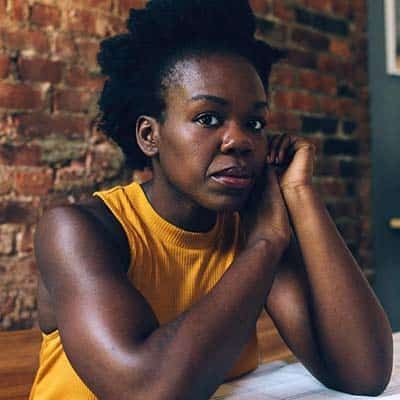
About
In this episode, we spotlight Ngozi Anyanwu and her compelling plays. In Good Grief, Nkechi, a med-school dropout and first-generation Nigerian, navigates first loves, losses, and the stars in search of answers. In The Homecoming Queen, Kelechi returns to Nigeria after fifteen years to care for her father, confronting family, culture, and past traumas. The Last of the Love Letters offers a tender exploration of love, choices, and the difficult act of saying goodbye.
We also discuss Ngozi’s remarkable career. A 2020 Steinberg Playwright Award winner, her works have been produced at Atlantic Theatre Company, Vineyard Theatre, Center Theatre Group, Steppenwolf, and more. Her plays have appeared on the Kilroys List, earned Humanitas and Leah Ryan honors, and she has been commissioned by leading theaters such as Two River and The Old Globe. Ngozi also directs and teaches, shaping the next generation of theater artists. This conversation is moderated by Chi Chi Anyanwu.
Transcript
This transcript was automatically generated and might contain errors.
[0:18] Mark-Eugene Garcia: Hello and welcome to The Drama Book Show!
[0:20] David Rigano: My name is David Rigano.
[0:22] Dylan Glick: And I'm Dylan Glick.
[0:25] Mark-Eugene Garcia: Happy to have you back with us.
[0:26] Ngozi Anyanwu: Oh my god, thank you so much for having me back.
[0:28] ChiChi Anyanwu: It's a pleasure to be here.
[0:29] Mark-Eugene Garcia: You belong here at this point.
[0:30] David Rigano: You're an official co-host.
[0:32] Mark-Eugene Garcia: And this is the last episode of the year.
[0:36] David Rigano: Yes.
[0:36] Mark-Eugene Garcia: And we saved a really good one.
[0:38] David Rigano: Yes.
[0:39] Mark-Eugene Garcia: Who do we have this week, David?
[0:41] David Rigano: This week it's Ngozi Anyanwu talking about her plays, moderated by her own sister, Chi Chi.
[0:50] ChiChi Anyanwu: Anyanwu.
[0:51] David Rigano: So this is one that we put the event up.
[0:53] Mark-Eugene Garcia: We knew we were gonna have it.
[0:54] David Rigano: We're all excited about it.
[0:56] Mark-Eugene Garcia: And it was in the same way that like the Warriors sell out in like minutes when we do something like that.
[1:02] David Rigano: Yeah.
[1:03] Mark-Eugene Garcia: This sold out so fast.
[1:05] David Rigano: Like I wasn't here. I was working on this playwriting thing over the summer with the Candela playwrights, and my phone was like buzzing across the table during this workshop.
[1:16] Mark-Eugene Garcia: Only to go to our workshop down in Brooklyn, which was moderated by Chi Chi.
[1:21] ChiChi Anyanwu: Uh-huh.
[1:22] Mark-Eugene Garcia: Real, and then listen to her talk about her sister and be like, oh my god, she is moderating this event.
[1:27] David Rigano: And then going up to tell her, I was like, oh, I'm excited because you're gonna be here with your sister for the event.
[1:32] ChiChi Anyanwu: And she's like, yeah, I heard we sold out.
[1:33] David Rigano: I'm like, you did.
[1:34] Mark-Eugene Garcia: Like you sold out before lunch.
[1:36] David Rigano: Like it was bananas.
[1:38] Mark-Eugene Garcia: And it was, oh, it was a cool night.
[1:40] David Rigano: It was a really cool night.
[1:42] Mark-Eugene Garcia: I'm really looking forward to her next play.
[1:44] David Rigano: I am too.
[1:45] Mark-Eugene Garcia: I love hearing about it when she comes into the store.
[1:47] David Rigano: Yes.
[1:48] Mark-Eugene Garcia: She talked about it being in the world of MMA, which immediately got me.
[1:52] David Rigano: I was like, wait, I'm sorry. I thought I was the only one in that little Venn diagram of theater and MMA.
[1:58] ChiChi Anyanwu: Both writer and fighter.
[1:59] Mark-Eugene Garcia: We love to see it.
[2:00] David Rigano: Exactly.
[2:01] Mark-Eugene Garcia: I always tell people I'm fighting and writing.
[2:03] ChiChi Anyanwu: I am so thrilled.
[2:05] Mark-Eugene Garcia: And I know it just was at Two River, and I know it's coming here, and then I think we're in California.
[2:10] David Rigano: The monster, I'm so psyched for it.
[2:13] Mark-Eugene Garcia: Yeah, it's exactly up your alley.
[2:16] ChiChi Anyanwu: This is so random. I'm remembering an anecdote from this event.
[2:19] Mark-Eugene Garcia: I remember because it was like such a long line of people.
[2:22] ChiChi Anyanwu: Someone, we ran out of copies of Last of the Love Letters, and there was like two people just figuring out who got the last one.
[2:29] Mark-Eugene Garcia: And I'm just like, damn. Like I don't know that you're like, you bought the last of the love letters.
[2:33] ChiChi Anyanwu: I bought the last of the last.
[2:34] Mark-Eugene Garcia: But I don't know. It was just a wonderful group of people here to support her.
[2:37] ChiChi Anyanwu: It was great.
[2:39] Mark-Eugene Garcia: Yeah, it was a wonderful full house here to see a great discussion.
[2:42] David Rigano: And let's dive in and hear this discussion.
[2:54] ChiChi Anyanwu: That's our uncle Deju, by the way, who came out.
[2:56] Ngozi Anyanwu: That's my uncle.
[3:00] ChiChi Anyanwu: That's my uncle.
[3:04] Ngozi Anyanwu: We love you, Uncle.
[3:06] ChiChi Anyanwu: Sis.
[3:07] Ngozi Anyanwu: What's up, sis?
[3:08] ChiChi Anyanwu: I've known you my whole life.
[3:11] Ngozi Anyanwu: So I want to start with the Ngozi Anyanwu origin story.
[3:15] ChiChi Anyanwu: Okay.
[3:15] Ngozi Anyanwu: Some fun facts about Ngozi. I think when I was in fifth grade, she won the Mellon Bank Stop the Violence Poetry Contest.
[3:23] ChiChi Anyanwu: Do you remember that?
[3:24] Ngozi Anyanwu: Yeah, that was, oh my god.
[3:29] ChiChi Anyanwu: The end of the violence begins with me.
[3:32] Ngozi Anyanwu: That's all I'm gonna give you.
[3:33] ChiChi Anyanwu: That's all I'm gonna give you.
[3:34] Ngozi Anyanwu: That's how I'm gonna give you.
[3:36] ChiChi Anyanwu: I was very jealous at the time because I believe you got to appear on the Maury Povich Show.
[3:40] Ngozi Anyanwu: I cannot believe it.
[3:41] ChiChi Anyanwu: So when the way the Maury Povich show...
[3:43] Ngozi Anyanwu: The bus broke down.
[3:45] ChiChi Anyanwu: She didn't invite me.
[3:47] Ngozi Anyanwu: I was your best.
[3:48] ChiChi Anyanwu: I feel like I was your bestie back then.
[3:49] Ngozi Anyanwu: You were not my bestie back then.
[3:50] ChiChi Anyanwu: In my mind, I was her bestie.
[3:52] Ngozi Anyanwu: She was so mean too. She took two of her guy friends.
[3:54] ChiChi Anyanwu: Oh, I did not mean the Cassiano, she was a girl.
[3:58] Ngozi Anyanwu: Either way, you're holding on to the show.
[3:59] ChiChi Anyanwu: She chose two friends over me.
[4:01] Ngozi Anyanwu: Okay.
[4:02] ChiChi Anyanwu: This is a roast.
[4:03] Ngozi Anyanwu: Thank the Lord.
[4:04] ChiChi Anyanwu: The bus broke down.
[4:06] Ngozi Anyanwu: So the second time around, she invited me.
[4:08] ChiChi Anyanwu: Thank you for thinking about me the second time around.
[4:10] Ngozi Anyanwu: This is, I thought it was an interview.
[4:12] ChiChi Anyanwu: Okay.
[4:13] Ngozi Anyanwu: You can't go without your little sister.
[4:14] ChiChi Anyanwu: Something else now.
[4:16] Ngozi Anyanwu: Like, okay.
[4:17] ChiChi Anyanwu: And then the next iteration of Ngozi being a fantastic writer.
[4:21] Ngozi Anyanwu: In high school, you had that song about saying no to drugs.
[4:23] ChiChi Anyanwu: Do you want to sing a little clip?
[4:24] Ngozi Anyanwu: Oh my god.
[4:25] ChiChi Anyanwu: We're doing memory lane.
[4:26] Ngozi Anyanwu: What was it? Drop?
[4:28] ChiChi Anyanwu: What was a drum one?
[4:29] Ngozi Anyanwu: Don't know how, I don't know why.
[4:31] ChiChi Anyanwu: But I know gonna try.
[4:33] Ngozi Anyanwu: I can't believe it.
[4:34] ChiChi Anyanwu: That's it.
[4:36] Ngozi Anyanwu: Google that one.
[4:37] ChiChi Anyanwu: So you've been a writer literally my entire life.
[4:40] Ngozi Anyanwu: I want you to talk about how did you go from writing songs and poetry to that transition to playwriting?
[4:45] Ngozi Anyanwu: Wow. I was like, it started 10 years ago, but I guess it didn't.
[4:48] Ngozi Anyanwu: I had always written poetry, bad poetry.
[4:52] Ngozi Anyanwu: And I think like I really wanted to pursue creative writing before I went to college, but I got discouraged because a lot of the applications for writing things.
[5:02] Ngozi Anyanwu: I remember Governor's School was a thing, and I like was in the finals, and they made you like free write, and I just froze.
[5:08] Ngozi Anyanwu: So then I was like, okay, but I still liked acting, so I went to school for acting because that would be an easier life.
[5:14] Ngozi Anyanwu: And then in undergrad at Point Park, I actually was like getting back to writing, but I had, I just didn't have the discipline to really finish anything.
[5:23] Ngozi Anyanwu: But I still wanted to put things up.
[5:25] Ngozi Anyanwu: And there are these guys in my undergrad, they were called like the Animal Club, and they were very like similar to SNL.
[5:31] Ngozi Anyanwu: And I was like, we could do that.
[5:32] Ngozi Anyanwu: And it was very much a boys' club.
[5:33] Ngozi Anyanwu: So me and some friends from undergrad did this festival essentially, where we got a bunch of people who had not finished any plays and did this thing called the Unfinished Works Festival.
[5:44] Ngozi Anyanwu: So we had monologues and scenes, and that was like the beginning of, oh, okay, like I want to keep writing and maybe I'll finish a play.
[5:51] Ngozi Anyanwu: And then being in New York for however, and then going to grad school, the first play, Good Grief, was essentially out of missing my friend.
[5:58] Ngozi Anyanwu: And my friend had passed away when I was in undergrad.
[6:00] Ngozi Anyanwu: And you took a break from college.
[6:01] Ngozi Anyanwu: I took a very, from college, I'd quit college around that time.
[6:04] Ngozi Anyanwu: It was before then, and I got reacquainted with my best friend, and he had passed away, and it sent me back into finishing school, into finishing undergrad.
[6:13] Ngozi Anyanwu: And so it was maybe like the 10-year anniversary of his passing, and I'd started writing Good Grief, and it was more just like an exercise.
[6:20] Ngozi Anyanwu: But before then, I'd done the First Generation Nigerian Project.
[6:23] Ngozi Anyanwu: And that was similar to the Unfinished Works Festival, where I had gathered other first-generation Nigerian women.
[6:29] Ngozi Anyanwu: I'd noticed around 27, we all had the same story.
[6:33] Ngozi Anyanwu: Being 27, having not been back since we were teenagers, having daddy issues, and we got together and were like, oh, I think we have a story to tell.
[6:41] Ngozi Anyanwu: So we got together through John Gold Rubin, and we had done like a series of showings in New York for a couple of years and gained a community from doing that.
[6:49] Ngozi Anyanwu: And you know, making things with more than one person is difficult.
[6:54] Ngozi Anyanwu: Disseminated because we all just got busy and couldn't necessarily also getting back to that.
[6:58] Ngozi Anyanwu: Shout out to Aaron Cherry, who was an original producer of the Russian Project.
[7:03] Ngozi Anyanwu: And also Infanaso Odophia.
[7:06] Ngozi Anyanwu: I don't think you're here.
[7:07] Ngozi Anyanwu: Infanaso Odophia, who's also a playwright.
[7:08] Ngozi Anyanwu: She also was an original producer.
[7:10] Ngozi Anyanwu: Yeah, Ivan Orgy was also one of the original actresses in that and writers on that.
[7:13] Ngozi Anyanwu: But it was also just hard to agree on what we were making.
[7:16] Ngozi Anyanwu: And everyone was busy, and it was a labor of love.
[7:18] Ngozi Anyanwu: And so it was also one of those things of, and I remember my sister being like, why don't you have something on your own?
[7:23] Ngozi Anyanwu: I'm like, ah, I don't want to do that.
[7:26] Ngozi Anyanwu: And I just, it was really just a discipline issue.
[7:28] Ngozi Anyanwu: And then my third year in grad school, I'd been missing my friend, and it was like 10 years past.
[7:33] Ngozi Anyanwu: And I started Good Grief just as a writing exercise to myself, a meditation to myself.
[7:38] Ngozi Anyanwu: And then 30 pages had erupted, and I was at UCSD, which was a strong writing program, design program, and directing program.
[7:46] Ngozi Anyanwu: So I was also inspired by the fact that I was always around writers.
[7:50] Ngozi Anyanwu: And at that point, it didn't feel as mysterious.
[7:53] Ngozi Anyanwu: I had been in New York for six years.
[7:54] Ngozi Anyanwu: I was an intern at the Public, so I got to be around the legs of Terrell McCraney in the beginning of his career.
[8:00] Ngozi Anyanwu: So it didn't feel so like far away.
[8:03] Ngozi Anyanwu: And I was like, okay, I think I have something.
[8:07] Ngozi Anyanwu: And I got my classmates together.
[8:09] Ngozi Anyanwu: Just I think I have a play.
[8:10] Ngozi Anyanwu: Is this the beginning of a play?
[8:12] Ngozi Anyanwu: Affirm me, validate me.
[8:14] Ngozi Anyanwu: And I remember reading, I just had them read the first 30 pages in this tiny rehearsal room in a basement.
[8:22] Ngozi Anyanwu: And like the first, I would say the first good validation was a playwright being like, screw you, man, screw you from writing good dialogue.
[8:29] Ngozi Anyanwu: I'm like, is that good?
[8:30] Ngozi Anyanwu: So I keep going.
[8:31] Ngozi Anyanwu: And they were like, keep going.
[8:32] Ngozi Anyanwu: I think this is a play.
[8:33] Ngozi Anyanwu: I think this is a play.
[8:34] Ngozi Anyanwu: And so by the end of my first year, I'd written the first draft of Good Grief.
[8:39] Ngozi Anyanwu: And then I was doing showcase and things, and if any of you know of Chi Chi, it's tornado.
[8:45] Ngozi Anyanwu: I gave her that draft, and she was just, yeah, I've already produced a reading of it.
[8:49] Ngozi Anyanwu: My best friend Susan starred in the first reading of it.
[8:52] Ngozi Anyanwu: The first public reading of that.
[8:54] Ngozi Anyanwu: That was off to the races of, oh, I have a play that I wrote, and we'll see what this thing does.
[9:00] ChiChi Anyanwu: Can you also talk about even just the power of community and also self-producing?
[9:05] Ngozi Anyanwu: Yeah.
[9:06] Ngozi Anyanwu: Because a lot of times, especially as young up-and-coming artists, they think that, oh, I need an agent, I need the money, but what about what we did back in the day in terms of that bare-bone style, yeah, getting people together.
[9:15] Ngozi Anyanwu: I didn't even know about writing agents.
[9:17] Ngozi Anyanwu: So I knew about that as an actor.
[9:19] Ngozi Anyanwu: I knew how hard it was to get an agent as an actor.
[9:21] Ngozi Anyanwu: So I really had very little hope and dreams of getting that.
[9:26] Ngozi Anyanwu: So I just always was like, you make the thing, you do the thing.
[9:29] Ngozi Anyanwu: Again, tornado.
[9:30] Ngozi Anyanwu: Even for Intar, Herb Newsom was also one of the original producers of that self-produced thing with the homies.
[9:36] Ngozi Anyanwu: And even for that, I was, because again, I have no shame, I have no pride.
[9:46] Ngozi Anyanwu: A lot of things of self-producing is a lot of it is about shame and pride.
[9:46] Ngozi Anyanwu: A lot of it is I use my waitress money.
[9:51] Ngozi Anyanwu: I had saved up money from, I said, okay, I was out of grad school as an actor, and I was hanging around Lou Moreno at Inter, and I was like literally cleaning the toilets and like putting down the set because he's the homie, and he had a small 65-seat theater, and he was like, what do you need?
[10:06] Ngozi Anyanwu: I was like, oh, maybe I'll do a reading of my play.
[10:08] Ngozi Anyanwu: And he was like, all right, you can have July.
[10:08] Ngozi Anyanwu: Try to make the play short because there's no air conditioning.
[10:13] Ngozi Anyanwu: And that was like the prompt.
[10:16] Ngozi Anyanwu: And it was like the first draft, and I was like, hey, Chi Chi, Lou's gonna give us his space.
[10:21] Ngozi Anyanwu: Did we do something?
[10:22] Ngozi Anyanwu: And we like produced it in 44 days.
[10:24] Ngozi Anyanwu: And I was like, and I was like, the budget is $5,000 because that's how much I have in my bank account.
[10:24] Ngozi Anyanwu: And I was like, what do you think, TG?
[10:29] Ngozi Anyanwu: We'll just do like a reading.
[10:30] ChiChi Anyanwu: And Chi Chi was like, you owe me $50.
[10:32] Ngozi Anyanwu: I was like, why?
[10:32] ChiChi Anyanwu: She goes, I already put it on, I already put the audition breakdown on Actor's Access.
[10:38] Ngozi Anyanwu: So I remember that.
[10:39] ChiChi Anyanwu: Okay.
[10:39] Ngozi Anyanwu: Yeah, yeah.
[10:40] Ngozi Anyanwu: So half of my success is this one, but it really came down to I wrote the play, like I did the thing.
[10:46] Ngozi Anyanwu: And we just learned as we went.
[10:47] Ngozi Anyanwu: So we did like, at the time, it was like Indiegogo was the thing.
[10:50] Ngozi Anyanwu: So we had friends who raised, and literally the budget was like so that I didn't spend all of the $5,000.
[10:55] Ngozi Anyanwu: So they, so the budget was to raise was like $5,000.
[10:58] Ngozi Anyanwu: I think we made like $4,900.
[11:00] Ngozi Anyanwu: And we just were like, okay, whether we get that or not, I know we're gonna do this.
[11:04] Ngozi Anyanwu: I just asked friends to do it.
[11:06] Ngozi Anyanwu: They all beautifully said yes.
[11:08] Ngozi Anyanwu: I asked Russell G. Jones to direct it, and it was just supposed to be a reading.
[11:12] Ngozi Anyanwu: And he was like, no, you guys can learn this in two weeks.
[11:17] Ngozi Anyanwu: And we did.
[11:18] Ngozi Anyanwu: So we learned it, and we did a four-day showing, and the community just pulled up.
[11:22] Ngozi Anyanwu: And I think from that First Generation Nigerian project, because I think what we made was I think always good.
[11:27] Ngozi Anyanwu: And so people were like, oh, you guys are doing something, and it was five dollars, it was like ten dollars.
[11:31] Ngozi Anyanwu: Yeah, so we were surprised when we did the four-day showing of this $15 thing.
[11:35] Ngozi Anyanwu: We had to turn people away.
[11:37] Ngozi Anyanwu: Like, we were like a waitlist of a waitlist.
[11:39] Ngozi Anyanwu: People sat down, people left messages on our waitlist.
[11:42] Ngozi Anyanwu: Yeah, Kamille Khan was like, he couldn't get in, couldn't I was like, oh shit.
[11:45] Ngozi Anyanwu: So it was the affirmation of the community, and then we just self-produced that, and then after that, we had done some sort of industry showcase of the show to no avail, and then I'd won this contest called the Humanitas Award, and then that was a thing that was like, oh, a career.
[11:59] Ngozi Anyanwu: And I remember Vaniso very distinctly saying to me when I had won that award, she was like, do you have any more plays?
[12:04] Ngozi Anyanwu: And I was like, no, I just had this play.
[12:07] Ngozi Anyanwu: This is my autobiographical thing about my friend, and that's all I got.
[12:09] Ngozi Anyanwu: And she's like, you should maybe write more plays.
[12:12] Ngozi Anyanwu: And I was like, I don't know if I have more plays.
[12:14] Ngozi Anyanwu: I just wrote something that was really personal to me, and she's like, you have more plays.
[12:18] Ngozi Anyanwu: And I was like, we'll see.
[12:19] Ngozi Anyanwu: And so I just had started on, well, as I was like interviewing for agents, I was like learning what to say, because they were also like, we're not gonna sign you off with one play.
[12:29] Ngozi Anyanwu: This place is good.
[12:30] Ngozi Anyanwu: Can you also tell the story about, because I feel like you were choosing between two agencies?
[12:29] Ngozi Anyanwu: Can you talk about in terms of like how you chose to pick with the agent you wanted to pick?
[12:29] Ngozi Anyanwu: Yeah, it was, I like had an interview I think Abrams, and they were like great, and they were the ones who were like, you should go and talk to more people.
[12:29] Ngozi Anyanwu: I was like, but no people want to talk to me.
[12:29] Ngozi Anyanwu: And they were like, no, you should.
[12:29] Ngozi Anyanwu: And so again, the hustle of emailing people, hey, I won this award, it had a press release, what do I do?
[12:29] Ngozi Anyanwu: And they're like, yeah, let's meet with you.
[12:29] Ngozi Anyanwu: And some people were like, cool, write more plays.
[12:29] Ngozi Anyanwu: And I had this great meeting with Gersh.
[12:29] Ngozi Anyanwu: It was really lovely with Kate Navin, who now is like the head of Audible.
[12:29] Ngozi Anyanwu: We cried together, it was deep, it was beautiful, and I was like, that's who I will probably be with.
[12:29] Ngozi Anyanwu: And my sister's like, let's hold out for her, let's hold out.
[12:29] Ngozi Anyanwu: I want you to meet everybody.
[12:29] Ngozi Anyanwu: And I was like, go where you're loved, the actors like go where they like you.
[12:29] Ngozi Anyanwu: And she's me, make sure you just meet everybody.
[12:29] Ngozi Anyanwu: I was like, okay.
[12:29] Ngozi Anyanwu: And then I think maybe a week or two later, I got in a meeting at CAA, and I had met Livier.
[12:29] Ngozi Anyanwu: And so it was, and I just, and I actually thought like the meeting went well, but it felt like, oh, it's CAA, they'll talk to me when I'm like a big deal and it'll be fine.
[12:29] Ngozi Anyanwu: And maybe as soon as I left the building, let's have a second meeting, and the second meeting was let's get to work.
[12:29] Ngozi Anyanwu: And it was like having Algerian, like French Chi Chi who was, who had literally who would, yeah, who was like she acts, I think she directs, how can we take care of her?
[14:02] Ngozi Anyanwu: But he was like, Yeah, get to work. And also, you don't need and also I like your first play. We can get your first play done. Don't worry about that. This is very good. We can get it done. But yes, keep writing. But he was like, him and the agentette Gersh were like the ones who were like, no, I see a whole trajectory, you just gotta keep going. And so those two were the most encouraging. But I respond, which is my own trauma response to a little like strict energy. So I went with he felt like an intense uncle. And so I was like, yes, I'll do yes, I want to please you. So I went with Olivier. Yeah, as you can see, but still encouraging. See? So I went with Olivia, and we've been together since 2016. I think this would be a perfect segue to hear some Good Grief.
[14:43] ChiChi Anyanwu: You guys ready to listen to some grief debris? Yeah. You want to set up the scene and any of this actors?
[14:47] Ngozi Anyanwu: Yeah. So the actors that you're gonna hear from are Mr. Fitzgerald and Ekele Ukekbu. Is that how I say that? Nice. And they're going to be reading N, which is inkechi, and MJG. And this is a flashback scene, and we'll call it like intro to kissing, if you will.
[15:05] ChiChi Anyanwu: Yeah?
[15:21] ♪ Musical number: "Good Grief" — performed by the cast ♪
[15:27] MJG: Hey, I was on level not. What are you doing?
[15:29] N: (tries to kiss MJ) How was that?
[15:34] MJG: What was that?
[15:36] N: I'm practicing.
[15:37] MJG: For what?
[15:38] N: My date?
[15:39] MJG: With who?
[15:39] N: Sergeant Slaughter?
[15:41] MJG: So that wasn't good.
[15:43] N: What?
[15:43] MJG: The attack?
[15:44] N: Yeah, did it do anything for you?
[15:46] MJG: Besides scare the crap out of me.
[15:48] N: Like sexy scare you.
[15:49] MJG: No, like species body snatchers scare me.
[15:51] N: Fuck, I'm never gonna get kissed.
[15:53] MJG: What's going to happen?
[15:54] N: Oh, wait, how are you 15 and you've never been kissed?
[15:58] MJG: I'm a late bloomer.
[15:59] N: Don't judge me.
[16:00] MJG: Kiss me.
[16:01] N: No, I will not.
[16:02] MJG: Teach me.
[16:03] N: Teach me the way.
[16:04] MJG: No, get away from me.
[16:05] N: What are you?
[16:06] MJG: Why not?
[16:07] N: You've kissed like everyone, and you're not a virgin.
[16:09] MJG: You want me to kiss you so you can prepare for your first kiss.
[16:12] N: That doesn't make any sense.
[16:13] MJG: You're impeding on my social progress.
[16:15] N: Who are you preparing for anyway?
[16:17] MJG: Jimmy Deering.
[16:19] N: Homecoming King Jimmy Deering.
[16:21] MJG: How did you swing that?
[16:23] N: I'm his tutor.
[16:24] MJG: Since when?
[16:25] N: Since Abby Isenthal came down with the mono.
[16:28] MJG: But you're a freshman.
[16:29] N: You know he's a senior.
[16:30] MJG: I know.
[16:31] N: This is big time.
[16:32] MJG: I need help.
[16:34] N: But he likes hunts the virgins, right?
[16:37] MJG: He calls it his search for the last of the Mohican.
[16:41] N: He may have a bet going on that he can de-virgenize you.
[16:45] MJG: So what you're saying is that I might get laid too?
[16:50] N: Kidding.
[16:52] MJG: But don't you want a guy to like you?
[16:55] N: That's funny coming from you.
[16:58] MJG: What does that mean?
[16:59] N: It means what girl have you ever liked?
[17:03] MJG: You got me there.
[17:06] N: But don't you want a guy to like you for who you are?
[17:10] MJG: That is adorable.
[17:13] N: But I'm gonna need you to focus.
[17:14] MJG: Now you have ladies.
[17:16] N: Plural, ergo repeats customers.
[17:18] MJG: Oh girl, it stands too.
[17:24] N: You with me?
[17:26] MJG: I think so.
[17:27] N: Yeah, sure.
[17:28] MJG: I, on the other hand, have one admirer, Jimmy Deering, hunter of Hyman's.
[17:32] N: I don't care if he likes me or my virginity.
[17:34] MJG: For now, they're attached.
[17:35] N: I'll worry about the love shit when I'm old.
[17:39] MJG: Right now, I'm just a squirrel trying to get her boot touched.
[17:43] N: I'm not like you, MJ.
[17:45] MJG: Guys aren't like falling over me like girls are falling over you.
[17:48] N: Well, come on, no, that's not true.
[17:49] MJG: What?
[17:49] N: Boys don't like me.
[17:54] MJG: I'm not you with the pretty eyelashes and the ethnic James Dean thing.
[17:59] N: I'm just me.
[18:04] MJG: Stop.
[18:05] N: What?
[18:06] MJG: With the pity look.
[18:07] N: I'm just saying I'm not in style.
[18:08] MJG: Maybe in 20 years, stocky black girls will be like super popular in all the rage.
[18:12] N: I but for now, a girl has to take what she can get.
[18:16] MJG: Stop staring.
[18:18] ♪ Musical number: "Kissing Instruction" — performed by the cast ♪
[19:00] MJG: You're the best.
[19:01] N: Gotta go.
[19:02] MJG: Do me proud.
[19:05] N: And let me know when you need help with blowjobs.
[19:23] ChiChi Anyanwu: Oh, and go through. Let's open up to the audience. You guys have any questions?
[19:30] Ngozi Anyanwu: Don't be shy.
[19:36] Audience Member: And uh autobiographical. Do you need to find a way to distance yourself from it in order to write it? Or does it be personal make it easier?
[19:49] Ngozi Anyanwu: Oh, interesting. Good question. Being personal make it easier. I take all the plays very personally. I think for Good Grief particularly, because I would say that one's like pseudo-autobiographical. It had been 10 years since the event. And so I think I don't know that I just skill-wise and personal-wise, I don't think I'd be able to write it so close, right? I was 21 when my friend passed away. So I don't think I would even have the skill or what have you to write it. But I think to write it at 31 reflectively and to lean into the and to know more about theater structurally, I'm like, oh, I'm doing a memory play. And then also having peers go, you can let it be a play. You don't have to like make it a documentary.
So I had a lot of great advice on that and that on that. But I consider all my plays personal. And I think if I can call myself skillful. I feel like you can tell that I wrote all the plays are very much in a kind of in one of the voices of in my head. But that'll probably be like the last, I won't say that. I'm like autobiographical, but that's that might be untrue. But I I would say but I do think that distance is helpful, so that you're not necessarily at least for me, I'm not writing a shrine to a person or I'm not writing, yeah, I'm not doing a documentary, like verbatim thing. I want to be able to take that event and make it poetic and beautify it.
[21:27] ChiChi Anyanwu: So your next play was The Homecoming Queen. So the thing that I remember about The Homecoming Queen, I remember you were working on it, but we had gone to go see that musical version of The Visit with Chita Rivera. And I remember you said something about maybe doing like a Nigerian version of The Visit.
[21:37] Ngozi Anyanwu: Yeah.
[21:41] ChiChi Anyanwu: And a revenge story of a lady coming back to Nigeria and burn everything down.
[21:46] Ngozi Anyanwu: Yeah.
[21:50] ChiChi Anyanwu: That's the violence. You're like, please continue. So talking about how it started in development and also when you changed to focus on the love.
[21:57] Ngozi Anyanwu: Interesting enough, I remember telling like agents of like, what things do you want to maybe write? And I was like, oh, I feel like I so vividly see an African version of The Visit. Having seen the Chita Rivera version, I like felt oh, I oh, that's really cool. And it's one of my favorite plays. And I feel actually someone turning me away from it because someone was like, Oh, there's a version happening with a very famous, it never happened, but there was a version happening with a very famous black woman who's gonna do a black retelling of The Visit of the play. So I was like, oh, okay. Even though I was like, Mile would be fire. But and that hadn't happened, so I was just like, okay, then what am I writing?
And I kept writing the play, still with that intent. And somehow I was like, Oh, I don't like this. So if you know The Visit, it is a revenge story about like how a town and this man did her wrong. And it's about forgiveness, but it's mostly a revenge story. And I and at the end I had this like badass ending where this person, this man gets poisoned, and the women of the village like drag his body off stage. That's actually fire. You might still get that player. But but there was at that point, I think it was like 2018. I was like, oh, the thought of women dragging this black man's body off the stage. No, I don't want it. I was like, I actually can't stomach it. I just was like, no, I want, oh, I want love.
I just want. And I was like, can I turn it? Can I? And so it just was, it was like, I can't. I had the ending of that. And I'm like, I can't actually bridge, I can't find the bridge there. And then I was like, and then when you do that, I'm like, what are you left with? That's always what I'm like, what do I want people to leave people with? And I was like, I didn't like what I was le and I write specifically with what do black people live leave with. And I was like, oh, I don't know what they leave with after that. So I was like, I didn't like it. And as I kept writing it and workshopping it, this other that a turn happened, and like the scene that we're gonna see, that one got written. I was like, oh, how do we work towards that?
And then it just all restructured itself. Then I was like, oh, this is about witnessing trauma, this is about forgiveness, this is about how hard it is to heal, this is about calcifying, which I don't think I had any of those words at that time. I just was like, I just got the inspiration of it. No, it's about forgiveness, and even the process of it doing the play was very hard because the artists were also like, I don't like it. I wouldn't forgive this, I wouldn't forgive this, I wouldn't forgive this. And I'm like, too bad, that's what I wrote. So it was hard because there was a lot of trauma in that play. But I was like, how do we move through it? How do we forgive it? And I'm like, the and ultimately what I looking back on it, I go, Oh, this is about how hard it is to kick and scream your way towards healing and forgiveness.
Yeah, and I just feel like that's and I think I try and keep that the theme where I'm like, I want people to come away with something like better or more positive. So love became I started writing this thing that you think is gonna be this, but actually I want us to come away with this, and that felt just better.
[24:44] ChiChi Anyanwu: That piece I feel like you used some family names. Seriously, if you felt, I don't want to say nervous. A lot of our family came out to see that one. That felt like the most Nigerian play that you had wrote at the time. So what did you feel about also introducing that show to the family and to the culture? Was anything kind of did anything make you anxious about that?
[25:00] Ngozi Anyanwu: I had a cousin who's like, how it there's a last name that's in our family that I was like just because the sound of that name sounds just so beautiful that I used. I had a cousin's like, how dare you use my last name? And it was like years later, who was like, I don't want people to I'm like, that play happened six or seven years ago, and nobody's checking for you. Bless. But shout out. But uh, but I didn't, I've always been I'm Igbo. So I just feel like I'm always uh the culture of Igbo is asked for forgiveness, not permission. So I just never checked. I never was like, hey, I'm doing this thing that might feel ooh. I just didn't check. And I think mom and dad like it when like anything is Nigerian.
Yeah. And I also poked and asked questions about hey, I'm doing this, and I kept asking questions about the culture and and rape culture, because like that play is so much in there. And so I didn't, I never really felt nervous. Oh gosh, are they there's some stuff that as far as like the sexual assault stuff that I pull personally that I pull from our family that I was nervous about triggering people. And so I was nervous when some people came to be like, how are we gonna feel about this? And so I was nervous about triggering people, but gave them the warning of that, but still you can give a warning and then someone can experience the thing. And it actually turned out very good where I had someone go who saw themselves in a beautiful way. Which was the intent. Yeah. But yeah, so that was the thing that I was nervous about. That there was something that it was, it's not based on anyone, but it's based on everyone.
[26:26] Ngozi Anyanwu: Yeah. That was the thing that I was the most worried about, because I'm like, I want to say something true, but I don't want to make people feel like I'm using them. But I just feel like we have to tell the truth. Yeah. Yeah. So that was like that was, and I didn't think I realized it until that person was in the audience. I was like, oh, how's that gonna go? But and I watched that person cry and I watched them go through the things, and I watched them, and it ultimately I think was good. But that was like a fingers crossed. Oh, I again asking forgiveness, not permission. I hadn't thought about it. I was just like, I just write and make the thing, and then I'm like, oh, I'm actually saying something that's actually quite true. I didn't use anyone's name, but I'm saying something that like someone might recognize. And I want people to recognize things, but some things you're like, you don't wanna, you're not trying to open scars.
[27:11] ChiChi Anyanwu: Yeah, you know, Hong Kong Cookie was the first of your plays that was produced in New York, right? Can you talk about also Atlantic Theater Company and also how you cultivate that relationship with them? Because they also did another show of yours, we're gonna talk about later.
[27:22] Ngozi Anyanwu: Yeah, so I was on my way, I think moving to LA, and I had met Annie for Good Grief because I think they would really like that play, and I think the thing that hit people with Good Grief was like a lot of people have lost people in their lives, and a lot of my meetings for Good Grief was like sitting and crying with people. So Annie was no different, so we sat and cried over loss, and they end up not doing that play, but it was like a keep you on the radar for anything else. And I had a meeting at New York Station Film with Joanna Febsler, who's now their assistant director of Berkeley Rep, but she was our assistant director of NISAF at that point, uh New York Station Film. And our first a lot of my first meetings with ADs was a lot of arguing with them about the state of the American theater.
And some of them found that really intriguing, and some of them did not find that really intriguing. But Johanna did, and she was like, ooh, what a smart cookie, and literally took that meeting and called Neil Pepe. And she and Homecoming Queen was in the when I tell you the beginning, like there were a couple scenes that were like, I think the scene goes like this, but this is how it ends. I think the scene, so there were like three unfinished scenes and a very like strong, rough, not quite draft. And Johanna, Neil basically, I think actually Neil called Johanna being like, Hey, we have a slot. Are there any younger playwrights that you come across that you're really liking? And we had just talked, and she was like, There's this one playwright, she has this one play.
It's not done yet, but it could be done. Bother her. And uh and uh theaters, if you're a playwright, like they won't talk to you unless they have something for you. If they're responsible, I think the AD is hard to get on the phone or a meeting with. You're usually talking to a literary manager in New York who has no power but is a fan. If you're talking to your associate director, it means you're closer, and if they really like you in the play, they'll give it to the AD because the AD is a the last bastion of gatekeeping. And with Annie, the call was, hey, can you resend me your recent draft of Homecoming Queen? And I was about to move to LA. I was like, sure. The next day, hey, can you grab a call on the phone with me and Neil?
I was like, sure. And then I was getting off the plane on my way to LA. Hey, Nguzzy, Neil, I don't know if we've met. I'm like, we haven't met. You know what I mean? I know I met you Neil Pepe. Anyway, or homies now, it's fine. And he was like, We I just read Homecoming. I think it's great. I think it's a great play, and we want to put it in the season next year. We should do that. I'm gonna call your agent. And then my agent called me the next day and was like, That is the fastest negotiation I've ever had. You're gonna be in New York next year. And so that was it was very like and I also sometimes if you if for those of you who are writers, when you're really that I've written multiple things, when you're like, I'm writing this thing, but it is belabored.
And then when you're writing something that I'm like, if I could just oh this is my hot shit, and Homecoming Queen felt really, oh, I know what this thing is. Okay, okay. And so he took it really like off the first draft, essentially. We still kept working. I had two more workshops before we started rehearsal for that, but he took that really quickly, and that's how that happened.
[30:24] ChiChi Anyanwu: All right, let's introduce the actors.
[30:26] Ngozi Anyanwu: Yes! Reading we have for Obina is Michael Lawoye, and then Nkeki Obimalikwe.
[30:33] ChiChi Anyanwu: Melekwe, my man, Malekwe. I've been asked from the Ibo culture. And they'll be reading Kalechi and Obina, and this is near the sort of like crux of the play, and that's all I actually say about that.
[30:44] Ngozi Anyanwu: Yeah, cool.
[30:58] ChiChi Anyanwu: Homecoming Queen.
[30:59] Ngozi Anyanwu: Excerpt two America, Britannica.
[31:06] ChiChi Anyanwu: I was okay.
[31:08] Ngozi Anyanwu: I think he's holding out just so I can be in Nigeria longer.
[31:12] ChiChi Anyanwu: This god forsaken place.
[31:15] Ngozi Anyanwu: I do not understand how you can talk about talk like that about your home.
[31:19] ChiChi Anyanwu: You know how a banker.
[31:23] Ngozi Anyanwu: What?
[31:24] ChiChi Anyanwu: Nothing.
[31:25] Ngozi Anyanwu: I just I remember very distinctly that you wanted to be a teacher.
[31:30] ChiChi Anyanwu: And that is what you wanted for me.
[31:32] Ngozi Anyanwu: You wanted to teach men how to be better than what they are.
[31:35] ChiChi Anyanwu: That when than what they were born to be.
[31:37] Ngozi Anyanwu: You promised.
[31:39] ChiChi Anyanwu: We made many promises then.
[31:45] Ngozi Anyanwu: A banker.
[31:47] ChiChi Anyanwu: So unimaginative.
[31:50] Ngozi Anyanwu: And how imaginative is your white man?
[31:57] ChiChi Anyanwu: That's over.
[31:59] Ngozi Anyanwu: Yeah, your father told me.
[32:00] ChiChi Anyanwu: Is there anything he hasn't told you?
[32:02] Ngozi Anyanwu: No.
[32:04] ChiChi Anyanwu: Is there anything you haven't told him?
[32:09] Ngozi Anyanwu: I don't know what you mean.
[32:11] ChiChi Anyanwu: Compound.
[32:12] Ngozi Anyanwu: I don't want to talk about the compound next door.
[32:15] ChiChi Anyanwu: The fire.
[32:16] Ngozi Anyanwu: I said it was a shame.
[32:18] ChiChi Anyanwu: Was it?
[32:19] Ngozi Anyanwu: What we did.
[32:21] ChiChi Anyanwu: What I did.
[32:23] Ngozi Anyanwu: You watched.
[32:24] ChiChi Anyanwu: You're good at that.
[32:26] Ngozi Anyanwu: Along beef as they are also tied by the cruelty of that safe.
[32:33] ChiChi Anyanwu: Wow.
[32:37] Ngozi Anyanwu: Okay.
[32:39] ChiChi Anyanwu: Okay.
[32:40] Ngozi Anyanwu: How can I?
[32:43] ChiChi Anyanwu: What can I I?
[32:55] Ngozi Anyanwu: How did we get here?
[32:57] ChiChi Anyanwu: We used to.
[33:00] Ngozi Anyanwu: We were close, were we not?
[33:02] ChiChi Anyanwu: Or did I imagine that?
[33:07] Ngozi Anyanwu: You used to make me call you duh.
[33:10] ChiChi Anyanwu: Do you remember that?
[33:11] Ngozi Anyanwu: Is this what you do? Relive memories that are dead and gone.
[33:15] ChiChi Anyanwu: I don't I do not know how to make things up like you.
[33:19] Ngozi Anyanwu: Perhaps if I too, I write it.
[33:21] ChiChi Anyanwu: It makes me feel better.
[33:22] Ngozi Anyanwu: Does it?
[33:23] ChiChi Anyanwu: It gives me power.
[33:25] Ngozi Anyanwu: The power to rewrite my entire history and forget.
[33:33] ChiChi Anyanwu: Bad things happened here.
[33:40] Ngozi Anyanwu: Sometimes I tell myself untrue stories and make them true.
[33:49] ChiChi Anyanwu: I tell myself my father is just old when he's really dying.
[33:53] Ngozi Anyanwu: I tell myself I'm not a Nigerian, I'm a New Yorker.
[33:57] ChiChi Anyanwu: I tell myself that if I'm with someone who looks and feels nothing like home, I can be happy.
[34:01] Ngozi Anyanwu: I tell myself I can be happy.
[34:03] ChiChi Anyanwu: I tell myself happiness is a thing.
[34:05] Ngozi Anyanwu: Sometimes I even tell myself you saved me.
[34:11] ChiChi Anyanwu: In my story, Obina the bird saves me from the Panther, the lion and the tiger.
[34:18] Ngozi Anyanwu: Maduka, Penny, and Sam.
[34:22] ChiChi Anyanwu: Obina.
[34:24] Ngozi Anyanwu: He is small, but he can fly.
[34:28] ChiChi Anyanwu: In my story, I I tell myself you can fly.
[34:36] Ngozi Anyanwu: And if he can fly, then I'd so can I.
[34:41] ChiChi Anyanwu: You've read it.
[34:43] Ngozi Anyanwu: I have.
[34:45] ChiChi Anyanwu: You are good.
[34:49] Ngozi Anyanwu: Thanks.
[34:53] ChiChi Anyanwu: I tell myself things too.
[35:00] Ngozi Anyanwu: I tell myself I never saw what they did.
[35:07] ChiChi Anyanwu: I tell myself I I I carried you home when it was you who carried me.
[35:12] Ngozi Anyanwu: I tell myself I I was your protector when you were mine.
[35:20] ChiChi Anyanwu: I tell myself I am a man.
[35:26] Ngozi Anyanwu: You are big and strong now.
[35:31] ChiChi Anyanwu: What would you have done?
[35:34] Ngozi Anyanwu: If you were this big if I could have I would what I would have finished them.
[36:00] ChiChi Anyanwu: I am haunted by that day, College.
[36:03] Ngozi Anyanwu: Really?
[36:05] ChiChi Anyanwu: You seem fine.
[36:07] Ngozi Anyanwu: I'm not.
[36:08] ChiChi Anyanwu: I'm not.
[36:16] Ngozi Anyanwu: Can I come closer?
[36:20] ChiChi Anyanwu: Yes, please.
[36:23] Ngozi Anyanwu: They are quickly and slowly make away to each other throughout the sea later by learning. But instead of maybe hours past, do you think if we knew each other without the bad things?
[36:46] ChiChi Anyanwu: I don't know.
[36:47] Ngozi Anyanwu: Pretend.
[36:48] ChiChi Anyanwu: Pretend.
[36:49] Ngozi Anyanwu: How?
[36:50] ChiChi Anyanwu: Just tell me something untrue and maybe it will be true.
[37:01] Ngozi Anyanwu: How would we have met?
[37:06] ChiChi Anyanwu: In the market.
[37:09] Ngozi Anyanwu: You would have stolen the last biscuits.
[37:12] ChiChi Anyanwu: We would have locked eyes.
[37:15] Ngozi Anyanwu: Oh, so cliche.
[37:17] ChiChi Anyanwu: No imagination.
[37:19] Ngozi Anyanwu: Then how would we have met?
[37:25] ChiChi Anyanwu: Neighborhood soccer game.
[37:26] Ngozi Anyanwu: Football.
[37:27] ChiChi Anyanwu: Semantics.
[37:28] Ngozi Anyanwu: You would have been the star striker.
[37:30] ChiChi Anyanwu: But I was so small.
[37:31] Ngozi Anyanwu: In my fantasy, you are taller.
[37:34] ChiChi Anyanwu: And after making the winning goal, you would have come up to me, the quiet village girl.
[37:40] Ngozi Anyanwu: Quiet, please.
[37:43] ChiChi Anyanwu: And handed me the ball.
[37:44] Ngozi Anyanwu: And then we would have dated and then shortly married, of course.
[37:49] ChiChi Anyanwu: I think we would argue.
[37:51] Ngozi Anyanwu: Really?
[37:53] ChiChi Anyanwu: We wouldn't be happy.
[37:55] Ngozi Anyanwu: No, we would be happy.
[37:57] ChiChi Anyanwu: Arguing.
[38:00] Ngozi Anyanwu: They are now in a playful embrace.
[38:02] ChiChi Anyanwu: There is a hint of tired joy.
[38:05] Ngozi Anyanwu: She softens it.
[38:07] ChiChi Anyanwu: It is the smallest moment of time.
[38:10] Ngozi Anyanwu: They dance, no singing, no music, only the kind in their heads.
[38:16] ChiChi Anyanwu: They dance and dream wide awake with a walking.
[38:23] Ngozi Anyanwu: I know you ain't.
[38:27] ChiChi Anyanwu: What do you know?
[38:30] Ngozi Anyanwu: I know.
[38:37] ChiChi Anyanwu: Life in the city has tall buildings and very little sky.
[38:45] Ngozi Anyanwu: I know success can be busy, exciting, and sometimes very lonely.
[38:55] ChiChi Anyanwu: I know how hard it is to find someone who occupies your mind, but not your heart.
[39:01] Ngozi Anyanwu: Someone who has made you their home while you have made them your hiding place.
[39:08] ChiChi Anyanwu: And there's beauty in it.
[39:11] Ngozi Anyanwu: Until there isn't.
[39:14] ChiChi Anyanwu: And then one day.
[39:16] Ngozi Anyanwu: One day what?
[39:18] ChiChi Anyanwu: You begin to dream of the place you come, you of the place you come from.
[39:25] Ngozi Anyanwu: It's pretty skies and rough people.
[39:30] ChiChi Anyanwu: And some dreams are good.
[39:31] Ngozi Anyanwu: Most are not.
[39:33] ChiChi Anyanwu: And so you come back to this place where you are born.
[39:37] Ngozi Anyanwu: To see what? If it was ever home or just a hiding place. I gotta shout out Michael because we went to London.
[40:26] ChiChi Anyanwu: Yeah.
[40:28] Ngozi Anyanwu: So we went to go try to see him in this Nelson Mandela musical, but it was during I think after the pandemic.
[40:33] ChiChi Anyanwu: Yeah, it was during like, yeah, it was during the quarantine.
[40:35] Ngozi Anyanwu: Yeah, yeah. Or after the quarantine.
[40:40] ChiChi Anyanwu: Yeah, we got in London.
[40:42] Ngozi Anyanwu: Yes. Doing our thing. Congratulations. You guys are killing it. Michael Lawyer in Keki. Obi Malekwe.
[40:49] ChiChi Anyanwu: I got it back. I got it back. I got my card back.
[40:49] Ngozi Anyanwu: Yeah.
[40:52] ChiChi Anyanwu: Does anyone have any pressing questions before we move on?
[40:54] Audience Member: Yeah, in the back?
[40:55] Audience Member: Yeah, um, I think it's really beautiful how part of the words and much of your writing is also how much attention you made to the impact of your writing, like what you're giving the audience. So I was just curious in how my writing process is there anything in particular that comes first to you, the story, the character, kind of answer to all those things?
[41:15] Ngozi Anyanwu: I think now, yes. Before it was like, oh, that'd be interesting that to make. I think with Homecoming Queen, it was like, oh, I should do the Nigerian play. And I don't know what my Nigerian play was. Like my peers at this time are like Jocelyn and Denai was someone I looked up to, and Umfaniso was like in the middle of like her epic scoping bag. And I was like, big guy. I just didn't necessarily have it down, but I just had this. I for me it's all I think most of my plays are really also adaptations, if they're not. So for me, it was like it was the visit thing, and it was like all these plays that I've read or seen, and I was always been like, what's my take on that? So for me, it's like what's my personal take on stories that I already I don't know that I think that there are any original stories.
So I don't necessarily think about character in the way of is this character or this character, but I think with Homecoming Queen particularly, I got some hard people in my family, and for me it was like why are they like that? So for me, it's always been like trying to understand. So it was really about trying to understand a difficult person. So I oh I think I was inspired by that by Terrell McCraney, because I remember I remember sitting through the I was like a reader for one of his first auditions for the premiere of the Brother Sister plays, and his plays were so beautiful. But I remember when the play was published that the Brother Sister series was like each thing was dedicated to someone. So I think of my plays as like dedicated dedications, and if I can stay on track, the other stuff will I hopefully flow.
[42:46] ChiChi Anyanwu: Yeah.
[42:46] Ngozi Anyanwu: Come on, yeah. You'll get your place too, Uncle. Don't worry, don't worry. Next play. Next play. Don't worry.
[43:00] ChiChi Anyanwu: And last but not least, yeah, the last of the love letters.
[43:04] Ngozi Anyanwu: Yeah. So during the pandemic, you wrote a monologue or the 24-hour plays.
[43:09] ChiChi Anyanwu: Yeah.
[43:09] Ngozi Anyanwu: And I believe Pedro Pascal did your monologue.
[43:12] ChiChi Anyanwu: Yeah.
[43:12] Ngozi Anyanwu: And then the monologue went viral. So talk to us about what happened and how you formed a play through a monologue.
[43:17] Ngozi Anyanwu: Yeah. So we were like in the we were like a month or two into lockdown. And I was not writing at all. I don't know if anyone was doing anything at all. And I yeah, we were like maybe I think this is like in May, May of 2020. And I was in LA, and I wasn't, yeah, very uninspired by everything. And they were doing the online 24-hour plays online. So they were just like giving prompts. And so the prompt was they gave you an actor that you communicate with online just through email. And the prompt was like a prop and something that they've never done. And I was like, I think I want to do the 24-hour plays. I think I can bang out something quickly. And I was doing a slew of people were doing a slew of monologue projects like that.
I had done something else with Jenna Warsham, where they're raising money for hungry kids. So I was like, Oh, I think I can bang out some writing quickly. So I was like, I'll try that challenge. And so I was like, we'll make this inspirational. And the actor I was gifted with was Pedro Pascal. So I get like an email from Pedro Pascal saying, hi, Guzzy. And I don't know him. And we're just, and he's just saying this thing, being like, hey, my pro he's I'm in my garage. My prop is Stevie Steven Ali Gyrgis's motherfucker with the hat. And I've never played Insane. And that was the prompt. And so I was like, okay, let's see. And we had eight hours overnight to write it. And I was feeling insane.
And I was never gonna write again. But and like the whole everything was imploding. And so I just was like, I'm going to write to art as if it's an X, as if I'm spiraling to it with an X. And so I wrote this three-page monologue thing, and I was like, here we go. What do you think? And he's like, Oh, okay. I wasn't expecting this. And so I sent that to him, and he banged it out, and it was awesome. It was like, I think usually they were like two minutes. I think his was like seven minutes. And I think now that and he's he was like pretty popular then, but now he's like ridiculously famous now. So people were just eating that up, and then I was like, oh my god, like I would and I emailed him back like being like that's your playwright stream.
Can I write a whole play for you? And he was like, sure. Again, like we weren't doing anything, so what does that even mean? Sure, I don't know you. He's very nice, actually. And I just kept writing that monologue, so it was like two and a half pages, and I was stuck in the pandemic. And over the course of a month or two or three, I was like, I think I'm just gonna stop at 25 pages. I think I've ranted enough. And I sent it to him. And he sent this really just love. I'm like, oh my god, this makes me feel dizzy and scared, and yeah, and he just gave, and he was like, Can't wait to talk to you someday about it. Because again, we weren't doing anything. And I just left it alone. And it was something I wrote just in a basically a depressive fervor.
And so it wasn't even something I really even felt was gonna actually ever be done or shared. It was just like, here is that self-indulgent like diary that I will not be sharing with anyone. Thank you so much for reading it, Pedro Pascal. That I just kept to myself. And at that time, I think months had passed, maybe we were like now in fall of 2020. The quarantine had totally lifted, but it was like the distancing and things like that. But at this time, the theaters were reaching out to writers and being like, we still can't meet, but let's do things online. And so Atlantic, who I had a relationship with, was like, what are you working on? And so we were reading a couple plays online, and I was like, and they were like, we'll read whatever, like we'll workshop whatever online on Zoom.
And I was like, okay, I also have this crazy thing. And then by then it was like maybe 2021, I think it was January or February. I was like, I also have this thing, and I was thinking, like, maybe I'll workshop it and spread it out and figure out what it is. And Neil, and he goes, Can you grab a meeting with Neil tomorrow? And I was like, I know that call. And we hopped on Zoom, and he was like, We have to do this now. We have to do this now. We're opening the theater in the fall or in the summer. We have to do this now. We have to open the theater with this, we have to do this now, we have to do this now, we have to do this now. And I was like, uh this way? This is not a play. And he's like, It is, we have to do it now.
And yeah, so we did it. I was like, Pedro Pascal, where are you? Uh he was very famous by then, and so he couldn't do the play. And uh we just looked through some names and ended up with Daniel J. Watts, which was not a losing battle. It was great. And so we worked on the play, and we were also because it was a monologue, we were looking to companion it with another piece. And my agent was like, with and we were looking for other writers to companion, and my agent was like, if it'll be a night of ghost, here it won't be a night at all. And I was like, This is why you have agents. And so I was like, but I don't have another thing written. He's then you'll have another thing written. And I was like, huh? And this is where the aggressive uncle energy comes in. And so I actually had not written the first monologue until rehearsal started.
[48:14] ChiChi Anyanwu: Wow.
[48:14] Ngozi Anyanwu: So I was and the rehearsal was three weeks. So I was like, I saw I was writing the beginning monologue, and because the the first monologue was the last monologue felt like a goodbye. No, it felt like a why did you leave me? I was like, oh, the first one should feel like a I need to leave. So the first one, like how hard it is for the theater to leave you, and what it feels like, and what it feels like for it to all be gone. And then I was like, what does it feel like if you're talking to your lover as theater? But I gotta get out of this thing that's not good for me. So that was the impetus to write that, the first monologue. But I was writing that all throughout the like the first two weeks out, and Patricia was like, You need to lock the script.
And so it's a monologue. That was like it's a 10 page monologue. There's like his was near locked, and then mine was locked. So that was a it was a very that process was like fast and furious, and what it is to do like urgent theater, and it was interesting to do that one because it was like Daniel's on vacation for the first week of rehearsals. He was jumping in at Tina at the same time, so he came in week two, we did two weeks of rehearsal. So to Xavier Evans, who like plays like person, but he basically was in the other room, and it was our understudy, and he was in the room with us, like helping us b memorize the monologues. And that was like rig talk about rigor and process. It's a 10-page monologue or twelve.
I don't know how we did it, because we did in two and a half, three weeks. And then very quickly, after we closed, we were we were published. And it was also a short run because it was COVID and and people weren't doing long run. It's one of those things where I'm like, that was like that wonderful shooting star of a play that I'm like, I would like to do that play again. We always wanted to do it in rep and switch, but we just we didn't. But Patricia was like, that's four plays, that's not two plays, because you two would do it completely differently, right? And there was just no time. So that was like that piece was a very fast, furious, ferocious shooting star of a process.
[50:04] ChiChi Anyanwu: And okay, we're back in plays, like plays are back and and we're doing this thing.
[50:08] Ngozi Anyanwu: So yeah, and that was your second time working with Patricia McGregor, correct?
[50:11] ChiChi Anyanwu: That was my second time working with Patricia McGregor.
[50:12] Ngozi Anyanwu: She had done the world premiere at of Good Grief at the Kirk Douglas Theater in LA.
[50:17] ChiChi Anyanwu: Yeah, can you talk about in terms of the importance of having black female directors for your work too?
[50:22] Ngozi Anyanwu: Yeah, that was. Out of grad school and being like, this feels weird walking into an auditioning for these rooms of this play that feels so of an experience, and actually this auditioning for uh a panel of white people, it just didn't feel good. And so when I was making my stuff, I and I had a white collaborator at that time. Me and Larissa just talked about the other day, who I went to grad school with, I was always a lead of her directing projects, and so she originally directed like the first reading of Good Grief, but I had to be like, ooh, I had we and it wasn't a hard conversation, and I was just like, hey, now that I'm responsible for that, I actually don't know that I can do that because I also know the equity that you get from doing the credit that you get for doing the original work is a big deal in New York, right?
So do the New York production or the original production, and I was like, oh, I have to give my black people equity, I have to give my black woman equity because I also know the experience, yeah of snaps. I just I because I also at that time I hadn't seen any black women director. Like at that time, I think like Patricia hadn't directed in New York in a minute. It would be different if everybody was directing everyone's thing, or if there were like a slew of black women out here in off-Broadway in New York, and there just weren't. It was like at that time it was like Patricia McGregor, it was Liesel Tommy. I think I know I'm leaving some people out, but it was a small list. And so I was like, Oh, I can't be responsible for adding like at that time the revolutionary thing was like to have a white woman directing a black woman's play.
And so I was like, this is it just didn't feel good to me. Yeah. And like just speak for myself. And so from the very beginning, it was like black people. So Russell had done that production, and he was gonna say it's an actor, and I was a fan of Patricia. So when Kirk Douglas was like, Who would you like as a director? And they theaters were always have their ideas, and I was like, Patricia McGregor. Actually, we only have California locals, and she's a New York director. She would do California last month. Caller. Like the nerdy person is like, I also know the logistics of where everybody's at. So I was like, now she's here. And then they were like, Oh, oh. So for me, it really was like, and it still is. Now I'm also trying to nurse relationship with younger black directors because my black directresses are so busy.
[52:51] Ngozi Anyanwu: And I'm directing now too. So yeah, for me, it's still not balanced.
[52:55] ChiChi Anyanwu: Yeah.
[52:56] Ngozi Anyanwu: So if it's not balanced, the least I can do, right? My artist equity, and I'm still deeply picky. I still I'm like, I still need that craft to be there, but there's such a belief that we don't have the craft. There's such a now that I'm doing it, the belief that we that people don't think that we know what we're doing is so insidious and pervasive that I didn't know how the sausage was made back then, but I knew it didn't feel right. But now that I'm in it, I'm like, huh. They're jokers out here. The institutions are jokers out here when it comes to what it comes to giving, I'm saying black women their things. So I was like, I won't be responsible for not doing that.
[53:36] ChiChi Anyanwu: Yeah.
[53:37] Ngozi Anyanwu: Beautiful.
[53:38] ChiChi Anyanwu: Yeah.
[53:40] Ngozi Anyanwu: So last but not least, we're gonna do Last of the Love Letters. Yeah, so this is gonna be me and Susan Hayward. So we're gonna switch it up. So she's gonna read a part a portion of the first monologue, and I'm gonna read a portion of the second.
[54:01] Ngozi Anyanwu: Urgent, she says. Urgent, urgent. It's important that you know that this wasn't easy. I didn't want to. I didn't make this decision lightly. It didn't just come in a second, it came over many seconds, minutes, hours, days, months, years, decades. It was not easy. But also, it wasn't that hard. All I had to do was think back to every time you took it out on me. Every time you turned over in bed because you were done. Every time we left early because you were tired. Every time an argument ended because you made your point every time. I put on the perfect lip color. I wore the clothes you liked, the ones that fit my ass just right. You always wanted it just right. The perfume you can't get enough of, the way I styled my hair, face, beat, hair, curly, braided, straight, no braids.
I love your hair like that. I love it long. You liked it long because you're a fucking cliché. You look great. I like it like that. I don't know why. I just like it. But I liked that you liked it. Even though it wasn't fully me. I convinced myself you wanted me. And not the me you created. Not the me I remade to fit your image so you would fuck me. Not me, but your me. Huh. Where was I? What was I saying? Right. Maybe this wasn't hard. Maybe this was easy. Yeah, easy. Breezy. No problem. No sweat. Not a thing. I didn't deserve you. Never did. Never have, never will. Curl! No need to cry over it. My dear, stop your crying. Can you mourn someone who did not know how to love? Can you? Am I? Anyway, where was I? I was you always had to be right.
And sometimes you were. Sometimes I was. Sometimes you let me win. Sometimes you punished me for winning. Sometimes I liked it. Sometimes I stepped into the pain. Like my favorite part. I waited for my places. I stepped into the light and gave the performance of a lifetime. A happy partner. Smiling. Enjoying. Just posing for you. Loving you. Wanting you. Needing you. Worshipping you. Prostrating for you. But I am free from that shit. Free. Relieved from or lacking something, and especially something unpleasant or burdensome. Free. Not bound or contained or defined by force. Free. Not fastened. Not confined. Unrestricted. Not united with, attached to, combined with, or mixed with something else.
Capable of moving or turning in any direction. Not determined by anything beyond its own nature or being, choosing or capable of choosing for itself. Capable of choosing for itself. Moves towards the door and then quickly turns back around. Okay, if I'm being honest, I liked that. I was the thing you needed. I would be lying if I said the way you cling to me didn't make me feel powerful. I would be lying if I said I didn't love the way a wise word from me made me feel like I held your life in my hands. Sometimes. A lot of times. Most of the time, especially near the end. To wait until you came for me. And you always came for me. Until you didn't. But it felt good to be plucked. To be picked, anointed, even knighted, special.
Hand in hand on your arm, made people look at me like I was more. And that. I got high off that shit. And I wanted more of that. That me, I built for you, I made her for you. Rockin' Bod. Nice smile spoken. Mannered. Witty, banter, pleasant disposition. Knows how to argue. No. Debate. But not so much that it makes one feel threatened or uncomfortable. Just just. That's how you liked it, right? You did that. You made that. And that person you made, that I let you make chicken egg. Who knows? I don't know her. She don't even go here. She is in my body, but I don't know who this bitch is. And I did that for you. And you say you didn't ask me to do all that?
[1:00:30] Ngozi Anyanwu: And that. That might be true. Do you remember when we saw that? What was that? You remember? They used to be in these expensive ass fucking buildings. Fuck, what were they called? Jeez! Remember, we saw this play. You laughed so much you peed a little. And what was that fucking line? How the fuck? If you got one friend when you die, then you got something that most people don't have. And I tried to quote that shit back at you, and you laughed at me because I fucked it up. Oh god, I was stuttering. It was sad, but you didn't seem to mind. I think you liked watching me squirm. You just tilted your head and smiled, and I kissed you. And you let me I said how I felt, and you let it hang there for what felt like hours.
You fucking beautiful sadist. You you just let it just linger out there, and then you set it back. Shit, shit. What was I saying? Why did you have to love me like that? Why did you have to love me back? Do you remember that? Can you think back that far? I only need you to think for a second, and then you can go back to hating me or however you want to feel, whatever. And you can render this conversation irrelevant. I remember we used to talk. We really used to spill our guts to each other. First day we ever met. You remember? You came to me. You came to me, remember? And you just started yammering on. Not that I didn't like it. I don't want you to make it feel like you were bothering me. I was hoping you would talk to me actually.
And I was like, who is this person? And you sat next to me and you just said, hey. And I said, hey. And you smiled at me, and I'm not gonna lie, the way that you were just too comfortable with me from the first second, even you can admit that was well kind of sus. But you didn't care. You just looked at me and told me how lucky we are to meet each other. That if you play your cards, this just might be the best thing that ever happened to you. And I took a deep breath and I said, Okay. And we didn't know each other. And you held my hand and I couldn't breathe when you touched me. It was weird. I could have came right there. I know you don't want to hear that, but you were all I wanted, I swear.
And now it feels like I made you up. Like I made us up. Did I make us up? Was that real? Are you real? I know I'm repeating myself, but I'm just, I'm trying to work out. Did we go through all the piss and the shit just to end up here? I'm what the fuck? Sorry, sorry. I know you hate it when I, but I just, I'm trying to figure out how we get to where I am. We got there, right? It wasn't just me that fucked up, was it? Did I lie to you? Should I have told you who I was before I held your hand before I took that breath? But you didn't seem like you wanted to know. That didn't seem like a part of the agreement, like a part of the deal. Is that a part of the contract that I was missing? Did I miss something?
I feel like you didn't ask. Like there was an unspoken from here on out. Fuck before. Forget about before. There was no before. Before was trash. There was no, there is just now. You didn't want to know all that before shit. At least that's what it felt like. Like you didn't want to know who I was. What kind of person doesn't ask questions? How can you be mad at me now? There had to be a small, deep part of you that knew. You knew, you knew. You had to have known who I was. I thought you knew. I thought that you could see who I was. How could you not see? How could you not see who I was? I thought you knew me, but I guess we were just both kidding ourselves. Or maybe I just wanted to see what I wanted to see.
Someone who would forgive me, forgive all the things I had done, someone who would absolve me. That's what I wanted to see. Someone who didn't care, someone who would give me that agape. I just learned that term agape means unconditional love or some shit. Or did you teach me that? Who can remember anymore? Anyway, it doesn't matter because that shit's not real. We all have conditions, directions, instructions, incantations, spells. You put a spell on me. I can't keep blaming you. I'm sorry. How long do you think this thing between us will last? This distance, this chasm? How long? Just tell me, never mind. I don't care if you never talk to me again. I don't need you. I never needed you. I never needed anyone.
I don't need anyone, certainly not you. Definitely not you. Who are you just anyway? Just some stupid damaged thing that came to me. You came to me. You came to me. You took your hand in mine. You swore that if you said, if I play my cards, you don't know. You didn't ask any questions because you didn't want to know, and now you do know. And you don't, so now you do know everything, who I am, who I was, but those two things are not the same. So can we just go back to who I am? And can you forget who I was? Can't you forget? Can't you forgive? Where's that agape love I read about in the movies, the books, the poems, the fairy tales? Never mind. That shit isn't real. Who cares? Fine. Then just sit there pretending like we never loved each other, pretending that never anything was that nothing was ever good between us, like we never kissed, like we never laughed, like we never cried, like I never held you, like you never held me, like you never talked to me, like we never tried, like I never gave you anything, like we never met, like you never knew me, like I never saw straight through you, like you never told secrets, like we never talked to each other or held each other for dear life, like we never exchanged spit and other fluids, like you never told me how to fuck you, just like you liked it hard and then slow and then fast and then slow again, and like you didn't sleep inside me, like I didn't sleep inside you, panting and breathing and sweating and slipping and sliding out until you begged me to never step.
[1:06:02] Ngozi Anyanwu: No, go on, go on and pretend because I know that's what you do best.
[1:06:17] ChiChi Anyanwu: Okay.
[1:06:21] Ngozi Anyanwu: The ground is still here. I have breath. Okay, I have life. Okay, I have skin and I have bones. I am strong. I am strong. Oh, I can do anything. I'll be okay. Yeah. I had love. I was loved. It was everything. I had everything. That's it. That's the thing. Thanks, Fran. Susan Hayward. Love you for the boys. Last season. Ask about her.
[1:07:43] Ngozi Anyanwu: Sis, you better act. Hey, sometimes we do it. Ooh, this question. So for time's sake, does anyone have any questions?
[1:07:49] Audience Member: Oh, okay.
[1:07:50] Audience Member: Yeah. I feel like a lot of that skill was built because I saw a lot of theater. At that point, I was before grad school, I had been in New York for about six years. So my sister was a casting intern, and I was an artistic intern at the public. So we just saw everything. So it was like I had skill that I didn't know that I had. And in grad school, the skill was just repetition. The skill was what is this play trying to do? The skill was text analysis. So I was thinking of what do actors want to say. That was like the most basic way that I thought of things. I'm like, do these actors want to say this? So for me, I always try and make actor candy. Because I'm an actor first. I went to undergrad for acting, went to grad school for acting.
So I really think about how did these two people get in there and to hope and trust that it's a thing. Good Grief is maybe the messiest play because I wrote it on the subway. I wrote it in grad school. I wrote it like in pockets of, and I let it be messy. I let it be like, oh, this is a memory play, and it's fragmented. And I was like, let me just lean into the fact that it was fragmented. And I don't think it was on purpose. It was just more people would be like, oh, this is cool. This is kind of like fragments. I was like, yes, it is. Sounds great. So I don't think I did anything on purpose. So probably wasn't I think Homecoming Queen felt a little bit more well made. And that is also a memory play.
So that one was like, let me lean into the flashback structure of that and actually be like in the flashback, you are learning something, and in the present, you are learning something, and try to make that on purpose. For this play for Last Little Love Letters, I was like, I will let it be a mess because they're doing it anyway. But even if I was to like go back into the play, I would say because that was a fast process, I think what I learned and felt about that play when we closed, I was like, there's an act three. If I was to go back and republish the play and get another workshop, shout out to the theaters, where you at? I would probably go back into that play, do some rewrites, and finish.
I think that play is not finished. And I would go back and go, you hear from one, you hear from two. And I think the play was leaning towards I want them in the same room with each other. And we just never got that because I couldn't figure it out. And we just didn't have time. And so I was leaning into what it was. I just let that play be unfinished and be like, this is what this piece is. So I think on structure as I'm making it, like what is for the play that's coming up in the fall, that one's I want to fight play, but I want an emotional engine. And so I think those skills are something that I built up by seeing other people's plays. Someone call me a hater. I call myself a cultural critic.
So I just have an opinion on everything. I think of a play and I see a play, and I'm like, oh, that's how I would structure that thing. Or I see what they're trying to do, but I think if they could just so I think my mind is always working and critiquing. So that's how I write my plays. But I usually start with probably something really emotionally driven. And if I can go back and go, what does Singuzzi do as a writer? I think I use feeling as emotion as the engine for the next thing to happen, as opposed to being like a plot-driven writer. I think I'm like about the internal engine of what's going on with us. And that's what I think drives my plays.
[1:10:54] ChiChi Anyanwu: Yeah. I believe we have time for one or two more questions.
[1:10:57] Audience Member: Uh healing?
[1:10:58] Audience Member: Yeah. Next project. Next slide. Tell us a little. You may get there, but maybe before we go, can you tell us about the monsters, what it is briefly, and um where we can do it.
[1:11:11] Ngozi Anyanwu: Yes, co-host Ewing. Next project, yes, next project, making my directorial debut with one of my pieces. Yeah. Everyone come, please. And that play is called The Monsters. As far as dedications and love letters, again, this one is a love letter to my big brother. He was formerly an MMA fighter. And the thing that I noticed with his community was these very big, strong bodies and soft hearts, and how he found a lot of self-esteem from it. And so I really wanted something to be like, hey, I see black men. And so I wanted to write a love story, but I wanted to write a sibling love story. And so that was the impetus for writing that play. So it's not a biography of him, it's just like he inspired the impetus to write it.
So it's a two-hander, and it goes up at Two River in the fall in October, and then it comes to Manhattan Theater Club at City Center in February. And then I am starring in it at Berkeley Rep as a sister in April. And then it might be going to some other places after that, but right now that's the trajectory for that play. Subscriptions are on sale at MTC and thank you. At MTC, Berkeley Rep and Two Rivers Theater. Individual tickets go on sale. I want to say it in a few weeks. So keep a lookout if you're just worried about my play. But also call them and be like, I want an email call of Botherem. We're trying to let him know what it is, you know what I'm saying?
[1:12:33] ChiChi Anyanwu: Yeah. So one last question.
[1:12:37] Audience Member: Ah, thank you. Um I have just one question.
[1:12:40] Audience Member: So I can definitely definitely post. Do you feel like there's nothing else to talk about style?
[1:13:04] Ngozi Anyanwu: So you're talking about, do I feel like I need to go back into my old work to hold myself accountable for my style, essentially? I don't think it is or other people's styles. I think yeah, I do read a lot. I'm right now maybe gonna write an adaptation of a certain play, and I'm trying to look at other people's adaptations to see if I'm not I don't want to copy, or I just be like, oh, those some of those things are just like you just have to do those things. They're important for that check-off play. So I look back on the structure of the original. I look back on who's adapted it, and maybe that person already did it, and then I look at but how do I do it, or what is my lean on it? Because if I don't have a lean on it or an engine, I won't finish it.
So for me, it's really, but it's more about the emotional thread. If I can't find the heart in it or why I want to do it, it won't get finished. I have a lot of things that have the first 15 pages that just won't get touched because I'm like, I got bored, I got tired. That I might go back and go, oh, I figured out why I wrote that because sometimes you're doing an exercise and you write, and I can't finish an exercise. I can only figure unless I got paid for it. But I can't, I can't finish an exercise and be proud of it unless I really am interested in it, which I might have to adjust because it's lean out here. So I might have to do some things I don't love. But for me, it's all about why am I doing it? What is the effect that I want people to have on it more than structure and style? I just have so many styles in my head. For me, the style reveals itself as I'm making it.
[1:14:38] ChiChi Anyanwu: Yeah, yeah. And just for you, so you can have the last word. Any last parting words for the aspiring writers who are trying to get their work produced and developed in New York?
[1:14:46] Ngozi Anyanwu: Who? Okay, it is okay. Words for writers who are in New York who are trying to get their stuff, especially for the first time. Who is ah I don't envy it? Is rough out here, it is lean. Theaters are producing less. The orange carrot is in charge, and it is what it is and ain't what it ain't. And I don't think that theaters are leaning into their responsibility. I think they're cowtowing under that, and so you're seeing all male seasons, you're seeing whiter seasons, it's getting the white man is back, and but you have to. So for me, I also, though I'm being produced, I'm going back to like, how do I self-produce again? Like, how do I lean into like my network now is larger? And so, like, how do I do that and make the cool, whatever fancy thing, but I'm like, find your peers.
If you have nobody, share your stuff on the online. Just that's me. I also learned about the interwebs during COVID. Just start sharing your stuff, start making your stuff. Don't wait for it to be a Manhattan Theater Club. Like the first time I did Good Grief, we did it in a 65-seat theater. There's the East Village basement. There's drama bookshop. Are y'all doing readings of plays? Let's start. People are doing them in Mr. has a thing called freaking souls where people or actors do monologues. And so if you got a monologue, bother him and show a monologue that you've written. There are other channels. I think sometimes we're waiting for somebody to pick us. And I never waited for that. It happened, but I didn't wait for that.
I was already making stuff, and then it was like, I'll submit while making stuff. So I don't think that's changed. So I would just say the thing to leave, keep writing, find your community. Even if it's not in the biggest fanciest thing, like find places, if you have an apartment, do salons in the house, make it share it. Make it share it. Like rinse repeat. And if it's fly, people will get attention. But also your community and your small community is good enough. Right. We're also like, I want to be, and it's just, I don't know when the business is gonna come back around. So if you're at this as an artist, I hope you're doing it because you really love it. You know, back in the day, it was like, are you doing it for fame, we're doing it for money?
I don't know that the money's gonna be there when you come back. I don't know if the I'm in it, and I don't know what the money's gonna be. I don't know how long the money's gonna be there, but I'm a lifer. So if you're really trying to do this, there's actually nothing that can stop you from doing it. If you're waiting for an institution to pick you, I don't know what to tell you because it's rough out here. So it's really about sharing your shit and getting and gathering your folks and gathering your shoulders, so soldiers, and just making the work and sharing it. So literally do it, have some friends, share it, grow it, invite people, don't be scared, don't be scared to take a critique. Like it's difficult to hear a critique, take it. A broken clock is right twice a day. Like sometimes the stuff is not perfect, but share it imperfect and then make it better. And you decide what is better.
[1:17:45] ChiChi Anyanwu: Cool. Thank you, Gilzy. Shout out to all the actors. Shout out one more time. Mr. Fitzgerald! Mark, David, thank you, the drama book. Thank you, Mark David. Susan Hayward! Eccole Quekboo. Michael Uway. In Keki Obimaleque. Thanks, guys. Cool. Thank you guys. Yay. Thank you all so much for coming.
[1:18:18] ChiChi Anyanwu: And we are back. Now, couldn't you just listen to them talk forever? And aren't you just ready to go out and do something creative? Exactly. First, read all her plays. Yes. Then do something creative. But also just listen to them talk. There's both. It's so inspiring on their own and together. And I am just eager to see this next play. I told her last time she was in here that we should have her in for an event for that play specifically. We can put a ring in here.
[1:18:45] Ngozi Anyanwu: Sure.
[1:18:46] ChiChi Anyanwu: Sure. And if they do it in Rocky the Musical.
[1:18:48] Ngozi Anyanwu: Exactly.
[1:18:51] ChiChi Anyanwu: Exactly. I did Wolf play, which is one of the most incredible things I've ever seen on a series of. And at the White House. Well.
[1:19:01] Ngozi Anyanwu: But you won't get to see that mark until next year.
[1:19:04] ChiChi Anyanwu: But I'm excited to see this play. But for this year. We thought we would cap off our end of the year program talking a little bit about the shows that we saw and loved this year.
[1:19:16] David Rigano: And so I've asked my cohort here to put together a top five.
[1:19:21] Mark-Eugene Garcia: And my top five has two honorable mentions.
[1:19:23] David Rigano: My top five definitely has a top six.
[1:19:25] Mark-Eugene Garcia: Is a top six.
[1:19:26] David Rigano: But let's start.
[1:19:27] Mark-Eugene Garcia: Do we have an honorable mention round then?
[1:19:29] David Rigano: Do we want to make mine number six?
[1:19:31] Mark-Eugene Garcia: Okay, I mean that's number six.
[1:19:33] David Rigano: Yeah, all right.
[1:19:34] Mark-Eugene Garcia: So we're gonna okay, we're gonna do a top six.
[1:19:36] David Rigano: Let's just start with that.
[1:19:38] Mark-Eugene Garcia: Okay.
[1:19:38] David Rigano: I still have an honorable I have two honorable mentions.
[1:19:41] Mark-Eugene Garcia: Well, you do both of yours.
[1:19:42] David Rigano: I'll do both of mine because my honorable mentions are in no specific order.
[1:19:47] Mark-Eugene Garcia: But one that I believe might be on Dylan's list and which we saw together, which was English.
[1:19:53] Dylan Glick: That's on my list, too.
[1:19:55] Mark-Eugene Garcia: It was so good.
[1:19:56] David Rigano: It didn't quite make the top five, but I couldn't not mention it.
[1:20:01] Mark-Eugene Garcia: And one that was featured on this podcast, which is Roadkills by Sophie MacIntosh, directed by Nina Goodhart, was just I walked up to Sophie after the show was over, and I said, You're a fucking sicko.
[1:20:22] David Rigano: I need to read Sophie MacIntosh.
[1:20:24] Mark-Eugene Garcia: And she was like, Yeah.
[1:20:26] David Rigano: That's always a good feeling to have.
[1:20:28] Mark-Eugene Garcia: The other thing I said to her is I said, I always know I'm at a Sophie MacIntosh play because I am surrounded by the most attractive lesbians I've ever seen in my life.
[1:20:35] Dylan Glick: Oh my god.
[1:20:36] Mark-Eugene Garcia: All right.
[1:20:37] David Rigano: So that was your honorable thing.
[1:20:38] Mark-Eugene Garcia: Those are my honor. Those are my two honorable mentions.
[1:20:40] David Rigano: Which counts as your top six, technically.
[1:20:42] Mark-Eugene Garcia: So then I have a top five.
[1:20:43] David Rigano: Okay, perfect.
[1:20:44] Mark-Eugene Garcia: All right.
[1:20:44] David Rigano: So we each have one to go then.
[1:20:46] Dylan Glick: Yeah.
[1:20:46] David Rigano: I will go first.
[1:20:48] Dylan Glick: My honorable mention, which I know is on someone's list, is Prince Faggot.
[1:20:53] David Rigano: It was so close to making top five.
[1:20:56] Dylan Glick: And when you top one, everyone knows exactly what that's gonna be before this list started.
[1:21:00] Mark-Eugene Garcia: Oh yeah.
[1:21:00] Dylan Glick: But so the other one's my surprise.
[1:21:03] Mark-Eugene Garcia: I looked over your shoulder, so I saw they won't surprise me, but yeah.
[1:21:06] Dylan Glick: Prince Faggot was so good.
[1:21:07] David Rigano: I absolutely loved it.
[1:21:08] Dylan Glick: And if I could have a tie for top five, I would.
[1:21:11] David Rigano: It was just brilliant and beautiful, and I'm gonna let someone who put it on their top five talk about it later.
[1:21:16] Mark-Eugene Garcia: Slay.
[1:21:17] Dylan Glick: Okay.
[1:21:17] David Rigano: I what's it called?
[1:21:18] Dylan Glick: My so this is gonna be, I'm making this sixth place because it's not an honorable mention.
[1:21:22] Dylan Glick: It's on the list for me.
[1:21:24] David Rigano: Number six for me is gonna be Boop.
[1:21:26] Dylan Glick: Because I had the this was my first okay.
[1:21:30] Dylan Glick: I worked a little assistant gig with Susan, the lyricist for Boop, and I just got very close with her, and I love her dearly, and it was my first time working on slash adjacent to a Broadway show.
[1:21:39] David Rigano: And it was just I don't know.
[1:21:41] Dylan Glick: It was really magical being able to sit in on some rehearsals, and I got to go see it with my mom, and I don't know, it was just a really magical time, and I love Susan's lyrics a lot.
[1:21:49] Mark-Eugene Garcia: The lyrics are great.
[1:21:50] Dylan Glick: Yeah, lyrics.
[1:21:50] Mark-Eugene Garcia: Yeah.
[1:21:51] Dylan Glick: Slay.
[1:21:51] Mark-Eugene Garcia: Yeah.
[1:21:52] Dylan Glick: And I unfortunately did not see either of those two, even though every time Prince Faggot extended, I would get a message from Dylan saying you have a little bit more time to get your tickets.
[1:22:04] Dylan Glick: I, yeah, quite literally after I saw Prince Faggot.
[1:22:07] Dylan Glick: I'll elaborate when we get to my top five, but I was urging David to go see it.
[1:22:11] Dylan Glick: I urged Mark to see it.
[1:22:12] Dylan Glick: I urged friends from other jobs and just friends in general.
[1:22:14] Mark-Eugene Garcia: Yeah.
[1:22:15] Dylan Glick: So good.
[1:22:16] David Rigano: So good.
[1:22:17] Dylan Glick: The script is out.
[1:22:18] Dylan Glick: It is sitting on my bedside table.
[1:22:21] Dylan Glick: I will read it sometime soon.
[1:22:24] David Rigano: Yes.
[1:22:24] Dylan Glick: Alright, promise.
[1:22:27] David Rigano: What's your number five, David?
[1:22:29] David Rigano: Huh?
[1:22:30] David Rigano: Okay.
[1:22:31] David Rigano: So yeah, okay.
[1:22:34] David Rigano: These are in a good.
[1:22:35] David Rigano: I was like, I didn't really write them like in order, but these are a good order.
[1:22:38] David Rigano: Jonathan Larson Project.
[1:22:40] Mark-Eugene Garcia: Slay.
[1:22:41] David Rigano: It was just as someone who does not quite feel exactly the same way as the majority about one of his biggest hits, but really loves some of his other work.
[1:22:56] David Rigano: I went in saying I just want to know more about him and his work because obviously it was so cut short.
[1:23:03] David Rigano: And I loved the show gave me permission to not love Rent.
[1:23:08] David Rigano: Because I said I loved the majority of this.
[1:23:10] David Rigano: I didn't love every song.
[1:23:13] David Rigano: And so I thought, okay, this is where I'm at with Jonathan Larson.
[1:23:16] David Rigano: I have great respect for the man as a writer, and I don't love every single thing that he does.
[1:23:21] David Rigano: But when he wrote something that really spoke to me, my God, did it go right to my soul.
[1:23:27] David Rigano: And I had a bunch of friends involved with the show.
[1:23:31] Mark-Eugene Garcia: Yes.
[1:23:32] David Rigano: Yes, I adore.
[1:23:33] David Rigano: Lauren Marcus and Adam Chandler Barat, and of course, John Simpkins directing, and the whole thing was the brainchild of Jennifer Ashley Tepper, who's been on our podcast.
[1:23:43] David Rigano: So I was so proud of everyone involved, and I knew what a labor of love it was for them.
[1:23:52] David Rigano: So it that was just a really special one for me.
[1:23:55] David Rigano: I saw a lot of theater last year, and I saw a lot of good theater last year, which is why that one ended up in like the middle of the road for me, but it wasn't middle of the road in quality.
[1:24:04] David Rigano: It just happened that there were some bangers outside of it.
[1:24:07] David Rigano: Like it's still in, it's like my top 12.
[1:24:10] David Rigano: But I saw a lot, so there's a lot more than 12 100% in this list.
[1:24:14] David Rigano: But it was incredible.
[1:24:15] David Rigano: I really I think we saw it on Valentine's Day.
[1:24:17] David Rigano: It was or it may have been our anniversary.
[1:24:19] David Rigano: There were like right around the same time.
[1:24:21] Mark-Eugene Garcia: That was a good date night show.
[1:24:23] David Rigano: It was a good date night show.
[1:24:24] David Rigano: And we just uh it hit very hard.
[1:24:27] David Rigano: I loved it.
[1:24:28] Dylan Glick: Okay.
[1:24:29] Dylan Glick: So my number five show, I actually saw this past week, and it is Practice at Playwrights Horizons.
[1:24:38] Dylan Glick: Essentially the vibe of practice is it is a production of a show led by this brilliant director, and it's in this church in this isolated kind of like situation.
[1:24:51] Dylan Glick: And slowly we realize that the rehearsal process is turning kind of culty, and it was really funny and bold, and I loved it.
[1:25:00] Dylan Glick: And so that's my number five.
[1:25:02] David Rigano: Alright, we're down to our oh no, my number five.
[1:25:06] Mark-Eugene Garcia: My number five is polarizing.
[1:25:08] David Rigano: Oh, and it was.
[1:25:09] Mark-Eugene Garcia: Uh-huh.
[1:25:10] David Rigano: I was there.
[1:25:10] Mark-Eugene Garcia: We were both me and David were both there for this one.
[1:25:13] David Rigano: Yes.
[1:25:14] Mark-Eugene Garcia: Yeah, okay.
[1:25:15] David Rigano: I was sitting between two polar opposites of it for this one.
[1:25:17] Mark-Eugene Garcia: Yeah.
[1:25:18] David Rigano: My number five is Slam Frank.
[1:25:21] Mark-Eugene Garcia: I love this show.
[1:25:23] David Rigano: I saw it twice.
[1:25:25] Mark-Eugene Garcia: So nice to see it twice.
[1:25:26] David Rigano: So nice I saw it twice.
[1:25:27] Mark-Eugene Garcia: If I can get in there once before in the next 10 days or less than that, because I'm gonna go on a cruise, I will.
[1:25:33] David Rigano: It is just a wonderful skewering of like performative, yeah, performative wokeness.
[1:25:40] Mark-Eugene Garcia: Yeah.
[1:25:41] David Rigano: Of going so far that you have actually come out the other side of being so inclusive that you're excluding of all of those things.
[1:25:49] Mark-Eugene Garcia: And yeah, it's trying to be inclusive without knowing why or what you're actually doing to the point that it's damaging.
[1:25:57] David Rigano: Yeah, it's smarter than it has any right to be.
[1:26:00] Mark-Eugene Garcia: Oh, yeah.
[1:26:01] David Rigano: It is ridiculously funny.
[1:26:03] Mark-Eugene Garcia: It is to the point that you it's so polarizing that there is a security guard out front to check your bags to pat you down.
[1:26:10] David Rigano: And because there are things that they talk about in the show, which is allowed because they have done so much skewering of everything.
[1:26:17] Mark-Eugene Garcia: I think if any show that took it took itself too seriously, tried to have discussions about certain current situations, they wouldn't be able to.
[1:26:25] David Rigano: Because they would be walking on eggshells.
[1:26:26] Mark-Eugene Garcia: But because they kicked these eggshells to the side the minute the show opened, they allowed them to have these twists and turns.
[1:26:33] David Rigano: Not so much kicked as stomped on.
[1:26:35] Mark-Eugene Garcia: It just the eggshells were broken from the time gone.
[1:26:39] David Rigano: I also this is adding to the whole like polarizing in terms of a security guard.
[1:26:42] Mark-Eugene Garcia: Isn't there a rule like on the Broadway Reddit that you can't talk about Slam Frank?
[1:26:46] David Rigano: Yeah, they actually there was a rule for it for a while that because people all the the thing with the show is that people were reacting to it before they saw it.
[1:26:53] Mark-Eugene Garcia: They were reacting to the idea of it.
[1:26:55] David Rigano: Yeah, I saw especially a lot of that on my Facebook.
[1:27:00] David Rigano: And if I hadn't known Andrew Fox, I might have believed some of what I read before from people who had not seen it first.
[1:27:10] Mark-Eugene Garcia: And I it was one I knew a little bit about.
[1:27:13] David Rigano: I'd heard the opening number, and then I went in there and it was something.
[1:27:17] Mark-Eugene Garcia: I remember and it might have been before you even saw it.
[1:27:19] David Rigano: You played through the opening.
[1:27:33] Mark-Eugene Garcia: And it's saying something, and it is just fifty shades of wrong.
[1:27:36] David Rigano: Oh, 100%.
[1:27:37] Mark-Eugene Garcia: I also, this is oh, wait, I lost my train of thought.
[1:27:41] David Rigano: You put a mic in front of you and you just lose everything.
[1:27:44] Mark-Eugene Garcia: I just get nervous and I don't know what I'm saying.
[1:27:46] David Rigano: Well let's put rapid fire round through some of these.
[1:27:48] Mark-Eugene Garcia: I'm so sorry, I just remembered it.
[1:27:49] David Rigano: Andrew Fox, seeing him in the show, reminded me of seeing Marlon Mendel in Titanic.
[1:27:54] Mark-Eugene Garcia: Like that kind of like chaotic like pleasantly chaotic like to the same time.
[1:27:58] David Rigano: I was like Broadway bound Titanic.
[1:28:01] Mark-Eugene Garcia: Broadway bound Titanic.
[1:28:02] David Rigano: Yes.
[1:28:03] Mark-Eugene Garcia: Which if I had seen that this year, that would be in my top show too.
[1:28:07] David Rigano: Alright, some rapid fire for David.
[1:28:10] David Rigano: Dead Outlaw.
[1:28:11] Mark-Eugene Garcia: Nice.
[1:28:11] Dylan Glick: Okay, Dylan.
[1:28:12] Dylan Glick: Little Bear Ridge Road.
[1:28:14] Mark-Eugene Garcia: Very cool.
[1:28:14] David Rigano: I have not seen that.
[1:28:15] David Rigano: Mine was English, which we've talked about.
[1:28:17] Mark-Eugene Garcia: Yes.
[1:28:18] David Rigano: It just that was such a beautiful show.
[1:28:19] David Rigano: Like just one of my favorite things.
[1:28:21] David Rigano: And it it did things theatrically that took me a second to get what they were doing.
[1:28:27] Mark-Eugene Garcia: And I love that that they didn't hand it.
[1:28:29] David Rigano: The broken English.
[1:28:30] Mark-Eugene Garcia: Yes.
[1:28:30] David Rigano: Oh, that was so cool.
[1:28:31] Mark-Eugene Garcia: It was so cool.
[1:28:34] David Rigano: They make you figure out what their game is.
[1:28:38] Mark-Eugene Garcia: And once you figure it out, everything they're doing becomes so much richer.
[1:28:42] David Rigano: Truly.
[1:28:43] Dylan Glick: I also the other day, I'm I think I must have heard on the radio or something.
[1:28:46] Dylan Glick: She bangs came on and we've seen like reading it from the oh, it's so funny.
[1:28:51] Dylan Glick: It was such a it was such a good heartwarming, just true show.
[1:28:55] David Rigano: I think something else that I loved about it was the fact that it was Oh my god, am I losing my train of thought again?
[1:29:03] David Rigano: This is also what I love.
[1:29:04] David Rigano: English is my number three.
[1:29:05] Dylan Glick: Yeah.
[1:29:06] David Rigano: So I think something that I loved about English and I also loved about Little Bear Ridge Road is that it felt like they were like smaller shows.
[1:29:13] Dylan Glick: Do you know what I mean?
[1:29:14] David Rigano: Where it's so many profound things happen at a smaller level, and it just moved me so much.
[1:29:19] Dylan Glick: It's a small show that's about nothing until it's about everything.
[1:29:23] David Rigano: Yes.
[1:29:23] Dylan Glick: And those are some of my favorite shows.
[1:29:24] David Rigano: Yeah.
[1:29:25] David Rigano: Alright, so hit your number three, David, number three.
[1:29:28] David Rigano: Purpose.
[1:29:29] Mark-Eugene Garcia: Nice.
[1:29:29] David Rigano: Yeah.
[1:29:30] Dylan Glick: Still haven't seen it.
[1:29:32] David Rigano: I read it.
[1:29:33] David Rigano: I saw it with my mom on closing weekend.
[1:29:36] David Rigano: And it's however two and a half hours, whatever, it's long play.
[1:29:41] David Rigano: And the lights came up after it ended, and my mom turned to me and said, We have a problem.
[1:29:47] David Rigano: And I went, What?
[1:29:48] David Rigano: And she goes, I need to see this again.
[1:29:51] Mark-Eugene Garcia: Ah, nice.
[1:29:52] David Rigano: And this and purpose was one, still is one that we that, but while it was running, we had people.
[1:29:57] David Rigano: There's always one or two shows that we have people coming to us directly from the theater and saying, I need the script for it.
[1:30:02] Mark-Eugene Garcia: That's one to this day.
[1:30:03] David Rigano: People are Brandon Jacob Jacobs.
[1:30:05] David Rigano: Publish this thing.
[1:30:06] David Rigano: We everybody wants it.
[1:30:08] Mark-Eugene Garcia: Everybody wants to have some purpose.
[1:30:09] David Rigano: Truly.
[1:30:10] David Rigano: We have no purpose here at the bookshop.
[1:30:12] Mark-Eugene Garcia: Alright.
[1:30:13] David Rigano: My number three is the revival of ragtime.
[1:30:17] Mark-Eugene Garcia: No, but you hate ragtime.
[1:30:20] David Rigano: No, there is no way ragtime wasn't going to be on my body.
[1:30:22] Mark-Eugene Garcia: And I guess this is another honorable mention.
[1:30:25] David Rigano: But I specifically made sure that I picked things that were new this year.
[1:30:30] David Rigano: But the revival of Floyd Collins.
[1:30:32] Mark-Eugene Garcia: Oh my god, I loved that.
[1:30:34] David Rigano: I loved that production.
[1:30:35] Mark-Eugene Garcia: Yeah.
[1:30:35] David Rigano: If I hadn't allowed a revival in there, it would have bumped John Proctor up higher.
[1:30:40] Mark-Eugene Garcia: Which I also loved.
[1:30:41] David Rigano: But I did love me some ragtime.
[1:30:44] Mark-Eugene Garcia: Yes, it is.
[1:30:44] David Rigano: Yes, yeah.
[1:30:45] Mark-Eugene Garcia: And I haven't seen it.
[1:30:46] David Rigano: I saw it at Encourse, but I have not seen this.
[1:30:49] David Rigano: It's one of the reasons about theater.
[1:30:50] David Rigano: And it's just one of the most perfect shows out there.
[1:30:53] David Rigano: It is so gorgeous.
[1:30:55] David Rigano: The storytelling is amazing.
[1:30:57] David Rigano: Uh the technique behind it is so wonderful.
[1:31:00] David Rigano: And it's just it's how you write musicals.
[1:31:02] Mark-Eugene Garcia: Yeah, really.
[1:31:03] David Rigano: Yep.
[1:31:03] Mark-Eugene Garcia: Yep.
[1:31:04] David Rigano: Alright.
[1:31:04] David Rigano: Number two.
[1:31:05] Mark-Eugene Garcia: Another one that's been featured on the podcast, Torera.
[1:31:09] David Rigano: Nice.
[1:31:10] Mark-Eugene Garcia: By Monet Hurst Mendoza.
[1:31:12] David Rigano: Mark, did you get to Okay?
[1:31:14] Mark-Eugene Garcia: Just got this.
[1:31:15] David Rigano: When you walked into the theater, the first thing that they did was hand you a program and a handkerchief.
[1:31:22] David Rigano: Because there are scenes in the play that take place at the bull fight.
[1:31:26] David Rigano: And so you have to wave your handkerchief in the air.
[1:31:29] David Rigano: You have the entire audience waving handkerchiefs in the air during the bull fight.
[1:31:32] David Rigano: But when they handed me the handkerchief, I said, was this Monet's idea?
[1:31:36] David Rigano: Because she knew I was gonna cry.
[1:31:38] David Rigano: And they were like, and they said, wave it in the air, you'll know when.
[1:31:41] David Rigano: And I was like, okay, we'll do, but I am gonna cry.
[1:31:47] David Rigano: And people just like it.
[1:31:48] David Rigano: And then I was like, but I am gonna cry at some point during the play.
[1:31:51] David Rigano: Because obviously when I read it, yeah, I cried.
[1:31:54] David Rigano: So I knew that watching it, and obviously Monet and I don't just have Monet and I don't just have so much history together, but we both have history attached to women's project, so it was really special to see it done there.
[1:32:06] David Rigano: So then I turned the corner into the theater and I saw the beautiful set.
[1:32:10] David Rigano: Google it, Torera Monet Hurst Mendoza Women's Project.
[1:32:14] David Rigano: I saw and I started crying immediately.
[1:32:16] David Rigano: Just when I saw what a gorgeous set she had for her show, and I was like, oh boy, first off, thank God I've got it.
[1:32:25] David Rigano: And I used I you and then I said to her at the end, I was like, Do they want this back?
[1:32:30] ChiChi Anyanwu: Because they're gonna have to they launder the handkerchiefs after yes, you have to give it back, and they wash them.
[1:32:35] Ngozi Anyanwu: Let you keep it.
[1:32:35] ChiChi Anyanwu: Yeah.
[1:32:36] Ngozi Anyanwu: I would have been like, I'm sorry, mine's a mess.
[1:32:38] ChiChi Anyanwu: I would have snuck it.
[1:32:39] Ngozi Anyanwu: I'm not sure I probably should have just stuck in my pocket.
[1:32:43] ChiChi Anyanwu: Oh, you're number two.
[1:32:44] Ngozi Anyanwu: Number two for me was liberation.
[1:32:46] ChiChi Anyanwu: And I want to.
[1:32:47] Ngozi Anyanwu: I saw it aroundabout with my friend Max. Hi, Max. I would like to go back and see it with my mother.
[1:32:53] ChiChi Anyanwu: It was very moving.
[1:32:54] Ngozi Anyanwu: I think okay. One of my jobs.
[1:32:57] ChiChi Anyanwu: My mom and my sister saw it together.
[1:32:58] Ngozi Anyanwu: Oh, really?
[1:32:59] ChiChi Anyanwu: Did they like it?
[1:33:00] Ngozi Anyanwu: Yes. There's for I pass by the James Earl Jones Theater quite a bit. And every time I see it and I see those characters, I'm just like, I don't know, like my heart, I'm like, oh God, I need to go back and see them again. And I really want to see it with my mom. It was just an incredible show.
[1:33:11] ChiChi Anyanwu: For me, second one is Mexodus.
[1:33:17] Ngozi Anyanwu: I'm so bummed I didn't get to see that one.
[1:33:20] ChiChi Anyanwu: Mexodus was one of the most incredible experiences I've ever had in a show watching him create the songs or watching them both create the songs as they're happening, creating the sounds and doing the live looping, but it wasn't a gimmick. It really was part of the story.
[1:33:33] Ngozi Anyanwu: And then telling a story of the Underground Railroad going south, of people escaping to Mexico, of a history that we don't get to hear. And a bonding of two very different people where there's sometimes a language barrier and a culture barrier was incredible.
[1:33:50] ChiChi Anyanwu: And using music to tell the story, there was a scene where they're repairing a farm that has been damaged after a storm, and the storm was in the sounds too. But then the scene where they're repairing it is them playing guitars, walking around each other, and movement, and there are no words.
[1:34:08] Ngozi Anyanwu: And afterwards, like both my husband and I were sobbing, and it was so beautiful because you got every single emotion, but you never were given a word to feel where you just felt it with them. It was incredible. Highly recommend listening there.
[1:34:24] ChiChi Anyanwu: The opening numbers on Spotify as well or on streaming anywhere. It's incredible. Also, Ranki Hada, the way his voice goes from tender to bass in one sentence is oh my god.
[1:34:35] Ngozi Anyanwu: Yeah. I loved him in Wolf play.
[1:34:36] ChiChi Anyanwu: Uh huh.
[1:34:37] Ngozi Anyanwu: And I know we have some of his like stuff on the shelves.
[1:34:39] ChiChi Anyanwu: Yeah.
[1:34:39] Ngozi Anyanwu: I'm like, I have to still get into his stuff.
[1:34:40] ChiChi Anyanwu: Yeah, he came to the house.
[1:34:42] Ngozi Anyanwu: It was yeah, he came in.
[1:34:43] ChiChi Anyanwu: Wait, it was that was something else too. It's like the day that one of his shows came out. I randomly like Facebook messaged him. I requested him and messaged him. And I was like, hey, your shows are here. Come sign it. And he's okay. And then accepted the request. And then that was it. That was our full conversation.
[1:34:56] Ngozi Anyanwu: And then when I went to see Mexodus, we happened to be like second row. And he looked down and waved in the song while the song was happening. And my husband's like, Do you know him? I'm like, do social media once we met. Like he remembered me from that. And then yeah, he did. And I was like, oh, what a moment.
[1:35:12] ChiChi Anyanwu: Oh my God.
[1:35:13] Ngozi Anyanwu: Yes.
[1:35:14] ChiChi Anyanwu: But Mexodus. Ugh. Incredible.
[1:35:16] Ngozi Anyanwu: Are we down to our number ones?
[1:35:19] ChiChi Anyanwu: Are we down to our number ones?
[1:35:20] Ngozi Anyanwu: We're down to our number one.
[1:35:21] ChiChi Anyanwu: All right. I think I know what David's is because he said that we talk about it later.
[1:35:24] Ngozi Anyanwu: John Proctor is the villain.
[1:35:27] ChiChi Anyanwu: I had a couple friends working on the show. I had a friend in the sound department. And I was so proud of my friend Maggie Kuntz, who was an understudy in The Outsiders. That was her Broadway debut, was being an understudy in the outsiders.
[1:35:43] Ngozi Anyanwu: Nice.
[1:35:44] ChiChi Anyanwu: Her second Broadway show was leaving the outsiders to be Ivy in.
[1:35:49] Ngozi Anyanwu: Wow.
[1:35:50] ChiChi Anyanwu: John Proctor is the villain. And I just I literally earlier this week bumped into her outside on the street here because she was here buying a book to prepare for an audition, and she was leaving at the same time that I was arriving. And so we got to chat a little bit.
[1:36:03] Ngozi Anyanwu: And I thought the play was just incredible. It sent me on a just a tear through every other riff on the crucible that we have here in the store. So far, my favorite one is Witch Hunt by Liz Duffy Adams, but anyone who works with me here knows that I'm a huge Liz Duffy Adams stan.
[1:36:26] ChiChi Anyanwu: We do know that.
[1:36:27] Ngozi Anyanwu: You also know that he was here today, John Proctor.
[1:36:29] ChiChi Anyanwu: Not particularly the teacher.
[1:36:31] Ngozi Anyanwu: Oh, really?
[1:36:32] ChiChi Anyanwu: Really?
[1:36:32] Ngozi Anyanwu: Yeah. That was another thing when Dylan, when you asked me to play Ichabod Crane in the reading of your Sleepy Hollow play, I was figuring out what to wear for the reading that would suggest teacher who seems like the cool teacher maybe is not appropriate with his students.
[1:36:54] ChiChi Anyanwu: And after I had already put my outfit together and I was on the train, I went, wait a minute. And I did a Google image search for John Proctor as the villain, and I was wearing basically the same outfit as that actor wore.
[1:37:06] Ngozi Anyanwu: Yeah, I fully like John Proctor as the villain. When it came out, I wanted to see it so badly. I was also, I wrote a riff on the Legend of Sleepy Hollow that is about grooming. And so I was avoiding John Proctor as the villain because I'm neurotic. And I was worried that I would accidentally subconsciously take something from the show and not know, and it would just be in my script.
[1:37:26] ChiChi Anyanwu: And so I just went so long without seeing it, and then I finally finished writing my show and I went, Finally, and then went to go and see it and obviously was not disappointed. I loved John Proctor.
[1:37:36] Ngozi Anyanwu: And one thing that I said to Maggie afterwards was that I thought that she had the most difficult character art to play because some of them have very satisfying coming to terms with the reality of what's going on and getting to let out the rage for what's going on. And because of a lot of circumstances, I don't want to spoil it for it's still one of the most popular plays that we sell here, so I don't want to spoil it for anyone who didn't get to see it and wants to read it. But um, because of a lot of things going on in her life that parallel other things going on in the story, she is unable to come to terms with it and see it for what it is.
[1:38:14] ChiChi Anyanwu: And I love that Kimberly Bellflower put that. I think it would be so easy to write a play that is just raw feminism and to have a character who's actually like really struggling with the right and wrong of this. I thought was so smart, and I thought that Maggie did it beautifully on Broadway.
[1:38:32] Ngozi Anyanwu: Oh yeah.
[1:38:34] ChiChi Anyanwu: All right, here we go. I we already know that it's Prince Faggot.
[1:38:36] Ngozi Anyanwu: I Prince Faggot is my favorite thing that I've seen all year. Quite literally, people will purchase a copy of Larry Kramer's book, Faggots, and I'm like, hey, have you seen Prince Faggot? It's running right now at Studio Sea View. Please go see it. It is, I don't know. It is what I love about theater. I think one of the things that I love about it is that it seems very like flashy and edgy, and it is, but it's like also so intelligent, and it's such an interesting take on can messy queerness exist in the royal family. I loved it.
[1:39:09] ChiChi Anyanwu: I had a great time with the show, really tugged at my heartstrings, and I bought it as soon as we got it in the store. So yeah, loved it a lot.
[1:39:16] Ngozi Anyanwu: I love messy queerness, and I love that show so much. I'm excited to have our upcoming event with Jordan.
[1:39:23] ChiChi Anyanwu: Me too.
[1:39:24] Ngozi Anyanwu: So sorry to sound so excited, but I really am. I love his plays a lot.
[1:39:28] ChiChi Anyanwu: So much.
[1:39:29] Ngozi Anyanwu: And to the point that we it was. And me too, and I'll actually read the play by the time we it was already set for later. And then I went to see the show and was so just, oh my god, I'm emailed from the house. I was like, I had a bunch of events cancel in December. Do you want to come earlier? And they couldn't, but I was like, oh like I just wanted to have that conversation now. I was like, oh, that it was so good. Such a good show.
[1:39:51] ChiChi Anyanwu: And so well staged.
[1:39:54] Ngozi Anyanwu: Yes, yes. And the intimacy direction from Uncle Dave's Fight House, so good.
[1:39:59] ChiChi Anyanwu: Incredible.
[1:39:59] Ngozi Anyanwu: It was, yeah. Really. When he came in. When he came into the shop, I was like, oh yeah. Props to you. That was incredible. I messaged him when I saw that. I was like, yo, this is need to know like the ins and outs of this like conversation of how these how this happened, how you did this. It was so cool. The thought of making all this actors feel like so safe with one another. Because it was it was it was intimate. So like just like being able to, I loved it. It's incredible.
[1:40:22] ChiChi Anyanwu: Absolutely. And we all know what your number one is.
[1:40:25] Ngozi Anyanwu: Everyone in the world knows everyone in the world knows everyone the show knows that this is your number one.
[1:40:30] ChiChi Anyanwu: And one of the reasons it's not on my list is just because I knew that I would get to talk about it anyway, because I knew it was gonna be your number one.
[1:40:37] Ngozi Anyanwu: My uh number one is real women have curves, of course it is. It's rare that I see a show eight or nine times. I remember you being like, after you saw it, you were urging like all of us to go see it.
[1:40:51] ChiChi Anyanwu: Yes, Milanovic, me. Like it was like I loved it. It was an incredible show. Everyone has to go see this. Also, because it was like it needed helped fill the house.
[1:41:00] Ngozi Anyanwu: Yes, it's it sucks that it's one of those shows that had it come out a year before, or had it come out this year where there's two shows playing, it would have been it would have stormed and taken over everything. But because it was a very full season, also we live in a world where we can't really have two Latino shows in one season.
[1:41:18] ChiChi Anyanwu: What and Buena Vista, which is also fantastic, but got a lot of that limelight.
[1:41:23] Ngozi Anyanwu: It was interesting to see that when I went to see the many times I saw real women, it was a very brown audience, and I was very happy and excited. And when I went to see Buena Vista, it was a very mixed audience, and I was like, How did they get the white people? Like, how did they get them to come to this and not to the other one? Because they both were astounding.
[1:41:40] ChiChi Anyanwu: It got 13 waves.
[1:41:42] Ngozi Anyanwu: I yeah, sobbed.
[1:41:43] ChiChi Anyanwu: Yes, I still do.
[1:41:45] Ngozi Anyanwu: I feel like the balance between the humor and the heart and the things that like rip your heart out. I just I also cried. I'm like, I don't usually cry.
[1:41:52] ChiChi Anyanwu: Incredibly funny.
[1:41:53] Ngozi Anyanwu: It's such a funny show.
[1:41:54] ChiChi Anyanwu: Oh my god, yes. And then when they were here for the signing, and I got to chat with a bunch of them. And I I got to get a little buddy buddy with Aileen.
[1:42:07] Ngozi Anyanwu: Oh yeah.
[1:42:07] ChiChi Anyanwu: And I I told her, I was like, first you made me cry in the show. Just absolutely wept at everything to do with that with her character who is brand new to the musical, who did not exist in any other forms of the story. But then she also made me cry on TikTok because she did a video where she was talking about everything that was going on in the country and the mass deportations.
[1:42:35] Ngozi Anyanwu: And she said it's a very weird cognitive dissonance to be living my dream by acting out my nightmare.
[1:42:44] ChiChi Anyanwu: Truly, yes.
[1:42:45] Ngozi Anyanwu: And that's the thing. That was the other thing is like it was showcasing what was what is happening in this country right now and making people aware of it. And there is never as sad as it is, a better time than to to make people aware of when it's happening. And I I just want this beautiful musical to tour.
[1:43:04] ChiChi Anyanwu: Yes.
[1:43:04] Ngozi Anyanwu: And I want it to go to Arizona, uh-huh, Texas, California, and California, all of the places where we're really seeing the worst of this. A little bit of the backstory on the event that we had here is that like the day that the album came out, like streaming, I wrote to the I slipped into the to the DMs of uh of Ghost Light, and it was like, hi, I'm the match at the drama bookshop, and I run the events and I want to do the album signing at the bookshop. Can we do this?
[1:43:31] ChiChi Anyanwu: And they were like yeah let's start having those discussions and then a little while later they hit me up and said we want to do the maybe happy ending event here. And I was like absolutely can we do only if on one condition.
[1:43:48] Ngozi Anyanwu: And we did them like two weeks apart. And something that I remember again like the fact that everyone involved with the show knows that it's your favorite thing of this year. That we all took a great big staff picture with the cast and the great poster and then the representative from the record company who is either from the show or the record company who was taking a picture said okay now we have to make Mark's dream come true so everyone else who works at the store get out of just Mark and the cast.
[1:44:21] ChiChi Anyanwu: And it was one of my favorite things and I got to keep that giant poster that is on top of my desk.
[1:44:27] Ngozi Anyanwu: It is huge. It covers up my entire wall when Josefina was in I had her come sign it too if any other real woman cast members are listening to this and they have not signed that poster please come in and sign and tell me and I'll have it sign it. I would be honored but yes real women number one lots of great theater last year I think we also all right so let's have a good end of the year.
[1:44:51] ChiChi Anyanwu: Have some good holidays so remember follow us on Instagram at drama bookshow podcast.
[1:44:57] Ngozi Anyanwu: Please subscribe to the drama bookshop on eventbrite to be alerted when we add in-person events to our calendar. Make our holiday dreams come true and give us some likes and some reviews and happy faces and things like that.
[1:45:09] ChiChi Anyanwu: And presents.
[1:45:10] Ngozi Anyanwu: And presents and remember, all the books that are published that we talked about can be found here at the bookshop. And so can we. And we will see you in the bookshop.
© Broadway Podcast Network, All Rights Reserved