

Step behind the curtain with Broadway theatre manager Dan Landon in this episode, talkback, as he discusses his memoir From the Back of the House. Spanning four decades and more than 50 shows, Landon shares backstage stories and encounters with Broadway legends, Hollywood icons, and even U.S... Read More
From the show: The Drama Book Show!
Guests

Featured Shows

About
Step behind the curtain with Broadway theatre manager Dan Landon in this episode, talkback, as he discusses his memoir From the Back of the House. Spanning four decades and more than 50 shows, Landon shares backstage stories and encounters with Broadway legends, Hollywood icons, and even U.S. Presidents, offering a vivid portrait of an unforgettable era in theatre history.
Joining him is Tony Award-winning actress Priscilla Lopez, who brings her own Broadway insights and moderates a lively discussion about the magic, challenges, and personalities that define life behind the scenes on Broadway.
Transcript
This transcript was automatically generated and might contain errors.
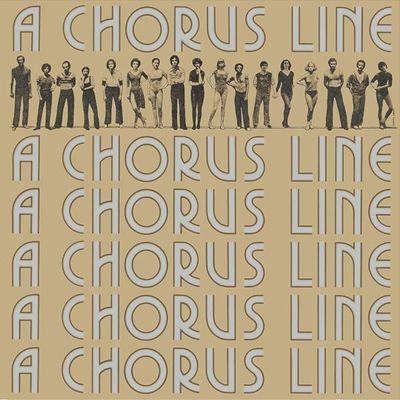
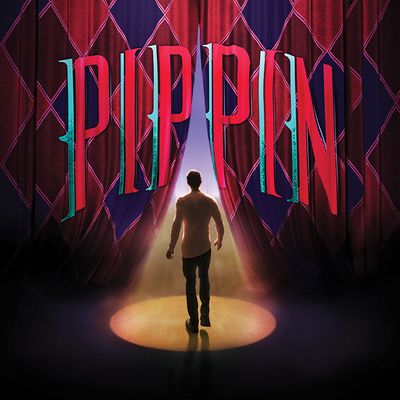
[0:00] David Rigano: Welcome to the Drama Book Show, the podcast that brings you conversations with the artists, authors, and theater makers shaping our cultural landscape. I'm David Rigano. This week, we're taking you behind the curtain with Dan Landon, whose memoir, From the Back of the House, offers a remarkable insider's view of Broadway across four decades. As a theater manager who worked more than 9,000 performances of 50 productions, Dan witnessed Broadway history unfold from a vantage point few people ever experience. His stories feature some of the biggest names in theater, film, politics, and pop culture, from Stephen Sondheim and August Wilson to Patti LuPone, Ian McKellen, Lin-Manuel Miranda, and Denzel Washington. Joining Dan in conversation is Tony Award-winning actress Priscilla Lopez, whose extraordinary career includes originating the role of Diana Morales in A Chorus Line, starring in Pippin, In the Heights, and countless other celebrated productions on Broadway and beyond. Together, they discuss Dan's journey from actor to theater manager, the unforgettable personalities he encountered along the way, and what life was really like from the back of the house during one of Broadway's most transformative eras. So settle in, and enjoy our conversation with Dan Landon and Priscilla Lopez.
[1:38] Priscilla Lopez: ...welcoming Dan Landon and Priscilla Lopez.
[2:04] Priscilla Lopez: Hello, Priscilla.
[2:05] Dan Landon: Hello, Dan.
[2:06] Priscilla Lopez: That's Priscilla. I'm not Priscilla.
[2:15] Dan Landon: A lot of those plays that they said I wrote, which I did, would have loved to play to an audience about a third, you know, half the size of this.
[2:29] Priscilla Lopez: Your turn.
[2:30] Dan Landon: My turn. Dan and I, actually, one thing we haven't talked about, when I actually did work with you, because our paths crossed throughout the years, and I was aware of him, and we lived in the same town, and so our kids went to school together at the same time, and we had a mutual friend who introduced us over again, but we never talked about Sisters Rosen's life. Because I was standing by the window, and Dan, every night I'd see him, I'd go in, and he had this big smile on his face, and he would talk to everyone on the street, everyone coming in, all the actors, they got a personal welcome from Dan. And that show was interesting to me because it was Sarah Paulson's first show out of high school. She was standing by for Brian, Amy Ryan.
[3:19] Dan Landon: Amy Ryan, that's a pretty good duo.
[3:22] Priscilla Lopez: And then she just went, whoosh! She didn't stop. So that was nice. But that's where we made Elastigirl.
[3:32] Dan Landon: I'll tell a couple of stories from that show, I'll be real quick. Madeline Kahn, the great Madeline Kahn, was in that show. And the week she's leaving, and we're doing fabulous with the show, Linda Latham is coming into it, Tony Roberts is coming into it, Robert Klein and Madeline are leaving. She catches me in the alley, and she goes, Dan, next week when Robert and I leave the show, will the show close? I said, no, ma'am. No, they're doing really well.
[4:10] Dan Landon: And another story I like to tell, and then we'll move on to other things, is that on her dressing room door, she had this cartoon from the New Yorker, and it was a cartoon of a king and a knight standing on a castle wall, looking out on thousands of men on horseback with spears. And the caption read, Genghis Khan, I thought we were expecting Madeline Kahn. Many stories. I was encouraged to write this book because my wife was tired of hearing them. She was tired of hearing them at dinners, or going out to restaurants, and she said, write a book about it. But there was an ulterior motive. She said, you write a book, you'll give a speech, we'll get on cruise ships, we'll go for food. So, here we are.
[5:10] Priscilla Lopez: So, are you going to read us something from your book?
[5:12] Dan Landon: Yes, yes. This is really the first part of the book, and what the book is about. And it is the prologue. Broadway, a definition more than a word. A place that thousands upon thousands of young actors dream about. Older actors fondly remember their days on Broadway if they were good enough, and this is important, lucky enough, to have been walking the boards of one show or ten. For those of us who worked on and around the glittering lights of Times Square, as I did for 37 years, the neighborhood was like a studio light. I would run into five people I had worked with on various shows in the distance of two blocks. People of the theater are usually kind as they ask me, what show are you working on, and how is it doing? As my old boss Jerry Schoenfeld, chairman of the Shubert Organization, used to say, everyone wants to be associated with a hit. That's the habit. How right he was. There was a world of people, those who do not act or sing, direct or write, who nevertheless labor in the Broadway theater, sometimes for decades. The stage names, ushers, treasurers, people in the box office, musicians, stage managers, portals, stage door company, and theater managers. That's what I was, the manager of the theater. Fiercely loyal to the buildings, theaters that we work in, all of us depend upon the shows that run in them. If the show closes and the theater goes dark, after we take out the ceiling and the lights, our work ends until another show books the theater and the lights of the marquee glow again. There was never an opening night. I was not thrilled and brimming with hope for that show. There was never a closing. I would not gaze at the empty stage in the semi-darkness and think of the incredible, fleeting nature of the theater and the illusion of life in the world. Fifty shows, I was that lucky, as I said. This is the story of those shows and how Broadway and the world of New York itself changed. In the end, there was only the single ghost light on stage, but on the way is the emotion, the funny memories, the fondly recalled observations, the audience lingering in a special place with the curtain down, the stage light dim, the story told. In the expanse of my career, I saw the show die with Bernard Hughes and Brian Merritt play a Broadway theater, The Marasket, in 1978. It was produced for $125,000. In 2015, a revival of the front page with stars Nathan Lane and John Goodman was produced at the Broadhurst, another Broadway house, for a budget of $4 million. What happened? Here's the lowdown from one Broadway concert.
[8:42] Dan Landon: I've spoken to many children, they ask me, would you come and speak to this class, whatever. I've been able to speak to a lot of kids, and I say, the theater is not just about being on stage, it's a whole world, so many things that you can do, and not everybody is an actor. It's dances, it's all those things that are part of the theater, stagehands, people inside, outside, people who love to do this. So I've tried to encourage them to learn about the other aspects of the theater, because without those aspects, the actors have no place to act, the audience will have no place to go. When I read it, I thought, it just reminded me of that. And what I liked when I read his book was, he reminded me of so many of the things that I discovered through my career, and experiences, and it was just going down memory lane. I really enjoyed that. And you have a lot of funny stories, too, crazy. So of all of these stories, do you have one that really stands out in your mind?
[9:46] Dan Landon: I have about 50.
[9:50] Priscilla Lopez: I'll pick a number, you look at the book and read it.
[10:06] Dan Landon: This is what you call dead air time.
[10:11] Priscilla Lopez: It's great to see you all here. I didn't know what to expect. This is the first time I've seen him in a store after he was arrested by Emmanuel, which he's a force in himself, a beautiful force. I loved working with him. When we were doing In the Heights, his parents would come to the rehearsals all the time, and they'd say, you think it's going to be a hit? I said, oh, yeah. How do you know? I said, because I've been in so many flops. I can tell the difference. I said, this is a hit. I've done a lot of Broadway shows, but it's only because they never lasted very long. I'm so anxious to start working right out of high school, because I learned performing arts right on 46th Street, so it was like everyone was applying to go to the theater to study theater, whatever. I said, it's down the block. So I thought, I'm not doing that. I'm just going to go right to the theater. And I had started as a dancer. I thought I was going to go to performing arts as a dancer, but that's another song that was never written. So I wound up going and acting, which was the best thing, because it just opened another world to me. So what have you found?
[11:17] Dan Landon: Okay, I found a little thing. Let me start by simply saying, theater always ran in my blood. And why do I say that? Everyone says that. But my two uncles, 12-year-old choir boys, first they sang at the Methodist church around the corner, and then they sang at the little church around the corner on 46th Street.
[11:40] Dan Landon: And they were gorgeous twin boys with beautiful voices, so George S. Kaufman came and saw them there. And since he was putting a choir in the third act of "The Man Who Came to Dinner," he hired them to be the choir boys along with six other boys in the show. And this was very big for my family because they lived through the abject poverty of the Depression. My grandmother worked at Ideal Toys, and that's what they lived on. My grandfather did not work since he lost his job in a bank years before. So the two twins were making a hundred dollars a week on Broadway. The average salary for a good job was $25,000. So all of a sudden, the poverty and depression left them. My father went into the business; he was a madman and Ken Erickson in an industrial show. He wrote one for so before it became Exxon and created the expression which is still with us today, "Put a tiger in your tank." That was him. He wrote songs with Mel Tormé, etc. And he later on wrote "The Milligan Show," which someone was directed by Michael Bennett. The composer was Marvin Hamlisch, and one of those little girls in the back was called... So that's what he did. So me moving to theater, I was an average football player at best, but he loved what I did on the stage, and I was the most dramatic I've seen in class. So after high school, I moved to New York, tried to make it as an actor, and worked as a waiter. And that was the problem; I was a terrible waiter. I was bound to starve. So at any rate, a job opened up at the American Place Theater. I was a walk-on throwing baseballs at Tony Lobianco, Yanks three, Detroit zero. And afterward, after the play, since I sold 1,100 subscriptions in my main film to patrons, I asked the theater manager job, and Julia Miles gave me the job as the theater manager. And that's how I started my management career.
[14:20] Dan Landon: After that, I went on to work for Alex Cohen, the Broadway producers whose offices were above Schubert offices. And I met Jerry Schoenfeld and Bernie Jacobs going up and down in the elevator. That would prove advantageous in a very short time. We were working on a play, a musical called "I Remember Mama," and the composer was Richard Rodgers. It was in fact his last musical. So we went to Philadelphia, and we're trying out the show. How the show is doing, I'll let Mr. Rodgers tell you. I was at the urinal taking a leak, where all the great meetings in the corner, and here comes Mr. Rodgers, a senior gentleman now who had throat cancer, so he spoke in a very gravelly voice. And what do you say to a living legend two stalls away? I said, "Mr. Rodgers, is a new song ready to go in the show?" And he says, "Not yet. The show sure needs it, doesn't it?" He knew what he had; he produced 30 Broadway shows. So we're in Philadelphia. Let me read you this passage real quickly. It would become a very terrifying time in Philadelphia; the hydrogen bubble was in the reactor at Three Mile Island. If it exploded and the wind was blowing our way, how a Broadway show tryout was going would have been of little concern. There was sullen fear on the faces as you walked the streets of Philadelphia. It was right at this time the boss of Schubert was coming to town to see the production. He had given Alex Cohen the Majestic Theater for "Mama" and wanted to see what was up. Jerry Schoenfeld was a short, stocky man who exuded the power of his position. Alex dispatched me along with Carrie, his limo driver, to meet Mr. Schoenfeld at the train station and take him to the theater. It was called the Schubert Theater but no longer owned by the organization. They had to divest many of their properties after the antitrust ruling against the Schubert brothers came down in the mid-1950s. They were ruled then to be a controlling monopoly of American theater, owning most of the legitimate theaters across the country.
[17:15] Dan Landon: As we passed by a hospital, Jerry pointed up at a room on the high floor. It was the only time over 30 years of working with Jerry that I ever saw a look of terrible terror come over his face. "That's where Zero died," he said, meaning Zero Mostel, the legendary actor and crazy man who he had produced in "The Merchant." To lighten the mood, I told him a joke, that one that Jerry Adler—he was Hesh on "The Sopranos," and he's very interesting—at 65 years old, his wife, who he always had beautiful chorus girls as his wives, asked him, "Our friend is doing this movie about Ouija called 'The Private Eye.' Could you call her up and ask her if there's a role in the movie for me?" And Jerry said, "Okay." So he called his friend up and asked if there was a role for his wife, and she said, "No, not really, Jerry, but I tell you what, if you want to come in and audition, there's a role for you." From that moment on, he got the role as the editor to Joe Pesci's Ouija in that movie. Then he played the murderer in Woody Allen's "Manhattan Murder Mystery" and went on to a dozen other roles, including Hesh, the accountant to the Sopranos in "The Sopranos." So that's who Jerry is, and at this time, he was just a stage manager. Our stage manager, wonderful stage manager Blue Room Boys, said telling Jerry Schoenfeld that joke was what got me the job. They threw me a wild party for my leading show. Chris Cohen, a mad raging bull of a man, drank 28 shots of Bushmills Irish whiskey, one for each year of my age, to toast my departure. Crazy yet, but true. Many of Maloney's friends, as he was a Jersey Shore boy, had come down to drink and party too. One such reveler ran out into the street with perfect timing as he proceeded to throw up on a passing Volkswagen that was Rob Maloney's. But I couldn't put in the book, "Help me take it out." By the way, at the end of our stay at Lopez Street, four inhabitants of the house had destroyed the curtains of a beautiful canopy red, broken dishes, glasses, and lamps. For six weeks, it was our own private animal house. The bill to repair the house and the things we destroyed at the end of the run in Philadelphia was $7,000. Alex paid it, called the production expense, and moved on.
[20:34] Dan Landon: The day I left Philadelphia with the hydrogen bubbles still in the reactor hadn't exploded. It might have not been as big a bomb as I remember. In fact, Thomas Meehan, the show's book writer, who later went on to pen books for such mass musicals as "Annie," was fond of saying because of all the directors, actors, and costumers that Alex hired on the show, more people came back alive from Vietnam than Philadelphia. Your turn. He talks about Philadelphia and Boston; that's something that I missed when that battle stopped. You used to audition for a show; you have eight weeks or four, six, four weeks rehearsals, then you'd go out of town to Philadelphia for another four weeks. You'd go to Boston for four weeks, then you come back to New York, and you either flopped or you were a hit. And that's how it was. And it was always very exciting to just be in another town and get a feeling on all of that. And because I was very young at that point, I was 18 when I got my first show, which was "Breakfast at Tiffany's," which was a million dollars by that time, and it never opened on Broadway. It closed after two, three years. But anyway, going out of town was always a lot of fun, and the audiences were always so different than the ones here in New York. That was another thing I enjoyed about his book, remembering all that time, those times, because now you have to go through so many steps to get a show done—workshop after workshop after workshop after workshop. Just get me out of town for four weeks and bring me back, and if it did or not, I really missed that. But that was another thing that I enjoyed remembering reading his book.
[23:00] Dan Landon: A story now about someone called Alec Bolan. I know you never hear of him anymore. Poor Alec. I had my own six degrees of separation for Alec. Before our show, I played football on Long Island against Massapequa High School, where Alec's father was the coach. I played an arch rival; it's not us. Alec also was about five years younger than me in age, and for the barbecues we had in the Barrymore alley between Saturday shows, Alec would walk around the party holding my one-year-old daughter, Lucy. I'm told Alec did a perfect imitation of me, always the great mimic. The next day, I got a call from Jerry Schoenfeld.
[23:20] Dan Landon: Chairman of the Board of Schubert asking me, is there anything wrong with the hot water in Barrymore? I told him the engineers and I have checked it and it seemed perfectly fine to us, but there was something wrong. Something the engineers had hidden from me for years. The Barrymore and the Lawmaker Theatres shared the same hot water theatre. Now you must understand that the heating, ventilation, plumbing, all that jazz was the engineer's department. I once turned on the blowers when the engineer I called took 45 minutes to get to the theatre as the audience fanned themselves with their programs. I was told in no uncertain terms that if I ever did that again, I would be out of a job. No crossing union lines on Broadway or else. Because of the shared water here, if the show in the Lawmaker got out early and the entire cast took showers, then there was no hot water for the show finishing later. At the end of the three-hour long streetcar performance, there was no hot water. This problem was not remedied until a complete renovation of the Lawmaker Theatre occurred years later when they got their own water heater. So, Alex was right. You're right, Tawneen. My turn. How about a story about the dressing room? I love that story.
[25:00] Priscilla Lopez: Oh. In the Shubert.
[25:01] Dan Landon: In the Shubert, yeah. Okay, this is a story. We were in rehearsals for A Chorus Line and before I did A Chorus Line, I had auditioned for many shows, whatever, there was this woman that I'd see at all the auditions and she'd have red hair and her hair in a ponytail and smoking her cigarettes. So, I'd see her all the time. And when it came time and we had the tape sessions of A Chorus Line telling all our stories, there she was again, smoking her cigarettes. It was television. So, we were very respectful of each other, but very separate. So, down at the Newman Theatre, when we were ready to start performances, in the Newman Theatre, there were only two dressing rooms that are ensemble dressing rooms and everyone's there together. First come, first served. So, we got there late and it turns out there were only two seats left next to each other. So, we sat down together and that was the beginning of a beautiful friendship. It truly was and she's my best friend to this day. But then when we moved to Broadway, we thought, oh, she should dress in them just like we did downtown. Michael Bennett didn't have that in his mind. He decided, because he was such a control freak, he decided who was gonna room with who. And usually that's a contractual thing that happens through agents, but he never went through agents. He never, no one was able to negotiate their contract. Everything was the same and he was in charge of who was gonna get what dressing room.
[27:02] Dan Landon: So, when you walk into the Thurgood Theatre, one flight up, there's this long hallway. And there originally was just that long hallway, one dressing room and there was a star dressing room. And it was a big dressing room and then it had an ante room. So, years go by and shows grow and the shows need space. So, the wall had been built in part of the main part of the dressing room. So, he decided that Kelly and Renee Bauman, I don't know if you know the show, but she's the one who couldn't sing. She couldn't sing and she was a wreck. Then Kelly would room with her because she'd show the ropes. And then he decided that I should be with Pam Blair because Pam Blair was always very nervous, whatever. And I was, maybe I look nervous tonight, but I used to be calm. And I was actually like the shrink of the company. Everyone would come and tell me their problems and I'd solve them. Anyway, so he thought I would be a good influence with her. And then he put Donna McKechnie and Trish Garland in another, the first. So, we were so upset about this because the dressing was so important when you're in a show. It's your home away from home. It's more than your home. It's your home. And so, the fact that we couldn't be together was so upsetting.
[28:49] Dan Landon: So, one day I'm in this little cramped one with Pam, which was not originally a real dressing room. I hit the wall like this and I realized, this is not a real wall. This is, you can, so I thought, what if we get the wall knocked down and then Michael wouldn't be mad at us because we haven't changed dressing rooms. We just eliminated the wall that separated us. So, I decided that I would, I wasn't gonna ask Michael because I knew it. Of course, he'd say no. So, I decided to go to Jerry Schoenfeld. So, I made an appointment with him. I went to his office and sat down. He was very nice. He said, so why are you here today? I said, I told him my sob story. I knocked my friend. I really want the wall knocked down. Do you think you can knock the wall down? The next day, the wall was down. And, oh, I forgot the best part of the story. Before that, he says, why did you come to me? I said, you usually go to the top and you're the top. And, I think that's what got him that I went like this. But, he was so wonderful. And then, Michael was beside himself because we hadn't changed dressing rooms. And then, after that, and then they were, the two girls, Donna McKechnie and Trish Barland, they hated that little space. So, they went and dressed with the boys on the other side of the stage. The boys had a huge dressing room. So, they went there. Pam stayed in the, now, their dressing room since ours became one other. She didn't want to be part of that. And, it worked out fine. But, it was just so great. It was so great. I remember all the crazy, wonderful people who came by that dressing room and didn't want to leave. Big stars and like, I think Richard Burden came. Oh, who's the guy with the, Paul, no. I can't remember his name. The one that sports, in the car, the green car that chases San Francisco. Steve McQueen. Steve McQueen. People at Allie McGraw, and it was like, you just sit there and it was just great. So, it was, dressing rooms are very important.
[30:04] Dan Landon: Yeah. The play you won the Tony for.
[30:07] Priscilla Lopez: Yeah. Tommy Toon directed. I used to go, I'm just gonna add a little piece to the beginning of that story. I, because I realized I was sort of a beast. Dramatic actress. I was really a character actress. A comedian. I didn't know it, but that's what I was. So, I used to go to auditions. I had one audition before that for Bob Fosse, to replace Leland Palmer in Pippin, the original Pippin. And I was 22 at that point, and I was supposed to be the queen, the trophy wife to the king. So, I decided to, I said, if I go by as myself, I'll never get it. So, I went and saw the show. I saw what the song was. I learned the song. I bought a wig. I put on this dress. I made up my choreography. I did the whole thing. And, oh no. I can't tell you the wrong story. It was the man who was the hairdresser at the show. I had worked with him before, and he said, I can get you Leland's wig. And then I had her wig. I did have another dress. And then, since I was so young, he said, and I've got somebody at NBC who's a makeup artist. He can make you look older. So, I went there. And so, now I'm walking through the streets dressed in this wig, and all of a sudden, I thought, oh my God. But, this is New York. No one cares what you look like. Nobody bothers you. But, I was so embarrassed, and I thought, I'm either gonna get this job, or I'm gonna be the biggest laughingstock in New York. And, I was so afraid, because you see all the same people at the auditions. So, when I got there, happily, there was no one right there at the stage door, and I ran up two flights, because usually those steps are right there at the stage door to go to dressing rooms. So, I waited up two flights. And then, I came down, and I went on the stage, and I sang the song, whatever. And, Bob Fosse came running down the aisle, slammed his hands on the stage, and said, now, that's what I call a well-prepared audition. So, after that, I said, that's what I'm gonna do from now on. I'm just gonna go dress. So, the story he wants me to tell is that I went, Tommy Toom was doing this show about the Marx Brothers, and I had, at that point, been out in Los Angeles, and dying to get back to New York. But anyway, and so what happened was, I left, he was in New York auditioning, and then he was coming out to LA. But, I had just left LA and was in New York. And, what happened was that there was a Marx Brothers festival happening on TV, and the VCR had just been invented. I don't even remember they were this big at the time. And, we bought one because we just thought there were things, when I did TV stuff, that I could get it. I wouldn't have to go through, can I get your permission to get this? You just tape it, and you'd have your work. Yeah, it was a Marx Brothers festival, and my husband taped all of them. He had all their own movies. And then, what happened was that he, while I was in New York, he said, Tommy Toom's in town, and he wanted you to audition for a Marx Brothers movie. He said, guess who he wants you to be? And, I thought, Margaret Doolant? And then, the Yonja knew, no, Harpo? I just hit, I said, Harpo? And, he said, yeah. And, I went, oh, and I was so upset. Because, I was now in New York, and Tommy Toom was in LA. So, he came back. He said, but he's coming back to New York, and then you audition. So, my husband sent all those, no, I had already seen them, but he sent them to me again. And, I studied them. And then, I went to audition. And, it was a first, pull the mirror audition. And, I sang, and did the whole thing. And then, I said, he said, very good, whatever. He said, now go home, and do a mind for me. I want you to perform a mind for your second audition. So, I go home, and I start. Oh, what am I gonna do? I'll be at a picnic, and I'll be eating something, and a bee's gonna come. I was doing all this stuff, and I went, I need it. I'm auditioning to be Harpo Marx. I'm gonna go as Harpo Marx. So, I went back to Brooklyn, got my father's pants, these big boots. I put on a shirt. I got a gray coat. I went to 14th Street, and got this blonde, curly wig. I had this little hat. I borrowed, or Jonathan Chulik knew that I was auditioning for this. We had been friends, and he lent me his horn. So, after seeing all these movies, I knew everything that Harpo Marx did. So, I went on stage, and I just did a whole little story, and did all his stuff. And then, at the end of the audition, I went.
[30:54] Priscilla Lopez: Now, another story you promised you'd tell me, for me, is of the story of your auditioning for Day in the Hollywood, Night in the Ukraine.
[35:00] Priscilla Lopez: And cut it for the guy because that's what he did too. But I thought that might be too much. But so in that his Dick Bossberg, who was the author of that, who knew the Marx brothers inside out, he was so impressed because he knew that I knew. And so I got that job and it was just great. I just most fun I've ever had. Chorus line was another experience. It was a thing and it's all, but of all the other shows, it was a day in Hollywood. It was so much fun. I had more fun backstage than I had on stage because it was like the show happens backstage and you come running on and oh, my day's back here and then you run and you do your show and you come back and you have, you still have your fun going on there. So it was great. So that's my story of Harpo Marx. But oh, just, you know, who is the Ira Bernstein? Ira Bernstein. I think it was him. He gave me, let me borrow this horn. That was Harpo Marx's horn. It was a bulb with a long, and I think it's maybe in coconuts. You see him carrying it in the movie coconuts. And I was just so amazed and it lived right on my dressing table. And there were nights where I felt so embodied by him. I felt like he actually was like inside of me. And it was like, I wasn't doing it. It was just happening. And then there were nights like the matinees, he didn't show up for the matinees. I'd go, oh my God. So I had to, instead of just be, I had to really act with. So it was a very special thing. And then I won the Tony, which was great. And then I had this whole little speech in my head over here. I didn't prepare a speech because I was afraid I wouldn't win and I didn't want to be left holding a speech. So I'll wing it. I'll remember. Never do that. Be prepared. I forgot to thank Tommy Tune, Tommy Walsh and Harpo Marx. And then I got this letter from somebody. How dare you? You didn't thank Harpo Marx. And I got so upset. Listen, there's nobody on this earth who was more upset than me, not thanking Harpo Marx than me. So don't tell me because I really felt so upset by it. It was just so upsetting because like I said, I want to make it special and it never reached from here to here. So anyway.
[37:52] Dan Landon: Any questions? Yes. Head of my union. So now everyone knows, BAM does belong to a union. It's called the Association of the Actual Proceedings of the Manifestation. You always wondered what those were. By having obviously worked with many theater managers, I'm just wondering what was the most challenging experience with an audience member that you can recall? The story I do tell was during Amadeus. It's eight o'clock. We've got to start the show and I go down. There's an argument in the audience, Mr. Landon. So I go down, I see and this lady shows me the credit slip for the tickets. And I go over to the gentleman there and he has the four tickets and the person with the tickets in possession. Everybody's waiting to start the show. What's going on? They've heard a little yelling so far, but then this lady gets on her high horse and says, I'm sorry I ever married you. You're the scum of the earth. Yes.
[39:24] Priscilla Lopez: When you were putting the book together, you have a thousand stories you've told. So you had to pick and choose. And I'm just wondering, are there ones you would have to leave out because it wouldn't make sense if you couldn't use the name of the person or did you use the names of the people, of the actual people?
[39:41] Dan Landon: No, I never used Nina's name. And I've got to ask her this question now because it was either Leslie or you on streetcar when we had to, you weren't on streetcar then. I think it was Leslie because she called me up and said, Jim Gandolfini wound up in jail and we have to go bail him out. Could you come with me? You probably know a lot more about it than I do. And the truth is the only time I got in trouble with the NYPD was when I was selling early in my garage, selling leather belts on the street. And one day they, Edith goes out, get all the peddlers off the street. So they take us into the precinct and second truckload, a guy comes in with kazoos and he's playing when the saints come marching in and we all start singing when the saints come marching in. That was my experience with the legal system. But I said to Leslie, listen, you won't even see me. I'll go with you. We post the bomb and wherever the Jim Gandolfini is, let him out. And they did and he was there at the theater that night. Very apologetic. You got to understand, Jim was not a big star yet. He was an understudy in a Broadway show. What show was it? Wonderful actor. The show was Streetcar Named Desire with Alec Baldwin and Jessica Lange. He played Mitch and he was wonderful. But so that's that.
[41:26] Priscilla Lopez: Any other questions? Yes. I know who you are, Mrs. Shelling. And Priscilla, I just wanted to add, and you know that she loved the Coruscant hits. And the Joel was a hole in his office. There was a hole in the floor and you could hear it and look over the stage and she would do it. And so on a Saturday he would go to do some work and hear Coruscant coming up through the floor in that particular room because Mr. Shew would like to look down on the stage to see what was happening.
[42:18] Dan Landon: Jerry had to go to the top and so that hole in the floor, since we're running, we're running out of time. I have to tell you the joke. I told Jerry Schoenfeld that the blue room boys said got me my job. So at any rate, I'm going to read that now. Because I know you're wondering, this is a joke I told Jerry Schoenfeld. Jerry Adler was the assistant stage manager on the original production of My Fair Lady with Rex Harrison and Julie Andrews. Bill Adler, his father, was the general manager of the show. Is there nepotism in show business? Yes. Every day in every way. The legendary Morse Hart was the director of the show. Morse had been in the hospital for a stay and now he was out. Now he was out. He promised Glen who were doing the show in Maryland in summer theater that he would come and see it if he could. He called Jerry up and asked him to ride along with him in his limo to see the show for company. Jerry could not refuse even though it was his day off. So a young Jerry and an old Morse Hart rode down to Maryland to this theater out in the sticks. They were late, but since the people involved in the show and the Morse Hart was coming, they held the curtain. Mr. Hart, finally in his seat, they began the show. The show was about a leprechaun. And in the second seat, he swung on stage holding a rope. However, the rope tangled around his hand and he couldn't get free. He swung back and forth madly trying to get loose of the thing. On the second swing, he struck a flat on the set. As he swung, swung back, he struck another and that flat started to collapse onto the stage. They hurriedly brought the curtain down. Morse Hart immediately got up and rushed out of the theater with Jerry close behind. In the limo, he told his driver to return to New York. Mr. Hart turned to Jerry and then said, it was short, but I liked it.
[45:07] David Rigano: Thanks for listening to this episode of The Drama Book Show. Our thanks to Dan Landon for sharing stories from, from the back of the house, a memoir that captures the people, productions and moments that helped define modern Broadway. We'd also like to thank Priscilla Lopez for leading such a thoughtful, engaging conversation. Next time on The Drama Book Show, we explore history through the eyes of two extraordinary women. Playwright Ellen Abrams joins us to discuss Eleanor and Alice, her acclaimed play imagining the lifelong relationship between first cousins, Eleanor Roosevelt and Alice Roosevelt Longworth spanning decades of American history. The play brings these iconic women together to debate politics, family, power, and the changing world around them in a witty and deeply human conversation. We hope you'll join us once again. I'm David Rigano. Please leave a like subscribe, leave us a comment or some stars. Please follow @dramabookshowpodcast on Instagram. Please subscribe to The Drama Book Shop on Eventbrite so that you can be alerted whenever we add in-person events to our calendar until next time. Keep supporting live theater, keep reading, and we'll see you at the bookshop.
© Broadway Podcast Network, All Rights Reserved