

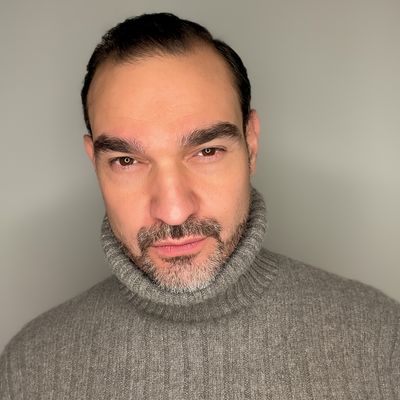
In this episode, Javier Muñoz—star of Hamilton and In the Heights—sits down with author Daniel Pollack-Pelzner to explore Lin-Manuel Miranda: The Education of an Artist, the definitive look at how a creative kid from Washington Heights became one of the most influential storytellers of our time... Read More
From the show: The Drama Book Show!
Guests
Featured Shows


About
In this episode, Javier Muñoz—star of Hamilton and In the Heights—sits down with author Daniel Pollack-Pelzner to explore Lin-Manuel Miranda: The Education of an Artist, the definitive look at how a creative kid from Washington Heights became one of the most influential storytellers of our time. Drawing from over 150 interviews, Pollack-Pelzner traces Miranda’s journey from high school musicals to global hits like Hamilton, Moana, and Encanto, uncovering the drive, collaboration, and cultural fusion that shaped his artistry. It’s an inspiring, behind-the-scenes portrait of genius, heart, and the making of a modern Broadway legend.
Transcript
This transcript was automatically generated and might contain errors.
[0:18] Mark-Eugene Garcia: Hello and welcome to The Drama Book Show.
[0:20] Dylan Glick: My name is Dylan Glick.
[0:23] Mark-Eugene Garcia: Happy to have you back, Dylan.
[0:24] Dylan Glick: Thank you so much for having me back, Mark-Eugene Garcia.
[0:29] Mark-Eugene Garcia: God damn it.
[0:30] Dylan Glick: Sorry for cursing.
[0:32] Mark-Eugene Garcia: Yeah.
[0:34] Dylan Glick: I can't think of a Dylan or a Mark pun.
[0:36] Mark-Eugene Garcia: You hate your mark, Mark.
[0:38] Dylan Glick: Yeah.
[0:39] Mark-Eugene Garcia: You Gene.
[0:41] Dylan Glick: Yeah.
[0:41] Mark-Eugene Garcia: Oh, nice.
[0:42] Dylan Glick: Yes, yes.
[0:44] Mark-Eugene Garcia: I can be a punchline.
[0:46] Dylan Glick: Yeah.
[0:46] Mark-Eugene Garcia: My mom's made at least one joke.
[0:48] Dylan Glick: No, Mark, you're not a punchline.
[0:50] Mark-Eugene Garcia: God.
[0:52] Dylan Glick: Very funny.
[0:53] Mark-Eugene Garcia: We're here tonight to talk about the book Lin-Manuel Miranda: The Education of an Artist by Daniel Pollack-Pelzner.
[1:01] Dylan Glick: Woo.
[1:01] Mark-Eugene Garcia: Who we just had in the store recently to celebrate the release of this book and the upcoming audiobook about Lin-Manuel Miranda.
[1:10] Dylan Glick: It was a really lovely event.
[1:12] Mark-Eugene Garcia: I had a great time.
[1:13] Dylan Glick: Oh, me too, me too.
[1:14] Mark-Eugene Garcia: And not only was it him, but he also brought in Javier Muñoz, who plays a lot of Lin's roles and works a lot with Lin.
[1:20] Dylan Glick: And I loved when he did his reading where he slipped into a little bit of Lin in his voice.
[1:26] Mark-Eugene Garcia: Yeah.
[1:26] Dylan Glick: It was just a complete chameleon moment.
[1:29] Mark-Eugene Garcia: But yeah, no, he's narrating the book as well.
[1:32] Dylan Glick: So it allowed us a little glimpse of not just what the book is itself, but what the audiobook is, which we don't always get.
[1:39] Mark-Eugene Garcia: This is true, and it's already on my wish list on Audible.
[1:42] Dylan Glick: So very excited to give it a listen at some point.
[1:44] Mark-Eugene Garcia: I am. I'm such a fast reader that I can't do audiobooks.
[1:50] Dylan Glick: Here's the thing. I do audiobooks when it's like nonfiction because I feel like that makes it a little bit more palatable, especially if it is a—well, this doesn't make it more palatable, this just makes it more exciting.
[1:59] Mark-Eugene Garcia: If it's a celebrity memoir, I love listening to it just because I'm like, oh my God, Molly Shannon is telling me her life story.
[2:05] Dylan Glick: Things like that.
[2:06] Mark-Eugene Garcia: Yeah, I don't know what it is. Like I tried getting an audiobook before, and maybe it also was like it was a book I didn't want to read.
[2:12] Dylan Glick: Yeah.
[2:13] Mark-Eugene Garcia: That someone wanted me to adapt to a play.
[2:16] Dylan Glick: And I didn't want to read the book because I wasn't that interested.
[2:19] Mark-Eugene Garcia: But I had before I learned how to say no to projects.
[2:22] Dylan Glick: Which is very—I understand that feeling.
[2:24] Mark-Eugene Garcia: And so I went to read it and it was so boring.
[2:27] Dylan Glick: And I'm like, all right, well then I'll get the audiobook.
[2:28] Mark-Eugene Garcia: And I got a couple pages in and realized I read faster than this.
[2:32] Dylan Glick: And I don't want to read it.
[2:33] Mark-Eugene Garcia: So it's not helping.
[2:34] Dylan Glick: Did you ever finish it?
[2:36] Mark-Eugene Garcia: No.
[2:36] Dylan Glick: It is one of three books in my life that I have started and never finished.
[2:40] Mark-Eugene Garcia: My—okay, the one book that I always start and never finish, and I've started it three times now, and I have it on my Nook.
[2:47] Dylan Glick: I have it, I don't have a physical copy, but I've tried reading it several times, and I also purchased the audiobook thinking maybe that would help.
[2:53] Mark-Eugene Garcia: And that book is The Stand by Stephen King.
[2:55] Dylan Glick: Really?
[2:55] Mark-Eugene Garcia: Yes.
[2:56] Dylan Glick: I've gotten like 300 pages into it.
[2:58] Mark-Eugene Garcia: I was reading it maybe a little too young.
[2:59] Dylan Glick: Like I was either like finishing high school or early college, and I started reading it, and I was like, let me take a little break, and I've never finished it.
[3:05] Mark-Eugene Garcia: And so yeah, one of these days I will because I love Stephen King and I know you do too, which is why I brought it up.
[3:10] Dylan Glick: Exactly.
[3:11] Mark-Eugene Garcia: Oddly enough though, this will take away—I don't know, my musical theater card or my gay card.
[3:15] Dylan Glick: Who knows?
[3:15] Mark-Eugene Garcia: One of the books that I have not been able to finish is Wicked.
[3:20] Dylan Glick: I never read the book for Wicked, so I think your gay card and your musical theater card are fully intact.
[3:24] Mark-Eugene Garcia: Yeah, because it was like right when it first came out, I was like in my twenties and picked up the book and I'm like, I'm gonna read this.
[3:31] Dylan Glick: And I read a little ways, and I read a lot too.
[3:34] Mark-Eugene Garcia: So it takes a lot for me to like—to not—and I just for some reason was not—it wasn't catching me the way I wanted it to.
[3:39] Dylan Glick: One—here's the thing. After seeing part one in the theaters, I went, I need to read the book.
[3:44] Mark-Eugene Garcia: And so I was going to purchase a copy, and then I just after some time, I was like, you know what?
[3:49] Dylan Glick: I don't feel the pull anymore.
[3:51] Mark-Eugene Garcia: Maybe after part two, I'll want to read it, but maybe—was it what or what was it about it that—or I don't even remember, it just didn't catch, and I was reading a bunch of other things at that point.
[4:00] Dylan Glick: I think that was roughly when I was reading A Hundred Years of Solitude, and I was in love with that book.
[4:04] Mark-Eugene Garcia: And so it just obviously is not gonna compare to that.
[4:07] Dylan Glick: But it just, yeah, it didn't catch.
[4:09] Mark-Eugene Garcia: There's very few books that haven't, and I can't explain why because they're not necessarily badly written.
[4:14] Dylan Glick: Yeah, it just doesn't catch.
[4:16] Mark-Eugene Garcia: I was just reading a book recently that I—it was good, but it didn't hit me with the characters that I found myself reading it out of obligation.
[4:25] Dylan Glick: We at like a few of us here did a little book club with Secret History by Donna Tartt, and this was like over like the winter holiday season, and I was truly like sludging—or not sludging, like trekking through this book that was like an uphill climb because I thought the characters were interesting, but I didn't really like them as people, and so it was just like I was like, I need to finish this book, I need to talk to my friends about it, and that was his last one I was doing where I think I came downstairs and I'm like, I finished my book on my lunch break, and it was all right.
[4:55] Mark-Eugene Garcia: And um, on to the next thing.
[4:57] Dylan Glick: Exactly, but that's not how I felt about this book.
[4:59] Mark-Eugene Garcia: Oh no, me too.
[5:00] Dylan Glick: I—here's the thing, I feel like this is random. One thing that I really took away from the event was I love how they called him Lin-Manuel when they were referring to him, and how the meaning of his name and how will he live up to it and like that kind of stuff.
[5:14] Mark-Eugene Garcia: I thought that was such an interesting way to frame the story as well.
[5:17] Dylan Glick: Oh, definitely, and it just allowed us insight into a person we know.
[5:22] Mark-Eugene Garcia: I felt a little weird going into this, I actually, to be honest, because I was like, I've read memoirs before, but they're always people I don't know, like in person who I haven't met and could have a conversation with.
[5:34] Dylan Glick: And this one is more, oh, this—I feel like I'm like betraying somebody, like reading someone's inner thoughts or something.
[5:41] Mark-Eugene Garcia: Yeah.
[5:42] Dylan Glick: And so I was a little—not anxious, but a little about it.
[5:47] Mark-Eugene Garcia: And then so I purposely didn't really look into it that much until the event.
[5:51] Dylan Glick: Yeah.
[5:51] Mark-Eugene Garcia: And then watching them talk about it, watching a little bit of it be read, I was like, okay, there we are.
[5:56] Dylan Glick: It's just even more insight into someone I know and love already.
[5:59] Mark-Eugene Garcia: I feel like I love what I love about it is the idea of how did we get here artistically.
[6:05] Dylan Glick: I know Adrian Kennedy has a book called People Who Led to My Plays or something like that, where it's like those kinds of things fascinate me so much because I'm like, what art inspired the people that I super look up to?
[6:14] Mark-Eugene Garcia: And Lin is one of those people that I super look up to.
[6:16] Dylan Glick: Oh, so it's like he's someone that right when I was getting ready to leave New York, because I was just like, this place had just kicked me around far too much when I first—little after I got here.
[6:27] Mark-Eugene Garcia: And it was more than that. It was like two years, and I was like, still just this is rough.
[6:31] Dylan Glick: I don't know if I want to do this.
[6:33] Mark-Eugene Garcia: And then I heard In the Heights and it reminded me why I came here.
[6:37] Dylan Glick: It reminded me of the sound of New York that I really love that is so specific to us, but it also—I got to see myself on stage and be like, oh, okay, there are stories for me here.
[6:50] Mark-Eugene Garcia: There are stories that I can tell that people will come and see.
[6:52] Dylan Glick: Yeah.
[6:53] Mark-Eugene Garcia: And it gave me—it was one of the many things that gave me permission to do what I do.
[6:57] Dylan Glick: Yeah.
[6:57] Mark-Eugene Garcia: But it was also one that kind of said, be who you are.
[7:00] Dylan Glick: Um, and there's—it was a show that hit me, it stays in my top 10 because it hit me when I needed it.
[7:06] Mark-Eugene Garcia: Like, I think there's some shows that people are like, this is a perfectly written show.
[7:09] Dylan Glick: It's so good.
[7:10] Mark-Eugene Garcia: You have to love this.
[7:11] Dylan Glick: And I'm like, no, this show made me feel this way at this time of my life.
[7:15] Mark-Eugene Garcia: And this is why I liked it.
[7:16] Dylan Glick: This is when I was questioning being a New Yorker, when I was questioning writing, when I was questioning all of these things, here was a show that said, no, do it.
[7:23] Mark-Eugene Garcia: Do it, write your family, write your story.
[7:25] Dylan Glick: And yeah, I'm glad it's been.
[7:27] Mark-Eugene Garcia: I'm glad it made you feel seen.
[7:28] Dylan Glick: And I'm also glad that you still write and are still in New York.
[7:30] Mark-Eugene Garcia: Oh, yeah.
[7:32] Dylan Glick: But what about you?
[7:33] Mark-Eugene Garcia: What was your first Lin experience?
[7:35] Dylan Glick: My first Lin experience was in my either sophomore or junior history class in high school.
[7:44] Mark-Eugene Garcia: My professor showed us him doing the opening of Alexander Hamilton.
[7:49] Dylan Glick: Opening of Hamilton the musical, but singing Alexander Hamilton for the White House Correspondence Dinner.
[7:53] Mark-Eugene Garcia: Yeah, and this was before Hamilton came out.
[7:55] Dylan Glick: And I was just like, I need to—I was like, first of all, who is this man?
[7:59] Mark-Eugene Garcia: How can I be him when I grow up?
[8:01] Dylan Glick: And also when Hamilton the Musical started like coming out, I was like, oh, I need to go see this.
[8:01] Mark-Eugene Garcia: I need to.
[8:07] Dylan Glick: And so that was the thing.
[8:08] Mark-Eugene Garcia: And then I, after I finally saw Hamilton, like nonstop became like such like an anthem for me.
[8:13] Dylan Glick: Oh wow.
[8:14] Mark-Eugene Garcia: I do this like—I do this little thing, which I don't know.
[8:16] Dylan Glick: I don't super do it anymore, slash I haven't had anything go up in a while.
[8:19] Mark-Eugene Garcia: But usually like one—if I wrote something and something goes up somewhere, I wear my young, scrappy, and hungry shirt like on the first day that it's up just because I'm like, I'm doing the thing, I'm writing, I'm scrappy.
[8:29] Dylan Glick: I don't know.
[8:29] Mark-Eugene Garcia: But so I've just since high school, since I saw that video, I've been like looking up to Lin and wanting to—
[8:35] Dylan Glick: Yeah.
[8:35] Mark-Eugene Garcia: And the thing is he's such a nice guy that he encourages you to do what you do.
[8:40] Dylan Glick: Yeah, he encourages like all of us here, but he also just—he cares, he asks, he asks us questions like what are you working on?
[8:47] Mark-Eugene Garcia: It's just nice.
[8:48] Dylan Glick: There was—I wear a Bruce Springsteen shirt every so often because my mother is a diehard Bruce fan, and there was one time where we were chatting in the break room, and then he came downstairs and he was like, so are you excited about the Springsteen movie?
[8:58] Mark-Eugene Garcia: And I was like, wow, thanks.
[9:00] Dylan Glick: Yeah.
[9:00] Mark-Eugene Garcia: Or even like when I was super nervous when he went to go see Shining in Misery.
[9:04] Dylan Glick: Yeah.
[9:05] Mark-Eugene Garcia: I was like, oh my God, the Hamilton reference and all of that.
[9:07] Dylan Glick: Oh my God, he's gonna fire me.
[9:09] Mark-Eugene Garcia: And having him just be as gracious as he was and laugh and joke about it was really cool.
[9:14] Dylan Glick: I love the feeling of like when you like meet slash get to know slash work with someone that you really look up to, and they're just like a lovely human being.
[9:21] Mark-Eugene Garcia: Yeah, definitely.
[9:22] Dylan Glick: Because in all honesty, this could have gone a whole different way.
[9:24] Mark-Eugene Garcia: This is true.
[9:24] Dylan Glick: This is true.
[9:26] Mark-Eugene Garcia: He could have been a terrible boss or something like that.
[9:28] Dylan Glick: And it would have been a very different story.
[9:30] Mark-Eugene Garcia: Yeah.
[9:31] Dylan Glick: But no, we're really lucky in the relationship that we have with him as someone who is here.
[9:31] Mark-Eugene Garcia: Yeah.
[9:31] Dylan Glick: As someone who is part of the business that we work in.
[9:38] Mark-Eugene Garcia: It's just really wonderful to have him on our side.
[9:41] Dylan Glick: Yeah.
[9:42] Mark-Eugene Garcia: And so let's delve a little into what makes Lin, Lin.
[9:46] Javier Muñoz: Hello, friends. What a treat to be here with you all.
[9:49] Javier Muñoz: And oh my God, what a thrill to share this stage with Javier Muñoz.
[9:54] Javier Muñoz: Can you imagine?
[9:56] Javier Muñoz: Oh yeah.
[9:58] Javier Muñoz: Oh my God, what a dream come true it is to write words and then have Javier narrate them for the audiobook of Lin-Manuel Miranda: The Education of an Artist.
[10:07] Javier Muñoz: I was like, this is what it feels like, I'm sure, when Lin writes a song and then hears Leslie Odom Jr. sing it or writes a song and hears Javier Muñoz sing it and perform it.
[10:15] Javier Muñoz: It's listening to a few minutes of it this morning.
[10:17] Javier Muñoz: I felt like going from my words on the page to the words in Javier's mouth was like Dorothy stepping out of black and white Kansas into Technicolor Oz, and I can't wait for you all to get to hear it.
[10:29] Javier Muñoz: I'll tell you a little bit about how this book came to be, and then we'll have a little conversation.
[10:33] Javier Muñoz: There's going to be a special treat, and then we'll invite things that you're interested in, and then we'll do the signing afterwards.
[10:39] Javier Muñoz: And boy, I'm just thrilled to see you all here.
[10:41] Javier Muñoz: I could not have imagined four years ago when I met Lin-Manuel right here in the Drama Bookshop that we would be gathered in 2025 with an actual book resulting from that conversation.
[10:54] Javier Muñoz: I would say that Lin-Manuel couldn't have imagined in 2002 after he graduated from Wesleyan and came to the Drama Bookshop to meet another Wesleyan grad, Thomas Kail, to talk about their work together that someday there would be a book with his face on it here in the Drama Bookshop.
[11:09] Javier Muñoz: But of course, he imagined that every day of his life.
[11:12] Javier Muñoz: He's always been envisioning that this would come true.
[11:15] Javier Muñoz: It's true that it has.
[11:17] Javier Muñoz: So how did this book come to be?
[11:18] Daniel Pollack-Pelzner: I'm a Shakespeare professor by training.
[11:21] Daniel Pollack-Pelzner: I met my wife Laura, whom I'm so glad is here tonight in a fifth grade production of A Midsummer Night's Dream, in which she was playing Oberon, the king of the fairies.
[11:31] Daniel Pollack-Pelzner: I was totally enchanted.
[11:33] Daniel Pollack-Pelzner: She ignored me for the next few years.
[11:35] Daniel Pollack-Pelzner: But then we got together and returned to Oregon, our home state, where we'd take groups to the Oregon Shakespeare Festival.
[11:42] Daniel Pollack-Pelzner: And I got really interested as a Shakespeare professor in who our Shakespeares are today, who are telling the big national scale stories in innovative dramatic forms that transform the way we see ourselves as a community.
[11:57] Daniel Pollack-Pelzner: And a guy named Oscar Eustace at the Public Theater, whom I was interviewing for another journalistic story, said, you gotta check out this guy, Lin-Manuel Miranda, who's written a hip hop version of the American Revolution.
[12:10] Daniel Pollack-Pelzner: He's doing for America what Shakespeare did for England.
[12:14] Daniel Pollack-Pelzner: I thought, oh, this sounds fascinating.
[12:15] Daniel Pollack-Pelzner: So in 2015, Laura and I were coming to New York with our kids for my grandma's 90th birthday party on the Upper West Side.
[12:24] Daniel Pollack-Pelzner: And we grew up every spring break visiting grandma, who grew up in Washington Heights in a little apartment over her dad's kosher deli, had taken us to see In the Heights when it was on Broadway.
[12:35] Daniel Pollack-Pelzner: She asked if we wanted tickets. I said, as long as you buy them. We loved it. And we were gonna have one night free of babysitting during Grandma's 90th birthday weekend. And Laura said to me, Daniel, I could take you out for a fancy dinner, or I could take you to see this new show called Hamilton that's in previews on Broadway. And I said, Fancy dinner, please. That sounds fantastic. But Grandma said, no, you have to see this show. This is gonna change your life. Wow. So we got tickets in previews. Oh, wow. On Broadway. The night we went, Vice President Joe Biden was sitting down the row from us. Yes. It was thrilling and really annoying because he used the bathroom during intermission, which meant nobody else could use the bathroom during intermission.
But sitting down the row from the vice president, watching this sequence of vice presidents on stage from Adams from Jefferson and Madison and Aaron Burr, I thought, God, this is the closest I could come to sitting next to King James watching Macbeth play out on stage in front of him. This is the performance of the origins of American Power for the elected representative of American Power. I've missed out on the first 400 years of Shakespeare reception history, but I can get in on the ground level of what's gonna happen when this show comes into the world. And so Laura very kindly trekked with me to London when Hamilton opened in the West End, so we could find out what happened when the American Revolution came into the shadow of Buckingham Palace.
I remember opening night I went to go interview Lynn at the press conference, and I came back, and Laura, you said there's this guy who keeps talking to you, and you don't know who he is. And we looked over, and it was the mayor of London who was engaging conversation because this was now had become this global political story. And then I went to Puerto Rico in 2019 after Hurricane Maria, when Lynn Manuel brought the show there to help revive Puerto Rican fortunes, and it became a much more complicated and fascinating story that I was glad to report on. And what really struck me was every time I got to interview Lynn Manuel, he always talked about the teachers who had shaped him as an artist.
And I think it's a pretty remarkable thing to have a globally renowned writer for whom everybody who's a Lynn Manuel fan knows the name of his elementary school music teacher, Barbara Ames, who cast him as Conrad Birdie in the sixth grade play, told everybody else to faint when he opened his mouth and gave him a lifelong love of Stardew. And I am so honored that we have Mrs. Ames here in the front row with us tonight with her daughter Allison. Amazing. And Lynn would talk about the next project he wanted to take on based on what he could learn from his collaborators. And he would say, he never had a lifelong dream to write a cheerleader musical, although why not? But he couldn't pass up the chance to learn how to write jokes from the Bring It On book writer Jeff Whitty, or new melodies and lyrics from the songwriting team of Amanda Green and Tom Kitt, or how to write to electronic beats with Andy Blank and Bueller.
And as a teacher myself, I thought, what a wonderful way to envision your life in the arts, not just about what will garner you some particular success or reward, but on how you could always be expanding your toolkit and how you could see everybody around you as a teacher, from your classroom teachers like Mrs. Ames to your mentors, to even the elementary school bus driver who took Lynn from Upper Manhattan on near 207th Street down to Hunter on East 94th and tested out his rap materials on a captive audience of 10-year-olds, who would then show up at school knowing every lyric to "Rapper's Delight" by the Sugar Hill Gang. And you could even see in Lynn's report cards in fourth grade, him going from his teacher at the beginning of the year saying he's a little shy, to after the elementary school bus driver's tutorial, he's writing a Jack and the Beanstalk rap by the end of the year.
And I thought, I would love to write a book for my students that would describe the education of an artist and wouldn't just be the successes and triumphs, but would also be the insecurities, the missteps, the wrong turns, the frustrations on the way to those glories that could not be a blueprint, but a kind of growth mindset that all of our students could adopt. I was going through a work transition at the time, and the great Shakespeare scholar James Shapiro, who's here tonight, very kindly said to me, You gotta write a book, Daniel. Nobody cares about Shakespeare anymore. Write a book about this guy, Lynn Manuel Miranda, that you've been stalking around the globe for the last decade. And Jim, the most magnanimous of mentors, introduced me to his own agent, the great Anne Edelstein, who called me up and said, Do you really want to write a book about Lynn Manuel Miranda?
And I said, I know exactly the book I want to write about him. It's not gonna be, it's not gonna be praise or blame. It's gonna be trying to understand each phase in his education. And here are the chapters, and here are the teachers that I want to talk to. And very generously and supportively said, okay, let's do it. So I sent Lynn Manuel an email with the I'd say unabashedly cringy subject line, Who Tells Your Story? Ah. And describing the book. Right. I said, we're gonna start with your parents, and then we're gonna go to that bus driver. We're gonna go to Ms. Ames, we'll go through Sondheim, we'll go through Kander, we'll go through Menken, we'll go through Andrew Lloyd Webber, we'll go through your collaborators and your fellow actors and your artists, and show how masterpieces don't just spring into the world fully formed, they're the product of a mind sensibility interacting with the world and going through the process of creation as collaboration.
And he said, okay, let's meet in the Drama Bookshop. So we came up with a list of teachers and mentors, some in the some formal teachers in the classroom, some peers and collaborators, some the master craftspeople of musical theater, some neighbors and friends. And over the next, I guess it was three years or so, I had the delight of getting my own apprenticeship in musical theater craft from all of these wonderful teachers, from amazing pals like David Davidson, who's here tonight, who played Officer Krupke in Lynn's 12th grade production of West Side Story. Amazing. Was the bass holding down the line in Fat Joe and the Boys, the a cappella group that Lynn formed after his high school math teacher told him that he may be able to get above a C in math this year if he did a creative project.
Yes. And he was allowed to rewrite Billy Joel's "For the Longest Time" as "For the Law of Signs." If you take the cross of Angle B, something like that. And recruited his buddies from the jazz chorus to sing along, and they formed their own amazing a cappella group. He wrote some of a melody for Fat Joe and the Boys. That goes, sound I got a bridge to sell you. That they didn't end up performing, but he filed away. And years later, when he wanted to write a song about a young man finding the four people who were going to energize him and help him transform the world, he wrote "The Story of Tonight" with the melody that he'd written for David Davidson and his high school singing buddies together.
And to talk to John Kander about trading ideas about composition with Lynn as he was toting a backpack full of Hamilton research books to their lunches that they would have on the Upper West Side. Yes. One day he showed Lynn Manuel showed up without the books, and John Kander said, What happened to all of your research? And Lynn Manuel said, Oh, my mom got me a Kindle. So John Kander got a Kindle too. And I loved all these stories, and I really wanted to try to write them in a way that wouldn't just be a kind of IBDB entry or Wikipedia page, but it would be a kind of coming-of-age story in which we would follow our central character through triumph and heartbreak and frustration and sublimation as he learned to do the things that he can so well.
And I was delighted that Anne found a home for the book at Simon and Schuster with a great Bob Bender, an editor whose own kid went to Hunter College High School, saw the potential in it, was very patient with me when the first draft, which for which he had requested a hundred thousand words, came in at 200,000 words. He told me in strong terms, he said Lynn Manuel Miranda is not Lyndon Baines Johnson. I was like, that's just because Lyndon Baines Johnson hasn't learned how to write songs yet. That's another reason. That's the only reason. But and then he passed on the project to Mindy Marquez, wonderful editor who sculpted it into a form that I hope is legible. If you read it and you enjoy it now, it's thanks to Mindy Marquez, my dad who'd read the first draft, then read the published version and texted me.
Thank God for your editor. And then I was so thrilled that Cassandra Perez, who's our wonderful publicist, was bringing the book into the world. And this is just beyond my dreams that it could have a life beyond the page because we had this fabulous audio producer, Alison Light, who's here tonight, a musical theater artist herself, who realized that this didn't just have to be a rote voice reading it, but that we could get a phenomenal Broadway artist to not only read this book, but rap the lyrics and sing the songs and give you dimension and inflection and tone and pacing and nuances that I'd never even heard in the language from somebody who had lived through the last twenty-five years of collaboration with Lynn Manuel.
Javier, I am so honored that you read the book. We have those of us who follow Javier have been seeing Javier advocating in Washington, DC over the weekend to try to oppose cuts to HIV funding, which is tremendously important work that you've taken the lead on. Grateful for your advocacy and grateful that you would take time to be here to elevate your collaborators and your colleagues' work. And thank you for being here.
[23:05] Javier Muñoz: Thank you for having me. My goodness. Good evening, everybody. I am so honored to be here. This is my first audiobook. I've never had this experience before. I am deeply grateful to you for this invite and invitation and opportunity. And Alison is the best. Thank you for guiding me through every step of the way. I want to ask you a few questions, if I may. Something that struck me while reading it was the structure. First of all, it's beautiful prose. It is an honor to read your writing. It is so gorgeous. You've written music on the page as far as I'm concerned. And so my question to you is process. So as musical theater composers and playwrights are writing, there's versions and drafts and there's collaboration.
This is something you did on your own. And I'm curious if there were collaborative aspects to this. I'm curious, did you venture anywhere to see things in person? What were the conversations like with people as you interviewed? I'm so curious about the process because Alison can attest to this. There were times where I would just go back and want to read that section again and again, no, one more time, one more time, because you had written such a rhythm and such a beautiful cadence in capturing Lynn as he progressed. I felt like you were even there, there was a pace and an eloquence to the In the Heights chapters that evolves and gets so much richer with the Hamilton chapters, and it's how I witnessed Lynn evolve. And so I just I'm so curious about this process and what were the details and nuances of it.
[24:46] Daniel Pollack-Pelzner: I love that. Thank you for describing it in such a beautiful way, Javier. I was very moved. A relative read an early version of the book and said, Daniel, this is less pretentious than your usual writing. And I have to admit I was offended because I thought this is just as pretentious as my usual writing. Because these are the things that I care about.
[25:06] Daniel Pollack-Pelzner: And I taught this class on coming-of-age stories as a first-year seminar for many years at my university, and we read all these stories, and I was thinking about them all the time, particularly stories about people who are unifying different parts of their identity and are living across cultures, like Maxine Hong Kingston's *The Woman Warrior* or Sherman Alexie's *Absolutely True Diary of a Part-Time Indian*, and how could we build this story into the story of an artist who would learn to synthesize all of his influences?
[25:31] Daniel Pollack-Pelzner: And the first year I taught the course, we started with James Joyce's *Portrait of the Artist as a Young Man*, which is, I'm sure for many of you, a book that begins from the point of view of a child. Once upon a time, there was a mu cow coming down the road, and then the narrative voice gets more and more sophisticated to the point where the hero becomes an artist and is gonna forge in the smithy of his soul, the uncreated conscience of his race. And I thought, I wonder if I could do that. I wonder if I could have the narrative voice grow up alongside the character. So the first sentence of the book is Lin-Manuel didn't like to practice piano. And I thought that's how a kid feels. And then we get to some sentences toward the end that you said require a bit of breath to get through all of the convoluted clauses that were there.
[26:15] Daniel Pollack-Pelzner: But I will admit, and Laura can attest to this, writing is usually a source of great anxiety for me. I look at the blank computer screen and I think, oh God, what am I gonna do? Whatever I do is not gonna be as good as the idea that I had in my head. And now I've signed up for this book, and everybody's gonna be disappointed in it because everybody loves this guy.
[26:37] Javier Muñoz: Yeah, the thoughts running through your head.
[26:39] Daniel Pollack-Pelzner: Yes. And there were two things that really got me through. One was learning about that process of revision that you have lived on the inside. So once another one of David Davidson's classmates from Hunter, Lin-Manuel's high school girlfriend, had the first draft of *In the Heights* that Lin-Manuel wrote his sophomore year in college.
[27:00] Javier Muñoz: Wow.
[27:00] Daniel Pollack-Pelzner: The script. And you read that script, it's great. And there is not a word in that script that made it to the version that was performed on Broadway. Except for maybe *In the Heights*. You know.
[27:13] Javier Muñoz: Exactly.
[27:15] Daniel Pollack-Pelzner: And the joke about Usnavi's name. That's it.
[27:18] Javier Muñoz: That's all that, yes.
[27:19] Daniel Pollack-Pelzner: And that's true for so even *Hamilton* that really just was coming out on fire. But we know that Lin-Manuel wrote the first song for Eliza for Alexander Hamilton's wife. This one's mine. Played it for his own wife, Vanessa. She said, "That's not your best work."
[27:33] Javier Muñoz: That's cool.
[27:34] Daniel Pollack-Pelzner: He fumed, went back to the gazebo outside his parents' place on Long Island, and then wrote *Helpless*. So learning those stories freed me from the sense that I had to get it right the first time. I just felt I had to get down what I had learned at that point in the process, and then try to learn from what I learned about Lin-Manuel, which is that you trust your collaborators to be able to envision a better work than you can yourself. You give the song to Javier Muñoz and have him perform Hamilton's final, and then you know what it means.
[28:04] Daniel Pollack-Pelzner: So poor Jim Shapiro suffered through, I think, two versions of this book and gave me the best notes. And one thing that I really took to heart is Jim would say to me, "You're making it look too easy. Readers have to know how hard this is and how unlikely this is." So many people want to have lives in the arts, and it's a very narrow tightrope to walk, and it's really easy to fall off. And that was absolutely true for Lin-Manuel, and that helped me see people who were living the story didn't know how it was gonna turn out.
[28:40] Javier Muñoz: Yes.
[28:41] Daniel Pollack-Pelzner: And that reframed the way that I was structuring the narrative. And then I had a bunch of wonderful readers who would read each chapter as I drafted it, and I had my Aunt Jude, who was the cheerleader, and would say, "I love it, and here are the parts I love about it, and I want more love story." Oh, we would get more love story in. And I would have my parents who were reading it, who would say, "Don't share your enthusiasm for the subject matter of your book. I love it. But at one point you mentioned Ira Gershwin, and I'd like more of that." So that helped me realize, okay, it can't just be '90s hip hop. There have to be some entry points in, just as Lin realized when he was writing the opening number of *In the Heights*.
[29:19] Javier Muñoz: Yes.
[29:20] Daniel Pollack-Pelzner: For folks who hadn't been to Washington Heights, he would say, as my man Duke Ellington said, "Yes, you just take the A-Train." There would be on-ramps for people who hadn't lived inside the world of Farside and Big Pun.
[29:31] Javier Muñoz: There it is.
[29:32] Daniel Pollack-Pelzner: And I suppose this is slightly sentimental to say, but the other thing I really took from learning about Lin-Manuel's own process. So his wife Vanessa, who's a brilliant lawyer and scientist, will say she cannot work in the same room as Lin-Manuel when he's writing. Because he's an actor and he lives inside all of his characters. And if it's a funny song, he is laughing out loud. And if he's writing a sad song, if he's writing Eliza's epilogue to *Hamilton*, he is ugly crying and going through boxes of Kleenex and wailing out loud. And when I heard this, I thought, oh my God, this is why I didn't hang out with theater kids. We emote. But how wonderful not to have those inhibitions that allow you to express.
And then I couldn't, I have to admit, I couldn't believe myself as I was writing, and I got to Abuelo Wisine, and I started crying as I was writing. And I got to Luis's line after the breakup after Lin goes to see a doctor in college. Oh, and I'm laughing out loud as I write this. And I thought, what a more beautiful way to write than the way I was taught to write academic work in graduate school. If this is a story that emerges from an artist who is so emotionally generous and open with his writing, can I try to be that open and accessible as well?
[30:52] Javier Muñoz: It sounds like this was stretching you, pushing your limits, stretching you in ways as a writer that you'd never experienced before.
[30:59] Daniel Pollack-Pelzner: Absolutely. Yeah, that's, and as academics, we're making an argument and then giving supporting evidence. This I was really trying to write as a story to try to propel people through. And then so I just started thinking of all these stories. There were another challenge of the book. I fell in love with all 150 people that I interviewed, and I wanted to give them each other.
[31:18] Javier Muñoz: 150.
[31:19] Daniel Pollack-Pelzner: Oh my goodness. And that's when the draft came in at 200,000 words. And it was just getting really hard for readers to track Alex Sarlin and Alex Horwitz and Alex Lackamore.
[31:30] Javier Muñoz: Sure.
[31:31] Daniel Pollack-Pelzner: Who were so vivid in my mind because I had met them and interviewed with them. But when they're just a name on the page, it's like hearing Nathaniel Greene and Henry Knox wanted to hire you from George Washington. Well, I don't know who those people are. They're just flying through. So our daughter was watching one of the *Oceans* movies behind the scenes.
[31:48] Javier Muñoz: Yes.
[31:49] Daniel Pollack-Pelzner: And it was *Ocean's 8*, the all-female reboot with Anne Hathaway. And I was thinking, okay, this is a movie that has eight central characters. How does this show introduce us to that many people? And I was watching, I was like, oh, they all have to have a superpower. Like we see Awkwafina, and she can hack into anything. Lucy Kate Blyton Chet and she can swing into anything. I have to give everybody a superpower because I was just doing a lot of exposition.
[32:11] Javier Muñoz: That is smart.
[32:12] Daniel Pollack-Pelzner: So when Lin comes to the Drama Bookshop and is putting his Voltron team together.
[32:17] Javier Muñoz: Oh, yes.
[32:18] Daniel Pollack-Pelzner: Javier knows all of these pop culture references to robot animated shows.
[32:23] Javier Muñoz: Yes.
[32:24] Daniel Pollack-Pelzner: My parents only let me watch PBS as I was a kid. I basically missed the late '80s, so I was doing a lot of research to catch up on this. But I learned what Voltron was, superpower robot that has all the robot stuff. Okay, we're gonna meet Chiara, and she's gonna do something that we haven't seen anybody do before. And then we're gonna meet Alex Lackamore, and he's gonna make this magic happen on the keyboard. And finally, my dad read chapter 10 in the draftings.
[32:44] Javier Muñoz: Now I'm interested in the story.
[32:47] Daniel Pollack-Pelzner: And then the other thing I kept learning was that Lin-Manuel in his early drafts of songs didn't often write endings of songs.
[32:54] Javier Muñoz: Yes.
[32:54] Daniel Pollack-Pelzner: The early demos. They would have an awesome hook and a great verse and chorus, and then they would just trail out. So the first version of *96,000*, the song about what happens if you win the lottery, just ended as though the dream was just vanishing.
[33:06] Javier Muñoz: Yes.
[33:07] Daniel Pollack-Pelzner: And for Broadway, Jeffrey Seller, the lead producer, said, "You have to have a button on the song," right? Which is sort of Broadway slang from... Ha, lights go off, and that's how the audience knows to applaud.
[33:23] Javier Muñoz: Yes.
[33:24] Daniel Pollack-Pelzner: Lynn hadn't written buttons. His director Tommy Kail, as a gag gift for opening night off-Broadway, gave him a bag full of actual little buttons because he had failed to put them on any of his songs.
[33:34] Javier Muñoz: So good.
[33:35] Daniel Pollack-Pelzner: Jeffrey Seller actually said, he said, "I want you to turn *96,000* into *To Life* from *Fiddler on the Roof*."
[33:42] Javier Muñoz: Yes.
[33:42] Daniel Pollack-Pelzner: "Make it build and build until we're in a total place of ecstasy." And he gave all the creators a copy of *The Making of Fiddler on the Roof* and said, "Read this book, turn your show into it." And so I was like, oh, okay. Every chapter needs to have a button that makes us feel like we've landed somewhere and propels us into the next mode. And there was one I was very proud of, which was after it was like the end of college. Lin-Manuel comes to the Drama Bookshop. He's not sure if he's gonna make a career. He gets offered a substitute teaching job. Should he take it for stability or should he give up health insurance and pursue his dreams? He asks his dad for advice. His dad says, "Go for it." So he's gonna pursue his dreams, but he doesn't have a producer. He doesn't, he's just broken up with his girlfriend, doesn't have any source of income. And then Jill Furman walked into the basement of the Drama Bookshop.
[34:27] Javier Muñoz: End of the chapter.
[34:28] Daniel Pollack-Pelzner: Yeah, that was great. Then my dad texts me and said, "Oh, Daniel discovers the cliffhanger." And so that became the goal. Every chapter I knew what the end line was gonna be, and I was trying to think, can I earn that line? Can I write to the point where we can get to that line? I felt so fortunate that it wasn't for me an isolating process. It was a process of leaning on my own mentors like Jim and my wonderful family and readers who helped make the book something that I couldn't have envisioned on my own.
[34:56] Javier Muñoz: That's beautiful.
[34:56] Daniel Pollack-Pelzner: So you've answered my next question because I was gonna ask, what in the process did you learn? But I'm so curious. The taking all that in, and let's shift it back. What about your subject? Because it's not just Lin-Manuel, he's a conduit for so much that you are telling in the story. We were talking downstairs, and I was saying to him that I left feeling so many. This is my friend for many years, and I learned so much about him, but I also learned so much in general about the art form, the process, about myself and the context of Lin and the context of the way you tell this story. So what did you walk away from? And are you still, is that still happening? Are you still engaging with readers and seeing the impact of your book upon people sharing their experiences with you? What are you learning from the, what did you learn and what are you learning still?
[35:51] Daniel Pollack-Pelzner: Yes, I love that. That I certainly hoped that it would be both a book that would be of interest to people who really want to know what was on Lin-Manuel Miranda's dorm room wall freshman year.
[36:01] Javier Muñoz: Great.
[36:01] Daniel Pollack-Pelzner: Yeah, yeah. I'll tell you afterward if you want to know. And people who just wanted to learn about creativity in general and wanted to have a sense of how somebody who always wanted to have a life in the arts, always had a really smart and talented guy who always had an aptitude for learning and for creating.
[36:20] Javier Muñoz: Yes.
[36:20] Daniel Pollack-Pelzner: But was not as good a singer as David Davidson, was not as good a musical theater composer as Arthur Lewis or Mark Rokin or all these guys, these brilliant guys who went to Hunter with him, not as skilled a director as Meredith Somerville, his mentor, but had this astronomical learning curve as soon as he started wanting to create work, learning from the people around him that this could be a story about what we call an education, a growth mindset as opposed to a fixed mindset, that it's not just about what you're born being able to do, although he won the parent lottery and grew up in an amazing musical time. He really did. But he didn't suffer from the anxiety that I and I think many people do of what I'm making is not as good as the works of art that I admire. He just, he said for him it was just so much more fun to make stuff than to think about making stuff.
[37:10] Javier Muñoz: Yes.
[37:10] Daniel Pollack-Pelzner: And he trusted that by doing it he would get better at it. And I thought that's the attitude I want to have for my students and I want to have for myself.
[37:18] Javier Muñoz: Wow.
[37:19] Daniel Pollack-Pelzner: And I ended up also being surprised that this became a book about parenting in a way that I didn't expect. So when I met with Lin-Manuel here for the first time, we talked about everybody who would be on the interview list, and he made one request of me.
[37:33] Javier Muñoz: Oh, that's right.
[37:33] Daniel Pollack-Pelzner: Which is that the first person I talked to would be his mother, Luz. His father, Luis, who's an amazing champion of his work and of course Latino communities in New York and in Puerto Rico, had a wonderful documentary made about him as a very public persona.
[37:50] Daniel Pollack-Pelzner: And people didn't quite know Luz's story or her influence on him. And Luz is a child psychologist, met Luis at the NYU doctoral psychology program, and recognized very early on that she had a tremendously sensitive child. And everybody in the family remembers Lee Manuel would cry when he saw an unhoused person on the street. He would cry if the news was on TV. He cried at the chord changes in "Bridge Over Troubled Water." He would tell his mom, turn it off, it's too sad. It's too sad. And he would cry when he saw the school letterhead at his preschool because he learned to read pretty early, and the other boys at school would throw sand in his mouth when he would read out loud. He was getting bullied and he didn't want to go there.
Very much. And Luis is a guy who believes in standing up for yourself, and he did not want to see his son get bullied. And he got a little boxing puppet to teach little Lynn Manuel how to fight back, at least how to stick up for himself. And Lynn Manuel would just hug the puppet and say, no fighting. He's still doing that today. It is, metaphorically speaking. He's still hugging us and saying no fighting. Yeah, it was beautiful. Who, as a child psychologist, told me she thought her job was to let her son know that whatever he was feeling was okay to feel.
[39:10] Daniel Pollack-Pelzner: Yeah. Got him a book of cartoon child psychology called Transactional Analysis for Tots, T-A for Tots, that said a little picture of a crying turtle, and it said, your feelings are as real as your big toe. They are part of who you are, and it's okay to feel them. And she would rub his back and she would sing him songs and give him breathing exercises, and she gave him this mantra that he quoted to me at her first meeting to say, these feelings are real, and if you want to be an artist, it's all grist for the mill. Yes. You should remember what these feelings are because someday you're going to use them in your writing. And Lynn said sometimes this could be weaponized against him. You don't want to take out the trash?
Hey, you want to be a writer. It's all grist for the mill. But he also remembered when he got his first job at the McDonald's on Columbus and 91st Street. Yes. He wrote a song about it. You know where this is going. Sorry, sorry, I ruined it. I jumped ahead. Not good at math. He's getting a C unless he's rewriting Billy Joel lyrics, having to add up all the totals in the cash register was giving him nightmares in which the pencil from the McDonald's desk was impaled in his head. And he told his mom about it, and she sang him the songs. They did the breathing exercises, and she said, and Manuel, this is all grist for the mill. You're learning about what it's like to have a job that you hate, and someday you might use it.
And sure enough, after In the Heights became a hit, the great composer Stephen Schwartz approached Lynn Manuel. They were doing a revival of Schwartz's anthology musical working with songs about people who had different jobs, and he wanted a new song about a first job, and asked Lynn Manuel to write it.
[40:49] Daniel Pollack-Pelzner: Yes, and then we'll say, I have a song about a first job. Yes. The one joy of his day when he got to leave the cash register and go out on the delivery run. Yes, and Dr. Liu said she told him, see, it's all grist for the mill. I love that song. So I thought, what a wonderful way to parent. And honestly, that has changed the way that I parent our kids have deep feelings. And instead of telling them conceal, don't feel, as I learned from Frozen, trying to say, hey, this is okay to feel this way. We all have these feelings too. And I thought, what a gift she gave him as an artist. This is beautiful. I think this is such a gift to get to have this moment with you. The book reveals so much about Lynn and his process and his growth and his evolution and how he came to be him.
But it's a moment we get to hear your process and hear from another creator just exactly what that process is and how relatable that is of questioning if you can even do the thing, and then you do the thing and it's masterful. It truly is.
[41:51] Daniel Pollack-Pelzner: I'm so curious, I want to wrap up with one more question and say, is there something while you were writing it? Was there an intention that you hoped readers would get? And now that it's complete, is that still the same wish that you hope readers take from it, or has that evolved? What a lovely question. I something I didn't quite realize was going to be a recurrent theme for the book, but did it but kept emerging as I was learning about these scenes of Lee Manuel collaborating with his friends. I think we still I think we still have a myth that you have to be a little bit psycho or toxic in order to create great work, and we put up with a lot of people because we say, yes, they're horrible to work with, but that's the price of greatness.
And it seemed to me that Lin Manuel and Tommy Kail really set out to prove that you could make great art and you could make great art about conflict and violence and toxicity through a process that really honored the voices and the lives of everybody who was contributing to it. And so I hope that's something that people can take away is that through generosity and kindness you can create transcendent works, not through toxicity.
[43:05] Daniel Pollack-Pelzner: And this was something that I really was moved to see. Lynn Manuel had to learn. He's always been a kind and generous person. Yes. But he says he went through a phase in high school of being really angry at his friends for not wanting to spend every weekend making movies with him. Because he was a guy who he made a 60-minute feature film when he was a 15-year-old in high school. Yes, he does. And the buddies that David connected me with, his friends who made this movie called Clayton's Friends, that they got on IMDB in 1996 and then couldn't get off of IMDB afterwards. We're from all of the outer boroughs of New York. And at first it was fun to trek up to Inwood to shoot this movie that was Kung Fu hip hop, West Side Story, and Simpsons jokes all put together.
And then after a while, coming from Staten Island to Manhattan, taking a train to a boat to another train, got a little tedious. And one of the buddies decided to go off to summer camp instead of finishing the film. I know, sacrilege. And got this irate letter at summer camp from Lynn Manuel.
[44:08] Daniel Pollack-Pelzner: How dare you bail on our project to go off and make lanyards in the woods. And this friend thought perhaps their friendship was over. Yes. And then a week later, he got another letter from Lynn Manuel apologizing for the first letter and saying, I'm sorry, what a schmuck I was to value this movie over our friendship. The movie is called Clayton's Friends, not Clayton's Coworkers. And I would be a terrible director and a terrible friend if I was berating you for doing what's important for you to do. Hope you have a great time at summer camp. We'll finish the movie when you get back. And so I loved seeing Lynn in real time learn how to be the joy in the room that everybody knows him as. Yes. And so I hope people will feel like they don't have to become their hero from the start. Lynn Manuel took a little while to become Lynn Manuel, too. But it is a process that you can learn.
[45:02] Daniel Pollack-Pelzner: That is beautiful. Thank you. Now, can I would you like something? You've heard me go on for quite a while. Would you like to hear Javier Muñoz read a little bit of this book?
[45:14] Daniel Pollack-Pelzner: Are you willing to do that?
[45:16] Javier Muñoz: Yes, yes. In fact, this is a selection that we have not. It's a surprise to Daniel as well. What's Allison helped decide what we were going to read today. So please forgive the way I read. I get animated. It's the way I can get the voices out and the storytelling out.
[45:37] Javier Muñoz: Over February break of his junior year in high school, Lynn Manuel wrote his first musical. He began, he says, with this one chord progression I couldn't get out of my head. A spiraling figure in the right hand over a staggered bass line that changed the figure's tonality, sometimes major, sometimes minor. It sounded unresolved, obsessive, a fantasia of anxiety. He had an idea for a story to match that music. If I write a dream, anything is possible. His central character would fall asleep and encounter everything that terrified him. When Lynn Manuel visited his grandfather's video store in Begalta, the cover of Nightmare on Elm Street 2, Freddy's Revenge, frightened him so much that he had to run past it, only sneaking a peek at the hideous clawed monster who killed victims in their dreams. He decided to call his musical Nightmare in D major.
[46:49] Javier Muñoz: For the monster that haunted the dreams of Lynn Manuel's hero, Hunter provided inspiration. He'd recently comforted Meredith, his high school girlfriend, in the hallway after she had to dissect a fetal pig in AP biology. He imagined a scenario both terrifying and ludicrous. Life and threaten revenge for being cut up. I knew kids would like it because half of them had taken AP Bio too, he says. His relationship with Meredith both accentuated his anxieties and helped him navigate them. We talked a lot about early trauma and how it manifested in me calling her all the time, he says. Meredith, who went on to become a child psychologist, understood. Although he usually projected an upbeat persona with his friends, he let her see his darker side. He was the kind of kid who would go into the sad parts of things and not run away from them, she says. I was too.
[48:40] Javier Muñoz: In your dreams, in your dreams. The hero, Dylan, wakes up from a nightmare and is comforted by his girlfriend, Marie. But just as she goes to get him a cup of tea, he falls back asleep and meets the fetal pig he dissected in AP Biology. It's wielding a knife, vowing revenge. Then Susie appears, and as soon as Dylan recognizes her, he learns that she has died and that he couldn't save her. The pig comes back, this time with its knife pointed at Marie. Can Dylan rescue his current girlfriend from Susie's fate? At the moment the pig is about to strike, Dylan wakes up. Marie has returned with a cup of tea just in time to save him. It was a one-to-one manifestation of what I was going through, Lynn Manuel says.
The main character was Dylan. Meredith was Marie. It was all grist for the mill. For each character, he came up with a different musical motif. Dylan had a swinging rock style. Susie sounded sweet and innocent, a little like a young Cosette in Les Misérables. The fetal pig sang with an incessant menace, made comical by the fact that the ghost of a poor sign fetus was singing at all.
[50:22] Javier Muñoz: Pig, I am just a fetal pig. I am not very big, so why did you cut me up in bio class? Is getting a good grade worth me getting slayed? He was a genius. He was already a genius. I can't tell you how those melodies stuck in my head. I literally texted him. I was like, why? Why did you do this? Why did you do this? So this is this the book is just a score, and this is like having the New York Philharmonic play your score. I am so moved. And I'm really moved that you chose that section. That was writing that. I remember being in the guest room at your parents' house or at the beach, feeling like this is the first time I think I can see inside Lynn's head about why he's putting all of these elements in.
[51:17] Daniel Pollack-Pelzner: Yes. And Lin-Manuel read a draft of it and he wrote back and said, Pollack-Pelzner, get out of my head.
[51:25] Javier Muñoz: That sounds so accurate. That's totally. Do we have time for questions from folks here?
[51:37] David Rigano: I'd love to hear.
[51:38] Javier Muñoz: David.
[51:43] David Rigano: I was playing Bottom, the ham actor, and I got to have, I would say, every 10-year-old's dream on stage, which is I got to die. Bottom as Pyramus in Pyramus and Thisbe kills himself. And my death scene took about 10 minutes long, and I convulsed on the floor. And then at the end I got to say, now am I dead? And it got a laugh. And I was hooked on Shakespeare for life.
[52:10] Javier Muñoz: There it is. I love it. Please questions anyone. Open it up to the space here.
[52:17] Audience Member: Yes, please. Any questions on release that's wow.
[52:23] Audience Member: Oh, any plans on releasing the book in Spanish?
[52:26] Daniel Pollack-Pelzner: Yes. And my agent, I think, has been inquiring about possibilities. And I think it's safe to say that is a goal that we have, and we would love for that to happen. And that's the next stage of the process. We would love for that to be true.
[52:40] Javier Muñoz: Any other questions, please?
[52:43] Audience Member: Yes, yes. Scott, good to see you.
[52:48] Daniel Pollack-Pelzner: Yeah, that's a good question. And that definitely was a process to figure out. I'm certainly comfortable with that description of it. Lynn didn't initiate it. He didn't ask for this to happen to him. But he's been very cooperative and collaborative with this process. And we agreed that he would redraft for factual accuracy. And sometimes that was, no, Daniel, my first kiss was Claire Newman, not Amanda Morales. Sometimes it was, no, I wrote "Skylar Sisters" after I wrote "Satisfied." So let's make sure that's reflected in. Sometimes I think it was very thoughtful. He said, you're projecting thoughts onto me. If you want to offer those thoughts as your opinion, you should do it. But if you're quoting me, quote me directly, and let's distinguish what's your narrative voice from what's my voice.
I thought that was a good note. The only things he asked me to take out were criticisms, not of him. Anything that was critical of him stayed in, but occasionally I would cast shade on another show for comparison. I mean, like this show closed after two weeks, just to show how difficult it was to make things succeed. And a lot of those stayed in, but sometimes he would say, does this show really need to be catching a stray bullet here? Is that really important for your narrative? So it was this desire to be part of a community and have that community uplifted. And then the other note that he gave me that changed the book was the first draft, the narrator referred to him as Lynn. And I think it's fair to say almost everybody who is his friend and interacts with him refers to him as Lynn.
His parents refer to him as Lin-Manuel and only Lin-Manuel. But that's almost only his parents and his family. So the narrator called him Lynn. And he asked me if I'd be willing to try a draft in which the narrator called him Lin-Manuel. And he said the tension between the narrator calling him Lin-Manuel, the name that his father gave him because it was the name he had read in a Puerto Rican revolutionary counter-colonial poem from the 1960s, about a dream for a son to grow up in a world that wasn't dominated by American imperialism. The tension between the narrator calling him Lin-Manuel and all of his friends at school calling him Lynn, he said that's part of the journey of an artist is being able to grow into the name that you were given and be able to synthesize your family and your cultural legacy with the world that you're operating in. And I thought that was a very sensitive way of thinking about that.
[55:14] Daniel Pollack-Pelzner: And then when I interviewed the great Olga Meredith, your co-star from In the Heights, who played Abuela Claudia and voiced the Abuela in Encanto, the songs for the Abuela in Encanto, I think I was asking her, she had said that was quite a thing to give a son at the name Lin-Manuel Miranda.
[55:31] Daniel Pollack-Pelzner: That was a lot to live up to. And then we were talking about the song that Lin-Manuel wrote for Encanto entirely in Spanish, "Dos Oruguitas." It's really the first time he'd written an entirely Spanish language song. And she said he has really grown into that name, Lin-Manuel.
[55:47] Daniel Pollack-Pelzner: And I thought, oh, that's the arc of the book. He's gonna start with a name that nobody calls him and that he doesn't yet fully identify with, and then he's gonna learn to become Lin-Manuel Miranda by the end of the book. So I was very grateful for that.
[56:01] Javier Muñoz: That's beautiful. My goodness. Anyone else, then yes, please.
[56:07] Audience Member: That's a beautiful way of describing it.
[56:13] Daniel Pollack-Pelzner: The question is his Lynn's generosity as a consumer to create space for people in his work for populations for us. And the question is how? Yes. How did he get to see that? And I think Lin-Manuel's very conscious going to Hunter College High School, surrounded mostly by students who were not Latino. "West Side Story" was the first time he got to be Puerto Rican at school in sixth grade when he was playing Bernardo, and then when he directed it again, and then the year he was directing "West Side Story," 1998 is the year Paul Simon's "The Cape Man" opened on Broadway. Which Laura's mom took us to see, and it was an exciting show. And he said, yet again, fifty years later, Puerto Rican characters are gang members wielding knives.
There has to be a wider range of stories to tell. And I think that particular generosity of how can he elevate stories that haven't been told before and how can he create space for performers he loves to shine. I think of it as the Barbara Ames principle of music creation. So some of you might know, if you've heard Lin-Manuel tell these stories, that when Ms. Ames did the sixth-grade play, they were doing "Bye Bye Birdie" or "Fiddler on the Roof." Not only would the actress cast in the shows get to sing the songs that were written for them, but Ms. Ames would also write additional songs for the shows so that everybody would have a song that they would get to sing. The famous story of Bobby Lopez went on to write "Book of Mormon" and "Frozen."
Really wanted to play Tevye, was cast as the Russian constable instead. The Russian constable does not have a song in "Fiddler on the Roof" that you and I have seen, but in the "Fiddler on the Roof" that was performed at Hunter College Elementary School, he got to sing the Constable song that Barbara Ames wrote for him. And in the production of "A Chorus Line" at Hunter College Elementary School that Lynn came back as a seventh grader to assist with, there was not a single member of the 44-person chorus who was cut in "A Chorus Line." Everybody got to sing a solo version. And I think Lynn-Manuel learned from Ms. Ames and has been carrying the Ms. Ames principle with him that everybody gets a moment to shine, and even the people who don't ordinarily get to have those solos get to. I think Tommy Kail put it as everybody gets to eat at the table in a Lin-Manuel show. And I think it really goes back to his childhood.
[58:32] Javier Muñoz: Welcome back. Woo. Again, it was so great to hear a little bit of how Lynn works.
[58:38] Daniel Pollack-Pelzner: Yeah. There was something that they talked about in his style of writing about how Vanessa doesn't like someone to be in the house with him or in the room with him when he's working, or I don't know if Vanessa said that or if he said that. But I get that because they talked about how he writes and that it's just if he's writing a sad song, he's crying, or if he's like writing a happy song, he's like bouncing off the walls.
[58:58] Javier Muñoz: Yeah, and I'm that person. I need to walk around, I need to act things out. I can't just sit and type. I have to be like, oh, then he says blah blah blah blah blah blah blah. And then you're having a conversation with yourself. I will turn my head, I will like I stand up, walk around. And I feel like there's a little kinship there that made me feel like, oh, I'm not crazy. I'm just an animated creator.
[59:16] Daniel Pollack-Pelzner: That makes me think of like also what for the stereophonic event when like David Ashmi was talking about, okay. We're gonna try these like the scenes out from Stereophonic.
[59:26] Javier Muñoz: Yeah. I love, but also I love that you feel like a kinship with Lynn and that you guys share that.
[59:30] Daniel Pollack-Pelzner: Yeah, it's so cool. No, it's nice just because it's like I'm sure because he's so relatable, I'm sure everyone finds that thing that they relate to with him. It just happened that when he said that, I'm like, yeah, I get that. Rodrigo always says we should be like best friends because the interest that we have between musical theater and Nintendo and all the other stuff. But we never talk about anything. Lynn, this is your friendship request.
[59:54] Javier Muñoz: Uh yeah, I don't know. But I feel like we're also in different places now. Like now he went and had kids and all of that, and I'm just still playing Nintendo. So maybe he's still playing Nintendo too. Maybe just he isn't, I don't know. Come visit, yeah. Slay.
[1:00:13] Daniel Pollack-Pelzner: The focus being on his teachers and educators is really cool. I was very excited when Daniel said that his first wire teacher was there in the audience with us that night. I was like, oh my god. Yes. I was like, I know who it is, because we walked through a tour. No, that was really cool. And it's just education plays such an important part of the art.
[1:00:32] Javier Muñoz: Correct.
[1:00:33] Daniel Pollack-Pelzner: And whether it's how we're taught as artists or what we're teaching as artists. And that leads us into our next book that we're gonna talk about in our next episode, which is Miranda Rose Hall's "To Tell a Story About the Earth."
[1:00:50] Javier Muñoz: Ooh, that was another fun event. It was a really fun one.
[1:00:53] Daniel Pollack-Pelzner: And to whet your appetites a little, it is a story or a play about a group putting on a play about the environment, but it's done in a bit of a mad lib style in the creation process where you put in your info, your hometown, your current environmental problem, your situations that you're in to make the show more attuned to you or your theatrical group. It was really cool.
[1:01:17] Javier Muñoz: This is gonna sound random, but it has to do with this. Earlier we were Mark was explaining to me the concept of book crossing.
[1:01:25] Daniel Pollack-Pelzner: Oh, yes.
[1:01:25] Javier Muñoz: And how you can put a book somewhere, there's a barcode in it, and you can figure out where it winds up. I love the idea of people putting on this show and just like connecting with other people that have done the show and being like, this is how ours took form. This is what we talked about. Each one has its own unique 10-minute show that they put on at the end of it that they've created. So no two shows, no two theater shows are ever the same, but in this case, really the same.
[1:01:48] Daniel Pollack-Pelzner: It's also, I think it's I don't know a lot about devising theater. And so the thought of almost I know she talked about how this is almost like a how to.
[1:01:54] Javier Muñoz: Oh, totally.
[1:01:55] Daniel Pollack-Pelzner: Like I would give this as a textbook when people are asking about devising theater, and we will talk about that more in the very next episode. So I don't want to spoil anything. I want you to get a chance to listen to it. So remember to follow us on Drama Book Show Podcast on Instagram. Follow our Eventbrite at Drama Book Shop. And remember that all the books and plays we talk about can be found at the Drama Bookshop, and so can we, and we will see you at the bookshop.
© Broadway Podcast Network, All Rights Reserved