

In Episode 15, David and Mark-Eugene sprinkle in some Sondheim puns as they gear up for Part One of their interview with the talented Melissa Errico, joined by pianist Tedd Firth and producer Rob Mathes. It’s a blend of interview, concert, and pure entertainment... Read More
From the show: The Drama Book Show!
Guests
About
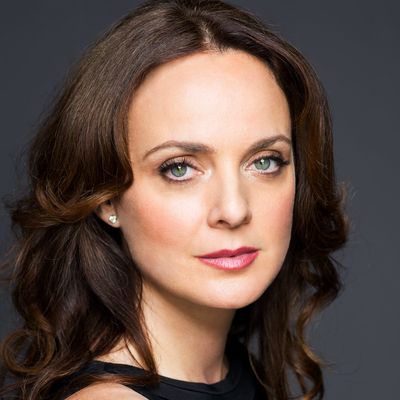
In Episode 15, David and Mark-Eugene sprinkle in some Sondheim puns as they gear up for Part One of their interview with the talented Melissa Errico, joined by pianist Tedd Firth and producer Rob Mathes. It’s a blend of interview, concert, and pure entertainment. Afterward, Mark-Eugene shares the scoop on his latest show, Goat Blood, and we build anticipation for Part Two of the interview, coming in the next episode.
Transcript
This transcript was automatically generated and might contain errors.
[0:18] David Rigano: Welcome to The Drama Book Show!
[0:20] Mark-Eugene Garcia: I'm David Rigano.
[0:21] Mark-Eugene Garcia: I am Mark-Eugene Garcia, and this is episode 15.
[0:24] David Rigano: 15.
[0:25] Mark-Eugene Garcia: Man, we have a good thing going.
[0:28] David Rigano: And speaking of which, you Sondheim nuts out there will get to hear a little "Good Thing Going" from Mark's favorite Sondheim musical.
[0:38] Mark-Eugene Garcia: Throwback to our first episode. If you're brand new to us, do go back and listen to the Sondheim Encyclopedia, where Mark and I talk about our favorite Sondheim musicals.
[0:48] David Rigano: But this is a Sondheim album.
[0:50] Mark-Eugene Garcia: Yes.
[0:51] David Rigano: From a regular Broadway baby.
[0:53] Mark-Eugene Garcia: Definitely. Absolute Broadway baby.
[0:55] David Rigano: Melissa Errico came to Drama Book Shop to do her album drop for the vinyl release of her album "Sondheim in the City."
[1:04] Mark-Eugene Garcia: Yeah, and she wasn't alone.
[1:06] David Rigano: That is right.
[1:07] Mark-Eugene Garcia: She brought some impressive guests with her.
[1:10] David Rigano: She brought her arranger, Tedd Firth, who is her accompanist and arranged about half of the album.
[1:17] Mark-Eugene Garcia: And she also brought the producer of the album, Rob Mathes, who produced the album and also arranged about the other half of the songs.
[1:26] David Rigano: The little things you do together.
[1:29] Mark-Eugene Garcia: Keep your Sondheim scorecards out for this one.
[1:32] David Rigano: I have a lot of puns, and I'm sorry.
[1:34] Mark-Eugene Garcia: And this was one that Melissa called you in advance of this.
[1:41] David Rigano: Out of the blue, and to get a phone call from Melissa Errico, yeah.
[1:46] Mark-Eugene Garcia: And part of it was to get my number so that she would call me so that we could have a chat the night before the event.
[1:53] David Rigano: And she said to me on the phone, "I really need someone who I can Sondheim nerd out with. Can you really be a Sondheim nerd with me?"
[2:03] Mark-Eugene Garcia: And I was like, did she know who she was asking?
[2:04] David Rigano: And I said to her, "Go listen to the first episode of the podcast."
[2:08] Mark-Eugene Garcia: But she is such a delight.
[2:09] David Rigano: Oh, she really is.
[2:10] Mark-Eugene Garcia: And it's meant to nerd out with somebody over Sondheim, over musical theater.
[2:14] David Rigano: And then just sit and listen to her voice. It's just gorgeous.
[2:18] Mark-Eugene Garcia: You're gonna get to hear her part of this album release.
[2:21] David Rigano: She did sing a couple of songs at the beginning and then another song at the end.
[2:25] Mark-Eugene Garcia: And these are some deep cuts.
[2:28] David Rigano: Absolutely. You'll hear us talk about this in my interview with her.
[2:33] Mark-Eugene Garcia: That we love a Sondheim deep cut.
[2:35] David Rigano: We love the cut songs from musicals or the songs from the movie that never got produced.
[2:42] Mark-Eugene Garcia: Tonight's episode is a special episode because it's a two-part episode.
[2:45] David Rigano: That it is.
[2:46] Mark-Eugene Garcia: It is.
[2:47] David Rigano: We had so much concert and so much fun that we couldn't contain it in one episode.
[2:51] Mark-Eugene Garcia: No, so the episodes are gonna have to be side by side by side.
[2:57] David Rigano: I knew I could get one in.
[3:02] Mark-Eugene Garcia: Boy, can that boy fox trot?
[3:06] David Rigano: So that's some of what you're gonna hear. We've given away one of them already.
[3:12] Mark-Eugene Garcia: Yeah, I don't want to go too much, so we're gonna jump right in.
[3:15] David Rigano: I just want to say something that I learned from the whole thing is that anyone can whistle.
[3:18] Mark-Eugene Garcia: I don't know why.
[3:21] David Rigano: I was really ready. I should know better at this point.
[3:25] Mark-Eugene Garcia: Mark and I have only known each other for 16 years.
[3:29] David Rigano: Yeah.
[3:30] Mark-Eugene Garcia: I should have known better, but I was really... What did you?
[3:32] David Rigano: I was ready to go?
[3:33] Mark-Eugene Garcia: What did you learn from this?
[3:34] David Rigano: What did you learn from this?
[3:35] Mark-Eugene Garcia: But you know I'm gonna say a joke, even when everybody says don't.
[3:39] David Rigano: And with that, we'll jump right into this podcast.
[6:24] ♪ Musical number: "Good Thing Going" — performed by Melissa Errico ♪
[10:46] Rob Mathes: So we've got with you Rob Mathes, who's the producer of the album and arranger of a lot of the songs, like "Good Thing Going," and so many other songs as well as it's kind of divided, I guess.
[10:56] Melissa Errico: Did you think you divided the tasks arranging? Half you and anybody said Ted?
[11:02] Rob Mathes: Ted is Ted.
[11:04] Melissa Errico: So Ted Firth on the piano is also an arranger, so they're both the arrangers on the album.
[11:13] Rob Mathes: So start up.
[11:15] Melissa Errico: And first off, what gorgeous arrangements and what beautiful performances.
[11:19] Rob Mathes: Bless you.
[11:21] Melissa Errico: So what made you want to do this "Sondheim in the City" album? And why now in particular?
[11:29] Melissa Errico: Well, the first match that was lit really in this was the pandemic.
[11:34] Melissa Errico: Was everything shutting down and the city going quiet and the kind of inquiry that I did and not just thinking about it right away.
[11:42] Melissa Errico: And then I was asked by one of my favorite nightclubs to reopen the club when the pandemic was ending.
[11:48] Melissa Errico: And I was thinking about the honor of that, the opportunity to bring people back together to get the stage happening again, that beautiful nightclub.
[11:58] Melissa Errico: And I started to think, well, what would I do? I want to just... I'm not the same person, nobody, none of us are the same. What would I want to sing about? What do people want to hear about and what might be important to say about and fun as well?
[12:08] Melissa Errico: And I thought about New York City itself.
[12:10] Melissa Errico: And so I did a concert at that nightclub called "Melissa Sings for New York."
[12:14] Melissa Errico: Ted was in the band and led the band, and we had an amazing time.
[12:17] Melissa Errico: We had a uniquely wonderful time and many encores after that, and lots of interesting New Yorkers were coming as well.
[12:23] Melissa Errico: One of them is in the audience right now, the great ballerina and leader in the dance world, and New York City ballet dancer.
[12:31] Melissa Errico: And a great human being is actually in the audience.
[12:33] Melissa Errico: I know is Deborah Winger. People like her, and I love having me here.
[12:38] Melissa Errico: This is the beauty of New York, in which she, in some ways, for sure, creativity, uniqueness, and the discipline, you know, and the things that are made possible, this beautiful town.
[12:48] Melissa Errico: So, anyway, so we had these wonderful people coming.
[12:50] Melissa Errico: Donna McKechnie showed up because I started it as a give me somebody to... I don't think I said to sing before.
[12:55] Melissa Errico: I may have, but I don't know.
[12:58] Melissa Errico: I don't think so.
[12:59] Melissa Errico: But so she was there, and it just got exciting.
[13:02] Melissa Errico: We had some of the Yankees come at some point, like it really grew.
[13:05] Melissa Errico: It's a little bit thing.
[13:06] Melissa Errico: So we had this wonderful experience, the New York show.
[13:08] Melissa Errico: And then some time passed.
[13:10] Melissa Errico: And there was a lot of music already in the show, that show, about my family.
[13:16] Melissa Errico: My family came over from Italy in the late 1800s.
[13:18] Melissa Errico: This beautiful picture, which the podcast audience will not be able to see.
[13:22] Melissa Errico: This is a wonderful, beautiful, and original.
[13:24] Melissa Errico: For the first time, took it out of my mother's house.
[13:27] Melissa Errico: It's an original photograph of my Aunt Rose, who was a Ziegfeld girl.
[13:32] Melissa Errico: So I grew up in a family of Ziegfeld stories and a Ziegfeld original artist in it, and my grandmother's a lyric soprano.
[13:40] Melissa Errico: I thought a lot about their dreams when they came over from Italy.
[13:43] Melissa Errico: My father's family, too, Italian.
[13:45] Melissa Errico: Some of them went to Argentina, some came to America.
[13:49] Melissa Errico: So I thought a little bit about the follies, the fact that I grew up in a house of follies at the New York show.
[13:54] Melissa Errico: The idea of these theaters being torn down, what that meant to Sondheim, what it meant to my life.
[13:59] Melissa Errico: So suddenly my life and his songs seemed to merge, and then when he passed, I felt like New York had to meet a big part of New York had died for me.
[14:09] Melissa Errico: I felt great loss that the city didn't even mean as much to me without it, that he had defined it in so many ways.
[14:15] Melissa Errico: So then I thought about that show, and I thought about turning that show into an all-Sondheim concert.
[14:21] Melissa Errico: And that's what we're talking about today. It's my inquiry into New York, it's my tribute to Stephen Sondheim, and it's my own life.
[14:27] Melissa Errico: It's a palimpsest, as they say. It's an overlapping of my life, his work.
[14:32] Melissa Errico: And then, of course, there is this look at New York itself.
[14:35] Melissa Errico: This is not a cast album.
[14:37] Melissa Errico: This is my goal is not to sing from "Merrily" from these songs as those characters, as much as it is to what is it about New York and a New York person, the loneliness, the faltering relationships, the sex, you know, in the first song, which was the sex and the follies.
[14:53] Melissa Errico: But there's so much in this album that's that interests me about what it is to be a New Yorker. So it's all those things.
[15:00] David Rigano: Yeah.
[15:01] Melissa Errico: I hope that makes sense.
[15:02] Mark-Eugene Garcia: Yeah, absolutely.
[15:03] Melissa Errico: And I want to talk to you about what this, what the set list was, how you came up with the set list and making it for the show, because you do a number of cut songs. Can That Boy Foxtrot was cut from Follies originally.
[15:20] Melissa Errico: Well, being a showgirl myself, you know, I was drawn to some of that Follies uniquely because I felt so attached to the idea of Follies and the promise of the arts, the promise of a showgirl's life with all of its disappointments, but never disillusioned, really. You're always illusioned. My grandmother and her sister have been knocked around, but they were never disillusioned.
[15:42] Melissa Errico: Yeah, uh, disenchanted either. They were just beat up a little bit by life, disappointed, missed it. My grandmother always wanted to sing more. Aunt Rose had a rough life, you know. But they had that enchantment, and so I did look at Follies a lot. I have a lot of great friends like Ed Bacher, a friend of mine, who gives me some tips sometimes about music that was cut or layers and layers of cut songs. You know, we're like jazz fans, you know, who always want the alternate takes. You know, Chet Baker, this alternate take or that alternate take.
[16:11] Melissa Errico: But theater people like me and my friend Ed, and so many of my friends, you know, we're cut song people.
[16:16] Mark-Eugene Garcia: Yeah.
[16:17] Melissa Errico: You know, do you know that Shy was cut from My Fair Lady, for example? Like that's, you know, I sing that in my concerts a lot. And it was the other I Could Have Danced All Night. Uh-oh. I do that a lot. So I look into cut music, and I think the digging process is also so indicative, really, of a New York fanatic like me. And I thought that's also part of the story is that there are people who love Sondheim so much that they'll just dig and dig all day and all night.
[16:42] Melissa Errico: And I'm one of those people, and the only song on this album that I didn't know, and I have to ask you where it comes from, is the very first song of the album, Dawn. It's an unpublished, oh no, it's not unpublished, it was an unproduced film.
[16:57] Rob Mathes: And you know what? I'm blanking now on the film.
[16:59] Melissa Errico: Can you look out of the mayor?
[17:01] Rob Mathes: Was that unreaching?
[17:05] Melissa Errico: That's right, singing out loud. A film that was never made. And the reason I started the album with it, by the way, there's another song that is still to come, which would be a bonus track as well. So a good deal of digging. Some of this digging, by the way, happened with Michael Mitnik, who was due to be here tonight. Just had the baby by joyously. He had a beautiful baby named B.
[17:32] Melissa Errico: So Michael Mitnick is a great intellectual, great friend of Sondheim's, and he just won Stephen Sondheim's chez in the auction. The chefs that Sondheim was lying down on in all the pictures when she wrote all his great musicals.
[17:47] Mark-Eugene Garcia: Yeah, you notice that he's always reclining.
[17:50] Melissa Errico: That's a famous chez. There is no more famous chez to us. So Michael Mitnick is home with his new baby on the chef.
[17:58] Rob Mathes: On the chefs.
[18:01] Melissa Errico: And he's so sorry he won't be here, but he's in Teach With Me Sondheim course at the 92nd Street Y notes.
[18:07] Mark-Eugene Garcia: Oh, wonderful.
[18:09] Melissa Errico: So you'll get Michael again if you came for him. But so Michael is also he knows everything about Sondheim, and he was able to send me papers and pieces of paper from Williams College, things nobody's ever seen.
[18:23] Melissa Errico: Wow, demos and really weird stuff. And Sondheim was a young man, an 18-year-old, 19-year-old talking into a tape recorder, and I have all this stuff. And I honored all of it, and all of it was curated for New York themed shows and New York inspired shows, or like Anyone Can Whistle, a bit of an imaginary town, a bit of Brigadoon like Manhattan.
[18:46] Melissa Errico: But also we use that as this is Melissa's Sondheim in the city, is not necessarily always literally Manhattan.
[18:52] Mark-Eugene Garcia: Right.
[18:53] Melissa Errico: As much as an imaginary city, a metropolis. Sondheim, though, lived in New York. Michael told me a lot about it. He lived in a 20 block radius from birth to death. He loved Manhattan in every regard, and I listened to a lot of his BC interviews all year, and I was interested.
[19:13] Melissa Errico: He liked New Yorkers because he liked people who were troubled. He liked people. He liked people that he where he could hear the rumblings beneath the surface. I think I quote him. The rumblings beneath the surface. And he said, I'm okay with people who are straightened out, but I like people like neurotic people.
[19:34] Mark-Eugene Garcia: Yeah.
[19:35] Melissa Errico: So there's a lot of neurotic energy that I thought about. What is a neurotic? And the song Anyone Can Whistle came to mind in song choosing. Because so many of us, or so many people that we know are so smart, you know, and have so much mastery, but they in other ways, you know, they, well, like it says in the song, I can read Greek, I can do all these amazing things, but on another level, they're utterly helpless.
[19:59] Mark-Eugene Garcia: Yeah.
[20:00] Melissa Errico: You know, it's simple things. What's hard is simple. What's natural comes hard. So it's hard to be natural sometimes in Manhattan or Manhattan people. We might relate to that. So Anyone Can Whistle, you know, tapping into that neurotic, tender Manhattan person, a great master of things, but full of fragility under me.
[20:24] Melissa Errico: So those are some of the ideas of why we chose it. Dawn, I opened the album of Dawn, and of course, by the way, every idea, as you see, I have a lot of ideas. Every idea that I brought to this beautiful producer on my right, he thought about T Review. He acknowledged.
[20:39] Mark-Eugene Garcia: I said it's not a song and record as much as it's a urban record.
[20:45] Melissa Errico: It's about the city, it's about song and psychology, it's about Manhattan itself, it's about the pandemic ending. So Dawn is all about the city wiped clean. What I was hoping is that I would be a part of the conversation of restarting the town.
[21:01] Melissa Errico: In my own way, in the places that Ted and I have had the great gift to be so often, you know, invited to sing so many beautiful places. But the gift, you know, of starting again, just the idea of starting again, it's all about the city at dawn.
[21:15] Mark-Eugene Garcia: Yeah.
[21:16] Melissa Errico: Clean and untroubled and unpolluted, if you will. Unpolluted rather that we all get to take that. So that's why that song. And it's a beautiful song, too.
[21:27] Rob Mathes: Gorgeous.
[21:27] Melissa Errico: Yeah.
[21:28] Rob Mathes: Do you want to explain how, yeah, maybe when I say like Dawn and she's not allowed to say this, but I will. I do think if you listen to one thing, if you're only allowed to listen to one thing from this record, Melissa and Ted on Anyone Can Whistle is insane.
[21:45] Rob Mathes: And we had three great takes of that. But I have a friend in England who writes for Grand Film magazine. His name is Edward Seckerson, terrific writer. He actually wrote the first biography I read of Molly or he called me this week and he said it's the very it's the greatest version of Anyone Can Whistle at his favorite life.
[22:06] Melissa Errico: So I'm going to see him in London next week.
[22:08] Rob Mathes: Yeah.
[22:09] Melissa Errico: Um on his podcast.
[22:11] Rob Mathes: Dawn is an interesting one because one of the things that I learned of the early Sondheim arrangement I did was not while I'm around for Renee Fleming and Brent Trevel, which could be dangerous, these big boys. But I heard through the grapevine that Sondheim was pleased because they didn't really mess with the harmony.
[22:34] Rob Mathes: That was a thing for him because the harmony is such an important part of music.
[22:39] Melissa Errico: I mean, lyric we all know about, and actually, I think he writes very comfortable.
[22:45] Rob Mathes: Agreed.
[22:45] Melissa Errico: I think that that whoever said that was roasted over a pit in Maryland.
[22:50] Rob Mathes: We were all right on the photo.
[22:53] Melissa Errico: With Dawn, we had a challenge because I don't know, Melissa, when he wrote it, but when he wrote Dawn, he was in that mode which occasionally you get in the Philippines of Instant Woods, the title song where the invention is endless.
[23:10] Rob Mathes: If you actually you could teach a college course on just the counterpoint of the Into the Woods piano work, it is extraordinary.
[23:20] Melissa Errico: And because of the way the tunic orchestrates it and it all works with Dawn, he almost enjoyed his laboratory too much.
[23:33] Rob Mathes: He went crazy.
[23:34] Melissa Errico: The harmonies go all over the place.
[23:37] Rob Mathes: So for me, what I wanted to do is I saw in the song as an arranger that it is as beautiful a song as he's ever written, and it was perfect for Melissa.
[23:48] Rob Mathes: And the harmonies were extraordinary. Ravel would have been thrilled to write it.
[23:53] Melissa Errico: But it just needed a little bit of, you know, rearrangement.
[23:58] Rob Mathes: And so it would just kind of be a little bit more seamless, a little warmer and slightly less spiky.
[24:05] Melissa Errico: You never want to remove the spiking from Sondheim.
[24:09] Rob Mathes: But I just arranged it in this in a way that I was thrilled that Adam Gotnick said it does sound like it does sound like the sun coming up.
[24:18] Melissa Errico: And Melissa, of course, sang the hell out of it.
[24:21] Rob Mathes: So it seems like I also just before we get too far forward, just to mention that this is our second Sondheim together, me and Rob and Ted.
[24:32] Rob Mathes: We made Sondheim Sublime a few years ago, which was a more inward-facing, as it were, album about the softer empathic that he was saying, the beauty of dawn, making me remember there is.
[24:45] Melissa Errico: There is what I call a sublime quality sometimes to Salem and something almost more than poetical.
[24:53] Rob Mathes: It's sublime.
[24:57] Melissa Errico: So we went anyhow. We did a record called Sondheim Sublime, where we looked at some of the philosophical, empathic, beloved, and inward-facing.
[25:06] Rob Mathes: So this was more of our not that we want we're making it a party or any jazz party, but it was energy that I was hoping from that I would that I could pull out of and the rhythms, you know, that Rob did that found and the drummer.
[25:21] Melissa Errico: Tell us about the drummer because you we knew that we needed we were making this a Manhattan record, we needed rhythm.
[25:26] Rob Mathes: We needed we wanted it to have this rhythmic life. I wanted another hundred people, for example, to be me when I was my dad's age.
[25:34] Melissa Errico: He said, right?
[25:41] Rob Mathes: And it took me here to Oz.
[25:43] Melissa Errico: It took me to the Drama Bookshop, actually, and I kid you not, the first Drama Bookshop for sure.
[25:48] Rob Mathes: And I used to walk these aisles and look at every sandwich, everything. This was my church, really. This was my I loved this store.
[25:57] Melissa Errico: And I got on that Long Island Express of the Long Island Railroad on those trains, and I said to Rob, I don't even want it to feel stress, like another hundred people, you know, company and all the anxiety of New York from that show, whatever it needed to serve there.
[26:11] Rob Mathes: It served for me the thrill of this circus space. This all these people on the phone, all these people maybe deceiving each other.
[26:19] Melissa Errico: I even I even like that, yeah. Just everybody's like lying to each other and saying I love you. You know, I just I enjoy I was excited about new Manhattan people, you know, and so Rob was said after we got to know the Follies, he's thinking the jazz, he's thinking it's pop, seeing Melissa has this feeling of like a girl in the 70s, 80s, you know, like we're coming out of the well, not the 70s.
[26:42] Melissa Errico: I was coming out of my mother then, you know, like having a coming coming out of the subway, you know, yeah, with this great anticipation, this thrill.
[26:51] Rob Mathes: I was at Alice in Wonderland in this place for myself, and and Pan or something or Dorothy.
[26:59] Melissa Errico: And so he said, We need a drummer.
[27:00] Rob Mathes: So tell me about the drummer.
[27:01] Melissa Errico: How do you think maybe we could get Lewis Nash?
[27:04] Rob Mathes: I said, maybe because someone like Lewis Nash.
[27:07] Melissa Errico: Well, I mean, I just do want to say that one of the great treasures of New York City is Tedd Firth.
[27:13] Rob Mathes: Oh, and uh well that's I honestly think that he's one of the best arranger rangers we have and pianists, and so it's always good to go with Ted when you can.
[27:25] Rob Mathes: And we had a number of drummers. There are a lot of great drummers out there that love Melissa Errico. One of them is one of the most famous drummers in history, which is Steve Gadd.
[27:33] Melissa Errico: And Steve would have done this, but years ago, I would be working at Barnes and Noble, or hopefully the Drama Bookshop if you work for Phil Ramon.
[27:43] Rob Mathes: Phil Ramon, who also produced Melissa's.
[27:46] Melissa Errico: No, not my debut record, the machine.
[27:48] Rob Mathes: You produce Michelle didn't have but Phil kind of gave him my first start as an arranger and player, and he did a record for Natalie Cole years ago, and drummer on that record was Lewis Nash.
[28:01] Rob Mathes: And Lewis has played with everybody. One of the leading jazz drummers in the country. He's now teaching, but he's also a touring all the time. It's amazing.
[28:11] Melissa Errico: And I'll never forget doing that Natalie Koch record with him.
[28:14] Rob Mathes: And I was playing piano and a little guitar, and Lewis just basically took over the session because the groove is so deep.
[28:20] Melissa Errico: And so we have Ted, right? You can't lose with Ted.
[28:23] Rob Mathes: And then we have the great David Fink on bass who produced Melissa's last record.
[28:29] Melissa Errico: The film Noir record, yeah.
[28:31] Rob Mathes: Exactly. So you can't lose with those two.
[28:34] Melissa Errico: And I said, Ted, if you could have your druthers, if it was Gad, Nash, or this, and Ted just simply said, Lewis Nash.
[28:44] Rob Mathes: Please, Lewis Nash.
[28:46] Melissa Errico: I called Lewis Nash and he was thrilled because he just he lit the record on fire along with Melissa.
[28:52] Rob Mathes: Yeah.
[28:53] Melissa Errico: He didn't know Sondheim much.
[28:55] Rob Mathes: He didn't say that.
[28:55] Melissa Errico: No, he had to be a little bit more than a lot of people.
[28:56] Rob Mathes: Well, he has, of course, played, you know, all of us.
[28:59] Melissa Errico: You don't know him.
[29:00] Rob Mathes: Right.
[29:01] Melissa Errico: But it's not his normal thing.
[29:03] Rob Mathes: Right.
[29:03] Melissa Errico: Yeah, and my goal for the record, my dream, and I think we pulled it off, is you know how there are so many amazing Sondheim records done. But what Melissa's Melissa offers me and Ted a kind of dream, which is that she has the ability to live inside these songs. You talk about character. I mean, she's Melissa, but she lives these songs. There was not one take in the studio where Melissa didn't go into a different place.
[29:37] Rob Mathes: Every single take, it was as it was the last take. But as a producer, I wanted not to rely too much on the theatrical approach sonically. A lot of to be I wanted to try to ground it with, you know, a swing pocket, a groove, and also a pop patina, you know, coming from Laura Nero and some of those great 70s records, the singer-songwriter records. I didn't want to go genre hobby, but I definitely wanted to feel rich and like kind of a great pop record with jazz overtones. I don't not sure we made that because it's incredibly deep, but I'm so thrilled at how it turned out because it swings as much as it can swing because of Batman's arrangements on things like Uptown, Downtown, and Fox Drive. But we've got Lewis Nash swinging his tail off, and Melissa swinging her tail off. So it was a really, as a producer, I just kind of, I mean I played some guitar and did some arrangement, but I was in there going, yeah, there you go. So cool.
[30:49] Mark-Eugene Garcia: So Rob, before we get away from you too quickly, you come from the pop and rock world.
[30:56] Rob Mathes: Yes, I mean, very strange upbringing, you know. I'm a dad playing Dylan in the front room, mom teaching Chopin, you know, so I'm a Mahler fanatic who discusses um Radiohead with her brother. So it looks, you know, is he here? My arco in the house. Songwriting professor and artist. That's another story. But yeah, so I do if I'm gonna put on a record at home, it's probably first gonna be Joni on Radiohead before it's Mahler, but Mahler's next, and then sometimes after that. So I have the language, but yes, I I'm uh so do you do you approach an album like this? And especially when Melissa comes to you with a set list thinking different from like, say, a musical theater compilation album.
[31:47] Rob Mathes: I I how do you approach someone like this? My, you know, one of my favorite scores in the history of music. I put it up there with the Rite of Spring with the Mahler Six is uh every note in Swingita. You know, can't disagree. So I mean, it's a masterpiece. So I would never want to try to force something into a pop box or God forbid water down any of the harmonies because Sondheim is, you know, heaven harmonically. However, to inform the musicianship on the record and to ground some of it in a pop sense, I think does it no way waters it down or tries to, you know, we're gonna use this group on it. Let's bring a drum machine in, you know, there's none of that going on. But to have a little bit of a sense of it, I think is good for the music.
[32:43] Rob Mathes: Yeah, it's been great to sing live, actually. It's been so fun to bring this to life with a band and with guests at uh at Birdland at 17 performances in New York City, and we've been all over the place, and now we're going to Vegas and all kinds of places. The NG New Jersey Performing Arts Center, we have a whole calendar, yeah. So to get to do it in all different performances. I even did this entire record as just guitar voice with JCAR and his and his professionist, the Caribbean guitar player, and we did it as if we were sitting on steps in Washington Square Park and in the 70s, and we looked at it as a whole other record, actually. And it was interesting. The material we played with it that one night, which was Sampai's birthday, just because Ted wasn't available. So I came up with a whole other idea that night. But it's hard to live without Ted ever.
[33:35] Rob Mathes: So you were seeing something that made me think of you and me and how we met even. You know, I seem like a little like from different worlds. Right. And how do we know each other? How did we?
[33:50] Melissa Errico: I can I tell him how I met you. I met you. It was at the Bono thing, which was called everyone was singing Cole Porter, and it was during the Drames, and it was in a music cares event, it was during one of those parties leading up to the Grammys. And I was there with Arif Martin, who had produced my first record on EMI records. Bruce Longall, a great what do you call it? President of Blue Note. Legendary jazz records. Legendary jazz name.
[34:19] Melissa Errico: Okay. So Bruce came to see me in high society. And he said, I hear jazz in your voice. I was in my 20s. And he said, I hear jazz. I feel like you could be a jazz artist or just some jazz. And so he brought me into his life. He gave me Yvonne Lynn's songs, he gave me A Battle of the Sad Young Men. I'm trying to think of his first songs. Beautiful stuff. And there was not while I'm around, it's always in my life. And he sent me up to meet Shelley Berg, Alan Broadbent, and Alan Pasqua in LA, because I was television in LA. So I started to do these mix of jazzy people meets Melissa and my beautiful brother, Mike Errico himself, but such an accomplished singer-songwriter. He gave me singer-songwriter material. He wrote some songs for me. Or well, he did. He wrote me a song, but and I'll be adapted one of his other great songs. I still love you. But he also gave me some ideas and how to bring those to the jazz guys.
[35:14] Melissa Errico: Anyhow, as that was happening, and I was exploring singer-songwriter material, some theater material in the hands of jazz people. I went to an event and I saw Bono singing Cole Porter, and it was so good, and it was so thrilling. And there was this man on the piano, and I could tell he was running the whole thing. And I had just started a Cole Porter musical, and yet I was hearing this thing. This the Italians, you know, had a soup called the Bolito Misto, where everything delicious is just chucking the soup, and everyone came out of the mixing. It was like a bonito misto of what it beauty and heart and sophistication and everything was still there. All the intelligence, the lyric. It was that there was that record called Red Hot Blue, which was one of one of the earliest kind of benefit records done. And it's really cool arrangements. Phil Ramon put an evening of it together to honor Bono as music here's first.
[36:12] Melissa Errico: I see and you were there with a reach. I was there with a reef and Nora Jones, and so on. I was at dinner with them, and I did wonderful table, the EMI crowd and stuff. But the way it actually happened is I can feel this man at the piano in your hat, and you had this coat and stuff, and you know, you're all kind of slim now, but you were an athlete, right? And you were like amazing to me. I was like, who is this man? And I stood up and I actually because I was afraid the moment would pass. Who is this? Who is he? Who is he at the piano? Who is that? I was so excited. I was like, oh my god, this is amazing. So I I got your name, and I think we met that night, but then right after that, Phil Ramon sent it up that I sing for Jimmy Webb at the induction and the singer song and this rock and roll hall of fame.
[36:56] Melissa Errico: Yes, and which is also weird that I got to do that. It was another jump into the other world. I was there with Billy Joel. I was hanging backstage with all these Cheryl Crow and all these new people, and I'm like, hi, I'm in a Broadway show. And I knew Mike. So you were at the piano, and I came over, we were about to rehearse rehearsal, didn't we? And we just just turned me before we started the first sentence out of the mouth of the person on this script to work with. And so I got this thing. Phil Ramon didn't know, by the way, I was desperate to work with it. It was luck. It was all the luck. And you turned around and you said, Melissa Errico, you might go sister. I was like, I'm Mike Errico's sister. So thank you, Mike.
[37:44] Melissa Errico: So anyway, we had a wonderful time to do that. And um I always believed that there was some way I could work. Check out my Eric's record. Records. Yeah, exactly. New music coming out now, too, and all kinds of stuff. So we were friends, and I had children. I was working with Michelle LeBron, then I was working with Phil Ramon and Ken doing this mix of jazz. I was working with Steve Gadd and David Fink came into my life, the bass player, and I had this beautiful time working with Michelle. He said, Missad, there is no genre of this. You will swing, you will feel, you will one you will never end the and he says, I love how you sing, you never breathe. He would just say crazy things and he had a beautiful relationship with me and Michelle. I did his Broadway show and I went on and traveled with him, made this symphonic album with him, just a beautiful, beautiful time.
[38:32] Melissa Errico: And while I was doing this incredible album, my husband and I realized said life's going great, but we forgot to have children, right? And I was like, and then I'm in the middle of this orchestral album and everything. And Victoria, who's now in the audience, this is amazing. And Victoria, you know, was well, not embarrassing, but she was conceived that summer. And so this beautiful, you know, the process is happening. And the first album that came to mind when I was holding Victoria in my arms was my life has just taken a big turn. I love all this, but now I feel nothing more than what women are feeling, and mothers and children and late nights and nursing and caring and all of the vulnerability of that. And I started to imagine singing to my other mother friends.
[39:27] Melissa Errico: And I started a mother's community in New York City, another microcosm of this album in way. All of there was 27 native languages in the group. It's still going, it's called the Bowery Bates. There are 5,000 or more women in it now. And so I was thinking about all these New York women and all these bellies walking around. And then we all had our babies at Victoria, one of the first Bowery baits. And I was kind of feeling something, and I thought, well, it's not what we had in mind, but I called Bob Mathis. And we made a funky lullabies album. And we had a wonderful time.
[40:10] Rob Mathes: Peter Paul and Mary's song, I know the whole family of the Yarrow family and all of the, you know, Noel's family too, Peter Paul and Mary, very close friends of mine. Real New Yorkers too.
[40:21] Melissa Errico: So I had some folk music. Have you yet? Or had you yet at that point done Sunday in the Park?
[40:27] Rob Mathes: And sung Children and Art.
[40:29] Melissa Errico: Yes. I did Sunday in the Park like two or three years before Sunday in the Park happened because I worked with Michelle LeBron because that was James LePine directing. And James brought Sondheim into my life. I really liked James Le Pine. I got on with James really well. So James Le Pine brought Sondheim into my life. Sondheim came to see Amore. So it was all the same year. It was all happening. Amore was beautiful. The Tony nomination was amazing. Michelle LeBron and I, everybody got nominated. It was a beautiful show, which I think someday hopefully I'll be in Maria Friedman. I'm gonna rescue it. Isn't she the best? Maria Friedman, I work with her too. She is really the uh blueprint of a great one.
[41:16] Rob Mathes: I think I I didn't I do not, I mean, I think once you did Sunday, Sondheim's in your balls, and before we did Lullabies, I did not while I'm around.
[41:28] Melissa Errico: Uh-huh. But as a demo just sent to me as an email. Yes, and I I don't know whether you said Sondheim is now a part of me.
[41:35] Rob Mathes: It is a customer.
[41:36] Melissa Errico: But custom was the first thing we did because of her tie to my fair later, and we still have to put that on for some reason. People are gonna love it. Because that is a lovely version. But not while I'm around was really the was huge for us. And I must say, again, she's not a lot of saying. It was a demo that I had done for her, and it's on Sublime, and it was on the top ten things to listen to after he passed in the New York Times. It was on there. I was so proud of that because that was the first thing we did together. You know, and and it was me playing piano, which was not bad. But on the record, it's big fun.
[42:17] Mark-Eugene Garcia: So that's all we have time for tonight. But we'll get to the rest. We'll get to the rest. And it'll be soon. The first question that I ask her in the next episode is so talk to me about the first time you met Sondheim.
[42:30] David Rigano: Oh, I cannot wait for that. So that's we're really gonna get into not just the Sondheim nerding out and not just Melissa and I talking about our favorite Sondheim lyrics and things like that, but really Melissa's experience with Steven Sondheim. And she's gonna tell some fantastic stories about rehearsal processes that she was in with him from from Sunday in the Park with George to Passion.
[42:54] Mark-Eugene Garcia: I can't wait to hear it now later soon. We'll get it out very quickly. Before we do, I want to have any more, or was that the last one?
[43:02] Rob Mathes: I think that might have been the last one, but I do gonna drop a plug.
[43:04] Mark-Eugene Garcia: Come on, come on, at midnight, last midnight.
[43:07] Rob Mathes: I do gonna drop a plug because a show of mine is having a reading this week. And so I want to let you all know if you're in town in New York at the tank at nine o'clock. My new show, Goat Blood. It's scary, it's spooky scary, but it's also funny, and it's about the Chupacabra. And it'll be at 9 p.m. You can look at the tank website, just look up the tank, just Google it, and hope to see you there.
[43:29] Melissa Errico: I can't wait to see it either. I've really been looking forward to this play. It's gonna be a lot of fun. We had our last rehearsal at the tech, and it's spooky scary.
[43:37] Mark-Eugene Garcia: Oh, I can't wait.
[43:38] Melissa Errico: Yeah.
[43:39] Mark-Eugene Garcia: So don't forget to follow us on Instagram at drama book show podcast. As always, all of the books and in this case album that we talk about on the podcast are here at the drama bookshop. And so are we, and we will see you at the bookshop.
[44:00] Melissa Errico: Being alive.
© Broadway Podcast Network, All Rights Reserved