

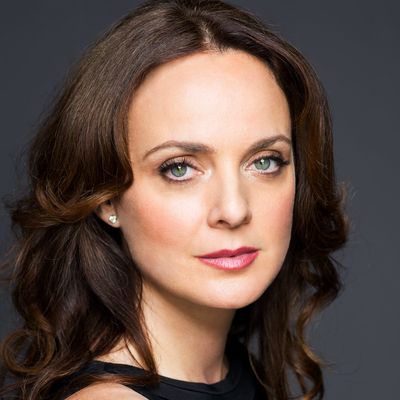
In Episode 16, David and Mark-Eugene dive back into their captivating interview-concert with the immensely talented Melissa Errico, accompanied by pianist Tedd Firth and producer Rob Mathes.... Read More
From the show: The Drama Book Show!
Guests
About
In Episode 16, David and Mark-Eugene dive back into their captivating interview-concert with the immensely talented Melissa Errico, accompanied by pianist Tedd Firth and producer Rob Mathes.. Following the performance, David and Mark-Eugene continue their Sondheim deep-dive while gearing up for the next episode.
Transcript
This transcript was automatically generated and might contain errors.
[0:18] David Rigano: Hello and welcome to The Drama Book Show.
[0:20] Mark-Eugene Garcia: I'm Mark-Eugene Garcia, and this is episode 16.
[0:25] David Rigano: Wow. We can drive a person crazy. This is from Melissa Errico's Sondheim in the City Part Two.
[0:33] Mark-Eugene Garcia: Uh, and I say it that way because Melissa Errico just got back from a, from what I can tell, wildly successful engagement in Paris.
[0:40] David Rigano: Wow. Not that has anything to do with this interview. So where we left off, Melissa had been talking to me about the creation of this album, which came out, uh, a lot of it came out of the pandemic.
[0:54] Mark-Eugene Garcia: She had, like all of us, had been quarantined, and she had been asked to headline a show at 54 Below as things were just starting to open up.
[1:06] David Rigano: So she really wanted to do a show that spoke to her relationship with New York City, which obviously Stephen Sondheim, a lot of his material has to do with the relationship with either New York City or living in a big city in general, and that after he passed away, she had the idea to adapt that show that she had done at 54 Below into a new show that turned into this album.
[1:34] Mark-Eugene Garcia: And it's wonderful because it has its own story.
[1:53] David Rigano: But the song is called "Dawn," and it's the very first song on the album. So when I played the, when I was listening to the album in preparation of doing this event, I'm listening to the song, and I'm like, what? But it also absolutely feels like dawn in the city.
[2:14] Mark-Eugene Garcia: It's just the sun coming up in the city, and you really get that like kind of pandemic. Like you remember when you'd go out in the pandemic and you'd be like, this city feels so weird. There's no cars on the street, there's no one around.
[2:26] David Rigano: And so you get that sense. It is from a movie that he never finished writing called Singing Out Loud.
[2:31] Mark-Eugene Garcia: I didn't know that. I bet you've heard some of the songs there. There are other songs from that that he wrote for that.
[2:36] David Rigano: Water Under the Bridge. And there's a few others from other cut shows I've heard, but not that.
[2:40] Mark-Eugene Garcia: But I had never heard this song "Dawn." So that's where we get to, as we said in the last episode, she wanted someone she could really nerd out with.
[2:49] David Rigano: And so I was absolutely the right person for that. Because there's a bunch of cut songs, "Uptown, Downtown," "It Wasn't Meant to Happen," and songs from little-known projects like "Take Me to the World" from Evening Primrose.
[3:04] Mark-Eugene Garcia: They didn't have "All Kinds," which is one that I absolutely love.
[3:08] David Rigano: From It Takes All Kinds.
[3:10] Mark-Eugene Garcia: It was going to be for The Birdcage.
[3:13] David Rigano: Oh yes.
[3:14] Mark-Eugene Garcia: I completely, yeah.
[3:21] David Rigano: Does he was supposed to write a bunch of songs?
[3:24] Mark-Eugene Garcia: And he did write a bunch of songs for the movie that they wound up not, like they wound up using "We Are Family" and stuff instead.
[3:31] David Rigano: And that's a real kind of, that would have been just to have Jerry Herman's La Cage aux Folles.
[3:38] Mark-Eugene Garcia: Yeah, which beat out famously, infamously, some would say, beat out Sunday in the Park with George at the Tonys that year, and then to have a bunch of Stephen Sondheim songs for the same story in movie format, that would have been a great coup.
[3:54] David Rigano: But there are Nathan Lane does sing "Can That Boy Foxtrot" in the movie, and Robin Williams and Christine Baranski sing a cut song from A Funny Thing Happened on the Way to the Forum.
[4:06] Mark-Eugene Garcia: Which one did they sing?
[4:07] David Rigano: They sing "Love Is in the Air."
[4:09] Mark-Eugene Garcia: That's the opening.
[4:10] David Rigano: The original opening number before this, sorry, the, um, we're getting again you want some Sondheim.
[4:17] Mark-Eugene Garcia: Second opening number, because "Forget War" was the first opening number that George Abbott said wasn't hummable.
[4:24] David Rigano: So Sondheim wrote "Love Is in the Air," which was hummable but didn't tell the audience that they were in for low comedy.
[4:30] Mark-Eugene Garcia: Yes.
[4:32] David Rigano: And infamously, as he puts it, Jerome Robbins said, you have to write a song that says that this is low comedy, and that George Abbott can hum.
[4:42] Mark-Eugene Garcia: Which is absolutely perfect.
[4:43] David Rigano: It's "Comedy Tonight."
[4:46] Mark-Eugene Garcia: Oh god, I can listen to that over and over again.
[4:48] David Rigano: I wonder, was this Elaine May who wrote the screenplay, or was this Mike Nichols as the director?
[4:54] Mark-Eugene Garcia: They make a real Sondheim joke.
[4:57] David Rigano: And Mike Nichols and Sondheim were friends, which is why he asked Sondheim to write songs for the movie.
[5:03] Mark-Eugene Garcia: At one point, they sing "Wives Are at Their Husband's Service, Virgins Are Completely Nervous."
[5:09] David Rigano: Uh, uh, virgins are completely nervous, or it might be a different lyric at that point, but it's that melody.
[5:14] Mark-Eugene Garcia: Day, and they look at each other as if it's this like thing that they remember the music director when they did this cabaret a million years ago that like they had to drill in.
[5:27] David Rigano: Nope.
[5:28] Mark-Eugene Garcia: And it's such a little Sondheim dig.
[5:31] David Rigano: Yeah.
[5:31] Mark-Eugene Garcia: And that's what it's like for all of us when we're learning.
[5:34] David Rigano: And it's so interesting because as a huge fan of The Birdcage, who has seen it so many times, and a huge fan of Sondheim, I didn't know that.
[5:41] Mark-Eugene Garcia: I never caught that onto that.
[5:42] David Rigano: It's so, while the songs that he wrote for the movie didn't make it into the movie, they still included a bunch of his stuff throughout.
[5:51] Mark-Eugene Garcia: God, I love that.
[5:52] David Rigano: I love that so much.
[5:55] Mark-Eugene Garcia: So that was a little bit of our deep dive.
[5:57] David Rigano: Our Sondheim nerding out.
[5:58] Mark-Eugene Garcia: Yes.
[5:59] David Rigano: And as you'll hear, my first question to Melissa in this second part is talk to me about the first time that you met Stephen Sondheim.
[6:07] Mark-Eugene Garcia: And she has an incredible story about the first day that she met Sondheim.
[6:12] David Rigano: Sad note, because I think that's sad that not everyone now is going to have that.
[6:17] Mark-Eugene Garcia: Uh-huh.
[6:18] David Rigano: I can talk about that.
[6:19] Mark-Eugene Garcia: You can talk about that.
[6:21] David Rigano: But it's just that we're a, uh, a before and after in theater history of people who can say that.
[6:27] Mark-Eugene Garcia: And I think for a lot of young people, especially, and comment on our Instagram.
[6:34] David Rigano: If this is you, if you're a young listener, comment on our Instagram post for this about your experience understanding Sondheim again and the scope of his work.
[6:44] Mark-Eugene Garcia: But I feel like for a lot of young people, they grew up with the canon being what it was.
[6:50] David Rigano: Truly.
[6:51] Mark-Eugene Garcia: And for me, Into the Woods was a new show.
[6:54] David Rigano: I remember seeing Into the Woods for the first time on PBS when it was still new.
[6:58] Mark-Eugene Garcia: Yeah.
[6:59] David Rigano: And I remember Passion coming out.
[7:02] Mark-Eugene Garcia: I remember hearing Stephen Sondheim is writing a new show about the Meisner Brothers.
[7:06] David Rigano: Oh god, I remember buying Bounce.
[7:08] Mark-Eugene Garcia: Oh, yes.
[7:09] David Rigano: At the store the day it came out.
[7:11] Mark-Eugene Garcia: Going to the store to buy Bounce.
[7:12] David Rigano: The Christmas present.
[7:14] Mark-Eugene Garcia: Uh-huh.
[7:14] David Rigano: For, I think for me, technology, but it was like the family, my family.
[7:18] Mark-Eugene Garcia: My family were a theater family, so we had to have the new Sondheim cast album.
[7:22] David Rigano: Oh, same thing.
[7:23] Mark-Eugene Garcia: And then getting, and same with Road Show.
[7:24] David Rigano: With the Road Show cast album, which I then got to actually see Road Show.
[7:28] Mark-Eugene Garcia: Same.
[7:29] David Rigano: So I grew up with the, I grew up with more of a what's next from Stephen Sondheim, where I feel like a lot of young people, even though he was still writing, we got a brand new show post-mortem.
[7:44] Mark-Eugene Garcia: We got Here We Are, produced after his death.
[7:48] David Rigano: So he was still writing, but I still feel like a lot of young people saw you can look at Passion almost as that's his Broadway career.
[7:55] Mark-Eugene Garcia: Yeah, exactly.
[7:56] David Rigano: And so for me, when he died, it was like that's the canon now.
[8:02] Mark-Eugene Garcia: Truly.
[8:03] David Rigano: That's now we can look at what he's written and say, that's everything.
[8:07] Mark-Eugene Garcia: And it's an insane canon, not just in terms of quality, but in terms of quantity.
[8:13] David Rigano: Like 100%.
[8:14] Mark-Eugene Garcia: And it's something that it's an actor's friend.
[8:16] David Rigano: It's an, he's an actor's writer.
[8:19] Mark-Eugene Garcia: Because it's not, yes, he writes beautiful melodies and great songs, but each one of them is so specific and so intricate that it tells you as a performer exactly what you should be feeling and what you should be doing and where you're at.
[8:32] David Rigano: And not everyone can do that.
[8:34] Mark-Eugene Garcia: And he has such an ear for the acting musically speaking.
[8:40] David Rigano: Truly.
[8:40] Mark-Eugene Garcia: There are a few things where he's gone, and I love when he would critique himself.
[8:47] David Rigano: Like in Anyone Can Whistle with "Everybody Says Don't."
[8:51] Mark-Eugene Garcia: He said, I don't do the singer much favors.
[8:53] David Rigano: You have to say, I insist on miracles.
[8:57] Mark-Eugene Garcia: If you do them, because the music doesn't emphasize the word you, the music emphasizes if.
[9:04] David Rigano: Yeah.
[9:04] Mark-Eugene Garcia: If you do them, so he's criticized himself as I really should have given the actor more.
[9:09] David Rigano: But for so much of what he writes, the acting is in the notes.
[9:15] Mark-Eugene Garcia: Little bit of trivia on that song specifically.
[9:17] David Rigano: I remember this goes way back in high school, singing that for a, "Everybody Says Don't," singing "Everybody Says Don't" for a grade for a test or from a musical theater test, and the teacher liking it, and then saying, oh, when we are showcasing at the beginning of the year what clubs you can join at the high school rally, you'll sing that.
[9:37] Mark-Eugene Garcia: And so I sang "Everybody Says Don't" at a high school rally.
[9:42] David Rigano: And for the rest of the year, people would follow me around like jokingly.
[9:47] Mark-Eugene Garcia: "Everybody Says Don't."
[9:47] David Rigano: "Everybody Says Don't."
[9:50] Mark-Eugene Garcia: It's actually written in one of my yearbooks.
[9:52] David Rigano: I remember that specifically, somebody writing that over and over again in your photos.
[9:58] Mark-Eugene Garcia: But I learned it before I knew Anyone Can Whistle.
[10:01] David Rigano: I learned it from Barbra Streisand's Broadway album.
[10:05] Mark-Eugene Garcia: Her second Broadway album.
[10:06] David Rigano: And I just fell in love with it.
[10:08] Mark-Eugene Garcia: And so I'm like, I wanted to sing it in talent shows from the time I was like nine years old.
[10:12] David Rigano: I remember even the slate of getting up there and saying, my name is Mark, and I'm gonna be singing "Everybody Says Don't" from Side by Side by Sondheim.
[10:20] Mark-Eugene Garcia: And my teacher going, stop Mark, it's from this.
[10:30] David Rigano: Yeah.
[10:32] Mark-Eugene Garcia: Well, shall we dive into some more Sondheim nerdery?
[10:35] David Rigano: Let's let Melissa Errico continue nerding out and let's bring Melissa Errico into this.
[10:44] Mark-Eugene Garcia: Talk a little bit about meeting Sondheim and the friendship that you formed with him.
[10:49] Melissa Errico: Well, the first time I met Sondheim was at the Kennedy Center. He came to rehearsal for Sunday in the Park with George.
[10:56] And I knew that I was playing a painter's model. I knew a lot about Seurat. I had been an art history major at Yale.
[11:02] And I knew a lot about Impressionism. And I thought the only thing was that I thought I could add to it, or that not that it was missing, but was nudity.
[11:11] I thought a model would be a bather in the Impressionist time. People are always taking off clothes. They were in a basin, they have their rear end against the bathtub, they were dancers, they were, but it wasn't dancers, it was just human form.
[11:24] It was so important to Impressionism. So I was in rehearsal, and Sondheim was there, and the first day we were rehearsing "Color and Light."
[11:33] And I had already thought of this at the airport. And I was like, oh, by the way, I think we should do the whole thing in a bathtub, and I should be totally naked.
[11:41] It just means you could just have to change a few lyrics. I had no idea. I was so young.
[11:49] And I said, and he did it.
[11:51] Melissa Errico: He did it. He's a tough guy. But he hears you and you have thought, and we, he said okay.
[11:59] I think if Streisand can ask him to change some lyrics, and if Shirley MacLaine can ask him to change some lyrics.
[12:06] Mark-Eugene Garcia: Strand's biggest fans in the audience.
[12:09] Melissa Errico: Then you can ask him to change the lyrics. And wouldn't you say the gift he's given all artists is an astonishing gift?
[12:17] Mark-Eugene Garcia: Because not everybody does this.
[12:19] Melissa Errico: He loved, he always encouraged everyone to make the material theirs.
[12:24] Mark-Eugene Garcia: Yeah.
[12:25] Melissa Errico: And to have it to approve all these different things, all these different treatments of the song is such a gift to the artistic community.
[12:25] Mark-Eugene Garcia: Well, it's true. I, by the way, I wasn't just wanting to take my clothes off, just to clarify that in that scene she's preparing to go to the Follies, by the way.
[12:25] Melissa Errico: Interestingly, I'll be in the Follies. She can't wait to go to a party. She's going to a party with her intense boyfriend, and he's doing the painting over there, but he's gonna stop, and I'm gonna be gorgeous, and we're gonna go out, we're gonna have the best time, right George? Right George?
[12:25] Mark-Eugene Garcia: And then he has, and she's getting ready, and I thought while he's painting, I would be there in bubbles looking at him, right George?
[12:25] Melissa Errico: And he'd be looking down, and I'm trying to get him in the mood, right? And that is the most heartbreaking sequence because it ends, of course, with him saying, we're not going.
[12:25] Mark-Eugene Garcia: And she says, what?
[12:25] Melissa Errico: And he says, I have to finish the hat. That's where we get "Finishing the Hat," and he doesn't choose that night, and that breaks her in half. It's like the last thing. It's probably happened a hundred million times, and that night that does it.
[12:25] Mark-Eugene Garcia: I get chills thinking about it.
[12:25] Melissa Errico: And I thought if I had nothing on and I had just come out of the tub and I was a painting itself in life, and he was looking at it, right? And then I put the robe on. We did it all very discreetly. It was really dangerous, by the way, to be naked at the Kennedy Center after us in water with night clothes on with a microphone.
[13:52] Melissa Errico: So they put the adapter in my brain, not my brain. We'll get that microphone, they put it on the right side of my head. And so when I was kicking and doing "I'll Be" in the Follies, I wanted to kick bubbles. Yeah, and I did, and the audience cheered. It was delicious. And we have pictures to prove it. So I'd be sitting in water with bubbles, and I would take everything off this stage hand whose job it was to oversee the things. We had a nice relationship. And I got in the water, and I knew that what I couldn't do when I kicked up the bubbles was get that bubble to touch my microphone, or I'd electrify myself. I'd be electrocuted, or I'd at least electrocute the microphone, and we'd have no more show for 20 minutes or something.
So I would always kick and go like this. I turn my head away. I've done that a few times. I have a, when I was in Dracula, I had to turn my head certain ways to be bitten, also just to disguise these bangs going in. So I'm skilled that this head just suddenly has to skill. So I turned my head, you know, just so, and I never electric. But it was beautiful, and I would come out of the tub, and then I had the towel preset on the edge. So I would sit there, the audience would see sort of a cello-like shape. And then I would lift the towel as I got out just so and step around. Yeah. And then I would be so excited, and I'd look up into the painting. He was up there like on this ladder, and he'd come down, and no, I don't think he came in.
He stayed up there because he had the hat to do. I have to finish the hat. I remember I closed the, took my earrings off slowly, put them down, and but so I was embarrassed. And it made me more embarrassed to be undressed. Yeah, yeah. And I know in reading Sondheim's book and everything, they were exploring doing bathers from the very beginning. That was some comfort that I wasn't just this crazy girl, like Italian actress with the Cuban guy and then the vowel spots, the Cuban Italian Sunday are closed, they got out of control, these kids. But also for being in good Sondheim company, I know that our amazing late great Marin Maisie had her mic pack in her wig when she was nude in the original production of Passion.
Pretty cool. I put my sunflowers just last week as a PS Marit Sunflowers. Yeah, when I did it in person, and I sang to the kids in her honor. So yeah, so Passion was an intense experience. But I had wonderful times working with Sondheim in all of these shows. But Passion, one thing that comes to mind was the zitsprope. When I was singing "Wouldn't That Be Beautiful?" and I guess I said wouldn't, and he stopped me in front of a whole orchestra and the cast. He says, "You never sing wouldn't. There's no uh vowel quality between the end and the T. It's not wooden, it's wouldn't." I said, "Right, but that's an absence." And I said this in front of everybody. He says, "Yes, it's an absence." I said, "Well, how do you sing with the absence?"
"You do," he said. I said, "But an apostrophe is a silence." He says, and he stopped and he was, "Yes." I said, "So you want me to sing the silence?" "Yes." A spot for your nose or something. It was kind of like that that I discovered, and I went back and I did it. And it was actually, what the happened? It was like a thing. Yeah. And it was like he was so happy, right? And then there was, I kept singing, and there was another one, and I lit up and I was getting it right. And then I was doing, there was apostrophes everywhere in Passion. And then other people were singing apostrophes, and I would look at him, and I was just, he loved my attention to everything. And so I would light up about every apostrophe, and he was delighted.
We were in love. So it was just those types of those that that kind of attention to detail and the challenge. That's a silence, yes, it is. That's it. And then so all of that. Very exact. She's very exact and it's so fun thing. When you everything's so fun, you know, like and you were exactly you were. I mean, she was, that was an incredible experience. Just her recording the record in terms of the attention to the text. I'll remember, yeah. Yes. Yeah, I think you've been proud, and so many of the great artists that sing his work know that you, it's like our Shakespeare, New York Shakespeare. But you were amazing, Alissa. Just I would go out and discuss what way everything had to be, she had to live it, you had to live every moment.
Well, I have Phil Hall too tonight. There is a person in my life named Phil Hall. He's a music director himself, a piano player, and a great voice coach, but also does arrangements and does everything, a great musician, and he's my coach. And in the last five years, though I've known him for 15, and I think he prepared me for the Passion audition, and many big auditions to my life that would come and say, "Oh, Phil Hall," but I don't just come to him anymore. I come to him all the time. We decided a few years ago that the best way to proceed as a Chantumuse or as an interpretive singer is to sing all the time and to pay attention to the lyrics very deeply, so that all the little things just are natural, and so we work together 10 hours a week or more, and we have for years.
We talk all the time. So the attention that he's given me, and he paid to the text and would remind me even tonight. I think I got it to make sure that while it's going along, you take for we for granted love will wear away. We took for granted a lot, but still I say. It's not end still, I said, it's but still I say. And today, for some reason, just on my way over here, I sang it, and then he was, "No, no, no, no." He nurtured every pebble on the beach here. It became a beach, but it's made of infinite pebbles. I love Michelle LeBron, I love many composers, but there's something in Steve's work that keeps catching me. Maybe all the complexities. I have a lot that goes on in my mind, and inwardly and quietly, every character has multiple feelings happening simultaneously.
Nothing is simple. It's not, "Oh, what a beautiful morning." It's, "Oh, what a beautiful morning at the end of a terrible night." Something else. And it takes me somehow, and I, it helps me organize my feelings. And it also I think is held so beautifully by Tedd Firth when we work together, we explore feelings, it's like emotional jazz, if you will. He'll play something, ah, feel something. And I'll think to myself, this is why I live. Just to quote Passion. Yeah. And the work I do with Ted, like day in and day out, is so real, and he's such a safe place and such a unique person that there's sending me crazy as I'm wrong anything down. We have music that he's such a beautiful, much fun. I've enjoyed, I enjoy so many musicians.
He doesn't want me to feel dependent. But we do have a beautiful time. Thank you, Rose. It does. And you see, I match your keys. And I do want to ask Ted, what is your process, both as a musical director and as it were an arranger when you're rehearsing with Melissa? How do you create this old thing? How do you create that kind of safe space in a rehearsal to be as vulnerable as a performer has to be, and then to try things and how much of the arranging happens before you get into rehearsal and how much of it happens between the two of you in rehearsal?
[21:51] Tedd Firth: I think that the most informative part of the arranging process for me is when I hear someone sing the song with me playing for them the first time. Because as soon as I hear their voice with the song, most of the time, definitely most of the time, things immediately start to occur to me as far as what we might do. Just hearing somebody's voice singing that a particular lyric and melody generally puts me in mind. I love that much more than I'd much rather do that as the first step in the process rather than having somebody say, "Hey, can you bring in something?" I'd much rather start that way. So I think we do start that way most of the time. And Melissa, of course, is, and I've worked with her so long that I know we have a very intuitive relationship musically.
And so with most of these, I think I just, I think I was just playing some and things started to occur to me. And I just wanted to say that Rob has been very kind and in for my playing on the record and everything, and I appreciate that. But really, one of the things I've been fascinating watching tonight is that is listening to you talk together. Because that shows why the record works so well. Is because it's the relationship that you two have creatively is you're so on the same page with everything. And it's really, that's why I think the record works so well because Rob is bilingual. And um Rob can, is that a metaphor? Well, it probably is bilingual. Maybe Rob is, I don't know how many people, but no, it is, yes, this is metaphorically speaking.
But one of them is music. Well, it's, I don't think is that there's a, so I've played on a good number of records through the years, and record producers run the camp as far as where they come from in the music world and how they operate. But you get an awful lot of like producers that the band will do a take, and we'll get done with the take, and we'll be sitting up there in the room with the headphones on, and the producer will come on and talk back, and the producer will say, "Yeah, that's pretty good. Can we do another one? A little more purple this time," and then we'll sit there not safe and figure out what purple means, and we'll play it again. Sometimes you have to write, sometimes not.
But Rob, we can speak with the instrumentalists on a date in very nuts and bolts terms musically that we understand and yet also communicate with Melissa about the way she views the material, which is not, she understands the nuts and bolts stuff, but I don't think that's generally in the forefront of where she's approaching it. It's much more about the text, it's about, it can be character driven, it can be that kind of thing. And Rob is very good with communicating with her that way, and yet also with the players on the date, being able to express what we need. And that's, that was a, I think, I mean you guys are very kind to give me all this credit. But I really do believe that between the two of you, that's why this record works. Don't try to get out of the next record.
[25:27] Melissa Errico: It's a trio. I literally have so many albums in my head. We do have a three, I have a three in my mind. It'll be a phenotype. I do have this idea of a part three called consequences. I don't know what that means yet, but I think that's where this is going. I have my Sondheim Sublime, which was part of Yanga's earlier time in my life, and whatever that was, that beautiful record. It was really a beautiful process made that, and this was really the kaleidoscope of New York stories and New York energy and this, the fun that we really have. It's a big band. We have a big orchestra, we have a big swing band on this, we have 14 brass players, it was incredible, it was incredible. It's like making a big Hollywood extravaganza, really.
And we don't get to do a lot of those records these days. It's, yeah, it's a laptop world. People are making amazing records on laptops. Some of the best pop music is made in little corners of houses or apartments. But to be able to go to the power station in on 53rd Street and get some of the greatest musicians in Manhattan to play, and Melissa is saying Tedd Firth, but I did not take it for granted.
[26:47] Melissa Errico: And there's something about that being that is then a collaboration of everyone in the room. It's not you in a track. Absolutely. It's you and your music director and every single musician in there. Yes, and the ideas that Adam Gopnik gave me, that Michael Mitnick brought, the support that I got from Phil Hall. This was an amazing team. Those are the main characters. Adam brought the first day we recorded, he brought in the encyclopedia of New York. Adam Gopnik, the great Adam Gopnik comes in with the encyclopedia of New York and Phil's there looking at the text and hopefully Steve was looking down, realizing we were treating it like we were holding the holy grail with the greatest musicians in town.
I felt very safe, like it was a sacred experience and went in and I did something a little naughty, which is that I pretended that I could afford his apartment, and I got a booking with the realtor and I went into his house. I did, I went into his home as I was thinking that maybe I could get some grant or something and that I could detect it from anybody living there, and then that maybe be a museum, and maybe I'll get old there and I could teach there and I can make sure that they never change the green wall and that the chefs would sing. But that part didn't work out. But I did go into the house in the process of making this album, and those are my liner notes. If people are gonna take the record home tonight, those are the liner notes.
The minor notes are about my walking into his home and imagining Victoria, this beautiful girl in front, my daughter, and her two sisters, Patrick the McIntyre, my beautiful husband, imagining our lives in his home. Literally imagining myself living in his home, and how where would the children eat? Because he didn't look like he cooked very much or anything. And I was imagining our lives in his space, and that became also some a nice trigger for the liner notes to think about New York City and his home. Some of the windows being outward facing to the busy streets, some of the windows facing an interior garden, where Catherine Hepburn also had the same intimate garden in Turtle Bay. And they had many fights as well.
[29:04] Mark-Eugene Garcia: Yeah, I've heard some story I think about when he was up late making music with Laura Nero, actually.
[29:04] Melissa Errico: Oh, with her like knocking out Catherine Hepburn knocking on the door and keep it down. Catherine Hepburn didn't like that. He didn't like that she used her fireplace. And she said, I distrust people who don't like fireplaces. There's a letter that she sent to the super or to the court, saying that she distrusts people who don't like her fireplaces. I mean, the record is also animated with stories of pleasures and notes from Sondheim. I even remember when Ted actually was using the expression most of the time, qualifying things, which I love that Ted said that, but it reminded me of when I was finished with a performance of Do I Get a Walls? And the stage manager said, with the cast in the crew, please come to the stage.
And I went to the stage, and it was already packed with so many people that I climbed up to set. It was a Venetian window, my character's hotel window, and I saw it up high, and I saw that everyone had gathered because Sondheim had come to give notes. That's what you always hope or fear is that he would come. And so I saw that famous profile, and there is Sondheim. So I said, well, so you know him now, he's made a ready. Come on, let me laugh. And so I said in front of maybe 175 people almost packed. I said, hello, and he turned around in front of everybody, and he said, oh, you were wonderful most of the time.
[30:29] Mark-Eugene Garcia: What he did there is everything, that comma.
[30:32] Melissa Errico: You were wonderful, comma, most of the time. He qualified it, he made his thoughts just a little unsure, a little rueful. He made you a little insecure. It's that comma where all of this richness happens. He sang the silence. He sang the silk. It's that hinge between two opposites. That is everything, and it's just what makes him so wonderful to sing most of the time. I do want to because we talked about a little bit of Sondheim nerding out. Yes, and you brought this song up first, loving again all of the cut songs, and you brought the song up a couple of times, and it has my personal favorite Sondheim lyric of anything, and that's the song Uptown Downtown. Cut from Follies. My favorite Sondheim rhyme. She sits at the writs with her splits. But with the schlitz in her midst, down at Fitzroy's bar. She thinks of the writs, oh, it's so skizo.
[31:40] Mark-Eugene Garcia: Okay, we are now massive.
[31:43] Melissa Errico: And now to make you mad. That's just one of the there was actually one. I meant to bring it with me today, and I forgot. I once sat down you because you also have What More Do I Need on this album.
[31:57] Mark-Eugene Garcia: Oh yeah.
[31:58] Melissa Errico: And that beautiful arrangement with Who Wants to Live in New York. And I once sat down and color coded the rhymes to that sign to bring that with me to because they're so intricate. Yeah. They're so very intricate. And and it is everything is in exactly the right way. Uptown downtown is so good at me as well. And it just I just because there's so much being immortalized here. My very good friend Peter Foley, who recently passed, he said that the rhyme he put that song in my on this album, and he died. He's a friend of mine from college. He died surprisingly young. And he said that the quality of the rhyme made him just know that he should never be a good lyricist. He said, you know, so but he was that was thanks to him. That's such a song came into my life. And again, I don't want to I don't want to be sparmy with Ted, but for Lewis Nash, Ted really used What More Do I Need as well.
[32:56] Rob Mathes: Oh yeah, that is one of his greatest drum performances.
[33:03] Melissa Errico: Yeah, Rob, did I ever tell you the story about how it's okay?
[33:06] Rob Mathes: No, look at him like he's oh you got it.
[33:07] Melissa Errico: Yeah, you got it. That's funny because I was actually just when you were talking about loose before, I hadn't thought about this probably in about a year. So we did the we started doing the rhythm tracking about just about a year ago. It was like early July, so it's almost the sun. And What More Do I Need was I think the last thing that I had to arrange. And I had been kicking that thing around for a few weeks. Well we talked about something. Like I should goofing around with some sort of lat thing or something.
[33:40] Rob Mathes: Oh yeah.
[33:40] Melissa Errico: And I was just, and I was just out on it. Because I wasn't thinking of anything I thought was good. And I was walking with a friend, just coming out of a rehearsal. And I was just, I was speaking out loud, just putting my problems out in the world. Yeah, I'm working on it. And this is a friend who knows this music very well. And I was just hoping, I was like, maybe he'll say something. Call a friend. It'll be helpful. And I was like, yeah, I'm working on this thing. We're bringing, we're gonna fly in Lewis Nash, world's best jazz drummers. And I said, but I don't know, man. I don't know what we're gonna do with this tune. And he said, I don't know, just make it a feature for Lewis. And that was and that put me out of the way.
Yeah, that was what I thought. Because up until that point, I was trying to make it more of a thing where the band, that kind of thing, I was trying to look for like a group that was maybe off the beat path. But then once I just thought realized that, oh, we'll just make it another thing for Lewis, just build a sort of a swinging arrangement that just gives him a lot of room to play.
[34:36] Rob Mathes: Yeah, yeah.
[34:37] Melissa Errico: It's so dangerous, it's wonderful, and it's all about the deficits of New York, the crappy apartment, the noisy neighbors, the kids upstairs, the everything that stinks, and it's just the best place to live in. It's like out of all the tracks he's played on, I would put that up there the best Lewis Nash performances.
[34:56] Rob Mathes: Yeah, and yeah, I see this is a perfect example.
[34:59] Melissa Errico: He's thinking like that. He's thinking we got Nash, we got the vibe, we got the feature and stuff. But I'm thinking all this is happening, but it creates chaos, right? It's old drums in chaos, and it's all it's the crane, it's the cream, I'm making street repairs, it's the baby upstairs, it's all these I can't sleep, it's this disgusting apartment with just a little fly and the disgusting snow that comes down, it's already brown or gray by the time you see it, it got dirty on the way down. Like, how did that happen? So I knew you're only in New York. But it's what a what the lyrics are all sudden, it's just madness that we love the sound that we do. So when the drums are kicking like that and Ted is going cuckoo, I'm thinking of all those lyrics that are, they become funnier, they become more angular in that company. It's just like once I hated this city, now it can't get me down. Slushy humid and pretty, what a pretty town. They're all just like going. But it feels rebellious.
[35:53] Mark-Eugene Garcia: Yeah.
[35:53] Melissa Errico: It feels like everybody who doesn't get it can leave. If you don't like it, blum it, or whatever you want to say. If you can't handle it, then don't be here, you know. In terms of being here, we could be here. Forever, sorry.
[36:07] Mark-Eugene Garcia: No, it's it's all we we are gonna have to wrap it up, but you've got one more for us.
[36:13] Melissa Errico: It's pretty song.
[36:14] Mark-Eugene Garcia: Yeah, let's just say goodnight.
[36:22] Melissa Errico: Thank you for that.
[36:31] ♪ Musical number: "Take Me to the World" — performed by Melissa Errico ♪
[39:35] Mark-Eugene Garcia: She has a voice.
[39:36] Melissa Errico: Yeah.
[39:37] Mark-Eugene Garcia: Yeah.
[39:38] Melissa Errico: I would have loved to have had her sing so many more songs.
[39:41] Mark-Eugene Garcia: Oh, yes, absolutely.
[39:43] Melissa Errico: The whole concert, the whole album. She had just performed at 54 Below right before coming here.
[39:48] Mark-Eugene Garcia: And it was a funny moment for me because it was the same night as Shining in Misery was at 54 Below.
[39:54] Mark-Eugene Garcia: And so I jokingly told her when I saw her what a wonderful first act she was.
[39:59] David Rigano: For yeah, exactly.
[40:00] Mark-Eugene Garcia: For from my show. But and even then, I remember just seeing her briefly and saying hello, and she was so wonderful and gracious. And that was before I knew there'd be an event here. And just being like, Hi. And it's great when people like this are so down to earth that they and I get that she was in like I feel like she was in everything on Broadway in the 90s and early 2000s. And she even talked to me about why she veered her career more towards concerts and recording than the eight a week. Yeah, but when people are so down to earth that they don't even necessarily realize I don't want to say how famous they are but maybe like how famous they are to you truly and it's what I like though is that she takes all of that that heart that she has and pours it into her performances it's just I remember like I was watching this event happen watching her perform but I also felt like time stopped for a brief moment to just it was where it was just me and her that we're in a room full of people and she was singing to all of us but for a brief moment I was thinking this is just for me.
[41:17] David Rigano: Yeah because she makes it personal yeah and you I mean you just heard in Take Me to the World and again that's another fantastic Sondheim deep cut where everything that they're singing about is relating the outside world to things that you would find in a department store because these two people I to try to describe the plot of Evening Primrose the characters who are singing are stuck living in a department store it's on DVD. It's a kind of a Twilight Zone TV musical that Anthony Perkins and Charmaine Carr from the Sound of Music movie were in and so you can watch the whole thing but they're stuck in a department store. So she's singing about wanting to see the outside world and comparing everything to things that you'd find in a department store. A world that smiles with streets instead of aisles. First off, to think of a rhyme like that, and then to write a lyric that is so specific and yet gets to this.
[42:26] Mark-Eugene Garcia: Well, that's the thing is that he's so specific. And that's what makes it so relatable.
[42:30] David Rigano: Yeah.
[42:33] Mark-Eugene Garcia: Is that at the same time, yes, that that song fits into that show perfectly, but it also, as a standalone, is so wonderful, and you immediately get all of the feelings and all of the story relating to your own life that that has nothing to do with being stuck in a department store. And speaking of which, if you're out there and looking for audition material and like you need your Sondheim song, and what are you gonna do? Because everybody sings, everybody says don't. I remember from Evening Primrose is another, and it's similarly earlier in the show, she's talking about her very vague memories of the outside world because she has lived in this department store for almost her entire life since she was a little girl, and she is similarly says I remember ice like vinyl on the streets, and everything that she I remember sky, it was blue as ink. She only has the references of the man-made things that surround her for the natural things in the outside world.
[43:39] David Rigano: It's just what he can do. I think that's why when we still speak of him in the present tense.
[43:45] Mark-Eugene Garcia: Of course, yeah.
[43:46] David Rigano: We've been doing through this whole thing. Yeah, I always will. I think that's why he when I met him, he is the only person to this day. And we work in a place where we get to meet so many wonderful, but he was the only person Paul Schaefer walked in today.
[44:00] Mark-Eugene Garcia: That's true.
[44:00] David Rigano: Um David Larry Paul Schaefer. Original Toronto production of Godspell, Paul Schaefer was in today. I may have fanboyed a little bit. But when I met Sondheim, that is the only time in my life I've ever completely lost my words. And I remember I was at his 75th birthday at the Hollywood Bowl. I was not supposed to be there. I totally snuck into that party. But I was there.
[44:26] Mark-Eugene Garcia: How old were you?
[44:27] David Rigano: I was 26. Uh-huh. No, I couldn't have been 26. I had to have been like 24, somewhere in there. I was a child. And I was at this party I wasn't supposed to be at, and I was meeting all of these people, and at one point it was like a movie. I turned around, and there he was. And I wanted to say all of these things that hi, I write musical theater. Hi, I'm into theater because of what you do, and you have shown me so much. And I stuck my hand out and I said, Excuse me. And I walked away and I took a glass of champagne and drank it like a shot. And then I turned back around and came over and said all of the things I wanted to say. But that first moment of seeing him, this master wordsmith who knows exactly what to say and what to do and how to find a voice, and I just couldn't. I completely couldn't do it.
[45:16] Mark-Eugene Garcia: So I was supposed to be at the party that I was at. I had been brought by my godfather who used to be the chairman of the board of the game and self crisis. Yeah, which I think they've changed their name to just being GMHC now without an acronym. And it was at Sardi's. I was 19 years old.
[45:36] David Rigano: Oh my god.
[45:36] Mark-Eugene Garcia: So I was going to the bar to get a Coke from my godfather and like a ginger ale for myself. They probably would have they probably would have given me a whiskey.
[45:46] David Rigano: I thought you were gonna say gin and tonic.
[45:47] Mark-Eugene Garcia: Gin and tonic for me. No, but I was just getting myself a ginger ale and I turn and there's Sondheim chatting with a bunch of people. So I had the turn in there Sondheim, but I didn't have the turn and I'm face to face with him. I did have a little bit more time. Right. And my godfather walks up to me like, Where's my cover? Being the chairman of the board. But he walks up to me and I just turn that this is when I didn't have any words. I'm holding two glasses in my hand, my godfather's and mine, and I just turned to him and I looked at Stephen Sondheim and I went, and he realized what and he went okay, and he took his glass of coke from me and he went on to keep being chairman of the board, and then I just worked my way into the conversation.
[46:25] David Rigano: Oh my god.
[46:26] Mark-Eugene Garcia: Until he realized that there was only one person in the conversation he didn't know. It was after a performance of Sweeney Todd in 2006.
[46:34] David Rigano: Right.
[46:34] Mark-Eugene Garcia: The John Doyle revival with Patti LuPone. And he just looked at me and stuck his hand out and said, Hi, I'm Stephen.
[46:41] David Rigano: Oh my God.
[46:42] Mark-Eugene Garcia: Right? But in that moment, did you find this also that once you had the once you could get back to that, that he made it so easy to talk to him.
[46:54] David Rigano: 100%.
[46:55] Mark-Eugene Garcia: And we like stood there and had a conversation. And then this girl came up to him. And I say girl, I think that she was probably a couple of years younger than me at the time, and I was 19.
[47:07] David Rigano: Right.
[47:08] Mark-Eugene Garcia: So I think that she might have been like 15 or 16. And she came up to him with her program. And she oh, excuse me, can and he signed it for her, and then she walked away and there was a beat, and I turned to him and I was like, Hey, can I? He was like, Yeah. Then I went, my program. And he signed it. But he, yeah, he was just like really fantastic. And I think that is the everyone who really worked with him and was close to him. And Melissa talked a little bit about this when she talked about singing the silence in wooden. And that everyone talks about him as a teacher and having that generous teacher spirit.
[47:47] David Rigano: And I think that's probably you walk into a party, certainly at your own birthday party at the Hollywood Bowl, or you walk into a party at Sardi's that is the GMHC gala for Sweeney Todd, you know that everyone there is gonna want to kiss the ring.
[48:04] Mark-Eugene Garcia: Oh, 100%.
[48:05] David Rigano: And he was just ready for this 19-year-old's kid who had just started working with a music producer who he had worked. So that was the other thing. I got to go into work and be like, Steve Sondheim designed.
[48:20] Mark-Eugene Garcia: Yeah, he was it's for as big as he was, he was so just down to earth and honest, and that was wonderful.
[48:30] David Rigano: And he was wonderful. Yeah, and I think that's why you get things, and I feel like he was always also just plugged into the pop culture. Certainly in the 70s in Company and Follies, you can hear how plugged in he is.
[48:45] Mark-Eugene Garcia: I love it. I love it. I love it so much.
[48:46] David Rigano: And then if you listen to um if you listen to Here We Are, there's a whole God. If I can I I need to memorize some of these lyrics because there's things about vodka tinis and Fresca Light, and he rhymed, oh, rhyming sprite. We have no sprite, we have no coffee, we have no Fresca Light, like that kind of rhyme. But yeah, he was just he never I say never, like I knew him. I met the man twice, but it never felt like he as lofty as we all saw him. Wanted to be this lofty figure above it all.
[49:23] Mark-Eugene Garcia: No, not at all. And I think he joked with that that when he wrote God.
[49:26] David Rigano: God, yes.
[49:28] Mark-Eugene Garcia: And he played with it. He played with us.
[49:30] David Rigano: Yeah.
[49:31] Mark-Eugene Garcia: Yeah. And he joked, the whole song is a joke on himself.
[49:34] David Rigano: Oh, 100%.
[49:35] Mark-Eugene Garcia: The little jokes on himself throughout the and the I'm gonna give my toenail clippings to the Smithsonian. Like those kind of that's when you go, okay, dude's got a sense of humor about himself. And that's good. He it was just an honesty, an honesty in his writing, and honesty in how he was, and honesty who he was friends with, like Melissa Errico, like Melissa Errico, and and again, not to be like we have to tie it all in, but you can hear that in so much of her singing about the city that was so much a part of his writing.
[50:10] David Rigano: Yeah, it was is the album is a true collaboration, and that and it sings that collaboration, it really does, and we're lucky to have it.
[50:19] Mark-Eugene Garcia: Yeah, and we have the album, just like any and all books that we talk about on this podcast. This album is at the Drama Bookshop.
[50:27] David Rigano: Absolutely.
[50:31] Mark-Eugene Garcia: So give us a follow on Instagram at Drama Book Show Podcast. Follow us on Eventbrite Drama Book Shop, and like the album and the books, we can be found here too. So we will see you at the bookshop.
[50:48] David Rigano: Hey PutriMart, this is Outro 2. So, David, what do we got going on in the next episode?
[50:56] Mark-Eugene Garcia: Next episode is a memoir. A memoir from one of the I think most iconic people in the avant-garde theater scene.
[51:10] David Rigano: Exactly.
[51:11] Mark-Eugene Garcia: Exactly. Charles Bush.
[51:14] David Rigano: Oh gosh.
[51:15] Mark-Eugene Garcia: Creator of Vampire Queens of Sodom. Die Mommy Die. Psycho Beach Party.
[51:21] David Rigano: Oh my gosh.
[51:23] Mark-Eugene Garcia: And one of the great joys is when people bring guest moderators as well. And in this case, the moderator was our coworker, Nora Bridget Monahan.
[51:36] David Rigano: Who is a fantastic playwright yourself.
[51:38] Mark-Eugene Garcia: And it was a mentee of Charles Bush.
[51:42] David Rigano: Oh, I just whistled through that.
[51:47] Mark-Eugene Garcia: And was a mentee of Charles Bush grow from a very young age.
[51:51] David Rigano: Yeah, growing up.
[51:52] Mark-Eugene Garcia: Growing up. So she's known him for forever. So it was great to hear the two of them chat together.
[51:58] David Rigano: Oh, it was wonderful. You will get to hear that as they talk about his memoir Leading Lady, The Tales of a Very Strange Boy.
[52:07] Mark-Eugene Garcia: Oh, I cannot wait for this episode.
[52:09] David Rigano: That that book, this album, Melissa Errico's Sondheim in the City, and any books that we've talked about here on the podcast can be found at the Drama Bookshop.
[52:20] Mark-Eugene Garcia: So give us a follow on Instagram. Do you want to say so can we?
[52:24] David Rigano: All right, great. So that book, this album, Melissa Errico's Sondheim in the City, and as usual, any books that we've talked about here on the podcast can be found at the Drama Bookshop. So can we? So give us a follow at Drama Book Show Podcast on Instagram. And follow our Eventbrite to Drama Book Shop. And we will see you at the book shop.
© Broadway Podcast Network, All Rights Reserved