

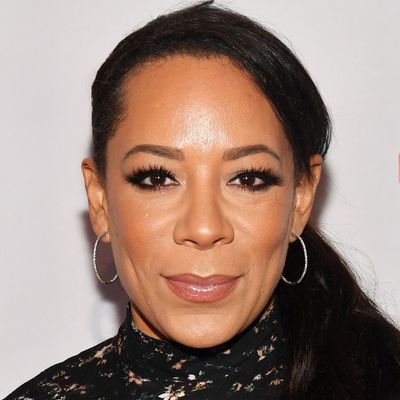
In episode 14, David and Mark-Eugene delve into the book My Sister: How One Sibling's Transition Changed Us Both by Selenis Leyva and Marizol Leyva. During the interview, the sisters share their journey, reflecting on the challenges and victories they've faced together... Read More
From the show: The Drama Book Show!
Guests
About
In episode 14, David and Mark-Eugene delve into the book My Sister: How One Sibling's Transition Changed Us Both by Selenis Leyva and Marizol Leyva. During the interview, the sisters share their journey, reflecting on the challenges and victories they've faced together. They highlight the harsh realities of violence, abuse, and discrimination endured by transgender individuals, women of color, and particularly trans women of color. The conversation explores the complexity of self-discovery and the struggle to be fully understood and supported, even by those who love you most. It was a moving night and is a powerful story about love, growth, and acceptance.
Transcript
This transcript was automatically generated and might contain errors.
[0:18] David Rigano: Hello and welcome to The Drama Book Show.
[0:20] Mark-Eugene Garcia: I'm David Rigano.
[0:21] Mark-Eugene Garcia: I am Mark-Eugene Garcia, and this is the 14th episode.
[0:26] David Rigano: They're flying by now.
[0:28] Mark-Eugene Garcia: Yeah.
[0:29] Mark-Eugene Garcia: So this is a memoir of sorts.
[0:33] David Rigano: Yeah.
[0:34] Mark-Eugene Garcia: This is Selenis Leyva and Marizol Leyva wrote together a book called My Sister: How One Sibling's Transition Changed Us Both.
[0:44] David Rigano: Yeah, and I feel like, yes, it's a memoir, but it's also kind of a how-to guide about just how we should treat people, how we should respect people and understand people.
[0:56] Mark-Eugene Garcia: It really hit me hard. And it's a book that comes at the subject of transitioning with the understanding that there are people for whom it, even if they want to understand and accept, they just may not have the right tools yet.
[1:13] David Rigano: It might just be so foreign to them.
[1:15] Mark-Eugene Garcia: And they came at this with the intent to empower anyone who wants to be a better ally and maybe doesn't know how.
[1:28] David Rigano: Yeah, and it's interesting. I talked to them afterwards, and I had a very specific history with it, is that I feel like I've seen both sides of the story because I know what it's like to come out. I know what it's like to need the ally, but then years later I would have a best friend who transitioned and their own coming out journey, suddenly I was on the outside of that, and not being the person who was coming out, but being the ally, being the person that I needed for me back then.
[1:55] Mark-Eugene Garcia: And it was neat to see both sides of the story, and so each one of them made me cry while listening to it because I could see exactly what that felt like.
[2:05] Mark-Eugene Garcia: So Selenis Leyva is from Orange is the New Black, among so many other shows, but that was her big breakout role, and she was so wonderful.
[2:17] David Rigano: And she talks about that being this thing that catapulted her into a spotlight where she suddenly had a platform that there were people who wanted to hear what she had to say.
[2:29] Mark-Eugene Garcia: And people who wanted her, oh, when are you gonna write a book?
[2:33] David Rigano: Right.
[2:34] Mark-Eugene Garcia: And I'm guessing people who probably had no idea of her history with her sister.
[2:40] David Rigano: Yeah, and I love that when given the opportunity of what to say, this is what she chose to say.
[2:46] Mark-Eugene Garcia: And she said, I cannot write a book about my sister's transition that is solely from the cisgender sibling, the cis sis, if you will. Only from my perspective as the cisgender sibling. I need to write it with her.
[3:05] Mark-Eugene Garcia: And the two of them wrote this book together that beautifully goes back and forth between their two perspectives on, in some cases, wildly differing perspectives on the same events.
[3:18] David Rigano: Yeah, and I love that dramatically when that's done, whether it's a show or a movie or so on, to see the same event through two different lenses. It's just really powerful.
[3:28] Mark-Eugene Garcia: And it was really fun. You'll hear this in the interview, to hear them talk about it from it. Sometimes we would be having conversations and we would remember things differently. And then later on, to see them actually talking about things and actually contradict each other.
[3:45] David Rigano: Right.
[3:45] Mark-Eugene Garcia: And say, Oh, should I tell the story? Oh, the Christmas one. That wasn't a Christmas one, but yes, it was Christmas.
[3:50] David Rigano: And you'll hear that in the episode. It's something only siblings can do, I think.
[3:56] Mark-Eugene Garcia: When you have a lifetime, I think when you have a lifetime's worth of memories with people, yeah. Things get jumbled.
[4:01] David Rigano: Things get jumbled up, you forget what year certain things happened.
[4:07] Mark-Eugene Garcia: But also, yeah, like you're going through your own formative stuff.
[4:12] David Rigano: Yeah.
[4:13] David Rigano: And so sometimes the exact same thing can be such a polar opposite experience for two siblings who were in the same room for the whole time.
[4:23] Mark-Eugene Garcia: And who are very different.
[4:24] David Rigano: Yes.
[4:25] Mark-Eugene Garcia: Different in personality, different in ways of speaking, which was reflected in the book.
[4:29] David Rigano: Yeah.
[4:29] Mark-Eugene Garcia: And the difference in font in their stories. We talk about choosing a different font for each narrator.
[4:37] David Rigano: So you could have a visual cue of who's speaking.
[4:40] Mark-Eugene Garcia: I remember when I first picked it up to read and noticed that the first thing I thought was, Oh, I'm in good hands.
[4:46] David Rigano: Yes.
[4:47] Mark-Eugene Garcia: In such good hands right now. It's the kind of thing where you just go, thought was put into this.
[4:53] David Rigano: Yeah.
[4:54] Mark-Eugene Garcia: Absolutely. They really, this is a writer who cares about my reading experience.
[4:59] David Rigano: Yeah. And it's interesting because you think of this topic and think of the storytelling that's going to be there, and you almost get ready for a very sad story.
[5:09] Mark-Eugene Garcia: And yes, there are parts that are definitely that. But the overwhelming feeling was joy the whole night.
[5:15] David Rigano: It was just a joyous place to be of a love and acceptance of it was beautiful.
[5:21] Mark-Eugene Garcia: Yeah.
[5:21] David Rigano: Yeah.
[5:22] Mark-Eugene Garcia: So should we delve in?
[5:23] David Rigano: Yeah, let's hear Selenis and Marizol talk about their experiences.
[5:27] Mark-Eugene Garcia: Let's do this.
[5:33] David Rigano: So thank you so much for joining us this evening. And we're gonna start by hearing a portion of the book.
[5:42] Selenis Leyva: Introduction. I've never had to give much thought to my identity as a woman. I've never had to question who I am or how the world sees me. My body, my mind, my heart. Even when I think back to my earliest memories, everything has always felt connected. From an early age, I played house, I was always the mommy holding the baby doll. When my breasts started to change, I became fully aware that my body was different from those of my brothers and the other boys around me. I always felt somewhat soft and somehow pink. Never did I question my choices in favorite colors or my instant love of Barbies. Never was I made to feel that how I naturally moved, talked, or expressed myself were offensive or wrong.
My gender identity was assigned to me at birth, and it matched my soul. Therefore, it just was. It just is. And it has allowed me to just be. But we live in a world in which many of us are constantly told that we can't act a certain way because it isn't okay. Some of us must constantly edit our natural movements, expressions, interests, to more neatly fit into what is expected of us. Some of us look into a mirror, and the person looking back at us is not the same person that lives inside. I have had moments when I have hated my body because of weight gain or because my shape didn't match that of most models and actresses. I wished for fuller breasts, no longer and leaner legs. I've also had moments when I hated my Afro-Latinx features.
As a child, I was always I always felt ugly compared to my cousins, who all had fair skin, nice hair. I remember being stared at or hearing comments that made me look in the mirror and recognize that my features, my skin, my face, my hair, were considered ugly. Every time I looked at my reflection, I wanted to change what I saw. I grew up intensely aware of my flaws, thinking that everyone around me believed that my looks weren't right. But it wasn't until my sister Marizol began her transition that I really stopped to think about what she might have been feeling. It wasn't until I saw how desperately she fought to understand herself and what was happening to her that I really took a moment to put myself in her shoes.
I realized only then that I had witnessed Marizol be uncomfortable and isolated for most of her childhood. Marizol, off to the side, hesitant, Marizol, disappointed with gifts. Marizol in football gear, awkward and bored. Marizol, trapped, unable to live her truth. This, of course, was when I knew her not as my sister, but as my baby brother, Jose. I remember the first time I tried to understand these memories from her perspective, to understand the emotions that she must have been feeling. And instantly, I was devastated. Only then did I understand that she, like many trans people, have been living in a prison-like state where something was off. That something is superficially seen by the world, but deeply felt by the person who is trapped.
The reality is that I would not have given much thought to how it is to be transgender if it hadn't been for my sister. This is not to say I wouldn't have sympathy for the struggle and the injustice people in the trans community face daily, but simply that I likely would not have taken the time to fully immerse myself in someone else's experience. That I would not have been able to comprehend what it truly means to live with a constant disconnect between heart, body, and soul. I have been witness to the childhood of a person who, by the age of three, clearly had a disconnect between body and brain. Before her transition, I saw my sister's struggle as an awkward little boy, always in his own world.
I saw sadness in moments that should have been filled with happiness. I saw a little boy fight against the natural essence in an attempt to avoid being picked on or scolded. I saw and felt his embarrassment more times than I cared to count. And to this day it haunts me. Though we are living in a more accepting world than we were 20 years ago, my sister still lives in fear. I have been with her when someone spooks her in public. That is, when someone calls her out as trans. I've seen the energy of others around us shift when she walks into a room. I have seen the stares. I have also seen my sister fully celebrated. I have seen her feel beautiful and happy and confident. And I have seen how quickly, with a single look or word that can all be erased, taken away from her. This is the reason I want to share with you our story. The story of my sister.
[11:28] Selenis Leyva: That she deserves to be acknowledged and addressed as the woman she is and always has been.
[11:38] Selenis Leyva: So that was the first thing I scribbled down in a piece of paper when the idea came to write this book. That was the first thing, and I saved the piece of paper, and I, you know, and then when we sat down to look for a ghostwriter to help us put everything together and work with editors, I was like, this is what I wrote, and this really sums up why I want this story to be told. Why I felt the need to use my platform and the place where I found myself in a time where I was like, you know, a hit show where everybody wanted to hear what I had to say.
[12:24] Selenis Leyva: And I was like, well, I have something to say. And I'm gonna take this moment to pass the mic over to my sister and have her, you know, have a moment of speaking her truth. But I knew that I had to use what I had been given, right? So what were the first steps in the genesis of the book? Did you, um, were there people coming to you asking you to write something? How did it become that you said I'm gonna write a book and this is what we're gonna write about?
[13:01] Selenis Leyva: I wrote an article. Was it for the Huffington Post, uh, Stacey? I wrote an article and it was yes, and it was my feelings about Jenner, Caitlin Jenner, and about her transition, and it just it was one of those things that I just like I had to write, and it was basically like it catapulted her transition, the celebration of her transition, the accessibility that she had, right? To slip in and get on the cover of a magazine and call it a day. And I was like, that's not the life of the trans community, that's not the life of the LGBTQ plus community. That is not the norm. And so I wrote this, and I remember writing it, and I was like, oh wow. I first of all especially as many people also felt that she kind of not just did that but also pulled the ladder up.
[14:00] Selenis Leyva: Yes. Listen, don't get me too. Well, okay, yeah. Not with not what today's conversation is about. Okay, yeah, but we, you know, buddy, who, thanks to her privilege, you know, I was like, no, I need to write this. And then I wrote that, and then everyone was like, oh wow, this is great. Have you thought about writing more? Have you thought about writing a book? Have you done and I thought, why not? And then I called my sister and I said, Marizol, this might sound crazy. But what do you think about writing a book together? And I wasn't going to write a book about her experience without her of course being on board. But I knew that I wanted to write it with her. And I knew that it was going to be special because I wanted it to include both our voices.
[14:53] Selenis Leyva: And it's almost not to shut the voice of the trans woman in her experience by the cis woman. No, it was to show that I have been a witness to my sister's transition from a very early age. And I wanted to show that point of view that a lot can happen and be beautiful if family is accepting and is loving and is all the things. So I called her, I said, she goes, I'll think about it right there. I said, You have every right to think about it. And then she joined and she said, okay, we'll do this.
[15:32] Marizol Leyva: So what from to now here as the book does so well, the same story from the other perspective. What was your side of that conversation?
[15:41] Marizol Leyva: So during that time I was going through a lot of personal things, relationships, and what are the things. And I wasn't really like publicly out there as trans, like people now were like my friends and family members, of course, but I wasn't like the way how we are today in the open and unapologetic about it. Because we're still back 10 years ago, we were still in a space where we're surviving and we're just trying to make it each day, whether it's going to work or getting back home safely. So putting that information out there was like not safe for us to do. So it's like a survival mechanism.
[16:17] Marizol Leyva: So when it was asking me, I remember saying, Do I really want to do this? Do I really want to put my life out there? Especially at a time where we just hand over tax and oranges and you black the first black trans women to be on a hit TV show. You know, that put a target on the trans community because for the first time a lot of people were acting out on how they really felt and saying what they really wanted to say. So then I was like thought about it, days goes on, days goes on. I remember saying to myself, I have opportunity to tell my story and let people know that this perception that you have about trans people is not the reality of our lives, it's not true.
[16:59] Marizol Leyva: And I have the opportunity to do that with the help of my sister and her passing the mic, passing the baton, because that that's when I realized I have a bigger responsibility with the opportunity that I have, understanding that not many people that look like me have that opportunity, and so I started for the grace of my community to go forward with the project and say, Yes, let's do this because we're often so unheard, and our stories deserve to be told in a way that is resilient, grace, and love.
[17:31] David Rigano: And what year was that that you were first starting to write?
[17:35] Marizol Leyva: Oh my god, it's also 2018.
[17:39] Selenis Leyva: Yeah, okay.
[17:39] Marizol Leyva: 2018. It seems like forever. It took a while.
[17:43] Selenis Leyva: It was a whole pandemic ago.
[17:44] Marizol Leyva: Yes, it was a whole pandemic. And it was like, and it was I remember also having a conversation with Marizol, and I said, Therapists, you need a really good therapist because we have to go there again. And we have to relive a lot of trauma. And I remember saying to her, You better, that's the first thing you need to do. You need to do. And I was so worried about her getting it that I didn't take my own advice, but I needed it too because so many things came up in the book, and we had to relive things all over again.
[18:14] Marizol Leyva: And then we had a lot of such discoveries that we I didn't know, she didn't know about me. So it was like wow, it was a lot to bring forward. There were more many moments where we were like, okay, we're done for the day. No more writing today. We gotta go. I'm gonna go drink some wine and I'm gonna go then run in the park a little bit. Like we needed to, it was a lot.
[18:34] David Rigano: So what how much of it was written in the same room together, and how much of it was written individually and then come back?
[18:42] Selenis Leyva: I would say there was a huge percentage of it that was written in the same room. I liked I used to go off on my own and write things, and we would discuss this is what we're going to tackle. This chapter is going to be about this, and we're going to do this, and then I would go ahead and start writing. You would voice note a lot of this stuff, and then so a lot of the things were done separately, but I know that Marizol wanted always to do it together, right?
[19:08] Marizol Leyva: Yeah, yeah. I think it was important for us to do it together just so we have a recollection of what was happening in certain areas of the story, and it also brought us very closer and understanding of the things that we were going through back then in those moments that when you read the book, because when life is happening, it's happening, and you really don't have that moment to like really reflect or have a conversation about it. So it was nice to be in a room and talk about the things that we were discussing, and I mean it's a lot more closer.
[19:40] Selenis Leyva: And we intentionally left things like if you remembered it differently, you remembered it like it was snowing outside, and I'm like, it was beautiful. Like we left a lot of things that because it was our point of view, we really wanted to have our point of view come across, and we discovered that there were moments where we were like, no, but but weren't you doing this? And you're like, no girl, it was winter, and I was like, no girl, it was not, it was hot. So we wanted to be truthful to that because I think that is light, but you could have the same vacation with someone, and someone remembers it very differently than you.
[20:16] David Rigano: And yeah, and we were talking about this upstairs a little bit. I'm a little ways into the book and absolutely loving it, and it's so fun to hear the same stories told, and you in some ways, some sense you feel like okay, Selenis has given us some context for, and then we hear Marizol's version of what was actually going on in the home in the house when you were worried about her or something, and we're hearing parallel stories, and this is what you'll all find as you go through and read the book.
[20:49] David Rigano: I do with that, I think we're end of this. I do want to open this up to any questions that anyone has, and at this point, it'll just become a conversation back and forth.
[21:01] Audience member: How long did the whole process take from idea to publish a book?
[21:07] Marizol Leyva: Oh my gosh, so we started in 2018, and the pandemic was 2020. So it took a good almost. It took two years, yeah, for us to write the book, all the rewrites and going back and forth and making sure all the details, we were very involved with every single aspect of from the font being used to the it was very specific and we wanted it to be right.
[21:36] Selenis Leyva: And it took two years.
[21:44] Marizol Leyva: And then the pandemic hit.
[21:50] Selenis Leyva: Something's coming.
[21:52] Marizol Leyva: And everybody was like, we had all this book officially out. The book was about to be that same week that the nation was. I had a show that week. Not the same, but I think it shut down on the 17th book release on the 22nd.
[22:05] Selenis Leyva: Yeah.
[22:05] Marizol Leyva: So we were like, Good morning, America. Good morning, we had all these pre-take. And we we got on Oprah's list. And I was like, oh my gosh. Like this is happening. And we had the press our book tour set up with all the places we were gonna visit and all special moderators that we're going to. And little by little we just kept hearing this thing, and we're like, oh no, it's happening.
[22:30] Selenis Leyva: And it happens.
[22:31] David Rigano: Yeah.
[22:32] David Rigano: Well, we're so thrilled that you get to be here now. His store didn't exist in 2020.
[22:37] Marizol Leyva: No.
[22:38] David Rigano: So his physical work.
[22:40] Marizol Leyva: Physical location. There was no physical drama book shopping in 2020.
[22:44] Selenis Leyva: Drama Book Shop is definitely like a nostalgia for me as a kid from LaGuardia High School. I was like, oh, the theater, all the plays. I just I was like, oh look, the Tennessee Williams section. So this the idea of the Drama Book Shop and what that meant to me and to be here now is so thank you very much.
[23:04] David Rigano: We are so thrilled to have I want to go back to something specific that you said when it came to font choice.
[23:11] Selenis Leyva: Yes, which isn't in this case just the choice of the font for the book, but I loved when reading it that each of your chapters have their own font.
[23:22] David Rigano: So I wanted to know whose idea was that in the first place.
[23:25] Selenis Leyva: I think we were just trying to make sure that people understood visually as well that there was changes happening. That it was not just like Marizol, Selenis, it was like if you happen to skip and I don't know, lose yourself and the font changed, it was for a reason. It was because someone else speaks. And so I think that was I don't know how I think like recollections of conversations, and when we were having sessions, we will often talk about like different parts of the book, and we had to make sure that when the readers were reading it, they understood like what a transition looks like and how it happens and where does it start, right?
[24:08] Selenis Leyva: What are the signs that you will see? So going back and forth, it was important to get two narratives where I'm telling my story and my sister's telling her story because often in times we get the story of just a trans person without any family member, or is being told by a cis-gender person. And so for us, it was important to do two narratives because we needed the cis community to get this book in their hands and understand the experience of a trans person and what that looks like in a family dynamic, and how you can accept your child with love and grace and with how a story and it will be a manual to help you and guide you to get there.
[24:49] Selenis Leyva: So that was mainly like our reason to format of that sort. Just really wanted to make it different. Yeah, it's a lot of things and one of the things that I loved about it is that it's almost like a visual cue for two different voices. I can see characters on the page that way. And then that's the actor in me that wants to like, and in this part you have to make sure that we do this or like when you're reading a play and you have the stage directions, it's almost like that. It's almost like here we go, this is a different character speaking now. So that was really important too. And then how much thought went into picking your fonts?
[25:28] Marizol Leyva: I think that one we didn't like really, we were like okay, we're okay with. I think yours is a little more, I don't know, every time I read them I feel like hers are a little more when mine are a little, I don't know if I had to, if I had to give them personalities I'd say yours is like a shin staff. But yeah, I'm, but that's all like where I am in the book. I'm reading the older sister trying to deal with the very difficult day to day, especially of a foster sibling and not knowing whether they're gonna be able to remain in your life. And it is, it's very kind of straightforward and then I'm reading about a kid finding herself and I'm sneaking into a bedroom and trying on her sister's clothes and play.
[26:19] Selenis Leyva: So it is like a shimmy.
[26:21] Marizol Leyva: It is a shimmy.
[26:22] Selenis Leyva: Yeah. Do we have other questions?
[26:24] Audience member: Yes. How supportive was your family throughout the process, and also when you decided to write the book? Because I found in our relationship, my parent, my mom was wonderful with our relationship. But we ended up getting married in a very public way. So I'm just wondering how did your parents support you before? And was there a different change in the reaction after you decided to?
[26:54] Selenis Leyva: So when I took a bomb coming out as gay, I remember like my family being supportive, like we still love you. But once I, we really, I didn't really come out to the rest of my family about being trans. It was just a recollection of conversations that I had with my sister, and she was the one that will go back town and put them on board what's happening with Marizol. This is what's going on, this is her name, this is what you'll be addressing her on. And it wasn't something that I really had to confront them on. They just knew, and when she gave them those recollections, they were like, oh, okay, that makes more sense.
[27:37] Marizol Leyva: Yeah, I was the mediator. I always went back and said, this is what's happening, and this is, and to go back to my parents, my mother especially was always like, you're my daughter. It's not my dad again, bless his heart, right? He was like, when you came out as gay, Fluppy was like, well, yeah, it's fine, but you know, gay, some guy, some gay guys are gay, but they don't, they're not gay gay. You know what I mean?
[28:05] Selenis Leyva: What?
[28:08] Marizol Leyva: But it's like, yeah, you don't have to walk around like announcing you're gay. You could just, it goes, don't you have, what's that friend's name of yours? I was like, and he said the name goes, yeah. You see him, you don't think he's gay. That's how it should be. And I'm like, okay, dad, so let's go back. So that man to this day is a very different person. That he without hesitation, Marizol is his daughter. There is no explaining to anyone. There is none of that. It's yes, my daughter. And you said that there was a moment, a story specifically that made that touched you. You should share talking about this reminds me of how much our parents have.
[28:53] Selenis Leyva: When he was in the hospital and you were outside, and he said, my daughter's outside.
[28:58] Marizol Leyva: No, you mean at Christmas.
[28:59] Selenis Leyva: Oh.
[29:00] Marizol Leyva: That was pretty sure.
[29:02] Selenis Leyva: C'est hot.
[29:06] Marizol Leyva: No, it was Christmas. The specific freshman part with my dad, I talk about it in the book.
[29:12] Selenis Leyva: Oh, yeah.
[29:13] Marizol Leyva: And it was like the first time that I was like present with the whole family, because there was a couple of holidays that I wasn't present. And that was like the first time that I was present with the family. And we were all dancing, and then my dad brass and started dancing with me, and he's like, you are my daughter. I love you no matter what. I will support you, I accept you as who you are. And that moment for me was something that I always wanted to hear growing up as a child, and affirming to who I am and seeing. I think that with my parents, sometimes, if you come from an older generation, I think grace and love and patience is definitely key to it from for them understanding because I understood that it's not their fault for not understanding.
There was a lot of own learning and culture dynamics that where they come from, this are were taboo conversations. So shout out to my dad for coming around and proving that you can unlearn and love your child no matter what.
[30:09] Selenis Leyva: Yeah. And I think this question is a good lead-in to the portion that you wanted to read. Do you want to read a little bit now?
[30:15] Marizol Leyva: Sure.
[30:22] Selenis Leyva: Okay, so this part is part two: beginnings of a transition. I want to be a woman. I couldn't believe that my sister was asking me that question. What did she even mean by it? Be a woman. Was it possible? Did she know something that I didn't? At this time in my life, I had never heard the term transgender, nor had I ever met anyone who identified this way. What I have seen on shows like Jerry Springer or Maury were transsexuals. Every time they were portrayed as disgusting freaks, the man in the dress, or my transsexual love triangle. Was that how my sister saw me? Is that what she meant when she asked me if I wanted to be a woman? Because of the body I was born into, I was assigned male at birth, and that assignment and all of the masculine pronouns that come with it, he, him, his defined everything in my life, my name, my clothes, my toys.
It defines how I was supposed to act, how I was supposed to walk, how I was supposed to talk, but my actions, my mannerisms, my interests, my everything were in conflict with what boys were supposed to like and what boys were supposed to do.
[31:35] When I finally got the courage to come out to the world as gay, I just hesitant. Something about it just didn't fit right. Everyone else around me, though, like Kimberly and my sister seemed sure. Though it's true that I am always, though it's true that I am always have been attracted to men, none of them knew the difference between sexual orientation and gender identity. It is different from everyone, but in general, sexual orientation refers to who you romantically, sexually, emotionally or spiritually are attracted to. Gender identity, on the other hand, refers to your individual concept of self. Gender identity can mean that you identify yourself as male or female as neither or even as both.
The spectrum for sexual orientation and gender identity are in me. I'm sorry. Indefined. And one person may inhabit multiple identities or orientations throughout their life. For me, though, I have always identified as female. This was true even though when I was a child, when I did not have the language to describe it, and when later I had the language too, but not the courage to live my life openly in the world as my true self. Now because of how I now because now the difference between sexual orientation and gender identity. I understand why the label gay never quite found legit to me. I was never a male attracted to other males. I am and always have been female. The first moment I heard the term transgender, I grasped it.
It was literally liberating to finally have a way to describe how to hold itself and to join a community of others like me. Today I'm proud to say that I am trans, but I have also become aware of how labels can confide us and affect others' perceptions of who we are. I am a trans woman, yes. But I am also a complex human being who deserves respect, privacy, compassion. I am a trans woman, yes, and that does not make my sense of self or my womanhood any less legitimate or real. All the time I spent alone in my room dressing up in studies clothes or putting on makeup or daydreaming about what it would be like to be loved by a boy, those were the moments where I could really just feel myself where I could forget about how other people thought of me as a boy simply because of how my body missed when I was born.
I thought that my feelings were something shameful, that I would always have to hide. I thought that I could only be my true self alone behind closed doors. That night in the attic, when my sister asked me if I wanted to be a woman, my immediate reaction was to say no. I was scared, confused, I didn't want to be thought of as a freak, and I didn't want my family to be ashamed of me. At the time, though, that night was the first time I was given permission to even consider separating my sexuality from my gender identity, and it was exciting.
[34:35] Marizol Leyva: And I'm glad that you go into that. That's the specific of what is the difference. Because I think a lot of people, it certainly some of them because of willful ignorance, but I think a lot of people through no fault of their own simply don't know, and they kind of go, oh LGBTQ, like is gay. And so to have to break that down in there, I think I hope is gonna be a good eye-opener for people.
[35:12] Selenis Leyva: Are there other, you've talked a little bit about this specifically having the family aspect be so inherent in this book? What are other things that you hope people can take from the book? Who do you hope reads the book?
[35:26] Marizol Leyva: I hope that it's obviously those that are trying to find their courage to say this is who I am here, but also from me, I want communities, I want families, I want grandparents, siblings, employees, I want people, I want everyone to have within themselves this space to not tolerate. I'm not talking about being tolerant of, no, I'm talking about really sitting and listening to people. And if you don't understand, find room to understand, make room for it because we owe it to the community at large, not just the LGBTQ plus community, but our society. The more we are accepting of people and respectful of everyone's journey, I think it's just a different life. I, for one, I don't know if it's a kumbaya on me, but I'm just like, yes, there's room for all of our stories, and there's room to make everyone, everyone's voice heard.
So for me, this book, I hope, is not this is not me saying I want you to have, I want you to feel sorry for my sister and people like her. No, I want you to understand my sister. I want you to really understand her journey, and I want you to understand what it is from my point of view as well, but from her point of view. I want that, and I think anything is possible as far as acceptance.
[37:03] Selenis Leyva: We talked about our father who's Cuban, an immigrant from Cuba, very stern and very he has he's made up his mind in many ways. And then his heart opened. And then all the things that he thought were real, right? All the things he had been told, these are the roles that we all play in society. Suddenly he dismantled that. And he said, Oh, no, this is how it is. And there's room for this. And my mother, our mother, Catholic upbringing, I mean, she is devoted to church and God, and she never, not once had a moment of hesitation. Because that's really what God is, right? God is if you want to be godlike, spiritual, that's what that's about. So I just want everyone to read this book and to learn and not be tolerant, just learn, have room, educate yourself.
Just everyone my sister seek right now. I have a recollection of my dad recently, and it just goes to show that these are the people that we do want to touch when they re are above not only our dads, our mothers, our sisters, brothers, our colleagues, our friends, the people that you may just meet on the block who may not understand. And recently we celebrated mine, he's his 21st birthday, and my dad was present, and the way he interacted with the drag queens, it was such a it was just so nice to see to show that, like my dad had literally unlearned a lot of the things that he thought that was appropriate, and it was just amazing to see. And then this is just a prime example that whoever touches this bug is going to be a family member, your friends, your c your coworker.
These are the people that we want to touch. Because a lot of the times we do ignorance is lit. I believe that we're having honest conversations. I believe even amongst my community, we can be transphobic, we can be homophobic, we can be ignorant, the same outside of it. And I think once we start having honest conversations, we can lead with empathy, understanding, because there is a lot of internalized traumas and internalized transphobia, whether you're in my community or not, because this is the book about self-identity and going off the box of what you've been told by society and how you need to show up and take up space. And obviously, in 2018, we were right smack dab in the middle of the Trump presidency.
And then in 2020, we were in a very difficult year of that presidency. But then even since then, we've had a bunch of states bringing out anti-trans laws, and we've had everything with a certain once beloved author coming out and hurting people. Was there any difficulty attached to telling your story in the midst of all of that?
[40:08] Marizol Leyva: No. I don't think I we our big thing came for the pandemic. That was like what stopped what halted the entire process of us promoting the book. We were never, if anything, that made it more of a necessity to get it out there, right? We were like, oh, we better do this now. You know what I mean? Because what's coming is it's gonna be deep, and we weren't wrong. And so this is why this conversation is important. This is why books like this matter, and and we have it, we did it in Spanish too. There's a Spanish version of the book, it's audio and Spanish version, and we felt it was important, especially for our community for the Latinx community, where a lot of the times our stories are not told.
We are excluded from a lot of the narratives across the board, right? And I felt no, this is something that we really need to make sure that people hear because there's so a lot of backward thinking when it comes to black and brown community when it comes to this kind of subject.
[41:14] Selenis Leyva: You've talked in both in the book and here tonight about a very macho culture, yes, that is pervasive. Even you talk about like your aunts having that same view of machismo and where you ought to be.
[41:32] Marizol Leyva: Yeah, there was a lot, and when the book was about to come out, we did have a conversation with other family members. We did make a phone call or say this is happening, not everybody was happy about it. And I said, You're entitled to not be happy, but this is our story, and we went out of our way not to disrespect anyone, we went out of our way to not blame anyone, not this is this book is not about hatred. This book is about it's love, it's survival, and it it's hopefully educational. But it's it was never with the malice intent of anyone feeling bad or any of that stuff. Um so we were very careful with that, especially when it came to family members, because I knew that this was gonna be hard, and there were things that again I wasn't even aware of that came out in the process of the book, and I was like, oh okay, wow.
But this is the this was this is our story. How was there much, if any, talking with family members in the during the writing of the book to go back and and get details and no, I think that we it was a specific story about us, Marizol's transition and me as her oldest sister watching it and telling it. And I was old enough to remember a lot of the details. So I think the conversations that we had with our family was really after the fact it was like we need to warn you. This book comes with a warning. If you don't want to know something, don't read chapter blah blah give over that one, honey. I think chapter three to fifteen, maybe you should stay out of it. But for the most part, people were I think my parents were very supportive, extremely supportive.
When I told them we were gonna do this, when we were like, this is what we're gonna do, they were like, Okay, okay, that's great. Poppy was like, that's wonderful. Yeah, they read it in Spanish, and they read it in Spanish, and it was hard for them. I think mommy was like, I'm reading the book, and some things made her sad. Yeah, yeah. I'm I'm sure as a parent, you can't help, and and you're not blaming you, like there are things that were out of their control, especially if it's something that maybe you didn't even have the words for.
[44:01] Selenis Leyva: Exactly. Which is why there was no blaming in the book, because like how would they have known, how would they have known the language to be able to help me with what I was feeling or even have those conversations like I because we're from a land culture where those conversations weren't had and we already saw what it was like just to mention the gay word. Yeah. There's no blame in this. It's all about love and grace and understanding that anyone else that was going through their situation has to leave with love and grace and patience. And there were times that for me afterwards, like knowing certain details of Marizol's life, very specific details that I wasn't aware of. There was guilt on my part.
Like, why couldn't I do more? Had I been more present, could I have saved her from this experience and this experience? And one of the things that I have learned is sometimes people have to just live their lives. And it's painful, and but some you can't rescue everyone, right? And you can't i i it's out of your hands. And so that for me was a healing portion of writing the book of just going, I did the best that I could. And yeah.
[45:12] Marizol Leyva: And yeah, I do feel at the time it was mainly Laverne Cox and Caitlin Jenner. Yeah. In 2018. And luckily, there's been a lot more representation coming to the fore. Honest truthful. Especially I think people taking their own. You look at people like Samantha Lux, like Dylan Mulvaney, who have just made their own platforms, and they're like how do you see this book fitting? So we talked about what was at the time and all of the negative that was and now I want to talk about since the pandemic and especially that isolation and people feeling the need to get on platforms like YouTube or TikTok just to have some kind of communication. Dylan Mulvaney, for example, just documenting her transition on TikTok because what else was she gonna do with the pandemic? Where do you feel that this book fits into where we are now?
[46:14] Selenis Leyva: I think that where we are right now is I would just say this. I want to see more people that look like me taking up space when it comes to sharing their stories, right? Because when it comes to people who look like me, they may not have access to certain things and going out of their way. And activism comes in very many forms. And I had to learn that through my experience with sharing my story and like going into different rooms and seeing how people articulate themselves to activism. But I understood that my way of activism is through my art. And I understand that there are activists out here who are trans of color who are doing most of the work and don't get the recognition that they deserve.
And though being on the forefront, being on the fortune life, having access to all of these brand deals, right? I want to see more of my people taking up those faces and giving the opportunities because it's usually off the backs of black and brown trans people who are doing the work and then no shade to Miss David, I what's her name again? Who'm sorry.
[47:19] Marizol Leyva: Dylan.
[47:20] Selenis Leyva: Dylan. It's no straight to her or anyone else. I think what she's doing is great, but when we just use that example, we need to be more realistic about what that looks like. I think we have a little bit of time for one or two more questions.
[47:38] Audience member: Yes. First of all, thank you. Oh, what for me is what has the response from the community been like knowing that that you are blazing that trail out there? Have people reached out to thank you for that?
[47:51] Selenis Leyva: Absolutely. So many Chigang trans children or sisters, brothers, parents who have jumped into DMs and sent out thank yous for making this book happen with your sister and sharing your story in the most authentic, unapologetic way where people can see themselves. Because that was the main thing of doing this book for others to see themselves as well. So it's always a moment hearing their inputs and comments on what we have because I really gave my all to this. And there were some ways every now and again when I feel like where's community? But every now and then when I get those messages, it reminds me like, no, we're doing the work and it's gotten in the hands of the right people.
[48:38] Marizol Leyva: I think you get to be the person you needed yourself, needed for you to do that.
[48:42] Selenis Leyva: Yes. And that's the beauty of it, right? That there is some Marizol out there, that there is a Selenis, that there is that family, that there is where they are like, oh, I'm not alone. And I think that's those are the messages that we've received that have been absolutely incredible from not just trans people, but what people from the LGBTQ community, right? They're like, Oh, I came out to my mother, I came out to my grandmother, and I gave her the book. So to be part of that's exactly what we wanted. Sure. Did we want to do the book tours? Did we want to go with Dave America? Yes, absolutely. But I think that there is a movement, and regardless of what this book did or didn't do at the time, it lives, it's out there, it's tangible, and it's something that will live on while we're no longer here.
[49:33] Marizol Leyva: Someone will read this, someone will hear it, and it will resonate, and that for me is what it's about.
[49:41] Audience member: And we've got one over here as well.
[49:43] Audience member: And then it'll be back.
[50:04] David Rigano: So I congratulate you guys.
[50:06] Selenis Leyva: Thank you for that.
[50:08] Marizol Leyva: Thank you for that.
[50:10] David Rigano: And then we have a question in the back.
[50:12] Audience member: I'm gonna echo this.
[50:13] Audience member: Okay, thank you.
[50:16] Audience member: I'm very proud of you, and I know in this word for visible. The question that often does not ask for trans women of color is what it means to be held during this time.
[50:27] Audience member: I'm sorry, can you say that long? What does it mean to be held during this time?
[50:34] Marizol Leyva: Well, I would start on by saying what it means to be held during this time is like being held by your loved ones and sharing affirmations, just little things as how are you today? What can I help you with? Or do you need anything from me? And I'm trying to get emotion because you're not going to be able to do that. I say this because I met Nala about we've been friends on social media for about four years. And recently, me, Jayda and Nala, we connected in person, and Nala has been amazing affirming me, reminded me of my power, reminding me that I'm courageous, that I'm resilient, and I think that what it needs to be held is that's what it looks like.
[51:30] Selenis Leyva: You are a prime example of what being held in.
[51:39] Marizol Leyva: Yes.
[51:40] Audience member: Hi Lonzo. So happy to be here to support you. Question So what do you feel like what's at like the forefront of your heart and mind as far as actions, turn to what actions that technology she really can take towards elevating your voice including.
[52:00] Marizol Leyva: I think that we can start with if you're an ally, show up as an ally. Not just during pride.
[52:06] Selenis Leyva: Right, right.
[52:07] Marizol Leyva: Yeah. Sorry.
[52:11] Marizol Leyva: Sorry. Understanding what's going around in the world and asking your colleagues or the ones that you support, like how can I show up? What can I do to bring more awareness to the causes, right? Because if we look at right now, there's over 600 bills, legislation bills that are being passed that don't protect anyone that's a part of the LGBT community. So I always say to those people is that if you're someone who truly loves someone a part of the community, really show up for them because at the end of the day, yeah, life goes on, people are in their lives, and everyone's having their own personal things going on. But if you really love a person, you would do anything to whether it's something a post or showing up at the courthouse in solidarity and just really pulling through for someone that's a part of the community.
That's what it really looks like. Just not like pride, like my sister said, because often time that's what happens, but that's just how it works. But if you're someone who can make a change and you don't have proximity and so those experiences, you have a bigger voice to be able to say, no, this is not a thing.
[53:25] Marizol Leyva: And I say this to the cis community all the time. It's like how you show up matters. And for me, one of the lessons that I continue to learn with having Marizol as my sister, is that showing up and saying, How are you, sis? Do you need anything? That matters. How do you feel? Um, when you hear of uh another death, uh another murder uh in the community. How are you? It matters. Um, one of the I I went on a uh tour in of a lot of the LGBTQ plus communities, a lot of projects and organizations in the Bronx specifically, because I wanted to be in the space and I wanted to talk to them. And I remember specifically asking one young lady who's very quiet, she was just kind of like watching me from a distance, mm-hmm.
And I said, How do you feel? Like, how are you? What do you need? What do you need me to know so that I could pass along? And she sobbed and she sobbed, and it came from such a guttural place, and it came from such a deep place, and she said, No one's ever asked me that. No one's ever asked me what I need, no one's ever asked me how I feel. And I thought, holy crap, we are doing a disservice to a lot of people by ignoring the feelings and the voices and their needs. So I say to all of you that are not part of the community, and you want to be a voice and you want to be of service, it's really simple. It's as simple as how do you feel? What do you need? What do you need me to know? And that makes for me back to this day, still touches now.
[55:06] David Rigano: Well, thank you so much for sharing. Did you have that? Did you have a question?
[55:09] Audience member: I did.
[55:11] Audience member: Oh, I'm so glad I'm so glad you talked that. Thank you for noticing it. First of all, thank you both for being here. I can't wait to read the book. But I want to also ask Selena, so you're uh really hard-working actress.
[55:23] Selenis Leyva: Yeah, like and I know that was like a lot, but you really have your own story to tell here, too. And being like so busy and everything, and I know that you had mentioned that the two of you don't live in the same place, New York and LA.
[55:35] Selenis Leyva: Yeah, right. So was it difficult getting together? And did your heavy work schedule make that difficult?
[55:41] Selenis Leyva: When the book was being written, we were both living in New York.
[55:44] Marizol Leyva: Yeah, oh yes, we were both living in New York, and that made it easier, I guess. But but even the distance, there is no distance, and I come about it's always how I'm like, girl, where are you leaving? You would then know. I'm always like, where do you? I do. I'm like, when are you coming back? You know, as much as I am busy and I have my own life and my career and all those things, family is important, and family is home, and I trust very little people in my circle. My circle means a lot to me. My tribe means a lot to me. My tribe is my family, and my tribe is my sister. And there is a need for protection also when you are in the limelight or people. So I always tend to turn to my people.
[56:36] Marizol Leyva: Right. Because I would imagine that could be a book in itself too.
[56:41] Selenis Leyva: Stay tuned.
[56:44] Marizol Leyva: Yes. Well, I hope if there's another book, you come back to the drawing.
[56:48] Selenis Leyva: You better believe we're coming back here.
[56:51] Marizol Leyva: You better believe it. Thank you so much for bringing this book here and for sharing your story.
[57:01] Selenis Leyva: Yeah.
[57:02] Marizol Leyva: Yes.
[57:04] Selenis Leyva: Reliving it is. God, it was such a good night. It just really was.
[57:09] Marizol Leyva: It's all the feelings.
[57:10] Selenis Leyva: It's not crying because anything is so sad. It is just emotionally vulnerable.
[57:16] Marizol Leyva: Yeah, I feel I don't know. Maybe I'm at that age where I stop crying because I'm sad, but I start crying when something's really beautiful.
[57:23] Selenis Leyva: Yeah.
[57:23] Marizol Leyva: If I see a piece of theater that is just beautiful, the tears start coming, the chills happen. And this was one of those nights where it wasn't, it just it hit me on such an emotional level because it was beautiful. And the people there were beautiful. And the stories were, and it just it was wonderful.
[57:39] Selenis Leyva: I liked that they were, and I think this goes to what the what the intention was behind the book. They I got my own privilege checked that night during the interview that you're because I started mentioning some of the trans uh people that I was following and people who were making their names and uh make making a big stink uh to to shake things up in the world, and she said no shade to any of the people who you've mentioned and the good work that they're doing, but I want to see more trans people of color because they because there aren't enough, and in so many ways they're leading the trail, but they're not getting the recognition that the Dylan Mulvaneys, the Samantha Luxes, who I adore so much are getting the recognition of the platform.
[58:29] Marizol Leyva: Yeah, they're the most in danger, yeah, and have the most risk and are doing the work, and so that recognition should be there.
[58:36] Selenis Leyva: And I was glad to be called on that, yeah, and to be given the tools in that moment, the to say, hey, just so you know, this is w a way to do better, and these are the voices to uplift more, and like literally in real time, they helped me be a better ally.
[58:55] Marizol Leyva: Exactly. And that's why I say that yes, this is a memoir, but it really is a how-to guide. It really is how to treat people, how to be an ally, how to support, how to fight for all of the things that we should be doing for this community. Just the little things, just the reaching out, all of it, yeah. It's all there, and it's all told with love. I and I I can't say how much I love this book enough. It's so good.
[59:20] David Rigano: So, David, what do we have next next episode?
[59:24] Marizol Leyva: Next episode's a two-parter.
[59:26] David Rigano: Two farter. Because sometimes we have these events where we just can't stop.
[59:31] Marizol Leyva: They just think that when there is music involved, when there's a performance aspect, sometimes that can tend to take over the night.
[59:43] David Rigano: We did an amazing album drop for Melissa Erico's vinyl album, Sondheim in the City.
[59:51] Marizol Leyva: Yes.
[59:52] David Rigano: Which I can't see without singing Hot Time, Sondheim in the City. I'm gonna write a lyric and it's gonna be pretty.
[1:00:00] Marizol Leyva: I wish that y'all could have seen my face because I was like, what is gonna be? I didn't know what it was gonna be.
[1:00:04] David Rigano: And I bet that she thinks the same thing in her head.
[1:00:10] Marizol Leyva: I'm sure she does.
[1:00:11] David Rigano: I didn't say it to her. So I'm we had a great time. Melissa came in to say she said to me in advance, I need a real Sondheim nerd up there with me. And I was like, ooh, I got you, girl.
[1:00:24] Marizol Leyva: Um I think it's I think we get to the real Sondheim nerdy stuff in the second.
[1:00:29] David Rigano: And it was fun. Watching the two of you nerd out was so much fun. I was cracking up the whole time.
[1:00:42] Marizol Leyva: And she also brought her music director who wrote a lot of the arrangements and her producer.
[1:00:47] David Rigano: So we got to hear a lot about how albums get made.
[1:00:51] Marizol Leyva: Exactly.
[1:00:51] David Rigano: And we also got 96 albums.
[1:00:53] Marizol Leyva: Yes.
[1:00:53] David Rigano: 96 albums. A Lin-Manuel Miranda reference at the drama bookshop on the drama book show.
[1:01:01] Marizol Leyva: Oh the layers, oh the meta.
[1:01:04] David Rigano: As always, those 96 albums and all of the books that we reference here on the podcast can be purchased here at the drama bookshop. Don't forget to follow us on Instagram at Drama Book Show podcast and our eventbrite at Drama Book Shop.
[1:01:21] Marizol Leyva: And we will see you at the bookshop.
© Broadway Podcast Network, All Rights Reserved