

In this episode, legendary playwright Migdalia Cruz discusses her new anthology The Impossible Plays, which features three previously unpublished works alongside reflections from theater luminaries Virginia Grise, Todd London, and David Henry Hwang... Read More
From the show: The Drama Book Show!
Guests
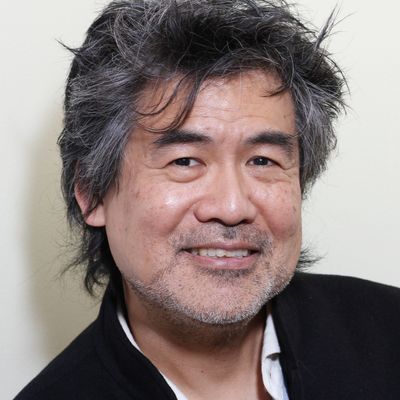
About
In this episode, legendary playwright Migdalia Cruz discusses her new anthology The Impossible Plays, which features three previously unpublished works alongside reflections from theater luminaries Virginia Grise, Todd London, and David Henry Hwang. The conversation explores Cruz’s provocative, essential plays, her creative process, and her insights for emerging playwrights seeking to build a career in the theater.
Transcript
This transcript was automatically generated and might contain errors.
[0:18] Mark-Eugene Garcia: Hello and welcome to the Drama Book Show.
[0:21] Mark-Eugene Garcia: My name is Mark-Eugene Garcia. On today's episode of the Drama Book Show, we're talking about the plays that were never meant to fit neatly into boxes.
[0:30] Mark-Eugene Garcia: What begins as a celebration of legendary playwright, mentor, and scholar Migdalia Cruz and her anthology The Impossible Plays quickly becomes something much larger, a conversation about artistic freedom, mentorship, legacy, and what theater can become when artists stop making themselves fit into and what theater can become when artists stop making themselves smaller to fit expectations.
[0:54] Mark-Eugene Garcia: Joined by acclaimed playwrights and theater advocates David Henry Hwang, Todd London, and Virginia Grise, the conversation explores what it means to create work that exists beyond convention.
[1:06] Mark-Eugene Garcia: Cruz's plays live in the spaces between worlds, between fantasy and reality, history and the future, joy and grief, and the living and the dead filled with mythology, politics, family, memory, and the rhythms of the South Bronx.
[1:22] Mark-Eugene Garcia: Throughout the night, the idea of the impossible play becomes a bigger question.
[1:26] Mark-Eugene Garcia: Are these works truly impossible?
[1:29] Mark-Eugene Garcia: Are the institutions sometimes limited in their imagination?
[1:32] Mark-Eugene Garcia: They talk about mentorship and the artists who shape us, from family histories to teachers and ancestors.
[1:40] Mark-Eugene Garcia: The conversation moves through the power of community, the importance of curiosity, and what it means to create work from instinct and truth rather than expectation.
[1:49] Mark-Eugene Garcia: And then the discussion expands even further.
[1:52] Mark-Eugene Garcia: It's education, identity, and the people who protect and nurture future artists before they even realize who they might become.
[1:59] Mark-Eugene Garcia: It becomes a reminder that theater isn't only about what happens on stage, it's about preserving stories, building spaces where people can feel seen and passing something forward.
[2:10] Mark-Eugene Garcia: So settle in for a conversation about impossible plays, necessary art, and the people who make us believe bigger worlds are possible.
[2:18] Mark-Eugene Garcia: The show is starting now.
[2:22] Migdalia Cruz: In 2019, I was writing a character who I wanted to take her life into a badass.
[2:27] Migdalia Cruz: And the way I thought she would be a badass was by self-publishing.
[2:31] Migdalia Cruz: Because I thought this gesture was so revolutionary.
[2:34] Migdalia Cruz: You don't have to wait for people to make your own books.
[2:36] Migdalia Cruz: You make your books, you can make them yourself.
[2:38] Migdalia Cruz: And I thought I should probably try to do it to see if it's doable.
[2:43] Migdalia Cruz: And I learned a couple of things.
[2:45] Migdalia Cruz: One, it is really doable, and two, it's really fucking worth doing.
[2:49] Migdalia Cruz: And especially for people who don't necessarily fit into the boxes, the small boxes that our field tends to identify people as.
[2:56] Migdalia Cruz: And so, like when I realized I could do it, I realized I just didn't want to be just doing it for me.
[3:01] Migdalia Cruz: I wanted to be doing it for everybody else.
[3:02] Migdalia Cruz: And guess what? You guys want to be doing it too.
[3:06] Migdalia Cruz: And I'm so happy you're here.
[3:07] Migdalia Cruz: And I'm so grateful to Daniela Naranjozarate.
[3:14] Migdalia Cruz: And this is she's one of the people who worked for Tripwire Harlot.
[3:17] Migdalia Cruz: She's one of our brand new employees, and she's also a playwright.
[3:20] Migdalia Cruz: And so grateful to Jacqueline Goldfinger, who's also one of the people who work for Tripwire, but you guys are not here to hear about them.
[3:27] Migdalia Cruz: You're here, they're about Migdalia Cruz.
[3:29] Migdalia Cruz: Well, I thought that up.
[3:30] Migdalia Cruz: So next year when I have the Sludgehammer series, I'm gonna do it in reverse.
[3:33] Migdalia Cruz: Migdalia Cruz is one of my favorite playwrights.
[3:36] Migdalia Cruz: I'm so thrilled to be doing this, and I'm so happy you guys are here.
[3:39] Migdalia Cruz: Thank you guys hello.
[3:48] Migdalia Cruz: I am giving the honor of presenting the speakers for tonight, and we are starting with no other than David Henry Hwang, who sings Woo!
[4:03] Migdalia Cruz: Whose stage work includes the plays M Butterfly, Chinglish, Yellow Face, Golden Child, The Dance on the Railroad, and FOB, as well as the Broadway musicals Ida, Flower Drum Song, and Disney's Aladdin.
[4:16] Migdalia Cruz: The Yellow Face revival is now running on Broadway, and M Butterfly was revived on Broadway in 2017.
[4:22] Migdalia Cruz: His newest musical, Soft Power, a collaboration with composer Jeanine Tesori, was a finalist for the 2020 Pulitzer Prize in Drama, his third such distinction, and called America's Most Produced Living Opera Librettist by Opera News.
[4:39] Migdalia Cruz: Hwang has written 13 librettos, and Aina Damar with music by Osvaldo Golijov is currently making its Metropolitan Opera debut.
[4:49] Migdalia Cruz: His screenplays include M Butterfly, and he's penning an Anna May Wong biopic to star actress Gemma Chan, as well as a musical feature for Paramount Pictures.
[4:59] Migdalia Cruz: For television, he was a writer and consulting producer for the Golden Globe-winning television series The Affair, and is currently creating and showrunning a new television series, Bailey Andoran.
[5:10] Migdalia Cruz: He also co-wrote the Gold Record solo with the late pop music icon Prince.
[5:16] Migdalia Cruz: So that's long, but here he is.
[5:18] Migdalia Cruz: Please welcome David Henry Hwang.
[5:20] David Henry Hwang: Woo!
[5:27] David Henry Hwang: Thank you, Daniela.
[5:28] David Henry Hwang: And thank you all for being here.
[5:30] David Henry Hwang: So this somewhere between my junior and senior years in college, I wanted to be a playwright.
[5:39] David Henry Hwang: And I was home in LA and I saw an ad in the LA Times calendar that said study playwriting with Sam Shepard.
[5:48] David Henry Hwang: And I was a big fan of Sam, so I clicked this thing and sent it in.
[5:52] David Henry Hwang: And it was the first year of something that became pretty prominent in Southern California, which is called the Padua Hills Playwrights Festival.
[5:59] David Henry Hwang: But this was only the first year that they ever tried to do it.
[6:03] David Henry Hwang: So there were only two of us that applied to be students, so we both got in.
[6:03] David Henry Hwang: I mean, I got to study with Sam, and perhaps even more significantly, I got to meet Maria Irene Fornés, who played such an important role in the playwright that we are celebrating tonight, Migdalia Cruz.
[6:28] David Henry Hwang: And Maria taught us to write from our body, to write from what we might call the subconscious, to follow impulse, to follow our dreams, and most importantly, what I took away from Irene is to be able to be free as an artist and to use the art to explore the freedom in myself and to bring more freedom to the world.
[7:05] David Henry Hwang: As I've grown older, I found that my what I do and how I look at playwriting has changed, that rewriting became easier, but in some sense, first drafts became harder because I had more craft, but I had to learn how to transcend that craft in a way in order to get my fingers in the dirt again.
[7:33] David Henry Hwang: And as an older playwright now, I look at some of my earlier work and I think, oh, how did I do this?
[7:41] David Henry Hwang: And how can I maintain that freedom that Irene taught me to revere?
[7:49] David Henry Hwang: And that is why Migdalia Cruz is such an important writer to those of us who are also dramatists, and those of us particularly who have been fortunate enough to get to do this for a while.
[8:10] David Henry Hwang: She has grown as a playwright in craft, experience, and wisdom.
[8:16] David Henry Hwang: And yet she has not fallen into the trap at all of letting that suppress her impulses and her voice as an artist, and she's able to hold on to and continue to give that gift of freedom.
[8:46] David Henry Hwang: She is able to navigate between fantasy and reality, between death and life, between history and the present, and perhaps a sort of Latin futurism.
[9:02] David Henry Hwang: Her work is populated by ghosts, by dictators, by American activists, by sexual transgressive expression, oftentimes rooted in the basic human things that unite us all, family, as well as a vision of the South Bronx and of being Boricua that encompasses the whole world.
[9:31] David Henry Hwang: She has managed to hold on to her craft without losing her freedom.
[9:37] David Henry Hwang: And as a result, she can write bigger stories, more epic stories, with a wider range of theatricalism, like Boom Raku Puppets.
[9:47] David Henry Hwang: And although we can say, is the American theater able to accommodate epic theater now?
[9:56] David Henry Hwang: Well, sadly, not so much.
[9:59] David Henry Hwang: And but that's a problem with the American theater.
[10:03] David Henry Hwang: It's not a problem with the work of Migdalia Cruz.
[10:12] David Henry Hwang: So we're all here tonight to celebrate Migdalia and to look at this incredible volume that has been published because she is an inspiration and an aspiration and a figure of hope to so many of us.
[10:32] David Henry Hwang: And I feel that she is a direct successor of her mentor, Maria Irene Fornés.
[10:40] David Henry Hwang: And because I've also had the privilege of teaching her wonderful playwriting daughter, Antonia, I feel that this kind of connects us a bit, and I'm able to congratulate and praise my sister, Migdalia Cruz.
[10:58] David Henry Hwang: Okay.
[11:19] Todd London: He spent 18 seasons as artistic director of New York's Neo-Literary, which received a special Tony honor under his leadership.
[11:27] Todd London: His many books include two novels and numerous books about theater, most of which you can find here at the Drama Bookshop.
[11:34] Todd London: He served on the faculties of Yale School of Drama, Harvard, NYU, and the New School, as well as the University of Washington, where he was executive director of the School of Drama, a past winner of the George Jean Nathan Award for Dramatic Criticism, and recipient of an honorary doctorate from DePaul University.
[11:34] Todd London: Todd London is director of the Dramatists Guild Foundation Fellows Program and the Legacy Playwrights Initiative, which last year honored, yes, Migdalia Cruz.
[12:20] Todd London: Please welcome Todd London.
[12:22] Todd London: This is really different.
[12:22] Todd London: First of all, hi, go see Yellow Face.
[12:28] Todd London: It's amazing.
[12:28] Todd London: And read Sheila Callaghan's plays, too.
[12:31] Todd London: So, why are we here?
[12:35] Todd London: Our country is tearing itself apart.
[12:38] Todd London: Hurricanes are shredding the South, and the American theater falling through the uneven floor it was built on, is reaching out to Jane Austen, Agatha Christie, Sherlock Holmes, and Dial M for Murder to save itself.
[12:55] Todd London: Meanwhile, no one I know is getting any younger.
[12:59] Todd London: Present company, except me.
[13:02] Todd London: And here comes Migdalia Cruz with a thick collection of plays she knows to be impossible.
[13:08] Todd London: She even calls them impossible, as if daring anyone who's even heard of the Drama Bookshop to stop what they're doing, to stop what they've been doing, to stop what they've been doing in all the ways they've been doing them, and to try something different, something impossibly different.
[13:28] Todd London: What the hell is she thinking?
[13:31] Todd London: And who does she think she is?
[13:34] Todd London: And who does she think we are?
[13:37] Todd London: Does she think we want to watch plays with dead people come back to life or hanging around in limbo like actual ghosts?
[13:46] Todd London: Does she think we want overheated dream images infecting our stages?
[13:52] Todd London: Does she think we actually need to contemplate a future in which a vile emperor-like president diddles himself while the nation burns?
[14:01] Todd London: Or that any God-fearing people would stand for a black Jesus and a white one licking each other on stage?
[14:10] Todd London: Does she believe that the nonprofit theaters would ever produce something on the scale of Fellini's Satyricon or God forbid, set in the Bronx?
[14:20] Todd London: Impossible.
[14:21] Todd London: Not only that, but I hate to be the one to say it.
[14:24] Todd London: Migdalia, okay, like the rest of us, is not getting any younger, even as the rest of the playwrights being produced in this country are most definitely getting younger.
[14:34] Todd London: Have you noticed that? Anyway, what is she thinking? And do we really want to know? Maybe if it were okay for a grown-ass Puerto Rican woman from the Bronx to write ghost plays like Shakespeare did, or like him to write about siblings orphaned in a post-plague world, and sure, maybe if it were okay to write dream plays like Goethe and Strindberg did, or okay, like those hallucination parts of Angels in America, or anarchic or expressionist works like Ubu Roi or that Brecht stuff, or early everyman. But we don't do that anymore. And we don't do what museums do, inviting Matthew Barney to transform the entire Guggenheim to a play space of quote, reproductive organs during the embryonic process of sexual differentiation.
Or filling the attic at Dia Beacon with Louise Bourgeois's massive, surreal and deeply personal structures, sculptures. Sure, there's one woman, but those people are artists and we're theater people, which is different, right? The other thing I keep tripping over is the way Migdalia's title is a kind of paradox. If these are impossible plays, how did she write them? If she wrote them, they're possible, right? Even if they might be hard to imagine, she imagined them. So are they impossible or not? So last year, Migdalia earned the designation of legacy playwright from the Dramatists Guild Foundation. It's a program I administer, so I was very happy about her winning that honor, despite the fact that she's still quite young for it.
I was also excited because back to back with Milcha Sanchez Scott's honor the year before, it kept the lineage of Maria Irene Fornés very much in the spotlight. If you haven't heard of Maria Irene Fornés, other than David mentioning her, because she didn't write TV and her only Broadway play closed in previews, you might be able to find some of her stuff here at the Drama Book Shop. Fortunately for me, this legacy honor brought Migdalia back into my life after many years of only glimpsing each other from afar. And I got to revisit her improbable slash impossible body of work and write some things. And she's thinking them in ways no one else ever has, which is shocking. And though I don't particularly believe in any kind of God, even blasphemous, at least if you think Dial M for Murder is the way to save the American theater, or if you're sure that Jesus was blonde.
Some of the things that I wrote were, she is our bard of the Bardo, and like that other earlier bard with his Hamlets and Macbeths, Migdalia loves a ghost. And her plays are polymorphous. They cross time periods, genres, genders, and realities. She draws on myth, fairy tale, legend, and dream, as well as political, literary, and personal history to extend the reach of her storytelling, sometimes all at once. A truism of pragmatic playwriting pedagogy holds that you can't mess with both form and content at the same time, but Migdalia must have cut class that day. She even presumes to slam together multiple stories in a single play. Take that, American theater. No wonder Tripwire Harlot is publishing her in their sledgehammer series.
I also wrote and believe every human comes stocked with her own dense mysteries. We sit together in the theater and share our common stories. We glimpse the inner immensities that divide and unite us. I want both the accessible commonalities and the mysterious distinctions, private visions, special language, and impossible interiority. I want the ungraspable mystery of the other person, that which is always out of reach. Migdalia's characters often live in proximity to that. So I don't know exactly why we're here, except maybe that someone of immense talent and singularity makes us believe that the impossible isn't. That our ghosts both haunt and bring us comfort, that our sexualities are vast and polymorphous and free, that we can imagine toward each other and know and love each other across time and place, and even as in her early play, Fur Through the Bars of Our Personal Cages.
Maybe we're here because her majestic creations inspire us to dream big and believe that theater is an art, and that such art fuels a different kind of fire than the ones burning around us. A fire of ambition and vision and hope for something we can't yet see and haven't yet sunk. Maybe we're here because we believe that badass playwrights of any age can show us to ourselves and show us the way to what's beyond ourselves. That beyond ourselves is what I come to the theater for. That beyond ourselves is each other, which is why I always want to know what Migdalia is thinking. Why I always want to know what her impossible plays make possible. Now I have the pleasure of helping format and assemble the book, The Impossible Plays of Migdalia Cruz.
And as an early career artist myself, spending time with Migdalia's work has been a masterclass in playwriting with race, compassion, hearts, and smarts. It is my greatest honor to introduce Migdalia Cruz.
[21:52] Migdalia Cruz: Thank you. The black one and the white one. Can you hear me? So as I look around at all your beautiful faces, I'm seeing the impossible. Filled with plays. No one has been brave enough to produce. So I want to thank you, Drama Bookshop, and Mark and David for hosting us, and I'm so grateful to Sheila and Daniela and Jacqueline and Ta and David and Virginia for sharing this space with me tonight, and thanks also to Morgan, Chiara, Linda, Thavio, and La Bruja for gracing the book with their words of support for me and my voice. My plays look back to move forward. They speak the unspeakable, and sometimes I hope they make you laugh at the same time. In this volume, three of my most unconventional characters and expansive landscapes are explored.
In one play, we see two middle-aged sisters cleaning up after the ghosts of their parents in a Cretona Park townhouse, looking for hope in a place shrouded by the darkness of disease and poverty. It has the sounds of Sansa and Seoul. In another one, we find two men in a sand-filled purgatory fighting to let go of their living loved ones after having sold their souls to the devil. But on their journey, they encounter the devil's servants who don't want to be devils anymore. Here live some 1930s Delta Blues and 1800s Puerto Rican Danzas. And the third play of the collection is a reimagining of Fellini and Petronius's Satyrikon, transposed from ancient Rome to envision a debauch and fascist America run by a president, soon to be deposed by his bastard Puerto Rican son.
I can dream, right? So for those of you who are still wondering why plays become impossible, these are some more reasons. Too much blood and feminine fluids. An honest exploration of human emotions and desires can be found unsavory by people with bourgeois ideas about what is a proper subject for literature. Two, too many characters and so many drastic scene changes. A lack of imagination will limit what producers can see happening on their stages. If you've ever worked in small theaters, you know how much can be achieved with few resources combined with the talented artists who work there. What can she possibly know about poetry and metaphor? When you're a Puerto Rican woman from the South Bronx, a person like me, you must constantly prove that your work is worthy of regard and respect.
If you're a man, you're encouraged to write big messy plays with blood and sex and vengeance. A male playwright I know once told me that women write about longing and make diary entries. Men write about big important social issues. I asked him, but what about those of us who do both? Who use imagery and personal journeys to focus on the humanity of those social issues? Like the issues that emerge from the sharp side of Machete as a 19th-century pirate talks to the man he has just slaughtered. Two Roberts, a pirate blues project. This play is dedicated to my mother, Gregoria Miranda Cruz of Cabo Rojo, Puerto Rico, and her nose. Roberto, 34, is a 19th-century pirate from Cabo Rojo in the southwest coast of Puerto Rico.
Ambitious, generous, brutal, an adventurer and seducer of women. He has my mother's nose. Time, the near future and an afterlife, place, a deserted island filled with abandoned juke joints, a crossroads, two railroad tracks betwixt and between. Prologue on a beach. In the dark, we hear a raging storm that segues into the sound of a blade being sharpened against a whetstone. A light comes up and a fight-scarred Roberto, sharpening the blade of a cutlass or machete. He speaks of the lifeless body of the man he had just recently hacked. He's stained with blood, his and the other man's. And Roberto says, "Hear that? Is the sound of the wind picking up. That's the sound of dull steel turning to gold, ready to pierce the entrails of a man richer than me, whom I will prick, rip, enter, and gore, and then I'll rob him."
There's a pause as he enjoys that sharpening sound. "I've heard it said that robbing a man after death is bad luck. His hair falls out, his penis shrivels. He loses all his money, and his women betray him. But I have never felt any of those ill effects." He drinks from a jar filled with red liquid. He studies the jar, turning it over in his hands. He holds the jar out to the dead man. "I found this in your cabin, fair size, well proportioned, good for keeping things. Holds a fine libation. Thank you, dear corpse. You were lucky I used my long blade on you." He returns to his sharpening. "I have my shorter blades forged into triangular points so that no surgeon can ever sew that gushing wound closed.
Slowly and in great agony, after perhaps three weeks of suffering, finally, a very rich man will die. But that's never mattered to me. All that concerns me is that his seaword possessions become mine. Half for me, a quarter for my men, and the last quarter for my country. An Afe, anyway. Add this last extra bit to my collection. I am a patriot, a man who stands for something. That hidden eighth will one day make my daughters rich. I will only have daughters. I always sharpen my own blade. Always take charge of my own destiny." There's a pause as he cuts out the tongue of his enemy and places it in the red liquid jar. "There. Sharper blade, faster work." He swirls the stuff in the jar and stares at the floating mess. "When you live by water, all liquids seem like home."
[28:59] Migdalia Cruz: Thank you all for listening and breathing with me for a time and reminding me that being a theater artist means you don't have to be alone. That would be impossible.
[29:21] Mark-Eugene Garcia: Yeah. Great. Thank you, Migdalia. Yeah, now please join me in welcoming Virginia Grise, who will be moderating our short Q&A session.
[29:41] Mark-Eugene Garcia: Virginia Grise is the Mellon Foundation playwright in residence at Bradamnia Theater and a professor at the University of Texas Austin. She is the recipient of the Alcred Award in the Arts, Yale Drama Award, winning Raiders Award, Writer's Award, and the Princess Race Award in Theater Directing. Her published works include Your Healing is Killing Me, The Panzer Monologues, co-written with Ivra Mayoga, and an edited volume of Zapatista Communicates titled Conversations with Don Burrito. Please welcome Virginia Grise.
[30:28] Virginia Grise: So before we start.
[30:33] Migdalia Cruz: Yes.
[30:35] Virginia Grise: Mark's driving around. All right, Mark. Do I keep talking?
[30:41] Migdalia Cruz: It sounds like something's happening.
[30:44] Virginia Grise: There's a song. Are you gonna sing to me?
[30:47] Migdalia Cruz: I am not.
[30:55] Virginia Grise: Yes? Can I just talk normal or different?
[31:00] Migdalia Cruz: Yeah. So I think before we start, I feel the need to say this publicly because this is how things happen. She deserves all the awards.
[31:11] Virginia Grise: Yes.
[31:09] Migdalia Cruz: She deserves all the honors. And she deserves all the productions. And we don't give them to her.
[31:29] Virginia Grise: I have in my chip. So I have four questions, and I'll probably start and then let them go. Some of them we've already started talking about, which is lineage and legacy. And you talk a lot about your mentor.
[31:52] Migdalia Cruz: Because you really have mentored so many. So when you think about where you came from, and who were the ones that helped you find your way as an artist, I'd like for you to talk a little bit about that, but also to talk a little bit about the ways in which you hope to help others find themselves as artists.
[32:16] Migdalia Cruz: Yeah, I think that's a kind of an essay question.
[32:56] Migdalia Cruz: So I felt like my mentorship was not the mentorship of the streets, not like I'm a gangster, I'm the hot. I wish I was. And we just came a piece of a bad plot and a police procedural. And I had I was tired of that. I was like, I know who deserves poetry, I know who writes poetry. My father wrote poetry. And he also worked in a steel factory. And I always think about what he taught me. I think was that whatever you think other people think of you, no one but your family can tell you who you are. And even if they tell you, usually they're lying. So I think that was a good lesson. They were there lots of I had lots of mentors, and Irene certainly was Marine Fornez was a big influence because what she did to me was when she first met me was tell me that I needed to stop avoiding who I was and really face that I was writing.
I had to learn how to write the truth of who I was. And I wasn't gonna find it in any book or any school or where any other people or any other place or in a certain structure for Irene is she was like characters will find their structure, but you need to focus on who your characters are, who populates your world, who makes you feel fulfills your heart. And I feel like that's what they've all done for me. And I don't and I if I would forget someone's name, I think if I tried to name everybody who was my influence, but I think mainly it was the place the South Bronx that I came from, being a New Yorker and trying to find a place, living from out of a and writing from a colonized mindset that constantly was trying to find home, and I was like, I'm gonna find it in my words, and I think I continue to search for that home.
[35:06] Virginia Grise: Yeah. What about you?
[35:13] Migdalia Cruz: Yeah. I remember us talking about reservation dogs one time.
[35:16] Virginia Grise: Oh, yeah, when you said the Bronx is the rest.
[35:19] Migdalia Cruz: And I said, Oh, so San Antonio. And so I always felt the Bronx. I've lived in both places. I was raised in San Antonio, and I've lived in the Bronx, and the Bronx is nothing like San Antonio, and it's so much like San Antonio at the same time. And the fact that this is published as such an important act, such an important feminist act of documenting stories. And so this becomes the place in which the stage becomes a place where I can share stories, but this becomes the place where the stories live forever. And where people can find them.
[36:19] Migdalia Cruz: As kids, that were brave enough to go to another country without knowing anybody, and for the women writers that were able to write the way that you wrote, because I never had anybody saying you can't write this way because I had the words on the page that showed me how. And you were the writer that helped show me how my sister.
[36:44] Virginia Grise: What fills your heart right now outside of this moment in a world turned upside down? What is filling your heart right now?
[36:56] Migdalia Cruz: Right now, I think I feel this moment really intensely because it's something I never would have imagined. It's like me and Vicky talking in a bookshop about books. And it doesn't have to be contentious. It's like appreciating each other's art and being able to just be artists together. That is making me really happy.
[37:19] Virginia Grise: What about you?
[37:24] Migdalia Cruz: Yes. Or should I ask you a different question?
[37:30] Virginia Grise: No, I want to know the answer though.
[37:38] Migdalia Cruz: Somebody recently told me to stop saying that I make theater. And it's been the most liberating thing that I've ever done. So another mentor, Sharon Bridgeforth, said, I want you to stop saying you make theater. Because what you're making is something else. And the moment that I stop saying that I make theater, I stopped fighting what the American theater refuses to produce and just started dreaming and making and doing. And that makes me really happy. The people that I'm able to gather, the audiences that come to see the work that I make with the people that I gather that has no fight in it, which is something that is very hard for me to do. It's to let go of the fight. It's just us coming together.
And so there is something that I think I was completely unprepared for about this moment of what it means for us to come together. And I think that there's so much Magdalena that you do, you just do. There's so much that you write, you just write. But so much of what you do is also just bringing people to the table with you. And so I really appreciate the moments of getting on a train to go sit and have lunch with you. And so I'm curious if we really can let down the machetes. Or if we should. If we can let them down. What is it that we want? Like as an artist, what is it that you want?
[39:14] Migdalia Cruz: Yeah, see, I don't think I can ever let down the machete. Only because it's really good for cutting up meat and stuff. And we have to eat. So I think there are practical reasons to stay armed, and sometimes it's not a physical armor that you carry with you into a space. But for me, it's the armor of words and intellect and poetry and saying that I'm here and this is who I am. And you have to listen because I am as important as you are. And for a long time I was like, am I as important as I had they almost had me convinced there, especially out of grad school. I was like, I don't know what I'm doing this for. What is who am I? But I've never not felt like I was an artist. And whatever that means, I don't know.
[40:05] Virginia Grise: Your whole life.
[40:07] Migdalia Cruz: Yeah. Yeah, because I fell in love with puppets when I was six. The first theater I saw was the Billboard Marionettes, which I think comes out, they come out from out of LA or something, but that's the only theater we saw in PS58 in the Bronx. And I remember watching Pinocchio, and I was like, oh, that's magic. He's a son, but he's a bit of wood, and then he's a nasty son and he lies. And I just thought, I want to do that. And now it's like six years old. So then I went home and I wrote a play about civil rights called That Gets Bad. The birth of a man means death to the clan was my play. So this was 1963. And my dad had made me some puppets out of spalding balls. And the clansmen were all tissues, white tissues.
And they were about to lynch a black man, and he asked for the last request was to for a cigarette, and when they go to light it, he lights them up on the whole thing. Oh wow, I thought that was brilliant. Until he immediately took apart the little puppet thing that you did because it was playtime was over. But I thought, oh, this was fun. Like creating metaphor out of spalding balls and people out of tissues and destroying the whiteness that might want to destroy you. And I didn't put that together when I was six, but as I got older, I was like, oh, I'm still writing the same play over and over again. When am I gonna get it right? But I think knowing that knowing the magic that you could have in the theater, that was really important to me.
And it wasn't the magic of like at the Metropolitan Opera that has three floors and turntables. I didn't need that. I needed those spalding balls and those. So I thought, yeah, I can do this. And it took Irene actually to remind me of what I had done and what I had learned. And I was like, so I gotta go back. And I gotta fix this because I learned some kind of weird shit in graduate school and undergrad that was about structures, like structure. I don't understand structure, the way other people understand structure. For me, structure is about you follow a character and they take you on a journey. And that journey can go in any many different directions, can go and can go and on many different planes and through many different parts of the world and dimensions.
So I don't want never felt like I needed to limit who my where my characters are going because of structure. It was all like it was all intuitive. Sometimes when I'm writing a play and I don't know where to go with it, I put my scenes on the floor and I try to make maps out of them. And I walk on my among my characters and see what does this do? Does that go there? What if I move scene five to scene 15? What happens to everybody in the play? And how does that affect what happens and what is that and how does that affect the message that I want to say? I don't know, Vicky, you're much more articulate than me.
[43:05] Virginia Grise: Oh, I do that with a pair of scissors too. So I take the scissors and a photocopy machine. Yeah, copy and repeat and repeat. I've always said I want to produce that play, by the way. So one of these days I'm gonna produce plans.
[43:20] Mark-Eugene Garcia: We're gonna stage it. All right, Migdalia, one of these days. I thought I'm interested in talking about graduate school and what it does to you. You talk about the six-year-old play that I've always wanted to stage since the first time I heard it. I'm interested in a moment in your career that was your favorite and why. This one right here is pretty damn good. Like looking out on everybody thinking that people are actually here to listen to what I have to say, and that I don't have to question that. That's pretty good. And thinking that you were talking about putting that on the machete, I'm thinking that when it's time to put away the knife, it might be also time to pick up the pen, but it also might be time to appreciate everything you've gotten.
[44:14] Migdalia Cruz: And I feel like living in a sense in a world that where you fill it with gratitude and kindness until it doesn't work because sometimes it doesn't work. It's important to me to move that way through the world and keep learning about the depth of my rage and how do I and how do I get to the other layers to get becomes more subterranean with the way I write. And but also letting the light emerge more prominently. And that's what I feel in each moment. What is the hopeful moment here? How do I get from A to B? How do I keep from doing it and not ruin myself or ruin my words or write for somebody else? Because like I'm really bad at that. People give me directions, I'm like, I don't even understand what you're saying. What am I supposed to do? You want me to put this when I was working on a musical opera by Frida Kahlo.
[45:08] Migdalia Cruz: Oh my god. I wrote 28 versions of that play by myself because I hated the scripts so much because I was co-writing it and I did not want to write that fucking play. So I did it for myself. So I have those 28 drafts. If anybody wants to read them, but I think it's but I knew that I had to do it for myself and keep finding the correct voice that I needed to put in the world. Even if no one else read it I knew it was there and even if it stays in my file for the rest of my life it's there and I understand I what I know about Frida I know but people questioned like why would a why did they hire a Puerto Rican to write this Mexican story. I'm like well she was half German let's start there. And have you seen her paintings? Have you seen my play? We had we have so much in common that's about blood and womanhood and and facing the individual and facing yourself over and over she did it a lot.
[46:08] Migdalia Cruz: She did 146 self-portraits. But the idea that she's that she's entrenched in herself I thought that is a role model. I was like I don't know anybody else who's that self-involved and I like that. I like that she did that. I was like man she's in the real sense of the word I said she can really and also that she was married to that that man that colossal man that was given all of the props and and she never was or she was given them in a different way. Again her diary entries and but if you look at her paintings they're much more than diary entries. Well you know what I want to say before I forget that the person who did my cover that's her painting over there. She asked me to bring it she couldn't be here today and that there that's the actual painting of that is in black and white in the book Christian powder jewelry and I wanted to give her a shout out and she really I've never had a book like this it's so beautiful.
[47:03] Mark-Eugene Garcia: Oh no this is a beautiful book. And definitely get it because the words but also it's a really word words are good. They good but also it's a really beautiful this is the thing about books, right? It's like the everything about the everything about it. The thing that I remember being a kid and seeing Frida that I loved is that she had her own house. She had her own house. Even when she lived with the colossal man.
[47:28] Migdalia Cruz: Yeah. She had her own house. I'm curious, Migdalia, there are too many to name. But if there was just one I want to stage all Frida plays now, back to back, one after another. It's that I don't know by number 15 people would be like, I think I get it. Whether you have to change it for the Frida musical the Friday I'm curious the one play that you haven't seen on stage that's I want to see that play.
[47:59] Migdalia Cruz: I really want to see the two Roberts which I read from today. The idea of pirates and Delta Blues masters in the same world living in living on in sand bars in the middle of the Caribbean. That's for me that's like the story of my life. I want to see all those things in one place and all of it to be theatricalized and beautiful and not questioned. It's my favorite play in the book. I kid you not and part of the reason why it's my favorite play in the book is because it reminds me of San Antonio. When I read it I just I felt like I was on the east side of San Antonio next to the train tracks which I always imagined were the ocean I'd close my eyes and imagined they were the ocean and there were many moments when I read that particular piece that in the middle of it I would just close my eyes and I could hear so much.
[48:48] Migdalia Cruz: It was like having a shell to your ear that I could hear voices and music and the ocean and all of those things all at once. We're gonna close with one last question which is a question I ask everybody all the time. What's your biggest, boldest, most audacious dream?
[49:14] Migdalia Cruz: Wow. That's some one of those things that continually changes. I was like, to see a woman in the White House, that would be nice. See the right woman in the White House, that changed already. And to think that our world, this that we're in, there we're going to be able to, in our lifetime, see the world transformed into a kinder and gentler place. And I don't mean that in a stupid way. That it's gonna be a that we're going to be able to understand that as a country of immigrants, we must love our immigrants, that because we are all from somewhere else, that we must understand the all the native peoples that we have displaced in order to be here, that we're gonna underst not only understand it, that it'll be in our blood, and that together we'll walk in some world that we don't have to continually justify doing it, that we will all be one.
[50:16] Migdalia Cruz: And that sounds like a kumbaya and we are the world, but I feel like that is my dream. Because you don't have peace with your sisters either, right? And they're your sisters, I know. But you know how to take their hand, you know how to let them be themselves, you know how to let them how and how they will let you be yourself. And in that world, we'll all be equal. Maybe not, maybe we'll be fighting, but we'll be equal. It won't be, I don't know. I think I feel like that's my dream. I almost said being able to dance at my daughter's wedding when I'm 90.
[50:57] Migdalia Cruz: Because she's slow on the drawing. I mean grandchildren. No pressure, writer, no pressure, writer. I think that's my dream. What's your dream?
[51:18] Mark-Eugene Garcia: I'm living it. I'm here. I'm here. I'm here with you. This thing that you said about finding yourself back home through the writing, and this is the last sentence that I want to end on because my other favorite place with Migdalia Cruz is a bar. I love to be with Migdalia Cruz and a glass of whiskey. But one of the things that I really feel like you've done that map, I love this image of the map on the floor and you walking on the floor because I know that you've talked in the past about this idea of having a safe house where artists can go and write whatever the fuck they want to without compromising their voice.
[51:59] Mark-Eugene Garcia: There is no singular playwright that I can think of. And I'm not being hyperbolic in the history of theater that has more integrity than Migdalia Cruz. That has never sacrificed her voice, the people that inspired her from the South Bronx, her family that has never sacrificed any of those things. And you really have created the home for so many of us. You've created the safe house for so many of us to know that it's possible, that it can be done, and that we're in it, right now in this exact moment. And thank you for all of your work, all of your work, all of the years, and thank you for this book. And y'all better buy it. And again, all the awards, all the honors, and one of y'all better give her some productions, goddammit. Woo!
[53:21] Mark-Eugene Garcia: Oh, okay. So we're gonna set up if you guys will sit down for just a minute because we have a very narrow hallway, right? We don't want anybody to get trampled. So you guys will take one second. We're gonna move all of our lovely speakers out front to where they can sign, and I'm gonna give you a little more information, and then we will release you. Just give us one second, we'll get everyone over.
[53:43] Mark-Eugene Garcia: So I want y'all to say there was a riot trying to get the books. So thank you all for coming. Thank you all for coming.
[54:02] Mark-Eugene Garcia: Once again, please follow Pathabs, follow us on social media at Bookshow Podcast, follow our events. And we are gonna bring some of our guests down this way. We're gonna ask you again to get the stake, but Jackie's gonna tell you something while we head out about this and future future publications, and then our resident Disney line reader, Mark, will line you up one row at a time to come and get your beautiful books signed for some reason. You did not pick up a book on your way in. And now you're just itchy to read all the contents. Or something maybe think of your best friend of how much they would love this. And you want to buy a second book. Dylan has more books at the register. And thank you all once again for coming to the Drama Bookshop tonight.
[54:55] Jackie Goldpinker: Thank you so much for coming out. I'm Jackie Goldpinker. Thank you so much for coming out. I'm the creative director of this legendary series. We are thrilled to work with at least one writer every year to create a book of plays that in a way to published in a way the traditional publishers can't do it, right? It's give them the free to be the artist on the page the way that they are the artist on the stage. So absolutely, we would love you to get many copies of Migdalia's beautiful book. Also know that we have three others, previous books in the series. We have a book by Philip Howes with illustrations by his friend. We have a book by Christina Anderson with illustrations by herself, and we have a book by Hansel Young that has doodles that she has doodled in all the margins of her plays, so you can think see how she came to those ideas, which is really cool.
[55:50] Jackie Goldpinker: Next year we'll be releasing a book by Sharon Bridgeforth, which I believe, yeah. Right? Yeah, Vicky and Al you mentioned is incredible influences on their work. For you guys who don't know Sharon, her work, she's mainly West Coast based. She creates books that you can actually do as a workbook for yourself, or you can take it to your community, and there are prompts to show you how you can build a show together with your community based on the book. All of it told through the autobiographical perspective of her mother's life. So we're very excited. We'll release that probably around the same time next year. So that we hope that you'll follow us on Instagram and come back next year to see that and learn more about the series.
[57:07] Mark-Eugene Garcia: So tune in and we will discuss his play, What We Deserve. So remember to follow us on Instagram at Drama Book Show Podcast. Follow us on Eventbrite at Drama Bookshop. And remember, all the books we talk about can be found here at the bookshop. And so can we. And we will see you at the bookshop.
© Broadway Podcast Network, All Rights Reserved