

In this episode, Mark-Eugene and David open up about stage fright, anxiety, rejection and possible ways to cope. Meanwhile, guest moderator Patrick Page guides us through the profound insights provided by Elma Linz Kanefield, LCSW... Read More
From the show: The Drama Book Show!
Guests
About
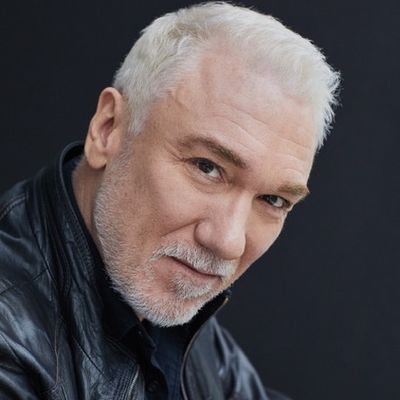
In this episode, Mark-Eugene and David open up about stage fright, anxiety, rejection and possible ways to cope. Meanwhile, guest moderator Patrick Page guides us through the profound insights provided by Elma Linz Kanefield, LCSW. Elma, a distinguished expert in the psychology of the performing artist, shares her rich experiences gleaned from working with countless artists. Through her narrative titled "Hamlet's Mirror," she eloquently chronicles her life's dedication to this field, highlighting invaluable lessons learned from performers across different ages and stages of their careers.
More information on Elma Linz Kanefield, LCSW can be found at ElmalinzKanefield.com.
Transcript
This transcript was automatically generated and might contain errors.
[0:19] David Rigano: Hello and welcome to The Drama Book Show.
[0:21] Mark-Eugene Garcia: I'm Mark-Eugene Garcia.
[0:22] David Rigano: This is our fifth episode.
[0:24] Mark-Eugene Garcia: Wow.
[0:26] David Rigano: Yes.
[0:27] Mark-Eugene Garcia: Time flies.
[0:28] David Rigano: And today we are going to be talking about Hamlet's's Mirror.
[0:28] Mark-Eugene Garcia: Hamlet's Mirror.
[0:32] David Rigano: What's that?
[0:32] Mark-Eugene Garcia: It's a book by Elma Linz Kanefield, who is a licensed therapist.
[0:38] David Rigano: And of course, the title refers to the line from Hamlet's, "acting is to hold as 'twere the mirror up to nature."
[0:47] Mark-Eugene Garcia: That is amazing.
[0:48] David Rigano: So she talks about how to approach acting from a therapeutical standpoint and how to hold that mirror up to nature in a healthy way.
[1:07] Mark-Eugene Garcia: Yeah. And a lot of people who find their way into this industry have anxiety issues already.
[1:16] David Rigano: And I won't pretend that this industry and the things that we have to go through doesn't contribute to that.
[1:24] Mark-Eugene Garcia: So this is really talking about looking at your career and getting yourself on stage from a therapeutical standpoint.
[1:32] David Rigano: And really, I joked about this on the night of it; it felt like we were in group therapy.
[1:38] Mark-Eugene Garcia: It really did.
[1:39] David Rigano: I know that as someone who also approaches this world through a lens of anxiety, it really did help just listening to her talk.
[1:51] Mark-Eugene Garcia: Yeah.
[1:51] David Rigano: And talking to her afterwards. But it just really showed that I'm not alone.
[1:57] Mark-Eugene Garcia: And I think that was the most important part.
[1:58] David Rigano: That's such a big thing.
[1:59] Mark-Eugene Garcia: Yes.
[2:00] David Rigano: You're a writer primarily.
[2:02] Mark-Eugene Garcia: Both of us are writers primarily.
[2:04] David Rigano: But you do act.
[2:05] Mark-Eugene Garcia: Yeah.
[2:06] David Rigano: And I get myself on stage occasionally. I've got a performance coming up next month that I'm probably gonna have to flip back through this again in the days preceding the show.
[2:21] Mark-Eugene Garcia: I, you know, I do cabaret. Do you still feel stage fright?
[2:25] David Rigano: What we call stage fright?
[2:27] Mark-Eugene Garcia: On a daily basis, yeah, I think about that a lot, especially because not only do I perform every once in a while, but I also have to get up once a week and do these events, whether it's you or me hosting or working with our guests or working with our audience.
[2:48] David Rigano: It's amazing to me the number of accomplished writers, some of whom are theater people and some of whom, but especially if they're theater people, who will be heading down the stairs to come to this presentation, and they'll go, "Oh, I'm so nervous."
[3:05] Mark-Eugene Garcia: Yeah, right.
[3:05] David Rigano: And I'm like, you and I are gonna sit on stools and talk, and half the people out there are friends. I've had people who have said, and I'm not gonna name names, but some people you wouldn't expect, say, "I'm kind of nervous about..." I think part of it, and this is flattering, but they go, "I mean, I'm talking at the Drama Bookshop," and we're like, "Oh, this old play."
[3:29] Mark-Eugene Garcia: Also, I think though, it's anytime you put yourself out there.
[3:32] David Rigano: Yeah, I noticed that. I'm nervous when I'm acting or anything like that. But if I'm really putting my own work out there, every couple of weeks at the BMI workshop, I have to present a song.
[3:43] Mark-Eugene Garcia: Yeah.
[3:43] David Rigano: Often I have to sing my own song. And I'm already nervous about singing my own song. But then I'm in that place of like, "Oh wait, they didn't laugh. Did they not laugh because I didn't hit the note? Did they not laugh because I'm not performing it right? Did they not laugh because the lyrics are wrong?" All of those things, and you spiral, and you're standing up there and you're no longer in the moment.
[4:02] Mark-Eugene Garcia: That's something that I know that when she was speaking in the book about spinning the way you think, or about facing those fears, that all of that came to mind.
[4:13] David Rigano: Yeah.
[4:14] Mark-Eugene Garcia: And that's why I was like, "Oh God, I need this book."
[4:16] David Rigano: Do you remember? I mean, I know that you do, when we took our musical to Chicago.
[4:22] Mark-Eugene Garcia: Yes.
[4:22] David Rigano: This was in 2011.
[4:24] Mark-Eugene Garcia: Yes.
[4:27] David Rigano: And it was the night of the show.
[4:30] Mark-Eugene Garcia: And I said to you, "I think I'm just gonna stand in the back."
[4:34] David Rigano: Yes.
[4:35] Mark-Eugene Garcia: Do you remember? Do you remember what you said to me?
[4:38] David Rigano: I don't.
[4:39] Mark-Eugene Garcia: You said, "No, you're not."
[4:42] David Rigano: Because you won't stand in the back.
[4:44] Mark-Eugene Garcia: You will pace.
[4:45] David Rigano: Yes, that sounds gonna sit next to you.
[4:47] Mark-Eugene Garcia: Exactly, like me.
[4:49] David Rigano: And I was like, "You're right."
[4:52] Mark-Eugene Garcia: You're right. That is what I would have done.
[4:55] David Rigano: I would have stood in the back pacing, probably making you nervous pacing or so. So you said, "No, you're gonna sit down in the audience next to me."
[5:05] Mark-Eugene Garcia: And I think had I been in that place too, I would have probably been pacing around if I had been the one to want to stand in the back.
[5:11] David Rigano: Because I am that person.
[5:13] Mark-Eugene Garcia: It's so funny how anxiety really does define us in so many ways.
[5:20] David Rigano: And I remember being nervous at things as a kid and thinking, "Oh, you know, when I'm older, that's all gonna go away."
[5:28] Mark-Eugene Garcia: But somehow it gets worse.
[5:30] David Rigano: Yeah.
[5:32] Mark-Eugene Garcia: Have you ever called out of work because of anxiety?
[5:36] David Rigano: I had a very deep, dark experience with anxiety where my old job closed, and I had put such a definition of myself into that job that when it closed and 30 of us lost our jobs, I remember I was at dinner with friends and someone said, "So what are you gonna do now?" While I was talking to them, I noticed like sweat pouring down my forehead.
[5:54] Mark-Eugene Garcia: Oh no.
[5:58] David Rigano: And I'm like, "Well, it's a hot restaurant because it's Peruvian food." And I went outside in February and was like, "I'm just really hot right now." And I'm standing there with no jacket and still just profusely sweating, and my heart is pounding.
[6:11] Mark-Eugene Garcia: Oh God.
[6:11] David Rigano: And I went inside. My husband was like, "Are you okay?" And I'm like, "Yeah." And then it just didn't stop.
[6:15] Mark-Eugene Garcia: Oh no.
[6:15] David Rigano: And so I turned and then to him, I'm like, "I need to go because I'm obviously sick." Like, I'm obviously I have a flu or something. I knew what was wrong, but I just said it's this because I didn't, and they were like, "Oh, okay, we'll feel better." I went home and he came home and said, "Are you okay? Like, I brought you some soup." And I was just like, "Babe, it's not the flu."
[6:36] Mark-Eugene Garcia: Oh no.
[6:36] David Rigano: And he goes, "What?" I'm like, "I froze up. I had stage fright in a real environment."
[6:42] Mark-Eugene Garcia: Oh God.
[6:43] David Rigano: So that happened. I started thinking, like, "Oh God, am I gonna be able to deal with that?" And then it happened a few days later at the store when the cashier just said something like, "Oh, I see you more often than usual." And then at the bank, and little by little for the next six months, my bubble got smaller and smaller and smaller until I was not leaving my apartment.
[7:04] Mark-Eugene Garcia: Uh-huh.
[7:04] David Rigano: And I was in this place of like, "Will I ever present my work again in front of a crowd? Will I ever act again? Will I ever do any of these things that I used to enjoy? Or will I just now look for a job that requires me to stay at home? And what does that mean for my marriage? What does that mean for my friends?"
[7:19] Mark-Eugene Garcia: Yeah.
[7:23] David Rigano: It took a lot of time and therapy to get out of there. And honestly, the thing that really flipped it was doing Encore.
[7:29] Mark-Eugene Garcia: Oh wow.
[7:31] David Rigano: Because I almost said no. When they reached out, I almost said no because I was like, "No, I don't want to be in this world." And then I had gone through enough, but a good chunk of therapy and been working on it that when the opportunity arose, I said, "You know what? F it. I'm gonna do it."
[7:47] Mark-Eugene Garcia: Yeah.
[7:48] David Rigano: And that to me, like coming out of that was like, "There is nothing less private than having cameras on you at all times of your life for a week."
[7:57] Mark-Eugene Garcia: Oh God.
[7:57] David Rigano: And so immediately after somebody had offered me a role in something, and I had said, "Let me think about it" before I left. And coming into it, I was like, "No, I'm gonna do it. I'm back."
[8:06] Mark-Eugene Garcia: Good.
[8:07] David Rigano: And it took that, but it's still there. Anytime I get to perform, it's still like in that place.
[8:13] Mark-Eugene Garcia: I had a day. You made me think of something else as well, but I had a day, I was directing a show, and I just, I can't remember, it was a combination of things because there's always multiple micro anxieties going on when you're doing a show and outside things, and I just woke up and I had the most debilitating anxiety attack.
[8:35] David Rigano: Oh no.
[8:35] Mark-Eugene Garcia: And I called the producer and I said, "I'm sick," and this is what I want you to do. I can't come in to rehearsal today. This is what I want you to do. And then I called the choreographer and I said, "I'm sick, and I would like you to go over these things. Like, this is what I want done in rehearsal today."
[8:46] David Rigano: Oh God.
[8:46] Mark-Eugene Garcia: And then I called the musical director, who was my brother, and I said, "I just called the producer and the choreographer and told them I'm sick. I'm having a panic attack."
[9:05] David Rigano: Oh God.
[9:05] Mark-Eugene Garcia: And I cannot come into work today. So they already know, but this is what I want. Please call me one day. And it just, you know, and you have to come to terms with the fact that, like, even now I'm saying, "Well, I told them that I was sick. I told my brother that I was having a panic attack."
[9:19] David Rigano: Yeah.
[9:19] Mark-Eugene Garcia: I was sick.
[9:22] David Rigano: It's, I was having a debilitating panic attack.
[9:25] Mark-Eugene Garcia: Yeah.
[9:25] David Rigano: I was sick for the day.
[9:27] Mark-Eugene Garcia: And you never know. I've even been here at work and something will happen, and it'll, I will spiral.
[9:31] David Rigano: Yeah.
[9:31] Mark-Eugene Garcia: And I'll just be, I'll just be working in one of the coolest, most wonderful places that you could be in New York City in a job full of creatives and guests that are all creatives as well, and just like heart beating, terrified, spiraling about something that's totally nothing.
[9:50] David Rigano: And that's what it is.
[9:52] Mark-Eugene Garcia: I, when I was in college, and I think it was because I was at that point really pulling away from performing and moving closer to writing and directing, but I was getting the worst stage fright just about getting up in front of anything.
[10:08] David Rigano: Yeah.
[10:08] Mark-Eugene Garcia: And a friend was directing a student production of Assassins. I didn't audition, but she came up to me after the auditions. She had not found someone to play Booth.
[10:23] David Rigano: Oh wow.
[10:23] Mark-Eugene Garcia: And she offered it to me.
[10:28] David Rigano: Offer only.
[10:31] Mark-Eugene Garcia: John Wilkes Booth in Assassins, and I said no.
[10:31] David Rigano: Oh no.
[10:31] Mark-Eugene Garcia: And I said, "No, I'm too busy this semester."
[10:37] David Rigano: That was a lie.
[10:38] Mark-Eugene Garcia: Kathy, if you're listening to this, that was a lie.
[10:41] David Rigano: I was, it was my anxiety. The idea, her when she asked me to play this dream role, this amazing character, the idea of getting up on stage made me so sick to my stomach that I turned it down.
[10:58] Mark-Eugene Garcia: Yeah.
[10:59] David Rigano: And I think that's conversations like this and conversations like the one we had at the store are ones that remind us that we're not alone in this.
[11:09] Mark-Eugene Garcia: And I think that that anxiety does that.
[11:12] David Rigano: It makes you feel like you're alone and it makes you feel like you're the only one going through this, that you're a failure.
[11:16] Mark-Eugene Garcia: How are you gonna do the thing that you love doing because it scares you?
[11:19] David Rigano: And this was showing us, no, that's not true. Like you still can, and you're not alone.
[11:26] Mark-Eugene Garcia: And not only that, there's somebody who can help you. There are people who can help you.
[11:27] David Rigano: It's nice to see that the professionals still have this.
[11:34] Mark-Eugene Garcia: Because this is the first episode that we're doing that wasn't moderated by either you or me.
[11:39] David Rigano: Right.
[11:40] Mark-Eugene Garcia: We had a guest moderator come in, who is someone who had worked with Elma, who had worked through his own issues, which he talks about in this, someone you might have heard of named Patrick Page from Hadestown and Spider-Man and Hunchback of Notre Dame.
[11:56] David Rigano: Uh-huh.
[11:56] Mark-Eugene Garcia: And currently has his show, All the Devils Are Here, which he was, I think he was about to go into rural.
[12:02] David Rigano: He was promoting it while he was here.
[12:04] Mark-Eugene Garcia: Yeah. But he was also having anxiety over the fact that he was like, "Oh, I opened in this two weeks, whatever it was."
[12:11] David Rigano: So, yeah, there's also something about hearing someone who you have watched on a Broadway stage, watched command a Broadway stage, and hearing that, "Oh, he goes through the same stuff."
[12:27] Mark-Eugene Garcia: And it doesn't have to be the exact same stuff, but he feels that?
[12:30] David Rigano: But it's true, it's something we all experience, but I think we often tend to think it's just us.
[12:36] Mark-Eugene Garcia: That's just our anxiety doing that.
[12:39] David Rigano: Yeah.
[12:40] Mark-Eugene Garcia: I'm excited to give this a listen.
[12:42] David Rigano: Yeah, here we go.
[12:42] Mark-Eugene Garcia: So let's listen to our event for Hamlet's's Mirror by Elma Linz Kanefield, moderated by Patrick Page.
[12:52] Patrick Page: Hi, I'm Patrick, obviously. Welcome. Thank you all for coming. I'm here to introduce you to my friend and former therapist, Elma Linz Kanefield.
[13:04] Patrick Page: I first came to Elma in, oh my goodness, Elma, probably 1993 or 94. And I worked with Elma for a long time. I can't remember how long, but over a decade. She helped me tremendously, and much of the wisdom that she imparted to me is in this wonderful book, Hamlet's's Mirror, the title being taken from Shakespeare's play, obviously.
[13:30] Patrick Page: Hamlet, where Hamlet's says that the purpose of playing was and is to hold the mirror up to nature to show virtue of his own image, scorn, her own featuring the very age and body of the time, his form and pressure.
[13:46] Patrick Page: So that's where this comes from. Now, in the case of this book, it's also descriptive because the book is not only to be read, it is a kind of mirror itself. Each chapter ends with reflections. You're invited to take a look at where you are, for example, on the performance anxiety scale, on uh well, Elma will go into it and I'll let her talk about all of that. So, Elma, would you like to say anything?
[14:17] Elma Linz Kanefield: Well, I'm thrilled that you're here with us, and many of you have come to see and hear Patrick full of excitement. And I hope you'll leave full of excitement about Hamlet's's meal. Welcome, welcome. I see many faces that I know and many faces that I don't know, which is very gratifying. So thank you for coming out on this really ugly evening. And let's make it a beautiful evening. Okay. So welcome, welcome. Why don't you read the beginning of the book?
[14:50] Elma Linz Kanefield: So that it's it's a wonderful opening uh tableau, but each chapter starts with these wonderful tableaus that make these clinical questions personal. And the first tableau is pretty wonderful. So I asked Elma if she'd start there. Okay. Tableau one.
[15:05] Elma Linz Kanefield: It's called the Young Woman. Take one. The young woman stepped up from the wings onto a small New York stage and into the cone of light shining down just for her. Trying desperately to ignore the sounds of wrestling paper and the shifting bodies in the creaking chair. She took a deep breath. The whirling voices in her head were more difficult to discount. Well they like me. Dwell up. Okay. I hope I can hit that note. Seconds felt like hours. She closed her eyes, rocked her head slowly and gently tapped out the rhythm of the slightly under-rehearsed melody. As the first notes of her music reached her. She took another deep breath, held it, and then slowly exhaled while lifting her chin, focusing on the axe of light in the back of the performance hall. Young woman opened her beautifully painted mouth to produce silence. She never sang it again. That young woman, me. Thank you.
[16:22] Patrick Page: So that's how the book opens with uh a kind of confession. So you literally lost your voice. You were a singer.
[16:30] Elma Linz Kanefield: Call it a Torah. Perfect pitch. Yeah. Came from the Midwest in New York City. Yeah. And here you were in an audition situation.
[16:40] Patrick Page: No, performance.
[16:42] Elma Linz Kanefield: Performance situation. Tell us what happened.
[16:47] Elma Linz Kanefield: Well, I went to doctors, I went to teachers, nothing. So I gave up and I went back to St. Louis. I went to a psychiatrist who said I had an adjustment reaction. If only I could adjust in my environment. And really, nobody could help a struggling artist. And I was struggling.
[17:26] Elma Linz Kanefield: So I went to graduate school. I learned all I could about what make artists too. And I moved back to New York, and I'm looking at Audrey, and I joined the Institute for Performing Artists. That was my first day here. And then I got the opportunity. I opened my private practice.
[17:48] Elma Linz Kanefield: Oh, this is interesting. This is New York City, right? Mecca for performing artists. I thought there'd be hundreds of private practice who teach performing artists. Zero. I was pretty successful. And then well, when you're a number of one or zero, you're pretty successful. And then I got the opportunity being the founding director of the counseling services of the Juilliard School. So that was a dream true. I consider myself pretty fortunate.
[18:26] Patrick Page: You came here as a performer. You found that you were in a situation where you needed counseling. You needed somebody who understood performers and understood the mental health side of it and understood performance anxiety, stage fright, all of those kinds of things.
[18:45] Elma Linz Kanefield: And there was no one available. So you essentially became that person. And over the years, you say you you learned additionally from your clients what their needs were, right? And you along the way began thinking about a book or thinking about things you'd like to be able to say who to people who didn't have the great good fortune that I have being in the room with you. What is that in terms of how it's near? What is the book about?
[19:15] Elma Linz Kanefield: And performance potential is being and doing the very best you can be and do, knowing what you know at the moment of performance. Or set off to school and just do your best. Well, we do our best at different times. If you're about to play Tchaikovsky's violin concerto for the first time, you may know it. You may even have it memorized, but you're going to play it differently the third time than you do the first time. Why? You practice. You know it better. It's in your fingers better. It's in your bowl better. It's in your fiddle better.
[20:05] Elma Linz Kanefield: I learned what prevents artists from reaching their performance potential. And what empowers them. And I also saw developed four personality profiles. And two fell into, I call it the diva syndrome. The diva syndrome, where the energy is such that you can't possibly reach your performance potential. And two, you can and do.
[20:56] Patrick Page: It doesn't make it feel so complicated. And what are those four personality types?
[21:02] Elma Linz Kanefield: Uh well, the first one is the problem written personality, the second one is the pugnacious, the third one is the promising, and the fourth one is problem written. So, and as you go through the book, you can take these reflections with a scale of say one to ten, exactly.
[21:23] Elma Linz Kanefield: So, one through eight. So, uh a one through eight, and you can sort of rate yourself as to where you are in these various personalities types.
[21:34] Patrick Page: Yeah, and move yourself toward a more helpful personality type if you find that you're in a negative or destructive personality type, right?
[21:41] Elma Linz Kanefield: Oh, okay. If your thinking is wrong, you have a saying. One of the things that I realize very quickly about someone who is really um prone to reach performance potential is thinking the way they think. And I have a mantra, but in order to really embrace this mantra, you have to get up and you're oh, folks, you can listen to it first.
[22:24] Elma Linz Kanefield: When you change what you're thinking, you will change what you're doing. When you change what you're thinking, you will change what you're doing.
[22:35] Patrick Page: Now we dance.
[22:36] Elma Linz Kanefield: Oh, now we dance. When you change what you're thinking, you will change what you're doing. And it is so true. Think of a negative thought. Now, think of a positive thought. And think what you're gonna do with this negative thought. And if somebody wants to tell the negative thought, do it. You're not gonna get the part that you want. Okay.
[23:08] Patrick Page: Okay. Now, how can you change that thought? Can you put the energy, that negative energy towards something constructive?
[23:18] Elma Linz Kanefield: What would the thought? I can get the next part. What? I can get the next part. Yes. And how would that make you feel?
[23:30] Patrick Page: Okay. When you change what you're thinking, you can change what if you do it. Go after the next part. I was start studying again. Uh studying more monologues, start reading again. You change what you're doing. Thinking is so powerful. Great. Right.
[23:51] Elma Linz Kanefield: Thank you. That's right. The power of your thinking, right? That's what we're talking about.
[24:02] Patrick Page: Um I know for myself, I I I simply live my life with the notion that what is happening is what is make happen, what is and uh so if I don't get a role, uh then I think, oh, okay, that one's not for me. There's something else, there's some reason I'm meant to be free right now. It may be that I need to be there for my family. It may need I need to focus on myself. It may need uh uh I need to focus on Paige at that time. There are a lot of different things that I might need to focus on.
[24:35] Patrick Page: Uh and I I immediately, as soon as uh as the disappointment comes, I simply begin to ask myself, all right. Well, why why am why is this? I I assume the best from the universe, right? And act uh in that way. And I think that must be something that perhaps I I kind of got by osmosis. I don't remember your saying those exact words or this mantra in therapy, but it's certainly something that I absorbed. Is that something that you feel?
[25:03] Elma Linz Kanefield: Yeah, but instead of the universe, it's really in you.
[25:07] Elma Linz Kanefield: I have a control over my thinking.
[25:09] Patrick Page: That's right.
[25:10] Elma Linz Kanefield: Yes. Nobody controls your thinking, but you.
[25:13] Patrick Page: Yeah.
[25:14] Elma Linz Kanefield: But uh you also said in in life for people who aren't performers at all. You want to talk about that a little bit? You talk about it because you talked about it so beautiful.
[25:25] Elma Linz Kanefield: It was really people like you, Patrick, who awakened me to the fact that this book was not only for performers. You'd say to me, Elma, this book can help anybody.
[25:40] Patrick Page: Sure, yeah. I mean, the personality traits that we're talking about are people personality traits that people had in life. I mean, the diva personality trait, let us say, is is essentially someone who is focusing on themselves and what they can get from a situation that could be in uh workplace, could be behind the bar here, it could be uh in books, or it could be out on the streets, or as opposed to someone who's thinking about how they can serve, how they can contribute in my own work as an actor, what is helpful for me is to recognize that I'm not there for myself only, right?
[26:17] Elma Linz Kanefield: If I think I'm there, which is a place I have been in the past, but rather to recognize that there's a whole group of people, in this case, the audience, but also my fellow players and so on.
[26:31] Elma Linz Kanefield: And the playwright and the playwright and the director.
[26:45] Elma Linz Kanefield: Well, it's not so much for me a kind of self-abnegation that I don't matter. I'm very, if anything, I would tip in the other direction, I'm afraid. The promising personality is someone that can learn that what's the other one on the other side of the promising. So how would they move to a more effective way of being? They start honoring themselves. And what would that entail? Feeling selfish. Sometimes I like to give homework. Go feel selfish for the week.
[27:18] Patrick Page: Oh my god, that's hard. And in a performance, being involved in, let us say, the production of a play, what would that involve? Don't let somebody step on your curtain. Uh oh. If somebody's rushing a line, talk to them. If something doesn't connect, if you're not connecting, talk to the person. It has a lot to do with connection. Does that make sense?
[27:43] Elma Linz Kanefield: Yes. I think that in order to do that, I know in the environments in which I work, one must have a very strong relationship to begin with, to begin to negotiate in any way how someone else approaches their work.
[27:58] Patrick Page: Yes. You have to be very, very careful. But you cannot dismiss your own belief system, your own needs, your own point of view, your own vision. You don't have to step on the person or demean that person. It's a conversation.
[28:17] Elma Linz Kanefield: Right. And then one has to be very careful about when you're getting into the other person's area of work.
[28:24] Patrick Page: Yes.
[28:25] Elma Linz Kanefield: Great. Is there more that you want to say about the book before we open it up for questions?
[28:30] Patrick Page: I think this group looks very eager to ask questions.
[28:33] Elma Linz Kanefield: Very good. Let us do that.
[28:36] Patrick Page: It sounds like.
[28:36] Elma Linz Kanefield: Well, that's a deep little to ask some questions.
[28:39] Patrick Page: Questions from anybody.
[28:41] Audience Member: In terms of your coaching, how long into your psychotherapy practice or in the graduate or how soon you just start working as a coach as well?
[28:52] Elma Linz Kanefield: About 12 years ago, instead of being a coach. And I think it's really helpful for performers because it introduced a line of accountability.
[29:06] Patrick Page: Can I ask why you asked that question?
[29:08] Audience Member: Because we're willing to question.
[29:11] Elma Linz Kanefield: Well, I'm also a psychotherapist.
[29:13] Audience Member: Okay.
[29:13] Elma Linz Kanefield: I'll see a still. And I've, uh, so my specialty is also working with artists. But I also went to corporate coaching. So I miss a whole separate certification.
[29:26] Audience Member: Yeah, studying.
[29:29] Elma Linz Kanefield: And, um, I know that sometimes you don't necessarily need to be certified as a coach to do coaching. Um, I went to a school to be certified.
[29:40] Audience Member: You're not, uh, licensed, right?
[29:43] Elma Linz Kanefield: There's no license, which is really too bad. In terms of coaching, what you were talking about the responsibility part of it, of artists being held to some account, and it seems to me that that's something that would be really useful.
[29:59] Patrick Page: You found because a lot of times artists are people who are kind of working out of the right brain, and the organized part, the left brain is, uh, and so to have someone holding them accountable for actions, it must be very helpful.
[30:16] Elma Linz Kanefield: That's what you found.
[30:17] Patrick Page: It is.
[30:18] Elma Linz Kanefield: It's kind of a shock.
[30:20] Patrick Page: For some artists, you mean, yeah. You know, and this is a little off topic, but since we're taking questions, I'll ask a question now. Thank you for that. I'll ask a question, which is, um, in writing this book, you have, um, told me and, uh, I read your blog post that you felt you couldn't write a book. You felt that you weren't a writer.
[30:42] Elma Linz Kanefield: And so the book was a kind of a milestone for you. It was doing something that you thought you couldn't do, and we've all been in that situation.
[30:51] Audience Member: Uh, why was it that you thought you couldn't write a book?
[30:55] Elma Linz Kanefield: Uh, I can't spell.
[30:59] Audience Member: Yeah, not spell.
[31:00] Elma Linz Kanefield: And I want to introduce my collaborator, Diane.
[31:07] Patrick Page: God bless anybody who collaborates should have a collaborator like that.
[31:12] Elma Linz Kanefield: So Diane helped you, uh, with that part of the book that you were like, I can't, I can't spell. I can't, I can't face, uh, the page. It's gonna make me feel terrible about myself.
[31:23] Patrick Page: I mean, I think that that's just a really, really great takeaway for me that we all have those things that we think we can't do.
[31:31] Elma Linz Kanefield: I can't do that thing.
[31:33] Patrick Page: But for me, it was dancing. I can't dance.
[31:35] Elma Linz Kanefield: So then they really.
[31:37] Patrick Page: I never knew.
[31:38] Elma Linz Kanefield: Oh, yeah. So then, of course, you know, Aeneas Mitchell wrote the transformative moment of Hades Town is 80s and Persephone dance. One thing I cannot do is the most important moment in the show.
[31:50] Patrick Page: And so that's, you know, the challenge.
[31:52] Elma Linz Kanefield: And this when you change what you think.
[31:55] Patrick Page: Yeah, that's right.
[31:57] Elma Linz Kanefield: And I had to, and I had to change it. I had to change it in order to approach that moment, or I would just freeze up with terror every single time.
[32:06] Patrick Page: Well, terror is the word.
[32:09] Elma Linz Kanefield: What we did a lot, we call it riffing, and I whiffed.
[32:14] Patrick Page: And Diane went to scribble.
[32:18] Elma Linz Kanefield: And by God. What else would we do?
[32:25] Patrick Page: Okay. So that's a fun story, I think. So other questions?
[32:29] Audience Member: Yeah.
[32:29] Patrick Page: Okay, so hi.
[32:31] Audience Member: I was shaking the move. I just got it, but I read something that I thought was very interesting. It said, how much stress will you want in your life?
[32:39] So my question is, do we always have, well, do we always need zero stress? Or do you think stress is important?
[32:46] Elma Linz Kanefield: Do we up and forth?
[32:50] Patrick Page: Do I think your question is do I think stress is important to a performer?
[32:56] Elma Linz Kanefield: Yes, I do think stress is always a bad thing, or not necessarily. I think it's how we handle stress.
[33:04] Patrick Page: When I say stress, what do you think about stress?
[33:09] Audience Member: Uh, uncomfortable. I want to run away from it.
[33:12] Patrick Page: You don't want it in your life.
[33:13] Audience Member: I do know, Margaret. How many people don't want stress in their lives?
[33:24] Elma Linz Kanefield: Because we're all gonna have stress in our lives. It's how we handle it.
[33:30] Patrick Page: Were you also suggesting that perhaps some stress can be motivating?
[33:35] Audience Member: Yeah.
[33:35] Patrick Page: Then, uh, is stress always bad, or is sometimes the stress some kind of motivating factor?
[33:40] Elma Linz Kanefield: Uh, can you say more about the kind of stress that you would find motivating?
[33:46] Audience Member: I was thinking maybe pressure, like giving yourself like a band line because being stressful, well, it could also help sometimes.
[33:56] Elma Linz Kanefield: A lot of people do their best work under pressure.
[34:00] Patrick Page: Oh, I've gotta get this, uh, memorized by tomorrow.
[34:06] Elma Linz Kanefield: If that works for you, terrific. People I found in the arts have their ways of going about things.
[34:17] Patrick Page: I think that's pretty rough.
[34:19] Elma Linz Kanefield: But if it works, it works.
[34:22] Patrick Page: Do you find that if you're, uh, are you an actor?
[34:27] Audience Member: I'm a journalist, but I perform sometimes too.
[34:31] Patrick Page: Okay, well, and if you wait to the last minute, do you wait to the last minute?
[34:36] Audience Member: A little time cycle.
[34:40] Patrick Page: And does it work?
[34:42] Audience Member: Sometimes.
[34:43] Patrick Page: Well, sometimes it's also like really my thing.
[34:47] Audience Member: So it's a choice.
[34:49] Patrick Page: You have to figure out what that choice is giving you.
[34:53] Elma Linz Kanefield: And it is giving you something.
[34:57] Patrick Page: The something may not be so good for you.
[35:00] Elma Linz Kanefield: It's something really to reflect on when you, I think that taking care of yourself, what you're talking about is like if I prepare thoroughly for whatever it is I have to do, that's taking care of myself.
[35:16] Patrick Page: Absolutely.
[35:17] Elma Linz Kanefield: And if I give myself time to do it, that is taking care of myself.
[35:22] Patrick Page: Absolutely.
[35:23] Elma Linz Kanefield: If you have to learn lines or a monologue, we have to talk about what you're about to do.
[35:32] Patrick Page: I mean, Patrick is in rehearsal for a play called All the Devils Are Here.
[35:38] Elma Linz Kanefield: I think it's 13 Devils or 13 sounds good.
[35:42] Patrick Page: Yeah, let's say 13.
[35:43] Elma Linz Kanefield: It changes.
[35:46] Patrick Page: Let's say 13 of Shakespeare's devils.
[35:50] Elma Linz Kanefield: You procrastinate because, oh, um, you and Paige have the greatest dinner plan, and your puppy needs attention.
[36:04] Patrick Page: And they're good things, so you just don't learn the monologue, oh damn did spot.
[36:14] Elma Linz Kanefield: Something like that. You are not identifying your wants and needs because it goes into previews pretty soon, doesn't it?
[36:24] Patrick Page: Yeah, next Friday, and so procrastination can be a form of not thinking about what is good for you and really compartmentalizing that.
[36:44] Audience Member: My question, I guess, is about when I had this problem when I would audition, I never felt ready. So I almost sabotage myself constantly because I thought I'm not ready. Even if it was fantastic to some people, it wasn't ready for me.
[37:01] Elma Linz Kanefield: And I did see a therapist who said to me, how much do you feel ready?
[37:05] Audience Member: I said about 65%.
[37:06] Elma Linz Kanefield: They give us 100% of that 65%.
[37:10] Audience Member: I was like, okay.
[37:11] Elma Linz Kanefield: And then I thought, well, that worked.
[37:14] Audience Member: And then I thought, no, it didn't.
[37:17] Elma Linz Kanefield: It's just 65%. I need to be ready.
[37:20] Audience Member: And no matter how ready I am, I feel there could be more.
[37:25] Elma Linz Kanefield: So there's a little bit of a sabotage with that.
[37:28] Audience Member: So is do you address that in the book?
[37:31] Elma Linz Kanefield: Uh, I need it.
[37:35] Elma Linz Kanefield: Self-sabotage.
[37:37] Audience Member: Yes.
[37:37] Elma Linz Kanefield: That's a real thing.
[37:39] Elma Linz Kanefield: Um, please.
[37:41] Elma Linz Kanefield: That's a thought process.
[37:44] Elma Linz Kanefield: It's called outcome thinking. You leave yourself because I don't care if it's 85% or 92% or 16%. It's an outcome. You need to be with yourself. Percentages don't matter. You go in there and you inhabit a character.
[38:09] Patrick Page: And I don't care if you prepare or not.
[38:13] Elma Linz Kanefield: You are with you.
[38:18] Audience Member: And what was your last audition?
[38:22] Elma Linz Kanefield: It's been a while.
[38:24] Audience Member: Okay.
[38:24] Elma Linz Kanefield: Is this making sense?
[38:26] Audience Member: Yes, yeah, yeah, sure.
[38:27] Elma Linz Kanefield: Um, see you think of results. You think of outcome. You can't be with yourself.
[38:36] Patrick Page: How can you think of I have to be 75% and be with who you're inhabiting?
[38:45] Elma Linz Kanefield: Just you're talking about being present.
[38:48] Patrick Page: Yeah.
[38:50] Elma Linz Kanefield: Being there.
[38:51] Patrick Page: Be present.
[38:53] Elma Linz Kanefield: You can't be. It has nothing to do with percentage. It has to do with who you are in this audition.
[39:05] Patrick Page: I think we're all guilty of it, too. Is that sort of impossible syndrome?
[39:09] Elma Linz Kanefield: Do I go on here? They'll all see that they're way ahead of me.
[39:13] Patrick Page: What's going on?
[39:15] Elma Linz Kanefield: And I actually talked to what's happening.
[39:18] Audience Member: Imposter syndrome.
[39:21] Elma Linz Kanefield: Talk to them?
[39:23] Patrick Page: See, well, we have it, don't we?
[39:25] Elma Linz Kanefield: I mean, I have it. I think a lot of people have it.
[39:29] Elma Linz Kanefield: And, uh, I think just for me, uh, in working with Elma and in my own experience, acknowledging it, and just saying, Oh yes, these are thoughts in my head. They're not me. They're not, uh, I don't have to pay attention to them. They're there, I've got this tape running that's telling me I don't belong here, that I'm not good enough, whatever. And, uh, people have all sorts of different ways of quieting that.
[39:54] Patrick Page: For a long time I quieted that with alcohol, I've been sober for three years now. That didn't work. Um it's just yes, uh well. Um although yesterday was uh uh an anniversary. It's just about like, oh yes, that tape is running, and I don't have to believe it. You know what I mean? It's gonna run. And uh it it might go away someday if you stop believing it, if you stop listening to it and thinking that it's you. Um it's just a tape running. You know how sometimes you'll get a uh a song caught in your head? It's like that. It's just like a song caught in your head. It's a familiar tape that's running. And you let's say, oh, I've got that song caught in my head today. Right? If I say right now, uh master of the house, you'll all go home and you'll have the house in your head.
Um you see the power of it. Someone at some point, you got this thing where someone said master of the house, and it's running in your head, right? But that's all it is. It's just noise. You're there, they selected you, you're doing the work, you're clearly that's where you're meant to be. That's what you're doing. And then that goes to what Elma's saying about then be there a hundred percent. Now, for me, what you said, every person's different, right? Some people they're like, no, I can't prepare. I'd have to go in. Brando couldn't prepare. He had to go in, they had to feed him his lines in his in his ear because he had to be there in that moment. He couldn't prepare, it didn't work for him.
For me, I have to prepare so much. So I I I have to I have to know the thing backwards, forwards, inside out. Uh I just saw an interview with Rachel Brazenhan where she said, uh, how do I learn lines? I have to do the lines at least 300 times, memorized. I have to know them and run them at least 300 times after I've learned them in order to go on set and have the confidence to play to see. That's who I am. But Anthony Hopkins said 250 times. That's how I am. Yeah. Yeah, you can prepare, but that's not what you're talking about.
[42:02] Patrick Page: Uh I don't think. What you're talking about is still not enough because that's the outcome. Right. He's saying that it's never enough, no matter how maybe that's what's happening. Yeah. And I I've had that experience. I remember when I was auditioning early on, I I tried not preparing very much and that didn't work. And then I tried preparing so much. And that didn't work. And not only did that not work, it cost too much when I didn't get the job emotionally. That I I had thrown myself into it and done so much work, and then I didn't get the job. I thought, okay, I'm not gonna do that. So when I auditioned for the Grinch, I went in and I didn't prepare much. But guess what? I did because the character was someone that I knew deeply from my childhood, I was able to just be there and not be in outcome.
Or not I was able to be there in that room and to play as if the role was already mine, which is really the trick. You go in and you say, on this day, on this audition, I get to perform for this group of people. Four people, two people for a musical, 20 people sometimes sitting behind the table. I get to perform. That's all I'm doing. That's my job today. My job isn't getting the job. My job is just a lot of people. I like what you said. I get to be there. Yeah. Yeah. It's a little opportunity to do what I think I was made to do, which is perform and then let go. And for auditions, I like to, I think maybe we talked about this at one point. I like to have something scheduled afterwards that I can look forward to so that the audition isn't the big thing in the day.
I know that I I really struggled with uh stage fright for auditions that Elma helped me with a lot. And we talked it through and talked it through and talked it through, and I would still go into the audition. My throat would dry off, my knees would shake, my hands would shake. And for me, what Elma helped me uh realize is that I had this idea in my head of perfection of the golden boy who couldn't fail. And so when I put myself in a situation where failure was possible, I just was you know, it was impossible. Well, we talked that through for about 10 years. It worked. Well, it actually didn't, it didn't work wholly because after about 10 years, uh, I the voices had stopped in my head, but my body hadn't gotten the memo.
But you know, failure's always possible because you can be so great in an audition, and they give it to somebody who's two feet tall. Um, and if you if you've ever sat behind one of those tables, you realize that it is really not down to how someone did nine times out of ten. Usually everybody in the room is viable, and it's to do with pairings, it's to do with certain eye color, all kinds of things that we can't control. Um, so the opportunity to go in and do what you do and be, you know, you you got into this because if you're like me, you got into it because it was fun. So go in and have fun. Yes, that's you know, the imposter syndrome has a lot to do um with failure to define failure for yourself, really think about what is failure in your business because it's so arbitrary and makes so little sense.
[45:37] Elma Linz Kanefield: I think you really have to write down our dictate your phone or whatever. Thousands of death not thousands. Several definitions of failure. Redefine failure. Yeah. Because you get to choose whether or not that's a failure. Yeah. Yeah. Yeah. Or success. Pardon me. Change your thinking. No, no, no, no. I think we can keep going all night. I'll see you all in group therapy next week. Um I think that if I have to define success tonight would absolutely be the picture definition of that. So thank you very much, Elma.
[46:37] Patrick Page: Welcome back. Okay, so I was near tears by the end of that event. I was near tears when she told me that she did not, in fact, take health insurance. I was gonna need to book a session. I wish I do. I I liked what she had to say about how to turn rejection into something good and how to oh if you change you dear listeners, just heard just listen to that. Change what you think can change what you do. Yeah. I like it almost it almost sounds too simplistic. You gotta distill it down to the most simple. We I think we want it to be hard. We do. We want it to be something that we can't overcome because then we have the excuse for not trying. Yeah. And I think this is something of like if you reminds us, no. Make it as simple as possible. Yeah. I think my my spin for things, and it's something I'm doing a lot this year. I'm in my submissions era.
[47:35] Mark-Eugene Garcia: And so I'm submitting to all sorts of Mark is in his submissions era tour. Yeah. I submitting, I I have six shows that have been out in the world, and I am like, where else can they go? Sending them all over the place. So I have this goal, and I have a spreadsheet and everything that I'm going to fail a hundred times this year, which sounds ludicrous. It sounds crazy. I would like to not really fail. Yeah. Yeah, no, but I'd like it. That means I have to try a hundred times. That means I there's a hundred things I have to submit my work for, whether it's an audition or uh a grant or anything to get my work out there, I have to submit. And it's exciting and it's terrifying. And it also takes the sting off a little bit.
Because then when you don't get it, and then when that thing happens, it's like, damn it. But oh cool, I get to cross it off, and I have one more red line. So it's one less I got to do. And and I had to put it to the test because there was a uh a playwright opportunity I was up for and it 75 people applied. I was in the top five. I was in the interview process.
[48:40] Patrick Page: I hate knowing that. Yeah, no, or we had we had an interview, it was delightful. The people were wonderful, and I do wish them the best because it just sounds amazing. I wanted it. It was in Chicago for a certain amount of time, and I was very excited. And I found out like about a week after the interview that I did not make that final cut. And yes, that stung. Yeah. But it also was like, top five's not bad. No. And then I got to go and take my little red pen and cross it off and be like, one less failure. You know, as someone who who sits behind the audition table a lot, I know that if I see 75 people in a day, most of them are going to be wonderful.
[49:22] Mark-Eugene Garcia: Exactly. Like it's not like I saw five amazing people and 70 clunkers. I saw 75 for the most part amazing people. But if I only have five spots, I know from casting that ultimately I have to make a choice. And and I've frequently said there's no such thing as the best person for the role. If it comes down to there being three people who are amazing and perfect for the role and could be considered the right one for the role, the best one for the role, I can only cast one of them. True. True. Hopefully, this is for another episode. Hopefully, my show runs long enough that someone leaves the show and then I get to call someone. I don't I don't even want to say my second choice, but I get to call someone else and say, hey, you auditioned for me. Would you like to come back?
[50:09] Patrick Page: Um see this is why I can't do casting because I just want to give roles to everybody. We'll just write new characters, we'll just add more people. Like, let's make it bigger. But I know let's cast them all. I know that even when it comes down to you know, the top three people, and you're sitting there at the bar with the head shots out, you only have one part. So it's the same thing. Even if I get down to the top five, if I don't get it, it's not a reflection on me. They only had one spot. Exactly. You have to try. Because you can't, you can't get anything if you don't. Yeah. Yeah. It's very rare that something just shows up on your doorstep. It's been a good thing.
[50:49] Patrick Page: And he's writing the he's writing the libretto of a musical that I got the rights to, and I just heard your music, and I think that you should write the music to it. Yeah, exactly. You can't expect that to happen. Not every time. But I'm so glad it did. I got in 2008. Wow. Yeah. Oh my god. That was so long ago. Speaking of time, what's going on next week?
[51:12] Mark-Eugene Garcia: We've got a two-parter. Two-parter. This was one of those events where no one wanted to leave. No, we we just hold it. We just, including us, including everyone who worked here was like, we don't ever need to go home. No. It was it was a book by Eddie Shapiro called Here's to the Ladies.
[51:32] Patrick Page: And in the book, he interviewed so many leading ladies of Broad. And this is his third book. He has done Nothing Like a Dame, Conversations with Great Women of Musical Theater and A Wonderful Guy, Conversations with Great Men of Musical Theater, as well as Queens in the Kingdom, The Ultimate Gay and Lesbian Guide to the Disney theme parks. So he knows his way around these Broadway stars.
[52:01] Mark-Eugene Garcia: So this is his second book of interviews with leading ladies, and it's called Here's to the Ladies. And he invited some of the subjects of the book to come and chat with us. And they did. What a chat we had. So much so that we are gonna have to break this up into two episodes. So that'll be starting next Friday. I am so looking forward to that.
[52:24] Patrick Page: Oh so much. I'm I can't wait to revisit it and all of the stories, and I can't wait for you all to hear these stories. That sounds astounding. So please follow us on our event, right? Please follow all of our socials for the story you can follow at Drama Book Shop. And for the show you can follow at Drama Book Show Podcast. And we'll see you at the bookshop.
© Broadway Podcast Network, All Rights Reserved