

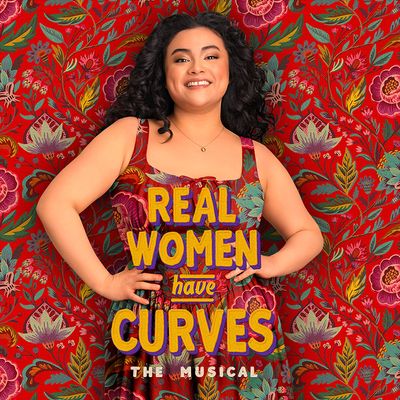
In the Season 2 premiere, David and Mark-Eugene dive into Mark-Eugene’s favorite show of the Broadway season — Real Women Have Curves. They're then joined by Josefina López, the award-winning playwright behind the story, who shares its incredible journey from Boyle Heights to Broadway... Read More
From the show: The Drama Book Show!
Featured Shows
About
In the Season 2 premiere, David and Mark-Eugene dive into Mark-Eugene’s favorite show of the Broadway season — Real Women Have Curves. They're then joined by Josefina López, the award-winning playwright behind the story, who shares its incredible journey from Boyle Heights to Broadway. López, the Founding Artistic Director of CASA 0101 Theater, has had over 130 productions of her work staged nationwide and brings decades of experience as a playwright, screenwriter, and advocate for Latino and female voices. After their inspiring conversation, David and Mark-Eugene look ahead to what’s coming this season.
Transcript
This transcript was automatically generated and might contain errors.
[0:19] Mark-Eugene Garcia: Hello, welcome to The Drama Book Show.
[0:21] David Rigano: My name is David Rigano.
[0:22] Mark-Eugene Garcia: And my name is Mark-Eugene Garcia.
[0:24] David Rigano: And this is episode one of season two.
[0:28] Mark-Eugene Garcia: Oh, I'm so glad that we're starting the countover again.
[0:32] David Rigano: I was thinking about that.
[0:32] Mark-Eugene Garcia: We're just gonna keep counting forever, but no, I like this idea of going back to one.
[0:36] David Rigano: Yeah, yeah.
[0:37] Mark-Eugene Garcia: Back to one, thank you, one.
[0:39] David Rigano: Exactly.
[0:39] Mark-Eugene Garcia: And on this one, I am so excited because we're talking about one of my favorite shows, Real Women Have Curves.
[0:45] David Rigano: And this should be number one, because this is this is number one.
[0:49] Mark-Eugene Garcia: Exactly. It is my number one show this season.
[0:51] David Rigano: I have seen it once. I will be seeing it again two days from now.
[0:54] Mark-Eugene Garcia: And I'll probably see it again before more.
[0:57] David Rigano: I love this show so much. It is so heartfelt. It is so unapologetically Mexican.
[1:03] Mark-Eugene Garcia: You walk into that theater and there is a mariachi band playing, and it just is wonderful.
[1:10] David Rigano: Spoiled that. Because I really I'm gonna enjoy that anyway, but I really feel like I like my little heart would have gone aflutter.
[1:17] Mark-Eugene Garcia: Okay, uh, you have to walk downstairs to where they're selling stuff, but there is the band there.
[1:22] David Rigano: And it's it's so cool. I even the ushers are like when you walk in, and I'm just like, that's I like that they're taking and honoring the culture and making it a part of the entire environment.
[1:35] Mark-Eugene Garcia: Like you walk in and think, okay, and as for me, I'm just like, ha ha, I'm home. This is great. I love this.
[1:41] David Rigano: This play also takes place really it's close to where you're from.
[1:47] Mark-Eugene Garcia: It is right where you're from.
[1:48] David Rigano: No, it's not right where I'm from, it's close. It's in Boyle Heights in LA.
[1:51] Mark-Eugene Garcia: It's a big immigrant community there, and which is why the story is what it is, because that covers a lot of the stories of the characters in this show.
[2:01] David Rigano: And so it just hit me very hard when I saw it.
[2:06] Mark-Eugene Garcia: And I I have to tell you, I knew that you loved it when you saw it. I knew that you really knew the specific, not just the culture that it came, but the specifics of the place where it comes from, the immigrant culture there.
[2:21] David Rigano: And I almost said to you, like, do you want to moderate this one? I almost pushed you to do it.
[2:26] Mark-Eugene Garcia: And I got here and I was like, so I have to read the play. If I because I was scheduled to so I'm gonna start reading the play, and if for whatever reason, I feel like if it was a busy day and I couldn't get through the whatever it was, I was like, I'll ask Mark if he wants to do it.
[2:42] David Rigano: And I am in the I devoured this play. And I was like, oh no, I have to talk. And then I met Josefina, the author, and she's down so fun and funny and smart.
[2:54] Mark-Eugene Garcia: You know, everything that the play is, and we just had we had such a good time.
[2:58] David Rigano: Oh my god, yeah. And one of the things that kept it so natural, I think also is generally, and this is a little behind the scenes trivia. When we have an author come in or have somebody, an artist come in who wants to showcase what they do, we always ask them to, if we're moderating, to give us three to five questions just to help keep the conversation going.
[3:19] Mark-Eugene Garcia: That we can refer to. We're gonna talk and we're going to say what do you want to do? I can come up with questions, but I want what do you want to talk about? What do you want to do the audience to know about you, the play, your process, et cetera?
[3:31] David Rigano: And so we always have that. And then this time we didn't. This time I actually had a bunch of her bio and her history, and I wrote all those questions.
[3:39] Mark-Eugene Garcia: Yeah.
[3:40] David Rigano: Everything I wanted to know, and everything that I was like, oh, let's talk about it.
[3:44] Mark-Eugene Garcia: In that way, you were moderating.
[3:45] David Rigano: Exactly.
[3:46] Mark-Eugene Garcia: But also backseat driving.
[3:49] David Rigano: Gave me what, seven questions?
[3:50] Mark-Eugene Garcia: I did. I give you a bunch. I give you a lot.
[3:52] David Rigano: And of course, then I read the play. I was like, I have a bunch of questions that I want to ask. Because first off, let's just admit that like majority of people who live in this country come from immigrant stock at some point.
[4:06] Mark-Eugene Garcia: At some point. Go back far enough. Unless you're Native American.
[4:10] David Rigano: Yeah. There were things about it that had me thinking about my Italian immigrant fans. It's a very different generation.
[4:18] Mark-Eugene Garcia: But also there's so much Spanish sprinkled throughout this play. And a lot of times they will say something in Spanish and English.
[4:26] David Rigano: So you get, or they'll say it once in Spanish and English, so when they say it in Spanish again later, not all the time. And sometimes you just I said I never felt in the dark.
[4:37] Mark-Eugene Garcia: Even if it was a passage in Spanish that I like knew just enough, or from my knowledge of Italian, I could figure out. Sometimes I didn't really know, but you you f the flow of it, and then at one point someone goes, basta, and that is the same in Italian.
[4:56] David Rigano: And I promise you that any kid who grew up with an Italian-American family has been told basta at some point. And I got to that, I went, oh, that just hit me to my core.
[5:09] Mark-Eugene Garcia: Yeah.
[5:09] David Rigano: And so there's so much in there about the things that that unite us, even as it's being so specific to this culture.
[5:20] Mark-Eugene Garcia: Truly. And I've always believed that as people we all have more in common than what separates us.
[5:27] David Rigano: And it's remembering that. And I think that these stories from any story that comes from a culture that becomes part of a play or a musical or this it part of the storytelling, it shows us that.
[5:42] Mark-Eugene Garcia: And that's something big that the show does because it talks about, as does Josefina during the interview, is talks about how a lot of times the culture is dehumanized or alienated or just othered.
[5:57] David Rigano: And the show showcases the humanity behind it. And that's something like in my writing and in Eight Tales that I strive to do was showcase the humanity of immigrants and as the culture.
[6:08] Mark-Eugene Garcia: And I think that's important because in a world where that's not happening, where it's not happening on the news, and it's not happening, it's definitely not happening in the White House, that it's we need that.
[6:17] David Rigano: Something that you do there, there are like such wonderful universal things. Like we don't have to know these folk tales to understand what it's like to have those stories from when you were younger.
[6:29] Mark-Eugene Garcia: That yeah, one of my favorite parts, and also part of this is that Rich, who was the actor who played the part is so good, when he takes on, when he as a storyteller takes on the role of the villain, yeah, and he says he's doing it because his kid, that's his favorite character, because he would put on the villain voice, so he loves being the bad guy, and then you see the delight that he has, and part of that delight isn't just because it's fun to play a bad guy, but you see what a dad enjoys doing to make his kid laugh.
[7:03] David Rigano: And that's universal. That's stuff that happens that's not limited to Mexican culture, that's across the board.
[7:08] Mark-Eugene Garcia: And I think but the other thing then, if I may, and we gotta be careful because we're gonna do your event, and I'm gonna have nothing left to talk about because we're gonna we'll have done it here already.
[7:18] David Rigano: But then when you get to other like really specific things like being in the back of a van and hearing a noise and getting scared and not knowing that's less of a universal thing.
[7:31] Mark-Eugene Garcia: But when we are so enjoying these characters, and then we see them that scared, you cannot help but feel that with them and for them.
[7:41] David Rigano: And that's something that Real Women Have Curves does.
[7:45] Mark-Eugene Garcia: Yeah. Uh especially on the on the Broadway show, where there's a moment very similar to that, and it happened, and I just I tensed up and got scared, and I was scared for them because again you've fallen in love with these characters, fallen in love with the these women who were sewing and their backstories and who they are and what they want and what they're torn between, whether it's the past and the future, and it the humanity is what makes you afraid, and that's just how it's so beautiful.
[8:15] David Rigano: And I can't wait to see how this kind of and you've told me about that moment in the musical and how the rest of this is handled. But this is a play that was written in the late 80s, I believe its first performance was 1990 or 91.
[8:27] Mark-Eugene Garcia: Around there, yeah.
[8:28] David Rigano: And and you'll hear me talk about this in the interview as well. But there are parts where someone says, Oh, I almost forgot I don't have to worry about that because I'm legal now, because I have my green card, because I have my citizenship, and I'm reading that, and that is striking to me.
[8:44] Mark-Eugene Garcia: I'm because of the climate that we live in now, going, no, don't get comfortable. We can't.
[8:49] David Rigano: That's not enough anymore. Watch what you say.
[8:54] Mark-Eugene Garcia: Yeah. Yeah, no, and uh this play this show delves into it so well. And I am so excited for you to hear Josefina Lopez talk about why she wrote it, how she wrote it, the various other shows that she has written.
[9:09] David Rigano: And literally laughing with us, crying with us.
[9:13] Mark-Eugene Garcia: Yeah. I it's just other people in the audience crying. I was one of them.
[9:17] David Rigano: Yeah. Yeah. No, it hits on such an emotional level, and I am so excited for you to listen to it.
[9:23] Mark-Eugene Garcia: Let's dive in.
[9:24] David Rigano: Here we go.
[9:25] Josefina López: Thank you so much for being here.
[9:28] Mark-Eugene Garcia: I am so happy to be here. I love this place. I really wish we had something like this in Los Angeles.
[9:33] Josefina López: I'm very envious. And I maybe I should start something like this in Los Angeles. We need more drama bookshops around the country, around the world.
[9:42] Mark-Eugene Garcia: Lynn, if you're listening.
[9:43] Josefina López: Um so before I start interviewing you, I want to do a quick poll of our audience. Who here has seen the play Real Women Have Curves?
[9:54] Mark-Eugene Garcia: Not the musical on Broadway right now, the play. Who here has read or seen the play, maybe read it but not seen it.
[10:02] Josefina López: Okay. Who here has seen the musical currently running on Broadway but doesn't know the play?
[10:08] Mark-Eugene Garcia: And who here is just such a Josefina Lopez fan that you've seen the play, you've seen the musical, you've seen the HBO movie.
[10:16] Josefina López: Yes, okay, we've got our yes, wonderful. You are in the right place.
[10:21] Mark-Eugene Garcia: So let's start as Julie Andrews told me to at the very beginning, which is a very good place to start. Real Women Have Curves has had an incredible 37 year journey.
[10:31] Josefina López: Back in 1988, you first presented scenes from the play in progress at Intar's Hispanic Playwrights in Residents Lab.
[10:38] Mark-Eugene Garcia: And by June of that year, you had a full draft.
[10:41] Josefina López: That's right. I don't know. I'm so glad that's right.
[10:46] Mark-Eugene Garcia: Can you take us back to that time? Can you talk to us a bit about what the development at ITAR was like?
[10:52] Josefina López: I got to work with Maria Irene Fornes on the six-month playwriting workshop, artist residency. And I came up with a draft. And I had just I had never written a full-length play.
[11:04] So it was very rough and raw, whatever. And what what I loved about her is that she wasn't about structure. She was about get the story, get it in. Like just tell whatever's in your heart, get it out. And it doesn't have to be perfect.
[11:14] Mark-Eugene Garcia: And so we did a presentation. It was still very rough and raw.
[11:18] Josefina López: But it was it working with her. I had never met a woman who had such an audacity to be herself. And I at that time it was so young and naive. I didn't know she was a lesbian. I didn't know the extraordinary life she had. I just knew that she was the first Latina who just said, I can say it, yeah, fuck it. Just tell the truth and be yourself. Who matters? What it doesn't matter what other people think. And it was great because that gave me the courage to write the story.
[11:42] Mark-Eugene Garcia: Awesome. So where did you know, as you were culling from whatever experiences you pulled from, maybe from your own family, maybe from things that you had people you had met, things that you had seen, what made you focus it in on these characters going through this situation in this one room?
[12:01] Josefina López: I love a play that takes place in one room. I worked in a sewing factory with my sister and my mother, and because I was undocumented for 13 years, so I couldn't go to college and I had to wait a year to qualify for Amnesty. So it was such an extraordinary experience to be in that sewing factory with these women saying these incredible wise things and silly things and naive things, and to really be in a room full of women who were real. And I just said, wow, I'm having so much fun listening to all this gossip. Uh-huh. And it really comes down to like me knowing that, oh, I have eight-hour days of ironing and it's gonna be hard, but I can't wait to see what kind of adventure we what kind of gossip we what do we what the things that would happen.
And we had so much laughter and joy that I thought no one would believe what an incredible time we're having. At least I was having a great time. And especially seeing my mother as a real woman, not just as my mother, but as like a real woman who was respected by these other women. Uh-huh. And seeing my sister as a boss. And then one of the things that really did it was that my sister had a crush on the guy next door, who's a loser, but in her mind, he was this romantic hero kind of and she wrote him a poem.
[13:08] Josefina López: And we were all like, Really? Like in the play. And then she said, Oh my god, I have a poem. And then we're like, We did. And we're like, then she got up on a bucket and she started reading this poem, like In Anna in the Tropics. Where she just and when she gave it her all and read this poem, I said, Oh my god, this is like a cultural center. This is beyond a sewing factory. This is a sacred space. And so I had to write this story. So when I left the factory, and then I came to the writing workshop. So I just was fresh from that experience. And I said, I had to tell people because the way Latinos are portrayed, we are always seen as victims. And we are all people feel sorry for us. And I go, Don't feel sorry for us.
We're having so much fun and we have great food too. It's like, why feel sorry for us? Like we know what matters. I got sick one time and that's how I was traumatized by mole. But that's how I made fun of it. But no, mole is great, right? And I just felt, no, I want people to see that this because this is the reality I live. I grew up in a neighborhood, you've seen my neighborhood so many times and all the gang films that Hollywood makes, but that was never my reality. I was never afraid of getting killed. I was never afraid I was gonna end up in a gang. It was a different world. So I say, I want to show people my world and how beautiful and colorful and fun it was. So that's why I had to tell this story.
And the other thing, too, why I do these presentations is because rarely do people get to interview someone who was formerly undocumented. And I feel like I'm gonna lend my voice to the undocumented because I was them, I am them. And I just feel like it's so important to challenge this narrative that we're the bad guys. It's like, no, we're the good guys because we've contributed so much, especially Mexican Americans to the economy during World War II with the braceros. All of our labor is taken for granted. And yet we are the angels of Los Angeles, but yet we are constantly invisible. Every movie about LA, every show about LA, rarely do you get to see Latinos, and then I go, wow, we're the majority.
And yet, so for me, this is the way I make myself visible. When you're undocumented, you get dehumanized because you're made to feel like you don't matter, like you're an alien. And so for me, and when I once I got my green card and I was holding it in my hand, I said, I swear, I will never allow anybody to dehumanize me. I am going to fight for my humanity. I am going to show people. My blood is red, like I bleed just like you. Like I am not gonna so for me, I decided to celebrate my life because the way you fight racism, the way you fight ignorance and hatred is by celebrating who you are, loving yourself absolutely. I remember I was so depressed after who got elected the first time, and I remember crying for three days, and I got so depressed that I got in a car accident.
And I remember telling myself, look, you've got to keep your spirits up. No matter what, you've gotta. And then I had this epiphany where the greatest rebellion you can do is you can absolutely love your life. Love being Mexican. Love everything about you, and live in like that. And that's how you fight back. And so that's what I do is I show people like hi, wouldn't you want to be Mexican too? And I tell these great stories. So clearly, there is a lot of you in Ana.
[16:10] Josefina López: Exactly. And you had asked this question we were talking about that when I was 17, I read in my I was I went to Los Angeles County High School for the Arts, and we were reading all this literature by mostly dead white men. And but there was a play about Anne Frank. And I remember when I read this play, I said, Oh my God, why keep a journal? I've kept a journal since I was 12. And I said, Oh, I'm going through that because I wasn't documented and I was afraid to be found out. I was afraid to be deported. I was afraid to be separated. And I just remember thinking, Oh wow, I want to do my version of Anne Frank. And so then I wrote Real Women, and we did a reading of it. And an actor friend of mine said, Oh, she's Anne Frank.
And I said, Oh my god, you know what? I'm just gonna call her Anne Anna because Maria is such a generic name. Maria is my first name. I said everybody's every character is named Maria. Why did I call why did I call this character Anna? Anna Garcia, you know, the everyday Latina. And you have the scenes in the play of everybody quiet, everybody hide, everybody get down. Because they think that ice is outside. It's really and it's not that different from hey, everybody in the attic. Yeah. Quiet, everybody hide, everybody get down. No, I purposely did that. And it's beautiful because if you see the musical, that moment feels so real and it gets so serious because you go, Wow, like even though I wrote this in 1987, that is happening everywhere.
And how sad. I mean, it as a writer, I feel, oh my god, my play is so relevant. That's so awesome. And then I go, how sad that it's so relevant, that very little has changed. And it's divine timing that it's on Broadway, and I'm so happy that it's divine timing because we need to challenge all the narratives about us being takers and bad guys and bad ombres and all the horrible things that are said about, especially Mexicans. And really just show our humanity. And that's it. So I feel very lucky that the show is on Broadway right now. That this dream came true. And that some people it's really unique because when you're going through something very painful, you would think you're the only person going through that.
But when you share your story, you're courageous enough to share your story. You realize that a thousand people are feeling the same way. They feel alone and helpless. And when you realize there's a thousand or a million people feeling the same way, that we can't possibly be helpless and powerless because there's a million of us feeling the same way, knowing that it shouldn't be this way. And so for me, I'm very happy that though this is very much my story, that it is a story of my community, and that I'm so happy to be here to speak up. And I do let people see my tears. I tell people like, unless you're evil, you won't be affected by my tears. But most human beings go, wow, that's terrible.
That's terrible that you grew up feeling invisible, being undocumented, feeling that you were worthless, and that you fought back to love yourself. And wow, we can learn from that story. Because all of us to some degree feel like there's something wrong with us. We secretly hide that. And so for me, I'm happy to be able to share that my personal story so that it can become the story of so many people. And it's funny because people go, That's my story. Oh my god, this is my story. This happened to me. And it makes me feel, oh wow, I'm not alone, I'm not invisible because now we see each other and now we know we're real.
[19:22] Josefina López: We were talking upstairs about the relevance of it and the edition of the play that's updated ver versus the importance of having the original play set in nineteen eighty seven, having the musical set in nineteen eighty seven, and the thing that kept striking me so viscerally that I I would go, every time someone said, Oh, it's fine, I have my green card now. It's fine, we're legal now. And I went I would just tense up every time someone said that. Because obviously, unfortunately one of the things that is so relevant now is that maybe that's not good enough. No, it's so sad. The incredible betrayal, you know. It and the hope with which the characters say and they breathe a sigh of relief. Oh, I don't have to have that worry about ice knocking on the door anymore because I have the green card now.
Yeah, and the play version. The musical, they it's perfect because now it's set in nineteen eighty seven. They did it on purpose. And now it's even s it's so relevant because it's an audience does get tense up because an audience does know like what's happening outside. And we are all like quietly conspiring together to keep these women safe. Yeah. And it makes me feel so good that people who don't look like us who d haven't experienced what we have that through this journey, they get to go, Wow, I didn't know. How sad that that happened to you, or how sad that these women have to go through that. And that we get it we have empathy for them. Yeah. And it's beautiful to see the audiences be so inspired by the story.
And for all of us in that moment to win, because we all get to recognize each other's humanity. So yeah, no, I know it's interesting, right? That I wrote it so long ago, and I just thought, Oh, okay. I have so many other plays, and I'm like, Oh my god, this play keeps coming back, and how wonderful that it has another life now as a musical. So I do because I see some tears being wiped in our audience as well. So there it clearly is a very shared human experience. I want to open it up to our audience as well. If you have any questions about this play, about the process of it being turned into a musical about your experiences with this. And I'll just ask if you could speak up a little bit if you have questions.
And if you don't yet, that's fine. I have more. We can keep going. But I'm but I do want to open this up to anyone who has questions, and I'll just ask that you really speak up because these are what's recording the podcast. And I'll see if we have questions, I'll see if we can maybe pass the mic around to get. But let's talk about while we're waiting. Now that you know that the floor is open, let's talk about the process of bringing this to the musical stage and finding a new life and a newly expanded form of storytelling for it.
[22:09] Josefina López: I always knew it could be a musical because in the sewing factory, there's so much sound. The machines always go, this is what they each machine has a different sound depending how much oil they need, how old they are, how new they are. And then the cutting, and so there was constant sound, and then there was a radio, and in the radio we had all these shows, all these songs. We had all these con there was all these contests too. Like where call now, the 20th caller will get so every hour my sister was running to the phone, making phone calls, trying to win the concert tickets or whatever. And so I also I remember thinking like when the women were sewing that there was a natural rhythm, and I was like, Oh my god, I could hear the sounds, I could hear the it was like tap dancing.
It was and then like the woman we'd have these motions where pull this, go it like that, and I'd be like, There's an organic choreography to to making dresses, and then I would iron right every day, and then I'd be like and I would even dance with the dresses sometimes where I would like whatever. And so I thought, oh my god, like I would get these visions of these women like dancing with mannequins and or dancing with the dresses or the dresses taking dancing by themselves, and there was all these magical moments that would appear, and it could be that also because after your irony for eight hours, you're gonna mind kind of wanders, so I could have been high too, just going like that. But it was yeah, because it's like you you so much that at some point you have to escape.
So there was just so much fantasy in a really hard working class environment that I said, oh no, I can hear it, I can see it. I would love for this to be a musical, but I was 18, I didn't know anything about music, I didn't know anything, but I just said no, I have to write the play, and I had hoped that one day it could become a musical. The process is that I wrote the play, it was very successful. As soon as, even before the play opened, I was already getting a phone call from Warner Brothers asking me if anyone had optioned it. And let me tell you, everything takes at least three attempts, people. Okay, do not give up to the first one, do not give up with the second one, not even the third one.
But it took three attempts to make into a movie, 11 years, right? And then when it got made, it was the perfect divine timing. And then and then the musical, uh, after the movie got made, I said, okay, let's go pursue producers. So since 2003, my manager kept looking for producers, and we met with many. They were I even did it at a workshop production at my theater. I have a theater in Boyle Heights, and we did it in 2008. I had a falling out with the composer, and we couldn't continue. Then I met another producer, and we had another team. And I was a dad. So I did so many rewrites. And unfortunately, I had a falling out with a producer, and we had fundamental differences, irreconcilable differences, because he was making, he was adding all these men, and they were becoming the heroes of the story, to put it lightly, right?
It's like the white boy in the movie was becoming the hero. And I'm like, hello. And then everybody was Stella was ended up married. It was like, oh no, I think men have this temptation to say, oh no, like you put in a man and all your problems are solved, ladies. We're here to save you. And I just kept saying, no, we're not gonna let we're not gonna do that. We're not gonna do it and so I had to walk away from that deal or what was about to be a deal. And even in this story, I'll be honest with you. Okay, I'm jumping ahead, but I'll tell you some cheese mail about the male story, okay? When Sergio Trujillo won the Tony for Best Choreography, I told my agent, okay, we have to get him because he will want to direct it.
And the fact that he's an immigrant and that he talked about being undocumented, and the fact that he's not ashamed, and he understands that story. I think he's the perfect person. We kept trying to find people, a lot of great people with great pedigrees, but they weren't quite right. We even approached like Robert Lopez, who is Filipino American, who was interested, like the team of Frozen, they were interested. And when they read it, they said, Oh, we love this story, but we feel it has to be done with a Latino composer. We really feel that you would we really like with we would love to do it, but we feel that at the root of it, this has to be a Mexican American composer, someone who really is from this culture.
[26:10] Josefina López: So they walked, they bowed out, and I was like, damn it. I said, okay, okay. So eventually when the moment when you're like, are you sure that's the one? Are you sure? I can sell out here and there. So, and I was like, no, okay, you're right. If in your gut you feel that we're artists, let's honor that. So then, so when Trujillo won the Tony, my agent said, okay, we're gonna approach them, and they were already interested in approaching us. So it was like we found each other. And then I met with Barry Wesler, yeah, from Chicago and Jack Noseworthy. Okay, because it, yeah, Noseworthy and he's trustworthy. Yeah, he is trustworthy. Yeah. His production company's called True Worthy, yeah. Uh huh.
But is Noseworthy is his last name. Anyway, so we met with him, my agent, and I felt like they really got it. They really saw how big this could be. Normally you're trying to convince people that it will sell, and they're like, oh, Mexicans don't go to the theater. They always give you all these ideas. And it's like, yeah, we do. We go to the, especially movies, we go a lot more. But we will, if you do a show about us, we will show up. And most theaters don't want to take that risk. And so what I loved is that he got it. He said, Chicago went to Mexico City. And I couldn't believe what a hit it was there. Just in his mind. And so then I think he saw the financial potential of this could go through Mexico and Latin America.
And it's like all these other markets that they have no access to, right? So he's thinking, ching, but he's also thinking, yeah, no, I believe in the story. And if you look at his track record, it's all about women, right? Chicago and Waitress, women's stories sell. And so I just felt like I had a wonderful feeling, and I said, okay, let's go with it. My gut says yes. Then I met Sergio Trujillo, and I hadn't met him yet, but I met him a few months later in Los Angeles. And what really sold it for me was the fact that he shared being undocumented, and we both started crying together. And in that moment, we both cried. And we talked about how nobody hit us, nobody punched us, but the impact of having to hide and having to carry the shame that we did dehumanized us that made us feel like we were criminals, that still affected us, and it still affects us today.
And I mean, we just started crying about what's it like to feel like you're invisible and to hide. And it just, and I said, okay, I don't have to, I don't have to explain to Sergio this wounding, this pain, and how hard it is to believe in your dream when you're undocumented, thinking you like you've been told you have no right to be here, much less to dream. And I just said, oh, it's gonna be great because Sergio gets it. Sergio, and then also when Sergio told me my mother was a seamstress. I want to do this as a love letter to my mother because without her sacrifice, without her doing everything she did, I could not have had this dream of winning a Tony. So this is the way I thank my mother.
And I said, oh, that's beautiful. We cried together. And so we had this beautiful bonding moment where I said, I trust this man because he really gets why we have to tell the story. And for our mothers, my mother passed a couple years ago, and the last song in the musical always gets me, and I've seen it 11 times now, and I go, I'm not gonna cry this time, I can watch it objectively, and the tear, and what it is that I realized that as I was growing up and I was getting an education, that I started looking down on my mother because my mother had all this programming about, oh, a woman's job is to get married, all this stuff that she was given that she had no choice but to live, and she just kept like passing on the machismo.
And there was so much conflict, and but I also realized the incredible courage and the incredible sacrifice that my mother made to give me this extraordinary life. And I know that if my mother would have had the same opportunities as me, she would also be a writer because she was such a great storyteller. Except she told chismes. I tell people she was, you can make a career out of that. She, yeah, now she could have been an influencer, right? She could have been FedEx Hilton, but like Catalina. So I realized that my mother's gift was oral literature, which is chismes, right? But she had no education. So I realized, oh wow, like my mother left me this because this is really my mother's story, because this is the way I saw how she knew so much, and she was such a great seamstress, and she was so creative, and so much of my creativity and ability to derive wisdom so quickly from experiences is my mother's gift.
But these are things that I never realized until even when I'm watching the musical, I'm learning this. I'm discovering my mother's gift to me and how my mother's gonna live on through this story. Yeah. And so I'm grateful. Because I think the other thing too is that we take women for granted and their work. Just the same way I took my mother's work for granted. The same way I criticized men for taking away from granted. I said, oh shoot, I was doing that to my mother. But my mother was also the first example of a third world feminist. Because I was reading Gloria Steinem and I was reading all these white feminists and looking down on my mother, and then I realized when I worked in the factory that I said, oh my God, my mother's a feminist.
I just didn't know it because it looks different when you're a woman of color. This is another type of feminism that we don't get to see as white women go protest, they have their babysitters and their nannies to take care of them, and it's all these women of color. And there are women who choose to have children because that is something that makes them feel complete and wonderful, and it's their choice, and I respect that. And it made me realize that, oh wow, I could be a feminist, but it also looks like these. That all these women here in this factory are feminists, and they're doing the best they can with the little opportunity they have, and they're strong. And it was a different way of looking at courage and strength that I had never seen before.
And that's why I said, oh, I have to share this with the world because I want to celebrate this. And people need to know this, right? That women's work matters and women's stories matter, and I'm gonna make this matter by documenting this story. I have not seen the musical yet, but I was tearing up at the closing monologue of the play, so I can only imagine if it's anything like that set to music, it's gonna puncture me right through all. It does, and Tatiana is just, she hits a certain note in the song, and your eyes just go and it's almost like something inside of you trembles and goes, oh, this is so honest and raw and real that your body like shivers, and that happens to me, and I've seen it, and it still happens.
But it's also her ability to really like tell you the truth from our soul. And I loved that you brought up Anna in the Tropics earlier, and I mentioned that I, certain plays that like as a playwright, they tell you in college you must read, and Anna in the Tropics was one, and Intimate Apparel is one, and not realizing it, I see the influences of your play in those plays. Thank you so much. Neilo was in the workshop with me, so I did write Real Women. I like people say, oh, this is like Lady Bird. I go, no, no, no, no. Real Women, and yeah, so it, yeah, I would agree. But, and I love it in Anna, and if you've not read Anna in the Tropics by Nilo Cruz or Intimate Apparel by Lynn Nottage, they are on the shelves here at the Drama Book Shop.
That's right, buy a book. In Anna in the Tropics, when they talk about most of us women can't read, but we can recite passages from classic literature because they have been recited to us. Because that's the, when they're passing the time in the cigar factory. And it's similarly the multiple generations of women at work in a factory. Um, and then with Intimate Apparel when you have a woman of color who is making the, not just the dresses, but the undergarments, the fancy undergarments for the rich white women who will wear them and it'll, but how much will they cost that versus how much this woman gets for it? And never making something for her. Okay, all of this, this was the precursor. Thank you.
Yeah, I'm being funny. I'm, I don't know if they read them or not, but my read my play or anything. But no, I think it's because I've always went been ahead of my time. I was born at six years old. My teacher was saying she's very wise. I've always had people go, you're an old soul, and I go, I think I am. So I think I was sometimes when I feel like when teachers are saying that about a six-year-old, they're also being like, she's very wise. Stop it. Stop it. You're scaring me. Yeah. Those eyes are penetrating me. There's like, yeah. No, I, yeah, I was always very aware. I think people can't believe that I actually wrote my very first play at eleven and I produced it and directed it in my backyard.
But the first play that officially was produced in public and everything was at eighteen. So yeah, I do feel that I, and that's also part of the problem is that as my career, because I wrote so early on in my career and I still wasn't established, nobody knew me, then like my work didn't get the attention, except in Latino theater companies. And now hopefully people go, what else has you written? I go, oh, about 20 other plays. Yeah. Come on. So someone's gotta publish the other one or something. Yeah. And including I have the male version of Real Women Have Curves. Yes. Called Trio Los Machos, which is about my father's story. It's inspired by my father's story as a bracero and a guitar player.
And it's, it's a love letter to Latino men. It's about trios and mariachis and where this music and this suffering comes from. And I grew up with a father who was very wounded. Luckily he was not an alcoholic or abusive or anything like that. But because he kept it all in. And I was the one kid that was not afraid of him, and I would talk to him, and when I would talk to him, he would break down and cry. He was a dam just waiting to burst. And he would cry. And it was because I tell people my father was John Wayne is a bad imitation of my father. Because my father was handsome, tall. Mexicans are the real cowboys, right? Because the film stole that image of the Mexican cowboy and made us the bandidos and then the good guys, which is not true.
It's the other way around. So my father was like this incredible cowboy, wore a Stetson hat, very strong, very courageous. He originally had told me that he had gotten deported four times. Later on in life, he said, no, it was about after six times of getting deported, I stopped counting. My dad was such a courageous risk taker. That's the reason I'm here. That's the reason I haven't given up after 37 years. Because I've gone through so much rejection, so much discrimination in every which way. But I think it's my father. So courage, but he also suffered a lot because when if anybody stopped to ask and if anybody cared to listen, he just break down crying. And luckily he never resorted to alcohol.
But I could tell that I'm very empathic, and that's why I'm a writer. I could tell that there's so much pain and suffering that I had to put down on paper for my father. I remember there's a, an image of the braceros. I don't know if you've seen it, where the men were all like treated like cattle and they were basically fumigated with like toxins, and then like hundreds of men were all naked and they had to bend over and get like a prostate exam in front of each other, and basically treated like animals. And I remember asking my father if this happened to him, and my father said yes, and I said to him, oh, why didn't anybody speak up? And he goes. Except through my play and a few little things.
Because all these men could not talk about it because they didn't want to burden their wives who already were sacrificing so much by not having them in their lives that they didn't want to burden their wives and say, oh, look at the way we were dehumanized and exploited. Look at how horrible we were treated. We were there as guest workers, we were there helping the economy of the US, and we were treated like dirt. We were treated not even dogs were treated better, and they had to take it because they had to sacrifice for their families who were starving. And so I'm, I connected to my father's pain, and I wrote this story. And again, you think it's your own story, and then when we produced it at my theater, we had so many families come, and some of the few remaining braceros who are still alive came.
And the family said, thank you so much because he never told us what he went through. Because men aren't supposed to talk about this kind of suffering. And now we could cry with him. We could cry together as a family, knowing what is sacrifice means to us. And I realized that, oh, I write stories because we're not in the history books. All our contributions as Mexicans have been ignored. And it's a wound already to be exploited and abused and oppressed, but then to then be told that it didn't happen is another type of abuse. And so for me, I realized that I have to document these things so that people know that they're real, so that people know that we're not the bad guys. Because again, the story of us being the bandidos and the bad guys happens every freaking decade.
[39:22] Josefina López: Every decade. Why? Because Mexico was stolen. Because we were the good guys on the story defending African and enslaved African people. We were the ones who said, no, slavery is outlawed. We will not allow the US to continue with slavery. And as a result, the US invaded Mexico to try to get their slaves back, but also to steal Mexico. So we are the good guys. But through film, cinema, and every which way, we have been made to be the bad guys. And so I tell people, even if a million people say you're wrong, you still have to say, no, that's not the truth. And even people will call you crazy because I've been called crazy so many times. So for me, like this play being on Broadway, I took a deep breath.
I was a catharsis because I go how many times I've been called crazy, and oh, who wants to see Latino stories? Who wants to see fat women on stage? The horrific sexist racist things I've heard. And to go, oh my god, it's the first preview, and we got a standing ovation after the undressing scene. Yes, people do want to see real women on stage. And then at the end of the show, it was a huge standing ovation. And then I realized, see, it may take 37 years to know that you were right, but it felt good to know that I was right.
[40:45] Josefina López: I want to open it up again to see if anybody else has questions or thoughts. And if you just want to take it in, that's also we can tell this story. Ask me anything. I'm not a, I'm a really strong person, right? One of the things I've learned is that when you cry doesn't mean you're weak, it means you're powerful. Right? Because I can cry and I can still keep telling the truth. Most people shut down. And that's why they cannot speak their truth because they shut down emotionally. And my superpower is that I keep telling the truth, even though it may hurt. And part of the reason I've kept this pain is because I go, no, I want this to be the fuel. I want this to be the ink that allows me to write these stories, right?
So please ask me anything. As you can tell, I'm very funny. I'm very deep and profound, but I'm also very funny. And I love wit and satire, and I'm very sarcastic and sassy, and I'm a real woman. I'm incredible and could have an incredible range of humanity that I love to see people, my authentic self. And truly, as much as the play had me clutching my own desk or wiping away tears, I think that I got a good Mark was next to me most of today. I think that I got a good out loud chuckle in almost every page of the play. Yes.
[42:14] Josefina López: Let me tell you how it really started. My sister was the only one who was undocumented. I had just gotten my temporary residency card. All her employees got her temporary resident card residency card. And she had some kind of lawsuit thing, legal thing that she was concerned about, so she wasn't sure if she could get the apply. So my mother started laughing, and she says, I wouldn't it be funny if the migra comes and instead of taking the employees like they usually do, they take the patrona, right? And we all started laughing. And I remember thinking, Oh my god, that's such a great premise for a play. So my mother is a playwright, right? She just didn't know it. Luckily, I stole her story and she can't sue me.
But I go, Oh my god. I turned to Mark today reading it at illegal possession of a lobster. I do get arrested for illegal possession of a lobster. That is true. I know people think I made that up, and people go, ah, and I said, No, I in Santa Monica, when I was 18 years old, I went fishing with my brother, and he captured a lobster, and I had never had lobsters. And when you're a working-class person, you've never had lobster. You're like, oh my God. And so you thought you had won the lotto, right? And so my brother says, Take it to the car. And I'm like, okay. And he puts it in a little small ice chest. And I'm not much, and I'm thinking, I guess I didn't know I said it. This must be illegal if he's telling me to take it to the car.
But damn it, I don't want to steal it. And I walk in, and then the feelers are sticking out of the little ice chest. And I go, Oh shoot, I'm gonna go through a bunch of people in the arcade. I'm gonna cut across to the parking line. And I decided to do something really dumb, but I thought I was being smart. I was gonna bend and crack the feelers on the lobster so I can stick him in so I can hide so they wouldn't be sticking out of the ice chest. As soon as I attempted to do that, that lobster had a, as lobsters have a really strong tail. The lobster went like that and kicked the lid off of me. And the lobster made a run for it. And it was, and I was chasing a lobster in Santa Monica pier, and I was chasing after it.
It was like trying to get out. And I was like, and then the security guards, the police, like they said, You're under arrest for illegal possession of a lobster out of season. And they caught the lobster, and I was like, oh my God, like I can't. I've been one of the funniest lines in the play, and it's nowhere near as funny as the full screen. Yeah.
[44:25] Josefina López: So I didn't I did, and then there was a part of me that said, Oh my god, what if I don't get a green card? Because I got arrested for legal possession of a lobster. Because it's a crime in Santa Monica. And I had to go to court. And I was like, dear God, I kept praying. When you're undocumented, you think any little thing, and sometimes any little thing can be used as an excuse to not give you a green card. So I was praying. I said, Por favor, Diosito. And thank God back then they didn't have computers where they could check and all that. And ice wasn't, but it was like, uh, oh my God, what if I get deported? What if I get deported? Not only do I get arrested and I have to go to jail, what if I get deported over a lobster?
How embarrassing, but how and then the the luckily the judge laughed and said, Oh no, it's okay. Don't worry. Like well, he thought it was funny the way we were. So luckily he just laughed and dismissed the charges. But I was like, oh my god. But yeah, that is, it's very funny, but that's really lucky because you never know if you get someone who's gonna find that funny or find it good excuses, any.
[45:23] Josefina López: And every time I go, okay, when I've done jury duty, I have to expose the fact that I have been arrested. And I have to say, illegal possession of a l I'm under oath, illegal possession of a lobster out of season. And everybody breaks out laughing, and the judge has to go, uh, Uh are you telling the truth? I go, I'm under oath, yes. And then they go. And anyway, yeah. I've had a lot of funny things happen in my life in life. I have I did have lobster after yeah I did make a lobster. I could not kill it myself. I had to ask somebody else to do it because I didn't have the courage to how to kill it and you're like somebody else do it for me. No I boiled one alive once before I knew how bad that actually was and then I learned the appropriate way to kill them and I said I can't do that. I'll just get it at a restaurant.
[46:08] Josefina López: Yeah yeah so we talk about this music and I have to say as a musical theater writer there's so many times when you hear someone say oh this should be a musical because it already has a song in it. This should be a musical because there's already music because the character is a singer or there's a band. And I go that's not a good enough reason because that that doesn't mean that the story sings. So to hear you saying oh I knew this had to be music a musical because there's rhythm there already. There's choreography because the story sings the story dance that as a musical theater is that there's so much emotion in the play and there's so many moments of joy but so many moments of sadness that when it gets that extreme that's when you break out into a song and it's so beautiful the way they incorporate it.
And let me just tell you that Joy Huerta and Benjamin Velez did such an incredible job. I am like thank you God for sending a woman whose name is Joy like in Spanish is Joy Huerta which means an orchard of joy. I go isn't that poetic I that's when spirit is working when you read po when you hear the poetry in something you go oh, that's spirit assisting you because she just captured the soul, and I just I'm so impressed by the by by how they captured my story in in in a song in songs.
[47:24] Josefina López: But you also talked about going through multiple drafts yourself before saying I have to hand it over to someone. Well, yes, someone else who I trusted who knows the culture. Yeah, no, I I really trusted Lisa. And the good thing is that I have had a say from the very beginning, and we I talked to Lisa for four hours, something like that, and she already knew all of my writing and knew me. And then I got to see most of the workshops and the reading. So I've been there at every step of the way. And one of the things that I will say publicly is that there was a version where Anna was going to end up with the leading man, and she would they were gonna take off in a into the sunset in the car, and it was all gonna work out, and it was all gonna be like a happy ending with the guy.
And I had to say, you know what? No, it cannot be that it she ends up with this guy, she has sex with him, and she falls in love, and everything's gonna be great because she's gonna end up with this guy in the East Coast and they're gonna see each other in college, and no. I said the reason why this movie worked, the reason why the movie won the Sundance Audience Award is because the mother doesn't give her a blessing, and she doesn't end up with the guy. Because those are the typical happy ending Hollywood story, the typical Hollywood happy ending that makes it a commercial film, but isn't necessarily the story that that I wanted to tell. I said, I want it to be that the guy compliments her, compliments her life, but it's not about him.
He doesn't get to rescue her, she has to rescue herself, and she has to learn that she's the great, which is what I've learned now at fifty-six is I am the greatest love of my life. Right. As women we're constantly fed this romance novels, telenovelas, where like everything's solved because a man shows up, and yeah. No, when once as women we discovered that we are the greatest love of our lives, then everything else is just men are just dessert. And then I had to fight and say no. Happy to be. That sounds good. I like that. Is that I I told the producers, I said, No, we cannot have this guy be the reason why she goes off to college. It can never be, right? A lot of my difficult decisions have had to be like men are not in the picture.
What is my decision? What can I do so that I don't regret this moment? So I had to really fight for that moment. And luckily, I'll tell you, I saw the presentation and I was like, No, I don't got ending. Okay, what am I gonna say? And luckily I saw luck Kimberly Akimbo. And I was like, see, the awkward black guy, and they end up in a car and they go off in the East Coast or South or wherever the I said, this is the same ending we cannot have. I can go to the producer and say, look, not only does it not work for me, but it's Kimberly Akimbo's ending. So they were like, Oh, okay. Good to know.
[50:13] Josefina López: So I have had, and I'm very open because I go, this story can work in so many ways. But there are little things that that I do I say, no, that we would never say that because the other thing too is that I go, I love Puerto Ricans, I love Dominicans, I love my gente. But there is a difference, and so we really have to culturally get the accent right because a lot of Mexicans are very, especially actors are very upset that most lot of they feel like a but it's funny because it works both ways that a lot of Mexican actors feel like, Oh my god, we're always losing the parts to Puerto Ricans. And when you see a show that's supposed to take place in LA with a Mexican American detective, they sound like Puerto Ricans.
And maybe the casting director can't tell because for them, Puerto Rican is a Mexican or a Mexican is a Puerto Rican, but we can tell. And so I told the casting people, look, we have to get a Mexican American casting agent or someone that has a say they can tell the difference between a Puerto Rican and a dominic and a Cuban and a da da da. We have to get and so I I basically told them who to ca who to use as a casting agent. And so then he consulted, and I felt we got the best cast possible because he was there fighting for opportunities for Mexican Americans, but also making sure that this was the best version, the best actors we could get. And because yeah, I've seen shows where I go, oh my god, like that person is clearly Cuban and they're pretending to be.
And the other thing too, I said, and this is something I've learned is that I always thought, oh, this story is really a Mexican story. I don't think it's as relevant to Puerto Ricans because Puerto Ricans are U.S. citizens, although not many people know. I and then of course Puerto Ricans got deported for speaking Spanish, which I thought was so crazy and ridiculous. But I go, Oh wow, this is a Puerto Rican problem too, because they're they speak Spanish and people can mistake them for whatever it's just terrible. So I said, No, this we're in this together, and so it's beautiful that the cast is Puerto Rican, Cuban, Tatiana is Filipina and Costa Rican Venezuelan, right? It's like really good mix. And so I just think that's great because so I did have a lot of influence, a lot of say. I do so I feel I felt like I was very much part of the whole process.
[52:09] Josefina López: Awesome. And I did want to also use the time that we have left to talk a little bit about the other musical that you are working on. Oh, whatever you can say. No, it is I did mention Trio Los Machos.
[52:22] Josefina López: I might change the title, but I was so inspired by Buena Vista Social Club and the fact that there's two Latino musicals on Broadway. This is history, right? So I'm so happy. And I've seen it twice, and I was so inspired because Trio Los Machos was a huge hit at my theater. We've done it three times, and people say, "What are you gonna bring it back?" And then I'm like, "Oh, there's no way I could turn that into a musical and make it commercial because all the songs are in Spanish." So here comes Buena Vista Social Club, right? And then you go, wait a minute. Most people don't know what the songs mean or whatever. They are given a pamphlet with a story behind it, which I think is so wonderful.
And you're seeing that, no, it's music; it transcends language. So that made me go, wait a minute, Trio Los Machos can be a musical. So I'm working with Jaime Lozano on adapting this into a musical. And I'm hoping that, and I used to go every time I go to a musical, as soon as the curtain draws, I'm the first woman running to the bathroom because you go, "Oh, it's gonna be a long soul line." And when I went to Buena Vista Social Club, there was hardly a line because it was mostly men in line. And I go, "This is also when there's like a lot of gay musicals where you go, 'Oh my god, there's hardly any women.'" Like I saw "Inheritance," thank you. Yeah, and there was no line at the women's bathroom.
And I was like, "What?" So I said, "Oh, interesting that the Buena Vista Social Club is attracting so many men." And I said, "I bet you that Trio Los Machos would bring in Latino male audiences that don't normally go see musicals because they think they're too cheesy. But if it's about them and about their pain and about the suffering, I think we could get new audiences and Latina women can bring their husbands and be like, 'Oh my god, maybe it'll be an opening.'" And not drag their husbands. Not drag their husbands, not drag them. That's right. That's right. Come along. Bring them and be like, "Let's have a romantic night out." Yeah. And look at this piece of art that is for you. That is for you too.
Yeah, no, and it definitely like there was this album, Idie Gourmet, Los Panchos, that everybody in East LA had, right? Like every, and my father would play it all the time. And I loved it. And I told my mother how much I loved it, and this and that. She goes, "I hate it." I said, "Why, Mom?" My father was having an affair with my best friend's mother who lived in front of us in our triplex, which we owned. It's very tragic. At 12 years old, it devastated me. And every time he would play that album, it was the way he was telling her that he was thinking about her. And then, but it was interesting is I thought this was just particular to my father's story. And I was commissioned by a theater in San Francisco that says every time we present the children of Los Panchos, we have thousands of people, like they come, it sells out every single time, and everybody writes us letters or stays in the lobby wanting to tell us their story of how they had affairs to this music.
All these people confessing how they fell in love with his music and how many affairs people had to this music. And I said, "Oh, listen to this album on my way." Oh, maybe something happened on the subway. So I said, "Oh my god, how interesting that this is my personal story, but this is the story of so many people." And so I wrote the story and they loved it. Fortunately, I couldn't produce it at the theater, but we produced it at my theater and it was a huge hit. So I think, and the thing is here's the secret, okay? There's writers in the room, a lot of you writers, and I've asked myself, like, what's the secret to real women? I can't because right now I'm working on the TV show. I'm trying to get it done as a sitcom.
If you see the musical, you realize, oh my god, this is a sitcom. And but I'm also hoping, and it looks like Sergio will want to make it into a movie about the musical, right? So that's shoot, I was thinking something. Okay, my line of thought. I'm thinking so fast right now that what was they? Oh, the writers in the room. Okay, thank you, thank you, thank you. So I've asked myself, like, why has it been so successful and it's been translated to so many different mediums and platforms? And I was, I get a lot of divine guidance. I've been a curandera in training and a shaman in training, and so I get a lot of divine assistance. And I'm not embarrassed to tell you that because I found out my grandmother was also, she has this gift, and a lot of us have this gift as Latinos, as people of color, and so I have to honor this truth in that I was told that the reason this is such a successful story is because Hollywood only values women because they're young, and I'm gonna say this, fuckable, right?
In Hollywood, it's like how fuckable are you? Because they treat you as a commodity, and it's so degrading to women, and that's why you see women both talking themselves out of careers, right? It's sad, right? And my friend and I were saying, any other place we're like a seven, but in Hollywood, we're like a five, or even less than that, right? You always feel ugly in Hollywood in LA, right? And the reason this story is beautiful and succeeded is because all nature has seasons. Women and all human beings are part of nature, right? And there is a season, there's a spring, there's a summer, there's a fall, and there's a winter. Women also have four seasons. There's our spring, which is the virgin, then there's the maiden, which is summer, then there's the mother, which is fall, and then winter, which is the crone, which is the wise woman.
We live in a society that does not value the wisdom of women, and we're told that we have to stay young no matter what, because that's what we derive our value from, because we're fuckable to men, and we're literally sexy, whatever. And the thing is, there's science that backs this up that says the reason humanity evolves is because women go into menopause. Because after women stop giving birth and are no longer fertile, they have years to now carry this wisdom and pass it on to other women, and this wisdom and these teachings is what has allowed humanity to survive because there is no other biological scientific reason for menopause unless there's a reason that allows humanity to survive, and I was, that's right, and so women have to know that we have four seasons, and there's a season for everything.
Right now, I'm a curandera, which is the wise woman, which is the crone, which is the elder, and I love this. I love that I value myself at the season where I'm at, and I got to enjoy all the seasons, but I've transitioned successfully to being who I am, and so these four women, these five women, or now they're more, and the musical is a lot more, these women are transitioning, trying to transition to the next season of their life, but they're having a difficult time, and as a result of this experience, they get to embrace who they are and they're able to transition to there's a character who's a virgin who will become the maiden who will eventually become a mother, and so these women are transitioning into the four stages of womanhood.
The other reason why it's been successful, and I will this is the secret formula, people, and this is what I was told in the Rhine Know is that when you can take a group of people that are flawed and you really celebrate their flaws, that's what creates character and personality, right? But these group of people come together to accomplish something with a perfect kind of love, they create something sacred, and when you expose that and show that in a story, everyone is moved by that. Because we are energetically spiritually moved by that, we are changed by watching and witnessing this. I really believe that when these women take off their clothes and they sing together, that this is a type of sacred that happens to women.
We get in touch with the sacred feminine goddess energy. And unfortunately, it was demonized. When women would get together, men would say, "Oh, they're all witches, they're all trying to conspire against men and burn them." Instead of women getting together to celebrate this grace, this sacred feminine energy, and to share wisdom with one another to say, "Don't worry, it'll be fine. Oh, your baby, it'll be okay." But passing on information and wisdom and helping one another in a circle, it was demonized. And I think when we see it on stage and we see that these women embrace their body, they celebrate themselves, that there's something so beautiful and sacred, and we just the energy gets elevated and we get to celebrate it.
And I just was like, "Oh, that's the secret to telling great stories." Obviously, there's all kinds of stories, but I think women's stories are about this. So borrow that, create your own story, find what's sacred in your life, find the stories that celebrate the sacred that have the spark of the divine. And if you can portray that on stage, people love that. And people especially love to see women having joy. It's contagious. Every time I watch the play and women start taking off their clothes and sharing and gossiping, and people just start getting really happy because when women get together and share joy, the energy becomes sacred and beautiful, and the frequency rises, and we get high from it.
I witnessed this so many times because I've watched the play, at least I watched 35 different versions of my play, right? Because I am lucky I get invited to every opening somewhere. So then sometimes I'm like, "Okay." And it happens every single time. Even if it's a bad production, it still happens. And I go, "Oh, maybe that's what's going on, beyond just the words." And who here, who here is a writer? Who here is a playwright? Anyone write musicals? Anyone an aspiring screenwriter? Great. So we've got a lot. And I just want to close by thanking you so much for having these human moments with us that are in many ways human to human and in many ways writer to writer. And giving us all of these examples of how putting your truth on the page means putting the truth on the page.
And you don't have to look for the thing that's universal. Because you told us multiple examples of, "I just wrote this down because it's what I knew," and who knew that all of these other people were. So thank you for really going into depth with how to make the specific universal. And I want to thank you all for coming. And one more time, thank you to Josefina. Because for sharing Real Women Have Curves with us. Ah, that was so good. The tears all over again. All over again. And it happened multiple times. I was constantly crying. And again, it just brought me back to seeing the show and wanting to go see it again. I'm so proud of what they're doing at that theater. I'm so proud of what Josefina has done.
And just the stories, the stories are so good. And just my whole heart is in that show. I again, I will I tell everyone who comes in here, and I'm telling you now, listeners, go watch Real Women Have Curves. Yes. Yes. Yes. And again, that's coming from me not having seen this production, this adaptation. But yes, and I can't wait to see it myself. Enjoy it. I'm excited. I'm excited to see it again. Let's talk about our next episode.
[1:03:25] Mark-Eugene Garcia: Yeah. So we're going from a show that has multiple iterations with multiple characters and a huge production on Broadway to a one-person show.
[1:03:38] David Rigano: The next one is open.
[1:03:42] Mark-Eugene Garcia: Yeah, a friend of the store. Great friend of the store. I have just known Crystal, just been in the same circles for a good years. Pretty much, I think I first became aware of her and her writing and met her a couple times probably shortly after I graduated college.
[1:04:03] David Rigano: Oh wow.
[1:04:04] Mark-Eugene Garcia: Yeah.
[1:04:05] David Rigano: Yeah.
[1:04:05] Mark-Eugene Garcia: So it was great to get to celebrate her work, this beautiful play. And what was really fun, and you'll hear more about this when you listen to the next episode, is that she brought two actors who had both done the show before, but had not gotten to see each other do the show. And they each read a different monologue. It was really cool.
[1:04:32] David Rigano: And one of them, Lily, I knew because I had worked with her.
[1:04:34] Mark-Eugene Garcia: Uh huh.
[1:04:35] David Rigano: And so I was so excited to see her on the roster.
[1:04:39] Mark-Eugene Garcia: But also, it was just, it was exciting. So we're gonna dive into that.
[1:04:44] David Rigano: Yeah.
[1:04:44] Mark-Eugene Garcia: Yeah. As always, please do follow us on Instagram at Drama Book Show podcast. You can subscribe to our Eventbrite to find out what events we're doing next and when you can join us. And as always, all of the books and plays that we talk about in these episodes can be found at the Drama Bookshop. And so can we.
[1:05:05] David Rigano: And we will see you at the bookshop.
© Broadway Podcast Network, All Rights Reserved