

In our inaugural episode, hosts David Rigano and Mark-Eugene Garcia introduce themselves and discuss their favorite Stephen Sondheim shows. The episode features an enlightening interview with Rick Pender, the author of "The Stephen Sondheim Encyclopedia," conducted at the Drama Book Shop... Read More
From the show: The Drama Book Show!
Guests
Featured Artists

About
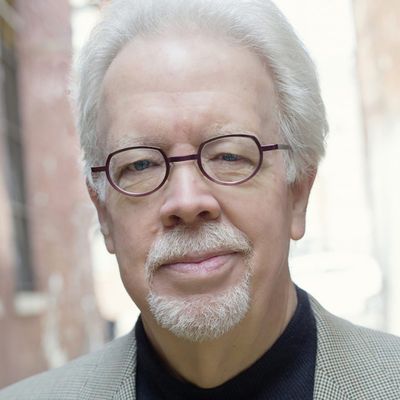
In our inaugural episode, hosts David Rigano and Mark-Eugene Garcia introduce themselves and discuss their favorite Stephen Sondheim shows. The episode features an enlightening interview with Rick Pender, the author of "The Stephen Sondheim Encyclopedia," conducted at the Drama Book Shop.
Podcast Music by Paul Rigano
More information on Author Rick Pender can be found at https://rickpenderwrites.com/
Transcript
This transcript was automatically generated and might contain errors.
[0:18] David Rigano: Hello and welcome to The Drama Book Show.
[0:21] Mark-Eugene Garcia: Welcome to the very first episode.
[0:22] David Rigano: Yes, the very first time we're doing this.
[0:25] David Rigano: I'm David Rigano.
[0:26] Mark-Eugene Garcia: I am Mark-Eugene Garcia.
[0:28] David Rigano: And we're a couple of playwrights.
[0:29] Mark-Eugene Garcia: Musical writers.
[0:30] David Rigano: Dramatists.
[0:31] Mark-Eugene Garcia: And booksellers.
[0:32] David Rigano: At the Drama Book Shop.
[0:33] Mark-Eugene Garcia: And we are excited to have this wonderful opportunity to talk about theater, which is something we love to do.
[0:38] David Rigano: And it's something that we get to do, even if people don't want us to.
[0:42] Mark-Eugene Garcia: Yeah.
[0:42] David Rigano: But luckily we get to do that all day at the bookshop.
[0:45] Mark-Eugene Garcia: People come in all the time and they come to us to ask questions about plays that they might want to read and shows they want to see.
[0:51] David Rigano: Or put on.
[0:52] Mark-Eugene Garcia: And we get to connect audiences with the works of great writers.
[0:55] David Rigano: And we've spun all of that into having authors come into the store to talk to audiences about theater and specifically about their work.
[1:03] Mark-Eugene Garcia: And that's really exciting because we even had some great authors who've stopped by from Broadway.
[1:09] David Rigano: Off-Broadway.
[1:10] Mark-Eugene Garcia: Off-Off-Broadway and beyond, and they're able to share their words with a whole new audience.
[1:14] David Rigano: We don't want to drop any names.
[1:16] Mark-Eugene Garcia: But names are heavy, David.
[1:18] David Rigano: What we have also walked away with are some really good friends.
[1:21] Mark-Eugene Garcia: Yeah.
[1:21] David Rigano: Something that the bookstore is known for, something we strive to be is a community.
[1:27] Mark-Eugene Garcia: It's a place where you can talk about theater, a place where you can experience theater, a place where you can meet theater makers.
[1:33] David Rigano: Often behind the counters.
[1:34] Mark-Eugene Garcia: Like us.
[1:35] David Rigano: Like the whole staff.
[1:37] Mark-Eugene Garcia: So many of us are making theater.
[1:39] David Rigano: Our co-workers are incredible.
[1:40] Mark-Eugene Garcia: Kind of like a cast.
[1:42] David Rigano: A cast of theater makers.
[1:44] Mark-Eugene Garcia: Yeah.
[1:45] David Rigano: It's what makes working here so fun.
[1:46] Mark-Eugene Garcia: Right.
[1:47] David Rigano: Mark, how long have we known each other?
[1:51] Mark-Eugene Garcia: Uh, we've known each other for 15 years, David.
[1:54] David Rigano: That is crazy that we met when we were five.
[1:56] Mark-Eugene Garcia: Yes, yes.
[1:57] David Rigano: One of the benefits of working here is getting to work with you on a regular basis outside of our collaboration.
[2:03] Mark-Eugene Garcia: Yeah, especially since we have these 15 years of theater insight between stuff that we've seen together, that we've worked on together, drama that was happening in the theater world while we were working together, and I think we've developed a great shorthand.
[2:18] David Rigano: Yeah.
[2:19] Mark-Eugene Garcia: I think we've established a similarity in a way of thinking.
[2:22] David Rigano: Knowing that our first episode is about The Stephen Sondheim Encyclopedia and knowing how similar we are.
[2:28] Mark-Eugene Garcia: I think now is a good time without any prompting to say our favorite Sondheim show into the microphone.
[2:33] David Rigano: Oh dear.
[2:34] Mark-Eugene Garcia: So ready?
[2:35] David Rigano: One, two.
[2:37] Mark-Eugene Garcia: Okay, okay.
[2:37] Mark-Eugene Garcia: I have to, okay, before we go, I have to say this with one caveat.
[2:41] David Rigano: Um, I categorize mine.
[2:43] Mark-Eugene Garcia: Of course you do.
[2:43] David Rigano: So I'll tell you the categories first.
[2:45] David Rigano: Um, I have my like all-around favorite show.
[2:48] Mark-Eugene Garcia: Uh huh.
[2:48] David Rigano: My favorite just score.
[2:50] Mark-Eugene Garcia: Uh-huh.
[2:50] David Rigano: Uh, the one that I think is technically a perfect show.
[2:53] Mark-Eugene Garcia: Uh-huh.
[2:53] David Rigano: And then the masterpiece of all musical theater.
[2:56] Mark-Eugene Garcia: But we'll start with our personal all-around favorite shows.
[2:59] David Rigano: And as I said, knowing how well we know each other, I expect that to be the same show.
[3:03] Mark-Eugene Garcia: So ready?
[3:04] David Rigano: One, two, merrily we roll along.
[3:08] Mark-Eugene Garcia: I knew that was gonna happen.
[3:10] David Rigano: Merrily is not in my okay.
[3:12] Mark-Eugene Garcia: Again, have I met a Sondheim show that I didn't like?
[3:15] David Rigano: No.
[3:15] Mark-Eugene Garcia: Uh, it's just not in the four that I've categorized.
[3:17] David Rigano: But my four are, again, my all-around favorite show is Sunday.
[3:21] Mark-Eugene Garcia: My favorite score, just looking at the music is Passion.
[3:24] David Rigano: Yes.
[3:24] Mark-Eugene Garcia: Uh, the show that I think is technically perfect is A Little Night Music.
[3:28] David Rigano: Yeah.
[3:28] Mark-Eugene Garcia: Uh, and then the masterpiece of all musical theater is obviously Sweeney Todd.
[3:33] David Rigano: True, true, true, true.
[3:34] Mark-Eugene Garcia: I don't think I've categorized mine as much.
[3:37] David Rigano: I just had to.
[3:38] Mark-Eugene Garcia: Of course you have.
[3:39] David Rigano: So for me, mine has got to be Merrily We Roll Along.
[3:43] Mark-Eugene Garcia: And a lot of it's because it's a show I feel that you appreciate more with age.
[3:47] David Rigano: Oh, yeah.
[3:48] Mark-Eugene Garcia: I think that when I first listened to it, I loved the last two scenes.
[3:52] David Rigano: And then as I started to like it more and more as I got older.
[3:56] Mark-Eugene Garcia: And now I'm a bitter old man and I like the whole show.
[3:59] David Rigano: And I think my second has got to be Into the Woods.
[4:02] Mark-Eugene Garcia: And it's a more personal choice because it did change my life.
[4:05] David Rigano: Uh-huh.
[4:05] Mark-Eugene Garcia: Up until I saw that show in high school, I hated musicals.
[4:09] David Rigano: No.
[4:10] Mark-Eugene Garcia: Yeah.
[4:10] David Rigano: I thought they had no place in the world.
[4:12] Mark-Eugene Garcia: Then in high school I saw this show that completely upended what musicals were to me.
[4:16] David Rigano: That is also the show that got me into musicals.
[4:19] Mark-Eugene Garcia: Uh, but I was like five at the time.
[4:20] David Rigano: I hate you, David.
[4:22] Mark-Eugene Garcia: I think for a lot of people in our age bracket, that was the show that got them into musicals.
[4:29] David Rigano: Yes, I think so too.
[4:30] Mark-Eugene Garcia: But you, of course, have another special experience with Into the Woods.
[4:34] David Rigano: That's right.
[4:35] Mark-Eugene Garcia: And oh my god, that came up so naturally without any prompting.
[4:38] David Rigano: I did.
[4:38] David Rigano: I got to do a reality show encore, and where I came back to my old high school and we performed Into the Woods with my classmates 20 years later.
[4:47] Mark-Eugene Garcia: And like before, it changed my life.
[4:50] David Rigano: And Kristen Bell was there.
[4:51] Mark-Eugene Garcia: Oh, names are heavy, Mark.
[4:53] David Rigano: That's right.
[4:55] Mark-Eugene Garcia: But I guess what I'm trying to say is we each have a past with Sondheim's work.
[4:59] David Rigano: Yes, and I love it.
[5:00] Mark-Eugene Garcia: And it's changed us.
[5:01] David Rigano: And we were lucky enough to get a chance to really delve into everything Sondheim.
[5:06] Mark-Eugene Garcia: And what better way to talk about Sondheim than through an encyclopedia?
[5:09] David Rigano: And with the founder of a website called Everything Sondheim.
[5:12] Mark-Eugene Garcia: Wow.
[5:12] David Rigano: Yeah, what a seamless transition, right?
[5:14] Mark-Eugene Garcia: Uh, so Rick Pender, the author of The Stephen Sondheim Encyclopedia, came to do an event here at Drama Bookshop, and I got to speak with him.
[5:23] David Rigano: Uh, Rick is an esteemed arts critic, editor, and mentor from Southwest Ohio with contributions to City Beat and The Sondheim Review, which he edited from 2004 to 2016, recognition from the Society of Professional Journalists and the American Theater Critics Association, and his initiative, as I mentioned, everything sondheim.org.
[5:42] Mark-Eugene Garcia: Rick's expertise in the theater world is unmatched.
[5:45] David Rigano: He came to do an awesome event here, and let's listen to that interview.
[5:49] Mark-Eugene Garcia: Let's do it.
[5:50] David Rigano: So why don't we just start off here a little bit about your background, your background in the theater and your background with our illustrious leader with that guy?
[5:59] Rick Pender: That guy, Stephen Sondheim. Sir, when I tell my story, sometimes I start at the very beginning, you know, as uh Oscar.
[6:05] Rick Pender: Julie Andrews always told me that's a very good idea. But uh when I was a freshman in high school, the very first LP that I ever acquired was the movie soundtrack for West Side Story. I didn't know who any of those people were who created it. I just knew that I really liked the music. And then as time went on, I learned that this young guy wrote all those words, and as I saw more musical theater, discovered how just how much he had done. So at age 13, and I'm 74 now, so it's been a long time that I've had some connections with that, but it was really there where it began. In the 70s, I saw productions of Company and of Follies and some of those not on Broadway. I lived in Ohio, and these were pre-college productions or community theater productions, that sort of thing.
But they were wonderful. I saw A Little Night Music just about two years after it came out in a sort of a semi-professional production. So I kept following along, but didn't really know so much about it. And then I had to have some surgery around the time of my fortieth birthday, and I was going to be in bed for a while. And I went to the library and got a couple of CDs, including one that was a three CD set of Sondheim material. I listened to that over and over again, and I was really captivated by the words. I'm not a musical person per se. I am much more about the words, and that was really what drew me to the cleverness of the writing and that sort of thing. But listening to all those, I was hearing stuff from shows that I knew had been around way before I was paying attention.
So that really drew me to it. And then in the 90s, I was in Chicago to see a show at the Goodman Theater, and in their gift shop, I saw a copy of this magazine called The Sondheim Review. I thought, "Holy crap, a whole magazine about this guy." And so I bought a copy of it and subscribed to it. And then in 1996, I believe it was, the Cincinnati Playhouse did a wonderful production of Sweeney Todd. Pamela Myers from Company played Mrs. Lovett in that production and was quite wonderful to see. And I wrote to the then editor of the magazine and said, "Would you like me to review this?" And he said, "Sure, I'd love to have a review of that." So I did that. One thing led to another. I started being a more regular contributor. He retired after he'd done it for 10 years by 2004, and I was asked to become the editor. Then I had some regular contact with Mr. Sondheim.
[8:46] Mark-Eugene Garcia: You told me a fun little story.
[8:48] Rick Pender: Sure, sure. Um, probably 2004. I was working in a weekly paper in Cincinnati where I was the arts editor. We were always on deadline on Wednesdays, getting the paper ready to get ready to go out. I had started working on the magazine more seriously at that point, and I had sent off a request to Sondheim for some permission to reprint something. So here it is Wednesday deadline. My phone rings. Usually I didn't answer the phone on Wednesdays because I was busy doing things, but I picked it up. It's Steve. I'm thinking Steve. And then he paused for a moment and he said, "Steve Sondheim." And I thought, "Holy shit. I can't believe that Stephen Sondheim is calling me." But we did, we had a nice little quick conversation.
He very readily gave me the permission. That was sort of how we first connected. And I will tell you that from that point on, I could ask him questions and get responses very quickly. He was very grateful for the existence of that magazine. It doesn't mean that he didn't read every word in it and tell me if there were a few of them that he didn't agree with. But we had really easy, easy connection. Once the magazine stopped publishing in 2016, shortly after that, I was asked to pursue putting this book together. I said, at first I thought they were asking me to be the editor of an encyclopedia at which I would coordinate the work of a bunch of writers. No, they didn't have any, they didn't have the right to have any budget for that.
They had budget to pay me to write a book and wanted me to generate 600,000 words about Stephen Sondheim. And I said, "Well, okay, I'll give that a try." But I reached out to Sondheim and said, "I'm gonna be doing this. I hope that I can rely on you periodically with questions and that sort of thing." And he said, "Of course." And I can't think of a time when I sent him mostly requests by email with a question to clarify something. If he was at home here in New York or at his place in Connecticut, or even in London, within 24 hours, I'd have a response from it. It was a good relationship. I also, the Cincinnati Playhouse did several productions of his work. He came to Cincinnati on a couple of occasions, and I did radio interviews with him for our local NPR station. He was always very generous with his time around that.
[11:17] Mark-Eugene Garcia: And so we had a little bit more of a personal relationship. I can't say like we were, you know, fast friends or anything, but he was very responsive to me, and I really had appreciated his willingness to do that.
[11:29] David Rigano: Why a Stephen Sondheim encyclopedia? What about this man's life and work? A lot of people said, there was a magazine about him. You know, I could put out a magazine four times a year about this guy.
[11:42] Rick Pender: Well, we were never had any shortage of material for the magazine. I had edited it for about half of its existence. I had copies of all of the prior issues before my time as the editor. I had a large compendium of material that I could draw upon, and I thought, well, shoot, if there's that much material, I can certainly, you know, find ways to shape that into this. But the way I approached it was that I first and foremost, I really wanted to give pretty thorough treatment to the 18 musicals that he wrote over time, mostly as the composer and lyricist. A few early in his career, West Side Story and Gypsy, for which he wrote the lyrics, not the music, but he was chopping at the bit to really get to do both sides of that equation.
But to really get to work and provide profiles of all of those shows. So the book has synopses of every show, stories about their development, about the actors who were in them and that sort of thing. And then as one begins to dig into Sondheim, you find that there are other players. He didn't do this all by himself. He had collaborators who wrote the books for all of the shows, many of whom he worked with on multiple shows, directors who he worked with, producers who he worked with, and stars who he worked with. And so all of those people became part of who I wanted to cover in the book. I also, of course, wanted to tell some things about him and his life and his predilections, some of which are interesting.
He had strong opinions about many things. And I wanted to share some of that sort of thing also. So those were all went into it. Altogether, I think the book has about a hundred and thirty entries that I wrote, some of which are like the one that's his biography is very long. And then there's I have one about his choice of pencils, which he had very strong opinions about pencils that he used when he was writing Blackwings. Blackwing member. Yeah. So I tried to, you know, he also liked those pencils because they had a square eraser on the back of them. And when you laid them down on a writing table that was slanted, they wouldn't roll off. That kind of specific that got us in the details. And I know that one of his strong opinions was about his collaborators getting the credit.
I remember maybe in the early 2000s, a letter to the editor in the New York Times had referenced something as Stephen Sondheim's Pacific Overtures or was going on at the time. And there was a letter to the editor saying you credited this show in your article as Stephen Sondheim's Pacific Overtures, and it is Stephen Sondheim and John Widman's Pacific Overtures. You cannot discredit the contribution of the book writer from Stephen Sondheim had written this letter to say, don't forget about the other person.
[15:17] Rick Pender: The shows that he were mostly of his own creation or that he played a significant part in. He thought that would be a great show to turn into a musical. He was right. But he thought at first that he would write the book for it. And he said he got through what he thought would be the first act, and that was going to be about four hours long. So he said, that's not gonna work. So at that point, they brought in another collaborator to work with him on that. So talk a little bit about how you decided to structure the encyclopedia. At the simplest level, it is an A to Z, it's an A to Y. I didn't have a Z item in it, but almost every other letter, so it goes through just like a dictionary or an encyclopedia, the items go from A to Z. Initially, I wrote the lengthier pieces about each show and pulled together information about those and then began to sort how many people I should cover designers, actors, directors, all of those sorts of things.
It took me about 18 months to put the whole thing together. I had spent some time in advance in Washington, D.C. at the Library of Congress. Someone who had been very helpful to me with the magazine, a man named Mark Horowitz, who's at the Library of Congress and is extremely knowledgeable about musical theater in general, and in fact, will need the curator of all of Sondheim's papers when they get donated to the Library of Congress. I had gone to see him, and he had a whole lot of material, not original archival material, but he had been collecting what he called scrapbooks, reprints of reviews and articles and interviews and that sort of thing. And I went home from Washington to Cincinnati with about five cartons of ringbinders of material like that that I could draw upon.
So that was tremendously helpful. I should also mention that I included in the encyclopedia 10 pieces that Mark was really the original author of. He wrote a series of pieces for the magazine called Biography of a Song. And he would take one Sondheim song and analyze it in incredible detail. When he first proposed to me that he was going to do this, he said, Oh, it'll be 1,500 or 2,000 words. He never wrote anything that was that brief. Most of the pieces were five to seven thousand words. He would talk about the lyric writing. He would talk about the music theory behind the composition. He would talk about the story of the show and who collaborated on it. And then he also would in depth go into information about various recordings of that particular song.
I did not feel that these pieces that were five to seven thousand words were really an appropriate length for an item in an encyclopedia. So I boiled them down to about 1,500 words that I thought were really what someone picking up a book like this would be interested in reading. So I didn't go into some of the gory details, but enough to really give people a sense of Mark's great scope. And I give Mark credit for all of these. So there are 10 of those that are included in the book. He has a fantastic book, Sondheim on Music, I guess that book is a transcription of a lot of interviews that he did with Sondheim. And really fascinating. I mean, he really he worked so closely with Sondheim that Sondheim gave him a lot of original materials, the writing of lyrics and composition and that sort of thing.
And Mark could really dig in and say, now why did you why did you choose this particular rhythm for this song and that sort of thing? So yeah, it's a fascinating book. Minor detail and major decision, which is the subtitles of the book. And if any of you are aspiring composers and you want to give yourself a really good reason to quit and never write a note again, read this, read this book. You will feel so inadequate. Um here's another the other book that you should, if you ever think about doing that, is that Sondheim did two books of lyric studies. The first one was called Finishing the Hat, the second one was called Look I Made a Hat, and I'm pretty sure it's on the bookcase here. There you go.
Those two books they came out in 2010 and 2011. And they are in-depth recountings of every show and every song and takes you through step by step. He includes songs that were written that were abandoned. You know, a lot of the shows as they worked on them. There was material that, well, they thought it was a good idea, but then no things changed, or an actor changed, and they needed to do something different with what that actor's vocal skills were, or whatever. He includes all of that sort of thing. Does anyone have any questions about the encyclopedia, about the creation of it, about the history of this fantastic great man?
[20:08] Audience Member: Yeah. I'm interested in what you stuff there might be that we've never had a chance to see. I know of a student your book you said that he and Anthony Perkins wrote a couple of screenplays that were never produced. Are we ever gonna see any of that?
[20:26] Rick Pender: I don't know. I didn't have access to that kind of material. But in I mean, I you know there is quite a bit of information about Anthony Perkins in the book. I talk about some of those things that they did work on together, but I didn't have access to dig into those in more depth. This is really meant to be as much as anything, a reference volume for people who might be involved in producing the Sondheim show, directing it or acting in it, who wanted to read it and learn more about it. Because there's a new biography out by Stephen Silverman about Sondheim that goes into a lot more depth than I could. Merrill Secret did the big biography that came out in the late 90s that really took his life up to that point. There's fascinating detail about many of those kinds of things.
[21:18] Audience Member: Yes. You mentioned that tape is going to go, Mr. Horowitz at some point. Do you know more about that progress?
[21:28] Rick Pender: That is apparently what's happening. The estate is well as best as best I can understand at this point, they're still processing the estate. But I'm sure that there will be more that will come out eventually. And probably some of it could be, you know, some of that kind of material like scripts for things. He does in the two lyric studies, he does write about things that never materialized, shows that were never produced. And so there is stuff in that collection. And I do have an entry in this that talks about most of the shows that were that were not we went unproduced, were unfinished in one way or another. So there is a way to find out that those kinds of things exist.
[22:16] Audience Member: Yes, have any conversations with Steve about here we are.
[22:23] Rick Pender: Not exactly. This is the musical that he was working on at the time of his death, and it working with David Ives, playwright Venus, and for some of you might know that that play. They were working on this show that is based on two films by Luis Bunuel. Very avant-garde filmmaker. These films were made in the 50s and the 60s, promised to be a very strange work. And really, one of the last conversations that I had with him, I asked him, where are you in this? And he said, Oh, we're not working on it anymore I said okay I was really gonna press him about it and then I heard that work had picked up on it again Frank Rich wrote a very interesting piece that appeared online in Vulture that some of you might have read recently about here we are coming together and it's about Ives and the director Joe Mantello yeah yeah Joe Mantello made conversations with them and Rich interviewing them so what I learned from some things that Ives had to say was that they were sort of on again off again they worked on it for a while they weren't he he was having some time was having a hard time coming up with songs for the second act and so they kind of stopped and then they decided again and apparently for again from what I've read the show has songs he has songs in the first act there is some music in the second act but not very much so I beyond that I no I didn't have a lot of conversation with him about it.
[23:59] Rick Pender: I will tell you though I was interested to read that article that Frank Rich wrote. He talked about how Ives and Sondheim had previously been working on a show that was an idea that Sondheim had, and it was a show called All Together Now. I knew about this because he had approached several book writers about this idea that he had, and we published an article in the magazine sort of in about 2010, I think. He called me and asked me about this article that we published. A scholar at the University of Texas pulled some archives from the playwright Terrence McNally, who was someone that Sondheim had talked with about this. And he wrote an article based on that. And Sondheim called me up quite irritated about the publication of this piece to tell me that he was concerned that his reputation was going to be sullied by this because it would sound like he'd stolen this idea from McNally.
Which I thought the article didn't say anything to that effect. So he was pretty wound up about things and told me that I had, uh, messed up his next production, which I thought, oh my gosh, my life is over. But I never heard anything more from him about that, and that show never materialized. But it was interesting to read in this article that Sondheim and Ives had eventually worked on it and abandoned it to go to work on Here We Are. So that's sort of a preface to any insights that I have about it. But, uh, that was one of every once in a while. When I was trying to create a website after the magazine stopped publication, I tried to create a website called Everything Sondheim, and our intention with that was to publish some timely coverage shows when they were happening.
And he called me up and told me that he thought that was a horrible idea, and he didn't want to have current reviews. He had a rather low esteem for theater critics, and he did not see that there was any value in publishing reviews of things that might affect tickets being sold for a production. And he said, well, that certainly was not our intention to do anything like that. But he said, well, I don't really care what your intentions are, you're going to do that. You can count me out. I don't want to have anything to do with this. And I decided that maybe we actually agree that we would only publish other kinds of articles, which we did, and there was plenty of other things to write about. And we wrote about many productions after the fact.
There are so many iterations of Sondheim shows that writing about a new or different production. I mean, think about Sweeney Todd, how many different ways it has been staged? So writing something new about it even after the fact gives people a lot to learn. So we did some of that. The website lasted for about two years. We put out a couple of print issues, but didn't generate quite enough revenue to keep it going. But that was sort of the interval between the magazine stopping and me getting asked to do the book.
[27:25] David Rigano: So going from the purely academic and fact-based to some opinion-based, what in your estimation would you say? And I'm very interested to hear what the answer is, and you hear the reaction to the answer. What would you say, in your estimation, is the most misunderstood Sondheim show and the most underrated Sondheim show, and whether or not that's the same show?
[27:53] Rick Pender: No, it's not the same show. In terms of misunderstood, I think it's probably Assassins. An awful lot of people just at first glance say, what a musical about people who shot the president, you know? How we, you know, why would anybody want to see that? Well, it's actually quite an interesting musical. It really digs into issues around the American dream and how people sort of go off kilter around that, and you know, think that somehow by shooting the president they're going to make a difference in the world. So it's a very interesting piece. It's also a very interesting show musically because he ties the music that is pertinent to each of the assassins to music that was appropriate in that period.
So the John Wilkes Booth music sounds like music. If you saw Ken Burns about the Civil War, that kind of music is sort of the way that the ballad of Booth is played. And then we get up to, uh, Squeaky Fromme and, uh, oh, now it's gone out of my head. I've played that role in a reading.
[28:58] David Rigano: Hinkley, thank you.
[29:00] Rick Pender: Um, so that we have a song between them that is very much like a sort of, uh, 60s, 70s folk song that I think really makes that an interesting show, both from the creational perspective and also from the stories. I mean, there's a couple of the Charles Guiteau, who's not an assassin that most people know very much about, who was the assassin of Garfield. He was quite an interesting character and is played pretty realistically to the odd man that Charles Guiteau was. So I think that one I think is often misunderstood.
[29:35] David Rigano: I think that I can agree on that.
[29:36] Rick Pender: Yeah, I was. I was like, well, I'm gonna ask these questions, and I don't think these are the divisive ones. And so underrated, what would you say?
[29:43] Rick Pender: Underrated. That's really even more opinion, I guess. I'm gonna say Pacific Overtures, which I think is a wonderful show, but it is, uh, even by Sondheim's standards, a very unusual show. And it's rather seldom produced, and it's, uh, material that to many audiences feels rather foreign because it is, as he said, in Japan in the 19th century. So I think that it is underappreciated for those reasons, not because it's not worthy of appreciation, but I think that a lot of people have not discovered it as much as many of the others.
[30:23] David Rigano: We discussed upstairs, and I said, I don't want to ask you, I want to find out if that's part of the event. And I said, I think that I want to turn this question on our audience members as well. Um, so I figure, uh, and rather than have everyone shout out, like I would just ask a show of hands. I'm gonna call out some that I think tend to be on the lesser appreciated side. And if you want to raise your hand and say, oh, I think this is the most underappreciated, underrated. So if I said Passion, okay, there we go. We got two for Passion. If I said Road Show, we got one, okay. We got a few for, if I said Do I Hear a Waltz? Okay, I was about to say everyone here thinks Do I Hear a Waltz is perfectly rated, right?
Okay, we've got a few, and one that I think has a reputation for being underappreciated, but has turned into one of the most popular, Merrily We Roll Along. I think that one might be a favorite. I don't know that I would call it underappreciated because I think that it's become very, very, very popular. It's taken a while to become appreciated, but I think it certainly is and will continue to be.
[31:29] Rick Pender: We mentioned Do I Hear a Waltz for some of you who might be a little less familiar. It's a show that it's the only show sort of later in his career when he went back to writing only lyrics, and he did it with Richard Rodgers, as in Rodgers and Hammerstein. Hammerstein had passed away and sort of, uh, was a mentor to Sondheim. He talked to Steve as he was in his final days and said, you know, if you ever get the chance to work with Dick Rodgers, I hope that you might do that. Steve was also good friends with Mary Rodgers, Richard Rodgers' daughter, and she sort of encouraged him to do it. And it was also that Anyone Can Whistle had just flopped, right?
[32:09] David Rigano: That's right.
[32:10] Rick Pender: That's right. And I think that, um, he and Arthur Lawrence both worked on the flop and then moved to this one. It was just an unhappy experience for everyone involved. Rodgers was aging and seemed to be worried about his own creativity. And he had these other fellows around him, Sondheim and Arthur Lawrence, who, uh, were full of creativity and energy. Nothing went very well about it. Sondheim pretty much said it's a show that he wished that he'd never worked on. I will say for anyone who hasn't listened to it, and for Dick Rodgers thinking he had no more tunes left in him, the opening number is Someone Woke Up, is just, I think, like the best melding of everything that we love about Stephen Sondheim and everything that we love about the melodic nature of Richard Rodgers and is one of the best opening numbers of anything ever written, even for a flop like Do I Hear a Waltz. Really, the music for the whole show is quite good. The story of it doesn't really work very well, but it's a great score.
[33:08] David Rigano: That's not the first time that's been said about a Stephen Sondheim show.
[33:11] Rick Pender: We've got another question. Also, what's curious is that in one of the songs in Do I Hear a Waltz, it's called Here We Are Again.
[33:19] David Rigano: That's true.
[33:21] Rick Pender: Yeah.
[33:23] Rick Pender: That's, oh, that's very full circle. I can't speak to that. I will say that. So the movies that Here We Are is based on are one is called The Discreet Charm of the Bourgeoisie. And then the second is called Exterminating Angel. So the first act is based on the bourgeoisie. And it's about a group of people who are trying to decide where to go to have dinner.
[34:05] Rick Pender: Which doesn't have much of anything to do with Do I Hear a Waltz. It may be just coincidence. When you write as many songs as Sondheim did, there was likely to be occasionally maybe some overlap there. Although he did write a song called I Never Do Anything Twice, which some of you might know. That's about a wholly different subject, but it's a great line that somebody could have put on his tombstone because no one of his shows is like any other show of his. He said, why would I want to do another one like Sweeney Todd or another one like Into the Woods? I've already done that. I want to do something new, something that challenges me. People have asked him on various occasions what he thought his legacy would be. And he always sort of shrugged and said, I don't know, I'm gonna be dead. You know, I don't really care about my legacy.
[34:56] Rick Pender: But I mean, he certainly has a legacy. I mean, the other thing that I like to talk about is how he very carefully monitored when new productions were being made of his shows, especially if they decided to do something different. He wanted to know about it and approve about it. Company is the easiest example of this. Most recently we had the one where the role of Bobby, who was originally a man, was a woman this time around. But Marianne Elliott, who directed that production, came to him with this idea and he liked it. Now, back in the past, several people had come to him wanting to do a production in which Bobby would be portrayed as being gay, and that was some of his reasons for his uncertain relationships with women.
Sondheim said that was not our idea at all. That's ridiculous. Don't do that. He would shut things down if he felt that they were not being appropriate. You think about the productions that John Doyle did of several shows with the actor-musician concept that Sweeney Todd back in 2006 is an example of that. Doyle collapsed the music considerably. They were much shorter than the original productions were. They were very interesting interpretations. And Sondheim loved them. He loved this new interpretation of his work. So, you know, I think that we're going to go on seeing Sondheim shows for years and years and years. You know, not just because he's not among us, he's still there. His presence will be felt for all of our lifetimes, I believe.
[36:34] Rick Pender: Was there anything that you were hoping to include that somehow the information or the text or the content just wasn't really there? Because of the timing of this, when I wrote his biography, I had not initially included information about his marriage to Jeff Romagna. That happened in 2017. It was not commonly known while I was doing the text on this, so we did a few tweaks of the content. I was able to include some of that, also talk about his passing, which of course well after the original one came out. No, I can't say that there was anything else beyond that. I had 600,000 words, right? So there wasn't really a whole lot that I had to leave out.
[36:58] Rick Pender: So what was Jeff's role in, if any, in helping with this book? I had no contact with him. When I was doing the website, I was trying to come up with a name for the website. The one that I had originally proposed was simply Sondheim because we were going to be focused on Sondheim. Sondheim didn't like that. He said people are gonna think that it's like it's simple about really. But so then he said to me, Jeff suggested Everything Sondheim, and I said that's brilliant, let's do that. And so then it was fine. So that was, but I've never actually had any direct personal conversation. I've worked with Steve Clark and another fellow who was Peter Jones, who was his archivist, who helped me with a lot of the photography for the book and that sort of thing. So I had more contact with those folks and with Sondheim himself, but not with Jeff.
[36:58] Audience Member: Could you talk about his relationship with Sue Wheeler?
[38:29] Rick Pender: I'm a Sue Wheeler fan for his mysteries and stuff. It seems to me that those plays were very well constructed. Fair to say some of the other plays, which have their charm, but they're not constructed as solid as the Wheeler. Yeah, so Sue Wheeler wrote the book for Sweeney Todd and also for A Little Night Music. Those are very well constructed plays. The narratives themselves really hang together well. And I think Sondheim very much appreciated. I mean, it was Wheeler who he brought on after he tried to develop the book for Sweeney Todd. And I think that he was very grateful for the way that Wheeler came in and found ways to tell the essential story concisely and make it work. And then with Night Music, they worked together from the get-go on that.
I think it was Pacific Overtures that there were some issues with Wideman's initial text for it, and that Wheeler was brought in and offered some secondary thoughts that were never used. And Wideman's nose was a little out of joint over that happening, as just to be understandable, but you know, they gave it a shot and it didn't work. So, but I think Sondheim had a great deal of respect for him. The librettist who Sondheim gives significant credit to is James Lapine, who really after the failure of Merrily We Roll Along, you know, Sondheim really was so dismayed over the misfortune of that production that he all but thought, well, maybe I'm not gonna do musical theater anymore. We're glad he got over that.
But Lapine, you know, brought him a new set of ideas and approaches to things with Sunday in the Park with George, and that is such a beautiful production, an expression of artistic nature. And then they went on and did Into the Woods and Passion. Passion. And he says in the lyric studies that, you know, really it was that was a turning point in his life that the shows that he did with Lapine really dug more deeply into a lot of Sondheim's own emotions and psyche.
[40:42] Rick Pender: So, and the first lyrics book goes right up through Merrily, and it's really fantastic. Like if it leaves you on a cliffhanger, the last line of the first book is, and then I met James Lapine. And then the second book picks up with Sunday. And if you've not read James Lapine's book on the creation of Sunday in the Park with George, that is here too, highly, highly recommended. Excellent book. It's very fascinating, both telling that story, but also all the pieces of how a musical comes together. It's really a fascinating book and very well written. And it also includes the complete text of the show, part of it. But a lot of it is for background of working with some of the actors. Mandy Patinkin was a little bit of a head case working on that show.
There's some real interesting things about how he had to be brought back to earth more and side things. But I know that after the failure of Merrily, he said he was going to quit musical theater and write murder mysteries. And we are so glad that he didn't quit musical theater. But goodness, what murder mysteries we might have had.
[41:42] Rick Pender: Do you know if any of those might be in some of those papers that are going to Mark Horowitz? Any drafts?
[41:47] Rick Pender: I'm not aware of that. I mean, you know, he did he did uh do the uh the movie Last of Sheila, right? The Last of Sheila, which was a little hard to get through, but some people have enjoyed it very much. He had a ball doing it, I think.
[42:01] Rick Pender: And uh, yeah, I think that he could very well have done we have uh getting away with murder on our shelf here as well, which he wrote with George Firth. With George Firth, who wrote the book for for Company and for Merrily. So yeah, there was he did work out you know some of those those kinds of things.
[42:18] Rick Pender: But uh I think at one point um Herbert Ross tried to talk him into doing another film screenplay or something like that and sometimes said, you know, I love those kinds of things, but I I wanted to stay focused.
[42:32] Rick Pender: You briefly mentioned that he was not too keen on worrying about his legacy. What would you say is the legacy? Some of his legacy is just how he mentored other creators of musical theater. I mean, he was so open and generous with his advice and feedback. Lin-Manuel Miranda talks about Sondheim telling him what a brilliant idea it was to create a musical about Alexander Hamilton and encouraged that all along the way. But there are numerous examples. In fact, in the magazine, we had an ongoing series that we called it Following Sondheim, and it was musical theater creators who talked about the impact that Sondheim had had on them in one way or another, literally mentoring them or interacting with them or just inspiring them, whatever.
But also, I think that Sondheim in a bigger picture, he is really the single catalyst for making musical theater something that can be every bit as serious as drama. His musicals really dig into the humanity and psyche of people because he created music, both the music and the words that really reveal character and move stories along. That set a model that is I think so important and that we're seeing in all kinds of things today. His influence is there and so I think that that is another piece of his legacy and the shows themselves, of course, are a tremendous legacy and we will be, you know, the canon of, I mean, his canon is not as extensive as Shakespeare, but it's every bit as momentous in many ways.
I think that, you know, there will be theater companies on into the future, you know, there is a theater company in Arlington, Virginia that has produced almost all of his shows. I think there will be other theaters that undertake to sort of do the canon like some of the Shakespeare companies try to work their way through all of Shakespeare's works, and I think that that wouldn't be a surprise to me at all that theaters will try to take that on.
[44:51] Rick Pender: So that's another form of legacy. And then I guess the final thing that I would say is that Sondheim, all of this I think goes back in part to his mentoring by Oscar Hammerstein who taught him so much about what you have to do to make musical theater work. And Sondheim himself became a teacher literally and metaphorically that his inspiration I think will last for years and years of people who are creating musical theater. So that to me is all of those come together, that's why he's an important figure.
[45:34] Mark-Eugene Garcia: That was incredible. That was so much fun. That really was an informative interview, and it's really nice to learn everything Sondheim.
[45:40] David Rigano: And from the expert.
[45:41] Mark-Eugene Garcia: The expert.
[45:42] Audience Member: And the audience was all in.
[45:43] David Rigano: Oh, yeah. We've had great crowds at our events.
[45:45] Mark-Eugene Garcia: We really have.
[45:46] David Rigano: And it fits in with our goal that this is the place to come and have intelligent conversations about theater.
[45:51] Mark-Eugene Garcia: Yeah. So if you, dear listener, if you want to come and be in one of our great crowds, then join us.
[45:57] David Rigano: We do events every Tuesday.
[45:58] Mark-Eugene Garcia: Sometimes more.
[46:00] David Rigano: Yeah, we are scheduled through almost June.
[46:03] Mark-Eugene Garcia: We've got a lot of events coming up.
[46:04] David Rigano: So you can follow us on social media at Drama Bookshop.
[46:07] Mark-Eugene Garcia: Or you can follow us on our event page on Eventbrite.
[46:10] David Rigano: And if you subscribe there, you'll always know when we have an event coming up.
[46:13] Mark-Eugene Garcia: So we're looking forward to seeing you soon.
[46:15] David Rigano: And we will see you at the bookshop.
© Broadway Podcast Network, All Rights Reserved