

In Episode 35, the season finale, Mark-Eugene and David reflect on their favorite moments from the past year. They’re joined by Karen Eber—best-selling author, TED speaker, and leadership consultant—who discusses her book The Perfect Story and the science behind telling stories that truly connect and inspire... Read More
From the show: The Drama Book Show!
Featured Shows
About
In Episode 35, the season finale, Mark-Eugene and David reflect on their favorite moments from the past year. They’re joined by Karen Eber—best-selling author, TED speaker, and leadership consultant—who discusses her book The Perfect Story and the science behind telling stories that truly connect and inspire. Karen is joined by Colby Webb, a global advertising executive and founder of Sav-a-Bull Rescue, who shares how storytelling drives her work. The episode wraps with Mark-Eugene and David announcing the first guest of the new season!
Transcript
This transcript was automatically generated and might contain errors.
[0:18] Mark-Eugene Garcia: Hello and welcome to the Drama Book Show.
[0:20] David Rigano: My name is David Rigano.
[0:21] Mark-Eugene Garcia: And this is episode 35.
[0:25] David Rigano: 35.
[0:26] Mark-Eugene Garcia: Season finale.
[0:27] David Rigano: Bobby, Bobby, Bobby Baby, Bobby Bubby.
[0:31] Mark-Eugene Garcia: How many times can you turn 35?
[0:33] David Rigano: 11.
[0:37] Mark-Eugene Garcia: It's been quite a season.
[0:38] David Rigano: It's been a season that lasted a year or more.
[0:41] Mark-Eugene Garcia: It's been a season of us figuring out how to make a podcast.
[0:44] David Rigano: Truly.
[0:45] Mark-Eugene Garcia: And I think we learned on the fly, and I'm really proud of our little show.
[0:49] David Rigano: Yeah, we've come a long way.
[0:50] Mark-Eugene Garcia: Do you have any favorite or fun moments?
[0:53] David Rigano: I think my favorites are when I was talking to someone about this at the event tonight. I have so very little influence in this industry right now.
[1:04] Mark-Eugene Garcia: But one thing I can do is if a friend of mine says I'm having a play published, I can say, great, you're gonna have an event at the Drama Book Shop and you're gonna be on the podcast.
[1:16] David Rigano: Yeah, and I try my best to make that happen.
[1:18] Mark-Eugene Garcia: Yeah.
[1:19] David Rigano: So when I've had people on here that I've known for so long, like Haley St. James, who the play was developed in my writers group, Monet Hurst Mendoza, who I was in playwriting classes in college with and produced workshops of her very first full-length plays.
[1:40] Mark-Eugene Garcia: And even I'm sure that Jen Tepper didn't need my help getting an event anywhere.
[1:45] David Rigano: But before I even knew what the book was about, she was like, I'm working on a new book, and I was like, You're doing an event at the Drama Book Shop.
[1:50] Mark-Eugene Garcia: Yeah, and it's nice to be able to make that happen because we're all connected in a way, and then you never know. I Jen Tepper helped me with Shining in Misery when it was at 54 Below, and you never know who you're working with and who you're going to work with.
[2:04] David Rigano: And so it's just been a really nice bonding experience, I think, to be part of the community.
[2:09] Mark-Eugene Garcia: And we've had some incredible times. Like I remember emailing Lynn Manuel about Joe Iconis using his Lynn's piano.
[2:16] David Rigano: And then Joe putting on a show.
[2:19] Mark-Eugene Garcia: A whole show. Not just, and this is something that for the podcast audience, it was a great episode to listen to anyway.
[2:28] David Rigano: But what you didn't get was that he hid people around the entire store, and people were popping out from bookcases under tables.
[2:37] Mark-Eugene Garcia: Because he made it, he literally made everyone think it was gonna be just him.
[2:42] David Rigano: I often think that the bookstore is the most beautiful black box theater you can ever find.
[2:50] Mark-Eugene Garcia: Yeah.
[2:50] David Rigano: Because the things that we do here at these events is really remarkable because you never know, is it gonna be a concert, is it gonna be a trivia game? Is it gonna be just a talk back or a performance?
[3:02] Mark-Eugene Garcia: Yeah, but also when Matt McLaughlin brought TV's own David Zayas, along with a host of like amazing actors who are still pounding the pavement.
[3:13] David Rigano: But we had David Zayas here brilliantly performing a monologue to his dead pet iguana, something I...
[3:13] Mark-Eugene Garcia: And yeah, you never know.
[3:24] David Rigano: Yeah, and it's an honor because then sometimes people will come in and be like, Oh, this is how he rehearsed it in the rehearsal room before we got here.
[3:31] Mark-Eugene Garcia: And I'm thinking, wow, you rehearsed this in the rehearsal room before you got here.
[3:34] David Rigano: Yeah, that is so cool.
[3:36] Mark-Eugene Garcia: People who have brought like staging, yes. Make sure you enter here, and they really do treat it as a black box.
[3:42] David Rigano: And it is, because I think everything we do here is a performance, and it's different from any book signing or book event I've ever gone to because of that.
[3:51] Mark-Eugene Garcia: And this is what I say to people when we're prepping before the event, because so many people say we have this much time to do this, and you send them a beautifully curated thing.
[4:01] David Rigano: But at the end of the day, every event has its own personality.
[4:08] Mark-Eugene Garcia: Oh, yeah.
[4:09] David Rigano: I always tell them that when they ask questions like, oh, so I have 20 minutes for this and 20 minutes for this, and I'm like, that's a generalization.
[4:15] Mark-Eugene Garcia: We really, the hour is yours to do with as you please.
[4:19] David Rigano: Like we will accommodate as best as possible.
[4:22] Mark-Eugene Garcia: This is the general outline for how an event will work, but let's figure something out together.
[4:28] David Rigano: And it's great with podcasts that do this is this portion of the show.
[4:33] Mark-Eugene Garcia: Yeah, and you know what to expect. Okay, we're gonna do this for...
[4:34] David Rigano: And but I do love that we don't have that here.
[4:39] Mark-Eugene Garcia: No, it's a little more real.
[4:41] David Rigano: And it's just that you're gonna get from the episode 1000 percent the personality of the author.
[4:48] Mark-Eugene Garcia: 100 percent, yeah.
[4:49] David Rigano: Or a thousand percent, I guess, mathematically.
[4:51] Mark-Eugene Garcia: That's why I work in words.
[4:52] David Rigano: Speaking of words, I guess I'm gonna announce it now.
[4:55] Mark-Eugene Garcia: I finally, after all of this time, am doing an event for myself.
[4:59] David Rigano: That's right.
[5:00] Mark-Eugene Garcia: Finally, only took you three plays on our shelves.
[5:04] David Rigano: It was weird.
[5:04] Mark-Eugene Garcia: It just felt a little, can I do this for me?
[5:07] David Rigano: But on my birthday on Friday, June 13th, a very spooky day, we'll do an event mostly to celebrate Goat Blood, which is the one that just came out that's finally here in the bookshop, but also to celebrate Eight Tales and to celebrate with Bated Breath and just have a night of talking about my shows, which is such a weird thing to say and think.
[5:27] David Rigano: You know what's interesting that I'm just realizing?
[5:30] Mark-Eugene Garcia: I've only read one of those.
[5:34] David Rigano: Oh, weird, yeah.
[5:35] Mark-Eugene Garcia: You've only read With Bated Breath because you saw the other with Bated Breath because I've seen Eight Tales twice.
[5:40] David Rigano: Uh-huh.
[5:40] Mark-Eugene Garcia: And I saw the recent production of Goat Blood.
[5:44] David Rigano: Oh wow.
[5:46] Mark-Eugene Garcia: Well, you read it. I'll probably have to brush up and like actually see what's on the page.
[5:51] David Rigano: Because I still...
[5:51] Mark-Eugene Garcia: You're moderating unless Laura Linney says yes.
[5:53] David Rigano: Yeah.
[5:55] Mark-Eugene Garcia: Putting that out there into moderate.
[5:59] David Rigano: Sure.
[5:59] Mark-Eugene Garcia: Yeah.
[6:00] David Rigano: Today is about the perfect story.
[6:06] Mark-Eugene Garcia: My idea of the perfect story would be me co-moderating with Laura.
[6:12] David Rigano: It did lead me to that question. Like as a writer, as a fellow playwright and storyteller, how do you create the perfect story?
[6:21] Mark-Eugene Garcia: I have it, it's funny because I actually do have a play called Not the Same Old Story.
[6:27] David Rigano: Uh-huh.
[6:28] Mark-Eugene Garcia: In which I take classic fairy tales and give them an updated twist.
[6:34] David Rigano: Okay.
[6:35] Mark-Eugene Garcia: And I teach storytelling to school children.
[6:38] David Rigano: That's one of the ways that I've made a little bit of money in this industry.
[6:42] Mark-Eugene Garcia: And I think there are the basics of rising action and made us rest, that kind of stuff.
[6:50] David Rigano: But I'm also, I'm cool with a story where nothing happens if there is momentum.
[6:57] Mark-Eugene Garcia: Yeah.
[6:58] David Rigano: If there are stakes and I feel like I care what happens next, even if what happens next is nothing.
[7:06] Mark-Eugene Garcia: My parents fall into very different camps with some of their theater tastes.
[7:11] David Rigano: When it comes, my father loves Eugene O'Neill.
[7:16] Mark-Eugene Garcia: My mother can't handle Eugene O'Neill play.
[7:19] David Rigano: My mother loves Chekhov.
[7:21] Mark-Eugene Garcia: My dad can't handle Chekhov.
[7:22] David Rigano: Interesting.
[7:23] Mark-Eugene Garcia: I side more with my mom on that one.
[7:26] David Rigano: And I remember my dad saying Chekhov play, he went, Oh yeah, we saw that. Nothing happened, but it took three hours.
[7:32] Mark-Eugene Garcia: That makes sense.
[7:33] David Rigano: But then I brought up the old trope about Chekhov plays that I think is what myself and my mother love about them is that in a Chekhov play, nothing happens except the end of the world.
[7:44] Mark-Eugene Garcia: Yeah.
[7:45] David Rigano: I think that my mother and I both agree with that.
[7:48] Mark-Eugene Garcia: Whereas my father just says on the nothing happens.
[7:51] David Rigano: But and so certainly a lot of that is taste.
[7:53] Mark-Eugene Garcia: But for me, as long as there's some kind of momentum and you're keeping me engaged, I don't really care about likability.
[8:03] David Rigano: I don't care if I like the characters as long as I'm interested in seeing what journey they go on.
[8:09] Mark-Eugene Garcia: I don't even need to care about the characters so long as I care what happens.
[8:17] David Rigano: So that's my thing. Just like some kind of momentum and some kind of stakes.
[8:22] Mark-Eugene Garcia: I get that.
[8:22] David Rigano: I think listening to that, I think I'm completely the opposite.
[8:25] Mark-Eugene Garcia: No, I also agree with the momentum, especially when it comes to theater, because everything has to be so fast.
[8:30] David Rigano: Everything has to lead into the next thing.
[8:32] Mark-Eugene Garcia: And I guess most good stories have that, where it just flows naturally to the next moment.
[8:39] David Rigano: I tend to love stories that have something to say, something hidden or sure.
[8:43] Mark-Eugene Garcia: Yes.
[8:44] David Rigano: Yeah.
[8:44] Mark-Eugene Garcia: I always like when it comes to my own writing, I like to find the story that's not being told and then tell it.
[8:50] David Rigano: Uh-huh.
[8:50] Mark-Eugene Garcia: But yeah, that you do in Eight Tales very well.
[8:53] David Rigano: Ha ha, thank you.
[8:54] Mark-Eugene Garcia: Yeah, I think that's where I go.
[8:56] David Rigano: I in life I'm led by the heart, and so I think most of my stories are.
[8:59] Mark-Eugene Garcia: I love that serial comedy world of where nothing's too dramatic, but nothing's too funny that it just is life.
[9:07] David Rigano: And I think that's where I go with my perfect stories.
[9:17] Mark-Eugene Garcia: But I tried very hard to find some heart in it.
[9:19] David Rigano: Yeah, it is full of heart, but it is also just one of the...
[9:24] Mark-Eugene Garcia: I've told you this. Someone came up to me here and was like, I'm looking for the stupidest comedy you can recommend.
[9:30] David Rigano: I was like, I have the stupidest play for you.
[9:33] Mark-Eugene Garcia: I always tell people that my personality, my humor, everything is I want you to think, and I want you to think I'm an idiot. Those are the two things I need.
[9:46] David Rigano: Oh speaking of perfect stories, I was working one day, and this woman walked up to me, and she asked me if I have a book called The Perfect Story.
[9:58] Mark-Eugene Garcia: And I said, No, I don't know it.
[10:01] David Rigano: And I looked it up in the system and it wasn't there either.
[10:05] Mark-Eugene Garcia: And I just thought, well, that sounds like something I should have here.
[10:09] David Rigano: Let me look that up and find out where I can get it.
[10:11] Mark-Eugene Garcia: And then as I'm doing it, it suddenly hits me this feeling.
[10:14] David Rigano: And working here long enough, you get that feeling when that question happens sometimes.
[10:18] Mark-Eugene Garcia: Uh-huh.
[10:19] David Rigano: And I looked at her, I said, You wrote that book, didn't you?
[10:22] Mark-Eugene Garcia: She said, Yes.
[10:24] David Rigano: And it was just such a wonderful conversation that we had just at that moment of talking about the book and what it was like to write it for her and what it was about.
[10:35] Mark-Eugene Garcia: And I just thought, no, that's something we definitely should have here.
[10:39] David Rigano: And as we chatted, I was like, you should come and talk about this.
[10:42] Mark-Eugene Garcia: And it just in a matter of moments of asking if a book was here, the seeds were already planted to we're gonna have an event and we're gonna celebrate this book.
[10:52] David Rigano: And it was so cool.
[10:54] Mark-Eugene Garcia: It was so much fun.
[10:55] David Rigano: Yeah.
[10:56] Mark-Eugene Garcia: Yeah.
[10:56] David Rigano: She was just fun and genuine and nice and just...
[10:59] Mark-Eugene Garcia: And that's something else. Like I love a story that says something, but you have to keep me entertained.
[11:09] David Rigano: Yeah.
[11:10] Mark-Eugene Garcia: At the same time.
[11:11] David Rigano: And yeah.
[11:12] Mark-Eugene Garcia: And yeah, that's what you get out of this.
[11:14] David Rigano: And also just as a person, like we do so many of these.
[11:17] Mark-Eugene Garcia: Like I was looking at the numbers today, and we have done 119 events since we started counting them.
[11:24] David Rigano: And yeah, and I will say that Karen Eber, who wrote this, is one of the few that I'm still like in regular contact with.
[11:35] Mark-Eugene Garcia: Like we still message each other on Instagram.
[11:37] David Rigano: Back when there was Twitter, we used to tweet at each other.
[11:40] Mark-Eugene Garcia: Uh-huh.
[11:40] David Rigano: And it's just she's just a joy, an absolute joy.
[11:43] Mark-Eugene Garcia: And so I'm really excited to present this and to have you hear her speak on the story.
[11:49] David Rigano: She's interviewed by Colby Webb.
[11:51] Mark-Eugene Garcia: And so the two of them are going to dive into the perfect story.
[11:56] David Rigano: Actually, I would love to start with a little fun fact that I dedicated the book to Madison and Dean, who are here tonight.
[12:05] Mark-Eugene Garcia: It's their first time hearing me speak.
[12:08] David Rigano: And the question I get most often is how do you know when a story is good?
[12:13] Mark-Eugene Garcia: And let me tell you, a teenager will make it very clear when a story isn't good.
[12:18] David Rigano: So if we do well tonight, I might be a few degrees cooler.
[12:21] Mark-Eugene Garcia: And if not, then we'll get some giggling going.
[12:24] David Rigano: Alright.
[12:24] Mark-Eugene Garcia: Alrighty.
[12:27] David Rigano: So we just heard that you were part of an incredibly successful TED Talk.
[12:32] Mark-Eugene Garcia: It now has over two million views.
[12:34] David Rigano: So what does that feel like?
[12:37] Karen Eber: I don't really know what it feels like, but I'll tell you a funny tidbit about it.
[12:42] Karen Eber: So someone that is in the audience here has this habit of texting me every time it reaches another level of... she'll text me the population in different countries.
[12:54] Karen Eber: And so she'll say, You passed this country today and the number of views, and every time we pass another country in views, I get another text.
[13:02] Karen Eber: So right now we're working on North Macedonia.
[13:08] Karen Eber: But before you get to your next question, I want to share a little more too.
[13:11] Karen Eber: Colby and I went into high school together.
[13:14] Karen Eber: And I have known her for very many years, and I am just so honored to be in conversation with her because she's someone that I've watched her career grow and watched her tell all of these amazing stories for some of the world's biggest brands.
[13:29] Karen Eber: And she's also inspired so many stories in the book, not just as an interview vignette, but in the writing of the book as I was shaping it and giving me different ideas, and so we're gonna take you behind the scenes and some of that and give you a peek.
[13:47] Karen Eber: Yeah, so it's you know very impressive.
[13:51] Colby Webb: Yes.
[13:52] Karen Eber: So I'm gonna ask the question that is probably one you're already tired of hearing, but it has to be asked: why is there a green crayon on the cover of your book?
[14:03] Karen Eber: So I have two different color eyes, and for me, this is my favorite thing because as a socially awkward introvert, I have a built-in answer to the question: tell me something interesting about yourself. We had two different color eyes. But I learned really quickly that a lot of people don't know what to make sense of that. Like I'll be in conversation, and I could see the exact moment when it happens, the words come to a stop, and I can see their eyes starting to go between my brown one and my green one. And it's almost like their brain is trying to figure out like which one do I look at? And I'm like, it's done, work, here we go. And almost always the reaction is, did you know you have two different color eyes?
Which I can't have it. I'm like, no, I had no idea. Now we're on this script, and it doesn't matter what I say because it's gonna play out however people want, which is always I know a dog that has two different color eyes. To which I always feel like, thank you. What do you say to that? Next is always David Bowie. David Bowie had two different color eyes, which I always have to ruin for people. He didn't, he had an accident, and one of his pupils is like permanently dilated, but his eyes were the same colors. But now we get to really fun questions like what color eyes does your mom have, and uh my favorite. Do you see the same colors out of each eye? And I'm always like, Do you? And it would get to the question that I always knew was coming, which is how did that happen?
And this thing that I loved about myself became this burden. I would dread it because what do you say? And I got so frustrated with the question. I decided next time I get this story, next time I get this question, I'm gonna tell them how I was born with brown eyes, and about the age of four. I'm in my room coloring one night, and it was gonna be late, and I was getting hungry, and I reached into that box. Like, you know how we all have that box that had the broken ones and the peeled ones? It was an old cigar box, and I reached in and I pulled out a green crayon and I sniffed it, and it didn't really smell like anything. I took a nibble and it tasted pretty good. So I ate it, and I reached in the box and I pulled out another green crayon and another, and I ate them all until all the green crayons were gone.
And I woke up the next day and my eye was green. And then I would be quiet, and people are always like, like logic says there is no way that you ate crayons to change your eye color. But she seemed so convincing, I'm not quite sure what to make of it. And I would let them off the hook and say that I didn't get different colored eyes because of the crayon, but this shift happened in that moment, and I was no longer this circus shot side circus side show where everybody's calling people over and asking to look at my eyes. I was now a person again, and we would have connection in moments that we probably never would have. So that is the birth of the green crayon, and I felt what better to personify storytelling than the moment that showed me that stories actually did give me a superpower how to use stories.
[17:22] Colby Webb: So that story clearly has been a huge part of your life. Did I tell it to you in high school? Do you remember this?
[17:27] Karen Eber: Yeah, no, no, because I said, Oh, David Bowie has two different color eyes.
[17:34] Colby Webb: And I got the other part of the story. You told me you knew a dog with two different colored eyes, too.
[17:41] Karen Eber: What was beyond that story? What was the inspiration for this book?
[17:47] Karen Eber: I spent a 20-year career in corporate settings where one person had the approval to say yes and had the budget and could forward. And 99 other people could and would say no all the time. And I found that stories were a way to get those 99 to pay attention and to slow the no's and to just create a more interesting conversation. And the more I did it, the more people started saying, How are you doing that? And can you show me how to do that? And there are hundreds of books on storytelling. I'm certainly not the first, but I feel like what they don't get into enough of how the way you tell a story makes a difference. And when you can get into what's happening in your brain, it just makes you realize this isn't just telling a story, it's telling it to create connection and information.
So I wanted to share the science of storytelling in a really relatable way. There's no lab coats, there's no beakers, but it gives you these ideas that make you recognize like you're right. I have sat through so many bad stories. The holiday table, our relative at the holiday table, is case in point of the bad stories, or in business meetings every day, there are people just boring us. And so I felt like there's a different way to do this to really help people understand how the way you tell a story makes a difference, and everyone can learn how to do that.
[19:15] Mark-Eugene Garcia: So you just mentioned the 99 no's in a room and that being a critical audience and really turning that around in order to collectively get to a yes. But is there a different way to talk to different types of audiences? So outside of a boardroom versus a friend versus someone that needs help? Like really, how much does the audience you're speaking to impact the way you're going to tell a story?
[19:41] Karen Eber: So if you're on an airplane, okay, and the person next to you says, What do you do for a living? Do you give the detailed version of what you do if you were in a networking event, or do you give the version that you tell your aunt that has no idea what you do?
[19:57] Colby Webb: I pretend my earphones are already on and don't answer.
[20:00] Karen Eber: Exactly.
[20:02] Colby Webb: Same.
[20:02] Karen Eber: I do that as well. But we all do that, right? We have this split second decision of what version am I gonna tell? Because I'm trying to guess what this person will relate to or how much I want to get into with them, because the audience matters, like the same story would be different. I actually did tell the crayon story very early on. I was doing a talk for STEM for these young leaders in high school. And they told the crayon story, and I start very early telling you I have two different color eyes. I lost them. They were no longer listening to me, they're all trying to see my eyes, and for the rest of the day, for the rest of that session, I could not get them back, and I was like, I did not tell that story, but I messed that one up. The audience always makes a difference because we would tell a story differently each time, and that's the fun part of how do you take something and make it be interesting and relatable.
[20:54] Mark-Eugene Garcia: Where did you lose them? Because they were scientific and trying to figure it out, or they were just really trying to look at the color?
[21:01] Karen Eber: They were trying to see my eyes, yeah.
[21:03] Mark-Eugene Garcia: They were not scientific, sadly.
[21:07] Karen Eber: So given where we are, is there a difference in your opinion to the way that you tell a story for business? You tell a story in playwriting, the way you tell a story for writing a book. How in your mind do you approach those things differently?
[21:26] Karen Eber: There's always certain differences based on the audience in the medium. But when I think of a story, I think of there's gonna be some type of tension. It's usually I'm not where I want to be, or there's tension between two people, or something larger than that, and there's characters that are relatable. We've got some giggling going, we're doing something right. We've got characters that are relatable, meaning that I don't have to agree with what they're doing, but I understand why they're doing what they're doing. And in creative forms or in a novel or in a screenplay or fiction, you're doing that, you're just doing that multiple times over and over. In business, you're doing that in maybe a three-minute talk. Like the pieces are the same. How you are building that tension and putting it together might be different, but I think when you get to the core part of story that we all connect to, I don't think it's that different.
[22:31] Colby Webb: Sure. We saw an early version of Tick Boom here in New York, which Coley does not remember. But she was one of my early theater buddies. We saw Phantom and Tic Tick Boom in many different productions. She's very excited on revealing all of this.
[22:47] Karen Eber: Nope. I still listen to the phantom soundtrack all these years later when I need help writing a PowerPoint presentation.
[22:54] Colby Webb: So different things to inspire different, very unrelated stories.
[22:59] Karen Eber: That does sound like an interesting choice for PowerPoint.
[23:02] Colby Webb: Yes.
[23:03] Karen Eber: Perhaps because most of them are financial and phantom.
[23:06] Mark-Eugene Garcia: So I am going to switch topics because these are all very positive ways to approach storytelling and constructive ways to approach storytelling. Have you seen some common mistakes or things that have gone wrong when people are attempting to tell a story that maybe someone here can learn from?
[23:27] Karen Eber: Yeah, I get these wrong too. The first is that you're telling the story you want to tell, but not the one the audience needs. It's like your greatest hits like I love telling this, and so I'm gonna tell it in any situation. I don't care who you are, and we've been on a receiving end of that, and you're like, oh, do I have to hear this again? It's like the uncle at the holiday table of it's telling that same story where you don't even need to be there, and that's our biggest mistake. We get so excited for an idea or a story, and we think I have to share this, but we completely forget there's a reason we're telling it and who we're telling it to. So that's a big one. Another big one is there's just no structure, and we've it's the story looks like this.
So last week I went to go meet a friend for lunch on Tuesday, and wait, was it Monday? I think it was Monday because it was Monday. I was running late and I forgot my umbrella, and I was caught in the rain. I'm on my way to meet my friend for lunch, and you know what? Made her's Tuesday. We've sat through this, and you just want to be like, get to the story. It's so well intended because the person's trying to put themselves back in that moment and remember what it felt like and be in this place where they can recount the story. But for the listener, like just where's the fast forward? And when there's no structure, it's not only you haven't organized it for yourself, but you haven't organized it for the listener.
And so there's I love a four-part story structure that is just what is the context? What's the setting for the story? What's the conflict where something happens and it's gonna be explored? And what happens because of the conflict? What's that outcome? And then what's the takeaway? What's that idea you want people to come away with? So even in five minutes, you can get a basic structure in place and make it so much easier for people. So that's those two are the big ones that I see most often. The third one is just we'll leave ourselves enough time. Come from a business world where we will spend two hours perfecting the PowerPoint slides and lining everything up amazing and spend five minutes thinking about what we're gonna say, which never goes well when you walk into the room like that.
[25:45] Mark-Eugene Garcia: That makes sense.
[25:47] Karen Eber: So you don't typically recommend that somebody write out the entire sort of theme of a PowerPoint first.
[25:56] Karen Eber: No, you can, yeah. So here's what I think like in the business world when we have to give a presentation. What do we do? What do I have? Let me open all of my existing slides, and we're gonna make a quilt of all of these slides, and not think about what am I trying to have this audience experience and what's that outcome that I want, and what do I need? What's their mindset today, and what might be an obstacle? We just think here's all the stuff I have, and I could put this together, and it looks pretty, and then five minutes beforehand, it's like, what am I gonna say? Start instead with what do I want this group to experience? And how do I think about that in their mindset and then go from there?
[26:36] Karen Eber: That makes sense.
[26:38] Karen Eber: So one thing that is truly differentiated about your book is the fact that each one of the chapters has an interview at the end, or a specific person that you're speaking to that is the embodiment of that chapter. What sort of prompted you to do that, and how did that really transform the way that you wrote the book or your experience with writing this book?
[27:00] Karen Eber: I didn't want this just to be one voice. There's storytelling is in so many different fields. And so in the summer of 2020, when we were all quarantining in place, I thought, you know what, I'm gonna talk to different people that tell stories. And so I reached out to friends, and Colby was one. I reached out to other people and just started interviewing them. There wasn't a book at this point. I didn't even think that my TED talk had been posted, but I wanted to just get a sense of what they were doing, and I just realized there is such fascination in hearing people's stories, and I was always a sucker for what's in her bag, articles and a magazine, and so I felt like this is the what's in her bag for storytelling.
[27:43] Karen Eber: And so I started talking to someone who worked at Pixar, a neuroscientist, a medical doctor, someone from the Moth. And I wanted to find people in very different walks of life to hear how did they approach storytelling and what did they learn? And we did these interviews. So, a secret tip, I asked them for 27 minutes, and every single person said yes because 27 minutes isn't 30 minutes. Like, I'll give you 27 minutes, and we kept it to 27 minutes, and I had more than enough for these interviews, and there were just so many super cool rich insights. So one of them is this gentleman in the UK that his responsibility, so remember this was 2020, his responsibility was to communicate the death of any royal on all British airways on the radio.
And at the time the Queen was alive, I believe that Prince Philip was still alive. And so he had this responsibility of whenever royal passes, you are going to launch this across all of the airways on the radio. And the stories written, but the weight and the protocol that you have to follow and how do you do that? And he talked about the stress and the pressure of that. And so I just thought it was such an interesting angle of storytelling. And I asked you because probably about 10 years ago, you had a Facebook post of Colby had adopted this pit bull Dan, and she talked about how every day Dan would come up and put his head on her lap and look up at her and thank her for rescuing him. And I remember seeing this and thinking like that is fascinating, which led to her creating Save a Bull.
And I that was the start of let's have a conversation about this. And that story is one of my most favorites in the book because one of the things she said in the conversation is if anything needs a new story, it's pit bulls. And how do you take something that has a stigma and help people relate to it differently? So will you share a little bit about that?
[29:46] Colby Webb: Sure. I had spent quite a lot of my life volunteering and fostering and donating to different charitable organizations for animals. And then once I lived here in the city, I started fostering more and more. And I began to recognize the fact that all of the dogs had showed up looked quite a lot alike. They all had blocky heads and big bodies, and finally asked the shelter director, why is every dog very large and very sweet that's coming to my door? And they said that there was a, and this was in 2010, that there was a disproportionate amount of pit bull type dogs in our New York City shelter system. At that point in time, it was about 87% of the dogs that were there were pit bull type dogs. And I say it that way because it's not a recognized breed, it's an amalgamation of several breeds and a look, and then they carry that label.
And while all of them predominantly tested exceptionally well behaviorally were healthy and were quite young, no one was adopting them. So they were at the top of the euthanasia list. They were always the ones that were in the greatest need for fostering or homes or adoption. And I just couldn't understand it. I was Dan was my 11th foster, so I started to do a lot of research and really recognized that this was not only a New York problem, but it was a national problem. And it was a result of many things. Not enough restriction being paid to backyard breeding, breeding for fighting, not enough legislation around fighting. It's exceptionally difficult to detect fighting rings. They're so underground and so prevalent, even though you wouldn't imagine that that is the case.
And there are on average 200,000 animals fighting to this day within the country currently. So it is an ongoing problem, and it takes on average about 113 of these animals before they can find one that can actually fight. So the other 112 end up in a shelter system or abandoned. And it's just it's a lot of overflow going into our shelters. Thankfully, not only I would love to take credit for this with my one single book that went to six shelters, but thankfully, just through the pit bull type dogs being adopted more and more over the years, and particularly during the pandemic, more and more people are finding them to be the incredible family members that they truly are and are more and more open to bringing them home.
So there was a tremendous positive uptick during the pandemic for large breed dogs and all dogs to get adopted, particularly when people were looking for companionship while they were left home at alone during pandemic times. I think the only thing that that is sad and is taking place again now today is all of our shelters are once again fully overrun as people return to work and or then their animals are having behavioral issues being left alone for the first time in years. They're just they're coming in in really large numbers into the shelter system. If on average a shelter here is supposed to accommodate for 80 large-sized dogs, they're at about 300 capacity currently, and this is not unique to New York.
It is the entire country, and it now no longer is unique to pit bull type dogs, it's purebred dogs. There are Great Danes, there are huskies, there's everything sitting there waiting for a home. So really, I would say I hope to continue to tell their story. We're starting now with a younger audience to really foster appreciation for animals and love at an earlier age. And that'll be the next sort of initiative that we take on. But if you want an animal, go to a local shelter. There are plenty of them that are great companions and would love to be at home with you. So I hope that wasn't far too long of an answer.
[33:47] Karen Eber: Can I share some of what was really interesting? Because you didn't really talk about the campaign that oh no, I forgot about that part. What was really interesting is in marketing. The intake in so many of the shelters was very similar to prisons early on. So they're getting essentially a mugshot and they're getting this intake and assessment, and it's all scary, and these animals don't have a chance of being adopted. And so Colby and many volunteers worked to teach shelters. How do you take a friendly photo and create the image of a dog that looks like a member of your family and a future friend? And they did this amazing campaign in Times Square where Dan was licking a camera lens and they were you can I'm telling your story, but they really you're doing a better job.
They created this idea that you know New York is a melting pot and everyone is given a chance, and all dogs should be as well. What is amazing is that during that campaign, every single one was adopted because people started to relate to them differently. And so I just always thought it was such a compelling, really interesting way to think about like how do you tell a story about something hard and make people care? And so it's one of my very favorites in there.
[34:59] Colby Webb: Yes. It was really trying to bring the positive, almost goofy side of the animals to life and really bringing to life their unique characteristics because every animal, just like every human, is truly a unique being and should be considered versus just allowing the stereotype to be propagated. So that was really the crux of the story and the campaign that I should have answered with. I would love to see if there's any questions in the room. Anyone have some either stump care questions or questions about story?
[35:34] Audience Member: I have a question for you about storytelling.
[35:36] Colby Webb: Sure.
[35:37] Audience Member: How do you perceive the difference and how do you tell the difference between a story that is yours versus retelling a story that is really someone else's?
[35:48] Karen Eber: Yeah. Yeah. How do you tell a story that's yours or someone else's? I frequently tell other people's stories, and there's a same element to both in that every story is personal. It doesn't matter whether it's yours or someone else's, there's a reason why you're telling it. There's something you were bringing to it, a perspective, and it's really important to lean into that because you would tell that story differently than I would, and that's what is important to show. But stories aren't private, like we choose what that is, what and if that's your own thing, like I don't tell stories about my family, but I will tell you about blanking on the Ted stage, which Colby was there for me the next day where you can tell that story.
It is really making sure that people are connecting to it, and the way they're going to is that you have your perspective and you lean into it. There's always some things when you're telling someone else's story, get their permission, anonymize things, but most of the time when I do that, they don't even know that it's about them.
[36:50] Colby Webb: Should we tell the story about me blanking on the Ted stage?
[36:54] Karen Eber: Like thumbs up, all right. So this is not the talk that's on Ted. This was Ted was testing a beta tool, an app where they were teaching people and companies how to give a talk. And they I was one of their beta testers giving them feedback on their instruction. And as a thank you, they invited us to TED headquarters. And about a week out, through a little bit of stream pulling, they came to me and said, Do you want to give your talk on the TED stage? And I was like, Yeah. So I had one week notice to put a talk together to give at TED Headquarters. And they do actually record talks on their stage. It's a little intimate environment not far from here. And the day is happening all around me, but I'm not paying attention because in my head, I'm like, I'm gonna be on the TED date, I'm gonna be on the TED stage, and I'm counting down the moments, and it's time for me to go on stage.
And I just remember thinking, don't trip as I climb up the stairs and I get on the red circle and I start the story, and it's going great. I do the first part, the second part, the third part, I round the corner and I'm coming to the end, and my mind goes completely blank. There's no notes in a TED talk, like I'm just looking at an audience just like this, and I'm like, okay, no problem, just don't panic. And I for some reason remember the first rule of improv when your mind goes blank, they tell you to look someone in the eye. So my friend Sarah was in the second row, and I looked her in the eye, and nothing. So I look a stranger in the eye and nothing. And so now at this point, we're at the uncomfortable moment of it's not just been like three seconds, we're on like 15 seconds, 20 seconds.
Yeah, it was uncomfortable. And I remember the second rule of improv, which is fall on the floor. So now I'm looking at the red circle under me, thinking, Do I need to fall on the floor? And at this point, I got what I call pity applause, where the audience starts applauding, and I'm like, no, I'm not done yet. Like, I'm gonna keep these pity applause. That shows how my brain is. They were just trying to be encouraging, you can do it in my mind. I'm like, oh no, oh my god, pity applause. But there was something about that applause that kicked my brain into gear, and I finished the talk, and I mostly wanted to go run and hide, but then they brought someone on stage to debrief with me, and I just felt awful.
I got off the stage, and one of the TED employees cornered me before I could go hide. Her name was Stephanie, and she said, I liked your talk, and like yeah, you have to say that. And then she said, You fit it, you recovered better than most people do. And I was like, whatever, I want to go leave me alone. And I didn't really hear what she said the next day, I had brunch with Colby. Sorry, oh sorry, we'll edit that out. I had brunch with Colby, and I was like, It was the worst. I blanked on the dead stage, and she said so many super kind things to me. And a week later, I'm scrolling through LinkedIn, and someone who was there that day that I hadn't met had a quote from my talk, and I left thinking, like, I failed, I didn't build an idea, I blanked on stage.
This is the worst thing ever. I can't believe this. And here a week later, someone I never met actually had a quote for my talk, and I was like, All right, maybe I didn't fail the way I thought. I was back at TED a couple months later for another project. And when I walked off the elevator, someone pointed at me and said a quote for my talk, and I'm like, How is this possible? This is like, how are these people remembering this worst moment of my life? And they're doing a tour of TED headquarters, because it's like Disney, they have to show you around. And they take us to one spot and they said, Oh, and this is where we edit the talks. I'm like, What? He said, you know, people blank, they cough, they forget things, they start over, we edit the talks for time.
I'm like, you mean to tell me these stocks were not perfect? And I realized I had built this stupid story in my head that I had failed and I cried in a bloody Mary Nicole Colby, like you can't believe I did this. When in reality, what happened is the audience responded to that moment in real genuineness and people remembered it. And now I have blanked on stages since then, and I don't care. It doesn't, I'm not afraid of it. I realize it's not the perfection that people want, it's the real moments that people respond to.
[41:23] Karen Eber: Do you remember that?
[41:24] Colby Webb: I do.
[41:25] Karen Eber: You do.
[41:25] Colby Webb: Yes, we were at Route 57.
[41:27] Karen Eber: Yes.
[41:28] Colby Webb: That's an incredibly poignant and personal story for the audience to take away. Is there anything else that you would like them to take away?
[41:39] Karen Eber: I just want people to realize that you may see a storyteller and they look like, oh, they just do this with ease and they have this skill that I don't have, or you go see an amazing show and you just think, like, how did they do that? This can be learned. Anybody can tell a great story and you can learn how to use the science to make your stories be really engaging and fascinating. And so when I'm asked what advice do you have, it is go find a place to tell a story. Like in business settings, nobody comes to you and says, Hi, will you please tell me a story today? It just doesn't happen that way. But you as soon as you start to look for these opportunities, you realize that there's many chances all day long to do it, and it ends up being such a more fun exchange and interaction.
[42:29] Colby Webb: Yes.
[42:29] Karen Eber: Yeah, because in like in your journey and coaching senior years, executives in storytelling to use that in their presentations or in the communication with their team. I'm wondering in your journey, how much pushback did you initially get? Because I can imagine storytelling, like for instance, empathy. Now the corporate rule is more open to it, and also since the pandemic, there's been a change. But I assume you started way earlier than the pandemic with in that journey. And I was wondering early on, how did you get through to them? How what did you do to make storytelling at the top of my list?
[43:11] Colby Webb: Yeah, how do you help someone be a storyteller that doesn't want to be or is afraid to be? Even though I think storytelling is a little more accepted now, everyone feels that way until it's time for them to tell a story, and then they're like on the roller coaster looking down, going, uh-uh, I'm not doing that, because it feels really vulnerable, even if it is a story about someone else, it feels like a different way of communicating, and that's uncomfortable for people. I mostly try to find a situation for people where they have to tell a story in a low stress setting, so in a small conversation or a gathering where they can see the response that they get, and then they're more open to it. I can tell people a hundred different benefits that they're gonna get from it, but until they stand up there and get nervous and say it and then see the response, they don't realize.
And I love this question of do you get nervous? I don't understand why we think we're not supposed to be nervous when we speak, or that you're not allowed to be nervous when you're telling a story, or that if you are nervous, that doesn't make you a good storyteller. And so that's what I love to try to change for people of it's not about conquering the nerves, it's using all of that to the best way possible, but is finding a chance for them to have to do it.
[44:30] Karen Eber: Thank you.
[44:31] Colby Webb: Yes.
[44:32] Karen Eber: Do you think differently when you're writing a story that's going to be spoken versus one that can be read?
[44:38] Colby Webb: Yeah, what happens when you're doing a story and writing versus speaking?
[44:42] Karen Eber: I am an introvert and I need to write out my stories to think them through. There's always something magical that happens when I'm writing it, and I cannot tell the story on the written page. So I've gotten myself into trouble where I've written a story out, and I went on a podcast and someone's like, Well, you tell that story, and I'm like, Oh, I've never thought about how to do that. So in the written page, you can read the emotions and the senses, and you can feel it, and you can help people get into it when you're telling it, your body can embody that your pace. So it's a matter of are you describing or are you embodying it and how do you play with it? Some people start in one and take it in the other direction, or they start in the start in the written and take it verbal, but there are slight differences. Do you see that?
[45:34] Colby Webb: My niece loves to comment on my hand gestures. She helps me. My niece is studying to be a filmmaker, and she helps me with my film sometimes. And I always know when the story is good because I get no notes. When the story needs some work, I hear all sorts of little tips on my hand gestures and things that I'm saying. So what other questions do you have?
[45:54] Audience Member: Yes. I have a comment, not a question, but something that you said really resonated with me on the early childhood or was an early childhood educator. And when we talk to students about kindergarten, first grade, second grade, and we say, What are the characters? What is the setting? What the other thing that we talk to them about is what is the problem? And so kids at that young age are taught to identify there's a problem, there's a conflict, there's something going on, and then we say, how did they resolve the problem? So I was happy to hear that you have you say something like that conflict because kids are being taught that now. They're learning how good story kind of comes together. But interestingly enough, for adults, conflict is very confusing.
Like I hear a lot of what if I don't have a lot of conflict, and conflict doesn't mean a Marvel movie where you're screaming at someone or there's a big explosion. Like conflict can be really quiet. It can be, I'm not where I want to be or where I thought I would be, or it could be like I'm not in alignment with my values, and that's conflict. It doesn't have to be this big complicated thing, and sometimes the more nuanced it is, the more compelling it can be.
[47:06] Karen Eber: Yeah. So I want to know do you are you ever like in the middle of something and going, This is gonna be a good story? And does it ever pull you out of the moment if you find yourself thinking about how you're gonna tell it back later? Or the opposite side of that, do you ever have to tell a story about something and go, oh, I remember this thing that happened that I never thought I was gonna tell as a story, but that will work for this?
[47:36] Colby Webb: The second one happens all the time where we'll be in conversation, the example will pop into my head and I share it. So I think in stories. So I have a background as an instructional designer, and I always want to give people the information they need to be successful. And so a big part of that is when I get a question, I am thinking, like, what's an analogy I can use that's gonna make it easy? And that usually prompts a story. I do all the time sense like this is a story, this is a moment. It doesn't pull me out of it, but it is you'll if you're around me in that moment, I'll be like, excuse me, I just have to put this on my phone really quick before I forget it. But no, I collect it for a while when I was at GE that I was getting a lot of is this gonna end up in a story comments from people?
Which I don't do that without permission. But yeah, I think once you start noticing stories and you start noticing the things you connect to and that are interesting to you, the more you realize, oh, I can share that with someone else, and it's really easy and helpful.
[48:34] Karen Eber: Yeah.
[48:37] Audience Member: Hi.
[48:38] Audience Member: Hi. I'm curious the interviews you did for the book, did they all make it in? And if not, what was the selection process like?
[48:47] Karen Eber: Sure, Gene, ask the hard question. So the question, did I do more interviews than were in the book? And were some selected? There were more interviews. I think I ended up doing 26 interviews, and there are 14 or 15. Unfortunately, the last two chapters do not have them for two reasons. One, who wants to be the story for the chapter on manipulation? And two, we reached a page limit that would drive the cost of the book up, and so I wanted to keep it down. I did two rounds of interviews. I did people I knew in my life, like Colby, who has this advertising and marketing background and nonprofit. I talked to improv comedians, I talked to just any walk of life that I could think of from my circle.
And then when I got the book deal, I realized, okay, let me try to get some. My goal was I either want the person's name to be recognizable or their role to be recognizable or it to be a story. And so I reached out to the moth and to Sundance, Michelle Satter, and I wanted there to be one interview per industry. I didn't want to duplicate any so that you could see this range of like how does someone in the moth go about storytelling versus a medical physician who uses storytelling every day in his life. And so interestingly enough, once they said one for each one, like there was a very clear chapter for each.
[50:11] Colby Webb: Yes.
[50:12] Karen Eber: What does it mean to think in stories?
[50:14] Colby Webb: So that you think in stories?
[50:16] Karen Eber: Some people think in pictures, some people think in words, some people think in music, and that does happen. I have a lot of music earworms, but I because a lot of my role is helping share information and helping educate people, it is this constant running dialogue of what's an example, what's a story, what's a way I can help you understand this. So that airplane example, if you're on the airplane, the person next to you asks what do you do for a living? That's a thinking and story where someone asks something, and I think, oh, here's an easy way to connect it. I mean, so it's a combination of looking for stories and then figuring out ways to drop them in.
[50:55] Colby Webb: I love listening listening to writers talk about writing.
[50:58] Karen Eber: Yeah.
[50:59] Colby Webb: It helps me.
[51:01] Karen Eber: Which is the whole reason that we put this podcast together.
[51:04] Colby Webb: No, truly, but it also helps me realize that we're not alone in all of the complications that come with storytelling. I think that because we're so used to seeing people have the final product that it gets disheartening when you write something that's not final product worthy. And it's I think it's so easy to even listen to someone say these are the like the building blocks.
[51:26] Colby Webb: Yes.
[51:27] Karen Eber: And these are again like your Medius Rest and Citing Incident, rising action, climax fun.
[51:32] Colby Webb: Yeah, sure.
[51:33] Karen Eber: We all know those stuff. Putting it into practice, putting it to practice and making it personal, and that's what this does. But also hearing from someone, like giving you the tools while acknowledging that our event, our author today, and you'll hear this on an episode in the next season. Our author today mentioned, said about writing, and he was quoting someone else. Uh said, choosing to be a writer means choosing to be an amateur over and over again.
[52:03] Colby Webb: Oh god, that hurts so much.
[52:05] Karen Eber: But it's yeah, yeah, no, it's true.
[52:07] Colby Webb: It's a hundred percent true.
[52:08] Karen Eber: Because you do create like everyone says, Oh, like the shitty first draft is better than no draft. But the shitty first draft is still rough. Like it's still it's still rough when you read it. You're like, oh god. I've always loved that when I've heard writers speak on that. You cannot rewrite an empty page.
[52:24] Colby Webb: No, it's true.
[52:25] Karen Eber: It's true.
[52:25] Colby Webb: I am grateful.
[52:26] Karen Eber: I am grateful for the perfect story, and I'm grateful for a really great season.
[52:26] Colby Webb: Really great season.
[52:32] Karen Eber: Yeah, and we're about to jump into season two. There's no break. There's no summary. We are jumping right into it. Because we've done a hundred and nineteen episodes, and 35 of them were in season one. And I'm really excited because the next episode is on a play that since then has become a musical, and that musical is my favorite show of this season. I haven't seen it yet, but I love the play. I also didn't start watching the movie until after I had the event. I really wanted to be focusing. But this is you want to talk about just like staying power. This is a play from the late 80s, early 90s. That became a movie in the early 2000s, which is a musical in the 2020s. And at the event she was talking about the possibilities of a series. Which I think is it would be fantastic. These characters in the show are that you want to know what happens to them. You want to follow them in the long term. You want to spend time with them.
[53:40] Colby Webb: Oh, so when they're being obnoxious.
[53:42] Karen Eber: Even when they're when they're at each other's throats or but also when they're building each other up. And we should tell them what the play is.
[53:50] Colby Webb: We definitely should.
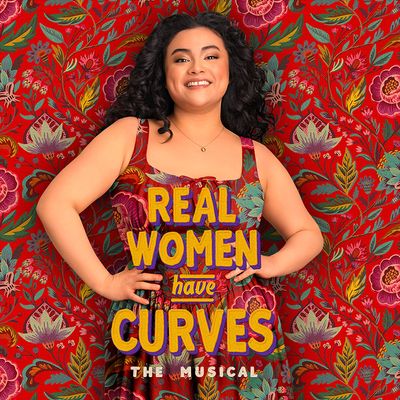
[53:51] Karen Eber: The play we're talking about is Real Women Have Curves. And the author that joined us was Josefina Lopez. And our season two, first episode, will be all about that. And it coincides with the opening of Real Women Have Curves on Broadway, which I will be seeing for the second time. I absolutely love it. Absolutely love that show. And I think everyone should go see it. That is the show I recommend to everyone, and we will talk about it in the next episode. Very excited to have you there.
[54:21] Colby Webb: No, it's not what we do first.
[54:22] Karen Eber: What do we do first?
[54:24] Colby Webb: Just remember, you can follow us on Instagram at Drama book Show podcast. You can follow the drama bookshop. You can subscribe to the drama bookshop on EventBright so that you can see when we add new events to our calendar and come to one of these in person. And remember, all of the plays and books we talk about are found here at the drama bookshop. And so are we. And we will see you at the bookshop.
© Broadway Podcast Network, All Rights Reserved