

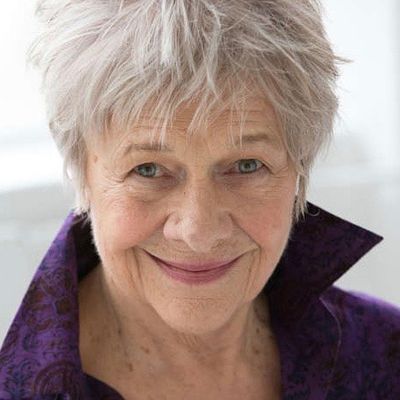
Mark-Eugene and David mark their twentieth episode with a special celebration! Joining them are Academy Award winner Estelle Parsons and Abbie Britton, MA, for an inspiring conversation about Estelle's book Uncharted Territory: Life Lessons from the Theatre... Read More
From the show: The Drama Book Show!
Guests
About
Mark-Eugene and David mark their twentieth episode with a special celebration! Joining them are Academy Award winner Estelle Parsons and Abbie Britton, MA, for an inspiring conversation about Estelle's book Uncharted Territory: Life Lessons from the Theatre. Tune in for unforgettable stories and profound insights from a true legend of the stage.
Transcript
This transcript was automatically generated and might contain errors.
[0:18] Mark-Eugene Garcia: Hello, welcome to The Drama Book Show.
[0:20] David Rigano: This is Mark-Eugene Garcia.
[0:22] David Rigano: And I'm David Rigano.
[0:23] Mark-Eugene Garcia: And we're here with episode 20.
[0:25] David Rigano: Happy 20.
[0:26] Mark-Eugene Garcia: Yeah.
[0:27] David Rigano: We did it.
[0:28] Mark-Eugene Garcia: And this one.
[0:30] David Rigano: Wow.
[0:31] Mark-Eugene Garcia: It was a doozy.
[0:33] David Rigano: This is the event that we did for Uncharted Territory: Life Lessons from the Theatre, as told by Academy Award winner Estelle Parsons to her daughter, Abbie Britton, MA.
[0:46] Mark-Eugene Garcia: And it was incredible.
[0:47] David Rigano: Now this started, I think somebody came in to give you a book.
[0:51] Mark-Eugene Garcia: Yeah, someone like handed me like a proof topic and was like, Estelle Parsons wrote a book, you should carry it.
[0:57] David Rigano: I think it was a friend of hers, not some like absolute rando, but handed me the book and was like, Estelle Parsons wrote a book, you should carry it here.
[1:05] Mark-Eugene Garcia: And then I turned to you, I was like, We need to do an event with Estelle Parsons.
[1:10] David Rigano: Yeah, and then maybe a day later, two days later, if that, I got an email at midnight.
[1:16] Mark-Eugene Garcia: Oh, so from Estelle Parsons.
[1:20] David Rigano: And I about fainted.
[1:21] Mark-Eugene Garcia: I just thought, oh my gosh.
[1:22] David Rigano: And it was so sweet, and just said I would like to do an event at the Drama Bookshop.
[1:27] Mark-Eugene Garcia: And immediately, like without even thinking of, yes, of course. No, this is gonna happen. We will make this happen.
[1:32] David Rigano: And she came into the store a couple days later, and I got to walk her around to the store.
[1:38] Mark-Eugene Garcia: And just oh the sheer joy and I mean and fear and a little bit of fear. I whenever you have someone I think who is such a massive celebrity, and I, you know, and having met her and talked to her, and she's the sweetest person, but she's a massive celebrity.
[1:58] David Rigano: A massive celebrity, but also like for me, like she's famous for things like Roseanne, where she played a very mean character sometimes.
[2:08] Mark-Eugene Garcia: Yeah.
[2:08] David Rigano: And so knowing that that character was there, was there that she could play. I had seen her when I was in college, I was such a huge fan of August: Osage County, the Tracy Letts play, which was on Broadway at the time in my senior year of college.
[2:24] Mark-Eugene Garcia: I'll let you all do the math on that. If you haven't read it, come to the Drama Bookshop, give it a read. Might take you a couple days.
[2:31] David Rigano: It's a three-hour play, a three-hour family drama.
[2:35] Mark-Eugene Garcia: And over the course of its Broadway run, it had three cast turnovers.
[2:41] David Rigano: And I saw all three of them.
[2:45] Mark-Eugene Garcia: So did I just say three hour or three and a half hour? I don't know. It was whatever it was, it was three and a half hours was the length of this play.
[2:52] David Rigano: So I calculated I spent 10 and a half hours of my life in that theater watching that play.
[2:57] Mark-Eugene Garcia: And Estelle Parsons was the second cast playing the matriarch who is terrorizing her family.
[3:06] David Rigano: And to have seen Deanna Dunnegan, who originated it at Steppenwolf, won the Tony Award, and then also Felicia Rashad, who was the last person to play the role before it closed, all three women were so very different from each other.
[3:25] Mark-Eugene Garcia: And thank goodness Anna Shapiro, the Tony Award-winning director, allowed that of them.
[3:33] David Rigano: But Estelle Parsons was so playful in her kind of pill-addled daughteringness of the role that when The Monster came out.
[3:45] Mark-Eugene Garcia: It was terrifying.
[3:47] David Rigano: And see, that's the thing is knowing that she has that character ready to pull out and play with, knowing that she has Bev from Roseanne, yeah, ready to just like launch into, I was a little scared.
[3:59] Mark-Eugene Garcia: Knowing that I was gonna meet this woman. And that she was coming. Not that we expected. But no, no, but coming to this store to see me, knowing that all of that, I was like, what if like that's just it's something that she hasn't all the ready to go? But I was so wrong because she is the sweetest person.
[4:17] David Rigano: And just absolutely wonderful, just a walking hug. I got to hug her a couple of times, and I just I was in complete awe the whole time.
[4:25] Mark-Eugene Garcia: Yeah, yeah. Well, let's delve in and hear a little bit of Estelle's story.
[4:34] David Rigano: There's a dog.
[4:39] Mark-Eugene Garcia: So that's you competing.
[4:46] David Rigano: She's a dog lover.
[4:49] Mark-Eugene Garcia: We had to have a little pen in the bedroom where we had a whole family of dogs, right?
[4:56] David Rigano: Yeah. We had Scamper and six puppies and cats as well in the back of the Chevy station wagon.
[5:09] Mark-Eugene Garcia: Yeah, we traveled I don't know, halfway across somewhere.
[5:14] David Rigano: We drove to Canada with those puppies.
[5:17] Mark-Eugene Garcia: Let's try. Were you doing a play there?
[5:20] Estelle Parsons: I think I took you and your twin to the Shakespeare Festival, but you know, because I had done a play with Bill Needles, who was at Stratford.
[5:32] Estelle Parsons: Stratford, Canada.
[5:34] Mark-Eugene Garcia: Okay.
[5:34] Estelle Parsons: So we went up there. We saw like four Shakespeare's in three days.
[5:39] Mark-Eugene Garcia: And then threw up.
[5:41] Estelle Parsons: When we came home, we were good at getting carsick.
[5:44] Mark-Eugene Garcia: Yeah.
[5:45] Estelle Parsons: We got all the way home. We were on Zoo Road. And in the latter mile, you threw up. I remember that well.
[5:52] Mark-Eugene Garcia: Yeah. How did the dogs do in the car?
[5:56] Estelle Parsons: The dogs did great, actually. But that was kind of how we had our childhood. You know, traveling from place to place. We sort of traveled with home.
[6:11] Mark-Eugene Garcia: We didn't, we weren't. But we did want to get rid of those dogs, and I couldn't get a vet that would kill them.
[6:20] Estelle Parsons: I was taking them from one I was making a few. And I remember going out of the motel and going to every vet in town to see if I could get a vet who would kill these puppies.
[6:33] Mark-Eugene Garcia: What was I supposed to do with them?
[6:35] Estelle Parsons: No, I think you want to say put to sleep rather than kill.
[6:40] Mark-Eugene Garcia: I should have given them to Christine.
[6:43] Estelle Parsons: Well wasn't that believable?
[6:50] Mark-Eugene Garcia: I'm sure the Stratford Festival could have used four more fairies in Midsummer that year or something.
[6:59] Estelle Parsons: Put some wings on the dogs.
[7:01] Mark-Eugene Garcia: And the puppies.
[7:02] Estelle Parsons: I don't know what actually finally happened with those.
[7:05] Mark-Eugene Garcia: We gave them all away to good homes.
[7:08] Estelle Parsons: That's yes.
[7:09] Mark-Eugene Garcia: That's how you do it.
[7:12] Estelle Parsons: Yeah, that's how it works.
[7:19] Mark-Eugene Garcia: Well, and you do talk a little bit about both the traveling as a family and sometimes the traveling separating the family in the book.
[7:29] Estelle Parsons: Yeah. But before we get to that part of the book, I think we have an excerpt that we're gonna hear.
[7:36] Abbie Britton: Mom announced before just back there that she was going to read seven of her favorite poems tonight, as opposed to doing anything about the book, I reps.
[7:48] Estelle Parsons: Which I thought was a great idea, but we're gonna read the book. We've got an hour. Who knows where the evening will take us.
[8:03] Abbie Britton: Yeah, we're gonna read a chapter called Fear is Fertile Ground.
[8:08] Estelle Parsons: The depth of the book, the subtitle of the book is Life Lessons from the Theatre.
[8:15] Abbie Britton: And yeah, I really the book was gonna be something totally different. And as I was talking to mom and when we first sat down, which we'll get into later, but I realized that this was really life lessons that all the stories had some kind of lesson in them that shaped me that were directly from her craft.
[8:44] Estelle Parsons: So this one is called Fear is Fertile Ground.
[8:51] Estelle Parsons: My mother taught me that fear forces one to create big things, and that you're always a prisoner of your own gifts, as the playwright Tennessee Williams once said to her.
[9:07] Abbie Britton: What? You read Tennessee Williams, Tom.
[9:13] Estelle Parsons: We called him Tom, and I and I it's hard for me to say Tennessee Williams. But if other people don't know we called him Tom, then it looks like I'm some kind of a snob or something.
[9:23] Abbie Britton: So Tennessee Williams.
[9:26] Estelle Parsons: Tom, we called him. Said that if you don't use, if you have a creative gift and you don't use it, it will destroy you.
[9:35] Abbie Britton: She began at six, even as a pipsqueak. She was fascinated by acting, watching the actors and rehearsals.
[9:44] Estelle Parsons: She dreamed of being Terry Temple. The Tavern Players, a local community theater, was housed in the women's exchange building in Lynn, Massachusetts.
[9:56] Abbie Britton: There was a theater with the balcony. Her mother, my grandmother, collected props for the theater and would plop the pastel in the audience where she would watch all the interesting people.
[10:09] Estelle Parsons: She called them the actors rehearsing. Mother was in many plays there.
[10:15] Abbie Britton: She was a dancing plate.
[10:21] Estelle Parsons: And in The Bird's Christmas Carol. She and a local kid named Billy Harrington were the directors' favorites.
[10:30] Abbie Britton: This went on from the time she was six until she was 15.
[10:35] Estelle Parsons: She was in a play with a bunch of other teenagers, and Billy Harrington had to kiss her.
[10:42] Abbie Britton: She was worried that her father might see her being kissed on stage, and she quit acting.
[10:49] Estelle Parsons: But it was her character as a frog early on in Tavern Players which set the ball rolling.
[10:58] Abbie Britton: I had to wear this costume with big frog mask over my head. I couldn't see the audience and they couldn't see my face.
[11:27] Estelle Parsons: And it's true I haven't ever. Or in a film. Those films where you have to turn into an ape and all that stuff.
[11:35] Abbie Britton: No, no, no. But there's a lot of money to be had there, but do it.
[11:43] Estelle Parsons: What else? Mother's childhood consisted of being misunderstood and doing what she wanted to do despite those who did not get her.
[11:54] Abbie Britton: My father said being in the community theater plays was bad for me.
[12:03] Estelle Parsons: I remember coming down and standing in front of him, and as he was sitting in his chair where you know, every night he went in and he had his pipes there, and he'd come home from work, he was a lawyer. And Alfred Junior he'd go and sit in his chair and read whatever.
[12:20] Estelle Parsons: And I remember standing in front of him. And he said being in the community theater plays was bad for me. And I shouldn't be doing it. He was not proud of me. And I had, of course, hope that he was going to be very proud of me. And when he did see me play a leading role when I was 13, I did the Bird's Christmas Carol. And there were stairs in front of the stage, and she was a crippled girl in a wheelchair. It's a very beautiful play. And he sees the family next door, they're a poor family, and she makes friends with the children. She doesn't live very long, and I don't know what was wrong with her, but anyway. And I suppose my mother made him come, you know. And afterwards I was sitting up there on the stage, and he walked up these steps, and I thought he was going to say how wonderful I was or something, and he never mentioned the play at all ever.
[13:22] Estelle Parsons: And I have to tell you if would you mind if I said one more for the Abby?
[13:27] Abbie Britton: No, I'm fully excited about this.
[13:30] Estelle Parsons: I carry Wheatley in my work, a nervousness that is unbelievable, and I've had years and years of therapy and analysis, but I've never gotten rid of this frightful nervousness in my entire being. And I think it was all caused by that standing in front of my father and hearing that, you know, everything that would go wrong in my life, like getting a B instead of an A or stuff like that, you know. Everything that went wrong was because I was in the theater. Not helpful.
[14:14] Abbie Britton: Wow.
[14:23] Estelle Parsons: Me?
[14:24] Abbie Britton: Yeah.
[14:24] Estelle Parsons: Me?
[14:25] Abbie Britton: This is you.
[14:28] Estelle Parsons: Oh, okay. All right. It is very clear to me, because of working in that community theater, you know, all the time through my childhood, that the job of an actor was to move the audience to tears or laughter. I was used to it, the matinees, you know, I'd hear all the pocketbooks click open because they were going to cry about my little 13-year-old purple girl who was gonna die. So it was very clear to me that acting was all about moving the audience to either tears or laughter. And theater is first and foremost about the relationship with the audience. Movies and TV are directors' mediums. They have nothing to do with the acting that is done in the theater. To start with, one must have some vocal prowess. Camera angles and patting editing make a movie great, but it's the relationship among the actor, the character, and the audience that creates greater theater.
[15:44] Abbie Britton: I really enjoyed that chapter. Um you're really in for a fun ride with this book. Because one of the things that I think that we see in this book, and you go into great detail in this in one chapter, is the generational aspect to it. We talk about your parents in one chapter, we go all the way back to the witch trials.
[16:10] Estelle Parsons: Yeah.
[16:10] Abbie Britton: We talk about the effect that your parents had on you, and then you talk, of course, about having Estelle as a mother and parts of your life from that. So what was the impetus? What was the genesis of the book in the first place? And did it start with one or the other of you?
[16:34] Abbie Britton: Yeah, I was a journalist for 25 years at major women's magazines, and Bo Carver's Bazaar. I focused on women's health and fashion and beauty.
[16:50] Estelle Parsons: Beauty editor Mirabella.
[16:53] Abbie Britton: Yeah, no.
[16:53] Estelle Parsons: And Marie Claire.
[16:54] Abbie Britton: Yeah, when I was the editor-in-chief of two women.
[17:01] Estelle Parsons: Yeah.
[17:02] Abbie Britton: That Lay Bryan paid for, right?
[17:05] Estelle Parsons: Was that the name of the book?
[17:06] Abbie Britton: Well, they put us on the map.
[17:08] Estelle Parsons: Yeah.
[17:08] Abbie Britton: Lane Bryant.
[17:10] Estelle Parsons: And Code.
[17:11] Abbie Britton: Code, yeah.
[17:12] Estelle Parsons: Tell us Code.
[17:13] Abbie Britton: Code was the I had a reputation for being a launch expert, which means that if a publishing company has an idea for a magazine, they call like her Storconass would call me and say we have this idea. Can you put together a staff, put together the concept, etc.? So I was known as a launch editor, and we did Code, which was the first ever uh Esquire GQ type magazine for black men, and then we did code that was for Larry Flint. I worked for Larry Flint, which was an amazing experience.
[17:54] Estelle Parsons: And then Mode was launched by Hatchet Filippacci, and it was the first Vogue style magazine for women size 12 and up. That was the whole beginning of that.
[18:06] Abbie Britton: You never saw anything in the magazine.
[18:09] Estelle Parsons: Yeah, and it was interesting because when I went to all my Vogue photographers and said I need you to come launch this with me, they nine out of ten of them said we won't shoot fat girls.
[18:23] Abbie Britton: Which was yeah, so we but so the response wiki was my cohort in crime there.
[18:34] Estelle Parsons: But our response was just watch us, F you and watch us, and we won every single award there was in the magazine industry.
[18:43] Abbie Britton: And now even in LLB you see the plus sizes.
[18:48] Estelle Parsons: And it's really important what you did there, I think.
[18:51] Abbie Britton: Yeah, it was actually just looking at Kim Kardashian's skim's line. I don't know if anyone's looked at that app, but she has every single body shape and size, and I sort of thank us for doing that. But anyway, so mom I did that for years to support my kids, and then I uh went back to grad school and got a degree in.
[19:17] Estelle Parsons: When she was 60.
[19:18] Abbie Britton: Yeah, I'm kind of a language nerd, so I thought master's degree in yoga science in the of the therapy, and I've studied Latin for eight years and Sanskrit, and uh just changed my life, and then I wasn't writing it all, and then mom came to me one day and she said, you know, I've had we were having one of our mom-daughter things, which we like to do. We're sort of peace in a pot, and she came to me one day and said, I really will you write my book, and I said, Yeah. And I wasn't really sure I wanted to do it, you know, because we're so close, and I didn't know if I could have any kind of separation from the subject matter at all, and I couldn't.
[20:19] Estelle Parsons: And it was very so we spent three weeks writing it.
[20:25] Abbie Britton: I took the whole manuscript, I put it in a drawer in Wolfburg, New Hampshire. This was 12 years ago, and then my sister found the manuscript.
[20:39] Estelle Parsons: And mom and I were at each other's throats for that three weeks. It was quite a grueling experience.
[20:47] Abbie Britton: Anyway, so I found the manuscript. Martha, my my twin sister found the manuscript. She read it, she called me, she said, This is amazing material. And I said, It is, and she said, Yeah, and so she sends it to me, and there was a chapter in it about, which is actually my favorite chapter, about mom and I going on a jount to Italy to find Dario Ilbufo and his wife from Rame because she wanted to do his place, and he and his wife Franco were part of the Red Brigade in Italy, and they were not allowed in this country.
[21:33] Estelle Parsons: So mom said, let's go.
[21:36] Abbie Britton: You speak some Italian.
[21:39] Estelle Parsons: And I said, okay, let's go. So we got on the airplane.
[21:45] Abbie Britton: We knew that he was staying in Cesanotico next to a drugstore.
[21:53] Estelle Parsons: And we just got in a car. We drove, we went to Gubbio.
[21:58] Abbie Britton: Remember, we slept on like a mattress in a cave because the town was so crowded.
[22:07] Estelle Parsons: It was magical.
[22:08] Abbie Britton: And so we slept in this.
[22:11] Estelle Parsons: Well, it was a hotel.
[22:13] Abbie Britton: Was it?
[22:14] Estelle Parsons: I don't even remember that.
[22:15] Abbie Britton: I remember it like there was straw on the floor.
[22:19] Estelle Parsons: That's what I remember.
[22:20] Abbie Britton: We had a hotel.
[22:23] Estelle Parsons: But we didn't have a hotel in Gubbio because the town had had a big event and everything was closed.
[22:31] Abbie Britton: I mean, this is what we did.
[22:33] Estelle Parsons: Literally no room.
[22:34] Abbie Britton: Not just in Italy, but in life.
[22:37] Estelle Parsons: Like we had, you know, we've lived in haylofs for we've lived in brilliant places through it's Carlton, and we've lived in Haylofs.
[22:49] Abbie Britton: When in the car, and we've just traveled around to do what we needed to do.
[22:56] Estelle Parsons: So mom could do the work she loved, which was amazing. I had the most amazing childhood.
[23:03] Abbie Britton: And anyway, so what was I saying?
[23:08] Estelle Parsons: You were saying about going around like that, and it's true because I had this desi dr I was a really terrible mother in my term.
[23:16] Abbie Britton: No, but I'm saying because I thought I'll just take those kids and try to do what I'm trying to do in my life.
[23:23] Estelle Parsons: Right.
[23:24] Abbie Britton: And they'll just have to go along with me.
[23:26] Estelle Parsons: Like circus performers, you know, the circus was up in Woodstock when we were there.
[23:31] Abbie Britton: And they have these kids and they lived in a bus with their parents who were like the acrobat or all of something like I thought, well, this would be wonderful for my kids.
[23:41] Estelle Parsons: So ridiculous, isn't it?
[23:43] Abbie Britton: What person would think that would be wonderful for their kids?
[23:47] Estelle Parsons: Oh, but the question was who started it.
[23:52] Abbie Britton: And then you would say that.
[23:53] Estelle Parsons: So the question is who started it?
[24:00] Abbie Britton: Oh we had this chapter on Dario Foe, which was so much fun.
[24:05] Estelle Parsons: It was about our this gypsy wander that we did through Italy.
[24:10] Abbie Britton: Oh, fine Dario Foe.
[24:12] Estelle Parsons: We finally found him.
[24:14] Abbie Britton: Uh the drugstore in the beach.
[24:17] Estelle Parsons: The drugstore.
[24:18] Abbie Britton: We got there in the drugstore.
[24:21] Estelle Parsons: There was a sign on Vacanza.
[24:24] Abbie Britton: So we had no idea when there was the whole drugstore was on Vicanza.
[24:28] Estelle Parsons: And so we're we go down to the beach and we see this woman who looks to me like everything I ever wanted to be.
[24:39] Estelle Parsons: She was in, she seemed to be in her 60s with blonde hair and big glasses, wearing the tiniest bikini and a little cover, and still a lot of us on the beach, and she was wandering around going, Dario, Dario. And it was Franco Rame. We had run right into them on the beach, and then there's Dario, who did not, by the way, drive riding cars. He only took bicycles. And they had this translator who looked like Che Guevara. She was in her 20s and was on the beach in our army fatigue. It was so incredible. And they took us to their house in a car that was about as big as this. Yeah. There must have been 10 of us in the car and Dario and his bicycle. And we stayed there for a week. Yeah. And they he and his troop performed the plays.
This was my childhood. Yeah. Frank Arame performed this the female piece of the feminist piece. The female parts. Yeah. Twin of them. And then mom brought them back to the public theater. And did them in the public theater. So and I thought I'd do two. Okay. So there were 23 of them. And I thought probably I would. Originally a couple that sort of adopted Abby and her twin brought me this book of these Frank Arame plays showing from England and they were a British translation. It was very kind of for me. It wasn't an easy set with me. It was like another play I did in Tom Joe, the Narvi Schmidt's uh Collect, which had been written through Zoe Caldwell, and that wasn't a fit for me because I know Joe Caldwell, so but anyway, so what was I saying?
You were talking about why you went why we went there and um oh yeah, and coming back with the 23 app. So I thought, okay, so I'll do like three or four of them. One of them's a very big one, a very, very funny, very successful with audiences of a man who was in in bed in the other room, and then she's ironing, and it's all about her talking to them. And we showed a couple of them to Joe Path, and I said, There are 23 of them, and he said, Do all 23, and I said, I don't think so. And he said, Yeah, I'd love to see them all. We'll run them two or three nights, it'll take you two or three nights to do them all, so you'll do them all. And I did, and I actually had to give up a movie for a European director, which I was not very happy about giving up that movie, but and he'd hired me because he seen me do these twenty-three feminist pieces.
Ronda Rame wrote, they were really funny. What happened was that this chapter that I had about our gallivanting to Italy. That was the only piece of the book that was intact that the manuscript that my sister found. I make my living as a writer, so I decided to submit that chapter to a writing contest by Hay House. Now, I don't know if any of you know Louise Hay, but she does all the self-help. She's just what the originator of you know positivity. I don't know what to say in the unseen, etc., which I'm in too, but anyway. Um so I thought F it. I'm gonna take this chapter and submit it to the contest. There's no way on the planet that this is gonna win. Because it had nothing to do with anything.
Well then why did you submit it if you knew it wasn't gonna win? You answer that question. Because I'm your daughter. Oh, okay. So you see what I'm dealing with. So I took that chapter, submitted it, and it won first prize. Wow. And I was living in Geneva, Switzerland, and I was looking through my email and I saw Hay House. I deleted it, and then I thought, did that say I won the prize? And so I don't like you. I know. So I'm like, how do I get my email back to see if I win this prize? And then they sent me a second email, which was about you win the prize, is what you have to do. So I called Mom and I said, Oh my god, we won! We won this prize. Now we have to write this book. Because there was a deadline.
Alright, but I'm coming to we have three weeks. We're gonna sit down and write the book. And this was ten years after I had written the original. So I mean just three weeks for the first draft. Ten years later, three weeks for the second draft. If you believe in something, do it. You never know if it's gonna pay off ten, twenty years later. You just don't know if you have a thing that says I must do this. And so we sat down. And we cut it like fifty pages out of the first manuscript. We were like, this is no good, this is no good. And then we really got down to business. Well, no, because when I sat down with her for the first session Saturday morning at 10 a.m. I said to her, Okay, we need to write this book.
So you know, I had a question prepared and she looked at me and said, I can't possibly talk about acting. And I was like, Oh, this is not fucking gonna go well at all. And then, you know, it just I think the thing my favorite part of the book is that it's it's a real relational conversation about mother and daughter in the theater. But also not just mother and daughter in the theater, but I was a single mother. Yeah. And I we had run out of money because of a div the divorce situation. So I mean it was it had all been spent in the marriage that produced you and your twin. And then it was gone. Yeah. And then the marriage was gone, and then there we were. So I had to look for in New York for the cheapest place I could possibly find from that house that we lived in, who had your father.
You know. Yeah. It was terrible. And I think there's a little of that in the book too. And I remember going walking by the bakery, you know, and saying what would happen if I smashed the window and took the bread out of that bakery. And you have in the week too about the that we'd always take the bread home. If we're invited to dinner, we'd take the bread home, and it was a lot of years before we got over take saving the bread. Yeah, we'd go to parties and mom would say put food in your pockets because we were literally hungry. Oh god. And you know, that's another lesson, you know, be willing. What's the lesson of that? I mean, you're starving, but you're doing what you're compelled to do. We never really starve.
This is something you talk about very early in the in the book when it comes to how you define success as an actor. And that the fame and the money, which did come for you in many ways, is not how you personally define success. Rather, it's the impact. And obviously, there was the Academy Award and there were the TV shows. And I wanted to ask how you balance the work that you feel is the real acting success with having to put food on the table. And you talk a lot about it in this book, especially as you say, being a single mother and having to put food on the table. Yeah. And I could never get, I wanted to get what do you call them? Commercials, ads. You know those things where you get a housewife and she'd open it for baggies.
I did get one. I got one for baggies, and the director was terrible to me. So because I was supposed to put this peanut butter sandwich. I play the piano, I mean my hands are fine, but I was supposed to put this peanut butter sandwich in one of these baggies. Oh, and I couldn't, I I don't know why. I just I it wouldn't go properly into that baggie. And the director was this mean. Mean. I'll open it up at this point. The commercials were good, you know, because you you'd make a lot of money on them. And I always thought, why can't I get commercials? And then I got one and the guy said, You reminded me of my sister. So that was the only reason I had gotten that job because I reminded him of a sister.
Wow. Let's yeah, we've got a question right here. What's the proper way of putting a peanut butter sounds? Well, it it was to sell the baggies, I think. You see, and it's not very easy to put one in. I don't know. I don't think there was anything wrong, but I think those, you know, I'm sorry to say it, but men, and there's a lot of money in the field, you know. But they take it out on you because they can. I've had several i i in in incidents in my life where it's been taken out on me, and probably I deserved it. I was probably very bad at it, maybe I was nervous, I don't know. I don't look nervous, but I probably was. I mean, I'd driven all the way down from Way Hampshire with the two twins to get back to audition for this darn thing and do the darn thing, so it probably wasn't wrecked, you know.
I don't know. But gosh, people were were really making a lot of money on those commercials. Women I can't forget now, most of them are dead, but anyway, they were making a lot of money doing that. I thought, well they can do it, why can't I? But I'm I wasn't an average enough type, I think, you know. Yeah. You have to look a certain way. I think I look like everybody else, but anyway. We've also done questions. Yes, I'm it's hard to say, I think you should have won best supporting actress from Rachel Rachel. Oh, yeah. You were also subbrilliant when you played Martha Mitchell in Russia. So when you look back on all the parts that have you that you played, is the one that is most meaningful for you?
Well, the the one thing that it that was extremely meaningful was Miss Margarita's Way, a play that was done direct to the audience. And I was in at the time Pirates of Penzance with George Rose, and it was just as television was coming up, and audiences, live audiences were getting very passive.
[37:00] Estelle Parsons: You know, it's a two-way street, live audiences, and that's why I would rather be with a live audience than in TV or films, because there are people there and they're involved, hopefully.
[37:14] Estelle Parsons: But George Rose and I were doing pirates, and we were always complaining that the audiences now came like they were watching a TV show. It was a real change in theater audiences in New York. There was a real change in maybe true theater goers, but you know, in people who bought tickets to go to the theater. They were sitting there, okay, entertain me. It was no longer this wonderful thing that we had all loved so much and were willing to work for low wages in the live theater. It was hard then. So when I read that chapter, and you were talking about complaining with George Rose, and then talking about the audience response to Miss Margarita and you as a great teacher.
[38:07] Abbie Britton: Yeah.
[38:07] Estelle Parsons: And being prepared for being scripted for whatever came at you. But that was special, and most actresses would hate it. The woman who did it, and she was a big star, but if someone spoke up in the audience, she would lie down on the stage and refuse to go on with the show. And you said today.
[38:29] Abbie Britton: Oh my gosh.
[38:30] Estelle Parsons: Bring it. Oh my gosh. What happened to me in that, not happened to me, but the things that the audience did in that play? Amazing. He's still around, but he's back in Brazil with a lot of other plays that you know were not that particular play. Because I'd been interviewed by this French guy, and I was saying, What is this just terrible now? They don't respond. He said, gosh, I've got a play I bet will interest you. He said, I'm gonna do it in Belgium, and it's a big hit in Europe. And he sent it to me in French. My French was boarding school French, but it was good enough to know. And I took it to Joe Papp, and Joe Papp, who was really not a savior, but so important to a circle of certain actors at that time.
You know, I took it to him and I said, I have this thing, and he said, Okay, let's see some of it, and we did some of it, and then it was very hard to rehearse it, and the French guy was doing it because he brought it to me. I said, I can't do this, I can't go on with this man. He's telling me to move here, move there. I just can't work there, blah, blah, blah, blah. You know, but Joe Papp could always ride all those waves of actor craziness in a very intelligent and beautiful way. Isn't that true?
[39:54] Abbie Britton: You and your twin worked hard too, didn't you?
[39:57] Estelle Parsons: Yeah, I worked for him. But I left him as a human being.
[40:00] Abbie Britton: Yeah, as a professional. I saw you in. I saw this play three times, three different casts, and every time I saw it, this was a play that I feel the audience, whether or not they wanted to, would have these reflexive responses was August Osage County. There was just things that would happen on the play, or someone, you know, you would say something to one of your three daughters, and the whole audience would go, oh, and you could hear it every time I went to see that play. Well, and I calculated because of the length of it. I spent ten and a half hours in that theater watching it. Watch it in total over the course of three times.
[40:41] Mark-Eugene Garcia: Well, do we have some more questions about both either one's career and also the creation of the book?
[40:47] Abbie Britton: Yes.
[40:48] Mark-Eugene Garcia: I have one for each. And so whichever you want to answer, but I wanted to ask. Well, I wanted to ask this Dell and you are you're just so indomitable in your character, but you in your life. And so the fact that you just said there were moments of course you're human, but that you were nervous. I mean, I almost just fell off my chair. I can't imagine that being assigned this fierce, you know, force that you are. And so I was just wondering if you could talk about how you stay connected if you've had those moments to your instinct, you know, your clarity, your behavior, your decision making, like if you feel nervous.
[41:23] Abbie Britton: And then I just wanted to ask Abby if there is something that you learn, not about your mom, but I guess about yourself or your history, you know, what was there anything that surprised you in finding the through line of the story?
[41:40] Abbie Britton: Right. The part of you that's on the story.
[41:46] Estelle Parsons: It was a mom and I always had a very tough relationship because I'm super headstrong. I'm unlike my sister. I have a twin sister, and I'm a fighter. And so by the time you got to me, you had what do you call it, interview of very many did we called celebrities and something. You weren't just like getting to me, you know, as a little world at that time.
[42:19] Abbie Britton: Well, that was the thing. I mean, I had interviewed Kissinger, Jackie, um, you know, that caliber people. It wasn't just like doing little stuff.
[42:32] Estelle Parsons: But so there were two things going on. One was I really knew how to handle a strong personality. You know, there are certain journalistic techniques where you get the answer even if someone doesn't want to give it. So that was kind of great because in many ways doing this book was my hardest task ever as a journalist.
[43:03] Abbie Britton: And lie too.
[43:04] Estelle Parsons: Yeah. But also I think that it gave, I don't know if you feel this way, but it gave us a chance to really go through our life together and unwind the challenges that we experienced together. And it for me it very much made me love my mother in a way that I never was able to before. Because I, you know, I'm so kind of a rock. You know, but I think it gave us to go through the book together, gave us a softness towards each other that we never had before that I has really continued, you know. So I'm very grateful for that. It was very, I mean, I hate to use this word, but for me it was very therapeutic. And also my greatest professional challenge as a journalist.
[44:21] Abbie Britton: Um yeah, I think it was for me too.
[44:28] Estelle Parsons: Yeah. Because you know, people say if you do a certain amount of things, and people say, well, now someone should write your biography. And so I was troubled by that. I know it's good to get a book out, you know. I'm in show books, what the heck. But I and I had tried, I think before we started, I had tried with a couple of people, and I found it so difficult to talk about myself to and get like a you know, maybe a week's worth of these interviews every day, and I said I can't do this, I just can't do it. I just can't do it anymore. So it I think that was at the time when I was talking to you about how would we do something. And of course, you can't do that to your own daughter. But the fact is she's very good at what she does, and probably I could have done it as a twin.
[45:29] Abbie Britton: No.
[45:30] Estelle Parsons: Oh, you think Martha could have done it?
[45:33] Abbie Britton: No, I said, I don't know. That was a stupid thing to say, but I think you were very good at you know, realizing the difficulties that I was having and they very often turn into meanness.
[45:49] Abbie Britton: Well what I discovered is that my mom I first of all they don't I never think of you as mean. I just think of you as an actor.
[46:02] Estelle Parsons: But worse.
[46:06] Abbie Britton: But what I discovered, I'm gonna say this without looking at my mom. Is that my mom is incredibly shy. And I had no idea. And that part of that stage fright. I was shocked. So, you know, there were certain places when we were right like I I would know that there like there was this one day we were in the living room and we'd kind of done all that we could do and I said, Is there anything else? And it w there was just like a wall and I thought, oh my god. Like this is this is we've had some fertile ground here. Like I started really understanding that that deep privacy and that deep shyness and that I'm standing in front of my father. They're hoping he's gonna love me is in the room with us. And if I can just sit.
This is where my yoga master's degree came in really handy. I thought if I can just sit here as long as it takes until we can get through fear and through shyness. And we're gonna have something really good. And I feel like the book is a gem of just like I don't think anyone could have written this book except for you and I.
[47:59] Estelle Parsons: Right. I just but that's because you're so original.
[48:03] Abbie Britton: Well, it's because you're so original.
[48:05] Estelle Parsons: Okay. Something that I think is so fascinating about this is that it doesn't really, even if you sort of consider it, say, okay, well, this is my biography because this is the story of my life, it it doesn't read like a biography. And it very much is the story of both of you. And as I said before, there's a lot of generational stuff, and there's a lot of stuff about your relationship to your parents, fear of losing your parents. I mentioned you over there, and I said I said, Can I ask this? Because I don't know if this was intentional or not. But then you even said after after the 10 years, you wind up cutting 50 pages. I thought, well, there it is right there. Because at one point you mentioned that Estelle, you had promised to live till 107. And the book. The book is exactly 107 pages long.
[48:59] Estelle Parsons: I'm so amazed that you know it's that. It's that that comes, you know, when you work in a bookstore and you're trying to read in between customers, you kind of go, well, how much more do I have?
[49:09] Abbie Britton: And I, and so I I had recently read the number 107, and I foot to the back of the page, and there it is, 107. So it's you know, those little things that just kind of happen, but it it it is I think in like in that way, even with that kind of happy accident. It's it's very much both of your stories, and I I loved reading Estelle about your career from the perspective of Abby, what was going on in your life at the time. Can you talk a little bit, Mom, about that thing of getting over fear?
[49:47] Estelle Parsons: Yeah, and because it it's a really important part in the front of the book where you say that I think that there's a that says, you know, it's life or death, and you just have to get up and do it. You can't mess around in your fear. Can you talk about that?
[50:06] Abbie Britton: Probably not.
[50:14] Estelle Parsons: Okay. I mean, I don't know as I experience it all of fear. I I don't know. No, no, no, no, I don't know. I don't know what I could talk about or not talk about. I don't know.
[50:26] Abbie Britton: Okay. It's in the book.
[50:29] Estelle Parsons: You'll have to read.
[50:30] Abbie Britton: It is.
[50:32] Estelle Parsons: Yes. I better read it. Can I talk about the moment in Williamstown? Because I think it's so emblematic and it's been so profound to me. I was visiting Abby and Estelle, and you were doing a play at Williamstown on the stage there. I don't remember the play. What was the play?
[50:53] Abbie Britton: It was a newish plans four years ago. Maybe five years ago. But the what is it? Clifford O'Desplay, I forget.
[51:00] Estelle Parsons: Yeah. Some lost TV version of a Clifford O some lost TV show that he Clifford Odes had written, right?
[51:11] Abbie Britton: Yeah. It was very strange. And we were all in the apartment that they'd given to you, and you said every time I go on stage and I'm waiting in the wings. I have stage fright. And I was gobsmacked. Having run La Mama, having done all this stuff with all these people. I'd never heard anybody so honestly address being terrified or having stage fright, whatever the words are, and doing it anyway. And I am to say that I can't even count how many times I've thought, well, I don't want to write this, or I don't want to get on the horse, or I don't want to do this. And I thought, well, of course you're afraid. You're standing in the rings, and now you're gonna go on. And that's it. We're just going on.
And it really, really moved me, Estelle. It really has come back to me, and I've mentioned it to Abby. It was huge, and I think it's so important for all of us to see somebody who's achieved so much. And yet there's still a sense that I'm afraid. I'm gonna do it anyway. And that's real heroism. So thank you both.
[52:34] Abbie Britton: And I would recommend to anyone who's guilty of stage fright that I think it's episode three of the podcast is Patrick Page moderating the book Hamlet's Mirror, which is Elma Lynn's Cainfield's book about from a psychologist point of view, about dealing with stage fright and a future episode that will be coming out, which is Philip Assou and Maris Pasqual Duran's book Piper Chancing, both of which we have here at the drama bookshop. We are we are right at about this time, but I did want to say, and if if not, then it's something that we all have to look forward to when you do figure out how to bring this to the stage. But did you want to did you want to recite a poem before we uh go? Or shall we or shall we wait for the record?
[53:19] Estelle Parsons: I might tell you right now. That's okay. I hear that going to jail might be an interesting experience. That might be an interesting experience. On that side, okay. Let me see if I can what did I do something wrong?
[53:37] Abbie Britton: You did something very wrong.
[53:39] Estelle Parsons: I did. What's that?
[53:42] Abbie Britton: You said come on.
[53:45] Estelle Parsons: I am like cheerleaders.
[53:47] Abbie Britton: I know you go.
[53:50] Estelle Parsons: No, I can I I was talking to them because I have I think like seven poems that I when I wake up at two o'clock in the morning. I want to go now. I wake up at two o'clock in the morning. So start saying recite all the poems that I know. Or whatever I may have memorized, because lots of times if I'm doing a play too, I wake up in the night and I work on my lines for the plays, but now I have I'm not in a play, and so I do all these poems. Two of them are Shakespeare sonnets. Many of them are Robert Frost, and one is Milton's sonnet on blindness, which really started the whole thing, because this is a funny story. After I won the Academy Award, I don't know why. I seem to have gone to a lot of some local libraries and schools, colleges, and I to talk, and because I was famous, you know, from the Academy Award at that time.
And I thought, well, I can't just get up here and talk. I have to give them something. I mean, what I do is act, so I have to just imagine these people. I mean they were having you sort of watch me or whatever, but I didn't think that was enough. So I used to recite Milton's sonnet on blindness, which I very might like, but when I recited, now you realize how crazy it is that I was going around these universities. How did you? And here I am, here's my Academy Award. And here's Milton's sonnet on blindness. When I consider how I light is spent half my days in this dark world and wide, and that one talent which is death too high, lodged with me useless, though my soul would bent to serve there with my maker and present my true account.
Let's see returning child. Doth God exact day label light denied. I fondly asked. But patience to prevent that murmur soon replies. God doth not need other man's work or his own gifts. Kingly. Thousands at his bidding spear or land an ocean without a breast. They also serve who only stands.
[56:57] Abbie Britton: Wow.
[56:58] Estelle Parsons: Yeah.
[56:59] Abbie Britton: What? What can you say?
[57:01] David Rigano: I I remember sitting there watching this event, just like my jaw just hanging there, listening to her talk.
[57:09] Mark-Eugene Garcia: Yeah.
[57:10] David Rigano: And then for her to pull that poem out.
[57:12] Mark-Eugene Garcia: Yes.
[57:13] David Rigano: Because she had said to me before, oh, maybe I'll just recite some poetry. Would have got oh okay. You're not gonna say no.
[57:19] Mark-Eugene Garcia: No, yeah, exactly. And she had those, and this is the other thing. You know, when you talk about someone who is an Academy Award winner, who was in Bonnie and Clyde, who was on Roseanne, but also is so entrenched in the theater. And I think my first well, I mean, also in the theater, like I the f one of the first things I saw from her is was in a documentary Looking for Richard with Al Pacino, and as I was a kid watching this and seeing her play crazy in there, it was amazing, but it it helped me realize that she was more than just the character I saw on TV. And it and it showed me how actors can have such a variety in their breadth of work.
[58:07] Abbie Britton: Yeah.
[58:07] David Rigano: For that for me was my father's a huge Gilbert and Sullivan fan.
[58:11] Mark-Eugene Garcia: Yeah.
[58:12] David Rigano: He was the light in a past life when he was a lighting designer, he was the lit at Light Opera of Manhattan, the season that they did every single Gilbert and Sullivan. So that was a big part of our growing up. In particular, the vinyl album of the revival of Pirates of Penzance starring Estelle Parsons as Ruth, the piratical maid of all work. So that was this other side of her that I just grew up with. And now here she is at this stage of her life at this age, and she was memorizing poems in case she did another one-woman show.
[58:53] Estelle Parsons: She's ready.
[58:54] David Rigano: If yeah.
[58:56] Mark-Eugene Garcia: Have him ready.
[58:57] David Rigano: Yeah. And I I as you can tell, dear listeners, we are our fans. Yeah. And just it was a glorious, glorious night. And and to have this book that's not just like this is my life. Isn't it? This is me just telling my story, but it's talking about being a mom who's a working mom in the theater. Being the the the relationship to ha to have her daughter writing about her mother and and to have it be like she says, these life lessons from the theater. Because if we could all be uh even just a little bit like Estelle Parsons, the world would be a wonderful wonderful place.
[59:46] Mark-Eugene Garcia: Well, I I didn't even know where to go from here, other than to say, David, the podcast is turning 21 in the next episode.
[59:53] David Rigano: Yeah.
[59:54] Mark-Eugene Garcia: We should we should get some cheap beers.
[59:57] David Rigano: Oh, we'll we'll pop some for Sacco.
[59:59] Mark-Eugene Garcia: Exactly. And who do we have coming up in our 21st episode?
[1:00:02] David Rigano: Well, we have a really cool one coming up because it's a two-time Tony winner.
[1:00:06] Mark-Eugene Garcia: Yeah.
[1:00:07] David Rigano: Who was not yet a two-time Tony winner when she did this event.
[1:00:11] Mark-Eugene Garcia: No, no, it happened since then.
[1:00:13] David Rigano: It happened in one night. She came with two-time Tony winner. Um, if you haven't guessed at this point, we are talking about the incredible Shana Taub.
[1:00:21] Mark-Eugene Garcia: Oh, amazing.
[1:00:23] David Rigano: And uh now Souf's both the libretto and the sheen music has been published since we did this event with her. But this event in particular was for her two musicals, uh her two Shakespeare musicals, As You Like It, and Twelfth Night, which had recently been published by Concord at the time. And we will delve into that next week. So remember, follow us on Instagram at drama book show podcast. Follow us on eventbrite so that you can know when in-person events are happening. And remember that all books that we talk about are here at the drama bookshop. And so are we. And so we will see you at the bookshop.
© Broadway Podcast Network, All Rights Reserved