

In this episode, hosted by Christine Toy Johnson, Michael R. Jackson and Rona Siddiqui share their creative inspirations, discuss their collaboration on the upcoming musical White Girl in Danger, and reflect upon their respective journeys with the Pulitzer Prize and Tony Award winning musical A Strange Loop, which was recently nominated for a 2023 Grammy Award for Best Musical Theater Album... Read More
From the show: The Dramatists Guild Presents: TALKBACK, sponsored by the Dramatists Guild Foundation
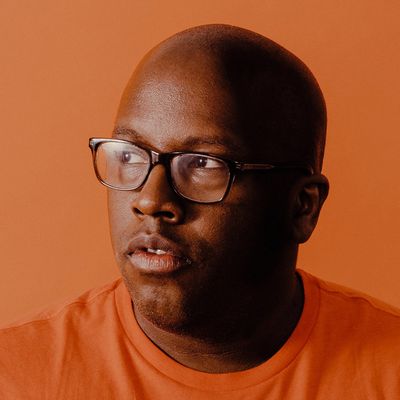
Guests
Featured Shows
About
In this episode, hosted by Christine Toy Johnson, Michael R. Jackson and Rona Siddiqui share their creative inspirations, discuss their collaboration on the upcoming musical White Girl in Danger, and reflect upon their respective journeys with the Pulitzer Prize and Tony Award winning musical A Strange Loop, which was recently nominated for a 2023 Grammy Award for Best Musical Theater Album. They also discuss the importance of advocating for their community; as active members on the Dramatists Guild Council, both Michael and Rona are passionate champions of supporting and empowering their fellow writers.
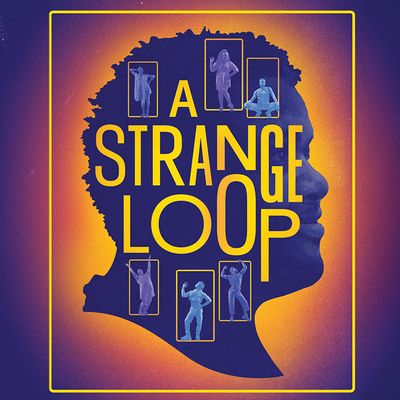
This episode first premiered in June 2022, in celebration of A Strange Loop's meteoric success at the Tony Awards. A Strange Loop is currently running on Broadway until January 2023. For tickets, please visit: https://strangeloopmusical.com/
This episode was produced by Amy VonMacek and Christine Toy Johnson, with postproduction by John Marshall Media. The music is composed by Andrea Daly. Talkback is a production of the Dramatists Guild of America and is distributed by The Broadway Podcast Network. Join the conversation online, using hashtag #dgtalkback.
Transcript
This transcript was automatically generated and might contain errors.
[0:00] Christine Toy Johnson: Welcome to the fourth season of the Dramatist Guild Presents Talk Back.
[0:05] Christine Toy Johnson: I'm your host, Christine Toy Johnson.
[0:07] Christine Toy Johnson: We've shifted our focus this year to talk about craft and inspiration.
[0:12] Christine Toy Johnson: Our guests this season are my colleagues and friends from the Council of the Dramatists Guild of America.
[0:17] Christine Toy Johnson: Our guests will give us a unique look into how they write, what makes a good story, and what drives them to keep working on the DG Council.
[0:26] Christine Toy Johnson: Stay with us.
[0:28] Christine Toy Johnson: Welcome back to Talk Back.
[0:30] Christine Toy Johnson: We bring to you a show we recorded back in April of 2022 to celebrate the meteoric rise of the show A Strange Loop on Broadway, which went on to win Best Musical and Best Book of Musical at the 2022 Tony Awards.
[0:45] Christine Toy Johnson: Here's my conversation with Michael R. Jackson, who wrote the book, lyrics, and music, and Rona Siddiqui, also a multi-award-winning composer, lyricist, orchestrator, and the musical director for A Strange Loop.
[1:00] Christine Toy Johnson: Welcome.
[1:01] Christine Toy Johnson: Can you please introduce yourselves to our listeners?
[1:04] Michael R. Jackson: Hi, and my name's Michael R. Jackson, and I am a book writer, lyricist, and composer, most notably the musical A Strange Loop.
[1:15] Rona Siddiqui: Hello, I am Rona Siddiqui, and I am a composer lyricist.
[1:22] Christine Toy Johnson: Great. I'm so excited to talk to you. Congratulations on everything. But I wanted to really talk about what has inspired you to write A Strange Loop and to continue on its very long journey. Michael, do you want to share some thoughts about that first?
[1:41] Michael R. Jackson: Yeah, A Strange Loop is a piece that began when I was about 23 years old as a monologue that I wrote for myself at a difficult time in my life when I had just graduated from undergrad and wasn't sure what I was gonna do with my life or where I was headed, and I just was trying to get some thoughts out on paper about what it felt like to be a young black gay man at that time, living in a very specific circumstance. And then I gradually began writing music once I went to grad school and putting that music then into the monologue, and over the years it took on its own slow germination process that led to our Broadway production.
[2:25] Christine Toy Johnson: That's amazing. And so along the way, as we all know, it takes a very long time to develop a musical and see it come to production. How many different productions have you been involved with that have led to this Broadway production?
[2:42] Michael R. Jackson: With A Strange Loop specifically, we've had two productions, but there's been many different developmental steps along the way. And I just wanted to talk to you about what has kept you going through the very long journey.
[2:58] Michael R. Jackson: I think what's kept me going is just a belief in the story that I and the composer within the story was trying to tell. And I was just I've always I've been interested in trying to capture that experience for such a long time that getting to the end of that or getting to finally express that on stage has kept me motivated.
[3:23] Christine Toy Johnson: In your wildest dreams, did you think that you would be opening on Broadway with the show?
[3:30] Michael R. Jackson: Not in a million years, what I have imagined. It wasn't even a goal, to be honest. It was something that really came as organically as it could, and I'm grateful for that.
[3:42] Christine Toy Johnson: Wow, that's amazing. And also to talk about your protagonist in the story. We don't really get to see people like Usher in a lot of musicals. How has that been for you to bring that character to life?
[3:56] Michael R. Jackson: It's been really thrilling because in many ways I began writing as a way for me to make sense out of certain things, but I also wrote it because I felt that I had never seen a gay character, a black character, a black gay character whose inner life and whose nuance and complexities are really shown in media anywhere, not even just in theater. And so I felt like the only way I could see that was if I were to create it myself.
[4:29] Christine Toy Johnson: Yeah, Rona, I know that you are such a multi-hyphenate composer, lyricist, orchestrator, and the music director of A Strange Loop. And I know that you and Michael are collaborating on a new project as well, which I want to get to a little bit later. I'd love to talk to you about how you became involved with this project and how it's been for you to see it grow through the years.
[4:50] Rona Siddiqui: Michael had been asking me to music direct different developmental workshops along the way, and timing was never working out. I wasn't able to do it until finally we were able to make it happen in 2018, I believe, for a workshop at Playwrights. And that's kind of how I joined up. And I'm just passionate about this material and this music. It was something I'd never heard before. And as a writer, it was inspiring to me, as I'm working on my own piece that's in the same vein of a self-referential story. So I was like, I have something to learn here as a writer, and so I'm gonna just throw myself into this and enjoy this process. And I also had no idea that this is where we would, you know, end up being. But it's been an incredible journey.
[5:34] Christine Toy Johnson: How do you feel your musical direction and your writing feed each other or impact each other? Or do you feel that they do?
[5:41] Rona Siddiqui: They are definitely two separate skills. There's two separate parts of my brain. So when I'm in music directing mode, I'm saying, how can I best interpret Michael's vision? I have my own sensibilities that I lean into and draw upon, but it's still about Michael's work and making it shine and making it wonderful and great. But I'm also being infused with his sounds and his words and his music. And so I know eventually as that's in the back of my brain percolating, I know that when I go back to my writing, there's going to be stuff that I'm suddenly like, oh, when Michael did this was really effective, and maybe I'm gonna try this in my way. So that's how both are happening.
[6:26] Christine Toy Johnson: Yeah, that's so interesting. Michael, do you have a thought to add to that?
[6:30] Michael R. Jackson: Collaborating with Rona has been so great because she can fill in the places where I struggle and that I'm not as proficient in and can really interpret things that I maybe have the raw idea about, but haven't fully fleshed it out on the page, or don't know how to talk about in like the professional music language, because I don't have a composition background. I'm self-taught in a certain sense. I feel her contributions are literally invaluable to me. And I think I'm annoying in that I'm constantly asking dramaturgical questions because that my writer brain is always at work because that's what's gonna help me to interpret the music and convey to the actors and the musicians in the music language what needs to be happening.
[6:55] Rona Siddiqui: Yeah, and I think I'm pretty good about talking about that aspect of it, even if I can't always figure out the musical way to say it.
[7:23] Christine Toy Johnson: Rona, I'd love to talk to you about some of the projects you're working on as a writer now as well. What are you working on? What's inspiring you right now?
[7:29] Rona Siddiqui: The main show that I'm working on is Salam Medina: Tales of a Halfgan. And that I'm writing by myself. It's a fantasia of vaudevillian style sketches about what it's like growing up bi-ethnic in America. Super fast-paced, super fun. And that has been on the front burner of my work. And then I have a bunch of other shows that I'm working on with other writers. I'm working on a show with Christopher Diaz called Expect Victory, and it's a basketball musical. So that's really fun. And I'm working with Bryce Pinkham and Zachary Fine on a one-man show for Bryce about the climate crisis.
[8:10] Christine Toy Johnson: Yeah, and then you're working on White Girl in Danger, I believe, together, right?
[8:15] Rona Siddiqui: Yep.
[8:16] Christine Toy Johnson: Yeah, yeah, yeah.
[8:17] Rona Siddiqui: Yeah.
[8:17] Christine Toy Johnson: Do you want to?
[8:18] Rona Siddiqui: Coming up quick. You want to talk about that a little bit?
[8:21] Rona Siddiqui: Yeah, so White Girl in Danger is a show that I started working on about five years ago, I would say. The idea of it literally came from just like the joke in my mind about doing a spoof or parody of lifetime original movies, which I grew up on. But over time that started to evolve into a bigger idea than just that. It draws on my childhood love of soap operas, which I grew up watching, Days of Our Lives and Another World and Santa Barbara and Guiding Light and One Life to Live. Like I watched all of them. And also there were these conversations that started to bubble up in the world in the last say five, six years about equity, diversity, inclusion, representation. And I just found myself in these conversations and thinking about what I thought of them and thinking about how I came at some of these issues in a different way because I'm a black writer.
And so these two little molecules began to float together of like soap opera musical, representation can turn into this whole other thing. I'm excited about it. It's like a crazy musical. I know that a lot of us writers of color have, like you mentioned, Mike, you start to write something because you haven't seen yourself represented in the theater in the way that you exist, and you've been told by messages that maybe you don't exist, and then you think, wait a minute, that's not right.
[9:47] Christine Toy Johnson: I wonder if you might also talk about when you're looking for a new project to embark on. What are some of the things that you have found have really sparked your need to tell a story?
[10:02] Rona Siddiqui: I think for me personally, it always comes from trying to grapple with some question that I have, or something that I don't understand, or something that frightens me, or something that makes me angry, and wanting to make sense of it, or wanting to empower myself through like dismantling the thing that makes me afraid, or some combination of all of those things. And so my inspirations orbit around that, around like getting at the thing that's like troubling me, or that I have questions about.
[10:39] Christine Toy Johnson: Yeah.
[10:40] Rona Siddiqui: Yeah, I think that's definitely at the core of it. And then also for me, being in the theater industry and seeing a lot and reading a lot. It's interesting to see what is being said and what is not being said and what needs to be said that is resonating deeply with me, that I feel either angry about that I'm trying to figure out for myself.
[11:01] Christine Toy Johnson: Yeah.
[11:02] Rona Siddiqui: And that I just want to project it out there.
[11:05] Christine Toy Johnson: I want to ask you about how it's been to emerge out of the intense time of isolation. And I wonder if you can speak about that a little bit, how it's been to navigate this time.
[11:18] Michael R. Jackson: Yeah, for me, it felt fruitful in a way because I could clear out all of the other day-to-day distractions. Suddenly I had the time and the clarity to sit down and write unencumbered. And it was interesting to see what just came out of me when I had no other pressures. There was a lot of crazy comedy stuff that was coming out of me in a time when people were not feeling like laughing, and I was somehow able to draw things out at that time. And then for me, as theater started coming back, that's when it got harder for me again. Because now it's oh, back to the other aspects of life.
[12:02] Christine Toy Johnson: Yeah, that's very interesting, having to balance it all, right?
[12:07] Michael R. Jackson: For me, so it's tricky because it's like with A Strange Loop, for example, I had already been working on that for 16 plus years. And then the Pulitzer happened, and that was weird, like in the context of what was going on in the world. And then also White Girl in Danger had been on a certain path that then got paused, obviously, with everything else. But what ended up happening is that because of the pandemic and because of all the things that sort of spun off of that, suddenly the universe was delivering all kinds of dramaturgy to me about my musical. It's still the same show, but it really took like a turn because I was like, I suddenly saw it in a different way than I had been seeing it. And I was very excited about it.
And so the work began for me, really in earnest during the pandemic on that particular piece. I'd say it was like a blessing in disguise, actually, because I think that I'm a very risk-taking kind of fearless artist. Like that's the only way I know how to do it. And so it gave me inspiration, even in the darkness of what was going on in the world.
[13:23] Rona Siddiqui: Yeah, my show also wound up reacting to the last two years, especially in our industry and a lot of the tokenism that was happening. So suddenly that gave me clarity as to the actual journey of my protagonist in my show. It's like, oh, this is actually what she's responding to and saying at by the end.
[13:44] Christine Toy Johnson: That's so interesting. I want to shift a little bit into this question about how the three of us all serve on the council for the Dramatists Guild. And everybody has different reasons for choosing to serve in advocacy.
[13:59] Michael R. Jackson: And I wondered if you could talk about what inspired you to run for counsel, what's gotten you fired up about advocating for writers?
[14:07] Rona Siddiqui: Anything you want to share? I think for me, I'm to be if I'm gonna be like really candid about it, I'm still figuring it out about what my best way of advocating for writers is. I think the thing I'm learning about myself is that I think I'm at my best when I can actually inspire artists within their craft. And so trying to figure out how to serve artists in terms of the business, teaching them how to advocate for themselves is something I'm still learning through watching others on the council. So it's been a slow burn for me as a council member. But I'm like I'm in awe when I watch other people on council take this on and that on, and I'm still like, what is how do I read this budget? I'm always floored by everybody in the room and yourselves included, how there are so many council members who are literally at the top of their fields and still wanting to sort of advocate for other writers, and it's really inspiring. I think it's really provided such a great source of joy for me.
[15:15] Christine Toy Johnson: Rona, you're rather new to the council.
[15:18] Rona Siddiqui: Yeah, I think for me, I've been in New York for 10 years, but I also still feel new-ish to the industry. And so for me, it's like watching what are the established ways that have, quote, always been that maybe aren't necessarily serving us that other people aren't thinking about because it's just the way it's always been. But me with fresh eyes coming in, I'm like, wait, why is this like this? Why do producers expect writers to write songs on spec for free? Why is that? Just like basic questions that I'm coming in with that I see no reason for, or that maybe we are being taken advantage of. And how can I set a different course?
[16:04] Christine Toy Johnson: We'll be right back with more for Rona and Michael.
[16:19] Christine Toy Johnson: Welcome back. We are also talking about craft this season. And I wanted to ask you what have been some of your greatest influences on your craft.
[16:30] Rona Siddiqui: I had so many in so many different ways. I will say on A Strange Loop in particular.
[17:01] Michael R. Jackson: Was there any sort of anything like it? Or like how do people solve this problem of telling these stories that are somewhat self-referential?
[17:09] Rona Siddiqui: And I encountered the lovely Black girl sheds or chameleon skin, and I saw Kirsten really solve the problem or solved that X in that way. And I was deeply inspired because it was very funny and very poignant. And the music, ugh, her music and her lyrics, uh just makes my heart hurt, like how good she is. And that show, I just listened to it over and over again when the cast album came out. And it just it gave me a real spark to keep going to figure out what my ex was to solve for in my piece. And that's just one example of something that's inspired me. There's so many others, but that's like a big one.
[17:48] Michael R. Jackson: Yeah. I'm super irritated that you stole my process. I was also gonna say Kristen. I had the joy of music directing her show Bella and American Tall Tale.
[18:00] Rona Siddiqui: Which I also love.
[18:01] Michael R. Jackson: Yeah, and I it was just that same type of thing. It's like how she's so subversive, yet so radically honest and so funny and so poignant and with so much heart. We write very similarly in many ways. And so she's been one of my one of my greatest inspirations and mentors.
[18:21] Rona Siddiqui: Yeah. Kristen Childs is one of our esteemed council members as well. We're all in amazing company. What about any formal training or education? Do you have any words of wisdom or thoughts about your formal education?
[18:36] Michael R. Jackson: For me, so I went to NYU's undergraduate playwriting program in the dramatic writing program. Then I also went to NYU's graduate musical theater writing program to study book writing and lyric writing. And my experience in undergrad was not negative, but it was not positive either. I was very young when I was in that program, and that's why I had certain feelings about students going to arts programs at too early an age. But I learned some, I think some really valuable things about storytelling. My graduate school program, I had the really positive experience. And going to that program also literally turned me into a composer just by accident because we had an assignment toward the end of our first year where our teacher Mike Reed said, if you're a lyricist who's never written music or a composer who's never written lyrics and you want to try it for this assignment, go for it.
And the song that came out of that was Memory Song, which ended up going into A Strange Loop years later. And if that had not happened, I would not be writing musicals today. Because I wasn't then encouraged when I shared that song to continue trying to write my own music. And just because I was encouraged by somebody, and that's another thing is that like I owe so much of my career to teachers, because I got encouraged by different teachers all along the way since high school. And so I just it gave me again enough of a nudge to just keep going and trying it. And that has led to the career that I've had.
[20:18] Rona Siddiqui: Yeah. I did my undergrad at UCLA and I went in as a piano performance major, and halfway through I got cut from the program. And that was utterly devastating because I had defined my whole self as a pianist. And I was floundering and didn't know what to do. And I had some professors that said, Your assignments in theory are so great that that you write. Why don't you do composition? I was like, why would anyone care what I have to say? That was my mentality back then. I just really thought nobody cares. But I'll do this because I need to graduate. And I promptly, after I graduated, put that aside and said, I'll probably never do that again. And it wasn't until many years later, that a friend of mine was applying to the NYU graduate musical theater writing program and said, You should do it with me.
And I was like, sure, buddy, I'll apply with you just for fun. And that application filling it out is what was revelatory. I was like, oh my gosh, this is the thing I'm supposed to be doing. It pushed me in so many ways. The faculty is so brilliant. My peers learning from them, listening to what they were doing. It yeah, it was life-changing.
[21:32] Michael R. Jackson: That's amazing. I want to rewind just a bit because something you mentioned, Rona, about getting the encouragement to go forward. When one of your teachers asked you, Michael, to write the music when you hadn't been writing the music, how did you go about doing that? Did you already have um music background? How did you figure that out?
[21:54] Michael R. Jackson: So I had I did have a music background because I had grown up taking piano lessons and I played in church from like age 12 through my senior year in high school. And that actually doing that was that experience was actually part of my, I think, compositional development. Like I played it at Baptist Church, and a lot of that is truly about constantly improvising chords, like all the time. I learned how to play for an audience and how to keep it interesting for myself during church. And then I fell in love with Torianus piano music. And so then when I was at home, I would try to learn how to play her songs through the piano books that I name my dad by. But then I would also try to imitate her style in my own compositions.
But I didn't know how to write lyrics, so it just would, for many years, was just me jamming on piano. And all of that was again more inspiration. That then when I got to grad school and got that assignment, I could take my little musical ideas that had been percolating for many years and translate them into a song form now that I understood what song form was.
[23:10] Rona Siddiqui: And at the time, did you know how to notate it as well?
[23:14] Michael R. Jackson: No. So that was a whole other piece was that in the early days of that, the only songs I could write were the songs that I could play. And I was I'm not a terrible pianist. I'm not a trained one in a real sense. I took a little bit of classical piano, but I was very bad at it. And other than that, it was just improvising. And so I just did that for as long as I could. And then I happened to meet Ira Whitesman who liked some of the music I was writing. And then he asked me, he said, Are you writing any of this down? And I said, I don't know how to do that. And so he gave me a copy of Finale 2006. It's a music notation program. And then I had to start very ignorantly trying to teach myself how to use it.
And then I would make little scores out of the songs I wanted to write. And I still to this day do this, although I'm much faster. I put things in, I'm constantly using playback to make sure that it's right. And then I met my friend Adam Wiggins, who is a copyist, arranger, composer, orchestrator, and he really loves cleaning up scores and that sort of thing. And that began a collaboration which helped me get all my music down on paper between us, because I would always take the first pass, and then he would clean things up. And that just helped me be able to keep going. So it's so many different things that led to how I was able to get words down on page. But in the beginning, I was like, nope, if I couldn't play it, it could did not exist.
[24:50] Rona Siddiqui: And Ronan, first of all, I'm so glad that you learned that people truly care about what you have to say because you're such a gift. But I wonder how you added writing words and melding them into songs and writing them down and all of that. But also, meanwhile, loved rock and pop and R&B and hip hop. And so I was also at my keyboard in my bedroom trying to figure out the Billy Joel songs and the Torre Emo songs and all of those. It was a fusion of those two worlds coming together. I always loved playing with words. Musicians' brains are like that. We are obsessed with words. We love words. We're really good at crossword puzzles and wordle and such. And when I got into NYU, I could have chosen either composing or lyrics, but I went as a composer.
And then watching all the words people learn the craft, and me not learning the craft the way they were, I was like, oh, now I'll never be a lyricist. Now I know I can't write lyrics because I'm not learning everything they're learning. And then it took a couple years after I graduated from NYU to be like, no, you actually can do this. You've always been able to do this. Right. And you did pick up the skills in the program, and then I just let it loose. And I think that was somewhat similar to me musically, because for years I would never call myself a composer. I said I'm just a songwriter. Because to me, composers were like studied and they knew everything. And I surprised myself over the years at like how things that they would do, I soaked it up in a certain way. And that gave me the confidence to finally say I'm a composer as well.
[26:45] Christine Toy Johnson: Thank you both so much for being here today. You are both such an inspiration to so many people, and I'm so grateful for your generosity and your artistry and everything that you do.
[26:58] Michael R. Jackson: Thank you for having us, Christine.
[27:00] Rona Siddiqui: Right back at you.
[27:02] Christine Toy Johnson: My thanks to Michael and Rona. To hear all our episodes, you can find us on the Broadway Podcast Network or Apple Podcasts. Please be sure to rate us and leave a review.
[27:13] Christine Toy Johnson: Learn more about our guests from all our episodes by visiting www.dramatistsguild.com. This episode was produced by Amy Von Masick and me, Christine Toy Johnson. Our associate producer is Alia Jackson. Music was composed by Andrea Daly. Special thanks to Home for Music in Nashville, Tennessee. Talkback is a production of the Dramatists Guild of America and is distributed by the Broadway Podcast Network. Join the conversation online by using hashtag #dgtalkback. And as always, to be continued.
© Broadway Podcast Network, All Rights Reserved