

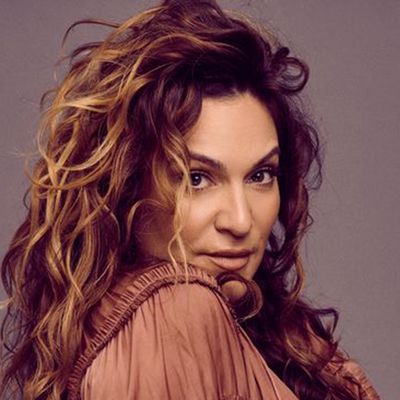
No bones about it, Shoshana Bean is a force. She’s a Recording artist, having released four studio albums. She’s mastered the art of YouTube, creating and participating in striking collaborations that feature her powerful voice... Read More
From the show: The Ensemblist
Guests
Featured Shows
About
No bones about it, Shoshana Bean is a force. She’s a Recording artist, having released four studio albums. She’s mastered the art of YouTube, creating and participating in striking collaborations that feature her powerful voice. A Broadway girl by heart, she’s received acclaim for her portrayal of Jenna in the Sara Bareilles musical Waitress. But before Waitress, before Beaches, before Wicked, Sho made her Broadway debut in a little show called Hairspray.
Transcript
This transcript was automatically generated and might contain errors.
[0:00] Mo Brady: You're listening to My First Time, a miniseries from The Ensemblist, the only podcast that shows you Broadway from the inside out. I'm Mo Brady.
[0:16] Mo Brady: Welcome to My First Time, where we talk to Broadway stars who made their debuts in the ensemble to talk about why that experience helped shape them as an artist.
[0:30] Mo Brady: As they've descended the title pages of our playbills and descended the towers of backstage dressing rooms to floors closer and closer to the stage level, I'm curious as to whether they've considered the time doing ensemble work as formative or merely a stepping stone to bigger and better things.
[0:55] Mo Brady: No bones about it, Shoshana Bean is a force. She's a recording artist, having released four studio albums. She's mastered the art of social media, creating and participating in striking collaborations on YouTube and Instagram that feature her powerful voice. But she's a Broadway girl by heart, and she's receiving acclaim for her portrayal of Jenna in the Sara Bareilles musical Waitress. But before Waitress, before Beaches, before Wicked, Shoshana made her Broadway debut in a little show called Hairspray. Here's our conversation.
[1:30] Mo Brady: Hi. Hi. Will you introduce yourself and tell us what you're currently doing on Broadway?
[1:42] Shoshana Bean: My name is Shoshana Bean, and I currently have the beautiful good fortune of playing Jenna in Waitress on Broadway.
[1:49] Mo Brady: But this is not your first time on Broadway. So take us back to when did you make your Broadway debut?
[1:54] Shoshana Bean: 2002 in the big, fat, glorious hit that was Hairspray.
[1:59] Mo Brady: How long you been in the city? What was your performance career, professional career up to that point?
[2:05] Shoshana Bean: I'd been in the city since '99. So I guess almost three years. It was like two and a half years, I think, before I booked Hairspray. And at that point, right when I got to the city, I got Godspell, which was an off-Broadway show. So I did that for, lasted almost about a year. And then it was the hard times. I went on the road real quick with a show called Leader of the Pack. But mostly it was like working at Equinox, working at Cornell Medical as like a terrible secretary, working in restaurants, singing backup for artists. It felt like a long time and it felt like a lot of sort of like near misses. I really, really believed that Mamma Mia was going to be my Broadway debut. And then Hairspray happened.
[2:47] Mo Brady: How did that first, how did you first encounter Hairspray?
[2:51] Shoshana Bean: I first encountered it, my first audition was actually for like one of the readings or workshops and they actually had me come in for Tracy. And at that point, obviously I wasn't right and they weren't interested. So when that Broadway auditions came around for an ensemble track that would understudy, I was in California and I told my agents, no, I'm not going in for that. They weren't interested in me before. Why do they want me to come back now? I'm not flying across the country to go in for this show. And then in the same day or the next day, I got a call to come in and audition to sing backup for Mary J. Blige. And I was like, for that, I will get on a plane and cross the country. And so I called my agents and I said, listen, I'm coming back anyway. So I might as well go in on this Hairspray thing since I'm going to be there. And I will never forget that as the most fun, least amount of nerves audition I've ever had in my entire career.
[3:43] Mo Brady: Oh, sure. Because you had nothing to lose.
[3:45] Shoshana Bean: And like it when it fits you, when it's made for you, there's no angst about it. There's no like trying about it. It's just with that and also like the room and the vibe that Jerry Mitchell because the first thing we did was dance. We had to learn the Nicest Kids choreography and it just was a high energy room. And his vibe is so positive and so loving that it just creates that in the room for everyone else. So it didn't feel like an audition. It felt like a dance class or like a party. And I remember having so much fun. I thought, oh, God, I don't want to want this show. Like, I don't want to want this job. I'm going to go sing for Mary J. Blige. But I remember also thinking like when I found out who the cast was, when I did get the offer and I found out who the cast was, I was like, oh, yeah, you just knew in the room. You just knew who the people were going to be. I just knew it.
[4:42] Mo Brady: Was that a long audition process for you?
[4:42] Shoshana Bean: It was one day. I think there was a callback. But the one day of learning the choreography and being cut down and then, you know, sort of I think all the callbacks were in the same day. I don't remember coming back a second day. I could totally be wrong. You know, I trained up from childhood as a dancer, but I never had the appropriate body type for like an ensemble girl. You know, I was not tall or long or lean and ballet never really worked on my body. I took ballet as a function of technique and being the foundation, but I loathed and despised it mostly just for the way that it made me feel in my body. You know, I went to those difficult schools where you had to wear a leotard and you had to wear the tights and you were all wearing the same thing.
And, you know, anyway, I digress. So going into the audition and being able to pony and twist and it was very athletic and it was very grounded and it just fit and worked. So it yeah, that was just another aspect of like when it's right for you. I remember the audition was in January. I feel like I had to wait the weekend. I had to wait the weekend to hear. And again, I was like, God, I don't want to want this, but I'm finding myself like wanting this. So that was like January, January, I'm going to say. And then we started rehearsals in April and then we went to pretty quick. Yeah, it felt like an eternity. I was like, let's get going. Yeah. I think we went to Seattle in May, May, June, back here in the summer. And then we opened in July, August. Yeah, it was a fast. Yeah. But they had been workshopping it for years and it was so ready.
[6:21] Mo Brady: So how long were you in the show?
[6:21] Shoshana Bean: Two years from the moment we started rehearsal in April. I left in April of 2004.
[6:27] Mo Brady: That's a long time.
[6:27] Shoshana Bean: Yeah, it never felt like a long time. It was joyful and wonderful. And I left when I felt like it's time to step into some more discomfort. Like it was I was comfortable and I had saved a chunk of money. And I'm ultimately at heart an artist who it's hard for me to do the same thing every day for a long time. So two years felt like a really solid commitment. And it was still hard to leave, but it felt like it was time.
[6:56] Mo Brady: You said it was a good vibe. Like, well, yeah, what made the vibe so good? Like, what are your great memories of doing that show?
[7:01] Shoshana Bean: In my experience, not just with that show, but in my whole career, the vibe is created from the top down. How the company is run, how the cast is treated, how the creative team approaches the work. And Mark and Scott, who wrote the music and lyrics, Jerry and Jack, our producers, we were very close with one of our producers, Adam Epstein. It just was treated like a family from the beginning.
[7:26] Mo Brady: When you think about being on stage in Hairspray, like what what's the what are the moments that come to your mind? Like when you close your eyes, what part of the show do you see yourself in?
[7:32] Shoshana Bean: It starts with with Nicest Kids in Town, because that was the most athletic marathon of five minutes physically, like I wouldn't be able to do it today. What it took, and it's shot out of a can, and it's like this barely the second number in the show, right? That's the first thing that comes to mind. And then really just like the finale, because it's such a rarity, and I think so important, as corny as it may sound in a Broadway musical, I think it's a gift. And the reason why people love musical theater, when a show ends with the entire cast on stage and upbeat uptempo, big singing and confetti, like you can't leave that show not feeling great about who you are. And it was an important time.
It was we were right after 9-11. We celebrated the one year anniversary, like right after we opened. It was so soon. This city was still a ghost town. It was still wearing the literal dust and the shock of what happened. It was still kind of walking around scared and sad. And we, every fucking time, I like to believe that we provided our audiences with some joy and some healing in a crucial time. And, you know, we felt that, and we felt that responsibility and the pride of being able to do that. And I think the finale, you know, we gave people the grieving moment in I Know Where I've Been, or the kids that were on stage at that moment gave them that. And then we gave them, you know, just a big heart wrapped up in a big pink bow at the end.
[9:26] Mo Brady: What are your strongest memories of life backstage?
[9:26] Shoshana Bean: Oh my god, life backstage at Hairspray was never a dull moment.
[9:30] Shoshana Bean: No, 1, 2, 3, 4, 5, 8 women. And we called it the airplane hangar. I don't know why we called it an airplane hangar because it wasn't a hangar. A hangar would connotate that we were in a big space. It was narrow and it was long. So I think we meant an airplane aisle is more like what it felt like. So just, you know, girls, girl time. I was flanked by two of my best friends. I'm tired. I'm in the middle of two shows. Forgive my tears. I had Camila on my left and I had Michelle Cottrell on my right. Two people who are my family today. So I just remember a lot of laughter, a lot of moods, you know, women and the, you know, we're high emotions. Well, we were very, Jack at the beginning, I remember one day early in rehearsal, he asked us who we were in the ensemble.
What are our names? What's our backstory? Where are we like? And we had no answers and we were mortified and humiliated. So we went away and came up with such intricate, interwoven backstories to the extent that we made a movie. We made a yearbook. Like what was your story? What was your character? Well, me, I was Shelly Shore, a wits, but I was hiding my Judaism because obviously in the sixties on the council that would, they would never allow a Jew on the council. Blacks, Jews, no one's allowed. Sketch Shore was my brother and I was having a relationship with a black boy, no surprise there, with Eric Anthony's character of Dwayne Reed, of the, soon to be the creator of the founder of the drugstore chain. It creates layers and it creates interactions on stage. We lived those layers and those interactions on stage fully.
[11:16] Shoshana Bean: What are some of the lessons that you remember taking away from either kind of more seasoned actors or production? Yeah, that's easy. Hairspray was my foundation. It laid the foundation for the type of performer, the type of cast member and teammate that I am, the type of lead that I am. I learned again from the team, how to set a tone, being someone that now creates teams to make projects happen, to produce shows of my own and for other people, and to understand how the tone of collaboration and respect is set, how to create a family, which I think is really important. And I learned from Harvey and Marissa how to be a leader, how to take care of people and how to, again, set the tone and be the head of the machine.
And I, that's all, that was all Hairspray. And it was important that that happened because the next thing I went from being an ensemble member to being a lead. And I didn't have time with Adina like that to learn from her in that way. So I was grateful that I had learned for two years from Harvey and Marissa and been able to take that one block down.
[12:26] Shoshana Bean: Do you remember anything specific that they did or a series of things that either of them did that just stuck with you? They were just connected to us. I think in my mind, stars or leads were separate from us, and we were never separate from them. Harvey's door was always open. He lured us in with treats and candies and cookies, and it was just an open door policy. And Marissa was always checking in and very affectionate, and they just cared about us. I don't know because I've never worked with anyone like this, but I think there's a potential for leads to separate themselves, not out of a hierarchy, but out of the fact that being a lead is exhausting and it takes a lot of energy. And a lot of times you need to separate yourself, shore up, and protect that energy because you need it for what's going on on stage. But I really do believe that the relationships offstage fuel what happens on stage and can only make it better.
[13:24] Shoshana Bean: So you're back on Broadway. Does it feel like the same thing? Does it feel like a different thing? It feels like the same thing in the sense of it's nostalgic. I remember my first Saturday two-show day back, and it was a beautiful sunny day. It was cold, but it was sunny, and I remember walking towards the stage door and being flooded with emotion because I'm like, oh my God, it's Saturday two-show day on Broadway. I'm back. It was crazy. And just walking into an empty theater on your way to your dressing room, the way it smells, the way it looks, they all are the same. They have this weird peace and quiet about them when you walk in that is just indescribable. It's such a feeling. It's still there.
So that nostalgia felt the same. What's different is me. What's different is 13 years of life and lessons and living and finding out or rediscovering or discovering through my own solo work who I am. And that journey only makes me a better cast member and castmate and performer and actress and musician and singer and only has me take greater care with the work and the piece and the people and only has me more grateful and present for and with every single moment.
[14:45] Shoshana Bean: What is the same? What's the kernel that you keep with you from those two years at the Neil Simon? The same is showing up to see your family every day. The same is getting to see, you know, as a solo artist, it's a pretty lonely career. I don't always get to use the same musicians. I don't, you know, get to travel with my whole crew every time. We pick up musicians in different cities and it's a pretty isolated experience, especially because I kind of run the ship myself. Here you get to show up and see the same people every day. And that's nice. I didn't know how much I missed that, how much I missed that community and that family. That is really comforting and familiar. The other thing that's the same is just how much I love performing, how much I love the fact that I get to be in front of an audience every night and have that relationship and give to them and receive from them.
Again, in my solo career, I don't get to perform every day. I work every day, but I don't, I work so that I can be on stage. That's everything I do in my solo career is just to make sure that I get to be on stage. You know what I mean? Making albums ensures that I get to go on stage. Promoting things and building a fan base is to ensure that I can go to a city and sell tickets so that I can be on stage. All I've ever done, I just want to perform. I just want to sing. I just want to perform. And so the fact that I get to go, you know, and do that every day, that's the part of me that is so lit up about being back is every day I get to go and I get another shot at being in this relationship with these people on stage and these people in the audience and I get another shot to explore this beautiful character and this gorgeous score.
I mean, that's the kernel. In all the shows, I've been lucky enough to play with extraordinary people as an extraordinary character every time. Since being back and doing Waitress, it just has all come flooding back to me.
[16:36] Shoshana Bean: You know, sometimes people will tell you at a very young age who you are, who they think you are and where they think you fit. Because usually it's in an educational setting and it serves their purposes for the shows they're choosing. It serves their purpose to be able to categorize you and know where they're going to put you. I implore you not to let anyone tell you who you are. Don't type yourself out. Don't pigeonhole yourself just because it feels safer or because someone else gave you that idea. You know, I was told that if I didn't change or alter certain things about myself, I would never be an ingenue or a leading lady or I'd have to wait till very, very late in my life and career to be a leading lady.
And now all three of my Broadway shows, I've been lucky enough to play an ingenue in those shows. Tracy Turnblad is an ingenue. She's a non-traditional ingenue. Elphaba is a non-traditional. Jenna, same thing. But I didn't have to change anything about myself. If anything, I was called to mine deeper and be more of actually who I am. So I just want to make it my mission to just shout from the mountaintops, like, be who you are. Find it. Figure it out. Own it. Be proud of it and lead with that because there will be a place for you. And it's going to be like I said about Hairspray. There's going to be a fit that is so perfect for you. You're going to feel it with every fiber of your being and all through your body. And you're not going to have to feel like you're fooling people or playing pretend. It's just going to be the right fit and it's worth the wait.
[18:14] Mo Brady: Special thanks to Shoshana Bean for sharing her stories with us this week. You can learn more about her and how to connect with her online by visiting our website, TheEnsemblist.com. The Ensemblist was produced today by me, Mo Brady. You can help others find out about my first time, all of our other miniseries, and The Ensemblist in general by leaving us a rating and review on Apple Podcasts. You can also download episodes wherever you get your podcasts or at TheEnsemblist.com. And make sure you're following us on Instagram where we are sharing the stories of talented artists working in Broadway ensembles every day. Thanks for listening, guys. Until next time.
© Broadway Podcast Network, All Rights Reserved