

As performers, our bodies are our instruments. We use our physical beings to create sounds, embody characters and tell stories. So when that physical instrument is suffering, how does that affect a performers’ artistry?.. Read More
From the show: The Ensemblist
Guests
Featured Shows
About
As performers, our bodies are our instruments. We use our physical beings to create sounds, embody characters and tell stories. So when that physical instrument is suffering, how does that affect a performers’ artistry? And, perhaps more importantly, what does it do to a performer’s psyche when they aren’t able to work to the best of their abilities.
That’s a conversation I wanted to explore in this new mini-series Hurt and Healed: an honest look into actors’ injuries, recoveries and the stigma that comes from not being able to be your best onstage.
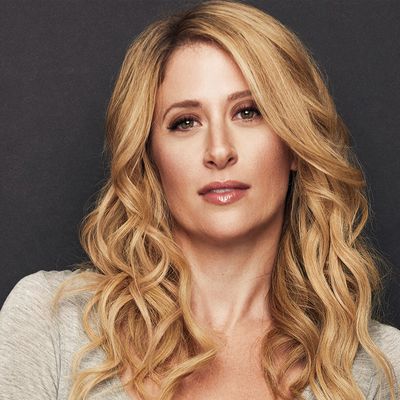
There is not a theatre performer who leads with more grace than Caissie Levy. Yes, she’s played some of the most iconic roles in Broadway history - from Elphaba in Wicked to Fantine in Les Miserables - but she’s also a warm soul that pulses with kindness.
...it’s probably because she’s Canadian, eh?
Recently, Caissie (who currently leads the Broadway cast of Frozen as Elsa, opened up on social media about a vocal fold injury she incurred during a decade ago, how she worked towards recovery and the stigma she still sometimes endures as a result. Here’s our conversation...
Transcript
This transcript was automatically generated and might contain errors.
[0:14] Mo Brady: You're listening to Hurt and Healing, a new miniseries from The Ensemblist, the only podcast that shows you Broadway from the inside out. Welcome. I'm Mo Brady.
[0:32] Mo Brady: As performers, our bodies are our instruments. We use our physical beings to create sounds, embody characters, and tell stories. So when that physical instrument is suffering, how does that affect a performer's artistry? And perhaps more importantly, what does it do to a performer's psyche when they aren't able to work to the best of their abilities? That's a conversation I wanted to explore in this new miniseries, Hurt and Healing, an honest look into actors' injuries, recoveries, and the stigma that comes from not being able to be your best on stage. Yes, she's played some of the most iconic roles in Broadway history, from Elphaba in Wicked to Fantine in Les Misérables, but she's also a warm soul that pulses with kindness.
It's probably because she's Canadian. Recently, Caissie, who currently leads the Broadway company of Frozen as Elsa, opened up on social media about a vocal fold injury she incurred a decade ago, and how she worked towards recovery, as well as the stigma that still sometimes endures as a result. Here's our conversation.
[1:45] Caissie Levy: Hi.
[2:20] Mo Brady: Would you introduce yourself and tell us what neighborhood of New York City you live in?
[2:24] Caissie Levy: Yes, I'm Caissie Levy and I live on the Upper West Side.
[2:27] Mo Brady: And what's your current job?
[2:28] Caissie Levy: I play Elsa in Frozen on Broadway.
[2:30] Mo Brady: The reason I wanted to talk to you was about something you had posted on social media recently. Can you describe what that was?
[2:35] Caissie Levy: My agents actually alerted me to the fact that on some of the theater sites, which I know better than to read, there were sort of rumors going around that I'd been fired when I played Elphaba in Wicked in Los Angeles back in 2008. I just wanted to, in the age of social media, you know, we have access to our fans and our friends and our foes. And I wanted to just set the record straight about it because I did have a tough time when I was playing Elphaba out there after doing the understudy track on Broadway for a year. I went out to replace and play the role. And I'd been dealing with a cyst on my vocal cords for a number of years prior to taking that job, and it really just became something I couldn't manage while doing that contract.
I was incredibly depressed and frightened and scared and sad. Rather than extend my contract, which I had been asked to do by my family at Wicked, I opted to finally have the cyst removed with a doctor that I met out in LA. And I now look back and think, oh, that must have been the reason I was meant to take that job out there was to meet Dr. Naseri, who sort of was the one that said, you know what, we just gotta take this out and you'll be fine. And I was. So rather than have that rumor permeate, I decided to just address it and say, no, I wasn't fired, I actually was asked to stay on. And then I was asked to come back to Broadway a number of times, but I had other jobs that conflicted. And the reason I left that job at the end of my first contract was in order to get this cyst removed.
And I just didn't realize when I tweeted it that I hadn't talked about my vocal injury in that public forum yet in my career. And it just totally went viral. And all of these people around the country, both actors on Broadway who have dealt with similar issues and vocal injuries and surgeries, as well as fans who'd never really heard about this element of the business, were responding and saying, oh my gosh, thank you for speaking out about this, because either I've been going through it as well, or my friend has, or I'm a voice teacher, or I'm a speech pathologist and therapist, and I'm trying to help people kind of remove this stigma. And so it just became a conversation starter. The number of people in our business who were like me too, me too, me too. I was just shocked at the sort of prevalence of vocal injuries.
[5:00] Mo Brady: Did that surprise you?
[5:01] Caissie Levy: Well, no, because my surgery was 10 years ago. I've had a lot of friends in the time since come to me and say, I know you had this done because you've told me about it, because I've talked about it with my friends. I just hadn't in sort of an official capacity on social media or in the world of my work. But I helped a lot of other friends and colleagues through this kind of thing because I'd been there and I shared my experience with them. And there's also plenty of people who did not speak up after my tweet, who I also know have been through this, and absolutely their prerogative not to say anything. I mean, it took me a decade to talk about it publicly. So it is very prevalent. And those of us working in this world, as you know very well, we deal with this all the time.
[5:40] Mo Brady: You're an athlete.
[5:40] Caissie Levy: I wasn't surprised.
[5:41] Mo Brady: Yeah, I'm an athlete. That's how I've always described it. My brother, when I remember when I first started working on Broadway, he, pardon my expletive, he would say, you're in the fucking NBA. And it's true. And that was his sort of frame of reference for making it on Broadway, but it's true. We are vocal athletes and we're physical athletes. And eight shows a week, no matter what the role is, no matter if you're in a singer track or a dancer track, no matter if you're doing a play or a musical, it's really vocally demanding. You know, your vocal cords are muscles, and they take a lot of wear and tear, and they require a lot of maintenance. And I know for me, anyways, and I think this is true for most people working now on Broadway, we feel like if we admit to having a show we need to call out of or a vocal problem, that it's some sort of indicator that we aren't good enough, that we don't have the skills to do our job.
When in fact, if you look at any athlete in any professional sport, they injure their muscles and they need to rest those muscles, and then they come back just as strong. No one ever says, oh, well, you know, you couldn't play ball that day, you had to sit on the bench, you must not be worthy of this job. You can't play this point guard position, you can't play a forward. It's like, no, of course not. This is the muscle I use all the time. And I think as singers and actors, we feel like it's a comment on our abilities when in fact it's our abilities that allow us to perform at the level we do eight shows a week in spite of the vocal fatigue and the exhaustion.
[7:05] Mo Brady: What is a vocal cyst?
[7:07] Caissie Levy: That's a good question. I didn't know any of this until I was dealing with it. A cyst is different than a polyp, it's different than a nodule. As far as I understand, you can have nodules on both vocal cords. A cyst often occurs on just one vocal fold. I first found the vocal fold cyst back in 2004 when I was in the ensemble of Hairspray on the national tour. I had finished the Toronto production. I'd gone out on the tour for about a year and a half. And in that time I went from playing Tammy in the ensemble to playing Penny. I started to have this vocal fatigue and I didn't know what it was. And I think I was in Atlanta, and the company sent me to an ENT, and we found I had this cyst that the ENT at that time had said it was probably there from the time I was a kid.
I had just finished a run of Maureen in Rent on the National Tour. That was my first job, and I had no vocal trouble. But something about the physical and the vocal exertion of Hairspray, I think just brought it to light.
[8:01] Mo Brady: That's an intense show.
[8:01] Caissie Levy: Yeah, for the ensemble. I mean, yes. Shoshana Bean, Jen Gambatese. There are these leading women on Broadway who were in the ensemble of that very, very active show.
[8:12] Mo Brady: Yeah. And then what a great show.
[8:14] Caissie Levy: Oh my gosh. Happiest years of my life, and I can still do that choreography in my sleep. So I found it then and I started to do a little speech therapy, started to learn more about vocal health because I was really young and new in the business and didn't really know much about what I should be doing to protect myself. After Hairspray was when I got the understudy for Elphaba on Broadway and did that for a year, and I was still dealing with this cyst and sort of singing around it and working with vocal coaches and ENTs to just sort of maintain. But it wasn't until I was playing Elphaba full time and singing that score eight shows a week that the cyst became unmanageable and I hemorrhaged around the cyst.
So basically a blood vessel was present near the cyst, and that blood vessel burst. And that can happen just from overuse of the muscle. It can happen from medication. I took a lot of Advil at the time, which I didn't know was blood thinning, and that can cause blood vessels to burst and hemorrhage. So all of that combined with stress, with maybe not great nutrition or lack of hydration, all these things can sort of take a toll on your vocal health.
[9:14] Mo Brady: Was there a moment where it hemorrhaged and you were like, how?
[9:18] Caissie Levy: Yes. It was more of a, oh, an instant loss of voice. You can sort of feel, you know, every artist, every actor knows their instrument, and I knew my voice very well then, even at my young age, and I could feel that something didn't feel right from one moment to the next, that like I couldn't, my cords didn't feel like they were touching, they weren't phonating properly, and I knew instantly that something was wrong.
[9:40] Caissie Levy: And then of course you go to the doctor and you see blood on your vocal cords and you think, oh, my career is over, it's done. And you feel shame and embarrassment, and you think I'm not good enough, and you think I'm damaged, and nobody can ever know because how will they ever hire me again? That sort of doesn't go away. I mean, that was a pretty big trauma to deal with.
[9:58] Caissie Levy: And I think that's what resonated with people about my tweets so much is that they remember that feeling for themselves when they found, you know, when they either hemorrhaged or when they had to turn down a job because they didn't feel up to it because they had just had an injury a month before, or when they're swollen and have to call out of a show on an important night when press is in or something. You know, there's so many factors, so many things that that people in our industry deal with with their voice, and it's been so undercover for so long that it's great that it's being talked about now.
[10:26] Caissie Levy: So, how much time are you performing still between the hemorrhage and the end of your contract? I was silent for I would miss a maybe a week. I think I missed a week of shows and took no medication and did complete voice rest, you know, carrying a whiteboard around and writing on it to order a coffee or whatever. That in itself is also really isolating. So you factor in a girl from Canada who's used to living in New York, who moved to LA to take over one of the biggest roles in the modern musical theater canon in a city she doesn't know anyone in with new doctors, no support system, a brand new cast who you feel like you're letting down. I had just joined, you know, three months prior or something, and then not being able to speak, which means you can't go out anywhere.
You can't hang out when you're not at the show. You're like sitting alone in your weird sublet in LA feeling sad and less than. So I spent a week of that, which you know healed me physically, but didn't really heal me emotionally. And then I went back into the show with a whole boatload of fear and expectation on myself to not screw it up and to not re-injure myself. And even though I didn't re-hemorrhage, I was swollen all the time because there wasn't a lot of recovery time. We were doing five show weekends. And for Alphabet and Glinda, that's just really difficult. And you know, you have a standby. I had a great standby, Teal Wicks, who we know is now in Cher, um, the Cher show, and she's wonderful, and she was also at the beginning of her career, and so you know, it was just a lot of emotional baggage around a lot of physical stress.
[11:24] Caissie Levy: But I did go back into the show and I was doing, you know, three shows, and then I'd take a show off, and then I'd do four shows and then I'd take a show off because I didn't feel like I could maintain it, and I was scared I would re-hemorrhage. And operating on that as a baseline was really difficult. And so when I got to the end of my first contract with Wicked, I thought, can I continue like this? They said, you know, stay, we love you. I loved them. I had incredible amounts of support from the Wicked producing team and from the casting crew there. I just was frightened. And so I didn't, I did feel quite alone, but that was more, I think, a prison of my own making, you know. But rather than continue to operate like that and feel scared all the time, I thought, you know, I've met this great doctor who makes me feel like this is something that can be tackled and I can move on from, and maybe that's what I should do. And so my parents came out to LA and I had the surgery to remove the cyst.
[12:57] Caissie Levy: And two weeks later, I sang a massive symphony gig at um at West Point. That's so soon. So the recovery time was short. It was. It's funny to think of it as short because in my brain, it's like a year and a half long, the whole process. But you know, Dr. Naseri, Sean Naseri, who operated on me and who was the voice doctor to the stars out in LA, he described it like this to me. The first time I was in his office, he said, this is having a cyst on your vocal cords and singing eight shows a week, especially a role like Alphaba, is like running a marathon with a rock in your shoe. You can run the marathon because you've been running your whole life and you know where to place your weight and how to make it to the finish line, but it's going to be fraught.
And if we just stop and take that rock out of your shoe, you can keep running the marathon. And he just sort of gave me the confidence to be like, okay, this isn't the end of something, this can be the beginning of something new. And so, of course, I did my research. I didn't just jump in blindly to surgery. I at that point had been on prednisone on and off for years and doing all of these things to maintain my vocal health while still working on Broadway and still working eight shows a week. And I think I had had it. I knew that it was time to change something. And so that ultimately is what drove me to have the surgery. And after a week and a half of complete voice rest post-op, I started going back to my voice teacher and I did this big concert and I've never looked back. I've never had vocal trouble since aside from, you know, general wear and tear of just like, oh, I'm tired today. I need to sit this one out.
[14:27] Caissie Levy: How did it feel the same? Do you remember that? Oh yeah, I was scared. I was scared and exhilarated at the same time because I knew because I had seen the pictures of my vocal cords that I was fine. But mentally I was carrying all of the weight and hurt and fear from before. Was there a point after the West Point gig? Do you remember feeling like I got this? I don't, uh, no I do not. I have actor brain that I think a lot of people listening will identify with, which is like imposter syndrome and like, oh, this will be my last job, no one's ever gonna hire me again and um, I really can't do this. I mean those I think that that's like a natural feeling especially when you've had an injury peppered in with moments of I got this sure peppered in with moments of like, oh I know I can do this.
I have the technique, I have the ability, I have the talent, I have all of these things that I know can back me up to get out there on stage and sing these songs and yet there's always that voice in your head that's, um, you know, reminding you of your fear and your doubt. I think that's normal and I think in live theater that's a healthy part of what we do. Every day we get on stage and we think, okay here we go, you know, um, whether you've been injured or not I think it's like a bit of a leap of faith.
[15:43] Caissie Levy: Um, and so that feeling doesn't go away even after you have something like a cyst removed. I think you just, you know, get a little more knowledge about who you are, how you operate, how you perform, what your limits are, what your goals are, and you use it. Why do you think there is stigma around injuries, vocal or otherwise, as a performing artist? I think there's a fear, uh, a very legitimate fear of not being hired again. You know, I think we are taught that what we bring into the audition room has got to be the best version of ourselves. And that's true. That's how you book jobs. You gotta go in and you gotta audition the hell out of that room, and you've got to know your material and you've got to deliver.
And you gotta deliver on opening night and on press night, and then every show thereafter. So there is a fear, I think that if you're not perfect and polished and ready, that you're not good enough. And I think what's been really awesome about working in the last, I would say it's only really been in the last five years that I've noticed that there's been a shift among people in our industry where we've started to peel away that perfect veneer and say, like, no, I'm human, I'm not perfect, I have vocal trouble sometimes, or like in my case, I have a three-year-old and I'm exhausted, and I'm balancing that with playing Elsa on Broadway, that people are willing to expose, and it's really beautiful, and I think people are responding to it because they feel less alone.
[17:06] Caissie Levy: We are operating at such a high level, and the way music is written nowadays and the schedule and the press surrounding the shows that we're doing, um, and the extras, you know, the interviews and the performances and the early morning TV show appearances, all these very exciting, wonderful things that are necessary to promote our shows, they also create wear and tear. And add, you know, it's not just eight shows a week. And so I think that's where the fear comes in for performers. You know, we want to be ready at the drop of a hat for whatever someone throws at us, and we're scared sometimes to say, I need a minute, or I'm not okay, or I'm not perfect. Is there anything you would have done differently?
I think I would have talked to people sooner. I wish I had. I wish I had let my guard down and been vulnerable sooner, because I think I might have arrived at a solution sooner, and I would have suffered less. Um being in entertainment, you are a commodity and you are selling yourself, and so you want to please people. I think actors already want to please people by our DNA. It's like some sort of sick reason we're in this business. Get on stage and say, like, love me, love me. If I had been able to pardon the pun, let go of some of my worries sooner and opened up a bit more and leaned on people and like asked for help, I would have avoided a lot of suffering. That said, I also think things happen the way they should.
And I love my story and I feel proud of my story. I feel proud of my accomplishments and my quote unquote failures. And I think that they've made me the artist that I am. So I don't really think I would go back and switch it, other than to just wish that any young people listening and old people who might be feeling like trapped in something and fearful about being honest with their art and their limitations, that they can talk about it and that it won't be the end, that it could be the beginning of something else.
[19:08] Mo Brady: Special thanks to Caissie Levy for sharing her stories with us this week. You can learn more about her and how to connect with her online by visiting our website, TheEnsemblist.com. The Ensemblist was produced today by me, Mo Brady. Please help others find out about the Ensemblist by leaving us a rating and review on Apple Podcasts. If you're not an Apple Podcast person, though, you can download episodes wherever you get your podcasts or stream on our website, TheEnsemblist.com. And make sure you're following us on Instagram to see when the latest episodes drop, some original photography, as well as some well-crafted blogs by artists in the theater industry. All right, thanks for listening, guys. Until next time.
© Broadway Podcast Network, All Rights Reserved