

Since South Pacific, we’ve had two more musicals win the Pulitzer Prize: How To Succeed in Business Without Really Trying and Fiorello!. But in 1975, a new musical came on the scene that would truly change musicals for the next fifty years. A Chorus Line... Read More
From the show: The Ensemblist
Featured Shows
About
Since South Pacific, we’ve had two more musicals win the Pulitzer Prize: How To Succeed in Business Without Really Trying and Fiorello!. But in 1975, a new musical came on the scene that would truly change musicals for the next fifty years.
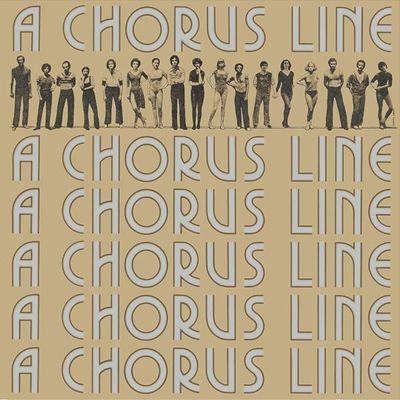
A Chorus Line. Without question, this show changed how ensembles were written, cast and perceived by audiences. Opening on Broadway in 1975 after a sold-out run downtown at the Public Theatre, it ran an unprecedented 16 years at the Shubert Theatre, as well as tours and companies around the world before coming back to Broadway in 2006.
On this episode, we dive into the legacy of A Chorus Line - how exactly it took the ensemblist experience and made it so universal, and how it became one of the most popular and best loved musicals in history.
Transcript
This transcript was automatically generated and might contain errors.
[0:00] Mo Brady: You're listening to The Ensemblist, the only podcast that shows you Broadway from the inside out. Welcome, I'm Mo Brady.
[0:15] Mo Brady: Welcome back to a re-release of our second full season, which first aired in 2016. Back then, The Ensemblist's co-creator Nika Graf-Lanzarone and I took a journey through the history of the ensemble. We explored how the Ensemblist experience has changed and been changed by some of theatre's most influential shows, writers, and subject matter. Since South Pacific, we've had two more musicals win the Pulitzer Prize, How to Succeed in Business Without Really Trying and Fiorello. But in 1975, a new musical came on the scene that would truly change musical theatre for the next 50 years: A Chorus Line. Without question, this show changed how ensembles were written, cast, and perceived by audiences.
Opening on Broadway in 1975 after a sold-out run downtown at the Public Theatre, it ran an unprecedented 16 years at the Shubert Theatre, as well as touring companies around the world before coming back to Broadway in 2006. On this episode, we dive into the legacy of A Chorus Line, how exactly it took the Ensemblist experience and made it so universal, and how it became one of the most popular and best-loved musicals in history. Stay with us.
[1:30] Mo Brady: A Chorus Line. It's the musical about dancers, right? Well, yes, as Broadway historian Jennifer Ashley Tepper told us.
[1:37] Jennifer Ashley Tepper: A Chorus Line is a concept musical that tells of the lives of Broadway gypsies or dancers, including their personal lives and their professional lives. And it's about whether or not they will get a job in an unnamed musical. But more than just being a musical about dancers, it played heavily with the conventions and structure of musicals. It was obviously very unique for its time, and it drove forward the concept musical. Most shows were still book musicals with maybe a couple of reviews thrown in. And the idea of the concept musical that had kind of reached a different apex with Company earlier in that decade was really driven forward by A Chorus Line, a concept musical being a show that does not have a linear plot necessarily, and that goes back and forth in the time continuum.
It plays fast and loose with theatrical form as far as telling the story in more of a stylized fashion. I mean, there are a lot of ways that A Chorus Line reached people and hit people because it was so fantastically well done that inspired future concept musicals.
[2:43] Mo Brady: Since its creation, A Chorus Line has changed an entire generation of musical theater performers, including the three artists we spoke to for this episode and me.
[2:56] Michael Berresse: My name is Michael Berresse. I currently live in the borough of Brooklyn in a hamlet called Brooklyn Heights. I've only done A Chorus Line once, and it was the 2006 Broadway revival. And I played the role of Zach. I was a really precociously intellectual kid and a very athletic kid, but I was also completely shut down. I was very, very aware of feeling other as a kid and not knowing where I fit. And I was compelled to sort of tell my story, but I didn't have the confidence to do it publicly.
[3:29] Catherine Ricafort: Hi, my name is Katherine Ricafort, and I am living in Astoria. I performed in the national tour of A Chorus Line, where I played the role of Connie. Watching A Chorus Line really resonated with me as a kid because there weren't really that many kids in my community who did dancing and singing and acting, too, so that really connected with me.
[3:46] Mara Davi: My name is Mara Davi, and I played Maggie Winslow in the original revival cast of A Chorus Line. Most of my research was research on the history of A Chorus Line. I read all the books I could. They terrified me because it was just brutal in the 1970s. People were fired all the time, and they were snorting coke out of their dance bags on stage. And I was 22 years old about to start this production, just not knowing whether it was going to be the same thing or not this time around and thinking I was going to get fired on the first day, how cutthroat it would be.
[4:29] Mara Davi: Mara and Catherine told us that when you're an artist playing an artist, like the roles in A Chorus Line, your own experience can't help but weave its way into the show's creative process.
[4:39] Catherine Ricafort: The first day of rehearsal was incredible. They sat us in a circle, and instead of hearing the stories of the original members, we all got to tell our stories as dancers and have a little taste of the experience that the original gypsies had when they were all staying up late at night downtown to tell Michael Bennett their stories. I didn't think of myself necessarily as a Connie, but when I watched the documentary, it really featured Bayark Lee. And getting to see her talk about her experiences and see how fiery she was, even for a very small-statured dancer, I saw a lot of parallels between me and her. So I decided to really target that role. And I had a creative idea for what I should sing for my audition song.
So I definitely wore flaps to emphasize my height, because I'm actually 5'2", so I'm kind of cheating the 4'10 thing. But I didn't tell them what song I was singing, and I just started singing, I Want to Be a Rockette. And so I had Bayark laughing. And she told me later, she's like, the second you started singing that, I knew you understood my character, who Connie is, and I knew that it was going to be you. And so I was really honored hearing her say that and working with her through that whole process. It was really, really special. I think that's why A Chorus Line really resonates with a lot of dancers, is because there's a little bit of every character in you. I mean, there is totally a Val in me, and there is totally some of Cassie, and there's totally some of Deanna.
So I love that the show continues to live on and that there are many productions of it, because at some point, I'd love to revisit the show and play different characters and see the show from a different perspective.
[6:18] Michael Berresse: It's hard to talk about A Chorus Line's impact without acknowledging the importance of its metatheatrics. Whenever you see a production of A Chorus Line, the cast of performing artists are playing performing artists, which is why Michael and Catherine think the piece packs such an emotional punch.
[6:35] Catherine Ricafort: I really didn't see myself represented. So anything that championed artists was of great interest and value to me. So yes, I think that's another reason why A Chorus Line was so specific in its appeal for me. It really made me think about why am I here? I mean, I would cry on stage every night when I would hear Deanna sing What I Did For Love, because that is really the only reason why you would do this career. It's not very stable, it hurts your body, and it hurts your pride. You're getting turned down all the time. But there's just something so special about connecting with an audience and getting to play an artist, being themselves, and having the audience applaud for those characters who are pretty much just like you.
It's really gratifying. Learning the script and getting to know about all these characters, they kind of felt like my older gypsy brothers and sisters who kind of gave me the lowdown on what it's like to be a working gypsy, because it actually hasn't really changed that much. So I really appreciated that these dancers are much more than just what they do in that specific show, dancing in the background, that they're people who really are chasing their dreams and have this passion, but it's also tempered by how difficult it is to navigate continuing to perform and making a living at the same time.
[7:47] Jennifer Ashley Tepper: Jen Tepper talked about the impact of hearing from so many individual voices and how that's a major contributor to the show's effect on actors and audiences.
[7:55] Jennifer Ashley Tepper: We've talked about a lot of Pulitzer-winning musicals that people in the audience would have seen themselves on stage or that people were playing real people who existed, and this was all of those things. This was people that really existed but who you actually wouldn't have known. So there are these moments for those actual people on the ensemble of realness, even though they only have 15 minutes on stage, that I just find that so meaningful. It gave people just such a perspective on individuals that they might not have seen as individuals, because the whole show is about the fact that at the end you're watching this form of what looks like one person, all the same costume, all the same song, but you've learned that they're actually these outstanding individuals that you've grown to love, and some of them got the job and some didn't, and you're affected by that.
And I think that a big point of the show was like, you know, the people that you pass in the street every day, the person that makes you your coffee, like all of these things, like everyone is an individual. It just has so much to say about the labor force and about aspects of life in a way that educated and was part of, I think, the reason the Pulitzer Committee awarded it.
[8:51] Jennifer Ashley Tepper: Through watching A Chorus Line, audiences learned that the nameless faces populating the backgrounds of Broadway stages were actually fully realized individuals.
[9:00] Michael Berresse: What? And not just a mythic line, of course, boys and girls. That's poppycock. Especially being a minority actor, I think the show is really special because it features a lot of different people who come from different backgrounds, and it doesn't hide their experiences. So getting to play Connie Wong and talking about being typecast and getting to show my anger at...
[9:52] Mo Brady: It is striking how universal a story about dancers is. It's so surprising to hear bankers and lawyers and doctors being as moved by A Chorus Line as theater professionals and theater hopefuls are. And what I love about A Chorus Line is the raw truthfulness of it. I mean, particularly Paul's monologue. And obviously, at the time, it was very unusual and shocking to have someone speak so openly about their experiences as a young homosexual dancer in New York. But the honesty from everyone, and I mean, what I did for love, that is universal. When we think about A Chorus Line's legacy, it's hard to look past how it forever changed the technical skills required for Broadway performers like Michael and Mara.
I think A Chorus Line was pivotal in the shift of so many aspects of what musical theater is, how it's made, how we perceive it, how it's consumed. And most of the time, when you see shows, certainly before A Chorus Line, an ensemble was an ensemble. You never got to know them as individuals, really. You really didn't understand how unique they were as individuals. But A Chorus Line pulled the veil back and said, this is a group of people that are remarkably talented. And listen, there's no harder job on Broadway than being, in my opinion, an ensemble and an ensemble dancer in particular. It's definitely the moment when, from that point on, ensemble members were expected to be triple threats.
You know, once you open that door and say, hey, I can do all of these things, then no one's going to ask for less again. And now it's, oh, and can you also play the piano and the guitar and the ukulele and do sign language and speak other languages? You know, it's only gone up and up from there. Now, singing, dancing, and acting, all three extraordinarily well, is the baseline.
[12:01] Mo Brady: But more than just elevating the triple threat to something everyone has to be, Michael, Catherine, and Mara believe that the most important accomplishment of A Chorus Line was the seamless marriage of two very basic but opposing human desires. It's something I call the special, not special thing. What's that mean? You'll hear. Okay. They explain it pretty well, too. I think there are two very basic components to human nature. One is I want to feel special. I want to be recognized as a one-off. And the other part of us is we're pack animals, that we want to be a part of something that is bigger than us. That's the language that I use and a lot of theater people use because I like the imagery of that.
And I think A Chorus Line does not work if you don't respect both. And one of the greatest beauties of that show is that by the time you arrive at that sort of shocking unison of one, of the finale, you've already come to know these people as wildly different individuals with different assets, different shapes and sizes and colors and backgrounds and priorities. So you know that they have chosen to put that aside and to be part of something that is bigger than the individual. When you're in an ensemble, and I proudly started in the ensemble and I still consider myself an ensemblist because there's something about the nature of the mentality of it that appeals to me, not just as an artist, but as a human being.
When you choose to be a part of something that you can't be as an individual, this other beautiful thing happens that can't happen any other way. And for me, I think that's what opened people's eyes. A Chorus Line opened people's eyes to the idea that it isn't just a nameless, faceless lemming that follows whatever they're told to do. It's a group of people that have chosen to be bigger than just them.
[13:43] Mo Brady: I think that A Chorus Line speaks to the masses more than just the theater community because it's about people chasing after something that they want, and it celebrates their individuality even though they're attempting to reach the same dream. And in America, we really celebrate being different and being individuals and knowing who you are and setting yourself apart. But at the same time, with real world demands and trying to fit into an industry that already exists and has these expectations, everyone has to sacrifice to reach that goal and that resonates with everybody. And doing A Chorus Line taught me that everybody in a show, no matter how small their part is that they play in that two and a half hour show on stage, is a star.
And it taught me to understand and celebrate that. A Chorus Line gave those ensemble members a voice. We all know that that was what was so special about A Chorus Line, was getting to hear from the up-till-that-point voiceless and hear their experiences and see their individuality.
[14:46] Mo Brady: Bestowing A Chorus Line with the Pulitzer Prize may seem inevitable now, but at the time it gave unprecedented validation to the artists who create musical theater. What I think is so interesting about A Chorus Line winning the Pulitzer is that it was the committee recognizing that, A, learning about Broadway and what ensemble members on Broadway did was a really valuable part of American life, which means a lot to all of us in this room, I think, and probably a lot of people listening. And it also recognized the fact that this show is so much about what it means to be a Broadway dancer and about just working in entertainment in general, but it is also so much about growing up in America in the mid-20th century.
And it was the first Pulitzer winning musical that really got into issues of homosexuality and race and poverty, and there were so many issues being hit because the show really took the time to get to know so many different individuals. So it was educational in that all of these social issues were being brought to the forefront, and also that it was educating about what it means to be an entertainer.
[15:47] Mo Brady: And while we still continue to create and produce more classically structured musicals, it's hard to find one that doesn't in some small part owe something very real to the legacy of A Chorus Line and its revolutionary storytelling. Anyone who came to New York in the 70s or 80s who is a director or a writer talks about A Chorus Line as being influential, so it's almost like the reach is everywhere. I mean, obviously we know how it impacted ensembles and how everyone really was recognized as an individual exponentially more after A Chorus Line. I mean, shows that really went into an individual sect of people, things like Working, things that took people's stories and dramatized them, were influenced by A Chorus Line.
It really showed people that they could take creation into their own hands in that way, like you had a lot more actors creating their own shows and transitioning into becoming writers and directors. I mean, it just, there was something about all those ensembles in a room on the tapes becoming such a hit show that I think showed people that that could be done in different ways, impacting the workshop process and impacting the way musicals were created.
[16:48] Mo Brady: Original works I've created with my collaborators also are sort of descendants of A Chorus Line in their own way. In fact, when I was directing Title of Show on Broadway, it never occurred to me until I really looked at the structure of the show that there are enormous parallels and that sounds like a big leap to some of you out there, but the truth is it's a very classically structured musical, but there is that need to do what it is that you feel you were born to do. What I did for love are the words that A Chorus Line uses to express that and I'd rather be nine people's favorite thing than a hundred people's ninth favorite thing is the way that Title of Show expressed that. Michael Greif talks about, like, I don't think Rent would have been what Rent was without A Chorus Line because of Michael Greif and because of Jonathan Larson, who were both influenced by the show, and it was seeing what they saw on the streets on stage, like that was done in A Chorus Line in an unprecedented way that contributed to everything that came after including Rent.
[17:49] Mo Brady: Look for the next episode in our season on the history of the Ensemble in your podcast feed next week, all about Rent. Special thanks to Michael Berresse, Catherine Ricafort, and Jennifer Ashley Tepper for allowing us to re-share their stories this week. The Ensemblist was produced today by me, Mo Brady. There are two great ways you can be helping The Ensemblist right now. One is by leaving us a rating and review on Apple Podcasts, and the second is by becoming a Patreon member. You can do that at patreon.com slash The Ensemblist. Please subscribe to The Ensemblist on Apple Podcasts, or follow us on Spotify, or you can listen to all of our episodes at bpn.fm. And be sure to follow us on Instagram because things are changing all the time. Thanks for listening, guys. Until next time.
© Broadway Podcast Network, All Rights Reserved