

Although not exactly touring in stock, today’s episode guest is indeed still here. Gaelen Gilliland has been delighting Broadway audiences since making her 2005 debut in the musical phenomenon Wicked... Read More
From the show: The Ensemblist
Featured Shows


About
Although not exactly touring in stock, today’s episode guest is indeed still here. Gaelen Gilliland has been delighting Broadway audiences since making her 2005 debut in the musical phenomenon Wicked. Between taking a break as Courtney in Legally Blonde to Bikini Bottom’s Mayor in SpongeBob SquarePants The Musical, she has spent most of her career creating musical comedy gold.
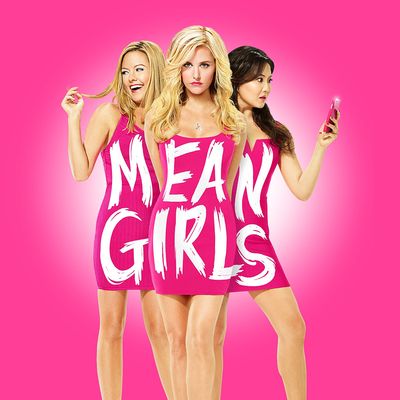
Gaelen is now sharing her talents across the country in the First National Tour of Mean Girls. Looking back at her career spanning six Broadway shows and three National Tours, she delights in how lucky she has been to have worked with some of the most collaborative individuals in the industry.
Jon M. Wailin spoke with Gaelen about the inspiration behind her incredible character work, as well as how life on the road has changed since her first tour twenty years ago. Here’s our conversation . . .
Transcript
This transcript was automatically generated and might contain errors.
[0:08] John Whelan: You're listening to The Ensemblist, the only podcast that shows you Broadway from the inside out. I'm your host, John Whelan.
[0:26] John Whelan: Although not exactly touring in stock, today's episode guest is indeed still here. Gaelen Gilliland has been delighting Broadway audiences since making her 2005 debut in the musical phenomenon Wicked. Between taking a break as Courtney in Legally Blonde to Bikini Bottom's Mayor in SpongeBob SquarePants the Musical, she has spent most of her career creating musical comedy gold. Gaelen is now sharing her talents across the country in the first national tour of Mean Girls. Looking back at her career spanning six Broadway shows and three national tours, she delights in how lucky she has been to have worked with some of the most collaborative individuals in the industry. I spoke with Gaelen about the inspiration behind her incredible character work, as well as how life on the road has changed since her first tour 20 years ago. Here's our conversation.
[1:26] John Whelan: Well, thank you so much for joining us. Why don't you go ahead and introduce yourself and let us know where you are calling from.
[1:32] Gaelen Gilliland: My name is Gaelen Gilliland. Gaelen Miller is my married name, but professionally, it's Gaelen Gilliland. I'm calling from Grafton, Illinois.
[1:39] John Whelan: Before the big Broadway shutdown that we're all experiencing at the moment, where would we have been able to see you kickball changing?
[1:47] Gaelen Gilliland: Well, I was on the first national tour of Mean Girls. So I was playing Ms. Norbury, Mrs. Heron, and Mrs. George on that tour. And we were in Fort Lauderdale, Florida, when we got shut down.
[1:57] John Whelan: And now you are locked away with your husband.
[2:00] Gaelen Gilliland: Correct. My husband and I are locked away with my in-laws here in Illinois.
[2:05] John Whelan: You have a history of doing some of these larger-than-life shows, if you will. How has it been bringing one of those shows, Mean Girls, to people all across the country?
[2:15] Gaelen Gilliland: It's really cool to do Mean Girls across the country because I didn't know how it would be received. Like, I went to see it when it was on Broadway. I had a great time. The interesting thing is I was in the original cast of Legally Blonde, and I felt very much like I was sitting at a performance of Legally Blonde when I went to see Mean Girls. I mean, it's entirely possible that it was because of all the pink and the young, fun audience. But I feel like it's got a similar message in that it's female-forward, and it's beautiful, young, popular females that are leading the way. But there's, in both shows, a sense of a lesson in what it means to be popular and what it means to be pretty, and also how you can use that or it can be very much against you.
So in the case of bringing this to the country, I think that it's just fun, but it, like most well-written musicals, has an underlying message that you walk away with and that sticks with you. So it's nice to see that it's been so well-received, and we had been selling really, really well throughout the country, and that's also thrilling to be a part of as well, to have big, exciting vocal audiences that are watching the show every night.
[3:20] John Whelan: That is so great to hear, and those houses across the country can often be much bigger than those Broadway houses.
[3:24] Gaelen Gilliland: Oh, yes.
[3:25] John Whelan: So it must be so great to hear that wall of sound come back to you.
[3:28] Gaelen Gilliland: Yes.
[3:29] John Whelan: Well-deserved every night, I know it.
[3:30] Gaelen Gilliland: It's wonderful.
[3:31] John Whelan: I saw it twice in New York, haven't seen the tour, but it is such a fun show with a great message that it wraps up in with a beautiful little bow.
[3:37] Gaelen Gilliland: Absolutely.
[3:38] Gaelen Gilliland: And it's a wonderful and very different cast on the road, so it was nice to be an original part of that, that we were able to sort of build our own dynamic on the road.
[3:46] John Whelan: That's great that you mention that, because I'm curious, as something as big and recognized as Mean Girls, both its source material from the book to the movie, now with the Broadway show, how do you find that balance in bringing yourself as an actor into a track while not straying too far from the show's source material?
[4:04] Gaelen Gilliland: Well, of course, I had seen the movie several years ago when it first came out, and then now and then, since then, when it appeared on TV or whatever, and it was always something that I would keep on when I would be watching. If it was on, I had it on. And when I booked the job, I had decided, OK, I'm going to stop watching the movie. I think before rehearsal started, I watched it once with my husband who hadn't seen it, and he was in and out of the room, so at this point, he hasn't truly seen the entire movie. But I had watched it start to finish just to gather the whole story again and take a look at how each of the roles that I would be playing were depicted, and then I tried to stay away from it as much as possible, to the point where I saw the Broadway production when it first opened, and I really wanted to see Jensen Hart play the role, but I had not gotten there in time, and by the time we were in rehearsals, I didn't want to go because I just didn't want her version of the characters to be too close in my brain while I was rehearsing and trying to create them myself. So I unfortunately didn't get a chance to go see her. I understand she was incredible.
[5:07] Gaelen Gilliland: Incredible. Yes, and I understand that my version is very different. So I'm happy for that, that I was able to sort of start from the ground up, essentially. And, of course, I saw Carrie Butler do it, who did a lovely job, but she and I are very different people as well. So I knew that when I saw her and when I saw the show that this was my role and that I was very interested in playing, but I also knew that I would be doing it very differently than Carrie Butler had done it. As I formed my way of doing these parts, I didn't have too much influence or any kind of voice in my head that was too much like any of the other women that I had seen do it.
[5:39] John Whelan: Wow, that's terrific. And so now here we are, Mean Girls on the Road. Let's take a couple giant steps back to when you made your Broadway debut. It was a little, tiny, lesser-known show, correct?
[5:51] Gaelen Gilliland: Yes.
[5:52] John Whelan: People may have heard of it.
[5:53] Gaelen Gilliland: Right.
[5:54] John Whelan: What was that show again, if you can remind me?
[5:56] Gaelen Gilliland: It's small, and it's not doing very well, as we all know. It's a little show called Wicked.
[6:00] John Whelan: Oh, I have heard of that.
[6:01] Gaelen Gilliland: Have you heard of it? Good.
[6:03] John Whelan: Yeah, yeah, yeah, through friends. Broadway debut, and in a show that is the phenomenon that is Wicked, there's already that, I can imagine, that pressure of, I'm making my Broadway debut, and you came in as a replacement, correct?
[6:14] Gaelen Gilliland: Correct.
[6:15] John Whelan: So you have that, and then you also have the microscope that is everyone looking at Wicked, because it is so well-known, so big. Was there any extra pressure or sense of responsibility when marrying the show itself with your Broadway debut?
[6:29] Gaelen Gilliland: Well, here's the thing. It happened very quickly, as a lot of instant replacements do. And I always tell the story that I'll truncate right now, which basically starts from me sitting in my bedroom getting ready for an audition and sort of threatening the heavens that I will leave this business if I don't get a job soon, and then cut to busting my butt for several auditions, and one thing leading to another thing leading to Wicked. So because of the nature of an instant replacement, the actor who is leaving the show gives a four-week notice. And so basically the creatives and anyone in place to be able to audition people at the time, they jump into a room, they put out an audition notice, and they hurry up and try to get people coming in and auditioning who might be available in the next couple of weeks to start rehearsal.
They give you two weeks to learn the show. So between that four-week notice that the actor gives and putting the notice out where they need performers to come in and audition, and then getting them into rehearsal and getting their costumes together, it's very quick. My experience was so much of a whirlwind that I didn't feel that pressure. But I also will say, now I was 31 when I made my Broadway debut, so nowadays with shows that have such young performers in them, people are popping right out of college and they're making their Broadway debut. I had been in the city for about 10 years, and I still didn't know any better to be as nervous and think that this show and this experience was bigger than me.
I was certainly grateful, and I was certainly getting myself prepared and sort of head over heels, crazy about the fact that this was the show I was making my debut in, and I knew that it was a big moment, but I didn't know what I know now, which is, okay, the worry that you have when you get to be a little bit older, like who's the producer, how long is this going to run, what kind of creatives do they have in place, and all that stuff that tells us a bit more now about the security of a show, but also tells us nothing because it's such a random who knows what is going to be successful nowadays because you think, oh, we've got all these elements in place, it's sure to be a hit, and then it isn't, which has been my experience a few times.
And then other variables come into place, and you're like, well, I don't know, we'll see if this runs, and then it ends up running. So you never know, and that's my mindset right now, is you never know, but you can hope for a bunch of really great variables. Where Wicked was concerned, it was only a year into the run, I knew that it had become very popular, I was a huge fan of it, and I knew that it had a great advance sale, but I didn't even really know what that meant. So I didn't know enough to worry about anything other than just getting myself ready to be in the show, and I had never gone into a show in such a short amount of time other than smaller productions in summer stock, say, and having a rehearsal that didn't include my entire cast.
So I was just dealing with all of those things of rehearsing in a room with the dance captain, and she's sitting there saying to me, you know, this person will be over here and that person will be over there, and then you'll run over there, and I had no idea what she was talking about, and then I'd watch the show that night and be like, okay, I kind of see what she meant, and then after the first week, I couldn't do one step for you, I'm going to fail, I don't know what I'm doing, and just freaking out. It's like a machine, and these dance captains on Broadway have some of the hardest jobs ever. They work the hardest in the entire company because they're putting all these new members in, and they know how to do it.
So I just kept trusting in her, and eventually, by the middle of week two, the day before my put-in, I did my put-in, I missed one change, my dresser said, we'll get it, we'll get it, she'll be fine. She says, we'll be all right, I guess we'll be all right. By that time, by that Thursday, before your Tuesday opening, I was like, all right, let's get on with it, I'm ready. And it was only a handful of days from when I was freaking out, being like, I don't know anything! So I was just focused on getting in the right place at the right time, like many people going into a show are, that the grandness of Wicked the Musical didn't hit me until a couple weeks after I was up and running. And I would just weep during the curtain calls because it was like a rock concert.
People were going nuts still for the show, I mean they still are, but at that moment it was just so electric in that room to be in a show that is so popular and even gaining more and more popularity and gaining more and more ticket sales and fame throughout the country. I remember when I booked the show, my dad's like, great, is it going to run? I'm like, well, it has like a $5 million advance, which then was nothing compared to the Hamiltons of today. So I realized, of course, that I had some job security, but I was only in my first Broadway show, so I was also attracted to the idea of Vendor being a second Broadway show and a third and a fourth. You just kind of get into that world and it's truly exciting, and as I said, I would weep during the curtain calls because all of that gratitude and praise coming at you, even though it was coming at a whole cast of people, I just soaked it in and was thrilled by it.
So second and third and fourth, they came a-calling and I want to take a moment to talk about show number two. You were clearly team Glinda because you stuck with the blondes and originated a track that I admittedly was obsessed with the second I saw the show. Five minutes into that show, which just like a canon goes off, the opening number of Legally Blonde, I swear, you did like ten different parts. And I was sitting there going, is that her again? She's everywhere. You were very busy and so golden in every one of those moments. Talk us through, especially coming from that immediate replacement in Wicked, talk us through the process of bringing Legally Blonde to Broadway.
[12:54] Gaelen Gilliland: Well, about six months before we started the Broadway rehearsals, we had done a workshop and I remember being in a very educated and well-traveled room of women in my ensemble dressing room of Wicked who had been around in this business and Glinda was one of those people. And she said, you know, this is such a great job that we're all in, and we all were going in to audition for Legally Blonde. And she said, you know why this is such a great job? And I said, no. I mean, I was still pretty green, especially in the Broadway community. It was very green. And I said, why? Why is it such a great job? She's like, because it's a workshop, which means we get a cut of the profits if the show doesn't. And it's one of the last of the ones that's really being auditioned out there.
Producers are starting to get rid of this contract. So I had gone into that audition with my buddies who I was currently in a show with there at Wicked and I was just kind of messing around with them and making them laugh at me. And we were all in this dance call and we were just sort of having a great time. And that's majorly to do with Jerry Mitchell who is just nothing but fun in an audition room and nothing but fun in a rehearsal process. So we sat there just kind of yucking it up in this audition, making each other laugh and having such a blast. When I booked it, of course I was thrilled but then I got a dose of what it meant to do double duty. Because you're doing a workshop rehearsal while you're doing your Broadway show and they say, OK, we're going to bring you in for these rehearsals and we will work around the Broadway schedule.
Meaning, when you have a matinee, you leave rehearsal and you go do your matinee and if you can, you come back after. So that I have said, when I first started out in the city I had three jobs. I was babysitting and I was working, I was temping a few days a week and in the evenings I was working at a gym and then I was trying to maintain social relationships and workout schedule and all that stuff for my own self-care outside of that. So I remember my schedule when I first got to New York City was sort of like up at 6 a.m. and in bed by 11 or 12. And it was just, you know, you're in your early 20s and that's just what you do to sort of...
[13:47] Gaelen Gilliland: Make it in the city and try to pay your rent and try to keep auditioning and stay in Manhattan. So this double duty was more exhausting to me than that, and I kept trying to think, why? Why? I mean, yes, I'm working ten to six every day and then doing a show every night, but it's not quite as hectic as working three jobs. Why am I actually more tired? And I think that is because you're putting your heart and soul into all day, that entire rehearsal process, and then you're putting your heart and soul into all evening when you're performing for an audience. So I think that it's just more energy on more levels in your human existence than phoning it in an office job temp situation or a front desk at a gym kind of situation.
So once we did that, and it was a very creative room, and I think that some of the best work does get done when you're that exhausted, that you're so vulnerable that you're like, okay, let me just try this, and it works or it doesn't, and you don't really take it personally because you're just too tired to. We did that sort of workshop process, and then as we were there in rehearsal, we eventually got announced that it would be coming to Broadway. So that was cool, but no guarantees. Like, it doesn't mean that you're definitely going to Broadway with it. So six months later, I'd been offered that contract, and as we approached those rehearsals, we had a lot of knowledge of the show from the workshop.
We did an out-of-town tryout, which was in San Francisco. That entire cast of people, I think, gets a lot of praise still and gets a lot of recognition still from people who have loved to watch the MTV version of Legally Blonde because it is still out there. It's still streaming on YouTube and all that stuff, so people are still watching it. It's very flattering and very cool to me that people recognize me from it and that they are still acknowledging the work that I did because we all worked really hard on that, and we all collaborated really well, and I would say that everybody in that cast has gone on to such incredible things that it's just a tribute to our offices that cast the show because they put together such a wonderful group of people that they continue to do creative things, and in fact, even continue now.
Our Legally Blonde cast will talk every now and then on a Facebook page, and we're trying to collaborate even in this pandemic time as well. I think it's just neat to have a show that has lived on so well, and my approach to those characters was very much encouraged by everyone around me and all the creative team, so they are just as much to the creation of all of those characters as I have within myself, drawn in each one out.
[16:08] Gaelen Gilliland: The collaboration element is so important, and it was so apparent in that company, both onstage and off, that you could see how well everybody was working together because it was such a solid and cohesive product for the two acts that the show is. It's so strong. I was lucky enough to see it in New York soon after it opened, so before the MTV craze. I was exhausted after the show, so you guys created something great. Yeah, it's just neat to see something that has such great staying power as well, and something that almost is more successful after its run on Broadway than while it was running on Broadway. Because, you know, we had high, high hopes for that show to run for years and years, and it unfortunately didn't. I think it ran for about a year and three months, and I had left it just about three months before it closed in hopes that I could come back to it, but unfortunately couldn't, and I just thought, how cool is it that that show was even more popular after it ran on Broadway, I think because of the MTV recording, and also as it went out on tour, it was doing extremely well on tour.
So I think not only delivering it to the masses via cable network, but also it having gone out on the first national, and then a couple other years of tours after that, just brought it to people in a way that they could really enjoy it firsthand, and I also feel like when musicals are recorded, I think it only lifts it up as a popular thing to go and see live. I think that a lot of companies are unfortunately thinking that a recorded musical will have the masses not going to see live theater, but I think the opposite is true. I think it gets people out and be like, oh, I remember that show, I loved it on TV, I'm gonna go see a live version of it. So I hope that continues, too.
[17:46] Gaelen Gilliland: Yeah, because with like close-up shots, you miss 90% of the stage. When you see the show live, you see it all, and so you see that recording and go, I wonder what was happening up on that second level of the set, let's go get tickets and find out.
[17:58] Gaelen Gilliland: Right, right. Or, you know, what is that ensemble person that I fell in love with in the opening number doing over here during that other part?
[18:04] Gaelen Gilliland: Exactly. Hamilton, without a wide shot for the whole show, you'd miss everybody in the ensemble working their tails off.
[18:11] Gaelen Gilliland: Oh yeah, and I had some favorites in that one, who I followed through the entire show. Well, speaking of favorites, you are definitely a favorite in an ensemble for many reasons, but one is you have this ability to just create these wonderful, thorough character parts, be it a scene, be it a storyline. I mean, the mayor in SpongeBob is a big example, but Courtney in the opening of Legally Blonde is another smaller example. You just take a moment and run with it.
[18:41] Gaelen Gilliland: Thank you. Is this something you've, you're welcome, is this something you've always had in your toolbox, or is this, over the years, a newer trick of the trade for you?
[18:50] Gaelen Gilliland: I think that I always attribute my comic sort of characters and a lot of my characters are very much based on my mom. I mean, she is like Lucille Ball to me. When I saw I Love Lucy and then I looked at my mom, I'm like, oh, well, you're just as funny as she is. You know, she had the expressions, she had the weirdness, she had all of that stuff. I'll sort of do something on stage and get a laugh for it and be like, well, that's just my mom. So I think that over the years of experience, yes, I've been able to hone different kinds of comedy and kinds of characters that I could delve into, but they're all based in my mom. And I'm the youngest of five kids, and I have brothers and sisters that used to goof off a lot with me, especially the next two older siblings. We would just make up the weirdest characters. So I think that's just always been a part of who I am, just to be weird. And now I can actually do it on stage, so at least I have an outlet, right?
[19:44] Gaelen Gilliland: I love that. So you have had quite a journey both on Broadway and with tours. Looking back over your years working in New York and on the road, what have you noticed has changed the most about the gig itself and the industry?
[19:57] Gaelen Gilliland: I mean, certainly money. When there's more money involved, it's, well, that's not even a good enough answer, I think. Because when I look at Wicked, which, let's see, I did that in 2005, and it's now 15 years later. So that show, to me, looks like it's got gobs of money thrown at it. But then if you look at SpongeBob, it probably is several million dollars more to make, but just as magical and simple as Wicked. I think that, and I've been back to see Wicked, certainly, in the more recent past, and it still looks just as exciting as it did back in 2005. And I think that's something that the producers who become very successful with putting up a show, they kind of put a timeless element to it.
Whether it's something that's based in history from a while back, and it's a little bit bare bones like Hamilton, that set, it's still impressive looking because it's sharp and clean. Or if it's something a little bit more fantastical and colorful, like SpongeBob, and now so many technological advances have come into Broadway, we can do so many more things. I mean, hopefully, if this isn't spoiling things too much for people who haven't seen Mean Girls, but that bus hit. I was talking to Nell Benjamin, who has written the lyrics for Mean Girls, and was part of this composer-lyricist team of Legally Blonde. She's like, when we started creating Mean Girls, and there was going to be this bus hit in the show, I thought, how are you gonna do that on stage?
But you have clever carpenters and clever electricians who figure out a way to do it. And what I will say, and this is all I should say about it, it's a pretty simple technique that they're using. It's not zillion dollars spent to do it. It's pretty simple. And I think that that has become, that's why I don't think money really is the correct answer, because when all is said and done, it's just about being clever and creative. And so it's not always that expensive. So I think that the cleverness that has evolved over the years would probably be a better answer. I mean, granted, money buys a lot of stuff, but as far as the changes on stage go, I think the cleverness continues to keep me in awe of what we are doing on stage now.
[22:05] Gaelen Gilliland: And the creative minds that are coming around the bend have lots of fantastic ideas, and some of the things that we are seeing are unbelievable. And simple is really effective and great, too. And that, I feel like, simpleness has staying power as well. I mean, look at Dear Evan Hansen. Not outrageous sets. They have some screens and stuff. They're using those screens really well, but there's not much more to it besides a really simple story that we're connected to by the end of it.
[22:32] Gaelen Gilliland: My seventh grade English teacher always said, kiss it when writing an essay, and that's keep it simple, stupid.
[22:37] Gaelen Gilliland: Yep, I know that. And I have applied that to everything, and there have been shows I've walked out of, not walked out of, but at the end of the curtain call, I've left going, they should have just kissed it. It was too much thrown at it.
[22:50] Gaelen Gilliland: Yep, I had a teacher in college that said so. Simple creativity.
[22:53] Gaelen Gilliland: Well, before I let you go, I just want to ask, because you have a career that has been both in New York and on the road, what have you noticed is the biggest difference between touring a show and having a sit-down production on Broadway?
[23:06] Gaelen Gilliland: Well, the biggest difference is that you're eating, sleeping, drinking, playing, and working with the same people every day. You don't really have your community outside of the theater like you do when you're in New York. That's both a wonderful thing and a thing that sort of makes you miss home a lot. And especially the difference right now is I first started touring right out of college, and I was in my early 20s. Then I toured about 10 years later with the Addams Family Tour. And then I toured now. And so there's about 20 years span there. And so I've been able to sort of interestingly touch back in with touring. And now on tour, I never get lost because I have my phone with my GPS. I don't have to stay in a hotel because I can look at Airbnb and VRBO.
Whereas 20 years ago, you stayed in the hotels. You stayed in the disgusting hotels that they gave you. Or every now and then you got a really nice hotel, and you stayed in that one because that's what they gave you. And you'd kind of walk around the block and be like, well, there's nothing to eat. But maybe on the very next block, you didn't walk far enough and there was something, but you don't know because you don't have that cell phone telling you things. So like technology has really evolved touring so much now, and it's made it significantly easier. I still have, the older I get, the more difficult it is to sort of adjust to change. So I didn't expect to go on tour, but I was very grateful to have the job.
I was very grateful that my husband could come with me. He's a stagehand. So when he got the job and we said, okay, well, we'll go because the two of us can go. It made it a much easier decision, especially since in Mean Girls, there are two adults in the show and the rest of them are meant to be high school students. So there's a huge age gap between me and basically the rest of the cast. So thank God I have my husband out there because it's quite a young cast. And occasionally I will feel the difference in our ages. A lot of times I don't. I have a lot of good friends out there. And then when I really think about it, they're quite a bit younger than I am. And when I think of being their age, I was on tour with people who were the age I am now.
And I just thought, oh my gosh, they're so old, which is true. It is true. But I sat there having drinks not too long ago with some of the younger members of Mean Girls and they said, yeah, you know, there is a big difference. And I said, and what we had all kind of discovered was if they are still in the business at my age and if they are on tour at my age, the young people that they could be on tour with that would be in their twenties are just being born right now. Doesn't that blow your mind? So if you think of yourself as a professional 23, 25 year old on a first national tour of Mean Girls, which is a great tour because it's one of the few that's out full production. The money is great because it's what you've been making, what you would be making on Broadway.
But then of course you have living expenses, you know, your per diem. So it's great to be on the road with that kind of show. And everyone's able to save a lot of money and do a lot of great things in that respect to get them in a secure place to go back to New York. But you're doing it in your twenties, so you're living it up. Whereas it's a different thing for me in my forties doing it because yeah, I'm saving money and all that sort of thing. But I've been to a lot of these venues already, but gosh, they have changed over the years as well. So it's neat to be seeing the country over again. Well, thank you so very much. I've loved chatting with you.
[26:28] Jon M. Wailin: And you. Thank you. Thank you to Gaelen Gilliland for sharing her stories with us today. The Ensemblist was produced today by Mo Brady, Angela Tricarico, Jackson Klein, and me, Jon Whalen. There are two great ways you can be helping The Ensemblist right now. One is by leaving us a rating and review on Apple Podcasts. And the second is by becoming a Patreon member. You can do that at patreon.com slash The Ensemblist. Please follow The Ensemblist wherever you listen to podcasts, whether that be on Spotify, on Apple Podcasts, or at our home of Broadway Podcast Network at bpn.fm. And be sure to follow The Ensemblist on Instagram. Thanks for listening, guys. Until next time.
© Broadway Podcast Network, All Rights Reserved