

For many theatre artists, there’s the show that changed everything. A musical that - for the first time - reflected a part of the artist that they had never seen before. A show that gave that young artist a glimpse into their future - into an industry and community they would inevitably be a part of... Read More
From the show: The Ensemblist
Guests


Featured Shows
About
For many theatre artists, there’s the show that changed everything. A musical that - for the first time - reflected a part of the artist that they had never seen before. A show that gave that young artist a glimpse into their future - into an industry and community they would inevitably be a part of. And while that experience is by no means unique, it is often the kernel of why they’ve made the theatre their life’s work.
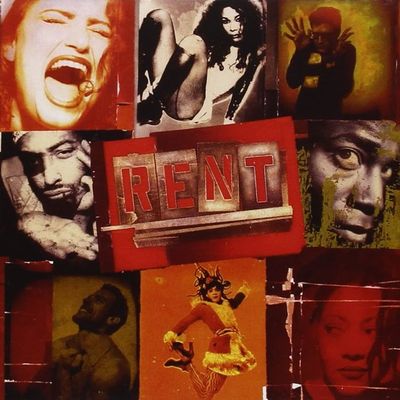
So for The Ensemblist’s 300th episode, we are turning the tables. Today, I’ll be interviewing The Ensemblist’s co-creator and host, Mo Brady, about his favorite musical: the 1996 Broadway phenomenon Rent. Here’s our conversation…
Transcript
This transcript was automatically generated and might contain errors.
[0:06] Aaron Albano: You're listening to The Ensemblist, the only podcast that shows you Broadway from the inside out. Welcome.
[0:12] Aaron Albano: I'm Aaron Albano. For many theater artists, there's the show that changed everything. A musical that for the first time reflected a part of the artist they had never seen before. A show that gave that young artist a glimpse into their future, into an industry and community they would inevitably be a part of. And while that experience is by no means unique, it is often the kernel of why they've made the theater their life's work. So, for The Ensemblist's 300th episode, we are turning the tables. Today, I'll be interviewing The Ensemblist's co-creator and host Mo Brady about his favorite musical, the 1996 Broadway phenomenon Rent. Here's our conversation.
[1:12] Aaron Albano: Hi Mo, thanks for coming.
[1:14] Mo Brady: Hi, thanks for having me.
[1:18] Aaron Albano: Happy 300!
[1:19] Mo Brady: Happy 300.
[1:20] Aaron Albano: That's really sweet.
[1:21] Mo Brady: Yeah, this is a ha this is a a uh occasion to celebrate. If you could introduce yourself and tell me where you're calling from, that'd be great.
[1:29] Mo Brady: My name is Mo Brady, and I'm calling from Maplewood, New Jersey.
[1:32] Aaron Albano: So tell me, what's your favorite musical?
[1:35] Mo Brady: For me, like for many people, I think we have different musicals that speak to us in different ways. When I thought about what my favorite musical is, I thought about the musical that I think is a part of me more than any other musical. And for me, that is Rent.
[1:52] Aaron Albano: That's crazy because I would have said I would have said Cats, because you've talked about Cats so much. And so I love that it's Rent, and I can't wait to hear you talk about it. Tell me what Rent is about if I didn't know anything about it.
[2:06] Mo Brady: If I wasn't as obsessed about it as you are. Describe Rent to me.
[2:10] Mo Brady: Okay, so Rent is a 90s musical that is based on the opera La Bohème. Like La Bohème, it's about a bunch of struggling artists in a city looking for love and finding purpose in life amidst trying circumstances. And for Rent, the situation takes place in New York's East Village, and it takes place in the 90s under the shadow of HIV AIDS, and we meet all of these different um artists, creators, I think we would call them today. I guess I should say, and also it's like a rock score. I think that in the bigger context, if you wanted to know what Rent was, you would say it came along at a time where people thought Broadway may be dying. You know, there was sort of this old style of musical, the British invasion. Rent came and said, No, we can tell more youthful stories, we can tell more diverse stories, we can use more contemporary music, and it can be on Broadway. And that I think is really, you know, shaped the last 25 years.
[3:11] Aaron Albano: Nice. And how did you encounter it?
[3:13] Mo Brady: Did you encounter it seeing?
[3:14] Mo Brady: I was like a, you know, a youth theater kid, and we would do our summer musicals and we would like listen to things, and we would like I I s I mean I like really remember in seventh grade and being in the makeup room and singing along to the Heat is On and Saigon, and just you know, sort of like that energy, right?
[3:30] Aaron Albano: Uh-huh.
[3:31] Mo Brady: Big theater kid energy.
[3:32] Aaron Albano: B T K E.
[3:34] Mo Brady: And so I think there was sort of buzz about this new musical that was coming up. But I really have to give credit to one of my best friends from high school. Her name is Kate. And Kate was like a Rent head. She was so excited about it. She was so excited about it that her senior year of high school, she booked a secret trip to New York, didn't tell her mom, like stayed in a hostel, saw Rent like three or four times that weekend, right? And I want to say this was maybe like May before the Tonies, right? So there was some sort of thing that was happening between like me being, you know, big theater kid energy, one of my best friends taking this sojourn to New York, the Tonies. I really remember the Tony Award performance, watching that over and over again on VHS, and then of course, listening to the cast album. But to go back to your original question, I think that in their ways, Sondheim and Andrew Lloyd Webber, like also made big shifts. This show also made a big shift and it made one for me.
[4:34] Aaron Albano: Do you remember the first time you saw it?
[4:36] Mo Brady: I do remember the first time I saw it. I've never seen the show on Broadway.
[4:40] Aaron Albano: Really?
[4:40] Mo Brady: I did see it off Broadway at New World Stages. I actually saw it, I think, in the West End in like 2001. I saw the motion picture. I saw the Rent Live on Broadway movie, but the first time I saw it was the National Tour. And I think at that time they were calling the National Tours Angel Benny and Collins. So I think it was the Benny Tour of Rent that I saw at the Moore Theater in Seattle. When Rent went on sale, it wasn't like Hamilton in regional houses, but it was that kind of energy, like like a radio station was doing this. Like you can come win tickets to Rent. If you come down to the box office on opening day and you sing, and I got my dad to let me skip two classes, he drove me down to I think it was actually another theater, the Paramount Theater, and we waited in the line, which wasn't that crazy. And I sang part of Seasons of Love on the radio, and they gave me and my dad free tickets to Rent. So the actual first time I saw it was from this like singing on the radio promo thing.
[5:42] Aaron Albano: Uh who was your favorite character?
[5:44] Mo Brady: I so identified with Mark. Like Mark was sort of the narrator, right? You think about this whole podcast. Like I was dressing up for Mark as Halloween, like getting a sweater and like a little like a Britney Spears headphone, like or like a microphone. Like I made, you know, like Casio headphones. So you wear those over your the top of your head, right? I would wear them on the back of my head for this Halloween costume. And I would attach part of a coat hanger on the ear down to my mouth. So you've got that mic that sits in front of your mouth. Oh, nice. That sort of Britney Spears Rent mic, right? And you cover it with foam, and I would that was my costume for Mark. Oh, and then I would spike my hair and I'd wear sort of the Anthony Rapp glasses. That being said, I just think Angel is just magic. You know, Angel is the heart of the show.
[6:32] Mo Brady: She's sort of like otherworldly for being a drag queen, she's just got the biggest balls. And I just I just admire that. I think it's one of the reasons the show is so successful, is because there's like tons of tons and tons of heart in that show, but also there's just like a character that is like literally love. Like that is her whole gig. And the older I get, I think the more power I see in that ability to inspire people through positivity. I would love I'd love to be Angel. I would love to be just like as weird as all hell and make people be able to change people's minds and see the good in others.
[7:11] Aaron Albano: Tell me how you feel like it changed you, like it shifted the course of your life trajectory.
[7:17] Mo Brady: The show came along at exactly the right time for me to be like, oh, I have to do this. I have to be part of telling stories. You know, it it was I it it just hit me at just the right moment. You know, one of the like sneaky wonderful things that I see now about Rent, so much of what I love about theater and like the soapbox I'll stand on for ensembles, I think comes from the show.
[7:45] Mo Brady: I love that this group comes together to tell a story in such a theatrical way, right? Like they are creating the space and they are running all over the place and they're moving the tables, right? They're telling a story with three tables and a staircase, right? And there's those moments, there's those moments of ensemble storytelling. Like you think I think about Rent, and there are some really powerful sections in that show. I think everyone probably has their own favorite songs. But to me, there are three moments that I think are just brilliant. One is "Seasons of Love," right? I love talking about what I call the timeline. Yeah. And that is a Hamilton term, right? People in Hamilton refer to that moment in the opening number where the entire cast comes together and sings, "Have you ever back down?
You never learn to take your time." Right? And Hamilton's walking across with his bag, right? Like, that's the timeline. If you think about it in terms of a theatrical device, you think about "A Chorus Line" uses the timeline. "Seasons of Love" in Rent uses the timeline. This is an age-old, tried and true theatrical test where we, as a whole company, every single person stands there and looks at you and says, "We're telling a story, and we wouldn't be able to tell it if you weren't here in the room with us." So, first off, "Seasons of Love." Love it. That's the beautiful way to look at it. The second moment is the end of the show, right? The end of the show is so unabashedly, we are gonna send you out of here smiling and walking on air.
Yes, people died. Yes, a character is coming back from death in a really sketchy way. And everyone is gonna sit at this fucking table, and we are gonna sing at you and say that life is worth living. And then the actor who plays Angel is gonna run on stage at the very last moment, and we're gonna sing "No Day But Today." It's a long time to sit. I'm getting chills just thinking about it. It's great. Yeah, I love that. Stare at an audience and sing relatively few words, right? Like those choruses that are in, there's not a lot of change of lyrics. I will say this moment reminds me a lot of "Democracy Reprise," the finale in "Soft Power," where the entire company comes, stands at the edge of the stage for an incredibly uncomfortable amount of time, looks you straight in the eye, and says the same words over and over again.
This messy political nightmare that we're living in is worth it. That is also what though the characters in Rent say, the actors in Rent say, I think in "Finale B," is they're like, "AIDS is terrible, life is hard, and yet it's worth it." The other that I love is "Will I." And I love that there are five groups and they sing in a round. I love that the groups are not defined by principle and chorus. I love that it's like such a palette cleanser in that show, right? It's also a moment where those designations fall away and it becomes a company. It's not lost on me that this show really does hit on a lot of different aspects of your life. It's a show that we were all obsessed with, but then it resonates to you in an ensemble sort of way because it is a very strong and very beautiful story.
And on top of that, the subject matter itself, like really shows me your passion for working with Broadway Cares Equity Fights AIDS. And it's all hitting all of these different tent poles of what your life has become, and it's actually really wonderful to see. I don't identify with any of the characters really in Rent. I never really wanted to be any of them. I think if I was like, which character am I most like? I'm probably like Mr. Gray or whoever sits at the table in the Life Café in La Vie Bohème and then leaves early. Like that's probably like the character I most like. I gotta get home, guys. I'm tired. Tired rowdy people are at the table next to the room. Right. Like I've never lived that like Bohemian artist life, and yet there is so much about the show that just like sort of baked itself into me.
[11:59] Mo Brady: If there was someone like a newcomer, fresh out of school person who was like, "What's Rent?" Where would you point them? It's a two-point journey. And it first starts with the Rent Live on Broadway film performance because it lives in line with that into the woods and in the Sunday in the Park with George, of just that shows you what it feels like to be in the space. I loved that you could sort of watch from the back of the house, and you're like, I'm imagining I'm sitting in row N. And also, there are incredible close-ups. Like, I'll never forget in "Without You." There's like a shot from backstage right of Will Chase as Roger through the stairs that go downstage, the sort of the Mimi "Out Tonight" stairs, right?
And you're seeing this moment that you would never see. Also, let's talk about that cast. That cast is fantastic. Will Chase is, he's a fantastic Roger. I mean, he's sort of a Lothario with a heart of gold. Like, I have feelings about Will Chase, and yet Sarner Roger. So you're just sort of like, yeah, that makes sense. Renee Elise Goldsberry. Okay, all right, great, great, great. Like Mimi's a dancer. She's 18. Sure, sure, sure, sure, sure. I had seen like so many singer last, actor first, play the role, right? Like, like, there's like a way that we look at Mimi that's like, and Renee Elise Goldsberry, you know, the original Angelica in Hamilton flips that on its head, right? I mean, she's an incredible actor, but she's not, she's not 18 and she's not a dancer, right?
But she sang the fucking shit out of that score. I was watching and I was like, oh, uh. She can blow. It's awesome. Yeah, she's unreal. Who else was in there? Eden Espinosa as Maureen. Adam Cantor, I think was Mark. Does that sound right? A little answer me vibes from the band's visit. So that's where I would send you to start, and then I would say, whatever spoke to you, go listen to the original cast album and like deep dive into the moments that you are identifying with. Like, if you want to like take like a one-song glory journey with Adam Pascal, like go for it. If you want to do an over the moon journey with Idina Menzel, like have your take me or leave me. Like, do whatever you want to do. Watch it, experience sort of the magic of the theatrical moment, and then like deep dive back into the original. That's where I would guide you, friends.
[14:37] Aaron Albano: Special thanks to Mo Brady for sharing his stories with us this week. The Ensemblist was produced today by Jackson Klein and me, Aaron Albano. There are two great ways you can be helping The Ensemblist right now. One is by leaving us a rating and review on Apple Podcasts, and the second is by becoming a Patreon member at patreon.com slash The Ensemblist. Please follow The Ensemblist wherever you listen to podcasts, whether that be on Spotify, on Apple Podcasts, or at our home on Broadway Podcast Network at bpn.fm. You can also follow us on Instagram. Thanks for listening. Until next time.
© Broadway Podcast Network, All Rights Reserved