

Like many communities in our country, much of the recent discussions among theatre professionals has been around the subjects of race and equality... Read More
From the show: The Ensemblist
Featured Shows
About
Like many communities in our country, much of the recent discussions among theatre professionals has been around the subjects of race and equality. Much of the change needed to achieve a greater sense of equality in the theatre industry needs to come “from the top down.” However, how can actors and others who are not the decision-makers in our industry make active decisions that advocate?
Today, Olivia Hernandez shares with us a story about facing racism in the theatre industry head-on, and how she forged her own path to acknowledging and advocating for other artists of color. Here, in her own words, is Olivia Hernandez.
Transcript
This transcript was automatically generated and might contain errors.
[0:32] Mo Brady: You're listening to The Ensemblist, the only podcast that shows you Broadway from the inside out. I'm Mo Brady.
[0:48] Mo Brady: Like many communities in our country, much of the recent discussions among theater professionals has been around the subjects of race and equity. Much of the change that's needed to achieve a greater sense of equality in the theater industry needs to come from the top down. But how can actors and others who are not the decision makers in our industry make active choices that advocate? Today, Olivia Hernandez shares with us a story about facing racism in the theater industry head on, and how she forged her own path to acknowledging and advocating for other artists of color. Here, in her own words, is Olivia Hernandez.
[1:29] Olivia Hernandez: I moved to New York a little over two years ago. I'd lived here once before, fresh out of my school's showcase, way in over my head, and it hadn't gone well. This time was going to be different. It had to be. This time I dragged my partner and my cat along with me, uprooting our life to follow my dream. Armed with an equity card and a few more credits on my resume, I started by hitting up every EPA and ECC I could. Within a couple of months, things were going pretty well for me, and an incredibly generous and thoughtful casting director reached out to me and suggested I get an agent. The casting director referred me to an agency, advising me to set up a meeting. The referral also came with the advice not to commit right away, because he planned on referring me to others as well.
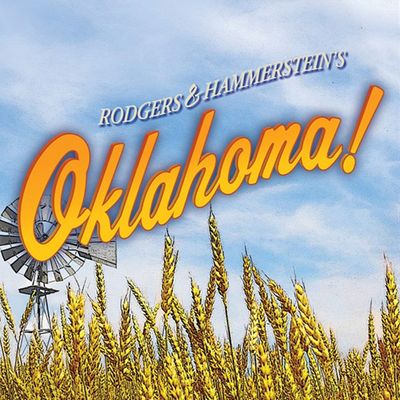
The meeting went well. I met with the agent that handled most of their musical theater work, and of course, being absolutely over the moon that anyone wanted to represent me at all, I was quick to forget the casting director's advice. I was sold. Soon after that, I booked my very first job out of New York, and it was an absolute dream. Laurie in Oklahoma at Tutts in Houston. The experience was even better than I could have imagined. The show was a collaboration with the Houston Ballet, some of the most exquisite artists I'd ever had the privilege of working with. We had a gorgeous 24-piece orchestra led by Kimberly Grigsby, and we were treated like royalty by Tutts's staff. But more important than all of this, when I looked around at my fellow artists, we were a beautiful mix of colors, backgrounds, and consequently, perspectives.
I am half Mexican, half white, definitely white-passing, and I struggle with the identity crisis that most mixed-race people experience. So when Priscilla Lopez told me on the first day of rehearsal that she took the job as Aunt Eller because she saw the Z at the end of my name, Hernandez, it hit a deep place inside of me and fulfilled something for 10-year-old Olivia, who listened to the original Broadway cast recording of a chorus line and took note of that same Z at the end of her name. I had arrived, and all of the apprehension about moving back to New York, about my family's sacrifices to get me here, melted away. I returned to New York with a sense of belonging and all of the warm, fuzzy feelings that you have after one of those special, meaningful contracts.
My agents asked that I come by the office for a few administrative things and to catch up about my time away. I sat down with the same agent I met with originally, and almost immediately he asked how Oklahoma was, following it up with, it was an all-Hispanic cast, right? That old, familiar insecurity crept into a back corner of my mind, that fear that maybe he thought I'd only gotten this job because I'm Mexican. I also felt a tinge of disappointment that he hadn't at least looked at some of the production photos or videos, but I immediately dismissed this, thinking to myself, he has lots of clients, Olivia, you can't expect him to spend time looking through all of that. I responded, no, actually, three of us in the cast were Latinx, me, Aunt Eller, and Judd.
Curly was Asian-American, Will Parker was Black, 8-0 Annie was White. We moved on, and I brought up an upcoming appointment for a big revival. Still being new to the city, and new to getting appointments, really, I was excited about it. The agent let out a breathy laugh while shaking his head and said, yeah, it's great that they want to see so many people of color for this, but then again, I have all my White clients with like five, six Broadway credits on their resumes, and I can't get them an appointment. I felt the sting of the double, no, triple whammy disappointment of, one, not having any Broadway credits to my name, a sore spot for any working actor at the beginning of a career, two, feeling like I was only getting opportunities to fill some kind of diversity quota, and three, simply, my agent not being focused on and excited for me, and instead talking about his accomplished clients who deserved more than I did.
He then suggested I go and have a chat with the owner of the agency, a man I'd only met in passing during my very first meeting, a man I'd already been warned by the first agent to fear because of his tough love approach. I sat down in the owner's office. He did not bother to look away from his computer screen for the first five or so minutes of our meeting. He said, so, Oklahoma, it was an all Hispanic cast, right? I gave him the same response I gave agent number one. Three of us in the cast were Latinx, me, Aunt Eller, and Judd. Curly was Asian-American, Will Parker was black, 8-0 Annie was white. To this, he threw his head back and, with a grunt, said, ugh, that kind of stuff is so hard to watch.
I cannot adequately describe how, in one short sentence, this man diminished an experience that meant so much to me to some tragic, politically correct bullshit. Of course, as so many of us do in a situation like this, I recalibrated, deciding he couldn't have possibly meant it the way it sounded. I let out a sheepish, awkward laugh and a nod, hoping that he'd elaborate or explain what he meant somehow. To my horror, I realized that my ambiguous response was actually an invitation for him to continue. And continue he did. What followed was a shocking laundry list of grievances he had regarding black people in roles that, quote, didn't make sense. He complained that a black woman playing a Depression-era ingenue in King Kong, quote, didn't make any sense.
In hindsight, I can't help but laugh at the idea that, while a black woman in this role, quote, doesn't make any sense, an enormous gorilla traipsing about New York City is completely reasonable. He went on to complain about the presence of a black man in Frozen, quote, here's this show with all this ice. It's clean, white, pristine, and then there's this black guy. Doesn't make any sense. There's a short pause, and when I don't say anything, he continues, quote, then he danced. Then it made sense. Here's the thing. I can make all kinds of excuses for my inaction at this moment. This man was in a position of power, and being new to all of this, I was digesting this moment in terms of what it meant for my career.
I finally had an agent. Why would I rock the boat? As a person of color, I was taking all of this personally. Simultaneously, as someone who is white, I understood that he felt comfortable saying these things to my face. In the wake of the deaths of George Floyd, Breonna Taylor, and so many others, many of us who are not black are doing some deep digging in ourselves to understand our privilege as white and white-passing people. I am personally consuming as much content as possible on the subject of anti-racism. I'm here to say that I have done some racially problematic things in my life. I've said many racially problematic things, and I have no doubt that I have, at times, made my black friends feel uncomfortable.
Worse than all of this, I have been complicit through silence in situations of racial bonding, those moments between white people that become a safe space to say things that wouldn't be said in the presence of black, indigenous, and people of color. Looking back, I did not have the tools or the information to confront the agent in that moment. I, like everyone in the United States, was raised in a system that perpetuates racial.
[9:52] Olivia Hernandez: I left that meeting knowing that he probably felt I was on his side, and that I agreed with what he'd said, though my insides were churning and my head was pounding. When I emerged from the owner's office, Agent 1 offered to walk me out to the street. He looked at me with a gossipy smirk and said, "So, you survived your first meeting with him?" Why this was the moment that woke me up, I have no idea. I thought to myself, I never want to feel that I've survived a meeting with my agent. I've read many pieces recently about dismantling the systems that perpetuate racism within our industry. Most of them talk about our producers, directors, music directors, choreographers, writers. I've read many that discuss our casting directors, the lack of diversity among these positions of power.
I left this meeting deeply examining the role of an agent in my career, and I fixated on the word representation. My partner is not at all in our industry and has an uncanny way of seeing things clearly as his vision is not muddied by all of the intricacies of emotion that guide those of us who are in the thick of it. He said to me, "That man does not represent you. He doesn't represent your views." Consider the power an agent has in our careers. We can diversify the pool of creatives. We can diversify the pool of producers and casting directors, but if we have agents whose prejudices affect the roles they're submitting us for, perspectives that deserve to be seen and heard will never even make it into the room.
I thought about the kinds of roles I dreamed of playing. Would he even see me in those roles? Would I end up not being submitted for roles that he couldn't imagine a Latina playing? I scrolled through the agency's Facebook page, seeing all of their happy opening posts about their clients, many of whom were Black, thinking, do these artists have any idea that their agent believes that their being cast in certain roles, quote, "doesn't make any sense?" I'd never experienced such blatant racism in our industry. I think that, in many ways, my last name and my mixed ethnicity shielded me from a lot of this because people didn't dare take that chance to say something racially insensitive to me. In considering writing this piece, I had an epiphany regarding my experience.
A dark and icky part of white privilege is being privy to these moments of racial bonding, moments when a white person feels comfortable looking into a white face and saying things that are rarely spoken in front of Black people. It doesn't feel good. It doesn't feel like privilege. But these moments are huge opportunities to stop someone in their tracks, to let someone know that what they are saying is unacceptable. If this agent felt comfortable saying these things to a Mexican-American woman, I'm realizing how common this must be among white people. We have an obligation to our fellow artists, our fellow citizens, and humans to put an end to this kind of behavior. I take my failure to act in that moment very seriously.
When watching videos of my Black fellow artists basically pleading with the Broadway community to dismantle the structures that perpetuate racism, I felt strongly that I needed to write this. You know what else I felt? Probably stronger than my feeling to write this piece was my instinct to keep the name of the agency anonymous. That's how powerful the grip of racism is. This silent system has a hold of all of us, and it's what allows someone like me to post a Black square and post information about defunding the police while simultaneously protecting an agent who makes money off of his Black client's work, even though he makes comments that would suggest that their presence in certain spaces, white spaces, doesn't make any sense.
Before you are six, or seven, or eight, to hate all the people your relatives hate, you've got to be carefully taught. I hadn't signed a contract with this agency, luckily, and immediately upon leaving that meeting I called a good friend who'd once been represented by them. I told him what had happened. He was not surprised at all. He connected me to my current agent, who couldn't be more wonderful. When I informed the first agency that I wouldn't be continuing with them, I did so by emailing agent number one. I didn't go into every detail, but I did mention that the owner, when talking about the color-conscious casting of Tutts, Oklahoma, expressed his opinion that that kind of stuff is so hard to watch.
The email response I got made no mention of the implications of racism. He simply said of the owner, quote, "'He really did like meeting you a lot after you left. Sad it couldn't work out. I just really adored you.'"
[15:38] Olivia Hernandez: I have since had the opportunity to play the iconic literary character Elizabeth Bennett in Austin's Pride, a Pride and Prejudice musical adaptation. Standing on the stage of the Fifth Avenue Theater in Seattle, easily the highlight of my career thus far, it was not lost on me that had I stayed with that agency, I might easily have never been submitted for this project. After all, what business does a Latina have playing an early 19th century Jane Austen character? There's an early draft of this piece with a big, gasp-worthy finish, revealing the name of the agent in the final sentence. After I'd accepted that my impulse to keep the agency anonymous came from a pattern of learned behavior that allowed racism to continue around me, I was ready to tear it all down.
That would be the ultimate act of commitment to changing the culture of our industry, wouldn't it? Calling out an agent by name for saying some very problematic things? So brave. It didn't feel brave. It actually felt pretty icky, after the catharsis of writing it wore off. As I said before, I am absolutely positive that I have done and said racially problematic things in my life, and I will continue to make mistakes. The journey of unlearning and reprogramming that I'm on is a lifelong continuum. Cancel culture is such a tricky thing. Who am I to wield my wokeness over someone else? Am I better or more moral than someone else simply because I've woken up sooner than they have? To use this piece in order to call this agent out by name would be to put on a show, to prove that I'm a better white person than he is.
This does not solve the problem. I hope he reads this, and that it has some kind of impact on him. More than that, I hope this reaches you. You an actor who wants to know what power you have to change things. You who, perhaps like a couple of my white friends represented by this agent, have said things like, "I'm not surprised he said those things. He's lovely to me, though, and he gets me work, so I'm happy." What power do you have? Start by refusing to hand the reins of your career over to someone who upholds archaic beliefs with no intention of moving forward or doing better. Start by willing yourself to take your business, your talent, your product elsewhere, even if the problematic thinking and behavior doesn't directly affect you.
I am committed to doing what is in my power to change the culture of our industry, to make mistakes, to have hard conversations, to recognize when I have that impulse to bite my tongue and to fight against that with every fiber of my being. I refuse to succeed at the expense of others. I challenge you to do the same.
[19:20] Olivia Hernandez: Please follow us wherever you listen to podcasts, whether that be on Spotify, Apple Podcasts, or at bpn.fm, the home of Broadway Podcast Network. You can also follow us on Instagram. Thanks for listening. Until next time.
© Broadway Podcast Network, All Rights Reserved