

A Chorus Line changed everything. It’s a statement theatre lovers have heard time and again. But until this exploration into the proliferation of the line as a theatrical device in musical theatre, I never really understood the depth of what A Chorus Line changed... Read More
From the show: The Ensemblist
Featured Shows
About
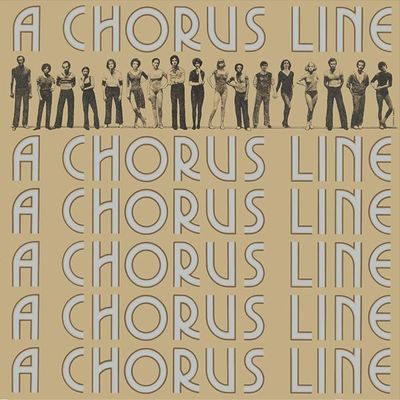
A Chorus Line changed everything. It’s a statement theatre lovers have heard time and again. But until this exploration into the proliferation of the line as a theatrical device in musical theatre, I never really understood the depth of what A Chorus Line changed.
For the layman, it was the first time in years that a Broadway musical reached the greater cultural conversation. Musical theatre had drifted from the zeitgeist after decades of leading the entertainment industry, but here it was back and in charge.
For the theatre aficionados, it was the first Broadway musical to run longer than a decade. For comparison, prior to Broadway’s shutdown there were four musicals running that had opened more than ten years ago.
But for theatre artisans, A Chorus Line was the first big musical without a separation between principals and chorus. In A Chorus Line, every character was named and given a point of view - not only in the staging but in the script itself. It’s a popular device now, but it shook theatre artists to their core because it meant that what they knew to be true about live theatre was finally being shared with audiences; that every company member makes an important contribution to the success or failure of a musical.
Transcript
This transcript was automatically generated and might contain errors.
[0:00] Mo Brady: You're listening to The Ensemblist, the only podcast that shows you Broadway from the inside out. I'm Mo Brady.
[0:20] Mo Brady: A Chorus Line changed everything. It's a statement theater lovers have heard time and again. But until this exploration into the proliferation of the line as a theatrical device in musical theater, I never really understood the depth of what A Chorus Line changed. For the layman, it was the first time in years that a Broadway musical reached the greater cultural conversation. Musical theater had drifted from the zeitgeist after decades of leading the entertainment industry. But here it was, back and in charge. For theater aficionados, it was the first Broadway musical to run longer than a decade. For comparison, prior to Broadway's shutdown in 2020, there were four musicals running that had been open for more than a decade.
But for theater artisans, A Chorus Line was the first big musical without a separation between principals and chorus. In A Chorus Line, every character was named and given a point of view, not only in the staging but in the script itself. It's a popular device now, but it shook theater artists to their core because it meant that what they knew to be true about live theater was finally being shared with an audience; that every company member makes an important contribution to the success or failure of a musical.
[1:53] Mo Brady: All points lead back to A Chorus Line, and that original staging created for the Public Theater. So I figured it would be best to speak to someone with intimate knowledge of the show's staging. And, like with my previous interviews, I wanted to speak to someone who had been on both sides of the proscenium, an artist who had performed in the show as well as taught it to others. So I reached out to Francine. Would you introduce yourself and tell us where you're calling from?
[2:20] Francine Espiritu: My name is Francine Espiritu, and I am currently calling from San Diego, California, although I do reside in New York.
[2:28] Mo Brady: And what is your experience with A Chorus Line?
[2:31] Francine Espiritu: I've been really fortunate to be a part of four productions. How I got introduced to A Chorus Line, well, besides watching Every Little Step and being like, I want to be Bayarklee, I started working for her nonprofit organization, National Asian Artists Project. They have a theater outreach program, and so they go down to Chinatown and teach theater. In 2015, fall of 2015, she was telling me that she is putting it up at Pace University and I should learn the show. So that's where I first started learning the show. In 2016, that summer, she brought me on to do, like, an assist for the Hollywood Bowl production. Fall of 2017 into 2018, I was really fortunate, and she asked me to be the assistant choreographer, dance captain, and female swing of the tour that went out.
And it also went international and got to go to Japan. And then finally, which is one of my favorite productions that I got to work on, I got to be the assistant choreographer and female swing for the New York City Center production in fall of 2018. So I have some experience with the show. And it's kind of just been a blessing to be part of this family.
[3:42] Mo Brady: In A Chorus Line, obviously, a lot of it takes place on this line. Can you talk about how the line is used, though, when people are on the line versus off the line? The device of the line, I guess.
[3:56] Francine Espiritu: The line is used to essentially establish the premise of the show. We are giving the audience an inside look to what an audition looks like. Michael Bennett wanted to show the audiences like a little sneak peek. And he chose a line because back in the day when you're auditioning in the 70s, you would line up and the director, the choreographer, would be like, you step forward, you step forward, you step forward. Everybody else, thank you very much. So kind of the same thing today, but it was a little bit more cutthroat. With that line, we're essentially telling the audience all the information and where to look. Another way the line is used essentially in this show, too, is that the show is built on a grid.
There is a formula to it. People stand on numbers. How it works is that you move to this number, you move to this number, and it creates those dynamic formations that he uses. After people establish their logo pose and they stand downstage of the line, they're talking about themselves. They're in the present. So they're starting to tell their story. They're starting to talk about themselves. And we're in reality. When you stand upstage of the line, you're in your memory, you're in your thoughts. And the lighting design also helps establish those two worlds. Whenever you're downstage of the line, it's like a single spotlight and that spotlight follows you. Upstage of the line, it's all color. So for example, in Monster Montage or Fourth Montage, everything is up in color and it starts changing. Everything downstage of it is non-existent anymore.
[5:27] Francine Espiritu: A Chorus Line is one of those unique musicals where the staging is as well-known as the music or the story. Every theater fan can imagine that lineup of 17 actors on a bare black stage. But what makes that staging even more special is that, like the music and the story, the staging also creates a visceral response for theatergoers. As historian Jennifer Ashley Tepper explains, the show is about an audition. And obviously in an audition, it's natural for that to be the realistic staging, for them to be in a line. The line also feeds the concept of a chorus line, where what's so moving about it is this idea that all of these people are equal and that they're all important and that only some of them get the job, but it doesn't mean that anyone's better than anyone else.
And it kind of hits you with all of these themes of A Chorus Line just through the physicalization of the line. But I also think specifically of the moment at the end of At the Ballet, when the staging finds the three characters that you've just seen pouring their hearts out in this incredible confessional number, step back into line. And it just drives home this point that all of these people have such human stories and have such humanity to them and so many things that we don't know about, just like in real life. And yet right now, we're just seeing them in a leotard on a line asking for a job. A Chorus Line uses the staging in the line to gut punch you with a lot of different themes.
[7:03] Mo Brady: I love all the jargon, logo pose and monster montage. You're alluding to the legacy of the show. The fact that it's basically always done the same way. What works about this form, where not only the script gets passed down, but the staging and the jargon and the costumes and the logo poses, like everything is a package in this. How is that different from other shows that you've encountered?
[7:32] Francine Espiritu: I mean, I think it kind of goes back to that phrase, like, why mess with what works? More than anything. Yeah, this show kind of speaks to our lives as performers. But even my father who has no idea of really what musical theater is and not interest whatsoever, when he came to see it when we were out on tour, he was still somehow able to relate to it. It's still a show that resonates with so many people because it asks you the hard and honest questions that can be applied to every single person, whether in this field or not in this field.
[8:18] Mo Brady: Whenever somebody does their show, and I was talking to the Queen herself, biologically, about this the other day, this show will ask you to stay in the business or not stay in the business. It makes you ask those questions. What could you do if you can't dance anymore? And it's a little, like, timely right now because I think a lot of us are asking these questions of ourselves. But we wouldn't be human beings if we weren't asking these questions. Part of the reason that it is so iconic is because the production itself is so distilled. It's not simple, but it is precise. I wanted to ask you about The Line in terms of uniformity versus individuality. A Chorus Line deals a lot with that, right?
And the more you sort of delve into it, you're like, oh, one, the whole song is about everyone being uniform, right? And yet the show is to tell us about the individuality of these people who are trying to be uniform. Can you sort of parse that out? I wanted to say that there's kind of like four points in answering this question for me. The first point, I was listening to an interview that Michael Burress did with you a couple years ago regarding A Chorus Line. This is my paraphrased version of it, but he was essentially talking about as human beings, we kind of have, like, two sides to us. The side where we want to be different, we want to stand out, we want to be that individual. And then there's this other side of us that is trying to almost conform to what people or society wants us to do.
So talking to your point about being uniform. And you have to acknowledge both of that. A Chorus Line, whether it was intentional or not, is built around those two ideas. With the individuality, you see that as the dancers are standing on the line. They're individuals in their own right when they're telling us these stories about themselves and where they come from. They're individuals. But inevitably, they are one. They are an ensemble. They are working together. And you see that when they are learning rehearsal ones. We get very super specific about learning that combo. For example, in the section of rehearsal ones, there's a group of four. All the groups of four are doing the one combination together, but they're doing it in canon.
They're speaking different parts of the combination. So one group is talking about what their feet is doing. The second group is talking about their upper body and their arms. The third group is singing the song. And the fourth group is saying numbers. When you put that all together, that's the one combination. And that is the brilliance of Michael Bennett trying to teach the audience of how us performers learn. And so the payoff of that is the finale. When you see everybody in their gold costumes, you know, like, how exciting is it when you get to see them perform all together? They take away their individuality, who they are to themselves, and they work together as one to create this iconic number, this visual number.
Because when you are standing on that line and you're shoulder to shoulder with somebody, if your elbow is not in front of somebody or if it's behind and it's not supposed to be, you can hit somebody and whack somebody. And you can hurt somebody, essentially. Everybody's breathing the same air, especially when you're standing on the line. They're all in the same experience, yet they're experiencing their own experience or story. You're mentioning of the finale and the uniformity and how satisfying that is. It's partly because we've spent two hours waiting for a thing, and then the show gives it to us in, like, such a satisfying way that we've been hungry for it for so long. I'm also thinking about the bows.
I never really thought about how important it is to be able to applaud for each one of those characters that you've watched for two hours beyond. It really is an ensemble piece. There is no principal role. Yes, Cassie has a seven-minute dance number. Yes, Deanna has her own song. But somehow, as performers or audience members, we can still relate to it. And so the payoff of these people standing on the line and basically burying their soul trying to get this job is the finale. The finale is the star without the star. You take that moment because you worked so darn hard for it. Michael Bennett chose a line and didn't choose a circle because if we were in a circle, it would be a discussion. It would be almost as if we're, like, inviting audience members to come in and discuss with us.
And that wasn't the case. When you're in a line, any sort of line, it's like you're standing there, you're an army. We're just going to give you information and then you get to decide. It's like Judgment Day, essentially, which is what an audition is. Michael just wanted people to know what an audition looked like, and more specifically, what a New York audition looked like. Because back in the day, New York was the only place that did auditions like this. That was something that I learned, too. What else have you learned? Tell me more. Give me more magic. Michael uses the phrase like army of soldiers a lot, like when you're running up and standing on the line. And I think I talked about the idea of like, when you're standing on the line, it is of utter importance.
And we get super specific in the opening when you're running to your number for the audition, whether your toes are on the line or the balls of your heels are on the line, because when you stand on that line, it's a make or break. Michael was very such a stickler about that.
[14:01] Francine Espiritu: Now, you've been on the inside of this piece and really seen it from both sides. Why do you think it works? Why has it become this tried and true theatrical device? When you're standing on the line, the information is there. So you're giving it to the audience and the audience wants to be invited into this experience. And there's something so simple about it. And in that simplicity, there's like a stillness to you're not distracted by the lights or the costume changes or the curtains or anything like that. I love simplicity because it's right there. And then you're able to think about or feel whatever the character is trying to convey to you as an audience member. I mean, it's a Pulitzer Prize winning book.
So every single word was very carefully crafted. Even in the work sessions for acting, Bayek always just says, just say what's on the page. Don't add anything. Just say what's on the page and whatever comes up comes up. So you don't really have to work as hard. You just have to say what's there. And I think people get lost in the process of trying to make something meaningful. And this is not to like poo poo other people's processes, but it's simple and it's not so simple at the same time. And I think that's why it works because there is such a specificity to standing on the line. Even if you ask the actors to standing on that line after doing a dance number is one of the hardest things because their bodies are warm and then you stand there for 10 minutes and then their bodies are cold again. Having to stand there and be on for those two hours. It's like, oh, shit, it's judgment day. I'm here. I'm on. I got to be on. And I think that's why it works. It's simple and not so simple.
[15:50] Mo Brady: Special thanks to Francine Espiritu and Jennifer Ashley Tepper for sharing their stories with us today. The Ensemblist was produced today by Anna Altide, Jackson Klein, and me, Mo Brady. There are two great ways you can help the Ensemblist today. One is by leaving us a rating and review on Apple Podcasts. And the second is by becoming a Patreon member at patreon.com slash the Ensemblist. Please follow us wherever you listen to podcasts on Spotify, Apple Podcasts, or at bpn.fm, the home of Broadway Podcast Network. You can also follow us on Instagram. Thanks for listening. Until next time.
© Broadway Podcast Network, All Rights Reserved