

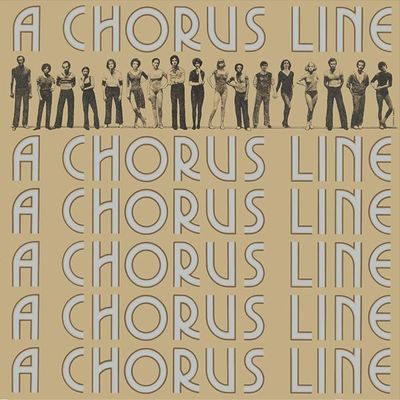
We’re revisiting our 2015 interview with Cynthia Onrubia. In our conversation, Cynthia chats all about making her Broadway debut as a teenager in the original Broadway production of A Chorus Line, the legendary record-breaking gala performance, and why this ultimate ensemblist musical is so powerful... Read More
From the show: The Ensemblist
Featured Shows
About
We’re revisiting our 2015 interview with Cynthia Onrubia. In our conversation, Cynthia chats all about making her Broadway debut as a teenager in the original Broadway production of A Chorus Line, the legendary record-breaking gala performance, and why this ultimate ensemblist musical is so powerful.
Transcript
This transcript was automatically generated and might contain errors.
[0:00] Jackson Klein: Hello, Twin.
[0:03] Cynthia Onrubia: Hello, hello.
[0:06] Jackson Klein: You're listening to The Ensemblist, the only podcast that shows you Broadway from the inside out. Welcome. I'm Jackson Klein. This month, we're digging deep into the Ensemblist archives to share highlights from some of our favorite interviews from our early days. Today, we're revisiting our 2015 interview with Cynthia Onrubia. In our conversation, Cynthia chats all things A Chorus Line, from making her Broadway debut in the original production as a teenager to the legendary record-breaking gala performance. Why this ultimate ensemblist musical is so powerful and more. Here's our conversation.
[1:00] Cynthia Onrubia: I am Cynthia Onrubia, and I have lived in New York City, Manhattan my entire life. Okay, I started in 1977, um, which was a very long time ago. Uh, I auditioned. They needed an immediate replacement for an understudy, uh, who was in the opening. And uh, I auditioned with another girl who I knew that they liked because she had been in before. Um, and we danced and we sang, and then we danced and we sang and sang again and sang again and danced again. And they said to me, uh, could you step outside? And I went, okay. Um, so a few minutes later, the girl came out, and I said, Did you get it? And she said, No, you did. That's not an answer that you typically hear at an audition. Um, so I got the job and I was filling out my insurance cards a few days before uh rehearsal started.
And I was putting my birth date, but then I thought maybe I should change the year. So the ink on the last digit of my birth date was getting thicker and thicker and thicker, and my mother came to me and she went, What are you doing? You're gonna mess up your pension. You know, you've been equity since you were seven years old. So I went, You're right, you're right. So the next day um I handed in my cards to the stage manager, and he said, Oh dear, we have a minor on our hands. I was 15. They didn't ask how old I was at the audition, you know, because I put on the eyelashes and the whole thing and the padded bra. So I knew I had to like really have my act together and prove myself. And I think I did because I wasn't fired.
So I did the show for two years. Um, and then I left to do uh the national tour of Dancing. So I did that. Then I came back and went back into A Chorus Line for uh three months. They let a girl go do a film. So I was Connie for three months. Then I went back out on the road. Um, then I came back to A Chorus Line, I think in 1984. Uh, I was doing Michael Bennett's workshop of Scandal. Uh, and he asked me, you know, do you want to go back into the show? There's an opening. I said, absolutely, because in workshops you make $250 dollars a week. So uh I went back into the show, and I think I was there for another 10 months.
[3:47] Jackson Klein: When you were auditioning for the show, was it the phenomenon that it is now? When you were in your audition and rehearsal process, or was it just another dance show that you...
[3:55] Cynthia Onrubia: Oh no, it was because it was such a hit. No, uh after the audition, um I ran out in Schubert Alley and screamed at my mother, I got it, I got it. I did, I really did. Um yeah, and you know, just being at the Schubert Theater. It was that was the home of A Chorus Line, and you know, it was there for so many years. And the show never moved to another theater. That was it.
[4:38] Cynthia Onrubia: Oh, no, why do I pay for? I think they gave me uh a three-week rehearsal period, but I went on early, of course, because people were out, so they said, Can you do the opening? I said, sure. And I had known um a lot of the cast people from years before, uh, doing an industrial show called The Millican Breakfast Show. Um, so they knew me as a Milla Kitty as a child. And all of a sudden, I'm playing an adult on the same stage with them. And what happened was uh at the end of the opening, Robert Lapone he says, you know, uh, any Broadway shows, uh, and then he looked at me and he hadn't seen me before. And then he went Broadway shows and I went, touring company. It was heaven. It was just absolute heaven. Facing away from the mirror when that orchestra kicks in is a great rush. And I don't think that ever really disappears, no matter how long you do the show, because you know the first part is just piano, and then you face away from the mirror and bam, you're in it.
[5:58] Jackson Klein: So, what was your average sort of day during the show? You go, you do the opening, you do your homework until when, and then you run downstairs and sing.
[6:07] Cynthia Onrubia: Okay, well, first I had to go to school during the day. Okay. Um, and then I was very disciplined uh a couple days. I would go to ballet class after school, and then I'd take the bus down Broadway and get off on 44th Street. Uh so then I get to the theater, and even though I had had my class, uh, you know, still had to warm up. It was still another two and a half hours or three hours before the show. Um, so I would do the opening, then change clothes, do some homework, uh, and then the first thing that we had to sing in the booth was uh I think the Badas in Hello 12. And so then we would just hang out through the end of the monster montage, and then uh during Val, I'd go back up to the dressing room, do my homework, um, until the ones, and then go back down, and then take the bus home.
Either my father or my mother would pick me up. We'd go home. Um I'd have something to eat, go to bed, get up the next morning, go to school. But what was great in school, of course, on Wednesday matinees, um, I I was in professional children's school, PCS. I got to leave at 12 noon to go do the matinee. And there was another girl, uh, she was in The Wiz. I think her name was Eartha Robinson. I think I got that right. Uh so we would take the bus down together, and she'd get off at the Broadway Theater, and then I'd continue down to 44th Street.
[7:51] Jackson Klein: When you were put into the show, were you put into the show by yourself, or did you have other people joining with the show?
[7:55] Cynthia Onrubia: No, it was just me. It was just me. Clive Clerk put me in the show. Uh, and then I think a week into rehearsal, uh, Bayork Lee came in, and she had two chairs, she sat them down in the middle of the stage, and she said, Okay, tell me about Maggie. So it was good. I was, you know, thinking about my backstory and my subtext. And Bayork had worked with my mother uh in Flower Drum Song in the late 50s, early sixties. So, you know, generations pass and everything, and and uh yeah, so and I knew Bayork also from Milliken because she would she used to be a Milla Kitty because she was so tiny. So that's how I knew Bayork.
[8:47] Jackson Klein: How is A Chorus Line to you the ultimate ensembleist show?
[8:54] Cynthia Onrubia: Well, I think it is, you know, uh even if the stories are dated or whatever, you know, everyone has a story. Everyone has a history, and it's like, I think in this day and age, even if one person seeing the show grabs onto, you know, grandmother, or you know, I had my boobs done or whatever. There's something that I think every person can can grab at and identify with or parallel it with something else. So I think it still does work. And of course at the end of the show, everybody's dancing in the same costume, doing the same steps the same way. Nobody's a soloist.
[9:53] Cynthia Onrubia: Then I could be a movie star. But the thing that made my mommy laugh so much was when I used to jump and things. Oh, the gala was it was the over 3,000th performance of the show, and that's when the show became the longest running Broadway show at that time.
[10:15] Cynthia Onrubia: That was one of the I think one and only times when everybody felt like a family, because Michael brought in everybody from every company.
[10:32] Cynthia Onrubia: Uh, and for two weeks we rehearsed at 890.
[10:36] Cynthia Onrubia: Um, and seeing people that you really never thought you'd see again, and then seeing people that did the show that you never knew, you know, all this the people from the Japan company.
[10:48] Cynthia Onrubia: Uh seeing Donna do the Cassie Zach scene was just heartbreaking sitting in that studio.
[10:59] Cynthia Onrubia: Um, but Michael did some really wonderful magical things.
[11:06] Cynthia Onrubia: Like at the end of the opening, he doubled when the mirrors turn, and then everybody's walking downstage before they lift up their pictures and resumes, and he doubled the music.
[11:18] Cynthia Onrubia: So the company that had done the opening, which was the current company that was doing it on Broadway, they exited and he brought on a whole other line.
[11:30] Cynthia Onrubia: And when the lights came up and they had their pictures and resumed, their pictures in front of their faces.
[11:36] Cynthia Onrubia: You looked and you oh my god, it's the original company.
[11:43] Cynthia Onrubia: And he had up, he had a ticker put up and it said original company.
[11:48] Cynthia Onrubia: And you know, of course, the audience went bananas.
[11:52] Cynthia Onrubia: I was doing Cats at the time of the gala, and I remember strategically making up my kitty cat face so I wouldn't have to take off the lashes because I had all that white makeup.
[12:08] Cynthia Onrubia: So I was very strategic because at the end of the show, Timothy Scott and I, he was playing Mistopheles, we ran down to the theater because he was playing Mark, so he was doing the Mark monologue, and then I was doing uh the monster montage.
[12:26] Cynthia Onrubia: And Michael had uh the Booth Theater was I think it was empty at the time because there was no scenery in the wings.
[12:36] Cynthia Onrubia: Um you could go under the you know, uh through the tunnel from the Schubert Theater, and you could connect to the tunnel of the Booth.
[12:47] Cynthia Onrubia: And on stage he had all these uh tables and makeup mirrors and chairs set up because there were so many of us.
[12:55] Cynthia Onrubia: I mean hundreds of us.
[12:57] Cynthia Onrubia: Uh so I remember getting dressed, sitting across from Barbara Luna.
[13:02] Cynthia Onrubia: Um she was doing because she was uh I think in the finale.
[13:07] Cynthia Onrubia: Um what else had Michael done?
[13:11] Cynthia Onrubia: Oh, the Cassie dance.
[13:13] Cynthia Onrubia: Donna did the scene and the f song and the first part of the dance, and then the mirrors came in, and what Michael did was he he turned no, it was still in the the upstage was still in the black, but he brought the mirrors in and he he uh m made the stage go pretty dark, so there was just light enough on Donna, and as soon as the mirrors came in and she started the slow section, the mirrors flew right back out, and all of a sudden there were there were a sea of Cassies.
[13:51] Cynthia Onrubia: And it was it was just such a great feeling.
[13:55] Cynthia Onrubia: You know, the audience just went and just and the way he staged the entire Cassie dance with all of them just going across.
[14:06] Cynthia Onrubia: And then Wanda Richard came in and did Heat Wave by herself, and then they all started adding in for the final turn combination.
[14:14] Cynthia Onrubia: It was it was the greatest thing.
[14:16] Cynthia Onrubia: And then all in Schubert Alley, and it took up all of Schubert Alley.
[14:20] Cynthia Onrubia: Michael had all of our eight by tens on these huge boards, right outside in Schubert Alley.
[14:28] Cynthia Onrubia: And it was like, wow.
[14:30] Cynthia Onrubia: That's a lot of people.
[14:51] Jackson Klein: What's your favorite part of the show to perform?
[14:53] Jackson Klein: And what's your favorite part of the show to watch?
[14:56] Cynthia Onrubia: Favorite part, the opening to perform.
[15:00] Cynthia Onrubia: Favorite part to watch, the opening.
[15:05] Cynthia Onrubia: Out of the corner of your eye.
[15:07] Cynthia Onrubia: Yep.
[15:08] Cynthia Onrubia: Always.
[15:11] Cynthia Onrubia: Welcome.
[15:14] Cynthia Onrubia: I think because it is an audition, and you know, when you're facing away from the mirror and that m the whole orchestra kicks in, but you're in a confined space because everybody's dancing at the same time.
[15:27] Cynthia Onrubia: Um but you know what it looks like to the audience.
[15:33] Cynthia Onrubia: So you have to, you know, you gotta kick it up.
[15:38] Cynthia Onrubia: Um I think the tension, the tension of the opening is good, and you know, the laughs are there for Richie and Headband and um all those people, Deanna dancing with her tongue out again.
[15:56] Cynthia Onrubia: But it's you know, I mean I like pressure.
[15:59] Cynthia Onrubia: I think pressure is is a good thing.
[16:02] Cynthia Onrubia: And I think rising up to it is even better.
[16:06] Jackson Klein: And now that you have switched sides of the table, how do you look at that experience?
[16:11] Jackson Klein: Has having done Chorus Line for so long changed the way you run an audition?
[16:16] Cynthia Onrubia: Oh I think so.
[16:17] Cynthia Onrubia: I do.
[16:18] Cynthia Onrubia: Um when I'm auditioning people I've always tried, you know, I mean I I demand a lot, but I always try to make it fun.
[16:27] Cynthia Onrubia: Uh I don't yell at people.
[16:29] Cynthia Onrubia: I try to make people laugh because the audition process never gets easier.
[16:36] Cynthia Onrubia: I think because the way it was written, you know, everybody is special, right?
[16:45] Cynthia Onrubia: Cassie says, no we're all special, even though you're auditioning for the chorus to be in the same costume and look the same.
[16:54] Cynthia Onrubia: I think everybody that did that show felt special.
[17:00] Cynthia Onrubia: Because you were playing a part.
[17:02] Cynthia Onrubia: You know, you were an individual.
[17:04] Cynthia Onrubia: You just weren't you know the short skinny blonde second from the end.
[17:09] Cynthia Onrubia: Um but yeah it it even if you never met the person before like at the gala you d you know they you you share you share the same emotions.
[17:28] Cynthia Onrubia: I think that's that's a lot of it.
[17:31] Cynthia Onrubia: Whether it's rejection, whether it's triumph, um whether it's sadness or anger.
[17:38] Cynthia Onrubia: So I I think it's it's more from the from the heart that you feel that connection with.
[17:48] Cynthia Onrubia: Sure, a lot of you know people that did a Chorus Line went into real estate and became brokers.
[17:56] Cynthia Onrubia: Um there are people that did the show that became dressers in Broadway shows.
[18:02] Cynthia Onrubia: Uh then there are you know people like Donna McKechney who's still doing it.
[18:08] Cynthia Onrubia: So and then you have other people, you know, of course, there's Bayork, who keeps the show going, um for new faces and you know, the new generation and the next generation, and so I think thanks to her, Bayork has kept it going.
[18:29] Jackson Klein: What does the What I Did for Love mean to you?
[18:34] Jackson Klein: How do you carry that with you?
[18:40] Cynthia Onrubia: Never get jaded, never get bitter.
[18:44] Cynthia Onrubia: Treasure the moment while it's there.
[18:47] Cynthia Onrubia: Um, if you're fortunate enough to to have a career uh and work and take that with you and know that yes, you do get old.
[19:06] Cynthia Onrubia: You know, you can't turn back the clock.
[19:09] Cynthia Onrubia: So I you know, I always say, guys, never get jaded and bitter ever.
[19:20] Jackson Klein: Special thanks to Cynthia Onrubia for sharing her stories with us today.
[19:25] Jackson Klein: The Ensemblist was produced by Mo Brady and me, Jackson Klein.
[19:29] Jackson Klein: There are two great ways you can help The Ensemblist right now.
[19:33] Jackson Klein: One is by leaving us a rating and review on Apple Podcasts.
[19:37] Jackson Klein: The other is by becoming a Patreon member, which you can do at Patreon.com slash The Ensemblist.
[19:43] Jackson Klein: Please follow us wherever you listen to podcasts, whether that's on Spotify, on Apple Podcasts, or at BPN.fm, the home of Broadway Podcast Network.
[19:55] Jackson Klein: You can also follow us on Instagram, where we share all of our latest episodes.
[19:59] Jackson Klein: Stay safe, and thank you for listening.
[20:01] Jackson Klein: Until next time.
© Broadway Podcast Network, All Rights Reserved