

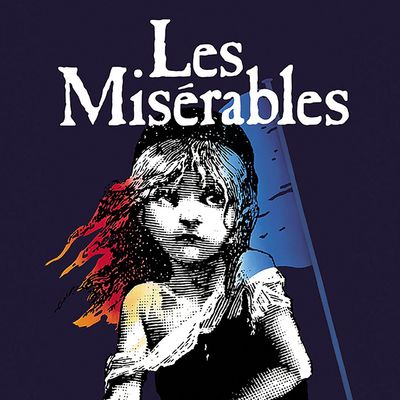
We’re revisiting our 2014 interview with Tony Award Winner Randy Graff. Among her many Broadway credits is the original production of Les Miserables. Randy spoke to us about originating the role of Fantine on Broadway, the rehearsal process, memories of performing the show, and why Les Miserables has had such a lasting legacy... Read More
From the show: The Ensemblist
Featured Shows
About
We’re revisiting our 2014 interview with Tony Award Winner Randy Graff. Among her many Broadway credits is the original production of Les Miserables. Randy spoke to us about originating the role of Fantine on Broadway, the rehearsal process, memories of performing the show, and why Les Miserables has had such a lasting legacy.
Transcript
This transcript was automatically generated and might contain errors.
[0:00] Jackson Klein: You're listening to The Ensemblist, the only podcast that shows you Broadway from the inside out. Welcome, I'm Jackson Klein. Over the past several weeks, we've been digging deep into the Ensemblist archives to share highlights from some of our favorite interviews from our early days. In our final installment, we're revisiting our 2014 interview with Tony Award winner Randy Graff. Among her many Broadway credits is the original production of Les Mis. Randy spoke to us about originating the role of Fantine on Broadway, the rehearsal process, her memories of the show, and why Les Mis has had such a lasting legacy. Here's our conversation.
[1:01] Randy Graff: My name is Randy Graff and I live in Jersey, but I'm really from New York. I was in the original production of Les Miserables. I was on Broadway for a year. It's an exhausting show. I look at pictures of myself from that time and I look emaciated with dark circles under my eyes, physically and emotionally exhausting, ultimately exhilarating, but really an exhausting show. And I was young and I was tired all the time. It's not like being older and being tired all the time. Anyone who plays Fantine has to play a boy at the barricades. The crossover with the students, the building of the barricade, being on the barricade, getting shot, getting off, that whole sequence Fantine is in. The original company did not get to the text until two weeks in.
The first two weeks was all improv. And Trevor and John, they did that for all their RSC shows and they were doing it for us and it was to get us to bond as a company and to trust each other as a company and to be intimate with each other as a company. Whether you were Valjean or Fantine or Javert, you were in the ensemble. That's how it felt. And we did exercises and some of them made our eyes roll, like the kind you used to do in school where we all made a machine and we were all part of the machine where we did trust exercises where you'd fall back into the arms. But there was a method to the madness because what they wanted to do was just strip down the ego altogether and get us to feel totally silly and foolish in front of each other so that we could take chances and risks.
And this is what we did. And this is what we carried into the rehearsal two weeks later. And there were actual exercises, the prostitution exercises, that made the scene. Let me tell you about the prostitution exercises. John Caird took all the women into one room, Trevor Nunn took all the men into another room. To this day, I don't know what went on in the men's room. But in the women's room, everyone had to be a prostitute of that time, which meant that you were dying or sick or afflicted in some way, whether you were missing a limb, whether you had consumption. One at a time, in front of John Caird, had to seduce him and feel beautiful, even though we were sickly or limping or whatever. And then we took that exercise into the room with the guys.
And Trevor did something with the guys. Like I said, I still don't know what it was. And we had to repeat that and find our guy and seduce them and take them, which went into the show. I knew the album. I heard Patti LuPone sing, I Dreamed a Dream. I called Andy Zerman, who was casting it, and a friend of mine. I said, I want to be seen for Fantine. Nandi and I laugh about this now. We're friends. But he said, well, you're not really right for it. You're somewhere in between Eponine and Fantine. But Trevor and John should meet you. I had an agent, but I just went over their heads. I went straight to Andy because I heard the album and I said, wow, like everybody else. I said, I want to be in this.
And I was very bold in those days and called and got seen. When I said, wow, when I heard it, it was the magic notes that got me. Apparently, my girlfriend saw the new production and she said it was like a rock concert in there. The minute they hear those, they went nuts. It's like a cult thing now. I heard the magic notes and I got little tingles. And then I was so absorbed in the story. And then I heard the song. I thought, my God, this is a fantastic role. So just as an actor wanting to be a part of something, all it took was the album. It's a global phenomenon.
[4:40] Randy Graff: And we knew something was up at our first preview when they wouldn't sit down. The buzz, it just started to travel. And this is without Internet. Cats came before it and that was pretty big. So I don't know if it was bigger, but it was groundbreaking in the storytelling with the passage of time and the slides and the turntable. I don't know if anybody had ever seen that before. And that was incredible stagecraft, magical, thrilling. And I think that the storytelling was so thrilling to people. That accompanied with the score, which was soaring and beautiful to our audiences. Whatever people are already feeling, the magic of the way the story is told through the stagecraft, their emotions get heightened by that.
That's why people can't stay in their seats. They're so moved by the story itself and man's triumph over adversity and forgiveness and redemption and the power of love and unrequited love and the students fighting for what they believe in. These are big, big themes that hit people. So take that and give them those themes told in this larger than life storytelling. That's what makes people jump. That's what is the magic of Les Mis.
[6:07] Randy Graff: I just remember a lot of mishaps, turntable breaking, and it always happened at the beginning of I Dreamed a Dream. I thought the song was jinxed. The first time it happened, we were out of town and I felt a jolt and some stagehand yelled to me, get off the stage. And they couldn't go on because the turntable had broken. So they sent the entire audience in the opera house at the Kennedy Center to the bar area. And I think we stopped for 45 minutes. That's a long time. Then when we got to Les Mis and we were in press week and Frank Rich from the New York Times was there, it happened again. And his review came out and of course he didn't mention it, which was menschy of him. And then there was another time that I sang I Dreamed a Dream and someone was having an epileptic fit in the audience and they had to stop the show.
And then there was another time that I was singing. I was halfway through the song and I looked up to the balcony and they opened the doors and everyone was leaving. They stopped the show again. They thought there was a fire. The entire audience was out on the street with the cast in our costumes. It was like a Fellini movie. It was just so bizarre. And then I came back in after they said it was a false alarm and I finished the song. The feeling of being in the ensemble was set from day one. There were no leads. There were no supporting. It may have looked like that on the colors of the contract, but it wasn't like that in the show. We were all in the revolution together. For me, it was a relief to play Pierre the Street Urchin and go out and play with everybody else because I was exhausted at the end of the Fantine track.
So I was happy to go out and be with everybody else and go through the next part of the journey. So I looked forward to it. It kept me in the show rather than being offstage for such a long time and coming back at the end as a ghost. It still kept me in the show. The mega musical is great. The Les Mis, the Wicked, the Phantoms, because lots of parts for lots of people. Everybody's working and I'm all for that. But also mounting these gigantic shows raises the ticket price and it cuts down on salaries for certain actors. Not the big leads, but supporting actors get less money. So those are the cons I feel for those of us who want to work and make money.
[8:13] Randy Graff: The thing that concerns me with some of these mega musicals is what does it do to an audience's brain as far as being able to just simply watch something without all the stuff? Are they able to do that? Because it trains them to think in terms of, wow, spectacle! You know, I was teaching a class once. There were these teenage girls and they were talking about Idina and defying gravity. And I said to this girl, I said to her, why does that song thrill you so much? And she said, well, it's just, you know, the lights and the broom and the way she was flying and it was just so cool. And I said to her, have you ever heard Idina sing that song without all the lights and the green and all that spectacle?
Have you ever heard her do it just in a t-shirt and a microphone? And she said, oh yeah. I said, and did you still like it? She said, oh yeah. And did you still get goosebumps? And she said, oh yeah. And I said, so what do you think? And she said, well, I guess it had meaning for me. You know, you're in a hit the minute you hit the lobby. There's a buzz in the room. I felt that way when I went to see Book of Mormon, I went, oh, it's a hit. And it was already a hit, but you just feel that buzz and people talking and they can't wait to see it. I've never been a part of anything like that, where the reaction that people had and the amount of people at the stage door talking to young people saying this changed my life.
This made me want to be an actor and that's a nice reason. It's so surreal to me at this point. All I know is I feel incredibly privileged to have originated it with all those incredible actors. And we all are very close. We recently had a mini reunion and we were just so happy to see each other. And we were looking at pictures of us with 80s hair and it was pretty wild what we used to look like.
[10:02] Jackson Klein: Special thanks to Randi Graff for sharing her stories with us today. The Ensemblist was produced by Mo Brady and me, Jackson Klein. There are two great ways you can help The Ensemblist right now. One is by leaving us a rating and review on Apple Podcasts. The other is by becoming a Patreon member, which you can do at patreon.com slash the Ensemblist. Please follow us wherever you listen to podcasts, whether that's on Spotify, on Apple Podcasts, or at bpn.fm, the home of Broadway Podcast Network. You can also follow us on Instagram, where we share all of our latest episodes. Stay safe, and thank you for listening. Until next time!
© Broadway Podcast Network, All Rights Reserved