

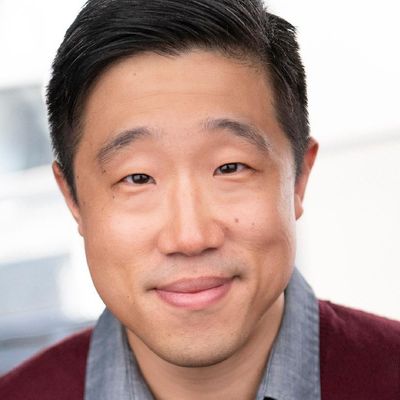
Today, actor Raymond J. Lee talks about the Grammy nominated off Broadway show Soft Power. Host Michael Fatica was blown away by how cleverly it deals with super touchy topics about race, democracy, traditional theatre and more... Read More
From the show: The Ensemblist
Guests
About
Today, actor Raymond J. Lee talks about the Grammy nominated off Broadway show Soft Power. Host Michael Fatica was blown away by how cleverly it deals with super touchy topics about race, democracy, traditional theatre and more.
Transcript
This transcript was automatically generated and might contain errors.
[0:00] Michael Fatica: Hi, you're listening to The Shows We Need from The Ensemblist. I'm Michael Fatica.
[0:30] Michael Fatica: Welcome back to The Shows We Need, where we talk about shows that are being made, or have been made, and are important for people to see when the theater industry can re-open someday. Hopefully soon.
[0:45] Michael Fatica: This week, I talked to one of my most favorite people, and former Groundhog Day cast member Raymond J. Lee, about a little Grammy-nominated show he did off-Broadway called Soft Power. I didn't know the show well, but when it was recommended to me, I took a deep dive in, and I have to say, I was blown away by how cleverly it deals with super-touchy topics about race, democracy, traditional theater, lots of stuff. I couldn't wait to talk to Ray about this show. Here's our conversation.
[1:16] Michael Fatica: Hi, can you please tell me your name, your preferred pronouns, and where you're calling from?
[1:33] Raymond J. Lee: Hi, my name is Raymond J. Lee. I go by he, him, his, and I'm calling from Saugerties, New York, upstate.
[1:41] Michael Fatica: How have you been holding up since March?
[1:45] Raymond J. Lee: We came up here pretty fast. I had the virus, unfortunately, in April and May. We dealt with that, in addition to remote schooling for my daughter, who finished the second half of kindergarten remotely, which no kindergartner should have to do kindergarten remotely. But we made it work, and just have adjusted to life up here in nature, cooking meals together, and actually having a lot of quality family time together.
[2:11] Michael Fatica: I am glad you're feeling better and spending time with family.
[2:14] Raymond J. Lee: And drinking. Lots and lots of drinking.
[2:18] Michael Fatica: I'm attempting dry January, and it has been a struggle. Okay, let's talk about Soft Power. Can you tell me what it's about?
[2:26] Raymond J. Lee: You know, the show, it's so hard to describe because it has so many different themes and tackles so many topics, but I basically call it a giant fever dream that deals with the politics of America and U.S. relations with China. It also deals with the Asian American struggle in this country, and being a quote-unquote other compared to white Americans. And it's a play that turns into a musical. It's like the most crazy version of The Wizard of Oz.
[2:54] Michael Fatica: I read a lot of taglines that claim it's a reversal of The King and I. Can you explain that reference a bit?
[3:00] Raymond J. Lee: Totally. I mean, that was the inspiration for David Henry Huang to write the show. He was, I think, watching the revival of The King and I and saw how problematic the material was compared to modern times. And back when he started writing it, he thought Hillary Clinton was going to win the election. So the premise was going to be Hillary becomes president and then this Chinese guy comes and helps her solve the issue of gun control and this and that and minorities. And that's how it was going to be a direct reversal of The King and I. And then stuff happened.
[3:32] Michael Fatica: A very similar plot structure to The King and I, but aren't there other ways that this musical used references from the show? I read that David Henry Huang was strongly influenced by how whitewashed The King and I had been done. Are there other devices like this that parallel that?
[3:49] Raymond J. Lee: What David and Janine and the whole team wanted to do was because, you know, in the original King and I movie, a lot of white people are aggressive as Asian people. And being an Asian American actor, I dealt with that. Even as a young kid, there were a lot of non-Asians playing Asian. So when it becomes this fever dream of this in the show, basically the lead character gets stabbed and then it turns into a musical. He goes into this Chinese version of America and the Americans are all played by Asian people. We all have blonde wigs. We all have different accents, you know, because just to parallel how when white creators create Asian shows, they don't even care about the accent. Everyone's using a different Asian accent, but to the white ear, it all sounds Asian, quote unquote Asian. So he was trying to make a point about that. It was very, very smart and very therapeutic as an Asian American actor.
[4:33] Michael Fatica: The details are like little Easter eggs of rebellion throughout. It's really interesting. And you're right. Generalizing cultures on Broadway is a rampant problem, for sure.
[4:42] Raymond J. Lee: I think there's a point that David thought that white creators exoticized Asian themes and customs so much like in The King and I, like I think it was or Flower Drum Song or other shows like that. It was an amalgamation of different customs and traditions all put into one general umbrella Asian theme. So he wanted to do that with Soft Power, where this Chinese version of America, everyone has guns. McDonald's is the fanciest restaurant. Like he really wanted to parallel what people had done to the Asian culture in musicals.
[5:15] Michael Fatica: The song where we meet the character of Hillary Clinton takes place at her campaign rally, being held at McDonald's, the fanciest restaurant. Can you tell me a bit about that number, I'm with her, and how the writers captured this flipbook version of America?
[5:32] Raymond J. Lee: First of all, they had me in roller skating and booty shorts. Thank you, Anita Yavitch and the whole team for putting me in there. So the point of the song is that Hillary Clinton is campaigning to be president. And so she goes to different restaurants to drum up the vote. And so she arrives at the most famous American restaurant of all, McDonald's, and talks to the people. And while campaigning and talking about real issues, everyone starts getting bored. So then she starts twerking, tapping, booty dancing, modern dancing, voguing to try and get the people to pay attention to her, which I thought was a very smart way to kind of symbolize what Hillary had to do in real life. She had to kind of do things that I feel like mentally she was way smarter to do.
[6:19] Michael Fatica: In the scene itself, we just talked about, I guess, the attention span of your average American, how you need the flashy, you need the loud, you need the show to maintain the attention versus actually listening to the specific topics that are being discussed. And that was a really cool, interesting point. Also, the characters and the people in the scene were kind of rabid. They wanted the drama, they wanted the violence, they wanted the action, which was also another very interesting point, aka stereotype of the Americans in this Chinese version of America.
[6:50] Michael Fatica: Do you think the last year or so has given you some unique perspective on the themes in that number?
[6:56] Raymond J. Lee: I have to say there was one part, and this is another scene in the show, where it's the end of Act One where our lead character gets stabbed. And we all show up with our blonde wigs and our American shirts and torches and tiki, tiki torches and weapons. The curtain reveals all of us, this giant, angry American mob. And I remember feeling so icky about it because we'd seen those groups, you know, the white guys in the South, you know, with the tiki torches. Then to know what just happened recently at the Capitol was terrifying. Because for me, having seen that image or on stage been that mob and then seeing this real mob enter the Capitol and promote violence and try to, you know, wreak havoc on the government was so scary and chilling. It was almost like I didn't realize we predicted parts of the American future that was happening when we did the show. It truly is terrifying.
[7:47] Michael Fatica: Terrifying. Can you talk to me about your big number? Who do you play? And what subject matter does it deal with?
[7:53] Raymond J. Lee: So I played the Vice President of the United States, the Veep. And basically, I got to have a fun Act Two song called Good Guy with a Gun, where the Vice President is repping Dear Leader. We never say the President's name, we say Dear Leader, and talk about how we need guns because we need to protect the country. And it's better for everyone to have a gun. That's the way for it to happen. And so I had this giant number and we all danced with rifles, AK-47s. In the beginning, actually, it was American revolutionary muskets. But in LA, they changed it to AK-47s. And then that made it so much realer and scarier, especially with all the school shootings and the violence. Yeah, that was a hard show that night.
It was an interesting number because it was a number that people were uncomfortable with because in the middle of the number, I fully say no American would throw away his gun and I would stop the number and look at everybody in the audience. And to see how uncomfortable people were, was not only terrifying, but really interesting and fascinating and important.
[8:52] Michael Fatica: Isn't it a sign of great theater when the audience is forced to look at themselves in the mirror and really see themselves in that story?
[9:01] Raymond J. Lee: We would actually have people walk out, both in LA and New York, and they would walk out in the way of making a statement. It wasn't like, I don't like this part. Let's quickly—they were like, stop, stop, stop, slam a door. To let them know they didn't agree with the satire that was happening on stage. But it's important.
[9:18] Michael Fatica: How poignant to only refer to Trump as a dear leader. What a clear cult reference. They had played with how he was going to be revealed. They were wondering in earlier drafts he was going to be a giant puppet. He was maybe going to have a chicken head. He was maybe going to have an orange head. In LA, there was Budweiser towers in the White House.
[9:34] Raymond J. Lee: I want to mention the song, It Just Takes Time. I love that it is a sweet moment of man meets woman, but it's also a moment about an Asian man teaching a white woman how to say his name correctly. How did a song with this kind of microaggression at the root of it resonate with you and with the cast? First of all, so a bunch of us in the cast didn't speak Chinese, and Austin Khoo was our Chinese dialect teacher. Because in the beginning of Act 2, I had this speech and I had some, you know, phrases to say. So I felt Hillary Clinton's pain in that number, because Austin would be like, no, it's Ron Shirley. And I'm like, Ron Shirley? And he's like, Ray. And so it was interesting to be in the white character's point of view, because I totally got it.
That number was fun, because it was this mix of My Fair Lady meets Shall We Dance, because, you know, they do a giant dance around the stage. And I liked that this Asian character was teaching a white character how to be correct, you know, in that society. It wasn't the other way around, because a lot of times you see the other way around. You see the white character telling the minority character, this is how to be proper. This is how you do it. I used to watch that number all the time, because I just thought it was a smart hybrid of old school music theater with modern twist to it.
[11:01] Raymond J. Lee: How did it feel as someone who is not Chinese to be doing this accent in a show? So many Asian-centric shows, as you said earlier, don't really differentiate between the different cultures. You know, they did, they emphasized mainly the Asian American experience in the country, because even though it's specifically Chinese, a lot of the feelings and emotions behind certain moments in the show, and especially the main characters came from the Asian American eye here in the United States. For example, David Henry Huang was actually stabbed in Brooklyn, because someone thought he was a food carrier. So I appreciate David really taking the umbrella of Asian America and putting it into the show. We actually had a lot of people also asked, too, the question of talkbacks, like, how do you feel about playing a Chinese character being Korean?
And I said, you know, right now, I felt like we're not allowed to be that specific yet. We still have to pioneer as Asian Americans to get better representation. And for me, if an English person can play a French person, can a French person play a German person? Can Chinese play Korean? Can Korean play Japanese? I would never play Indian, you know, South Asian. We're still figuring out the borders and the boundaries for the correct representation, you know. And so that was an interesting comment. We got that a bunch of Q&As.
[12:21] Raymond J. Lee: How important do you think it is to have a show like this with a ton of Asian representation that isn't just set in an Asian country or location? It is so important to have shows like Soft Power, so important. Representation alone, it's... we had a lot of comments from especially younger Asian kids at the stage door, where this was like the first time seeing an Asian romantic lead. They were like, oh my gosh, in a way, like, because Conrad played this character so sexy, you could believe this woman would fall in love with him. A lot of the times we play the sidekicks, we play the asexual characters, or, you know, we're relegated to the character roles. And so a lot of kids were like, it was so great to see a romantic lead that was Asian that didn't have an accent.
He was just American. The last number of the show is all of us, just who we are, singing the reprise of democracy. So when there's a sea of Asian faces singing about America and democracy, and that number, you would feel it in the audience, just representation-wise, who is related to it, who wanted to see this group of Asian people on a stage singing about America, because that's been so rare. I don't really remember another time that I've had that moment. So very, very important. And also to give these kids material, the future generation's material to audition with, practice with, it really has been cool to be a part of the show, and just for the next generation.
[13:41] Raymond J. Lee: To piggyback on that, I'd love to talk about the number, I Am, which is about a man figuring out how to fuse his Asian heritage with his American present. Did the cast or creative team ever talk about having to deal with this personally, or dealing with it as artists? That song is so important and so meaningful. It was amazing to see the different responses people had to it. A lot of biracial kids related to that song, because they're part of two worlds, and they sometimes feel like they get pulled in one direction or the other. I related to it being Korean American, because when I lived in America, I felt like I wasn't American enough. And then when I lived in Korea, when I was in elementary school, I wasn't Korean enough.
And I was like, Where am I? Who am I? Who am I? I am both. I had the privilege of covering Francis. So I got to sing that song at an understudy rehearsal, and practice it and really study it. And it's such a smart song. It's such a meaningful song. If you are a minority in this country, or biracial, there's just an added level of understanding that you get with that song that just kind of clicks with you.
[14:45] Raymond J. Lee: The cool thing about the rehearsal process is that Lee Silverman would have circle ups, where we would just all circle around before a rehearsal. And we would just vomit our feelings about the business, about being Asian American, about being the kids of immigrants. And it was fascinating and so meaningful that people listened. Janine told us, I think, during one of our circle ups that she was like, I was not aware of the plight of the Asian American actor in this business and what you guys have to deal with. And she said, My eyes have been open with the show. And we were all like, Oh, that is huge. That's made it feel like this was worth it to be able to open up such an influential eye like Janine Tesori.
And we did it by just being honest. We told about the stories we had about having to have accents in rehearsal rooms or getting comments about eye surgery, or be more Asian, be more American, being a token in a rehearsal room. And I think it was good to talk about that and bring that up to the light. Because if you don't experience it, I don't know if you're aware of it.
[16:00] Raymond J. Lee: Well, if that's not a beautiful example of what inclusivity in the rehearsal room can do, I don't know what is. Okay, final question. Asian Americans have received a whole new hit of racism this year with the former reality TV show host Donald Trump's rhetoric about quote, the China virus or Coronavirus. If there is life for Soft Power, fingers crossed, what do you think could be added or changed about the show based on the events of this past year? We were joking, I was talking to some cast members how we could write part two with all the stuff that has happened, including and I think there should be a Kung Flu ballet. Like full on old school like, you know, singing in the rain give us one of these big dream ballet numbers.
I think there's so much more material. But when we had done the show like the kids, kids in cages was just a topic. I made a point what if we had kids in cages in the White House, like there's so much more material now that I feel like David has, unfortunately, that David can use in the next reiteration of the show. And even the fact that we have a new president, which I personally am relieved for, could be also a way to end the show and make it even more hopeful. Because when we ended the show last time, Trump was still president and we just didn't know what was going to happen. We knew this election was going to come but we didn't know which way it was going to go. So I personally am also very curious to see what the next chapter of Soft Power will be and what will be included.
[17:27] Raymond J. Lee: Well, I certainly hope that there is a next chapter for Soft Power and that it is on the Broadway stage because it is a show we need. I have to say I made a joke too. It's like instead of the Veep, I will gladly wear a blonde wig and come out as Kellyanne Conway. Oh, you'd be beautiful.
[17:48] Raymond J. Lee: I looked up what Soft Power means and it's defined as a country having cultural or intellectual influence. Do yourself a favor and have a listen to this cast album, read some interviews with David Henry Hwang, or even just check out some clips online. This is my personal favorite kind of theater, the kind that makes big statements with both big choices and also subtle hidden ones. Let's hope we get to see Soft Power on the stage again soon. Bye for now.
[18:26] Michael Fatica: Special thanks to Raymond J. Lee for sharing his stories with us. The Ensemblist was produced today by me, Michael Fatica, Jackson Klein, and Mo Brady. There are two great ways you can help The Ensemblist right now. One is by leaving us a rating and review on Apple Podcasts. The other is by becoming a Patreon member at patreon.com slash The Ensemblist. Please follow us wherever you listen to your podcasts on Spotify, Apple Podcasts, or at bpn.fm, the home of the Broadway Podcast Network. You can also follow us on Instagram. Thanks for listening. Until next time.
© Broadway Podcast Network, All Rights Reserved