

Helen Hayes panelist Matthew Kacergis is a DC based arts administrator and arts advocate. He has a long history of performing at regional theaters across the country, and now works as a Project Associate at the DeVos Institute of Arts Management... Read More
From the show: The Ensemblist
Featured Shows

About
Helen Hayes panelist Matthew Kacergis is a DC based arts administrator and arts advocate. He has a long history of performing at regional theaters across the country, and now works as a Project Associate at the DeVos Institute of Arts Management. We talked about the Helen Hayes Awards, the categories they use to celebrate ensemble work and what kind of performances typically get celebrated in those categories.
Transcript
This transcript was automatically generated and might contain errors.
[0:00] Mo Brady: You're listening to The Ensemblist, the only podcast that shows you Broadway from the inside out. I'm Mo Brady.
[0:15] Mo Brady: You may notice that we've changed the title of this miniseries from How to Award Ensembles to Can We Award Ensembles? When I started this exploration a couple of months ago, I figured that there was a way to properly recognize ensembles for their contributions to the industry. But at this point, I'm not so sure. Hence the name change.
[0:49] Mo Brady: But it's not all doom and gloom, right? There are theater awards out there that celebrate. In this miniseries, we've heard about the Chita Awards and the SAG Awards, each recognizing contributions in different art forms. But there are also major theater awards that recognize ensembles in cities across the country, like the Helen Hayes Awards in Washington, D.C.
[1:13] Mo Brady: For this episode, I spoke to Helen Hayes panelist Matthew Kacergis. He's a D.C.-based administrator and arts advocate. He has a long history of performing at regional theaters across the country, and now works as a project associate at the DeVos Institute of Arts Management. We talked about the Helen Hayes Awards, the categories they use to celebrate ensemble work, and what kind of performances typically get celebrated in those categories. Here's our conversation.
[1:42] Mo Brady: Hi, would you introduce yourself and tell us where you're calling from today?
[1:55] Matthew Kacergis: Hi, my name is Matthew Kacergis, and I'm calling in from Washington, D.C. Well, the suburbs outside of D.C.
[2:01] Mo Brady: You are a person who wears multiple hats. Would you tell us about some of the hats that you wear, Matthew?
[2:07] Matthew Kacergis: I was a professional performer for, gosh, 10 or so years. A couple years ago, realized that it was time for me to pop over to the other side of the table. So I now work in consulting for nonprofit arts organizations, which involves any number of things. It's a lot of supporting research, do some fundraising work. I also do some artistic programming, do the booking for a performing arts center in Michigan. So it's a little bit of everything. It involves some event production. It involves producing some theater occasionally. So it's good for an ADHD kid.
[2:41] Mo Brady: It's hats upon hats. You have so many hats. I'm so excited to speak to you about those hats. But one of the other things that is also in your arsenal of creative titles is that you are a judge and adjudicator for the Helen Hayes Awards in D.C. What's your exact position with that?
[2:58] Matthew Kacergis: I think we're called panelists.
[3:00] Mo Brady: What's a panelist? What do you do?
[3:02] Matthew Kacergis: They have a handy dandy handbook with a lot of criteria. I think it's available online that anyone could review. But our role is to go out and see the shows and evaluate the different aspects of the productions based on the criteria that they've given us. I do so for the, it's either the Helen or Hayes. I think it's the Helen. The Jeffersons does it by equity, non-equity. I think with the Helen Hayes, it is either budget or has something to do with compensation, but it's a financial line. So I see some of the tours that come through the Kennedy Center. I see Signature Theater, Ford's Theater, Only Theater Center, you know, the big Lord Houses arena stage. I get to see some good stuff.
[3:46] Mo Brady: You see the bigs.
[3:47] Matthew Kacergis: Yeah, I see the bigs.
[3:48] Mo Brady: Do you see only musicals or do you see plays and musicals?
[3:51] Matthew Kacergis: I mean, I personally see plays. In my capacity as a Helen Hayes Awards panelist, I only see musicals.
[3:59] Mo Brady: Let's iris out for a second. What do you think makes a great theatrical ensemble?
[4:03] Matthew Kacergis: I got to complicate it right off the bat. I don't think that collectively we all seem to have one shared definition of what makes an ensemble. In the case of the Helen Hayes Awards, I was actually just looking this up. The ensemble must be four or more performers. In the eyes of the Helen Hayes, the ensemble refers to the entire cast. And at certain times that's certainly true. Ragtime at the Fifth Avenue Theater, the chorus was not in the show. So we played every single role. So certainly we were an ensemble. And then you have ensemble in a show like Come From Away. I'd say actually our approach to Ragtime was kind of similar to what you see in Come From Away, where someone puts on a hat and all of a sudden there's someone else.
But then you've got Crazy For You, 42nd Street, shows that have, you know, a cast of principal characters, and then they have a chorus. I also used to be an adjudicator for the Fifth Avenue Theater Awards, which is, as you know, for high school students. And, you know, lo and behold, the educational theater folks are ahead of us when it comes to inclusivity and how they recognize people. So the Fifth Avenue Awards has Best Ensemble, which refers to the performance of the entire cast on stage. And then they also have Best Chorus or Outstanding Chorus. That makes a lot more sense to me because how am I supposed to go and see... Crazy For You is one of my favorites. I love Crazy For You. The chorus or the ensemble in that show does an insane amount of work.
They change costumes every time they walk on stage. They have to tap dance in perfect unison. There's a precision to it that's just so utterly impressive. And then there's something like Come From Away, which is also an ensemble. They're mostly all on stage all the time. They're all working together. So I wonder if we've done ourselves and some of our peers a disservice by letting ensembles just sort of be this gray term to describe any number of different things. I think I just made our conversation more complicated.
[5:51] Mo Brady: Every time I dive into this, it's more complicated. Okay, right, because it is Crazy For You, which is whether or not we use the word chorus, or we decide that chorus or ensemble is that is a different thing than Come From Away or chamber version of Ragtime like you were talking about. Is there a unifying thing that makes both of those great sort of beyond tap dances? What is similar between a great ensemble in Crazy For You and a great ensemble in Come From Away?
[6:18] Matthew Kacergis: I mean, certainly you want everyone to be in the same show. You certainly want to make sure that there's a sense of teamwork. You want to know that people understand certainly the story and that they're all in the same story. In the case of a musical, you want to understand, you want to be able to see that people have a good sense for the musical styles of the show. You want to see performances that are open and generous and responsive to the other people on stage. I think where it gets tricky, though, is and again, I know I keep going back to a show like Crazy For You, and I think there's probably a time where what we wanted from our ensembles changed. And depending on whether you're doing like, we're doing Oklahoma, we're doing the old school classic version, the expectations of the ensemble are going to be very, very different than the most recent revival of Oklahoma where it was all about celebrating differences and they wanted everybody to be unique.
And then of course, there are these moments where everybody snaps into the same production. And that's really cool. And they do that and come from way too. But the old school version of what a good chorus was, was precision. Everybody kicks to the same level. Everybody looks the same. Everybody sings the same. I don't think anybody's sad to see at least some of that go by the wayside. But there is something thrilling about watching people, you know, all kick to the same level and be in perfect position. And that's very interesting. And technically challenging and very challenging. I mean, there's a reason a kick line garners applause. They sort of live in that world of there is a group doing something together that is physically inspiring as an audience member.
[7:50] Matthew Kacergis: Then going back to the Helen Hayes definition of ensemble, which is the entire cast. If you've got a character that really doesn't interact with anybody else in the show and kind of does their own thing, and then you've got this amazing chorus over here. Well, that's not as much of an ensemble. If you're looking at the full show sense of the word, we really got to like decide what our words are going to mean.
[8:10] Matthew Kacergis: Helen Hayes also has best ensemble for plays.
[8:13] Mo Brady: Right. So the way that I think about it is cohesive storytelling. It's that it's everyone's in the same play. It's the energy is the same. You sort of feel that driving force, right? And that to me, when you're celebrating the entire company, I think is a good way to look at it in terms of what are we championing with an award.
[8:33] Matthew Kacergis: But the limitation there, what if I've got a show and I've got a chorus just full of incredible performers that are doing great work and there's some weaknesses in the principal cast? In the case of the Helen Hayes, this amazing chorus isn't going to get recognized.
[8:49] Mo Brady: So what is the Helen Hayes asking you to panel to adjudicate?
[8:53] Matthew Kacergis: I'm going to read it to you verbatim. Judges will consider and score any acting company as an ensemble. An ensemble is defined as four or more actors and refers to the full cast. So it's everybody on stage, the chorus and your principals, in the case of our old school musicals we were talking about.
[9:11] Mo Brady: What about swings? Can I ask you about swings and standbys? This may be...
[9:14] Matthew Kacergis: Absolutely.
[9:15] Mo Brady: What do we do? Are they part of it? Do they get this?
[9:18] Matthew Kacergis: We have to hire them. Producers, are you listening? You have to hire them. It's important. Then we're going down the rabbit hole.
[9:23] Matthew Kacergis: You want to have them hash it out amongst them as to what they all thought across those different performances. So I'm not sure how you recognize that. Here's my like pro-giving awards the swing theory. If we're celebrating a collective energy, then the swings are part of that, right? They're part of the creative process. They're going to pop into the show. Maybe they're there that night. Maybe they're not on stage. They are part of the storytelling. But it does feel weird that you perhaps are giving an award for performance for someone you didn't see perform. So I guess in theory, if I'm giving an award to the entire ensemble, that ensemble, you're right, I may have seen a swing or an understudy that night, but that cast would not have been able to do the work that they did without the work of the swing.
So I guess I would say that the swings share in any award that is given to the full cast. Do they get a trophy if they're in the cast? Okay, so you're saying that in the Helen, you made your joke that we need to hire them. And I'm assuming what you meant by that is in DC theater, there are very rarely or never swings hired for productions. That's not necessarily true. We've all been in plenty of musicals where there's just no understudies and you just kind of hope nothing happens. It's a short run. You figure no one's going on vacation. No one's going to take a personal day. You're just hoping nobody gets sick. My last thing is that the more specialized we make our categories, the lesser the likelihood I think they're going to be scored.
Well, Helen Hayes, the Tonys do this. You've got people who are producers, you've got people who are teachers, you've got people who are reviewers. And so I think the further you get away from people who have actually made theater, you're expecting them to have technical knowledge of how things get made that there's just no way for them to do. That's where it gets really hard. Helping people that don't work intimately on shows understand these kind of intricacies.
[11:38] Matthew Kacergis: Give me a sense of who the panelists for the Helen Hayes are. What kind of positions in the theater do they have? On my specific panel, there is an administrator. There's somebody who's a marketing director at one of the theaters in town. There's a couple actors. There's a couple directors. There's some theater educators. So it's all people who obviously would have seen enough theater and would know enough about theater to be able to weigh in intelligently on it. They try to really make as many diverse viewpoints as they can. And this panel chooses the nominees and then there's like a wider scope of people that pick from the nominees who wins. My first term was cut short by COVID. So I'm still waiting to take this through the entire process, but everything is numerically scored.
And then the results are audited by an independent accounting firm. So the people from the Helen Hayes can't even see it. And then it goes into discussion where they say, okay, here's the numbers don't lie. Here's how everybody kind of scored. And then I believe there's a discussion. I'm going to put an asterisk there. I have not gone through that entire process. But in Seattle at the Fifth Avenue, that's what we did. We had to give a numeric score to everything. It wasn't done by an independent accounting firm. The staff at the Fifth Avenue then said, okay, here's the highest scoring stuff. And what we would do is we would then say, all right, is anything appear to be missing from this list?
Maybe it's just below, or maybe it's way down the list and you don't understand why your fellow adjudicators didn't score it higher. And do you want to go to bat for something? And that's being stuck in the conference room for 48 hours. That's to get the nominees. And then after that, we go back and we pick the winners.
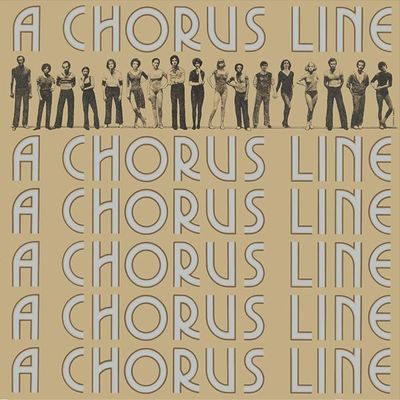
[13:15] Matthew Kacergis: Yes. All right. Your tenure at the Helen Hayes is new. However, your experience in DC theater is not. What sort of work tends to get celebrated with ensemble awards at the Helen Hayes Awards? In 2020, it was Signature Theater as a Chorus Line. That makes perfect sense. But a cast full of principals. That is true. Do they get their names listed? So is like the person playing Wrong Arms Roy and Tricia, are they getting celebrated? The full cast. Full cast. The full cast. Every single person. So that would be the swings too. Booth singers, everyone got an award. Great. Okay, keep going. In 2019, it was the Scottsboro Boys, which is more of like a chamber show. They're all principals. But nominated that year was Anything Goes at Arena Stage, which I saw and it was incredible and it had an amazing chorus.
But then also nominated that year was You're a Good Man, Charlie Brown. Again, all principals. Ford's Theater's Ragtime, they did it with the full cast. And so it did have a chorus. That's an example of a chorus musical receiving the award. But there's no clear line. It's really just like what the people who are nominating and then awarding feel make an ensemble. Okay. And again, you're asking people to compare things that I don't think are necessarily comparable because the chorus of Anything Goes is successful for a much different reason than the chorus of the Scottsboro Boys. Now they share certain things, but the cast of the Scottsboro Boys might not be able to do those precision production numbers. It feels to me like we are trying to take way too many things and kind of tie a neat little ribbon on them and make them into one category when I think it needs to be broader.
[15:06] Matthew Kacergis: I think so. Okay. I think you'd have to set some criteria. I think it would need to be a chorus musical. I mean, I'm happy to be wrong, but that just to me, it seems like there's plenty of times that I want to award the Scottsboro Boys and I want to award Crazy For You for very different reasons. We haven't solved anything. Is it better to do one rather than none? Always. It's always better to do something. If you've got Best Ensembles for a play, then there's a difference between what you're thinking of as an ensemble and then what a chorus does. So I want to play devil's advocate a little bit about the apples and oranges. So let's look at the Tony nominees for Best Leading Actress in a musical for whatever season we're currently in the middle of, right?
We have Adrienne Warren, we have Karen Olivo, and we have Elizabeth Stanley. Aren't those different things? Aren't those apples and oranges in a way? And yet we find a way to put them in a category. What is the difference between the apples and oranges in that category versus the apples and oranges in your outstanding ensemble categories?
[16:07] Matthew Kacergis: In the case of you're evaluating one performance, the whole point is for them to be as different from one another as possible. And when you're evaluating a group of ensemble performers, there's more attention paid to what that entire group is doing. And so if you've got eight incredible people in an ensemble, but they're not in sync, the ensemble won't appear successful. Whereas you can be one performer in a cast that might be uneven, and you could still say, well, that person gave an excellent performance. I think it's that in one situation, you're evaluating a group of people. In the other situation, you're evaluating one person. How do I have a criteria that applies to who's afraid of Virginia Woolf and also applies to 42nd Street?
In the case of the Helen Hayes Awards, they are not giving you any specific criteria other than it needs to be four or more people. It refers to the full cast. If a cast of 20 has two weak links, it might not win. Two weak links in what aspect? In their time steps? In their all being in the same play? Like there's no written guidance, I guess is what I'm getting at. You're supposed to know, because you've been chosen as a panelist, you've been shown to have know-how, expertise, empathy in what it would take. And we're both performers. So, you know, we know when something really affects us. We know when something's like really popping. We know when it's just working. I think it's hard to put into a handbook what that means.
As a person who has maybe not two left feet, but just not skilled in the way that so many chorus performers are, I find it to be this just incredible talent. And especially when you have a group, you have a chorus of people that are all, you know that individually they're all spectacularly talented, but when they can do that thing that only kind of an old school chorus can do, it's just really exciting to watch. Maybe we should follow back up after I've made it through an entire season of the Helen Hayes Awards and I can tell you of any difficult choices I had to make.
[18:20] Mo Brady: Special thanks to Matthew Kacergis for sharing his stories with us today. The Ensemblist was produced today by Anna Altide, Jackson Klein, and me, Mo Brady. Please rate and review The Ensemblist wherever you listen to podcasts, on Spotify, Apple Podcasts, or at bpn.fm, the home of Broadway Podcast Network. Thanks for listening. Until next time.
© Broadway Podcast Network, All Rights Reserved