

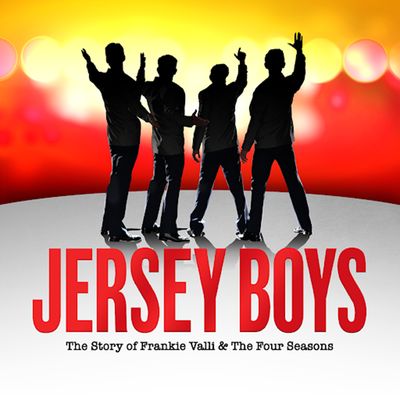
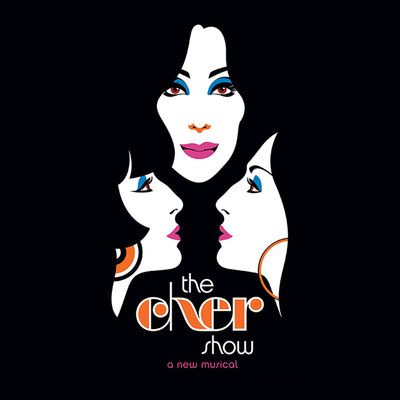
This week’s show we continue our conversation with "Jersey Boys” and "The Cher Show" book writer Rick Elice. This time we dip back to the late 70’s and early 80’s to discuss New York theater at that time and what it was like being at the start of what became one of the most powerful advertising agencies on Broadway... Read More
From the show: The Fabulous Invalid
Guests

Featured Shows

About
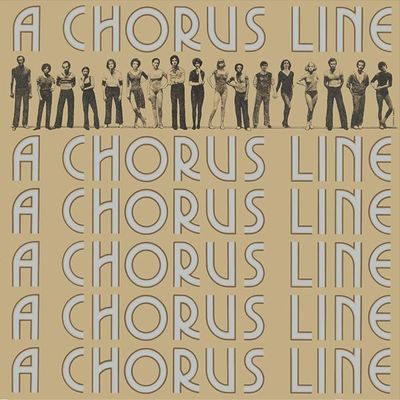
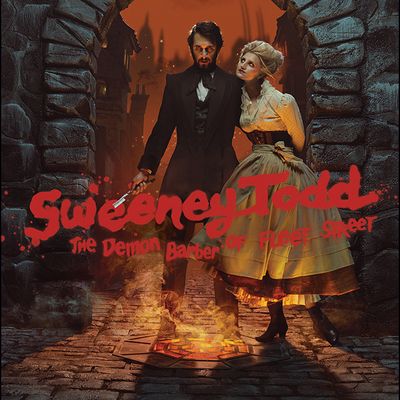
This week’s show we continue our conversation with "Jersey Boys” and "The Cher Show" book writer Rick Elice. This time we dip back to the late 70’s and early 80’s to discuss New York theater at that time and what it was like being at the start of what became one of the most powerful advertising agencies on Broadway. This week’s music: “A Little Priest” from “Sweeney Todd,” “I Hope I Get It,” “I Can Do That,” “The Music and the Mirror” from “A Chorus Line,” “Broadway Baby” from “Follies,” Carol Burnett singing, “Let Me Entertain You” and Lauren Bacall singing “Welcome to the Theater,” from “Applause."
Transcript
This transcript was automatically generated and might contain errors.
[0:00] Jamie DuMont: I'm Jamie DuMont and I'm Rob Russo, and this is the Fabulous Invalid.
[0:17] Rob Russo: Hi, Rob.
[0:18] Jamie DuMont: Hi, Jamie.
[0:19] Rob Russo: Well, here we are officially in the full swing of the new year.
[0:22] Jamie DuMont: Yes.
[0:23] Rob Russo: 2019.
[0:24] Jamie DuMont: It's here.
[0:24] Rob Russo: Happy New Year.
[0:25] Jamie DuMont: It's queer.
[0:27] Rob Russo: Certainly is.
[0:28] Jamie DuMont: Yeah.
[0:29] Rob Russo: I saw the prom last night.
[0:30] Jamie DuMont: So tell them my year is off to a very queer start.
[0:32] Rob Russo: Very queer start.
[0:33] Jamie DuMont: Two days after seeing Head Over Heels.
[0:35] Rob Russo: There were a lot of people at the prom last night.
[0:37] Jamie DuMont: Yeah.
[0:38] Rob Russo: Well, I it was- it was counter-programming for the president's address, you know.
[0:41] Jamie DuMont: Oh, yes, which I quick counterproducting.
[0:43] Rob Russo: Which I watched, but we won't we won't talk about that.
[0:47] Jamie DuMont: Well, I have big news.
[0:48] Rob Russo: Yes.
[0:48] Jamie DuMont: As you know, Rob Russo.
[0:50] Rob Russo: Um, because you are partially responsible.
[0:52] Jamie DuMont: Yeah, almost entirely responsible.
[0:54] Jamie DuMont: I have finally gotten on Spotify.
[0:56] Rob Russo: Yes.
[0:57] Jamie DuMont: So I'm very excited about that.
[0:58] Rob Russo: I'm still learning my way, and I have to figure out how to close up my Pandora account so that I'm not paying for two.
[1:03] Jamie DuMont: What is Pandora?
[1:04] Rob Russo: Pandora is something that old people like I myself use.
[1:08] Rob Russo: Um it's a streaming musical service that has commercials on one way that I listen to it and no commercials on another way.
[1:15] Jamie DuMont: I don't know. Seems like a personal problem.
[1:17] Rob Russo: I well, I I have probably two different accounts and whatever.
[1:22] Rob Russo: Um anyone who knows me knows that this is not my strong suit.
[1:26] Jamie DuMont: Um but now you're on Spotify.
[1:27] Rob Russo: I am on Spotify.
[1:28] Jamie DuMont: So the reason I bring all of this up is that um if anybody has any advice for me or playlists, I will happily take them.
[1:35] Jamie DuMont: Uh oh, but uh what I want to say is if if anyone thinks that they would be interested in our playlists or a fabulous invalid playlist, maybe tweet at us or or direct message me on something, and we could maybe talk about doing some of that.
[1:53] Jamie DuMont: Because I've already started doing now.
[1:55] Jamie DuMont: I have some Spotify friends, um, and so I've been sharing things, and um I'm I'm getting into it.
[2:01] Jamie DuMont: I still can't figure out half of it, but I'll get there.
[2:04] Jamie DuMont: I now that I the week is sort of behind us, I'll probably be texting you a lot saying, how do I do this?
[2:04] Rob Russo: How do I do that?
[2:11] Jamie DuMont: That it can do I can do that.
[2:16] Jamie DuMont: Here's what I want to say about the Golden Globes.
[2:18] Rob Russo: I'm one shocked that you watch the Golden Globes, but I'm always like every time I make a joke about you having a television, and you very crossly correct me.
[2:29] Jamie DuMont: Um, but the thing I will say about the Golden Globes, and this is something I have said about the Oscars, and it's something I have said since I saw the film.
[2:39] Jamie DuMont: Glenn Close was not an upset for me the other night when she won for the wife over Lady Gaga.
[2:48] Jamie DuMont: Because as far as I'm concerned, that is her award to lose.
[2:53] Jamie DuMont: She has it.
[2:53] Jamie DuMont: I I have not seen the favorite, although I will say I'm a huge Olivia Coleman fan.
[2:58] Jamie DuMont: I feel like I'm the first person in America that knew who she was because I was a huge fan of The Rev, which is a show I think I think that's the name of it that nobody's ever heard of that she was on, and Broadchurch and so on and so forth.
[3:11] Jamie DuMont: But um my point is her time will come, but I really really have always been very full of conviction that this is the time for Glenn Close.
[3:24] Jamie DuMont: So her winning the Golden Globe was not an upset to me, and her winning the the Academy Award in a few weeks' time will just be an inevitable.
[3:32] Rob Russo: Well, I have to say, it might not have been uh a surprise to you, but it seemed like it was a genuine surprise to Glenn Close because her the reaction shot when they announced her name was unbelievable.
[3:43] Rob Russo: I mean, she's a good actor, but like that was real.
[3:46] Jamie DuMont: Oh, she was not expecting to win that award.
[3:49] Rob Russo: No, and if Jamie DuMont sitting in his apartment watching it, knew it was gonna happen.
[3:53] Jamie DuMont: I was like filing my nails, rolling my eyes, going, Oh Mary, please.
[3:57] Rob Russo: No, but do you like how I was I'm making the filing my nails?
[4:02] Jamie DuMont: You can't say file your nails.
[4:03] Rob Russo: Actually, doing it.
[4:05] Jamie DuMont: No, I think it was genuine.
[4:06] Jamie DuMont: And I think she probably thought, I, you know, it's the golden globe.
[4:09] Rob Russo: Oh, because how am I gonna how am I gonna beat Lady Gaga?
[4:12] Jamie DuMont: And right, and how many times in her career has she been screwed over by major awards, right?
[4:16] Rob Russo: She's never won an Oscar famously.
[4:18] Jamie DuMont: No, she wasn't nominated for Reversal of Fortune, which, if you haven't seen it, is one of the most brilliant.
[4:25] Rob Russo: I haven't seen it.
[4:26] Jamie DuMont: Rob Russo, I heard of that movie Reversal of Fortune.
[4:29] Rob Russo: What year was that?
[4:30] Jamie DuMont: It shocks me that we're we've become as close friends as we've become.
[4:35] Jamie DuMont: Reversal of Fortune is one of the greatest pictures ever made about the I say that every time, don't I?
[4:35] Jamie DuMont: I say that every single time.
[4:43] Jamie DuMont: Um it's about Sonny.
[4:45] Rob Russo: Do you know who Sonny von Bulow was?
[4:47] Jamie DuMont: No.
[4:47] Rob Russo: So Sonny von Bulow was a Newport socialite with obviously a lot of money, and she married um a man named Klaus von Bulow, who many people, he was a European playboy.
[4:59] Jamie DuMont: Long story short, he he was accused of murdering her, or not murdering her, I I misspeak.
[5:07] Jamie DuMont: She she was sent into an uh insulin-induced coma from which she never recovered.
[5:14] Jamie DuMont: Um she spent the last 30 years of her life as in a vegetative state in a hospital on the Upper East Side.
[5:21] Jamie DuMont: But he was convicted of not convicted, he was accused of of trying to murder her.
[5:26] Jamie DuMont: Attempted murder, I suppose.
[5:27] Rob Russo: And it was a quite a scandalous story in the early 80s, complete with drug dealers and male prostitutes, and not on his, not him, he was straight.
[5:38] Jamie DuMont: Um, but it's a wonderful film with Glenn Close and um uh uh oh I can't think of the man who plays Klaus von Bullock.
[5:48] Rob Russo: Jeremy Irons of this movie.
[5:50] Jamie DuMont: Jeremy Irons, who was nominated for an Academy.
[5:52] Rob Russo: Oh, isn't that funny?
[5:53] Jamie DuMont: They did the real thing together on Broadway.
[5:55] Rob Russo: They did.
[5:55] Jamie DuMont: Well, and Christine Baranski plays the girlfriend that he ends up with.
[6:00] Rob Russo: I've never heard of this movie.
[6:01] Jamie DuMont: It's a fabulous movie.
[6:02] Jamie DuMont: It was Alan Dershowitz's first one of his early big cases, which is played by Ron Silver, and Abella Shiora has a small part in it.
[6:12] Jamie DuMont: Fisher Stevens has a part in it.
[6:13] Jamie DuMont: Uda Hagen plays the maid, who the maid, the maid who was manufacturing evidence to convict Klaus.
[6:21] Jamie DuMont: So this is all based on a Dominic Dunn story for Vanity Fair, I believe the film is.
[6:27] Jamie DuMont: And it's a wonderful film, and it's and there's a scene in it where she's eating ice cream, smoking uh cigarette with sunglasses on in a very grand dining room, and that alone should have won her an Academy Award.
[6:39] Rob Russo: It is one of the great moments of film.
[6:42] Jamie DuMont: Okay, well, I'm gonna look up this movie.
[6:43] Rob Russo: I know these are big statements.
[6:44] Jamie DuMont: Anyway, well, you you like you like to make a big statement.
[6:47] Rob Russo: And I like Glenn Close.
[6:48] Jamie DuMont: And you like who doesn't like Glenn Close?
[6:51] Rob Russo: I'd like to.
[6:52] Jamie DuMont: I'd like to well, I mean, we could but I mean that's that that's not this show podcast.
[6:57] Rob Russo: There is actually a podcast, I think.
[6:58] Jamie DuMont: I'm sure they're in devoted to the subject.
[7:00] Rob Russo: I don't doubt.
[7:01] Jamie DuMont: But yes, I think if you you if you think you were breakdown every year, there's a you there I don't think there's a year where you go, oh yeah, she was robbed.
[7:10] Rob Russo: I mean, I think she's she's she unfortunately made all of her great films in years of other great films.
[7:16] Jamie DuMont: But I suppose you could say that about almost every single year.
[7:19] Rob Russo: Sure, sure, sure.
[7:20] Jamie DuMont: Well, it was a good night for um stage actors, um at the Golden Globes, uh, or you know, actors who were we love to see in New York.
[7:28] Rob Russo: Um like, well, Glenn Close, first and foremost.
[7:32] Jamie DuMont: I mean, that was huge.
[7:33] Rob Russo: Um, I believe Ben Wishaw won an award.
[7:36] Jamie DuMont: Um Patricia Clarkson, who is, you know, who's done a lot of stage work.
[7:40] Rob Russo: She has, I love her too.
[7:41] Jamie DuMont: Who doesn't love Patricia Clarkson?
[7:43] Rob Russo: Um, even Darren Chris, right?
[7:46] Jamie DuMont: I mean, that was a big, you know, big career moment for him to win a golden globe.
[7:49] Rob Russo: Did you see that for Versace thing?
[7:51] Jamie DuMont: I did not.
[7:51] Rob Russo: I heard it was fantastic.
[7:52] Jamie DuMont: It is great.
[7:52] Jamie DuMont: And I think it's it's either on Netflix or Hulu in the next few days.
[7:56] Jamie DuMont: I I I recommend it.
[7:57] Jamie DuMont: It's also like the the real star of that is um Judith Ivey.
[8:02] Rob Russo: Uh not Judith, Judith Light.
[8:04] Jamie DuMont: Well, Judith Light's the star of anything she's in.
[8:06] Rob Russo: She is, she has a few small scenes, but it is good.
[8:09] Jamie DuMont: Doesn't matter how much material she has, she's always the star.
[8:12] Rob Russo: Yeah.
[8:12] Jamie DuMont: Um that's a compliment.
[8:14] Jamie DuMont: I mean that is a compliment.
[8:15] Rob Russo: Um yeah, so it was a good it was a good night for for some stage actors.
[8:20] Jamie DuMont: She's the reason I didn't go into acting.
[8:21] Rob Russo: Judith Light.
[8:23] Jamie DuMont: She told me I didn't have the drive.
[8:25] Rob Russo: Wow.
[8:26] Jamie DuMont: I was in high school.
[8:26] Rob Russo: Well, we need to get her.
[8:27] Jamie DuMont: That's another story.
[8:28] Rob Russo: Yeah.
[8:29] Jamie DuMont: Well, we need to get her on.
[8:30] Rob Russo: Forget about the story.
[8:31] Jamie DuMont: It is I should qualify that in case this makes it on the air.
[8:34] Jamie DuMont: She did not say it in a malicious way.
[8:36] Rob Russo: It was doubtful.
[8:37] Jamie DuMont: It was in a it was the it was the greatest thing somebody ever did.
[8:40] Jamie DuMont: It's the actually one of the great things somebody did for me in my life, which was to point out to me that I had a certain amount of talent, and I had a certain look and all that other stuff in connections or whatever you want to call it, but that I didn't want it enough.
[8:51] Jamie DuMont: And and I nobody had nobody had said that to me.
[8:54] Jamie DuMont: And and um I didn't know her.
[8:56] Jamie DuMont: She was just teaching an acting class I was in in high school.
[8:59] Jamie DuMont: And uh, and it was one of the great things, and I will forever be grateful to her.
[9:03] Rob Russo: And I can't imagine she would yeah, thank you.
[9:05] Jamie DuMont: And if we ever have her on here, you know, I've been with her, I've had dinner with her, I've I've told her.
[9:10] Rob Russo: No, I've never, never just never come.
[9:13] Jamie DuMont: She was at my table at a wedding years ago, and uh no, I've no, because it's just like changed the course of my life.
[9:22] Jamie DuMont: Um I will say um in closing, you should see the favorite.
[9:27] Rob Russo: Oh, I will, because Olivia Coleman is pretty fantastic.
[9:31] Jamie DuMont: Yeah, I I'm I still haven't seen all the the films for this year, but um, because uh you know the theater schedule is just insane.
[9:38] Rob Russo: But um The Favor is my favorite film of the year, and I feel comfortable saying that.
[9:43] Jamie DuMont: Have you seen The Wife?
[9:44] Rob Russo: I have not seen The Wife.
[9:45] Jamie DuMont: No one's seen The Wife, though.
[9:47] Rob Russo: Where I mean, when did that come out?
[9:49] Jamie DuMont: Last year.
[9:49] Jamie DuMont: It was in it was well, I saw it in San Francisco, but it was here too.
[9:53] Jamie DuMont: It it's a great film.
[9:54] Jamie DuMont: It's um it's a good film, it's not a great film, it's a great performance in a very good film.
[9:59] Rob Russo: Yeah, well, why I I have to say this is purely based off of internet chatter, but there is a a sub-stream of um commentary that says that the actual real greatest day uh film performance of the past year is not even a nominated performance, and that's Tony Collette in Hereditary, because it's a horror film, people overlook it.
[10:22] Jamie DuMont: But I I've seen some clips, and I love me some Tony Colette.
[10:27] Rob Russo: So I've seen the film.
[10:28] Jamie DuMont: Oh, okay.
[10:29] Rob Russo: Okay.
[10:29] Jamie DuMont: I love a horror film.
[10:31] Rob Russo: Yeah, I love Tony Collette more than I love all the horror films combined.
[10:36] Jamie DuMont: Yeah.
[10:36] Jamie DuMont: Um, it is a great performance, and I can see it getting a nomination, although I don't think it will.
[10:41] Jamie DuMont: Um, but I I think it's worthy of it.
[10:43] Jamie DuMont: That the film takes a twist that you either at the end that you either love and go with, or you don't love and don't go with.
[10:49] Rob Russo: And I think that might be something that precludes that performance from the serious recognition that it probably should deserve.
[10:57] Jamie DuMont: Mama was rooting for her.
[10:59] Rob Russo: I love these subgroups you're reading.
[11:01] Jamie DuMont: I think we need a little more information on that.
[11:04] Rob Russo: No, no, it's just as I as I scroll through Twitter, you know, you you pick up on themes.
[11:09] Jamie DuMont: Uh and that's one that I've seen uh for a little bit, you know, a little while now.
[11:13] Jamie DuMont: Every once in a while someone tweets it, and it's like, yeah, you know, that's true.
[11:16] Rob Russo: As you know, I struggle with Twitter.
[11:18] Jamie DuMont: Yeah, we all struggle with Twitter.
[11:19] Rob Russo: I think Twitter struggles with it.
[11:20] Jamie DuMont: One of the first years there's no clear front runner best picture.
[11:25] Rob Russo: Have you seen all the pictures, Aaron?
[11:26] Jamie DuMont: I have not.
[11:27] Rob Russo: I'm really bad this year.
[11:28] Jamie DuMont: Do you normally see all the pictures?
[11:30] Rob Russo: Usually see like 75% of them.
[11:32] Jamie DuMont: I try to see a lot.
[11:33] Rob Russo: Last year I saw almost all of them and was very disappointed.
[11:36] Jamie DuMont: What was your favorite picture last year, Aaron?
[11:38] Rob Russo: Last year it was I mean, call me by your name, but that was not gonna win.
[11:42] Jamie DuMont: But it was either that or three billboards.
[11:45] Rob Russo: I just re-watched In Bruges.
[11:47] Jamie DuMont: Have you seen In Bruges?
[11:48] Rob Russo: I never have.
[11:48] Jamie DuMont: Okay.
[11:49] Jamie DuMont: Aaron, go home, stream, tweet whatever you know, you don't tweet films, but stream whatever however you watch, watch in Bruges, and um, and then we'll have a conversation about it because it's a it's a great film.
[12:02] Rob Russo: But I think on that note, we've rattled on about movies for yeah, no.
[12:06] Jamie DuMont: Well, you know, every once in a while you have to take a little left turn.
[12:09] Rob Russo: Yes.
[12:10] Jamie DuMont: Or as Smart would say, as Jennifer would say, a signal a lane change.
[12:13] Rob Russo: Right, right, right, right.
[12:14] Jamie DuMont: Here's a good bridge.
[12:15] Jamie DuMont: During the Golden Globes telecast, um, there was a teaser trailer for Fossi Verden, the coming miniseries on FX.
[12:25] Jamie DuMont: Um, which, you know, there you go, from film to stage.
[12:29] Jamie DuMont: Bob Fossey was the perfect uh figure.
[12:32] Rob Russo: We're gonna have to put a pin in this, and we're gonna have to talk about this later.
[12:35] Jamie DuMont: Oh, we need to do it.
[12:36] Jamie DuMont: Because there's a lot of things I have to say about this, and a lot of things, a lot of the many people have a lot to say about this trailer, and so I think we need to unpack that next week.
[12:46] Rob Russo: There you go.
[12:53] Jamie DuMont: Back in December, we had dinner with Rick Elice at Orso, and uh Rick is one of those marvelous storytellers and really has had such a phenomenal career, kind of a two-part career, both as an executive at Sereno Coin for many, many years running ad campaigns for one of the largest advertising agencies on Broadway, but also as a very noted and well-known book writer of musicals and playwright. So we decided to break that interview up into two parts. Uh, the first part we talk primarily about his current show, The Cher Show, um, which is available on iTunes and is the episode right before this. And today's episode is the second half of that conversation. Enjoy.
[13:42] Rob Russo: Well, I want to travel back in time a little bit. Um, to a New York that doesn't exist anymore.
[13:50] Jamie DuMont: And that would be 1982.
[13:53] Rob Russo: Oh my god. Which I think was a pretty good year for you. It was not only the year you met Roger, but it was also the year you started at Sereno Coin.
[14:03] Rick Elice: Yes, actually, those two things happened within a month of each other.
[14:06] Rob Russo: Oh wow. So tell me a little bit about New York and the theater in 1982.
[14:16] Rick Elice: Well, 1977, 78, 79, I was at Yale Drama School. You know, it's sequestered in the, you know, the Ivy Halls of Yale. And um studying to be an actor. Studying to be an actor. I um returned to New York the day that I got my MFA, which is the Master of Fine Arts degree, but we called it the motherfucking actor degree. I came to New York, I literally left the graduation ceremony, came to New York and had two auditions. One was to leave with an equity card. You get your equity card. That was that's the much big much more important than getting your diploma. Right. Because your equity card, of course, is the catch 22, you know, you can't get it unless and you can go right to work. So we were able to go right to work. And I came in and auditioned, I had two auditions that day. One was to there was a musical called Sweeney Todd playing on Broadway. Maybe you've heard of it.
[15:14] Rob Russo: Heard of it.
[15:14] Rick Elice: And Victor Garber, who was playing Anthony the Sailor, was leaving the show. And his understudy, Chris Gronendahl, was being promoted to replace him. And there was an audition to replace Chris Gronendahl in the understudy track and ensemble. I auditioned for that, and I auditioned for a musical called The 1940s Radio Hour, which was written and directed by somebody from Yale, not from the drama school, but a professor at Yale. And I had been in various um formative stages of. I had those two auditions that day, and I got both jobs.
[15:52] Rob Russo: Wow.
[15:54] Rick Elice: And I thought it would be good to take the new show. I don't know what drugs I was on. I mean, I can't believe I turned down the chance to be in Sweeney Todd, but I did.
[16:06] Rob Russo: What is that?
[16:07] Rick Elice: It's Fop. Finest in the shop. And we have some shepherd's pie peppered with actual shepherd on top. And I've just begun. He's a politician so oily inside with that only have one. Put it on a button. Well, you never know if it's going to run. Turn the flyer, find the drire. No, the clergy is really too coarse and to me. That's compacta. Yes, and always arrives overdone. I'll come again when you have judge on the menu. Have charity towards the world, my pet. Yes, yes, I know my love. We'll take the customers that we can get. I don't know why. We'll not discriminate great from small. No, we'll serve anyone, meaning anyone, and to anyone.
[17:19] Rick Elice: And then in September of 1979, I was fired from that show in previews and replaced. Not being in it enabled me to take the only acting job that I was offered, which was um to go up and be a charter member of the American Repertory Theater in its premiere season and thereafter. And because and in the and I I attracted the attention of Peter Sellers, who had been at Harvard undergrad and was this sort of brilliant avant-garde opera director we've all heard of now. But he was going to direct at the ART, and he can't, he thought he liked my acting. So he cast me in everything he did. And so I spent two seasons up at the ART. This is with Cherry Jones and Mark Baker and Tony Shaloub and Christine Nielsen and Carmen DeLavallod and Christopher Lloyd and Ken Ryan and you know I wonder. The only one you've never heard of is me.
[18:22] Rob Russo: That's because you turned down Sweeney.
[18:24] Rick Elice: They were so great. And then I was in a play directed by Lee Brewer.
[18:29] Rob Russo: Oh, sure.
[18:31] Rick Elice: Which was a consolidation of the three Vatican plays about Lulu, the film, the original film fatale. And Joe Papp came and saw them and decided to bring them to New York. And, you know, of course, as a New Yorker growing up, you know, sort of a red diaper baby like I was, Joe Papp was God. And um, so Joe Papp was gonna bring it to New York, so I left ART and came to New York. And that was when a dear friend of mine that I respected called and said, You have to go and see this thing that's playing on Broadway. Um it's The Life and Adventures of Nicholas Nickleby. It's uh, you know, this is an amazing thing. You have to go see it, it's gonna change your life. And I said, tickets are a hundred dollars. I wouldn't pay a hundred dollars. Are you kidding? I'm like, I'm a I'm a communist. I mean, it's anybody ever pay a hundred dollars to see a show. I, if I had a hundred dollars, I would buy food.
[19:22] Rob Russo: Right.
[19:23] Rick Elice: And who do these Brits think they are coming here and sucking up all the oxygen? Fuck them. In fact, I was so fired up. I went to Equity and I started a committee to keep the British out of Broadway or Boob, as I called it. And I even had a t-shirt with the word Boob across the front. This woman was so smart, and I respected her so much that when she said you have to go, my birthday's in November. So my parents asked me what I wanted for my birthday. I was 24 years old. And I said, I'd like a hundred dollars for food. And I got a hundred dollars, and I went to the Plymouth Theater and got a ticket to see Nicholas Nickleby. Which changed my life.
[20:07] Rick Elice: The next day, after seeing Nicholas Nickleby all on a Saturday, eight and a half hours, I was doing a tap dance at a benefit for New York Stage and Film Company. Founded by my friend Mark Lynn Baker and Leslie Erdang and Max Mayer. And at that benefit, I got a job offer to choreograph a show at the Astor Place Theater in the spring. So I choreographed this, it was believe it or not, a jukebox musical, a Randy Newman jukebox musical.
[20:37] Rob Russo: There you go.
[20:38] Rick Elice: They didn't call them jukebox musicals in those days. They've always been around. Yeah. They, well, you know, jukebox musicals actually predate jukeboxes. So it's just a it's a misnomer at the very very least. You know, the great Irving Berlin, you know, Singing in the Rain, everybody's favorite movie musical. It's a jukebox musical. Uh, you know, uh, you know, get real people. But uh, it's a little like, you know, to say old jukebox musicals are, you know, some sort of a boil on the ass of mankind is a little like walking into a museum and saying, oh God, not another rectangular painting. I was like, who cares what the frame is, you know, what's inside the frame is we should argue about the music director for this jukebox musical with songs by Randy Newman, was working on a show across the street at the Public Theater for Joe Papp, written and directed by this Canadian genius named Des McAnuff about the Red Baron, and David Bowie was gonna play the Red Baron, and Jennifer Muller, the great avant-garde dance theater person was doing the choreography, and everybody wanted to be in this show, and I went and auditioned and I got in.
[21:49] Rick Elice: And Joe Papp um famously threw very sumptuous opening night parties for his actors. Because he knew that otherwise we never ate. And that was the night that I met uh Maddie Sereno, and he and we were just talking on literally online for the buffet, and he said, You you seem like a funny guy. Do you think you could write funny headlines for me? And I said, No. I'm an actor. He said to me, I'll pay you a hundred dollars. And I was making 149 dollars a week as an actor in the show, plus an extra 20 because I was the dance captain, minus 10% because I had an agent, minus 50% because I had a government. And um I saw a hundred dollars. I so I you know, I said, I well, I'll try to write funny headlines.
I went walking down Broadway to 1515 Broadway, where Sereno Coin and Nappy had its offices, and I passed by the Winter Garden Theater, which was, you know, sort of always my lodestone because Follies played there in 1971, and Follies was the show that changed my life. And I thought, oh, look, that stupid idiot Cats thing is like the box. Look at all these idiots waiting online to buy tickets for this. Like, how, like, I can you believe it? And then I went and found out that I was gonna be working on that show. Minutes later. Life is funny at all. Humility, humility, always humility. Kept asking me to come back, and I thought, well, he is paying me $100, you know, I guess I'll come back. At the end of the week, I said, you know, I can't come anymore because I have to be free for auditions.
And he said, Oh, all right, and he handed me a check for $500. He made $100 a day. $100 a day. I mean, I thought I really I thought I had to. It's not bad now. I mean, $100, I mean, uh, cash, you know, like I thought, oh my God, do you need me to come back next week?
[23:52] Rick Elice: So I came back a second week, and then at the end of the second week, he said, you don't need to come back because my partner's Nancy Coin is coming back. And then some a few days later, uh, I got a call from Nancy Coin saying, I my partner says you should come up, we should meet. And I did, and instantly we hit it off. We were kindred spirits from the very first moment. And she said, I need you to go to this, I need you to go to a dress rehearsal for a thing tonight, because otherwise you'll never get a chance to see it because it's sold out for like a year. But you're gonna be working on it, so you should go and look at it. And it I said, what? She said, It's this shats. It's at the Winter Garden.
Here, take my intern, Hal Luftig. Oh my god. And go go and watch Cats tonight, and we'll talk about it tomorrow. And it just so happens that at Cats dress rehearsal, because he had just finished filming in Los Angeles the day before Bob Fosse's last movie called Star 80, and was due to start rehearsals the next day in the West End for Tom Stoppard's new play, The Real Thing. Roger Rees decided, rather than fly from LA to London, which is a very long, tiring trip, to stop in New York and say hello to all his Nicholas Nickleby friends, Trevor Nunn, John Napier. His old friend Gillian Lynn, who choreographed Comedy of Errors, which was the Olympia Award winning best musical in 1977, you know, starring Roger and Judy Dench and Francesca Annis and Mike Williams and he decided to stop over in New York.
[25:29] Rick Elice: And he came walking down the aisle to say hello to all his British pals. And I was sitting there in the aisle, and there was the guy that I had like fallen rapturously in love with a year before.
[25:41] Jamie DuMont: Hadn't you written him a letter?
[25:43] Rick Elice: I had done so many things. But I had also turned my little one room apartment into a shrine to him. And there he was in the flesh. And there was Hal Luftig, the intern, who said, Oh, I know him. He used to teach us at Columbia last year when he was doing Nicholas Nickleby. I know him, and I said, okay, Hal, when this Cats thing is over, you're gonna introduce me. And Hal did. Hal introduced me and Roger. We stood outside on 7th Avenue after Cats that night and talked until about four in the morning. And never um parted.
[26:21] Jamie DuMont: But what was Broadway like?
[26:23] Rick Elice: Which was actually your question. It was uh you know, the 70s were not kind to um to Broadway. And um we lived through the Ford to New York drop dead, we lived through a chorus line changing everything and making it okay to come to Midtown Manhattan again. People forget that a chorus line wasn't just a hit show. And it wasn't just uh, you know, a sort of a major entertainment story like Hamilton, let's say, but it actually saved New York because it made it okay to come back to the part of New York that nobody wanted to come to.
[27:07] Jamie DuMont: Again, step kick kick kick kick touch again, step, kick, kick, kick, kick, touch, again, step, kick, kick, kick, kick, touch, again, step, kick, kick, leap, kick, touch.
[27:19] Rick Elice: Right. That connects with turn turn out in touch, step, step, kick, kick, kick, kick, touch. Got it? Going on. And turn, turn, touch, down, back step, pivot step, walk, walk, walk. Right. Let's do the whole combination facing away from the mirror from the top. A five, six, seven, eight.
[27:59] ♪ Musical number: "I Hope I Get It" — performed by the cast of "A Chorus Line" ♪
[28:31] Rick Elice: Broadway was revising itself. And it and it was as of 1979, 1980, 1981. It was kind of becoming a destination for great British theater. You know, those were the things that got the carriage trade, as it used to be called, you know, people with money, to come back to those few blocks in midtown Manhattan at a time of day when people would really not want to be there. But Broadway was uh, you know, I was the 13th hire at Sereno Coin in 1982. Which went on to become the largest advertising industry. It was a great big advertising agency that had all the business, and everyone.
[29:16] Jamie DuMont: Was that Jay Walter Thompson?
[29:18] Rick Elice: No, Jay Walter Thompson had already split into Ash Ladon, Sereno Coin, and Napy. But Ashley Don had the lion's share of the business.
[29:26] Jamie DuMont: Right.
[29:26] Rick Elice: And then that became LaDon Wilner, right?
[29:28] Jamie DuMont: Yes.
[29:28] Rick Elice: Yes, okay. And every Sunday, that's not when I came to New York. Every Sunday, as I'm sure Peter Ladon and John Wilner did. Nancy and Matthew and Nick Knappy and I would sit with the um, you know, the uh the arts and leisure section, the Sunday Arts and Leisure section is published on Wednesday. So we would get it up on Wednesday, and we would sit with the ABCs and we would mark off the shows that we had and mark off the shows that they had. And gradually, gradually over the next couple of years, we saw the balance shift until we were like the, you know, we were the top dog, and it was very exciting to be in at the ground floor of something that was happening.
[30:07] Jamie DuMont: You know, Nancy was a Nancy sort of invented the idea of theater marketing. There was no theater marketing. None at all. And I remember the first time I walked into the the hallowed halls of Serena Coin in 1996 to work on my first Broadway show. And I will never forget walking into reception and the wall of window cards that represented the current running shows. It wasn't even a history wall. It was just the 20 shows that were currently running or whatever the number was. And it was breathtaking for this, you know, younger me. It was a very intimidating and incredible for.
[30:50] Rick Elice: What show was that you were doing?
[30:52] Jamie DuMont: You weren't on it, I don't think.
[30:54] Rick Elice: It was called Street Corner Symphony.
[30:56] Jamie DuMont: Street Corner Symphony.
[30:57] Rick Elice: Ken Wasteman.
[30:58] Jamie DuMont: Ken Wasteman.
[31:00] Rick Elice: I was, I were you on that.
[31:01] Jamie DuMont: Well, well, I I may, I was on it, but I was sort of in a supervisory capacity. I I worked on 307 musicals.
[31:11] Rick Elice: Over 17.
[31:12] Jamie DuMont: Over the over the my years at Sereno and about half as many plays. And um, and that's why I'm so irritating now to most of the people that I work with, because they go, oh, you know, I remember hearing, I go, oh yeah, I worked on that. Oh yeah, I worked on that. Well, yeah, I worked on that.
[31:29] Rick Elice: Yesterday, I I watched the documentary Moon over Broadway.
[31:34] Jamie DuMont: That's right.
[31:34] Rick Elice: I think I'm in it.
[31:35] Jamie DuMont: You are in it.
[31:36] Rick Elice: Well, that's the point. We it gets to the point where they're doing the So it was a dentist. The next day, ad meeting, and they cut to the conference room and that massive wood table. And all of a sudden I start hearing you reading the ad copy from. Carol Burnett came to the dress rehearsal of the share show in Chicago because she just happened to be passing through town, and Mackie invited her. And she she and you know, there's like there's like 50 people and Joan Marcus in the in the audience. That's the rule. And uh, you know, Joan is snapping away, and and Bob brings down Carol Burnett. I think probably. So he introduces her to a few people, and he introduces her to me. And she said, hello. And I said, believe it or not. We met years and years ago on Moon Over Buffalo.
[32:27] Rick Elice: And I'll tell you, just as a little sidebar, one of the one something that makes a star. There was an early preview, maybe the very first preview, I can't remember, of Moon Over Buffalo at the aforementioned Martin Beck now Al Hirschfeld Theater. And it was a great big Heidi Landesman set. And something didn't work. And they had to stop the performance. And I was in the audience, and it the uh the stage manager came on and said, ladies and gentlemen, we're gonna have to stop for a m for a moment. And the moment became a minute, and then five minutes, and then ten minutes, and I thought, what the hell is going on? So I went through the pass-through door backstage, and there was some major technical problem involving some hydraulic something or other.
And Carol Burnett, who was starring in the show, um, said, well, okay, here's what we're gonna do. Nobody knew what to do. And Carol Burnett said, here's what we're gonna do. I'm gonna go out and I'm gonna, I'm gonna do like questions, like I've done on my show. The audience will, it'll make the audience very, very happy. So the stage manager said, okay, great. I'll raise the curtain. She goes, no, no, no, you're not going to raise the curtain. What do you mean? Well, how are you gonna get out? She said, You're gonna raise the curtain two feet, exactly two feet. He said, No, no, I can raise it all. She said, No, no, I know you can raise it all the way. I want you to raise it two feet. Okay. So he raises the curtain two feet.
I go back out through the past door, and I'm now standing at the back of the theater. See two feet, and then you see these two skinny legs. And then Carol Burnett got down on the floor and rolled out from under the curtain and stood up, and the audience went before she even said a word, the audience went berserk, because she, coming from the theater, knew exactly how to make the audience completely forget that they were being delayed. And it was the it was the it was you know like one of like the five great theater moments of my life, and it wasn't even a theater moment, it was just that one night where she saved the day times a million because she knew exactly what to do, and everyone backstage had no idea what she was talking about. That was thrilling.
[35:44] Rick Elice: What is the number one greatest theater moment of your life?
[35:47] Jamie DuMont: Yeah.
[35:51] Rick Elice: I think um when I was fifteen years old. And I say fifteen because like the year before I had been to see, I had a I had a theater friend who became a very famous um and then infamous press agent named Fred Nathan. He he knew about the drama bookshop, and he was able to get scripts for Broadway shows. And he introduced me to the item called the vocal score, which wasn't a stupid piano selections that you could get anywhere, but it was actually every note of music that was played in a show reduced to something that I could play on the piano. Well, I mean I thought I had died and gone to heaven. And we used to r enact, reenact these Broadway shows, playing all the parts ourselves on Saturday afternoons. Then when we got a little bit older, which is say 14.
[36:45] Jamie DuMont: Right.
[36:46] Rick Elice: He said, come on, let's go. Let's go to see this new show called Company. And we went to see Company, and I thought, what the hell is this about? I don't know. I don't understand. It's just these, it's just these boring middle-aged people talking about marriage. Who cares? You know, I was 14. A year later, I think I probably had finally reached puberty. And we came to, we came down into Broadway to try to see applause. And it was sold out. It was a Saturday afternoon. It was sold out. He said, Well, let's go to see this other show at the at uh called Folly's. And I said, Oh no, no, I can't. He said, Why? I said, Well, my parents saw it and they forbid me to see it. He said, Well, how are they ever gonna know? And I thought, oh yeah, how would they ever know? We went to see the show I was forbidden to see. And I was 15. And I had never seen anything like it in my life. I didn't even know what I was seeing, but I knew that it was astonishing.
[37:57] ♪ Musical number: "Broadway Baby" — performed by Carol Burnett ♪
[39:00] Rick Elice: You know, if you wanted to see an old movie, you would catch it on the Million Dollar Movie. It was a very, very different world. And we were not a wealthy family, and the idea of going to see something twice was anathema. I had never ever done it. And here I was desiring to see something twice that I had been forbidden to see even once. So I was shitting myself, but I went and got a ticket to see it again the following Saturday. And I went 52 Saturdays in a row. Here's how devious I was. I put all my ticket stubs in a rubber band inside my desk. So of course, my mother, who frequently would search through my drawers to find out what drugs I was on, found 52 stubs for Follies, a show I was forbidden to see even once.
But that took a long, long time. I became obsessed with that show. Not thinking it was the greatest show, but thinking that it was the greatest experience for me. And it sort of took over my life. That was 1971 to July of 1972 when it moved and opened at the Schubert Theater in Los Angeles.
[40:32] Rob Russo: So you weren't even going to see Bacall in Applause. You were going to see Arlene Dahl?
[40:39] Rick Elice: Not even Ann Baxter. Arlene fucking Dahl. Wow. Well, I think it worked out. There's a force guiding it.
[40:50] Rob Russo: Well, there was no one better than Alexis Smith. I think you've just answered our final question that we ask everyone in there. You've answered it multiple times, really. So now I'm gonna ask the question we always ask as the final question: what was that show that made you want to work in the theater or that changed your life?
[41:00] Rick Elice: I don't know. Is it My Fair Lady? Is it Follies? Is it Company? Sounds like it's Follies.
[41:16] Rob Russo: Or is there a Folly?
[41:18] Rick Elice: No, I thought it was Follies, but I have to say that there are a handful of things. I have to say that I thought it was Follies, and then the same Fred Nathan called me when I was in college and said Michael Bennett, who to me was a god because of Follies, is doing this new thing about dancers, and you have to come see it. It's at the Public Theater. Well, you know, anything to do with Joe Papp, I was there. Drove down from Cornell. And I met Fred at the Newman Theater, and we saw A Chorus Line in preview. Wow. Cassie didn't get the job.
[42:09] Rick Elice: All I ever needed was the music and the mirror and the church to die. Then via Sereno in '83, '84, working on Dreamgirls '85, '86, working on Scandal, Chess, I got to know Michael quite well before he died. I had that experience. I had Michael Bennett perform a show for me in his home while I just sat there looking like a schmuck, you know. And so there was A Chorus Line. There was also, I have to say, in all fairness, on March 4th, 1979, Sweeney Todd opened at the now Gershwin Theater. You know, when you're in the presence of a masterpiece, you know that it's a masterpiece, and it was a masterpiece. And that was 1979. And then, thanks to my friend now, the great actress Caitlin Clark, no longer alive, I went to see on December 5th, 1981, Nicholas Nickleby, which is, I think it's probably safe to say that for anyone who saw it, it was a singular theater experience.
And it was life-changing because it was not because it was Dickens, although Dickens is wonderful, and not because Roger was in it, although Roger was in it, was the center of it. But that the poor theater story theater technique that Trevor and John Caird imbued in that production and made the lifeblood of that production was exactly the kind of theater that I grew up loving and fell in love with again at Yale and wanted to devote my life to.
[44:17] Rick Elice: So for me, it was sort of a recapitulation of everything that I cared about and loved, felt passionately about in terms of theater, and I felt like, yeah, they're British, but god damn it, they really got it right. But Nicholas Nickleby was a summation, really, like a valedictory of everything that I had grown up and studied and loved about what theater could be, where money wasn't the solution, but imagination was the solution and storytelling was the solution. And it was profound. And I think, you know, after that, there was, yes, seeing Roger and Felicity Kendall in The Real Thing, the most, I think, in London, it was the most romantic thing I'd ever seen in my life. And I think had it been another Stoppard play, because historically they used to give me toothaches because he was so brilliant, and like all I did was feel like an idiot.
But The Real Thing was so romantic that if it hadn't been as great, I would never have ended up with Roger because we wouldn't have had anything to talk about. You know, what are you gonna say if somebody's in something you don't like? You just quickly change the subject. But I was able to go on and on and on about it. Of course, there was that. Angels in America. I mean, when I was thinking about leaving advertising, suddenly Angels in America came along. When I was thinking about leaving advertising again, suddenly The Lion King came along. Rent a couple of years before that too. You know, when I thought I could never get out of the house, Lynn Miranda very sweetly, because he's the dearest man in the world, didn't really know me and didn't know Roger at all, sent me a ticket for opening night to Hamilton because he knew that I was sad.
And when Cher said, I bet you haven't been out of the house, she was right, except the only night that I'd been out of the house was opening night of Hamilton, which I went to because I got a ticket from Lynn Miranda. And, you know, so it's a handful of things. It's not just one.
[46:31] Rick Elice: But what those handful of things have in common is some idea of making me thank God for the day I was born. You know, I think it was maybe Noel Coward, or maybe it's apocryphal, but you know, he said great theater should always make you thank God for the day you were born. And if you don't know what that means, or you think that that's a silly statement, then you know, God bless you. I hope you come to the theater, but it means that you don't really understand what the theater means to those of us who understand what that means when you actually thank God for the day you were born when the hair stands up on the back of your neck. There we are. We're this tribe of people who have this art form that represents us. And those moments have all made me feel that.
[47:27] Rob Russo: The end. Thank you very much. That was beautiful how you said that. And then I think on that note we should just leave it there. Thank you so much for coming down and joining us tonight.
[47:37] Rick Elice: Thank you so much for my penny pasta. It's a pleasure. And it's a pleasure to meet you.
[47:47] Rob Russo: Always a pleasure, thank you.
[47:50] Rick Elice: Welcome to the theater, to the magic, to the fun, where painted trees and flowers grow, and laughter rings fortissimo, and treacheries sweetly done. Now you've entered the asylum. This profession unique. Actors are children playing hide and ego seek.
[48:21] Jamie DuMont: Hi, it's Jamie. That's our show. Thanks for listening. The Fabulous Invalid is a production of OM, etc. and the Fabulous Invalid LLC. Our theme music is by Lucky Chops. Today's episode was edited and engineered by Aaron Kaufman. Find us on iTunes and online at the FabulousInvalid.com and on social media at Fabulous Invalid. And tune in next Wednesday.
[49:05] Jamie DuMont: Welcome to the pinches from the stage hands. It's the only quiet thing they do. Welcome to the Philadelphia Critics. Welcome, Librium and Nebutal. Welcome to a life of laryngitis. Welcome to dark toilets in the hall. Welcome to the flop you thought would run for years.
[49:39] Jamie DuMont: With some luck, you'll be a pro. You'll work and slave and scratch and bite. You'll learn to kill with sheer delight. You'll only come alive at night when you're in a show.
© Broadway Podcast Network, All Rights Reserved