

On this week’s episode, Rob, and Jamie sit down with Mark Swartz, the Archive Director of The Shubert Archive. Since the mid-'70s, The Shubert Archive has processed and cataloged over one hundred years of theater history, including costume and set designs, scripts, music, publicity materials, photographs, correspondence, business records, and architectural plans... Read More
From the show: The Fabulous Invalid
Featured Shows

About
On this week’s episode, Rob, and Jamie sit down with Mark Swartz, the Archive Director of The Shubert Archive. Since the mid-'70s, The Shubert Archive has processed and cataloged over one hundred years of theater history, including costume and set designs, scripts, music, publicity materials, photographs, correspondence, business records, and architectural plans. Mark discusses the history of the archive, how things get processed, some of his favorite items, and why the Shubert Organization is truly the heart of Broadway. And, finally, Rob gives us more information on the Shubert brothers and the legendary Shubert Theatre.
Transcript
This transcript was automatically generated and might contain errors.
[0:00] Jamie DuMont: I'm Jamie DuMont.
[0:01] Rob Russo: I'm Rob Russo.
[0:02] Jamie DuMont: And this is The Fabulous Invalid.
[0:18] Rob Russo: Funky Tad.
[0:19] Jamie DuMont: You haven't said funky town in a long time.
[0:21] Rob Russo: Not in a long time.
[0:22] Jamie DuMont: Not in a long time.
[0:23] Rob Russo: And also, it's funny how we say the fabulous invalid.
[0:26] Jamie DuMont: You gotta, you gotta swing up.
[0:28] Rob Russo: It's gotta, yeah.
[0:29] Jamie DuMont: It's our thing.
[0:30] Rob Russo: That was the first note I got from my husband.
[0:31] Jamie DuMont: That's how we say it.
[0:32] Rob Russo: To not do it?
[0:34] Jamie DuMont: No, on the first episode that he heard that when we did the Joel Gray, his one, all his first note was, yeah, you guys are doing it's like you're apologizing for the show by not saying Invalid.
[0:48] Rob Russo: Yeah.
[0:49] Jamie DuMont: Anyway, that was his first note.
[0:51] Rob Russo: Many.
[0:52] Jamie DuMont: Noted.
[0:54] Rob Russo: Noted.
[0:54] Jamie DuMont: Well, I think, you know, that I'm very proud of the Joel Gray episode. And as we're sort of nearing the end of this, uh, this first season, uh, with this being what, episode 35 that we're in now of the 40 that we have planned to do.
[1:10] Rob Russo: You know, there's been a we've we've gotten better at this.
[1:13] Jamie DuMont: I hope so.
[1:13] Rob Russo: And I hope our listeners have noticed.
[1:15] Jamie DuMont: Yeah, right.
[1:16] Rob Russo: We've also really fulfilled our mission of um, of doing a 360 view of the industry, um, which I don't know of any other podcast that's done.
[1:25] Jamie DuMont: Uh, and today we're gonna, you know, really go somewhere that I don't think anyone has been with our interview um at the Shubert Archive.
[1:32] Rob Russo: That was which we just came from.
[1:34] Jamie DuMont: Which we just came from, exactly.
[1:35] Rob Russo: Yes.
[1:35] Jamie DuMont: That was uh, we we felt it was best not to do our topics in their room and let them get back to work because it is a fully operational thing.
[1:44] Rob Russo: They are they are busy archiving and um, what was the word he used?
[1:49] Jamie DuMont: He had a word processing, processing, processing, gotta process, yeah.
[1:53] Rob Russo: Which I'd never I mean, I've never been to a I've never sat down with an archivist.
[1:57] Jamie DuMont: You probably have in your life.
[1:58] Rob Russo: I've met some, yeah, but this was this was a really interesting conversation.
[2:01] Jamie DuMont: I can't wait to share it with everyone.
[2:03] Rob Russo: Um, but what was really cool beyond the interview and the substance of what we cover um was visiting the Lyceum Theater and getting to see the uh, the apartment on top uh where the uh, the Shubert Archive is is located and learning more about the history of the building, you know.
[2:20] Jamie DuMont: Um, we we mentioned it in the interview, but around the centennial of the Schubert organization, they produced a book um called The Schubert's Present.
[2:30] Rob Russo: And it's it's a really fascinating look at each of the 17 theaters on Broadway that they operate currently.
[2:36] Jamie DuMont: It's probably the most comprehensive look at all of the Schubert theaters that you even more so than if you were to dig deep in the Google machine.
[2:46] Rob Russo: Right, because it's all kind of beautifully laid out with the photographs and we both read the book within 24 hours of being handed the book.
[2:54] Jamie DuMont: Right.
[2:55] Rob Russo: Right.
[2:55] Jamie DuMont: You stayed up very late.
[2:56] Rob Russo: Yeah, I happened to use an afternoon to read it.
[3:00] Jamie DuMont: But yeah, I agree with you. The theater section of the book, which is the title of the book is The Schubert's Present.
[3:09] Rob Russo: No, The Schubert's Present 100 Years of American Theater.
[3:13] Jamie DuMont: Right.
[3:13] Rob Russo: And you can purchase it on Amazon and Yes, and you should, if you have any interest in the history of Broadway and Broadway theaters in particular, um, it's a real treat.
[3:22] Jamie DuMont: Um, like Rob said, you're not gonna find a more definitive, comprehensive collection of the history and the stories behind the theaters.
[3:28] Rob Russo: And what's fascinating about the Lyceum, which is one of the oldest theaters on Broadway, um, is that uh, and it's something that I never fully appreciated, is that it was built to be a repertory house, meaning that all functions of a singular company are are meant to be performed in this one building.
[3:46] Jamie DuMont: The other thing we didn't actually talk about with um, with Mark was the trapdoor in the office, which I took some photographs of and I will put online.
[3:56] Rob Russo: But there is an there is a small door in the the apartment that looks down right onto the theater and has a perfect, it's like perfectly centered view.
[4:06] Jamie DuMont: I'm assuming that's why it is where it is.
[4:09] Rob Russo: Yeah.
[4:09] Jamie DuMont: Um, and you can I think clearly hear and see.
[4:12] Rob Russo: Well, they said that Wednesday afternoons get quite loud with the Be More Chill uh in uh in the theater.
[4:19] Jamie DuMont: Yeah.
[4:20] Rob Russo: Pretty cool, really fascinating.
[4:21] Jamie DuMont: And you know, if you peel back, uh, if you look behind the curtain, so to speak, of all of the Broadway theaters, they all have these fascinating histories, these amazing stories.
[4:30] Rob Russo: Um, and these in you know, these oddities and intricacies like this little trapdoor.
[4:35] Jamie DuMont: Um, the Belasco has one.
[4:37] Rob Russo: Exactly.
[4:38] Jamie DuMont: Yeah, um, I'm sure there are others.
[4:39] Rob Russo: And there's there's an apartment above the Belasco.
[4:41] Jamie DuMont: There's um, there's of course the Shubert Organization offices above the Schubert Theater, which was originally built as an apartment for the city.
[4:47] Rob Russo: The August Wilson has offices above it.
[4:49] Jamie DuMont: Because that was the Guild Theater, right?
[4:51] Rob Russo: Another company that you know house was housed in in one of these theaters.
[4:54] Jamie DuMont: Yeah, was that where the Theater Guild offices were?
[4:57] Rob Russo: Probably, I yeah, I assume.
[4:59] Jamie DuMont: Going through the book, I was amazed to learn that the Longacre Theater is actually the same age as the Schubert.
[5:04] Rob Russo: And I always think of the Schubert Theater as being one of the oldest, you know, theaters on Broadway.
[5:08] Jamie DuMont: It was built in 1913.
[5:09] Rob Russo: Um, the Longacre was built contemporaneously with it.
[5:12] Jamie DuMont: Um, and that's a gorgeous theater that you know we're obviously big fans of here.
[5:16] Rob Russo: What's the oldest?
[5:17] Jamie DuMont: The New Amsterdam?
[5:18] Rob Russo: Currently it's still operating?
[5:20] Jamie DuMont: The oldest is the Hudson.
[5:21] Rob Russo: Oh.
[5:22] Jamie DuMont: Really?
[5:23] Rob Russo: Yeah.
[5:23] Jamie DuMont: And the Lyceum is the oldest that has been consistently used as a theater.
[5:27] Rob Russo: It's never been, you know, not a theater.
[5:28] Jamie DuMont: But I thought the Hudson Theater was built with money inherited after the woman's husband died on the Titanic.
[5:39] Rob Russo: No.
[5:39] Jamie DuMont: It predates the Titanic.
[5:40] Rob Russo: The Titanic was 1912.
[5:42] Jamie DuMont: The Hudson was built in 1901, I think, 1902.
[5:45] Rob Russo: So maybe she purchased the theater with her inheritance.
[5:48] Jamie DuMont: Perhaps.
[5:49] Rob Russo: Yeah.
[5:49] Jamie DuMont: From that.
[5:53] Rob Russo: Which is fun.
[5:54] Jamie DuMont: If you could see the smile on Rob's face right now as he just said that.
[5:58] Rob Russo: Yeah, you really like you are glowing from within.
[6:01] Jamie DuMont: Yeah.
[6:02] Rob Russo: That's very sweet.
[6:03] Jamie DuMont: Um, that I actually did not know that.
[6:05] Rob Russo: Okay.
[6:05] Jamie DuMont: So that's that's very interesting.
[6:07] Rob Russo: But the Lyceum, which was built in 1903, I believe, um, has the record of being the oldest continually operated theater because for a long time the Hudson was used as a banquet hall.
[6:19] Jamie DuMont: Right, as a banquet hall, exactly.
[6:20] Rob Russo: Yeah, event space.
[6:21] Jamie DuMont: Well, it's interesting because there's a perception, right, that the theaters on this side of Times Square, which would be the East side, are less desirable.
[6:31] Rob Russo: Right.
[6:32] Jamie DuMont: The Lyceum, the Court, um, the Belasco.
[6:36] Rob Russo: Oddly, though, nobody's ever considered the Palace to be less desirable.
[6:41] Jamie DuMont: And it technically is in that same place.
[6:43] Rob Russo: But because it's right in Times Square.
[6:45] Jamie DuMont: That's true.
[6:46] Rob Russo: Come on.
[6:46] Jamie DuMont: But as I've said to you a thousand times, and I will say a thousand more, I think the Belasco is the greatest theater on Broadway.
[6:53] Rob Russo: And and I and it's nice to know that that does not persist anymore.
[6:58] Jamie DuMont: That that that false.
[6:58] Rob Russo: Not at all.
[7:02] Jamie DuMont: Feeling that these theaters are lesser or less desirable.
[7:05] Rob Russo: I get the sense now that people fight for the Belasco.
[7:07] Jamie DuMont: Correct.
[7:08] Rob Russo: Which was not the case at even a decade ago.
[7:10] Jamie DuMont: And I think the Lyceum, too, because I think as shows, shows it seems to me, shows are either getting bigger or smaller.
[7:17] Rob Russo: Correct.
[7:17] Jamie DuMont: Right.
[7:17] Rob Russo: Right.
[7:17] Jamie DuMont: And as these smaller shows are fighting for these intimate houses that have these forward balconies and you know, so that the audience is really in it.
[7:26] Rob Russo: Think about how much Hadestown has changed from the being at the National, which is a fabulous theater.
[7:33] Jamie DuMont: Right.
[7:33] Rob Russo: To being at the Walter Kerr.
[7:35] Jamie DuMont: It it's an entirely different show.
[7:37] Rob Russo: Right.
[7:38] Jamie DuMont: Just by virtue of the theater itself.
[7:40] Rob Russo: Well, you took the words right out of my head.
[7:42] Jamie DuMont: Because I was gonna say exactly that, right?
[7:43] Rob Russo: The Lyceum is one of the few theaters, a handful of theaters that has a balcony, right?
[7:48] Jamie DuMont: So it's got three levels, and yet the capacity is quite small, um, despite the fact that it has three, you know, three tiers of seating.
[7:56] Rob Russo: Also, think of the Golden, right?
[7:58] Jamie DuMont: Which is one of the smallest theaters on Broadway, is now constantly booked.
[8:02] Rob Russo: Yeah, right.
[8:03] Jamie DuMont: Well, although I mean name a theater that's empty.
[8:05] Rob Russo: The Luntfont.
[8:07] Jamie DuMont: Is that the one that was built as a movie palace?
[8:08] Rob Russo: It was used as a movie theater for a long time, and it probably was built.
[8:11] Jamie DuMont: I don't know.
[8:11] Rob Russo: Or was the Barrymore the one built as a movie theater?
[8:13] Jamie DuMont: Barrymore was not built as a movie palace.
[8:14] Rob Russo: Okay, so I think the Luntfont may have been built as a I'm just gonna say things that I have no backup on.
[8:20] Jamie DuMont: I know it was certainly used as a movie theater for a long time, and that makes sense.
[8:23] Rob Russo: You feel like you're in a movie theater when you're sitting in the back of that very, very, very long and deep orchestra.
[8:30] Jamie DuMont: Okay, well, we could talk about theaters forever.
[8:32] Rob Russo: Um, maybe we should cut to our interview with Mark.
[8:36] Jamie DuMont: Yeah, I think it's time to get to Mark, but I'm also gonna just look up the Luntfontaine.
[8:40] Rob Russo: No, it was it was built as a as a legitimate theater, and it was built by producer Charles Dill Dillingham, who was oddly the gentleman on the Titanic.
[8:56] Jamie DuMont: No.
[8:58] Rob Russo: Went on the what.
[9:00] Jamie DuMont: It was built by producer Charles Dillingham, and we saw uh, we saw a wire um correspondence from Charles Dillingham to J.J. Schubert.
[9:09] Rob Russo: So we saw that we saw that today, and I took a photograph of it, and I can put it on the I'm wondering online, but it was built as a legitimate theater.
[9:17] Jamie DuMont: Um, does that mean that movie theaters are illegitimate?
[9:21] Rob Russo: Yes.
[9:29] Jamie DuMont: Today we're very happy to be coming to you from atop the Lyceum Theater in the former apartment of original theater owner Daniel Froman, which now houses the Shubert Archive.
[9:37] Rob Russo: We are joined by Archive Director Mark Swartz. Thank you for coming to join us.
[9:40] Mark Swartz: Hi, Mark.
[9:41] Rob Russo: You're welcome.
[9:42] Mark Swartz: Welcome to the archive.
[9:43] Jamie DuMont: Thank you. Well, I'm wondering to begin, if you could give us just a short overview of um what exactly it is that the Shubert Archive is and what you do here.
[9:52] Mark Swartz: Okay. Uh, well, first, not to correct you right off the bat, but it's Shubert Archive, not archives.
[9:57] Jamie DuMont: Singular.
[9:58] Mark Swartz: A lot of people make that mistake. In fact, some We've been making it all week.
[10:01] Rob Russo: There you go.
[10:02] Mark Swartz: We have we have email chains called Shubert Archive.
[10:05] Rob Russo: So there you go.
[10:06] Mark Swartz: Um, we were established in 1977, and we basically are the repository of over a century's worth of records for the Schubert organization, the Schubert uh company that the brothers, the three Schubert brothers founded back in uh 1900.
[10:24] Jamie DuMont: And we have uh a lot of material that dates back to pre-1900, some of their uh brothers' activities upstate in Syracuse and uh Rochester and that area of New York.
[10:40] Mark Swartz: And then when they came to the city in 1900 to start their Broadway escapades. Um, the collection continues on to the present.
[10:51] It's very strong on business records. We really are document and uh a memory, collective memory of the Schubert Company and all the subsidiaries that have existed over the years.
[11:04] Jamie DuMont: And we also have some of the artistic records, the front-of-house things like costume designs and uh set designs and photographs, although the strongest part of the collection is from around 1900 to 1940 or so, which was the Schubert Brothers Heyday.
[11:19] Rob Russo: Were they good about keeping their documents and their records?
[11:22] Mark Swartz: They did not have an archive of their own in their time, but they also weren't good about throwing things away.
[11:31] Mark Swartz: They were kind of pack rats.
[11:33] Rob Russo: So it was sort of a happy accident.
[11:34] Mark Swartz: Yes, definitely.
[11:36] Mark Swartz: So things was uh things were saved and put away and squirreled away all over the place, and that's how the archive came to be.
[11:45] Mark Swartz: Uh, there were literally documents and records all over the place uh in various nooks and crannies throughout all the Schubert theaters.
[11:52] Jamie DuMont: You know, it became apparent that there was a huge volume of material and it was all unique, and it was a documentary of literally the Schubert of the theater business in the 20th century.
[12:04] Mark Swartz: So the foundation talked about what to do. They thought about uh seeing if Library of Congress or New York Public Library was interested in some of the material.
[12:13] Mark Swartz: Problem is it is a lot of business records, and you know, generally those collections were more interested in the the sexier stuff.
[12:13] Jamie DuMont: Um, body could guarantee that they'd keep the collection together.
[12:26] Mark Swartz: I think there's also concern that this was the heart and soul of the records of this company, and the company itself didn't want to just let go of all that legacy.
[12:37] Mark Swartz: So they decided they took a proposal to the Schubert Foundation board, um, and the board decided to initiate an archive project, which eventually they hope to open up to researchers, and that's how we came to be.
[12:51] Jamie DuMont: And everything that you have is is in this building here, or do you have it in other people?
[12:56] Mark Swartz: Everything is in this building. This building actually is the last surviving example of a repertory theater in New York City, and the building goes through the block from 45th to 46th Street.
[13:06] Mark Swartz: On this side of the block, the 45th Street side, we're right now in Daniel Froman's apartment, the man who built the theater, um, and that's our meeting room, and where we have some where we do our work, our processing work.
[13:19] Mark Swartz: And then upstairs was originally rehearsal studio, and that's now climate control archive space.
[13:25] Mark Swartz: And then on the other side of the building is the equivalent of like a 10-story building, and there are dressing rooms back there on the lower floors, but from the third floor up to the top, which is uh about the sixth floor, is all archive storage.
[13:40] Jamie DuMont: Wow.
[13:41] Mark Swartz: And the very top floor is a double height loft where we keep all of our manuscript musical scores.
[13:46] Jamie DuMont: So there's a lot of material in the building, and so far everything is here.
[13:50] Mark Swartz: Um, you know, we do run out of space or at least begin to run out of space.
[13:56] Mark Swartz: So there's some talk about maybe finding us some more storage within another building within the Schubert Empire.
[14:02] Jamie DuMont: But so far we have not had to use any kind of outside storage facility.
[14:07] Rob Russo: Well, you've mentioned that that the thrust of the collection are business records, and that you continue to expand that um that collection.
[14:15] Jamie DuMont: So I'm wondering if present-day business records are is a lot of it digital versus printed.
[14:20] Mark Swartz: And do you keep a printed copy of more modern records that would primarily exist digitally?
[14:26] Mark Swartz: We yes and no. So far, we haven't really formulated a final plan for the disposition of digital records within the company.
[14:39] Rob Russo: Well, I wish all of our listeners could be sitting in this room with us right now because it is a really, really cool space. And you told us just before we sat down that we're sitting at a table that once belonged to Lee Schubert.
[14:49] Mark Swartz: Yes.
[14:49] Mark Swartz: Which is pretty amazing. It's quite a beautiful table.
[14:51] Rob Russo: It's a gorgeous table. I wonder if you could tell us if you have another favorite item in the collection.
[14:58] Mark Swartz: Actually, it's interesting that it comes up now because probably my favorite item are these things called letter copy books, which were a way that correspondence was kept. They were in use between at the end of the 19th century, and for our company, they start in 1900 and go up to 196. Sorry, that's our doorbell. That means somebody wants to come up. Anyway, the um these are at a time before there was even carbon paper, and probably a lot of people these days don't even tell a carbon paper is. We have college kids in, we have college kids in for groups, or we've had high school kids in and they have no idea what carbon paper is, even. But obviously, before photocopies, before mimeographs, before carbon paper, there were these books that you bought at a stationer's store, and um they were bound volumes and they contained usually several hundred pages of very thin tissue paper.
And as a piece of correspondence was generated by a given office, the secretary would take the piece of paper and moisten it. And because the ink was water soluble, you placed that moistened piece of paper underneath one of these pages of tissue, and then you ran it a press over it. And when you lifted the tissue carefully off the letter, you wound up with an imprint of the letter on the tissue pages. So you wound up with these bound volumes of, you know, as many as 800 pages in a volume of each and every piece of correspondence that went out of an office in a given day. So especially for Sam Schubert, who died in 1906, 1905 actually, all of his correspondence pretty much is in these books, but it gives you a complete record because you know we're talking about a time when there were certainly were telephones, but not everyone had one at their desk. So a lot of memos even were written between floors of a building. So you just get this running commentary of what was going on in the office a hundred years ago.
[17:10] Rob Russo: Well now a hundred and are they very business-like or are they conversation? I mean, do they do they in any way mimic the way we write correspondence today, or is it much more formal?
[17:19] Mark Swartz: Um no, they they are similar to what we write today. I mean, they're some of them are conversational, some of them are quick, some of them go into more detail. There's one that we like to cite where um Sam Schubert is in conversation with a road manager who's out with a production, and he's got this actor who keeps running up on his lines, who's giving them trouble, who's not dependable, and Sam says, okay, get to such and such a stop on the tour, and when you're there, I will have another actor waiting to step into the role, and then we can get rid of that guy. Nothing has changed.
[17:56] Rob Russo: It's nice to know.
[17:58] Mark Swartz: Right. There's always somebody out there who'll take the job. And it's a good reminder that there were they owned hundreds of theaters, right? Around the country, not just.
[18:19] Mark Swartz: Now keep in mind a lot of that was booking arrangements and stuff. They probably owned, we don't have an exact count, but well over a hundred theaters in their prime. And today it's 17, so it gives you a sense of the scale that they had, right? Amount of correspondence that was involved in keeping that operation going.
[18:37] Rob Russo: Yeah. Wow. So these books, you said it's tissue paper that they were they were copied.
[18:42] Mark Swartz: Yeah, it's a kind of tissue.
[18:43] Mark Swartz: So it looks a little bit like onion skin if people have to. Remember onion skin.
[18:46] Rob Russo: Yeah, could erase on the tissue.
[18:50] Mark Swartz: Yeah.
[18:50] Mark Swartz: Yeah. So funny. Well, I I read in in preparing for this interview that you also have the records of Klaw and Erlanger, who were their biggest competitors at that same time. How did that come to be that you would have their records kind of?
[19:02] Mark Swartz: Yeah, it's kind of ironic. Some years ago, before 42nd Street was reborn, this was when it was in that limbo period. We had asked to take a tour of some of the theaters. This was after I guess some of them had been taken over by eminent domain, and they were just sort of sitting there waiting to see what was going to happen. And we were in the New Amsterdam theater, and somebody said to Marianne Chach, who was the director at the time, that, you know, there are these weird boxes of material that they think used to be in the New Amsterdam, but are now just rotting away in the basement of the Sam Harris, which was next door. And did she want to see them? So they brought her over and she saw this huge cache of boxes, and boy, they were in really rough shape.
I mean, they were in these old um what they used to use as filing cabinet kind of wooden boxes with hinges, wooden and cardboard boxes. And you know, they were filthy, there was um, you know, uh rat feces around, and there was all kinds of dust and who knows what, and some of them were crushed. But looking at them, she could see right away that they looked like Klaw Erlanger's records, and nobody wanted them. They were gonna discard them. So she started asking around and got Lee Silver, who was our uh communications and public relations person involved, and they actually were, I guess they were happy to get rid of the papers and find some place to get them out of there, and we took them and just you know realized that this was this valuable little collection that, like you say, is ironic because they were the Schubert's bitter competitors, but here we are now the holders of all their.
[21:01] Mark Swartz: Well, it's it's from the period they moved into the New Amsterdam around 193, 194, which is when the uh they built the building, to around 1914 or 15. It's a lot of booking records, um, but they're interesting, and they're still being provided.
[21:16] Rob Russo: That was my question. Did you have do you have to restore them or are they are they sort of as as you found them?
[21:21] Mark Swartz: Most of the correspondence itself was in decent shape. The containers, the outer containers were really bad. So right away we rehoused everything, and that was a chore, like we wore gloves and masks because it really was a mess. Uh so they now are all in acid-free folders and acid-free boxes, but in terms of going through them and entering them into the database, that's ongoing.
[21:43] Rob Russo: That's ongoing. And is there any kind of comparison that happens while that's going on of the way that those gentlemen did business versus the way the Schuberts did business?
[21:52] Mark Swartz: You know, a lot of the there are a lot of similarities, of course. Uh a lot of those records are booking records, and because at the time they had the Klaw Erlanger were the theatrical syndicate, they had a stronghold on booking in the country. Um, so you get a sense, you know, the Schuberts battled them because there was a lot of uh discontent saying that, you know, the syndicate took advantage of both producers and theater owners uh taking uh share of the profits and playing favorites and that kind of thing. And you can see in the correspondence, there'll be some theater manager in a small town saying, you know, you're always sending me the crappy bookings. Why do I get the crappy bookings?
Send me something good for a change. Um so there was a lot of disgruntlement even within the Klaw Erlanger Empire, but you know, it was a business and it was efficient business, and I think the correspondence reflects that too. And and also a lot of the theatrical wars between the Schuberts and the Syndicate were played out in the press, and they attacked each other and they got very vicious and very personal. And when you actually see correspondence, you realize these were just normal people. They weren't like these monsters, and they had their good sides. And they, in fact, you know, um, even though people said Erlanger could be very, you know, ruthless, he comes across sometimes in in correspondence as you know, perfectly nice man. So who knows?
[23:19] Rob Russo: Well, it's just like you can't believe everything you read in page six or Michael Riedel, right? It's all some of it can be heightened reality or simply not true.
[23:27] Mark Swartz: Some of it is true, right?
[23:29] Rob Russo: Yeah. It makes for better reading.
[23:31] Mark Swartz: Yeah, that's for sure. Uh speaking of these historic theaters that we now, I'm looking at a wall of you know, the the 17 uh Schubert houses and their in their original forms. Um, the Schubert Theater is um, you know, considered by many, myself included, to be like the crown jewel of Broadway. Um, why do you think that is?
[23:50] Mark Swartz: Um I think part of it is location. I mean, it has this amazing location because the alley that fronts it lets you see the the marquee very clearly, also because Schubert has such continuity, and that's one of their older houses, and it's never been anything but the Schubert Theater, um, and it was built to be their flagship, and it was named in honor of their brother Sam, who died in 195. Um so I think that has something to do with it. It also is a beautiful theater, and it's had a very large percentage of hit shows. I mean the marquee is very prominent. You see it clearly from uh Broadway, Seventh Avenue. So I think those all have something to do with it. And um because the name Schubert at one point was so synonymous with Broadway, it became kind of this symbol, the heart of Broadway.
[24:52] Rob Russo: You touched on something just a minute ago that really struck me, and that is the continuity that the Schubert organization provides to this industry and to this community. And yeah, I was reading preparing for this interview that there's an estimate that somewhere around 50 theaters from that era have been destroyed or otherwise repurposed. I'm wondering if in the pantheon of the original Schubert properties, if there's one in particular that if you could snap your fingers today, you would you would resurrect.
[25:31] Mark Swartz: It's was built at the it wasn't built by the Schuberts, but it was built in the later part of the 19th century, and it's when the center of the theater district was slowly shifting from the Herald Square area up to Times Square. But it was this Moorish Victorian fantasy. It had this turret and it had really elaborate decor inside that was all Moorish influenced, and then it had a roof garden on the top where they had performances and a nightclub and sort of food, and um it just looked like I'm sure you know, by today's standards, it wasn't particularly comfortable. It was an old theater, it had the old-fashioned second balcony with the columns. Um, but it was beautiful, and it just looked so exotic. It's it it seems like they had so much fun back then.
[26:21] Rob Russo: Yeah, you think of all these theaters. You know, it's it seems like a lot now, but they were you know easily double, triple, yes, maybe even quadruple the same the number of theaters in this same number of blocks. It must have been well, and many, many of which had these rooftop theaters. It had these these the or uh restaurants, you know, there was several things one could do, I would assume after the show and not leave the theater.
[26:43] Mark Swartz: Right. That's though that's sort of a lost art. And I just have to say this since you brought up the lost theater, because I have to say it any time somebody talks about a lost theater. If we could get the Mark Hellinger back, I think the world would be a better place.
[26:56] Rob Russo: We would respond about throwing that out into the into the universe.
[27:00] Mark Swartz: Yeah, that was really too bad. It was just wrong place at the wrong time. If it held on for a few more years, it probably would have still been a theater.
[27:13] Rob Russo: I know it's so funny. The good news is that it's been well maintained.
[27:17] Mark Swartz: Yes, yes. We checked out the lobby a couple of weeks ago. And it's it's gorgeous.
[27:21] Rob Russo: It's still spectacular.
[27:22] Mark Swartz: Yeah, it's it's unlike any other theater, too. And you know, that the ones that remain. Do you get a lot of donated material?
[27:29] Mark Swartz: Um we get some. I mean, people do call us from time to time to donate. A lot of times people are looking to sell things, and unfortunately, we don't have a big acquisitions budget. We're uh we're actually a project of the Schubert Foundation. We're part of their educational outreach. Um, you know, I explain to people we can make small purchases here and there, but if you're looking to make money, you really have to go elsewhere. Um so we do get small donations from time to time, once in a while, something larger. Just last year somebody donated a really nice portrait of David Belasco, which we hung in the Belasco Theater. It's at the top of the at the top of the stairs to the mezzanine.
[28:08] Rob Russo: Oh.
[28:12] Mark Swartz: Right outside the ladies' room, between the ladies' room and the bar.
[28:15] Rob Russo: I'll have to take a look.
[28:16] Mark Swartz: Yeah. So to come full circle, um, what is uh sort of the uh a day in the life of a Schubert archive, I said it right, archivist, right? I mean, what what are the actual you know activities that are happening in this office right now?
[28:29] Mark Swartz: Well, there's a lot of processing that that we do. Um, you know, even though the archive has been around since the as a project since the 70s and open to the public since the uh late 80s, there still is a lot of material that needs to be processed.
[28:46] Mark Swartz: Things, you know, generally get inventoried or listed, but then we need to go into finer detail to make them accessible. We have a database system that we're always working on, inputting information and processing materials. We also, you know, look at long-term projects. We're about to update our website, which is coming up on 20 years old, so that's a bigger project. Um, we also publish an annual publication called The Passing Show that we work on. There's a new one scheduled to come out within the next couple weeks, actually. And then there's researchers, obviously. We get people emailing, phone calls, in-person visits to help out researchers. And just, you know, every day brings something new.
[29:43] Mark Swartz: And of course, having your offices in this building that's 115 years old has its own challenges, too. There's always, you know, something going on with the elevator or a leak in the roof, or some construction or maintenance that's being done that, you know, you have to. And you heard the doorbell. Right. That rings all day, and we have to go up and down. So a different show playing downstairs every, you know, a couple months, or depending on what does the Schubert organization symbolize to you?
[30:16] Mark Swartz: Um, tradition and continuity, certainly. I mean, it is amazing that this company has been such a major presence for so long in this age when, you know, companies come and go, and even a lot of the old companies, uh, specifically, you know, think of department stores like Macy's and all of these once-upon-a-time New York local iconic companies are now owned by big corporations, and the Schubert still is here. Um, they've had their ups and downs. There was a period in the 70s when things were pretty tough, but they're very resilient, and um, so continuity is a big thing. I also think, um, that as we talked about before with the Schubert Theater, I think a lot of people equate Broadway with Schubert. So to me, Schubert just seems like the heart of Broadway, partly because of that continuity and tradition.
[31:24] Mark Swartz: And also there's something that a lot of people don't know, and that's that um, the heart of the theater district on 44th and 45th streets, where the largest concentration of Schubert theaters are. Originally, all of those theaters were built on land that the Schuberts were leasing from the Astors, because the Astors were big landowners in this part of town. And when the Schuberts built the theaters, they built them with a 99-year lease on the land with an option to buy. And after World War II in the 40s, when theater was at one of those points where people weren't sure what the influx of television, what was going to happen with theater. And television at that time was centered in New York. The television studios were looking for space to do their programming. And they approached the Astors about the theaters, and the Astors went to Lee and J.J. and said, you know, if you want to sell out your lease, we have interest.
[32:34] Mark Swartz: And there was talk of even building a television city, studio city there. And instead of selling out and making a lot of money, both of them were elderly at that point. They could have taken the money and been perfectly happy. They decided to exercise their option and buy the land. And in one of the biggest real estate purchases of the time, they bought all the underlying land on 44th and 45th Street where their theaters are. If they hadn't done that, I don't know that Broadway would look anything like it does today. I mean, the whole thing might have transformed into something else.
[33:16] Mark Swartz: Quite literally.
[33:17] Rob Russo: Right, right.
[33:18] Mark Swartz: Wow. And that was probably one of the single smartest business decisions that was made for the company.
[33:24] Rob Russo: Correct.
[33:24] Mark Swartz: Because that also helped by now becoming the landowner. It enabled you to have a longevity.
[33:32] Mark Swartz: Yes. In addition to preserving this wonderful district of the theater.
[33:39] Rob Russo: The legacy of the legacy.
[33:40] Mark Swartz: Thank you. I couldn't find the word.
[33:42] Rob Russo: Right, right. That's incredible.
[33:45] Mark Swartz: Well, on that very high note, we always like to end our show with the same question that we ask every guest, and that is, um, what was the show or experience that you had early on in your life that made you want to work in the theater?
[34:00] Mark Swartz: Um, when I was very little, my parents, you know, they were of that generation where Broadway show tunes were the popular music of the day, and so I remember very early on, you know, like My Fair Lady and Camelot and, um, a little bit later, you know, Sound of Music, um, and listening to those on record, and that's what I played as a kid. And I think even though, um, when I first heard those things, I hadn't yet seen a show. I think, you know, I immediately just took to them. And then, um, my uncle worked for a company that used to, at Christmas time, um, this was in Boston, but at Christmas time, especially some of the vendors that he worked with would give theater tickets away.
[34:49] Mark Swartz: So I think the very first show I ever saw in a theater was Kismet. Um, and I was really little, and it was, you know, from the, I think it was up in the balcony, but you know, it's kind of magical. So, um, I guess that was at the start of that.
[35:06] Jamie DuMont: That's a bit, you are the first person to say Kismet, and I'm so delighted because I'm obsessed with Kismet. I love that show.
[35:12] Mark Swartz: I'm not sure it would work today, but I do love that score.
[35:17] Jamie DuMont: That would be an interesting one for Encores today.
[35:19] Mark Swartz: They did it.
[35:20] Jamie DuMont: Did they?
[35:20] Mark Swartz: They did it several years ago with Maren Mazie and Brian Stokes Mitchell.
[35:24] Jamie DuMont: And I don't believe it was a success.
[35:27] Mark Swartz: Um, but I could be wrong about that, so don't get that.
[35:31] Jamie DuMont: I don't remember that.
[35:31] Mark Swartz: I would have liked to have seen that.
[35:32] Jamie DuMont: I don't know what to do.
[35:33] Mark Swartz: Yeah, it was probably, I mean, now it was probably 20 years ago. I mean, they were, it was around the Kiss Me Kate time, I think.
[35:39] Jamie DuMont: You were busy working on a book at that time.
[35:41] Mark Swartz: Probably.
[35:42] Jamie DuMont: Yes, probably.
[35:43] Mark Swartz: Perfect. Excellent. Well, thank you so much for being so generous with your time and this amazing space.
[35:48] Mark Swartz: Thank you. And, uh, we wish the best of luck to the Shubert Archive.
[35:51] Rob Russo: Absolutely.
[36:02] Rob Russo: Rob here with you may be wondering. We just finished our visit to the Shubert Archive, located in the Froman apartment above the Lyceum Theater, a hidden treasure, an operation that I never even knew existed until a couple weeks ago. As we mentioned, the Shubert Organization is the largest landlord on Broadway, with 17 theaters under its control, and an additional six off-Broadway houses and the Forest Theater in Philadelphia.
[36:23] Rob Russo: Since the dawn of the 20th century, the Schuberts have operated hundreds of theaters and produced hundreds of plays and musicals, both in New York City and all across the country. The Schubert Organization and its affiliates also include Telecharge, the official ticketing agency for most of New York City's theaters founded in 1984. The Schubert Foundation, founded in 1945, which gives a generous annual allotment of unrestricted financial grants to help support the growth and advancement of arts-related organizations, and the Shubert Archive, founded in the 1970s as a subdivision of the Schubert Foundation.
[36:53] Rob Russo: Maybe this is news to you, maybe not. At a minimum, if you know the Schubert name, it's probably because you've heard of the Schubert Theater. Still, you may be wondering just who were the Schuberts? And what's the story behind the Schubert Theater, their flagship space on 44th Street? Well, the company was founded at the end of the 19th century by three brothers, Sam, Lee, and J.J. Schubert, Jewish immigrants from Europe who settled in Syracuse, New York.
[37:16] Rob Russo: After quickly moving from selling concessions to running the box offices, then owning and leasing theaters in Syracuse, Rochester, Buffalo, Troy, and Utica, in 1900, Sam and Lee, followed later by J.J., moved to New York and began rapidly acquiring theaters and producing shows. At the age of 29, Sam died in a tragic and fiery railroad accident in 1905, leaving Lee and J.J. behind to lavishly expand the business, building many of the most famous theaters that are still on Broadway today, including the Winter Garden, The Imperial, The Majestic, and of course, the Sam S. Schubert Theater, which they built in 1913 and named in honor of their dead brother, who had spearheaded their collective venture into the theater business.
[37:56] Rob Russo: Lee died in 1953 and J.J. died in 1963. J.J.'s grandnephew, Lawrence Schubert Lawrence Jr., ran the company until 1973 when it passed from the Schubert family to the leadership of Bernie Jacobs and Jerry Schoenfeld, both of whom have since passed, but are memorialized with theaters named after them on 45th Street.
[38:14] Rob Russo: But back to the Schubert. In 1909, Lee co-founded the New Theater, an art playhouse on Central Park West, later renamed the Century Theater, and then demolished. In 1911, the New Theater leased a plot of land between 44th and 45th Streets behind the Hotel Aster with the idea to build a theater. When that plan was abandoned, Lee and his new theater partner Winthrop Ames joined forces to build two new theaters on the lot, the Schubert and the Booth.
[38:40] Rob Russo: In a unique architectural move, the two buildings shared a united exterior in the style of Venetian Renaissance, despite being two totally distinct auditoriums, each with their own interior style. The Schubert is a grand house, ornamented in a distinctive Renaissance style, with two balconies and a capacity just over 1500, while the Booth is decidedly more modest, with its decor of restrained classicism and just under 800 seats.
[39:06] Rob Russo: Another unique feature of these theaters was the construction of a private roadway connecting 44th and 45th Street, which cleverly allows both theaters to occupy a corner lot, despite being in the middle of a block. That roadway is, of course, Schubert Alley. Named the Sam S. Schubert Memorial Theater, Lee built an office and an apartment above the auditorium of the Schubert Theater, which later officially became the headquarters of the Schubert organization.
[39:29] Rob Russo: As their most prominent and special theater, the Schubert has taken on an all-purpose use, housing everything from big flashy musicals to more quiet dramas, opening with a production of Hamlet. Over the years it hosted five Rogers and Hart musicals, including Babes in Arms and Pal Joey, and as Mark mentioned, a string of other big hits, like The Philadelphia Story, Can Can, Paint Your Wagon, Bells Are Ringing, Promises Promises, and A Little Night Music.
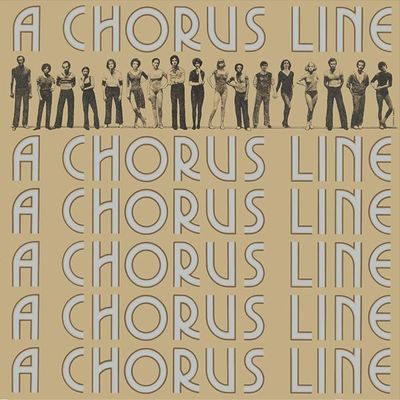
[39:53] Rob Russo: In 1962, Barbara Streisand made her Broadway debut at the Schubert in I Can Get It For You Wholesale. And in 1997, the acclaimed revival of Chicago moved to the Schubert from the Richard Rogers. But the Schubert's most famous tenant will likely always be A Chorus Line. After considering the Winter Garden and the Barrymore, lore has it that the debate over which theater should house A Chorus Line, then a downtown smash of the public theater, came down to the Schubert versus the Broadhurst next door.
[40:19] Rob Russo: Years later, Jerry Schoenfeld reported that director and choreographer Michael Bennett secretly wanted the Schubert, but settled for the Broadhurst when he learned that David Merrick planned to produce a play at the Schubert. Meanwhile, Schubert executive Phil Smith recalls that Michael Bennett secretly told Bernie Jacobs the exact opposite, that he actually really did want the Broadhurst, but would settle for the Schubert, which is essentially the same theater with just two balconies instead of one.
[40:43] Rob Russo: Regardless of who was right, in the end, Merrick's show fell through, and A Chorus Line booked the Schubert, where it ran for 6,137 performances over 15 years, from 1975 to 1990, breaking all records to become the longest-running show in Broadway history in 1983. A title since overtaken by Cats in 1997 and The Phantom of the Opera in 2006.
[41:04] Rob Russo: A Chorus Line at the Schubert Theater became iconic, the very definition of Broadway, from its famous sign to its use of mirrors on the marquees. But it also revitalized Broadway itself, reclaiming the glory days of the now CD district by making it a tourist destination. Without A Chorus Line, Broadway might not have bounced back from the obsolescence of the early 1970s.
[41:23] Rob Russo: In 1996, a couple years after A Chorus Line left, the Schuberts funded a massive multi-million dollar renovation of the Schubert Theater to restore its original green and gold color scheme, integrated throughout the auditorium, and upgrade and modernize the backstage. It stands today as the most elegant and iconic theater on Broadway, and an enduring tribute to three immigrants who built an empire and both changed and defined the course of American theater.
[41:54] Rob Russo: Rob here, that's our show. Thanks for listening. You can hear us anytime on iTunes. The Fabulous Invalid is a production of OM etc. and the Fabulous Invalid LLC. And a very special thank you this week goes to the Shubert Organization for letting us take a peek at the fabulous world of the Shubert Archive. Our theme music is by Lucky Chops. Today's episode was edited and engineered by Aaron Kaufman. Find us online at thefabulousinvalid.com and on social media at Fabulous Invalid, and on iTunes, Spotify, and wherever you find your podcasts. And be sure to tune in next Wednesday.
© Broadway Podcast Network, All Rights Reserved