

On a special summer bonus episode, Jamie and Rob travel up to Garrison, New York to experience the magic of the Hudson Valley Shakespeare Festival... Read More
From the show: The Fabulous Invalid
Featured Shows
About
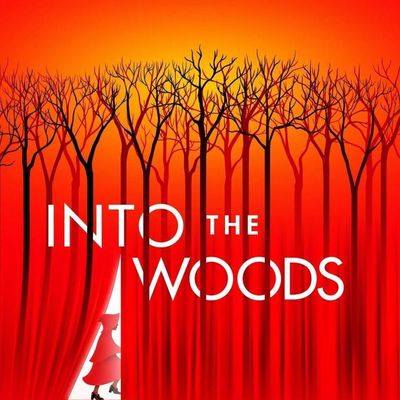
On a special summer bonus episode, Jamie and Rob travel up to Garrison, New York to experience the magic of the Hudson Valley Shakespeare Festival. After a picnic on the great lawn at Boscobel House and Gardens, and a performance of “Much Ado About Nothing”, they speak with conservatory company member Kayla Coleman, Director of Education and company member Sean McNall, and Artistic Director Davis McCallum, then catch the company’s first-ever musical, “Into the Woods”. Rob also offers a brief history of the Hudson Valley Shakespeare Festival.
This week’s music: From “Into the Woods”, “I Know Things Now”, “Maybe They’re Really Magic”, “Ever After”.
Find us on Twitter & Instagram: @fabulousinvalid
Facebook: www.facebook.com/fabulousinvalid
Rob’s reviews: www.stageleft.nyc
Email us at: info@fabulousinvalid.com
Jamie Du Mont
Twitter: @jamiedumont
Instagram: @troutinnyc
Rob Russo
Twitter/Instagram: @StageLeft_NYC
Jennifer Simard
Twitter: @SimardJennifer
Instagram: @thejennifersimard
Transcript
This transcript was automatically generated and might contain errors.
[0:21] Jamie DuMont: Welcome to the Fabulous Invalid, a Broadway Centric podcast where we take a 360-degree view at the business of Broadway through interviews with actors, writers, directors, designers, and everyone in between.
[0:36] Rob Russo: I'm Rob Russo, writer and theater critic with Staged Left at NYC.
[0:39] Jamie DuMont: Hi, Rob.
[0:39] Rob Russo: Hi, Jamie.
[0:40] Jamie DuMont: Well, here we are.
[0:43] Rob Russo: Uh tonight we're actually doing something a little um different for us.
[0:47] Jamie DuMont: Yes, and now for something completely different.
[0:48] Rob Russo: Absolutely.
[0:49] Jamie DuMont: Oh, a Monty Python reference.
[0:51] Rob Russo: I know my Monty Python.
[0:52] Jamie DuMont: You surprise me every day.
[0:55] Rob Russo: But we are um we're coming to you uh we're actually today we're bringing you a special summer bonus edition of the Fabulous Invalid.
[0:55] Jamie DuMont: We're coming to you from the grounds of Boscobel House and Gardens, which for the last three decades has been home to the Hudson Valley Shakespeare Festival.
[1:10] Rob Russo: Yes, and I wish everyone who's listening to this podcast could be with us right now, because I am currently looking out at a great lawn that is truly great, uh, that overlooks the Hudson River.
[1:21] Jamie DuMont: Uh and there's some uh hills in the distance and West Point.
[1:25] Rob Russo: It is a beautiful, sunny, you know, 80-degree summer day here, and it's absolutely astonishing.
[1:33] Jamie DuMont: And no exaggeration to say that a little bit ago we were hearing ammunition go off from some sort of explosion across the river.
[1:42] Rob Russo: I don't know what that was.
[1:43] Jamie DuMont: I believe you said they're blowing stuff up.
[1:45] Rob Russo: Yeah, I think I did.
[1:46] Jamie DuMont: Uh so last night, Rob and I came to see Much Ado About Nothing under the tent that they have here on the grounds, uh, where the Hudson Valley Shakespeare Festival performs.
[1:54] Rob Russo: And tonight we're seeing Into the Woods, uh, which is the first musical that they've ever produced uh in their 30 plus years of producing shows here.
[2:04] Jamie DuMont: And this is a really, really, really special place that we experienced together last night for the first time.
[2:09] Rob Russo: And will again tonight and encourage all of you listening, if you have any interest, to get your butt up here before the season's over because there's nothing like it.
[2:18] Jamie DuMont: It's very easy to do.
[2:19] Rob Russo: That too.
[2:20] Jamie DuMont: You get on a train, it's an hour 15, they have a shuttle.
[2:23] Rob Russo: But I I have to say, I am hooked.
[2:28] Jamie DuMont: I will come back again and again and again.
[2:30] Rob Russo: Oh, for sure.
[2:30] Jamie DuMont: It's a very special place.
[2:32] Rob Russo: Absolutely.
[2:32] Jamie DuMont: And and I have to say, you know, we're seeing Into the Woods tonight.
[2:35] Rob Russo: This is my fourth Into the Woods of 2019.
[2:37] Jamie DuMont: That it is.
[2:38] Rob Russo: Uh which I'm a glutton for punishment, but when it's Into the Woods, is it really punishment?
[2:42] Jamie DuMont: Should you really say you're a glutton for punishment when it comes to Into the Woods?
[2:45] Rob Russo: Well, exactly.
[2:45] Jamie DuMont: Well, some were less punishing than others.
[2:47] Rob Russo: Well, we've we've we this will be our third together.
[2:50] Jamie DuMont: And then you cheated on me once and saw another production.
[2:53] Rob Russo: That's right.
[2:53] Jamie DuMont: Not far from here.
[2:55] Rob Russo: Up in Massachusetts, yeah.
[2:56] Jamie DuMont: Which was fun.
[2:58] Rob Russo: You know, it's i i i think everybody listening knows Into the Woods, so we don't have to talk about it too much.
[3:03] Jamie DuMont: But it is one of those shows that literally can be done in a variety of different ways.
[3:08] Rob Russo: And it's it's is it's i it's an extraordinary piece of theater.
[3:14] Jamie DuMont: And much like the works of Shakespeare, there's no real, you know, the there's a roadmap, but you can do anything with it, right?
[3:19] Rob Russo: You can take the words and you can set it anywhere.
[3:21] Jamie DuMont: You can do anything with the story.
[3:23] Rob Russo: Um, and so I'm excited to see what they do with Into the Woods tonight.
[3:26] Jamie DuMont: Yeah, because I think it's gonna be a little different than what we've seen previously this year.
[3:31] Rob Russo: Uh you know, first and foremost, because we're gonna be under a tent um out in nature.
[3:36] Jamie DuMont: There, I'm literally looking at some woods right now off to my side.
[3:39] Rob Russo: And you know those will be utilized.
[3:40] Jamie DuMont: Oh, yes.
[3:41] Rob Russo: They were last night.
[3:41] Jamie DuMont: Yeah, just and they were lit beautifully.
[3:43] Rob Russo: Yeah, something that's really cool about the about the way they use the space.
[3:46] Jamie DuMont: It's a very um intimate space, uh about 550 seats in the theater.
[3:51] Rob Russo: Um and it's it's basically it's like a circus tent.
[3:54] Jamie DuMont: They perform on um a sandy uh uh stage floor, there's no deck.
[4:00] Rob Russo: Um, and every entrance and exit possible uh is used throughout the throughout the production, much like seeing something at the Delacourt but in in Central Park, but much more intimate.
[4:10] Jamie DuMont: It's an elegant circus tent.
[4:11] Rob Russo: I feel like I need to feel like it was designed specifically for the festival.
[4:15] Jamie DuMont: That's right.
[4:15] Rob Russo: And it um it is it is it is architecturally quite beautiful for a tent.
[4:19] Jamie DuMont: Yes, exactly.
[4:21] Rob Russo: Uh for a tent.
[4:22] Jamie DuMont: Perfect.
[4:23] Rob Russo: Well, we're gonna be sitting down with three different folks um who are associated with the Hudson Valley Shakespeare Festival.
[4:28] Jamie DuMont: Kayla Coleman, an actress, yes, and uh student here, and Sean McNall, who is the associate artistic director and also the director of education, and then of course the man himself, Davis McCallum, who is the artistic director.
[4:42] Rob Russo: Fabulous festival.
[4:43] Jamie DuMont: Well, shall we get to our interviews?
[4:45] Rob Russo: We shall.
[4:45] Jamie DuMont: Let's do it.
[4:54] Rob Russo: Right now we are joined by Kayla Coleman, who can be seen as Ursula and C. Cole in Much Ado About Nothing, and as Little Red in Into the Woods. Kayla, thank you so much for talking with us today.
[5:06] Kayla Coleman: Hi!
[5:07] Rob Russo: Now we know you need to go prepare for Into the Woods tonight, so we're gonna keep this brief.
[5:11] Jamie DuMont: But we are very, very excited to see the Shadow Night as we were just talking about before we got started.
[5:15] Rob Russo: Um, to dive into questions. You just graduated from NYU, Tisch.
[5:19] Kayla Coleman: Yes.
[5:21] Rob Russo: Oh yes, we've done our research, we've done our research.
[5:23] Kayla Coleman: Oh my god.
[5:23] Rob Russo: Uh and this is your first show at the Hudson Valley Shakespeare Festival.
[5:27] Kayla Coleman: Uh, can you tell us a bit about your experience here?
[5:30] Kayla Coleman: Yeah, so this is my first season here.
[5:32] Rob Russo: Season right, season.
[5:33] Kayla Coleman: And I'm part of the conservatory company, which means I'm in a ensemble of five other um people who are pretty early in their career, young folks who are getting started in the business.
[5:43] Kayla Coleman: Some recent graduates, some people who've done graduate school, and like all paths have led to here.
[5:48] Kayla Coleman: Um and it was a rigorous audition process for a lot of us.
[5:52] Kayla Coleman: And um we were basically chosen to be part of the whole season.
[5:55] Kayla Coleman: So we are in Much Ado About Nothing as cast and Cymbeline as cast, and most of us are have like lead roles, principal roles, and named roles in Into the Woods.
[6:05] Rob Russo: Wow.
[6:05] Kayla Coleman: Which is really exciting.
[6:06] Rob Russo: Yeah.
[6:06] Kayla Coleman: How did you come to the festival?
[6:08] Kayla Coleman: How did you hear about it?
[6:09] Kayla Coleman: So I didn't know jack about the festival.
[6:12] Kayla Coleman: I never heard of it until um uh the casting director, Stephanie Clapper.
[6:17] Kayla Coleman: She called me in like I think it was a Thursday night I got the email, or Thursday, like late evening I got the email for an appointment on Friday.
[6:26] Kayla Coleman: And that's the thing they don't train you in school.
[6:29] Kayla Coleman: They don't tell you you don't get three days to prepare for an audition.
[6:31] Kayla Coleman: You don't get that.
[6:32] Kayla Coleman: That's a luxury.
[6:33] Rob Russo: Right.
[6:33] Kayla Coleman: Like you're lucky if you get 48 hours, 24 hours.
[6:35] Kayla Coleman: So she called me in, and I'm looking through this email, and it was like these sides, these songs from the show have a Shakespeare monologue, contemporary monologue.
[6:45] Kayla Coleman: If you have an instrument, bring it.
[6:47] Rob Russo: And I was like, okay.
[6:49] Kayla Coleman: What's your instrument?
[6:50] Kayla Coleman: Uh I play the flute.
[6:51] Rob Russo: Okay.
[6:52] Kayla Coleman: Yeah.
[6:52] Rob Russo: Did you play the flute in your audition?
[6:54] Kayla Coleman: I did too.
[6:54] Rob Russo: I knew what to play.
[6:56] Kayla Coleman: Do you know what song you played?
[6:57] Kayla Coleman: I played, was it Amazing Grace?
[7:01] Kayla Coleman: I played on the flute, I believe.
[7:02] Rob Russo: I've never heard that on the flute, but it sounds good.
[7:04] Kayla Coleman: Yeah, I think I played Amazing Grace.
[7:07] Kayla Coleman: And they put me through the ringer.
[7:09] Kayla Coleman: Everything they said to do, I did.
[7:11] Rob Russo: Right.
[7:11] Kayla Coleman: Right.
[7:12] Rob Russo: Yeah.
[7:12] Kayla Coleman: Well, it seems like it was a good preparation for the summer.
[7:15] Kayla Coleman: Yeah.
[7:15] Rob Russo: Right.
[7:15] Kayla Coleman: It was a nice entree into what this was gonna be.
[7:17] Kayla Coleman: And I'm the type of person, if you say you're gonna do all those things, I'm gonna believe you, I'm gonna take it at face value, and I'm gonna come up with all those things prepared.
[7:25] Rob Russo: Yep.
[7:26] Kayla Coleman: So, what have you learned now from your experience at Hudson Valley Shakespeare Festival?
[7:31] Kayla Coleman: Hmm.
[7:32] Rob Russo: Or are you still learning?
[7:34] Kayla Coleman: Oh, I'm still deep in the process.
[7:36] Kayla Coleman: Yeah, I think something that is really heavily like on my mind at the forefront of my mind right now is preservation.
[7:43] Kayla Coleman: Preserving the body, preserving stamina, um, rigor, um, learning how to pace myself.
[7:49] Kayla Coleman: Uh at a certain point, we were doing three shows, and now we're doing two, and we were we were rehearsing two, rehearsing one, running two.
[7:59] Kayla Coleman: It gets confusing at a certain point.
[8:02] Kayla Coleman: You're just kind of whizzing around.
[8:03] Rob Russo: Yeah, you're whizzing around.
[8:04] Kayla Coleman: So you have to learn uh how to calibrate your energy and your body and listening to your body, listening to your mind, getting the rest.
[8:12] Kayla Coleman: And my teachers, they were not playing in class when they were like, you know, put on those knee pads, like you need these for the rest of your life.
[8:18] Kayla Coleman: This is not just for this moment in time.
[8:20] Kayla Coleman: And you have to you have to make sure you are taking care of yourself, and that's so important.
[8:25] Kayla Coleman: The self-care is really important.
[8:26] Rob Russo: That's what I'm realizing.
[8:27] Kayla Coleman: I've already got a couple bumps and bruises, and now I'm like, okay, we gotta let them heal.
[8:32] Rob Russo: Let's talk about that for a second, because I think some of our audience don't know that you're working on a stage that's basically sand.
[8:37] Kayla Coleman: We're working in a sandbox.
[8:39] Rob Russo: We're literally on the playground.
[8:40] Kayla Coleman: Yeah.
[8:40] Rob Russo: We're on the playground.
[8:41] Kayla Coleman: It's an adult playground.
[8:42] Kayla Coleman: That's what it is.
[8:44] Rob Russo: And the shows are very interactive.
[8:46] Kayla Coleman: If you've never seen a show here.
[8:48] Kayla Coleman: Uh in Much Ado, I'm very much so climbing things, running through the aisles in between seats and things like that.
[8:55] Kayla Coleman: You'll see tonight in Into the Woods, and listeners, you'll see if you come.
[8:59] Kayla Coleman: We are taking all the exits.
[9:01] Kayla Coleman: We're using the woods.
[9:02] Kayla Coleman: We're using the beautiful Belvedere.
[9:03] Kayla Coleman: Like you can see West Point from the theater.
[9:05] Kayla Coleman: We're using all the most imaginative ways to make this thing come alive.
[9:08] Rob Russo: We are in the woods doing it.
[9:10] Kayla Coleman: Yeah.
[9:10] Rob Russo: There are you're not mic'd, right?
[9:13] Kayla Coleman: We are mic'd for this.
[9:14] Rob Russo: Oh, you're mic'd?
[9:15] Kayla Coleman: Okay, so you weren't mic'd for Much Ado.
[9:17] Kayla Coleman: We're never mic'd for the Shakespeare's.
[9:19] Rob Russo: Oh, yeah.
[9:19] Kayla Coleman: But we are mic'd.
[9:21] Kayla Coleman: And it that adds a really nice touch to the shows as well.
[9:25] Kayla Coleman: You it's kind of daunting at first, and you're like, what do you mean I'm not mic'd?
[9:29] Kayla Coleman: And there's 600 people in the audience every night.
[9:31] Kayla Coleman: Okay, how does how is this gonna work?
[9:33] Kayla Coleman: But you get you calibrate, you get used to the tent and what it feels like to speak, and then you get all that good voice and speech training you got.
[9:40] Rob Russo: Exactly.
[9:40] Kayla Coleman: You put it to use.
[9:41] Kayla Coleman: Comes into play.
[9:42] Kayla Coleman: It comes into play.
[9:43] Kayla Coleman: And this is not my first time performing outside.
[9:45] Kayla Coleman: Um I did Big River in front of a river in Massachusetts.
[9:52] Kayla Coleman: Two years uh was it two years?
[9:54] Kayla Coleman: Almost two years ago, two and a half years ago.
[9:56] Rob Russo: Talk about a perfect site specific.
[9:58] Kayla Coleman: Site specific in front of a waterfall.
[10:00] Kayla Coleman: Oh gosh.
[10:01] Rob Russo: In the middle of a Sturbridge, Massachusetts.
[10:03] Kayla Coleman: Cool.
[10:04] Kayla Coleman: And we were mic'd there, but Mike's only project what you are giving.
[10:10] Rob Russo: That's right.
[10:10] Kayla Coleman: Um so clarity is important, and clarity is always more important than value.
[10:14] Kayla Coleman: If you're clear, then that's what because you're gonna be conveying the story.
[10:17] Rob Russo: Right.
[10:18] Kayla Coleman: And you can't predict the elements.
[10:19] Rob Russo: I mean, I can hear the train going in the background right now.
[10:22] Kayla Coleman: There's there's Oh, there's always a train going.
[10:24] Rob Russo: Yeah.
[10:24] Kayla Coleman: There's always a midnight train to Georgia hopping over there.
[10:28] Kayla Coleman: Um and it's great how you have to incorporate that stuff into the show.
[10:31] Kayla Coleman: Um, for opening night for woods.
[10:33] Kayla Coleman: Oh my gosh, we had the best weather possible.
[10:36] Kayla Coleman: It was thunderstorming.
[10:37] Rob Russo: Oh god, that's perfect.
[10:39] Kayla Coleman: And I I believe that's the best way to do Into the Woods.
[10:41] Kayla Coleman: It got dark exactly when the story got dark.
[10:44] Kayla Coleman: And when the story gets real, the weather got real.
[10:47] Kayla Coleman: And I I believe in God, I believe in a higher power, and all things are working on my side at all times.
[10:54] Kayla Coleman: And so it was lightning crackling right when the witch was exiting.
[10:59] Kayla Coleman: There were it was children children will listen.
[11:04] Kayla Coleman: Uh we were all coming in the coming forward in the rain with umbrellas.
[11:09] Kayla Coleman: Uh uh, when the giant's footsteps were going, we heard some thunder happening.
[11:15] Kayla Coleman: Um perfect.
[11:16] Rob Russo: We had the best collaborator possible.
[11:18] Kayla Coleman: When the baker up and left the group, uh uh, we hear the giant footsteps of the thunder going, and me, Cinderella, and Jack, we all looking at each other and running in the rain.
[11:27] Kayla Coleman: And so I it it can only if you have an open heart and an open vessel, it can only add to the experience.
[11:34] Kayla Coleman: So for me, that's how I interpret it.
[11:36] Kayla Coleman: Whenever I heard the thunder, I was like, we don't know where the giant is.
[11:40] Kayla Coleman: The giant's over there, the giant's behind us, the giant's in front of me.
[11:42] Kayla Coleman: I I I don't know where she is.
[11:44] Kayla Coleman: I don't know where she is.
[11:45] Kayla Coleman: It can only add to my experience as red, if that makes sense.
[11:49] Kayla Coleman: But I think this show also suits itself to this space because if it's a beautiful day and it's sunny and it's 75, it's a great show.
[11:56] Rob Russo: Right.
[11:56] Kayla Coleman: If it's thunderstorming, it's a great show.
[11:58] Kayla Coleman: If it's cloudy, it's a good show.
[12:00] Rob Russo: Yeah.
[12:00] Kayla Coleman: Which is the mark of a good show.
[12:02] Rob Russo: Exactly.
[12:03] Jamie DuMont: Well, we want to let you go and get ready for this great show, but I have a question because I did I did stalk you on on social media a little bit.
[12:11] Kayla Coleman: Well, my question is on one of your social medias, Instagram.
[12:17] Kayla Coleman: Instagram, you call yourself an artistic disruptor, and I love that term, and I want to know what that means to you.
[12:22] Sean McNall: Artist is my profession, but being an artistic disruptor is my calling and like my life mission, if that makes sense. Absolutely. Um and so how do I make those two coincide? That's always what I'm looking to think about. Um and there are places and people who are doing those constantly. Um and I try to affiliate myself with those places and those places that do that spiritual hard deep work and critique and look at how we uh how we come to our art and whose voices aren't being heard and who we're not listening to and what stories aren't being told, and also the dynamics of just any theater company, who's in positions of power, how do we make everyone a part of the table, or forget that how do we build a new table?
Right. Okay, because some tables are old and rickety and they don't we don't need to sit at them. Right. And I may not necessarily want to sit at them. So when I say I'm an artistic disruptor, that means I'm here to disrupt the practices that have reward been rewarding some and not others. And how do I make it an equal playing field and not only an equal one but an equitable one for everybody as well? Sometimes we have to throw stuff away and start from scratch, and that's okay because who is it serving? If it's not serving everyone, if it's not serving me and the people that I come from in my community, then that's a problem. And who are we doing for? If we're doing something for the greater good and we're trying to reach the widest audience, then let's hold ourselves accountable, and I'm gonna hold myself accountable and everyone else accountable to find a solution to do that.
Right. And to do that work, and that's not easy work, and those are hard conversations to have, but they need to be had. It's small changes. The way we talk about things, I think they're there there are power in our words. Oh, yes, absolutely. There's power in our words, and words mean a lot, and that's why I'm very intentional with the words I choose, and that's how I approach being an artistic disruptor. It starts with the day-to-day interactions.
[14:19] Jamie DuMont: You know who I think is a disruptor as well?
[14:21] Sean McNall: Little Red.
[14:22] Jamie DuMont: Oh, heck yeah.
[14:24] Sean McNall: In her own way. I mean. That was good casting.
[14:30] Jamie DuMont: She's she's one of the bravest people.
[14:32] Sean McNall: Red has some strength.
[14:33] Jamie DuMont: Yeah, she does have bite.
[14:35] Sean McNall: Well, we look forward to uh to seeing your bite and your red tonight.
[14:38] Jamie DuMont: And uh joining disruptions.
[14:41] Sean McNall: Yes.
[14:41] Jamie DuMont: Yes!
[14:42] Sean McNall: All right, thank you.
[14:43] Jamie DuMont: Thank you so much.
[14:44] ♪ Musical number: "I Know Things Now" — performed by Sean McNall ♪
[15:21] Sean McNall: Sean McNall is the associate artistic director and director of education at Hudson Valley Shakespeare Festival. And he also plays Don Pedro in Much Ado About Nothing, which we saw last night. Welcome to the show.
[15:32] Sean McNall: Thank you so much for having me. Thank you for coming to you. Um so I'm I'm curious because um you also you also do the you're the director of education here. Education plays a very large part in what you guys do at the Hudson Valley Shakespeare Festival. Um your website is excellent. I read the full script of Much Ado About Nothing, not to mention your dramaturgy PDF, which was outstanding. Can you talk a little bit more about the education programs at the festival and why they're important?
[15:58] Sean McNall: Well, we can start, I guess, with the summer because it's uh there are three basic domains that exist in the education world. During the summer, uh, most of our programs are sort of pre-professional programs for interns and for actors. In fact, several of the actors you saw last night, and many that you'll see tonight are non-union actors who are here on an education basis. Kayla, who you were just speaking to just now, for instance, is a member of our conservatory company. Um, and we really celebrate that liminal space but for actors who are just on the verge, I think, of getting their card and are looking to get as many reps as possible here under the guidance and with the mentorship of our our actors here.
And that goes, that's the same for our intern program as well. A lot of interns are running many of the things you see going on in the tent right now as you speak. Which is not uncommon in these kinds of uh scenarios. I would say that what is uncommon is that whereas I think some programs are pretty eager to put their interns and their actors to work in any capacity possible. Myself having been to Actors' Theater Blueville and loved it in the 90s, but I spent a lot more time removing nails from boards than I did actually on the boards themselves. Um we pride ourselves in trying to provide a kind of, you know, graduate level experience with real roles that they can really sink their teeth into.
So that means that we spend a good portion of the year looking for these very particular actors that we can sort of train and in one way or another rise to the level of the actors we have under our tent. Many times often exceeded by their enthusiasm and their ability and our surprise that we're in their shadow. But that's okay. That's what it's supposed to be. That's the way it works. Um we also during the summer have a host of community-driven programs that are education-oriented, but we put sort of more emphasis on the fun. So for instance, I just ended a two-week uh Shakespeare summer camp that we do with kids in the community, and they're all from around the sort of tri-state area. What age is that?
[17:43] Jamie DuMont: From well, we have three different groups.
[17:45] Sean McNall: One is eight to eleven, and then eleven to sort of the verge of being talented young uh high school students, and then the high school students. Um, and that's really geared towards bringing in people who are curious about the theater, but maybe a little bit more academic or bookish, um, would like to be in the spotlight, but don't necessarily want to go do Matilda or don't feel like that's you know, they would love to, but that's just really not what they do, or that's what they feel most comfortable in. So it becomes this interesting little niche where people get to express themselves in a way and sort of delight their parents because it feels academic and it feels like it's Shakespeare, but at the same time it's you know, it's them being irreverent in fun at the same time.
So um, and we also do pro professional development programs, which means that we have a very core set of practices that we do throughout the school year. It's a rehearsal room pedagogy, which means that we treat the plays, whatever it is we're teaching in the school, um, with the same uh sensibilities that an actor or a director or a playwright would. Uh we push the desks aside to get up on our feet, and it's a high engagement activity. Um we do our best to avoid just simply reading the text. So we do professional development programs throughout the summer, which is onboarding a lot of the the teachers that we work with throughout the school year, so they understand what they should expect when our teaching artists come in.
Somewhere around September is about the time our full education program begins, and that that's about a 20-person team. Most of the people uh are themselves actors or directors of playwrights. They all live in New York City. We do a bulk of our training in New York City. That is their point of departure. And throughout the year, throughout the tri-state area, um, we have our teaching artists working anywhere from one to five days in a host of up to 50 schools and in any particular school year, from as you know, far south as uh the far Rockaways, far north is we get as far north as Rhinebeck, I guess, at one given time or another. So it's quite a big scope.
[19:33] Jamie DuMont: And you know, we teach those those plays that you would expect us to teach those six that are in the curriculum, in addition to also uh producing a touring production every year. Sort of in we just finished Julius Caesar, it's gonna be concluding its run under the tent tomorrow afternoon.
[19:49] Sean McNall: And where was that before? Where does it where does that tour all in the same area?
[19:53] Sean McNall: Well, now that will tour, we again it's cast and rehearsed in New York City for about three weeks. The point of departure is in New York City. Every day at about 4 a.m. They all get into a bus and they make the large migration to Newburgh in Westchester, so we serve a lot of schools in the Westchester County, which is proximate and good for them as well. Um it's about 60, 40 grant funded in people and schools that pay for it outright out of their pocket, one way or another. Um, we reach anywhere between 40 and 55,000 students and teachers.
[20:25] Jamie DuMont: Any academic.
[20:25] Sean McNall: That's huge.
[20:26] Jamie DuMont: I have I'm just blown away by the scope of this program.
[20:29] Sean McNall: Like, oh my gosh. Well, it's uh I I will say that before I came here, I've been here five years. I've been here uh when Davis came up as the artistic director, we were old old friends, and the first time we met was uh actually doing Julius Caesar the last time they did it in the park. I just graduated from Juilliard, he was a directing assistant. I came in and played Augustus Caesar, and you know, and we've been friends ever since. I went on to work at the Pearl Theater Company for several years, and that was sort of my home for about 12 years. Davis came up here, he brought me up, and I inherited a really robust program. I was very fortunate. Um I knew the gentleman who ran it before Chris Edwards, um, and we fortunately had worked together and had very similar points of view on how these programs could and should be successful.
[21:09] Sean McNall: And um it's largely based on the good work that had been laid for those 15 or so years. I sort of built on top of that and we're sort of keeping the good conversation going.
[21:18] Jamie DuMont: I love that you go into the schools and you teach the teachers what to expect.
[21:21] Sean McNall: Yes.
[21:22] Jamie DuMont: Because that to me says that you're really getting in the foundation, right?
[21:27] Sean McNall: Because the the teachers don't know what you're doing or what you're trying to accomplish. It's gonna make it harder for you guys to get through to the students.
[21:35] Sean McNall: Yeah, and you'd be it's uh because pedagogy and the teaching differs over time. I would you know, you're our younger teachers, I think, are a little bit more accustomed to sort of high engagement learning in one way or another. So they're a little bit easier to incorporate and really get physical. But it doesn't what's what's wonderful about it is it's also we're teaching the teachers how they should be the best students in the classroom once we are actually arrive, so that they know that we expect you to be in there and to be modeling for your students because they're gonna be looking to you to be foolish. Because a lot of what we're asking them to do is go out, play the fool, take a big risk, be bold like an actor would, and discover you know the text in your body so that you can learn to love the plays and realize that you know humanity's been the same since it's interesting that it's hard to get kids to play the fool.
[22:17] Jamie DuMont: Yes.
[22:17] Sean McNall: But I guess Shakespeare's scary for everyone, but it shouldn't be.
[22:17] Jamie DuMont: It shouldn't be.
[22:21] Sean McNall: And that's that's probably one of the main things that you try to teach everybody.
[22:24] Sean McNall: Absolutely. I would say that I came to it similarly. I would say I was attracted to Shakespeare initially as a kid because of the level of difficulty in one way or another. There was something attractive about, oh, if I'm gonna be an actor, I want to do the hardest thing, and if I can do the hardest thing, I can do the easiest thing. Um, but I quickly realized that what was hard and strange about it was really it was a mistake in how in one way or another I I engaged for the first time. I remember so vividly sitting in a classroom, middle school, reading Julius Caesar aloud, and being embarrassed to hear my own voice speaking the words among among my peers because there was a sort of a uh a liturgical quality to it.
Like here we are doing this terrible thing that we don't we don't understand and we don't care about it, and you're making me pretend like I'm wearing a toga. Which is embarrassing. Some it was particularly in the 80s and 90s. Uh but uh less so now. Now you might see a toga in story.
[23:14] Jamie DuMont: Right.
[23:15] Sean McNall: Wonderful. My God. Um but then I quickly realized that you know people have always been the same, and that much of what we think of when we think of storytelling and indeed human being was in some ways first breathed into life in Shakespeare and first became the popularization of the human being for first came in. And that's through everything that's included the high and the low, the fools, sex the sex, the violence, everything that we love about entertainment was very much there, and he was playing to the same interests and the same ideas that we are now. And to reveal that to a young audience or an old audience is a great privilege, but there's also a kind of giddiness and watching people discover that for themselves the way you did, and you can pass that large conversation on moving forward.
And that's what excites me the most about it. It's seeing seeing the lights turn on in someone's head and when they're doing something like Macbeth and understanding that the same ambitions, the same potential for making bad choices, as it were, sort of exists in them, and they see it all around them, and that they can learn a little bit or project a little bit of their own experience on these characters that seem otherwise so remote.
[24:18] Sean McNall: It's very gratifying.
[24:20] Jamie DuMont: Yes, it is.
[24:22] Sean McNall: Glenda Jackson calls Shakespeare the most contemporary writer today.
[24:25] Jamie DuMont: I would think so.
[24:27] Sean McNall: And I love thinking about it. We live in extremes, and if he didn't do anything, it was he wrote extremes.
[24:34] Jamie DuMont: For sure.
[24:34] Sean McNall: How do you balance your role as both administrator in the company and an actor?
[24:40] Sean McNall: Yeah, it's complicated. I mean, it's wonderful from September through April when I'm only in the office, nine to five. I have a six-year-old son and a wife, and this decision was largely made so I could be a father proper. But Davis was really keen because I'm the associate artistic director, not to bring a person whose eye was necessarily geared towards directing. I do a lot of leading from within. I'm a kind of, he describes it as an ombudsman. I largely do conflict resolution and try to make sure that everyone kind of understands best practices and that everyone knows that there's someone that's deeply concerned about their experience here.
[25:18] Jamie DuMont: Conflict with actors?
[25:18] Sean McNall: Well, yes, I mean you can look around, it's not only the interpersonal conflict, but it's also just we're at odds with the elements here. And it's understanding and having a sense of the rhythm of producing under this tent and making sure that people can anticipate what's coming, and once we're in the midst of something that seems uncontrollable and chaotic, that it's okay and we can be successful in spite of that, or you know, because of it in some ways. But it does get tricky. I mean, one of the things that when I came up, I sort of joked with Kayla, I said I was just in your neck of the woods. It was one of those situations in which I needed to go and address some things that have been bubbling up and help some people come to terms with where they are on this evening that they're gonna be doing a show. And that's a privilege. I get to be the human and portray the human at the same time. I would say it's probably more complicated for those that are my peers.
[26:06] Jamie DuMont: Right.
[26:07] Sean McNall: Because I try to go to great lengths to let them know that you know I'm not the Stasi, I'm not just spying on you. You know, I there is a I'm committed to your experience here, and if nothing else, I'm just when something happens, it reverberates through me like a bell, and people that need to hear it do, and then we can do something about it to make their experience, you know, everything they need it to be. But it is complicated for sure.
[26:30] Jamie DuMont: Well, they're a lucky company to have you.
[26:31] Sean McNall: Well, thank you very much.
[26:33] Jamie DuMont: Well, thank you so much, Sean, for chatting with us.
[26:35] Sean McNall: Thank you so much. We're loving our experience up here, and thank you for giving us a little bit more insight.
[26:40] Sean McNall: It was my pleasure. Thank you for having us.
[26:41] Jamie DuMont: Thanks.
[26:41] Sean McNall: Thank you.
[26:42] Sean McNall: Why you do what you do, that's the point. All the rest of it is chatter.
[26:45] Sean McNall: Well, if the thing you do is pure and intent, if it's mental it's just a little bit, doesn't matter.
[26:49] Jamie DuMont: Yes.
[26:50] Sean McNall: No, what matters is that everyone tells tiny lies. What's important really is the size.
[26:56] Sean McNall: Only three more tries, and we'll have our prize when the ends inside, children's eyes. If the hand is right, it justifies the beautiful.
[27:08] Jamie DuMont: We are delighted to introduce Davis McCallum, the artistic director of Hudson Valley Shakespeare Festival. Davis, welcome.
[27:12] Davis McCallum: Thank you so much for having me, and thanks for making the trip.
[27:15] Jamie DuMont: Oh, of course. You took over the role of artistic director from the festival's founder, Terry O'Brien. So what was it like stepping into the shoes of someone who had created the company and then now leading it into the future?
[27:27] Davis McCallum: Well, Terry ran it for 27 years. And so his artistic fingerprints are all over our kind of house style of the way we produce Shakespeare and what our audience comes to expect, and the whole experience when they come to this place. And I think luckily I felt like my approach was very aligned with his, and I was honored to really kind of carry forward the legacy that he had started.
[27:56] Davis McCallum: Like you guys were saying, I had only been here once before to see a production of Hamlet, I think in 2013, maybe, or maybe 2012. I was workshopping a new musical at New York Stadium Film in Poughkeepsie, and my friend was playing Hamlet, and I thought, okay, I'll come down and see you play Hamlet. And then a couple years later, when this job came up, I thought, I actually loved going to that theater. I'm interested in that job.
[28:21] Davis McCallum: And one of the things I thought could be an advantage for the theater is to really capitalize on the fact that we're just 50 miles from Times Square. You know, we're here at this amazing view in this location that feels like it's another world, but you can get on the train at Grand Central Station and be in Cold Spring in an hour and 15 minutes.
[28:40] Jamie DuMont: And we just did.
[28:40] Davis McCallum: Yeah, we just literally just got off that train.
[28:43] Jamie DuMont: It is true.
[28:44] Davis McCallum: It's amazing.
[28:45] Jamie DuMont: So how do you describe your role as artistic director then?
[28:50] Davis McCallum: Well, the most important thing I do is I choose the plays that we're gonna produce and I curate the artists that are gonna bring those plays to life. And that process happens kind of as soon as we get the first plays of a current season up. I'm thinking about what we're gonna be doing next year. And then we normally announce the plays in October and hire designers in the fall and do a bunch of pre-production and cast right before the holidays. And then we do a little more pre-production and produce a really robust program of educational programming in the early spring, and then we start rehearsal in April. So it's a kind of a 12-month cycle that comes around pretty quickly, even though our performances are more or less Memorial Day to Labor Day.
[29:37] Jamie DuMont: Right.
[29:37] Davis McCallum: And how did you come to Into the Woods? Because this is your first musical.
[29:41] Davis McCallum: It's true, yes. We did this production of the world premiere of an adaptation of Rip Van Winkle last year. And we did it kind of inspired by the public works shows that they do at the Delacourt at the end of the Shakespeare in the Park season. So we had a huge cast of community members, and we had a live band and an original score. And so it was one of the first times we had heard a band under that tent. And it was during that production that I started to think the kind of conventional wisdom that a musical would never be possible under that tent might not be true.
[30:20] Davis McCallum: And so we started to investigate what kind of additions we'd have to make to just the hardware of the tent to make a musical happen. But really this I'm so proud of this production of Into the Woods you guys are going to see tonight. And among the things I'm most proud of is the fact that it sounds great. I have a really great musical director, Amanda Morton, and Ken Travis is the sound designer. And together they've just kind of done a minor miracle because it really sounds terrific under an open-air tent.
[30:52] Jamie DuMont: Yeah, there's a bit, I think, of your sits probe on your website.
[30:55] Davis McCallum: Yes.
[30:55] Jamie DuMont: Which it, yes, it does sound fantastic. I can't wait. Does that mean there's a short list of other musicals that may or may not happen in the near future?
[31:03] Davis McCallum: A number of our channels. Can we make some news for us here?
[31:05] Jamie DuMont: I know I'd love to pull in some extra listeners to the Fabulous Invalid podcast with this breaking news.
[31:11] Davis McCallum: But no, but I will say that as soon as I programmed it, I thought, you know, a lot of other theaters that have Shakespeare in their name that in Ashland, Oregon, or Stratford, Ontario, or the Shakespeare Theater in DC have started to include the kind of classic golden age American musical theater as part of what we understand a classic to be. But I really was attracted to Woods because it's a musical that really seems like it values language, the lyrics are so important, and there's so much book, especially in the second act. And so it felt like actors that had a kind of muscle for Shakespeare and could sing the amazing score would be a perfect group to tackle a very actor-driven production of Woods.
[32:03] Davis McCallum: And you know, now I'm just kind of free associating about Woods, but I think it's often produced in a way that feels like it kind of weighs it down, and it's long for a musical, and it takes a bunch of really hairpin turns in terms of tone and story. And that feels kind of like a Shakespeare play. If you have a big set, it can slow it down and kind of enforce a kind of singular tone over the whole show. And I think a musical like this wants to be hilariously funny and kind of break your heart in the next moment, and you want to have the music and the actors really be able to modulate that.
[32:44] Jamie DuMont: Yeah.
[32:44] Davis McCallum: So that's one of the things I like to do. Let's see. You know, the amazing thing about we saw Much Ado last night and just the economy of the staging, right?
[32:51] Jamie DuMont: Right.
[32:51] Davis McCallum: Two benches and a stairwell, and that was it.
[32:55] Jamie DuMont: Yeah, you know, and all and then in the face, the place is the space is so dynamic and entrances and exits from every different corner, and I'm sure we'll see that tonight. You know, because the show calls for it, of course.
[33:06] Davis McCallum: You touched on something that I wanted to ask you about in particular, which is expanding beyond the canon of Shakespeare to include other works by more contemporary artists or other classics in your seasons. What is sort of the thought process behind that and how do you arrive at what more contemporary works in particular to include?
[33:26] Davis McCallum: Well, you know, our space is a 530-seat, basically a circus tent, you know, and there's no deck on the floor. Actors are standing right on basically the ground, it's a kind of synthetic, you know, sand ground that they use in horse.
[33:43] Jamie DuMont: Yeah.
[33:43] Davis McCallum: As long as you don't call it a kitty litter box. But you know, so therefore I'm really excited by plays that feel like they're about the relationship between the actors and the audience, you know, because I, you know, what do I know about what Shakespeare was really like in the 17th century? But I feel like those plays work best when the audience is in really spontaneous collaboration with the actors.
[34:10] Davis McCallum: So I can sometimes sit in the tent in tech or in a preview, and if I feel like the audience is just kind of regarding the play without feeling like they've been invited to lean forward and really participate in it, then the tent's not actually being utilized. The audience in this tent. And part because the show starts at 7:30 and it's in broad daylight, right? But also kind of energetically, their presence has to be the key thing that unfolds the play.
[34:42] Jamie DuMont: I was listening to you guys talk to Andre de Shields about Hadestown, and I love that show too. And I feel like that sense of a contract with the audience is fundamental to what we're trying to do here as well.
[34:55] Jamie DuMont: And do you find that when you bring up new directors and it's the first time working in the tent that there's a little like history lesson that has to be given, or this is how we use the tent, or do you let them just go on their own and then adjust as needed?
[35:08] Davis McCallum: It's a little bit of a mix. I mean, my philosophy is basically you hire really great people and let them do their thing and try and support them to the full extent of what the theater can manage. But also I think there are just a couple of little hints about the way, you know, the acoustics in that tent work or how the pre-show unfolds. And I've kind of made it a rule for myself that when I'm talking to directors about projects in the future, that they just have to come up and see it, you know, because if I have a coffee with a director who's interested in X, Y or Z production, we'll spend half the coffee me trying to describe this tent.
[35:50] Jamie DuMont: Right.
[35:50] Davis McCallum: Exactly. I see the look on your face and just I'm not understanding what you're saying. But if they come then immediately they're like, oh, this thing I was gonna pitch you makes no sense because it really needs a set, or maybe we should think about this instead. And I've had the most fruitful conversations that way.
[36:08] Jamie DuMont: Well, that's what makes this space so special too, right? Is that it is unique, it is its own thing. You have to really come here and see it to really fully appreciate the magic that happens in that tent.
[36:18] Davis McCallum: I think you're right.
[36:19] Davis McCallum: Um, something else that I really was struck by and really appreciated about your company is the diversity among the members. And I'm wondering how you intentionally go about fostering, you know, or casting a diverse group of actors and how that sort of fits into the mission overall of Hudson Valley Shakespeare Festival.
[36:40] Davis McCallum: Well, it's one of our core values is inclusion, and that's kind of based around the idea that the tent is an inclusive space. I mean, it doesn't have walls. It's a place where we, you know, that phrase that, you know, the Democratic Party, you know, like let's have it be a big tent, you know, and what's the thing? I think that the origin of that is that sense that we're all in it together. And so we do feel like it's important to put on stage and backstage and for the people who are leading the projects and designing the shows that represent the world on stage that reflects the world we all share. You know, the audience has gotten more diverse in recent years and the company's gotten more diverse.
There's a state park not too far away from us near where 301 intersects the Taconic that has a little beach at the lake there. And I love together with my family in part because it's just wildly diverse. It's everybody together on a hot July afternoon trying to get a little bit of cool and jump in the lake. And so in terms of the theater, I think we'll continue to try and move the theater so that everybody feels that this is a place that belongs to them. And we think about that when we're programming and we think about that when we're casting and hiring too.
[38:09] Davis McCallum: Yeah, and that's the best way to do it.
[38:12] Jamie DuMont: Well, thinking about the future, what would you like to, well, what is your vision for this company moving forward, say five years from now? What would you like to achieve?
[38:23] Davis McCallum: Well, it's a great question. You know, we're on the grounds of Boscobel, a historic house museum, and you know, our theater, if we were here in early April, there'd be nothing but just kind of a gravel patch over there. We kind of come up from zero and down to zero at the end of September. And, you know, 32,000 people see the shows here every summer, which is a large number of people. Seventy something, 77 performances. And I don't know this to be true, but looking across the wider field of the American theater, I can't think of another theater that doesn't have a building, even one that they rent, that has 32,000 people seeing a show. Right. So our reach and I'd like to think our impact is way above the amount of infrastructure that we actually have.
So, you know, I'd love to have a kind of 2.0 of this performance facility that has better bathrooms and a better concession stand for the audience and a much, much better dressing room for our artists and for our wardrobe staff. Jen Thompson, who directed Into the Woods, calls our backstage tent, which it is a tent. She calls it the MASH tent. And I like if you know, we're of the same generation and watched MASH on TV, then you know exactly what she means.
[39:53] Davis McCallum: Absolutely. It's both complimentary and also a little bit of a diss. I took it in the best possible spirit, and then we all laughed about it. But immediately I said, you know, that is a nickname that is going to stick. Yeah, that's just so apropos.
[40:07] Jamie DuMont: That's great.
[40:08] Davis McCallum: Oh my gosh, cool. Amazing. Well, Jamie, we always have one question that we ask all of our guests, and I'll have Jamie ask it because he's the best at it. We do ask everyone this, and that is what was that show or experience that made you want to work in the theater?
[40:22] Davis McCallum: My God, what a great question. You know, we're also producing Cyrano this summer, and I grew up in Atlanta, Georgia, and there was a theater there, which at the time actually was performing under a tent, the Georgia Shakespeare Festival, which sadly is no more. And they did this production of Cyrano probably in the late 80s or early 90s, and it was swelteringly hot under that tent, and they had fans that would kind of slowly rotate at the top of the tent. And because it was the late 80s, there was a huge kind of wig and hair design. I remember the actors just the wigs just kind of like sticking to their faces, but it was also completely magical. And there's this great actor that was playing Cyrano with a huge prosthetic nose.
I'm sure if I could, you know, take a hot tub time machine to 1990 and look at it, I would have all sorts of things to say about it. But at the time, I was just completely transported. And I went back maybe three or four times that summer to see that show. And it was something about the magic of language and, you know, on a summer night, and all those people packed into that tent, kind of breathing together. So it's funny how whatever it is that sends you into the theater in the first place, it's, I don't know what the metaphor is, but it's like some kind, some from the animal kingdom, some kind of like moment of, oh, that's it. Yep, and you end up kind of pursuing that thing even subconsciously for the rest of your life.
[41:57] Jamie DuMont: All right, well, also other things, hopefully.
[41:59] Davis McCallum: Yes, and it's been a full circle moment. I wouldn't imagine doing Cyrano this year.
[42:04] Jamie DuMont: Yeah, it's a great production of Cyrano. We also have astonishing actor, Jason O'Connell, who's playing Cyrano, and he co-adapted it with his friend Brenda Withers, who, in addition to being a great playwright, is also a wonderful actor. And there are only five actors in it. So it really is a kind of celebration of the kind of creative spirit, the kind of poetic spirit that Cyrano personifies. Funny and also pretty heartbreaking. So you guys saw much of doing your seeing woods, so when I persuade you to come back on that train in August, you'll see Cyrano.
[42:41] Rob Russo: Oh, you won't have to work hard at all to persuade us to come back.
[42:44] Davis McCallum: Good. Well, thank you so much for chatting with us. And we look forward to seeing the show tonight.
[42:48] Kayla Coleman: Yes. Thanks very much.
[42:50] Davis McCallum: Thank you.
[43:05] ♪ Musical number: "Into the Woods" — performed by the cast of Into the Woods ♪
[43:28] Rob Russo: Rob here with you. You may be wondering, following our conversations with Davis, Sean, and Kayla, you may be wondering more about the history of the Hudson Valley Shakespeare Festival itself and how you can come see a show. Well, the Hudson Valley Shakespeare Festival, or HVSF, was founded by Melissa Stern and Terry O'Brien in September 1987, with an outdoor production of A Midsummer Night's Dream at Manitoga, the home of industrial designer Russell Wright in Garrison, New York, about an hour or so north of Manhattan. The following year, HVSF staged a production of Shakespeare's As You Like It, under a tent, overlooking the Hudson River on the expansive grounds of Boscobel House and Gardens, a historic neoclassical home named for Basketball Manor in England, that was built by British loyalists between 1804 and 1808, raised in 1955, then rebuilt 15 miles north at its current scenic location in Putnam County.
[44:17] Rob Russo: Every summer since, HVSF has grown, adding a second show to their annual summer season in 1994, an annual touring production for local middle and high schools starting in 2004, a custom-designed open-air theater tent with seating for 540 patrons built in 2006, and a third show to their annual season in 2008. As we mentioned, this summer's production of Into the Woods marks the first musical that HVSF has ever produced. Since 1987, more than 500,000 audience members have seen a production at HVSF. And you can too. Performances of Into the Woods, Cyrano, and Much Ado About Nothing continue until September 8th, and HVSF is accessible to New York City and surrounding areas by car, bus, train, shuttle, or taxi. Just check out their website, they've got all the details there.
[45:01] Rob Russo: Of course, HVSF is not the only Summer Shakespeare company in America. I'm willing to bet that no matter where you are listening from, there is some form of summer theater nearby, Shakespeare or not, oftentimes free or else very affordable. The most famous, of course, is the Public Theater's Free Shakespeare in the Park in Central Park in Manhattan, which was founded as the New York Shakespeare Festival by visionary theater pioneer Joe Papp in 1954, and itself started a trend in cities nationwide. Today, the acclaimed Oregon Shakespeare Festival in Ashland offers a robust season of programming, combining new works and classics. The Shakespeare Theatre Company in Washington, D.C. offers free summer performances, as does the Chicago Shakespeare in the Parks, Baltimore Shakespeare Festival, Shakespeare on the Common in Boston, Shakespeare Dallas, the Colonial Theatre of Rhode Island, Pittsburgh Shakespeare in the Parks, Shakespeare by the Sea in Los Angeles in Orange County, the Portland Actors Ensemble, the Austin Shakespeare Festival, the Kentucky Shakespeare Festival, the Nashville State Shakespeare Festival, the South Dakota Shakespeare Festival, which just started a couple years ago, and the Heart of America Shakespeare Festival in Kansas City, and the list goes on and on.
[46:04] Rob Russo: Something quite unique about HVSF, though, is the fact that it is a repertory company, meaning that the same ensemble of actors perform up to three shows simultaneously, rotating on different nights of the week. Yesterday, Jamie and I saw Much Ado About Nothing. Tonight we see Into the Woods, and tomorrow night, the company will perform Cyrano. In North America, only the Oregon Shakespeare Festival in Ashland and the Stratford and Shaw Festivals in Canada really offer such a traditional repertory programming experience, a delight for audiences and actors alike. Sitting under the tent at HVSF, looking out at the sun setting across the glistening Hudson River, I was reminded that there's nothing like an open-air theater.
And there's something really incredibly special about revisiting the plays of Shakespeare, the Elizabethan era, and other classics, many, if not most of which were originally performed outside or in open-air venues during the summer. It's no mistake that these companies are often called festivals. There's a sense of occasion, of celebration, of community that is created in such a setting that makes for a memorable and enchanting summer evening. If not this summer, definitely put Hudson Valley Shakespeare Festival or another outdoor theater company near you on your radar for next summer. You won't regret it.
[47:25] Rob Russo: Thanks for listening. You can hear us anytime on iTunes, Spotify, or wherever you listen to podcasts. The Fabulous Invalid is a production of OM, etcetera, and the Fabulous Invalid LLC. Our theme is by Lucky Chops. Today's episode was edited and engineered by Aaron Kaufman. And a very special thank you to Matt Ross PR and everyone at the Hudson Valley Shakespeare Festival for being so accommodating. Find us online at thefabulousinvalid.com and on social media at Fabulous Invalid. And be sure to tune in Wednesdays starting in September.
© Broadway Podcast Network, All Rights Reserved