

For a special, two-part episode of “The Fabulous Invalid”, Jamie and Rob take an in depth look at the life, work, and legacies of Bob Fosse and Gwen Verdon by talking with actors and dancers who knew and worked with them... Read More
From the show: The Fabulous Invalid
Guests
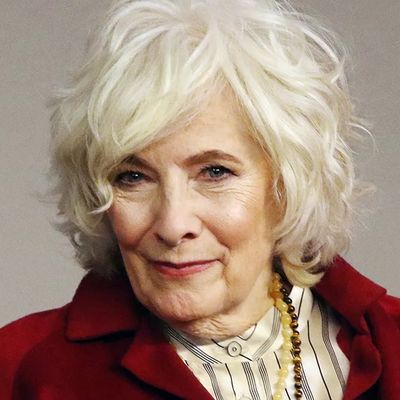

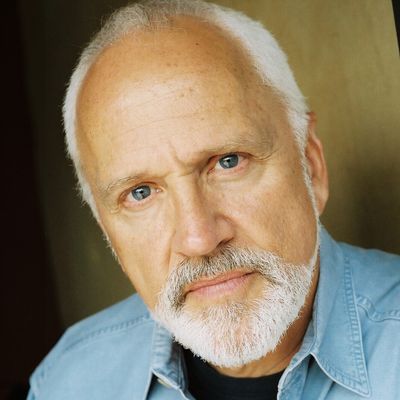

Featured Shows
About
For a special, two-part episode of “The Fabulous Invalid”, Jamie and Rob take an in depth look at the life, work, and legacies of Bob Fosse and Gwen Verdon by talking with actors and dancers who knew and worked with them.
From their first auditions to memorable experiences in the rehearsal room and in performance, Mimi Quillin, Jane Lanier, Chet Walker, and John Rubenstein—along with Betty Buckley and Donna McKechnie—pull back the curtain to reveal the Bob and Gwen they knew. This podcast offers a unique look at one of the most famous, successful, and fascinating show-business duos in history.
This Week’s Music: “Main Title” from “All That Jazz”, “Corner Of The Sky”, from “Pippin”, “On Broadway”, from “All That Jazz”, “Rich Man’s Frug”, from “Sweet Charity”, “On the Right Track” from “Pippin”, “If They Could See Me Now”, from “Sweet Charity”, “Take Off With Us” from “All That Jazz”, “I Gotcha”, from “Liza With A Z”, “Big Spender”, from “Sweet Charity”.
Find us on Twitter & Instagram: @fabulousinvalid
Facebook: www.facebook.com/fabulousinvalid
Rob’s reviews: www.stageleft.nyc
Email us at: info@fabulousinvalid.com
Jamie Du Mont
Twitter: @jamiedumont
Instagram: @troutinnyc
Rob Russo
Twitter/Instagram: @StageLeft_NYC
Jennifer Simard
Twitter: @SimardJennifer
Instagram: @thejennifersimard
Transcript
This transcript was automatically generated and might contain errors.
[0:18] Jamie DuMont: Welcome to the Fabulous Invalid, a Broadway centric podcast where we take a 360 degree view of the theater through interviews with actors, writers, directors, designers, and everyone in between.
[0:32] Rob Russo: I'm Rob Russo, writer and theater critic with StageLeft.nyc.
[0:36] Jamie DuMont: This week and next week, we're doing something a little different with the show.
[0:40] Rob Russo: That's right.
[0:41] Jamie DuMont: As promised earlier in our season, we're doing our first in-depth package show, where you'll hear from multiple voices talking about a person or an event that has shaped or is still shaping the theater world.
[0:51] Rob Russo: First up, a look at the life, work, and legacies of Bob Fosse and Gwen Verdon.
[1:25] Jamie DuMont: He racked up eight Tony Awards for work on stage with musicals ranging from The Pajama Game, Damn Yankees, and Redhead in the 1950s, to Sweet Charity in 1966, and Pippin, Chicago, and Dancin' in the 1970s, not to mention his Academy Award winning direction of the iconic 1972 film version of Cabaret, and his autobiographical masterpiece, All That Jazz, in 1979.
[1:46] Rob Russo: Actress and dancer Gwen Verdon was the hottest and most acclaimed musical comedy star of the 1950s, teaming up with Bob on Damn Yankees and going on to be his muse and wife.
[1:56] Jamie DuMont: Along the way, she won four Tony Awards for her star turns in Can Can, Damn Yankees, New Girl in Town, and Redhead. She created the iconic role of Charity Valentine in Sweet Charity and was the impetus behind the 1975 musical Chicago, for which her legendary performance as Roxy Hart would be her last on Broadway.
[2:16] Rob Russo: The FX miniseries Fosse/Verdon, which premiered back in April, brought a renewed interest in Fosse and Verdon back into the popular culture and the cultural conversation.
[2:24] Jamie DuMont: So we thought we'd talk to some people who actually knew and worked with them. Because Bob and Gwen worked so closely together, we'll talk with our guests about both of them over the next two episodes. Though you'll hear a little bit more about Bob in this first episode and more about Gwen in the next.
[2:37] Rob Russo: Over the past few months, Jamie and I sat down with Mimi Quillin, Jane Lanier, Chet Walker, and John Rubenstein, as well as Betty Buckley and Donna McKechnie, who we also interviewed for their own episodes of The Fabulous Invalid.
[2:49] Jamie DuMont: Throughout this episode and the next, you'll hear their voices. So first, we'll let them introduce themselves.
[2:55] Jane Lanier: Hi, I'm Jane Lanier. I worked with Bob and Gwen initially on the revival of Sweet Charity, starting in 1985, opening in 1986 on Broadway.
[3:06] Mimi Quillin: My name is Mimi Quillin. I worked with Bob Fosse and Gwen Verdon on the 1985 revival, I think it was '85, revival of Sweet Charity, starring Miss Debbie Allen. And I worked as a performer. And then I was brought in to help them reconstruct the show. And I was also asked to be dance captain, so I know where all the bodies are buried.
[3:29] Chet Walker: Hi, I'm Chet Walker, and I have worked for both Bob Fosse and Gwen Verdon together and separately.
[3:36] John Rubenstein: Hi, I'm John Rubenstein. I worked with Bob Fosse in 1972 on the musical Pippin.
[3:43] Jamie DuMont: And then that's our cast. Now on to the episode.
[3:46] Rob Russo: Five, six, seven, eight.
[4:11] Jane Lanier: I first met Bob when I was rehearsing Night of A Hundred Stars 2, assisting Albert Stevenson. And we were in the Minsk rehearsal studios. They're no longer there anymore. But there was, there was no Google, right? No pictures. So I didn't know what Bob Fosse looked like. And I'm in the hallway, and there's this older gentleman, all in black, knee pads around his ankles, and he kept checking me out. And I'm like, oh, who's this? You know, why is this guy checking me out? And one day I was sick, but as we do, you rehearse anyway. And I'm laying down on the couch, and um, oh, prior to that, like I ran into him in the hall and he said hi to me, and I'm like, hi. I like totally snubbed him and walked by.
And then I'm sick and I'm laying on the couch during a break, and he walks by again. He's checking me out. I'm like, oh my god, I'm sick. Um, and then somebody goes, Oh my god, Bob Fosse checking you out like that. And I was like, that's Bob Fosse, the person I've been snubbing all week. So that's how I met him.
[5:18] Rob Russo: Did he ever call you out on it?
[5:19] Jane Lanier: No.
[5:20] Rob Russo: Oh, I thought he liked it, right?
[5:22] Jane Lanier: Probably, because he wasn't used to that. Um, but anyway, then I auditioned for him for a replacement in Dancin' on a Sunday, I still remember. And I wore the same leotard that I wore the day I found out who he was. It's like a bumblebee, not really attractive. But anyway. And I got kept all the way through, and they hired somebody that had done the show, but he asked us to come to his Sweet Charity audition. And I wore the same leotard, and Christopher Chadman, who was a friend, was assisting him, and I saw them talking about me and pointing at me. And Bob Fosse walks over really close and is like, same leotard, smart. Well, 700 girls auditioned for that show between equity and non-equity. There was about 90 of us.
And in there was a lunch break. It was like from 10 to 6. And everyone was buzzing in the lobby after lunch. Cy Coleman’s in the room. And I'm like, I don't know who that is. Because I was a ballet dancer, and I don't know who that is. But I was so nervous because Fosse was in the room. And I go in to sing my 16, whatever bars. And as I'm singing, he gets up and slowly starts walking around me in a semicircle, staring at me as I'm singing. And then I do my big choreography where I take two steps forward, you know, and raise a hand for the big belt note at the end. And when I finished, he said to walk towards a table like that, most people would walk backwards, give her sides. Two weeks later, longest two weeks ever.
Um, you know, I have an answering machine with a cassette tape in it. My light is blinking, so I pressed the button when I came home, and the message was Jane. This is Bob Fosse. You got the show. Uh, the story I heard, which I have never told anyone, but oh, what the hell? Gwen came into the show um after it Bob agreed to be with it. So he brought her in. And she and I had met while I was doing a production with the American Dance Machine, a benefit. And she said that she would only do it if um if she could have Mimi. And I think that that's really sweet because I've never worked with her. But um, I think by then they had hired me, and she said, Well, if you've hired her, then I want Mimi to assist. I had never worked with either one of them before. That's quite a compliment.
[7:56] Rob Russo: It's a very big compliment.
[7:58] Jane Lanier: The first time of working with um the two of them together was transferring um Dancin' from the Broadhurst to the Ambassador Theater. Uh that was the first time working with them together. Bob Fosse calls me at home out of the blue. Can you sing? I said, Well, well, we've sort of. I've done musicals, I can certainly carry a tune, but nobody will ever pay money to hear me sing. Um he said, Can I come over? I said, Absolutely. I said to my wife, Bob Fosse's coming. She said, Oh my god, Bob. So they knew each other. My wife made a lovely dinner. Um she was eight months pregnant at that point. And uh, and I sat down at the piano and played uh two Laura Nyro songs. Laura Nyro, who was my idol and remains so.
And I played them and sang, two of them. And he said, okay. And then we sat on the couch, and he had brought the script of Pippin, and he read all the parts, and I read Pippin, and we read the whole play from beginning to end. We had dinner. He left. We went to bed, my wife and I, and our house was such that the stairs led right to the bedroom door. You know, it was in the Beverly Glen. So we're turning out the lights, and there's a knock on the bedroom door. I said, hmm, it was 11:30 or something at night. I open the door, it's Fosse. He hands me a tape, a cassette, says, Learn the second song. Come to New York in five days. The second song was Corner of the Sky. It was Stephen Schwartz playing and singing all of the songs of Pippin. So I did.
[10:41] John Rubenstein: I saw an ad in the New York Times that day saying any young man between the ages of 18 and 30 show up at the, I think it was the Majestic, I may be wrong about that, theater, to play the title role in the new Bob Fosse musical. So there was a line down 45th Street and all the way down 8th Avenue for like a block or two of all these guys. You know, this was the hippie period. So they're all these guys with different weird long hair and beads and carrying guitars and some straight actor types with their little photographs and their, you know. Uh and I went in there and I sang my two Laura Nyro songs in the pit, you know, played for myself, and they all leaned down and listened, and I sang up to them.
Um and then I got up on the stage and I sang Corner of the Sky. And then they talked for a minute. It was just Stephen and uh and Bob and Stuart Ostro, the chorus. And Roger, her son, who wrote the book. And then at the uh I stood there for about a minute, and then Bob came running down the aisle and said, parts yours if you want it. That was my dream was to ever be on a Broadway stage. And for my first time to play the title role in a big musical and work with Bob. And I was, uh I couldn't believe it. Kid grows up in New York, wants to be in the theater. Oh, he gets his first Broadway show. It's Pippin.
[12:10] Rob Russo: Well, that's why I think I asked you that question about when Fosse said the show is yours. That's not a comment. That's a that's a that's the only other person who ever did that to me was Mike Nichols. And here you're talking about two of the greatest directors in the history of the theater, and they were relaxed and normal.
[12:29] Jamie DuMont: Yeah.
[12:30] Rob Russo: They didn't, you know, have a thing about, well, my people will talk to your people and we'll see, and blah, blah, blah, blah, blah. They said, hey, I want you to be in my show.
[12:39] Jamie DuMont: Right.
[12:39] Rob Russo: And again, that also speaks to the world that we live in now, right? Now you can't be all the appropriate channels, which serves a value and a purpose. I understand that. But there are, it's harder to just say, look, I want to do this thing. I want you, it's yours. But Fosse had a particular love of doing that, because then I heard from other people that sometimes he would do that in the theater like he did with me. But but when, but other times even after big dance auditions like which look like a chorus line, you know, with people being cut and sent home and then everybody goes home exhausted and they hope that they got the job.
[13:17] Jane Lanier: He would call them very often personally, rather than having his producer call the agent and the agent calling their client, he would call him, hi, this is Bob, you know.
[13:28] Jane Lanier: Yeah, you got the part.
[13:29] Jane Lanier: Because he loved that moment.
[13:31] Jane Lanier: He knew what it meant.
[13:53] Jane Lanier: The saint is all wave magic in the hand.
[13:58] Jane Lanier: The very first cut for a lot of his, it's in All That Jazz film, you do a passe jump across the floor diagonally, and he would stand at the door.
[14:06] Jane Lanier: So you're jumping towards him and the open door.
[14:09] Jane Lanier: Um, and so if he cut you, he would say, Thank you very much for coming and shake your hand.
[14:16] Jane Lanier: Everyone say that I won't pass too long.
[14:21] Jane Lanier: Home roadway.
[14:33] Jane Lanier: Somebody like that who calls you personally to tell you you have the show.
[14:38] Jane Lanier: That seems rare too.
[14:40] Jane Lanier: Yes.
[14:41] Jane Lanier: Oh my gosh.
[14:42] Jane Lanier: And when, and then during our break, he was auditioning for Big Deal.
[14:48] Jane Lanier: So I showed up and he said, Oh, I can't remember one of the Broadway houses, and he walks over to me, he's like, Jane, what are you doing here?
[14:56] Jane Lanier: I'm like, Well, I just wanted to audition for a new show for you, Bob.
[15:01] Jane Lanier: And he's like, Okay, you can stay.
[15:03] Jane Lanier: So he let me stay.
[15:05] Jane Lanier: And I get all the way through, but again, he called me, and I happen to be home that time, and just said, he used to call me Janie, and he's like the only person that I allowed to call me Janie.
[15:16] Jane Lanier: Um, he said, I want to keep you in Charity.
[15:19] Jane Lanier: And I broke down crying.
[15:21] Jane Lanier: I was so seemingly always crying, but I'm not.
[15:24] Jane Lanier: But um, um, he's like, Why are you crying?
[15:27] Jane Lanier: You know, and I said, Well, I just wanted to do, you know, create something new.
[15:32] Jane Lanier: Rhythm of life.
[15:34] Jane Lanier: The two of the guys, the assistants were on their back, um, kind of walking on their shoulders backwards.
[15:43] Jane Lanier: And so one had a tank shirt on, so he was getting a bit of, you know, a burn.
[15:47] Jane Lanier: And so Bob took his sweater off and gave it to him.
[15:50] Jane Lanier: So those are the kind of things that you probably don't hear a lot about.
[15:57] Jane Lanier: You hear about all the other stuff.
[16:01] Jane Lanier: I met Gwen first, and I was doing um a benefit for American Dance Machine.
[16:07] Jane Lanier: And I don't know if you know the format, that is hit numbers from uh Broadway musicals, and there's always a host.
[16:15] Jane Lanier: And she and Cheetah Rivera were hosting it up in New Haven, Connecticut at the Schubert.
[16:20] Jane Lanier: And I'd never met either one of them.
[16:21] Jane Lanier: And I had gone to, I had made it to the callback for the women's um.
[16:28] Jane Lanier: I finally got it.
[16:29] Jane Lanier: I went to the men's open call, and then I went to the women's call back, they called me back.
[16:32] Jane Lanier: And I got into the theater that night, and immediately Gwen didn't even introduce herself.
[16:38] Jane Lanier: She just walked up to me and she said, There's a step in the show you're gonna hate.
[16:43] Jane Lanier: And she just in that little funny voice, you know, and she um started talking to me like I had a job.
[16:50] Jane Lanier: And I said, Oh, Miss Verdon, I I just had an audition, I have no idea if I have a callback or anything.
[16:56] Jane Lanier: And um, she just we had a whole weekend of shows.
[17:00] Jane Lanier: So the next day she came by my dressing room and knocked on the door and asked, you know, could she come in?
[17:06] Jane Lanier: And I was like, Of course you can come in, Miss Verdon, Miss Yes, please.
[17:10] Jane Lanier: And she came in and she said that Bob might want to see you again, and she handed me a little torn-off corner of an envelope with Fosse Minsk and a phone number on it.
[17:21] Jane Lanier: She said, Call him Monday morning and he might want to see you again.
[17:24] Jane Lanier: But if he does, here's what you have to wear.
[17:27] Jane Lanier: And then she redressed me from head to toe in a much hotter, tougher.
[17:33] Jane Lanier: She kind of put me in what they're wearing in Chicago.
[17:36] Jane Lanier: She knew.
[17:37] Jane Lanier: She knew.
[17:38] Jane Lanier: And it folklore turns out.
[17:40] Jane Lanier: I found out later that, you know, oh, I that Bob had said when she said, Did you hire Mimi?
[17:44] Jane Lanier: He said, Mimi who?
[17:45] Jane Lanier: And she said, Mimi, you know, that and he said, Oh, Gwen, she's a good dancer, but she looks terrible.
[17:51] Jane Lanier: So then, and then Gwen would say, You never knew how to dress until I told you what to wear.
[17:55] Jane Lanier: And I thought, well, I don't know if that's really true.
[17:57] Jane Lanier: But I I'm very grateful that you told me what to wear.
[18:00] Jane Lanier: So I went back the next week and auditioned for him and did the entire chorus call all by myself.
[18:06] Jane Lanier: And then at the end of it, he just said, Are these all your phone numbers?
[18:12] Jane Lanier: And I thought, is this in isn't this in a film?
[18:16] Jane Lanier: You know, and I said, Yeah, you can call me.
[18:18] Jane Lanier: And I am I went in one more time and I was hired.
[18:21] Jane Lanier: I went into the Edison where Old Calcutta was still playing.
[18:26] Jane Lanier: And it was he and um Psycholman, and they um it was so funny.
[18:32] Jane Lanier: It was like Mimi, this is Psy, Bob this is I don't know.
[18:34] Jane Lanier: Well, hi guys.
[18:35] Jane Lanier: And I sang Take Back Your Mink from Guys and Dolls.
[18:40] Jane Lanier: Like that's like the worst song in the world.
[18:42] Jane Lanier: It turns out Bob hated that musical.
[18:44] Jane Lanier: But it I think.
[18:46] Jane Lanier: But anyway, um he hired me.
[19:13] Rob Russo: What was the dance step she said you were gonna hate?
[19:16] Jane Lanier: The slope, which is the step that you see them doing in the Rich Man's Frug.
[19:21] Jane Lanier: Right.
[19:21] Jane Lanier: Where they're sort of hunched.
[19:22] Jane Lanier: Yeah, they're they're like their backs are humping.
[19:24] Jane Lanier: It's a it is a backbreaker.
[19:26] Rob Russo: Yeah, is it literally?
[19:27] Jane Lanier: Oh yeah, yeah.
[19:27] Jane Lanier: I bet that whole number's a backbreaker.
[19:29] Jane Lanier: Yeah, it is.
[19:30] Jane Lanier: But it's so much fun to do, especially with a live orchestra.
[19:34] Jane Lanier: I mean, it just that music is fabulous.
[19:59] Jane Lanier: Say what you will about the film, but that number is beautifully shot in the film.
[20:04] Jane Lanier: I mean, it's gorgeous.
[20:06] Jane Lanier: And you know, one of the folklores that Gwen uh told me is that um they didn't have a movable cam at that point, and so he was in a shopping cart that she was pushing him around in to make all the to film those shots.
[20:20] Jane Lanier: Oh my god.
[20:21] Jane Lanier: And you know, I yeah, and and I also remember Bob saying in br in pre-production when it was just the three of us, that he and he wasn't egotistical in the sense that he would say, I invented MTV.
[20:36] Jane Lanier: But remember, in the 80s, the the videos, can you remember?
[20:39] Jane Lanier: Yeah, the videos from that, the what they would call they were called jump shots, you know, one it would go flash from one thing to another, which has thus shortened everyone's attention span down to almost zero.
[20:49] Jane Lanier: But in the Frug, he does those.
[20:52] Rob Russo: Yeah.
[20:53] Jane Lanier: And he said, I created that.
[21:10] Jane Lanier: In Los Angeles, when we rehearsed, Gwen was teaching us the Frug.
[21:14] Jane Lanier: Bob had kind of picked who was gonna do what, where, and then he left.
[21:18] Jane Lanier: So for four straight days, eight-hour days, we did the Frug and everything turned in.
[21:23] Jane Lanier: And one morning, I rolled out of bed onto the floor and crawled on my hands and knees into the shower because I couldn't walk.
[21:32] Jane Lanier: Wow.
[21:32] Jane Lanier: Because it was so opposite, and my body was just, and I was in, you know, perfect shape then.
[21:39] Rob Russo: So when you say turned in, so when you dance ballet, are you turned out?
[21:43] Jane Lanier: And with Fosse, particularly in the Frug, everything's turned inward.
[21:47] Jane Lanier: Yes, with ballet, you're turned out almost always.
[21:51] Jane Lanier: And with him, you're either parallel or turned in.
[21:56] Jane Lanier: So he would use both.
[21:57] Jane Lanier: Occasionally, like in a Blackbird, we start in a ballet first position, and it is more ballet, but then he goes to parallel or an actual turned-in position.
[22:07] Jane Lanier: So your hips are rotating both ways.
[22:11] Jane Lanier: Yay.
[22:16] Jane Lanier: And the massage bills, yes.
[22:18] Jane Lanier: The massage bills, yeah.
[22:19] Jane Lanier: But that helps.
[22:28] Jane Lanier: And he said, but John, you can't dance.
[22:32] John Rubenstein: I said, I'm aware of that, but what can we do?
[22:36] Jane Lanier: And he made that number on The Right Track, which is one of the numbers.
[22:41] Jane Lanier: And he had Ben Vereen dance around me and try to teach me to dance as a way of uh as a metaphor for pulling me back into the swing of things because I was depressed.
[22:54] Jane Lanier: And he we danced.
[22:56] Jane Lanier: I actually had to do a pirouette and do all this stuff.
[23:00] Jane Lanier: But the whole point was that I couldn't dance.
[23:03] Jane Lanier: Baby loving, flustered, keep those hopes aloft.
[23:11] Jane Lanier: Keep cool as custard, trying hard, stepping soft.
[23:17] Jane Lanier: There's no trick to stay sensible.
[23:21] Jane Lanier: Despite each call the sack, cause each steps indispensable when you're all the right track on the track take it in on them.
[23:37] Jane Lanier: Mr. Fosse never left people with egg on their face.
[23:41] Jane Lanier: Our job as choreographers are to make the performer or the dancer look brilliant.
[23:46] Jane Lanier: Not to make us look brilliant, because if they don't, you don't.
[23:51] Jane Lanier: And if you make them feel a certain way about themselves, something given to you, you know.
[23:51] Jane Lanier: We all give gifts to our loved ones for a reason, you know.
[24:01] Jane Lanier: Well, sometimes it's obligatory, but but basically you give that because it's something from you to someone, and it's not to everyone.
[24:08] Jane Lanier: And that's one thing a director or a choreographer can give to an to an actor or an actress, dancer, singer, uh, performer.
[24:17] Jane Lanier: They can give them something that's gonna make them, you know, as he says, you know, if you stick with this, I can't make you a great dancer, but I'll make you a better one.
[24:26] John Rubenstein: How heartbreaking would it be?
[24:29] John Rubenstein: And this is not to dog any of us who were involved in anything he did, but how heartbreaking must it be that he sees something now that he didn't see then.
[24:39] John Rubenstein: But if he had seen it then, what would now look like?
[24:43] John Rubenstein: That's someone who thinks in the process, someone who works in the process, and the end result is because you did the process.
[24:49] Jane Lanier: One of the things of Mr. Fosse's work, in my opinion, is not just about the steps, it's where they come from.
[24:54] Jane Lanier: Why are they?
[24:55] Jane Lanier: What's the story?
[24:56] Jane Lanier: What's behind it?
[24:57] Jane Lanier: Um if you don't get to give that to someone, they may or may not shine.
[25:02] Jane Lanier: And then you get to get in there and go, you know, if you can't and it tweak, and all of a sudden they go ding ding.
[25:09] Jane Lanier: I get it.
[25:10] Jane Lanier: That's exciting for a creator.
[25:13] Rob Russo: What do you think it is that makes Bob Fosse's choreography so distinctive?
[25:18] Jane Lanier: Because you have to act it.
[25:20] Jane Lanier: Now, that's not to say you don't have to act Agnes de Mille or Balanchine's not a good choice because he was known for the abstract ballet, but or uh so many other um choreographers, but it was so specific.
[25:32] Jane Lanier: And he and Bob would even admit sometimes when we would be working on um, say auditioning just one person for something, and they would come in and do it, and he would say, That's there's really nothing to that dance.
[25:43] Jane Lanier: But you know, so you would realize it had to be acted.
[25:48] Jane Lanier: So um, not to say there weren't technical, there was tons of technical stuff in it, but every moment is acted.
[25:56] Jane Lanier: And so a number like if my if your if my friends could see me now, there are so many wonderful references.
[26:03] Jane Lanier: It's like what that builds like a monologue when it's properly done.
[26:08] Jane Lanier: If they could see me now, that little gang of mine.
[26:15] Jane Lanier: Um eating fancy chow and drinking fancy wine.
[26:19] Jane Lanier: I'd like those stombo bums to see far up back, the kind of top drawer, first rate, chums I attract.
[26:27] Jane Lanier: All I can say is, wow, we look at where I am tonight.
[26:32] Chet Walker: I landed, pow, right in a pot of jam. What a setup. Holy cow, they'd never believe it of my friends. God save me now. And in it are, you know, Gwen would say to me, here's Art Carney shooting his cuffs. You know, right before she pops the hat on one hip and she does a little wrist thing, you know. That's Art Carney shooting his cuffs. This is Reginald Van Gleason strutting, putting his hat on and strutting up the stage. This is Schnauz Durante, you know, ha cha. When the first struts. So there's there's all these references, and then there's there's Groucho Marks going, you know, going around. And Chaplin, isn't Chaplin in there? Yeah. And there's Chaplin in everything Gwen does. And she she would explain it to me, you know, you scoot along on your heels, and then you grab the door frame and you swing your hips around and shake her behind like a like a little fat girl who has to pee.
They'd never believe it. They'd never believe it of my friends. God see me now. Hi, girls, it's me, charity. So there were always these images that you played. And if you played the images and not the literal, you yeah, they had to play the literal choreography, but your body was gonna do that. Right. You know? That's what makes the that's what makes it so different. And because it's gotta the shapes are cartoonish. You don't perform it as an artist in a cartoon manner. But if I sometimes say when I'm teaching it, think cartoon when you make these shapes, and don't try to be sexy. You either, as Gwen would say, you either are or you aren't. Bob would say, let them come to you. And so if you do that, you leave space for the audience.
So if I'm not acting sexy when I do Big Spender, I allow you to say, oh, that blonde is really hot. Or I and I remember the first time I saw a dancin, way before I ever even thought I'd get to work with him. And I I would go, oh, I love that dancer and that dancer, oh, they're so hot. There, but they weren't telling me they were hot. They let me come to them. They left room for me. And that's what Bob, that's the way Bob directed it. That's why it worked. One of my favorite parts of Fosse's choreography is almost the simplicity. Because it can appear to be simple until you try it. Because he isolates two to four parts of your body at the same time. So your shoulders doing one thing, your hip is doing another, your head is doing something else.
And that's what I love. And I love teaching it because it's like, I'm like, okay, be get in this position, now walk. And they're like, what? And everyone laughs. The Fosse style is so unique. You know, I mean, everyone's talked about this, but he didn't, you know, he didn't have the ballet turnout, so he turned in. He didn't like his hands, so he wore the gloves. He was balding, so he put the hats on. But I love that he took his faults, or what he thought were his faults, and made it into a positive. And this incredible style that no one else has ever done.
[30:26] Mimi Quillin: My name is Candace.
[30:28] Betty Buckley: My name is Jennifer.
[30:29] John Rubenstein: My name is Rema.
[30:30] Jane Lanier: My name is Janny.
[30:31] Chet Walker: My name is Austin.
[30:32] Rob Russo: My name is Sammy.
[30:33] Jamie DuMont: My name is John.
[30:34] John Rubenstein: My name is Gary.
[30:38] Mimi Quillin: And don't forget about our group fun class.
[31:24] Chet Walker: Still, there was something nagging at him, especially following the runaway success of Michael Bennett's A Chorus Line in 1975, which had eclipsed his last original collaboration with Gwen, Chicago. In the years after, he'd openly confess to confidants, how do you call yourself a choreographer when you never did a ballet? And so, he created a new musical song and dance entertainment called Dancing, which took Broadway by storm in 1978 and became the second longest-running show he worked on in his lifetime, after Pippin, running from 1978 to 1982 and launching two national tours from 1979 to 1983. A daring show reflecting his sole authorship, it had no book and a few lyrics, but was an unabashed celebration of dance, ranging from tap to dance to ballet, all in that distinctive Fosse style.
If the movie All That Jazz would be the autobiography of his life, dancing was the autobiography of his choreography. It's never been revived, there was no cast recording, and little video exists online, so it's easy to forget about dancing, but it was an important show in his career, his ballet, and remains a major part of his legacy. Dancing. Dancing. Dancing. A new musical song and dance entertainment.
[32:54] Chet Walker: Well, I had no idea where that was. Because, you know, nothing's ever in the ambassador theater, right? Because it's uh a triangle. Funny, there's something there now. Oh, yeah, yeah, yeah. Um, but it's a theater, not a noise funk went forever. But usually it's I didn't know he says on 49th Street. Just never knew that place. And so I went there and we're looking at this theater, and he says, Do you think that we can get the show in here? And I went, Yeah. Because that's just me. And he says, But we're two feet or four feet short. Yeah. And you know, where are we going to put you know the bandstand? Fly it. He's like, this is Jeopardy here. What can you do with a bandstand? You fly it. And he says, but you know, what will it look like?
You know, it'd be cramped. I thought, well, you know, at the Broadhurst, where it's the Broadhurst is low. And so therefore the audience is kind of like high up to it. And this is not so much. It's like a normal theater in a sense. The only part of that theater is normal, you know, because it's triangle. And we go like this. So looking down this way, you get to see more patterns than you may have done at the Broadhurst. So yeah, you're going to you're literally going to see as much, if maybe not more. And they said, really? And yeah, I think so. I wanted a job. I didn't want to end. And uh and it was like, oh God, this is gonna be great because it's gonna be new. It's gonna be uh new, you know.
They were gonna make changes in costumes and whatever. You know, we were we were refurbishing and we were gonna hit it, and he and Gwen were coming in with along with Christopher Chapman, um, and were going to play. Play wherever they could play, you know, and and work with people. Some people who, like Richard Cortes was was in the show originally, um, uh, and he played, uh Christopher played it originally, but uh Richard took over. The old Bojangles and Bill Hastings was the spirit. And they were working in the lobby, which is on an angle, and they were working, and Mr. Fosse and Miss Verdon were there working and working, just because she had known Bill for a hundred years. Bob was just getting to know him, of course, know Richard forever.
And you couldn't get them out of the lobby. Because it's all those details. And Richard, of course, is like this amazing man, and both of them are, but it's just you have a you have a new spirit, and you have the old guy, and how do we make this work? And that's the process. And literally trying, we need to move on. Really, not so much. Because these are, as you called them, nuggets, you know, they're gems. They're these moments that make you as an audience watch the show without you even knowing that maybe that's why you're watching the show. Right, right. You know, you're not you're not actually in on that. You're not in on that process, but the because the process happened, you are in on the glory of it.
We got gorgeous girls, handsome men. We got spins, leaps, jumps, cartwheels, and other incredible body gyrations that I am not allowed to mention on television. Dancing at the Broadhurst Theater, directed by Bob Fosse. To be able to take dancing from a theater and move it to a new theater was an opportunity to do new. When you said um he would change things in dancing, was that dancer-specific? So a new dancer would come in and he would change something for that particular person's talent? Yeah, well, well, or that that person excited him, or that person, you know, was doing uh, you know, Miss Ranking got to do trumpet solo, but Lydia O'Barca did it, and she's totally different, and Janet Elber is totally different.
You know, Marianne New, keep going, Barbara Yeager, all of those ladies, they're they're all, you know, and Gail Benedict, all of them are were different. And so when he got to work with them, he would, you know, get to play with them. He loved playing. The end result was not as exciting as the process. Ever. That's really interesting. Yeah, because to try to get him to come see a show afterwards is like, okay, this is really hard. I get it. Now that I directed I choreograph, I understand. Because once you let it go and it opens, the children take it.
[38:05] ♪ Musical number: "Kiss Me" — performed by Chet Walker ♪
[38:05] Betty Buckley: When we sat down with Betty Buckley back in August, she shared the story of how she came to be cast as the replacement Catherine in the original Broadway run of Pippin and how she got to know and work with her idol, Bob Fosse. This show came out Pippin. So I called my agent, and I had a super agent, Eric Shepard at Ashley Famous, which then became ICM, but he was a power broker agent. I was very lucky to be signed by him when I was a junior in college. So I called Eric and I said, Look, I hear there's this show, Pippin and Fosse's doing it. Blah blah blah, I gotta be up for that. He said, Oh, there's no part for you, Betty. And I was like, What do you mean? There has to be. No, it's Bob Fosse.
He's like, Well, no, there's nothing. All right. So I go see Pippin. And of course, Jill Clayburgh, wonderful Jill Clayburgh, is doing Catherine. And I'm like, What? There is a part. And Jill Clayburgh's doing it. And she's Eric's client too. Why did this happen? I call him and I say, Eric. And he said, they didn't want to see you, Betty. And I said, What do you mean? I have to meet Fosse. It's everything to me. You don't understand. And he goes, they don't want to see you. And I'm like, okay. So six months go by, and there's this uh great, great prop guy who also was on cats with me, and you know, just a genius guy. And he sees me on the street and he says, Betty, are you going in for Pippin?
And I'm like, what? And he says, Jill's leaving, and you've got audition for Pippin. And I'm like, Well, so I I call Eric and he goes, They don't want to see you, Betty. So a few days later, I get a letter from Michael Shirtleff, who is the casting guy.
[39:48] Betty Buckley: Our prop man Merlin says that you would be interested in coming in for Pippin. And, you know, your agent told us you were out of the business. And we would like to see you Wednesday. Mr. Fosse looks forward to meeting you, and Mr. Osho sends his love. I call Eric. I'm like, "Eric," and he goes, "Oh, Betty, for Christ's sake, don't be so naive." He said, "I didn't send you in because, you know, I could get $150 dollars more a week for Jill." So I went in and I got to sing and dance and everything for Bob Fosse. And I was like, "Oh, this is like a dream come true," and they cast me in. He came back and directed me into the show instead of having the stage manager put me in, which has been great.
And I learned so many wonderful things. Like one day he comes up, and he was really funny because he would smoke cigarettes constantly, and they would burn down to his lip. And there would be like, I don't know how he did this, but there would be like at least an inch or an inch and a half of ash still attached to the cigarette on his lip. And I was like, "How does he keep that balanced?" You know? And he never wanted to make eye contact. So he's always, and I'm always like, "This is the Texas girl thing," you know, trying to be in his eyes, you know, like trying to get his eyes. So I was always dancing around him to try to be sure I saw him straight on. And he was always avoiding that. It was really funny.
And so one day he comes back and he used to give me these beautiful notes about my performance as Catherine. I learned so much. And he came in and he said, "Betty," I said, "Yes, sir." And he said, "Um, you're a very talented young woman." I said, "Thank you." And he says, "And you're a very supple performer." I said, "Thank you." And he said, "But you're a little too polished sometimes." And he said, "So when you feel good about what you're doing, just think about this. It's probably wrong. I don't want anyone around me telling me what I did I want to do." And it was not the first time I had heard that when we did the revival of Pajama Game with Hal Linden, Barbara McNair, Cab Callaway, Willard Waterman, Mary Jo Catlin, keep going, keep going.
There was a question of the show because he had just opened Pippin. And he was overheard because we were in the wings all going, "We're gonna be fired," and was, "I have no idea what I did in 1954, but if you'd like me to do something new." So from my experience, which a lot of my experiences different than a lot of other people's experiences, which is great, but I'm not gonna change my tune about that. He didn't want to recreate. I mean, he took Sweet Charity, I'm sure you've heard this, and he took like 20 some odd minutes out of it, you know, because in 1965 and in 1986, it's just or 85. It's different, people's attention span or whatever, and he was great at doing that. You know, and Gwen remembered what she did.
She was, you know, she was Charity, probably knew everything. Working together on that was great fun to watch. I was in the women's dressing room in LA, and it was empty, and I was taking a little nap, and I heard someone in the room, and I just thought, "Oh, it's somebody back early from dinner, it's wardrobe." But then it was like, "Wait a minute, something made me get up and look," and it was Bob. And Bob was not touching anything, but he was going through the dressing room looking at each one of our dressing tables, which is kind of creepy and also kind of really lovely. You know, it was just like Bob. I mean, it was like so wrong and so right at the same time, you know. You just couldn't resist him.
And I saw him and he could just looked at me. We looked at each other through the mirror, and he just said, "You know, I just love seeing all your photographs and stuffed animals and where you sit." And he loved women, you know. So he was a little taken aback, and then he just said, "Uh, Gwen tells me that you can sing Big Spender with a lit cigarette in your mouth." And I said, "Well, yes, I can." I don't know if I could, but I thought, "Well, if Gwen says I can, I can." I know what she's doing because she was doing that all the time. Oh, that there's a wink on that beat, you do it. You know, she was always threading lovely little things and shooting them my way. You do that, you do that. And to other people, but yes, I was treated a little bit, but you know, doing extra work.
So anyway, he then said to me, "Here's how you do it." And he did his, you know, classic cigarette. Of course, we could smoke anywhere those days. And he lit up in the dressing room and he tucked it in his molars, you know, on the in the back, and said, "Like this." And I remember saying, "Can I smoke a 100?" Because I didn't want it that close to my face. And he said, "Well, I don't know if they had them back then." And I thought, "Oh, for God's sake." But I did wind up smoking one 120s because it was that. It would just burn, you know, and especially when the curtain came up. This was a few numbers into the show, but you're still getting the backwash of the air conditioning coming at you, and so during Big Spender, there was a whoosh that would happen, and I would have tears running down my eyes because the smoke is going in it, and you can't blink during that number.
And, but I did that, and it was Ann Ryan King when she came into the show, she said, "You know, he gave you that cigarette, and if I were you, I'd have the fire engines coming after me." Smoke it. And, you know, I was still trying out how to smoke it in the number, but she was the one that said to me, "He gave it to you. Use it."
[45:28] ♪ Musical number: "Big Spender" — performed by Betty Buckley ♪
[46:31] Betty Buckley: When you were staring and you were looking, we were looking into the 12th row of the orchestra.
[46:36] Jane Lanier: Oh, you all looked into the same row?
[46:38] Betty Buckley: I looked into the same row but straight ahead of ourselves. So there was this sort of bending of reality. There was one, and then there's one customer. And but we all look straight ahead at that one customer. And the only time we all sort of gather and you appear to be looking at the same person is when they all run to the edge of the bar and it's to on stage left, and it's the call the amoeba, where they slink along and then they break up.
[47:07] Chet Walker: What do you say to us?
[47:09] Betty Buckley: Hey, how's the vota?
[47:10] Chet Walker: Led, I could give you some.
[47:13] Betty Buckley: Are you ready for some fun?
[47:15] Chet Walker: How would you like her?
[47:16] Betty Buckley: Let me show you a good time.
[47:18] Chet Walker: Hey, big spender, hey, big spender.
[47:30] Betty Buckley: That number, as far as his choreography, you can learn all the moves. And if you don't do that number from inside, it's not worth it, and it doesn't work. Bob would go down the line in rehearsal, and he would whisper in our ear, "Pick me." Which was very interesting. Because again, it was okay. How many meanings are there? But he was also when we what the pick me was when we would sing me, me, and our lips had to be like a combination of a kiss and saying pick me. It had to be internal pick me, pick me, why I needed to be picked, and so he really pitched us against each other to compete. And even though that was a particularly close cast, we were pitched against each other to compete, and it was fun. We would see what so and so had come up with. Oh, I see that, and we were all wearing those press on nails, and our hair got bigger, and the boobs came up higher, and I mean it was just fabulous.
[49:14] Chet Walker: How about it, palsy?
[49:17] Betty Buckley: Yeah. When we were given that number, I swear every the ten of us in that revival, we almost broke parts of our bodies just to get into the most torqued positions we could find. We did, I don't, you know, you would Bob inspired that. You would do just about anything to make it work for him. If you were picked by him, you got to wear the mantle of being a Fosse dancer. And that was very special, and that I will always have, and I feel proud of being able to wear that mantle. But there was also something you never did less than 300% for him. And it wasn't because he was demanding or, you know, hard on us, because with Charity, he was fantastic the whole time and a gentleman, and he would, we're doing I Love to Cry to Weddings, and he's like, "I want you to move, you know, three numbers to the left."
And he would come up and take your hand and move you, ask you to move. So you wanted to be the best you could be for him, always, at all times. And not in a "Oh my God, I hope he likes me" way, but because you were proud, and you wanted to make him proud. For the most part, we were on the same wavelength, and he was very respectful. Now, you know, he had his reputation for going after the girls. So I'm not sure if all the women dancers, and I've been married to two of them, in fact, would say he was respectful. I don't know. But from my vantage point, and not just to me, but sort of to everybody, including those women that he was attracted to, he didn't act like he had all the answers, and it was your job to somehow glean what they were and come up with them, either as a dancer or as an actor or as anybody else.
We were working together, and that was extremely uplifting. And I can't say that every director has treated me that way, or in their sort of work mode treats everybody else like that. He was respectful, he was sweet, he was funny, and yet he knew exactly what he was doing.
[52:08] Jamie DuMont: That's it for this episode. Stay tuned for more with Bob Fosse and Gwen Verdon next week. The Fabulous Invalid is a production of OM etcetera and the Fabulous Invalid LLC, and a proud member of the Broadway Podcast Network. Our theme music is by Lucky Chops. Today's episode was edited and engineered by Aaron Kaufman and Charles Van Kirk. Find us online at the Fabulous Invalid.com and on social media at Fabulous Invalid, and on iTunes, Spotify, and wherever you find your podcasts. And be sure to tune in next Wednesday.
[52:40] Rob Russo: No, no one finds what show.
[52:44] Jamie DuMont: I love my life in all.
© Broadway Podcast Network, All Rights Reserved