

On this week’s episode, Rob and Jamie venture to the “City of Brotherly Love” to catch up with the fabulous Carolee Carmello. As she winds down the national tour of “Hello, Dolly!”, they sit down to discuss her remarkable career, her incredible voice, and what playing Dolly Levi has meant to her at this time in history... Read More
From the show: The Fabulous Invalid
Guests

Featured Shows
About
On this week’s episode, Rob and Jamie venture to the “City of Brotherly Love” to catch up with the fabulous Carolee Carmello. As she winds down the national tour of “Hello, Dolly!”, they sit down to discuss her remarkable career, her incredible voice, and what playing Dolly Levi has meant to her at this time in history. Before that, Rob and Jamie geek out about their Carolee Carmello fandom and, a bit later, Rob gives a look into Philadelphia’s historic Academy of Music.
This week’s music: “Under Separate Cover”, from “A Class Act”, “The Winner Takes It All”, from “Mamma Mia”, “Prologue”, from “City of Angels”, “Rose’s Turn” from “Gypsy”, and “You Don’t Know This Man” and “All The Wasted Time” from “Parade”.
Find us on Twitter & Instagram: @fabulousinvalid
Facebook: www.facebook.com/fabulousinvalid
Rob’s reviews: www.stageleft.nyc
Email us at: info@fabulousinvalid.com
Jamie Du Mont
Twitter: @jamiedumont
Instagram: @troutinnyc
Rob Russo
Twitter/Instagram: @StageLeft_NYC
Jennifer Simard
Twitter: @SimardJennifer
Instagram: @thejennifersimard
Transcript
This transcript was automatically generated and might contain errors.
[0:00] Carolee Carmello: I'm Carolee Carmello, and you're listening to The Fabulous Invalid.
[0:15] Jamie DuMont: Welcome to The Fabulous Invalid, Broadway's podcast, where we present essential conversations with a curated roster of the best, most important, and innovative theater makers working today, from actors to writers, directors, designers, and everyone in between.
[0:29] Rob Russo: We took our name from the title of a 1938 play by Kaufman and Hart that has since become a loving nickname for Broadway itself.
[0:36] Jamie DuMont: Always deemed on the verge of decline, yet always bouncing back, the fabulous invalid.
[0:41] Rob Russo: I'm Rob Russo, writer and theater critic with StagedLeft.nyc and host of Stage Left the Podcast, which you can also find on the Broadway Podcast Network.
[0:52] Jamie DuMont: And I recommend that you do.
[0:53] Rob Russo: It's quite good.
[0:54] Jamie DuMont: Thank you, Rob. Jamie happens to produce it with me.
[0:57] Rob Russo: So, uh, yeah.
[0:58] Jamie DuMont: But I'd be a fan either way.
[1:00] Rob Russo: I don't like that.
[1:01] Jamie DuMont: I think it's great.
[1:02] Rob Russo: And I love what you guys talk about. I get to sit in the room, which is a real treat.
[1:06] Jamie DuMont: Um, what's hard for me is I don't get to use my big mouth.
[1:10] Rob Russo: Right.
[1:10] Jamie DuMont: Um, it's particularly hard when Casey Mink is in the room because I pretty much agree with everything she says.
[1:16] Rob Russo: Well, yeah, I mean, it's been fun to have a to create a platform for younger theater critics and journalists to talk because, you know, it doesn't really exist.
[1:24] Jamie DuMont: It's fun and it's important.
[1:25] Rob Russo: I agree with you.
[1:26] Jamie DuMont: I really started it.
[1:27] Rob Russo: Yeah, absolutely. Um, that's not what we're here to talk about.
[1:31] Jamie DuMont: No, no, no, no, no, no. So last week we had the incredible pleasure of taking a little field trip out to Philadelphia.
[1:39] Rob Russo: Pleasure or privilege.
[1:40] Jamie DuMont: Privilege, honor, all the above. Um, to catch the national tour of Hello, Dolly!, which is in its final weeks now.
[1:50] Rob Russo: Um, and we had seen it in August when we interviewed Betty Buckley for the show, first episode of the season. If you didn't listen to it, go back and check it out.
[1:59] Jamie DuMont: Um, that was up in Boston, and so we went the other way to Philly and um got to see Carolee Carmello.
[2:07] Rob Russo: Oh, Carolee Carmello.
[2:09] Jamie DuMont: Carolee Carmello, who I've been obsessed with since I was, I don't know, 12 years old.
[2:13] Rob Russo: You don't get to own that, my friend.
[2:14] Jamie DuMont: What?
[2:15] Rob Russo: I think we all own it.
[2:17] Jamie DuMont: I was just giving some context.
[2:18] Rob Russo: Oh, all right. All right. Sorry, sorry, sorry, I didn't mean to jump down your throat.
[2:21] Jamie DuMont: Um, I'm obsessed with her too.
[2:23] Rob Russo: Yeah, yeah. But well, probably less so than you. I mean, like I feel like when we first met, you were like, you worked Carolee Carmello into the conversation.
[2:29] Jamie DuMont: Right.
[2:29] Rob Russo: No, well, of course, yeah.
[2:31] Jamie DuMont: Which is, you know, good.
[2:32] Rob Russo: Yeah, well, you know, it's funny. Um, you know, you and I have had, I think, as has any serious musical theater fan, such a relationship with Hello, Dolly!, and specifically this production.
[2:43] Jamie DuMont: Um, you know, when it was announced that it was coming to Broadway, which is hard to believe, what was like four years ago.
[2:49] Rob Russo: Um, I was so excited because this is a show that, you know, sort of got me hooked on the theater to begin with.
[2:56] Jamie DuMont: Um, and Bette Midler, obviously headlining that revival was so electric and so exciting, and it was just, you know, it was such a gorgeous, perfect. It was everything you wanted in a revival of Hello, Dolly!.
[3:05] Rob Russo: Even before one got to see the revival, just the art.
[3:12] Jamie DuMont: Well, the art, but the just the idea of Bette Midler back on Broadway as Dolly Levi, it just was like you could just picture it.
[3:20] Rob Russo: Yeah, it just you saw what it was, it was exciting.
[3:23] Jamie DuMont: Oh, yeah, and then it's been just such a journey to go from, you know, seeing Bette Midler to Donna Murphy, who played Tuesdays, who I, of course, uh we had her on in the second episode of this show. Check it out.
[3:35] Rob Russo: Unbeknownst to us at the time because we didn't know each other. We were both in the audience for Donna Murphy's first performance, which was the Monday after the Tony Awards of whatever year that was, 2017.
[3:45] Jamie DuMont: 2017, yeah, it was after the election.
[3:48] Rob Russo: Yeah.
[3:48] Jamie DuMont: And then, you know, obviously Bernadette Peters, uh, and then Betty Buckley on tour, uh, which was so thrilling, and now Carolee Carmello closing out the tour.
[3:56] Rob Russo: And it's funny, when they announced that the show was closing on Broadway and that Bette Midler was coming back to close it, literally, one of the first thoughts that came into my mind was, oh no, we'll never get to see Carolee Carmello do it. You know, like that's how obsessed I am.
[4:09] Jamie DuMont: Rob is always casting Carolee in something.
[4:11] Rob Russo: Well, yes, uh, as are casting directors, because she works nonstop.
[4:15] Jamie DuMont: She works all the time.
[4:17] Rob Russo: Yeah, I mean, it's unbelievable. I mean, we in preparation for that interview, I went back and looked at her bio and I kept remembering, oh yeah, that's right. She did this. Oh, that's right. She did this. She's been in 15 Broadway shows.
[4:28] Jamie DuMont: You're gonna tell us what some of them are?
[4:29] Rob Russo: Yeah, she made her Broadway debut in City of Angels and then quickly left to go uh headline the National Tour of Chess in 1990. Um, but she was in Falsettos on Broadway and also on tour 1776, uh, which I also saw her that was in 1997 at revival, but I also saw her uh do a one night only concert of an all-female 1776 at 54 Below. She played John Adams, and she was unbelievable.
[4:52] Jamie DuMont: Can we see that production on Broadway?
[4:56] Rob Russo: I mean, I'm hoping that is the production that's coming to Broadway, fingers crossed. Um, but then she was a replacement in um The Scarlet Pimpernel, obviously Parade, Jason Robert Brown's musical from 1998 that she was Tony nominated for and should have won.
[5:10] Jamie DuMont: She should have won.
[5:10] Rob Russo: Uh, I'm sorry to the person that won that year, but I feel that it was Carolee's awards. Her DNA is in that part, and it always will be.
[5:18] Jamie DuMont: Oh, I'm so frank. I can't really imagine a production without her in it.
[5:23] Rob Russo: Yeah. Although we do want another production.
[5:25] Jamie DuMont: Well, we want all the productions of Parade.
[5:27] Rob Russo: Um, but you know, Kiss Me, Kate, You're in Town, Mamma Mia. She was in Mamma Mia for four years on Broadway.
[5:31] Jamie DuMont: It's a long time.
[5:31] Rob Russo: It's a long time. Um, as Donna Sheridan. Uh, she was in Lestat, The Addams Family, Sister Act, Scandalous, uh, Sister Act with Jennifer Simard, of course.
[5:41] Jamie DuMont: Who currently stars on Broadway in Company.
[5:44] Rob Russo: Uh, by Company starring Jennifer Simard and some other people, yeah.
[5:48] Jamie DuMont: But I know I can't be. I'm getting just so our listeners know, I'm going to be saying that every episode from now on.
[5:54] Rob Russo: Forever.
[5:55] Jamie DuMont: Yeah, yeah.
[5:55] Rob Russo: Um, but just to round out her Broadway credits, um, she was in Finding Neverland and Tuck Everlasting.
[6:01] Jamie DuMont: Ugh, Tuck Everlasting.
[6:02] Rob Russo: Right. Um, but she works nonstop because as we know, theater isn't just Broadway. Um, you know, she did Gypsy in Sacramento last year. Uh, she's doing this national tour of Hello, Dolly!. I mean, she's unstoppable, and she, you know, she can play anything.
[6:17] Jamie DuMont: If that roster of shows proves anything, it's that Carolee Carmello can do anything.
[6:22] Rob Russo: Can I just say, can I peek behind the curtain just a little bit, Rob?
[6:26] Jamie DuMont: Please do.
[6:27] Rob Russo: So when we, we obviously we we're recording this after the fact, so we saw the show, as you all know. And the minute Carolee, like barely through, I put my hand in, and she does this very signature Carolee vocal maneuver.
[6:42] Jamie DuMont: And not as it happened, not only did I feel Rob's entire body warm up, he like started nudging me.
[6:48] Rob Russo: I nudged it.
[6:49] Jamie DuMont: Like he was so excited.
[6:50] Rob Russo: Yeah, it was a little aggressive, but yeah, that's I mean, I'm okay with an aggressive nudge.
[6:54] Jamie DuMont: But it was just I and I knew exactly what you were feeling because I was feeling it too. I wasn't physically abusing you over it, but I did have the same reaction, and I think everyone in the theater had that same reaction.
[7:08] Rob Russo: There's just something about the tenor of her voice and the way she, the power, even in a quiet moment that is unparalleled.
[7:16] Jamie DuMont: Yeah.
[7:17] Rob Russo: She's magnificent.
[7:18] Jamie DuMont: Well, you're gonna hear a little of her voice coming up, because I, you know, because we can, of course.
[7:23] Rob Russo: Exactly. I'm gonna exercise that right.
[7:25] Jamie DuMont: Um fabulous. Well, let's get to that interview. We had the best time chatting with her backstage.
[7:29] Rob Russo: She was very generous to sit down with us before going on backstage at the Academy of Music in Philadelphia.
[7:35] Jamie DuMont: Um, and it was a fun interview.
[7:37] Rob Russo: It was.
[7:38] Jamie DuMont: Okay, here we go.
[7:39] ♪ Musical number: "Under Separate Cover" — performed by Carolee Carmello ♪
[8:11] Jamie DuMont: Thank you so much, Carolee, for joining us today.
[8:13] Carolee Carmello: You're welcome. We're backstage at the Academy of Music in the Ormandy room.
[8:18] Jamie DuMont: Are we?
[8:18] Carolee Carmello: Very fancy.
[8:19] Jamie DuMont: Is it Eugene?
[8:20] Carolee Carmello: Oh, it is Eugene Ormandy. There he is.
[8:22] Jamie DuMont: He's a handsome fella.
[8:24] Carolee Carmello: He's looking over our shoulder. Hi, Eugene.
[8:27] Jamie DuMont: Well, as you enter your final month of this tour of Hello, Dolly!, um, what has it been like slipping into this iconic role?
[8:35] Carolee Carmello: Um, let's see. I don't know if I would say slipped. Uh, you know, it took a lot of work, but and and it's an amazing role. It's so well written. It's such a pleasure to do every night because it's just such good material, you know. And you don't often get that. I shouldn't say that. You don't always get that, I should say, because you know, there are some shows that that I've done in my past that take a little more coaxing to tell the story of, but this one is so well laid out and and so well directed by Jerry Zaks. So it's a pleasure. Um, but yeah, there's a certain amount of pressure slipping into that red dress. You know, there's there's so many amazing, iconic women that have played this role. So um I just try to, you know, filter it through my sensibilities and hope that it comes out with some version that's acceptable to people.
[9:31] Jamie DuMont: Can you pinpoint what you think makes your Dolly your Dolly? What makes your Dolly special or unique to you?
[9:37] Carolee Carmello: I'm not good at that at pinpointing things that are good about myself. Um gosh, I mean, I think her humor is so important, and I I think I bring that to the table. I think the other part of her that I find so fascinating in the writing is her vulnerability, you know. I mean, there's all those great Thornton Wilder monologues that are part of the show that were in the original matchmaker play. I'm sure people know that, but I just throw that out. Rob has read it.
[10:08] Rob Russo: Yeah.
[10:10] Carolee Carmello: Me too. Um, so when she's, you know, in that sort of private space and kind of communicating with her deceased husband, you see a different side of her that's very, you know, sort of um sad in a way and and vulnerable. And and I hope that I'm able to tap into that because I think that's an important thing for the audience to see. She's not just this kind of steamroller bombast that comes through. I mean, that's in a way, that's sort of her. I mean, it's her talent, but it's also her defense mechanism in a way, you know. I mean, as as we all do, we have this public face and a private face. And so I guess I hope that I bring both of those to the equation. And she wants the one thing that she provides for other people. She just wants companionship and and love and comfort and a place to go at night.
[11:02] Jamie DuMont: Yeah, don't we all think it's universal?
[11:05] Carolee Carmello: Well, I think it's like what you said a moment ago. The book is so good. The book is timeless. The jokes are very funny. It, it Michael Stewart really really knew what he was doing when he crafted this story from the Thornton Wilder play.
[11:19] Jamie DuMont: Absolutely.
[11:20] Carolee Carmello: And I think, you know, some of those musicals from the golden age don't have as strong a book, you know, and and this one really does. And and I was surprised when I started working on it how funny it really was. You know, because you think sometimes those older shows, the jokes are kind of okay, yeah. You know, I'll crank this one out and hope that a certain part of the audience will appreciate it. But we have audiences of all ages, and we have, you know, of course, people who have seen the show before, but lots of people who had never seen it who stay at the stage door and say, I had no idea. This is such a great show. It's so funny. So yeah, it's a pleasure, and it's been really fun to bring it around the country, um, especially at this this time in the world when we all need a little joy and a little escape.
[12:06] Jamie DuMont: Yeah, that's for sure. Um, that was gonna be actually my next question, which is you know, I when this show was on Broadway in 2017, it was sort of like my salve after the 2016 election. Like, what happened in the 2016 election?
[12:19] Carolee Carmello: You might want to look that up.
[12:20] Jamie DuMont: Yeah.
[12:21] Carolee Carmello: Check that out later.
[12:22] Jamie DuMont: Um do it after the show.
[12:24] Carolee Carmello: Do it after the show, yeah. Um, but you know, it really was something that I, you know, I went as many times as I could because it brought such joy to my life in a time that just felt so bleak. And touring the show, you know, we're still in a moment where every day the news, you know, no matter what side you're on it, everybody feels attacked by the news. Um not just politics. I mean, now we have the coronavirus attacking us, and you know, there's all kinds of stuff going on.
[12:51] Rob Russo: Yeah, this this show is is you're right. It's it's very filled with joy, and it appeals to all kinds of you know, political parties and ages, and there's something really kind of magical about the way it lifts your spirit.
[13:06] Carolee Carmello: Yeah. Have you have you felt a sort of a yearning or an openness on the part of the audience as you've traveled across the country to experience a show like this?
[13:15] Carolee Carmello: I think so. I mean, it's a little hard uh to know exactly what's going on in in their minds, but I certainly feel you know, we feel embraced when we're on stage. We feel like people are appreciating the show, and um lots of people wait afterwards to say hi, which is great. Some people dress up as Dolly Levi, which is great.
[13:35] Jamie DuMont: Yeah, we've had that a few times a little bit.
[13:37] Carolee Carmello: Oh wow. Um I enjoy that. Uh yeah, I think people are welcoming and and sort of in need of it, you know.
[13:46] Rob Russo: Yeah. Right. I find that shows like this do well at at times in the world when you know lots of things are going on.
[13:56] Carolee Carmello: I did Mamma Mia for a long time. Um and that happened to open right after September 11th. And I think it's also one of those shows that you just kind of go, Oh, okay, a few hours where I can just, you know, sort of watch these pretty colors and listen to these pretty songs and and just smile, and you know, I might not do that any other time in my day.
[14:17] Carolee Carmello: I apologize. If it makes you feel bad. See me so tense. No self-confidence.
[14:30] Carolee Carmello: But you see the text. There's some lore that suggests that part of the initial success of the show was that it was in the wake of the Kennedy assassination. And that the country was in this moment of, you know, loss and turmoil, and that Aladali stepped in and, you know, was part of the healing of the nation.
[15:36] Rob Russo: Yeah, that makes total sense. I mean, I I do think that there's there's a need for that kind of art when we're in these crisis moments.
[15:45] Jamie DuMont: Yeah. Well, we we we already alluded to the play, The Matchmaker, which I know you just said you read. Um, what else did you do to prepare for for this role?
[15:53] Carolee Carmello: Oh, well, I hadn't seen the show in New York, so that would have been a good preparation, but I didn't get to do that. Um I came to a couple of stops on the tour, Washington, DC and Boston and watched the show with Betty Buckley. And uh what else did I do? You know, I I'm a believer in like I don't feel like I have to block out other people's performances in a way to like create mine. So I watched things on YouTube that I could find, you know, from different amazing women that had done the role over the years, and just to see kind of what their take was. I mean, I didn't I wasn't able to find like huge chunks of it, but I saw little clips of Carol Channing and little clips of, you know, Pearl Bailey and Ginger Rogers and all kinds of people that had done it.
[16:45] Carolee Carmello: That's the amazing thing to me about this show, too, that so many different kinds of women can be successful at it. You know, it's it's just one of those roles that you can kind of put your own stamp on, and it still works. The material still sort of conforms to you.
[17:01] Carolee Carmello: There's a really interesting production on YouTube that was done in Germany where um all of a sudden they when they're when you're traveling from Yongers to New York, all of a sudden all these cowboys and Indians come out and they start doing this Western dance because you know in Germany that's sort of their idea of what America is like, of course. I don't think I'd be between New York City and Young.
[17:20] Rob Russo: Yeah, so I don't think I've ever seen any Cowboys or Indians in Terrytown, but they maybe might be there. It was the 1800s, so maybe.
[17:27] Carolee Carmello: Um I didn't see that one.
[17:30] Carolee Carmello: Yeah, it it it you might fall down a rabbit hole you'll regret. Um so did Betty Buckley have any advice for you before you took over the role?
[17:39] Carolee Carmello: Um she yeah, she had a few sort of technical things that she told me about, you know, watch out for the headdress when you're coming through doorways and stuff like that. Um and she, you know, of course, because she's so devoted to her craft, she took copious notes and she like offered to show me all her notes, which was lovely that you know, things that Jerry had told her about the character and stuff like that. So I read through everything, and and of course her dolly was very different uh from mine. So yeah, it was really helpful to see and really helpful to talk to her because she's you know, she's amazingly talented, and of course you have to listen to people who you know whose shoulders you step on.
[18:24] Rob Russo: Right, yeah. Well, now now that you've been doing it for a bit, do you have a a favorite moment or song in the show that you just it changed?
[18:33] Carolee Carmello: Um right now I'm loving So Long Deary, which is sort of the I guess you could say kind of the 11 o'clock number. Um it's not a song that I really was that familiar with before, and I don't think it's one of the songs that people necessarily think of when they think of Hello Dolly, but it's just a fun sort of vaudeville moment that you know I don't get to do the kind of song and dance thing very often. Uh I'm usually sort of um I mean I do sometimes get cast in comedies, but a lot of times I get cast more in the kind of you know, put upon wife or the you know the caterer from next door.
[19:11] Rob Russo: Well, yeah, that's true, but she didn't have a cane and a hat either.
[19:15] Carolee Carmello: No, just some mittens, some oven mitts. Exactly.
[19:18] Carolee Carmello: Um, you you mentioned earlier all the other dollies that have come before you, and uh, we've noticed as along with the world on Instagram that you've been paying tribute to many of these ladies. How did that start?
[19:29] Carolee Carmello: Um It's fantastic, by the way.
[19:31] Jamie DuMont: Thank you.
[19:32] Carolee Carmello: It's been so fun. Uh, how did it start? Well, we we did early on, I think we were in St. Louis, maybe, we did a photo shoot for the new company that was coming in because there were lots of new people. When I started in September, I think half the cast changed. So we did a little photo shoot, and one of the photos they had me do was that one of Carol Channing sort of hugging the register.
[19:54] Carolee Carmello: Um it's a little lumpy, but it rains. Exactly. He knows it. Um I liked the idea of that, but I wasn't super crazy about how the photo came out, so I was like, I'm gonna take one of my own. That's a little more because I do I didn't really know that photo well enough when we took that picture, and they were just sort of like, here, put your hand here, put your hand there, and it was all very quick. And afterwards I was like, Oh, I see what they were trying to do. So I took one of my own a few weeks later, and then I was like, this is kind of a cool idea, just sort of all these great photos that exist over the past, you know, 70 years since the show opened. So yeah, that's how it started. And then I decided to kind of make it a thing.
[20:41] Jamie DuMont: Do you have do have you planned what your final one will be?
[20:43] Carolee Carmello: No, do you have an idea?
[20:45] Jamie DuMont: I'm trying to figure it out.
[20:47] Carolee Carmello: I kind of go week to week. Jamie spends hours just pouring through photos online from old production photos. It's like his dirty little secret.
[20:54] Jamie DuMont: Yeah. You know what my big go-to is the New York Public Library website.
[20:58] Carolee Carmello: Oh.
[20:59] Jamie DuMont: They have all the photos, all the Martha Swope, all the like everything. And and they have photos that like, you know, that you wouldn't expect. They have production shots, but then they also have like random things like stage. Like I really am on it a lot. Two days ago, I they were all these notes from Michael Bennett that from a course line.
[21:18] Carolee Carmello: Yeah, like all these handwritten notes, like rehearsal notes and things.
[21:21] Jamie DuMont: Yeah, I it was a very scary rabbit hole that I found that day. Anyway, that someone had taken a photo of the notes and then and then it's part of the archive at the library and it's just digitally. You can access it on their website.
[21:33] Carolee Carmello: Yeah, you just you just just go.
[21:35] Jamie DuMont: I had no idea. I can send you a link for that.
[21:38] Carolee Carmello: And if I think and if I think of a photo for a final one, because um I'll I'll let you know if I have an idea.
[21:43] Jamie DuMont: Okay. Well, since you've been doing the show since uh September, um something very monumental has happened, and that was the passing of Jerry Herman in December. I was wondering if that has changed the experience at all as as you've gone along.
[21:57] Carolee Carmello: I don't know if it's changed it, but it it certainly has made us all in the cast, I think, very aware of how special the show is and how special an experience it is to do this show right now. You know, I I'm sad that I never got to meet him. We were kind of hoping that when we were in Florida we might be able to meet him, but um but from by all accounts, he was just a lovely, joy-filled, fun person, and that really shows in his writing.
[22:26] Carolee Carmello: Um so yeah, it was sad. And and it happened when we were on a little break. We had a we had a layoff for a week, so we weren't even all together to sort of celebrate his life. But when we came back on Tuesday, you know, we talked about it and we had a little kind of you know gathering to say thanks, Jerry.
[22:45] Rob Russo: Well, the amazing thing is that you know, people can come see Hello Dolly, right? I mean, you know, as a way of celebrating him and his music. His legacy will go on forever because he wrote some amazing shows.
[22:55] Carolee Carmello: Yeah, yeah. Well, we want to travel back a little bit in time to the beginning of your career.
[23:01] Rob Russo: Which you began on Broadway in City of Angels.
[23:04] Carolee Carmello: True. And um, I'm curious, how did that come about?
[23:08] Carolee Carmello: Um I just auditioned for it. I don't I don't know if I even had an agent at that point. I auditioned for uh an understudy slot. Um, and so when I was first cast, I was covering D. Hody and Kay McClelland, who were two of the leads in the show.
[23:27] Carolee Carmello: Um, and I had one line in the show. It was a very, very small part. It wasn't like most Broadway shows where there's like a singing dancing chorus. I literally had one line as a maid and then came on for the final scene where everybody was on stage. So um then a few months later, I was cast in the National Tour of Chess, and so I left City of Angels really quickly. Like I was the first person to leave even before the cast album was recorded, so I'm not on the cast album.
[23:59] Rob Russo: Really?
[23:59] Carolee Carmello: Yeah, it was really quick. I think I gave notice like two weeks after we opened or something. Um and I don't regret that because the National Tour of Chess was an amazing experience, you know, and to play that role and to to have a sort of first class national tour of that show. That was pretty exciting.
[24:18] Carolee Carmello: Um then I was able to go back to City of Angels and play Oli uh and close the show. So I did like the last I don't know, nine months of the run.
[24:27] Rob Russo: That must have been a nice little homecoming.
[24:29] Carolee Carmello: It was. It was really nice.
[24:31] Carolee Carmello: And I love the show, and I'm I'm thinking this this revival that's happening in London is probably gonna be pretty exciting.
[24:38] Rob Russo: I'm going next week.
[24:39] Jamie DuMont: I can't wait.
[24:40] Rob Russo: I'm going to London specifically to see that person.
[24:43] Jamie DuMont: Are you really?
[24:44] Rob Russo: I'm surprised there hasn't been a revival of the world.
[24:46] Jamie DuMont: That's already. I mean, I've loved the album since I first listened to it years ago, and I've just been waiting for a lot of people.
[24:53] Rob Russo: Oh, I'm jealous. Have a good time.
[25:16] Jamie DuMont: Well, I'm curious. Um, of the things that I mean, as a huge fan of yours and a devotee of your career, um, you know, one of the things that people think of when they think of you is your voice, right? How unique and incredible it is. When did you discover your voice? When did you know that you had this incredible voice?
[25:39] Carolee Carmello: Uh, I don't, I still don't feel like it's an incredible voice, but um, oh it is.
[25:46] Jamie DuMont: Oh, thank you.
[25:47] Carolee Carmello: Apparently, I was singing. In fact, it's kind of an ironic story because I was apparently singing as a one-year-old, which I have a vague sort of, you know how we have memories of our toddler years that are sort of like a weird kind of foggy sort of flash. Um, but I remember standing in my grandmother's house in one of the bedrooms and singing for a group of relatives when I was apparently I was about a year and a half, and the song I was singing was Hello Dolly.
[26:18] Jamie DuMont: Whoa!
[26:19] Carolee Carmello: Yeah, so it's the first song I ever sang, apparently for an audience. Um, Captain Well. And then I just kind of, you know, other things drew me, you know, I was an athlete in high school and I was a business major in college, and I didn't really think about singing much. I mean, it, you know, it I think it didn't occur to me that you could make a living singing. And it wasn't until after college, really, that um I sort of had that moment of, huh, I guess I could try to do this. And it happened because I was doing some community theater during college just as a lark. And as a result of that, I was offered a summer job where I was, um, I had to join the actors union. And at that moment, the producer said to me, you know, this is a thing.
Like you, if you want to do this for a living, you have to join this union. And I was like, what? Do it for a living? And so I said, Well, all right, I'll give it a try. And then I moved to New York after that summer and sort of just dove in with no singing lessons and no acting lessons, and just kind of trying to wing it as I went. So I don't think there was a moment when, hey, I can sing.
[27:40] Jamie DuMont: Right, yeah.
[27:41] Carolee Carmello: Yeah, sort of a slow discovery over many years.
[27:45] Jamie DuMont: Right.
[27:46] Carolee Carmello: You don't know this man.
[27:51] Rob Russo: You don't know a thing.
[27:56] Carolee Carmello: You come here with these horrifying stories, these contemptible conceits, and you say you understand how a man's heart beats, and you don't know a thing.
[28:11] Rob Russo: I've heard that you're not a big fan of the rehearsal process. Is that true?
[28:14] Carolee Carmello: Yes.
[28:17] Rob Russo: I hate rehearsal.
[28:18] Carolee Carmello: Has that always been the case, or did that sort of evolve over time?
[28:21] Carolee Carmello: No, that's always been the case.
[28:22] Rob Russo: That's always been the case.
[28:23] Carolee Carmello: Yeah.
[28:24] Rob Russo: I just don't know what to do.
[28:25] Carolee Carmello: You'd rather do it.
[28:26] Rob Russo: Yeah.
[28:27] Carolee Carmello: Just get that.
[28:28] Rob Russo: Well, so that's interesting. Do you find that things change more outside of the rehearsal room? So once you get on the stage, is that when you really discover and get into the meat of it? Or are you able to actually do that in the rehearsal room?
[28:41] Carolee Carmello: I'm able to do it in the rehearsal room. Um, and of course, some things evolve, especially with comedy. I think things evolve over time a little bit, but I'm not a big one for like changing things every night. You know, I've definitely worked with actors who enjoy sort of mixing it up day to day, and uh, that's not me. I'm more, you know, I figure out which version of it works the best, and then I stick to that. Um, yeah, I don't know what it is exactly about the rehearsal process that I don't like, but um I don't know. I like knowing, I guess I guess it's the it's the knowing. It's knowing what I need to do to accomplish my job for the day. And in a rehearsal process, you're it's still so like uncomfortable and and not figured out yet, and I don't like that feeling.
I like to know when I start the show, I know exactly I know all my lines, I know what's gonna happen, I know where the laughs are, and I enjoy the audience response, which in a rehearsal room, you know, of course you don't get. Especially with a comedy, it's hard to rehearse when no one's laughing.
[29:50] Rob Russo: And you can also over-rehearse comedy, right? You can you can there's a point at which it you can't rehearse it anymore, right? You just have to kind of start doing it.
[29:57] Carolee Carmello: I guess that's true.
[30:00] Rob Russo: Yeah, yeah. I mean, we were definitely not over-rehearsed for this, but um I suppose that is true. Um and there's definitely a point also where you need the audience to tell you which things are working and how far, you know, how high to raise your voice on a certain line, or how you know how much to throw your arm on a certain line. Um and that, you know, that gets fine-tuned over the run, I think. But I would think specifically with Dolly and the Harmonio Gardens, the food scene, I would imagine that that's the kind of thing that you really need the audience to help you figure out what's working and what's not working.
[30:39] Carolee Carmello: Yes, absolutely. Uh, and it was very choreographed. The eating part of the scene was very choreographed. Um, and I was very sort of skeptical about it. I was like, really? Is this gonna be funny? This works. Are you sure? Um, but yeah, the audience, the audience tells you what is happening out there.
[31:02] Rob Russo: And now that you're nearing the end of your run in Dali, can you tell us what you're eating?
[31:08] Carolee Carmello: No, because my company manager is right here. I was instructed in the very beginning that I'm never allowed to talk about that. It's like a big trade sequence.
[31:14] Rob Russo: I guess it's been the same thing since Carol Channing.
[31:21] Carolee Carmello: So really so people have been keeping it.
[31:24] Rob Russo: I have an idea of what I think she was eating. So maybe when we turn the mics off, I'll tell you. I'll tell you what I think I will. And you can just smile or not.
[31:34] Carolee Carmello: Well, apparently in the very very beginning, Carol Channing was eating cotton candy.
[31:38] Rob Russo: Yes, yes, that's what, yes.
[31:40] Carolee Carmello: And then there came a time, I don't know how far into the run, but she was having some blood sugar issues, and they had to change it.
[31:47] Rob Russo: Right.
[31:48] Carolee Carmello: So whoever was working on the show at the time, and I forget the man's name, but I think he was the prop master in the Broadway run, and he went through a number of things and figured out what would work. So and that's what you're theoretically doing to this day.
[32:01] Rob Russo: Yep.
[32:02] Carolee Carmello: Wow. Okay, that I didn't know. I thought actually it had changed for this revival. That's really interesting. Okay. I actually feel like I've been told.
[32:10] Rob Russo: Now I could be wrong.
[32:11] Carolee Carmello: No, no, no. I'm sure you're right. I'm I just I feel very satisfied in this answer. I didn't think I would be. No, I thought I was gonna walk away going, she didn't tell me, but now I feel I feel good.
[32:20] Rob Russo: Yeah.
[32:21] Carolee Carmello: Thank you.
[32:23] Rob Russo: Amazing. Uh, well, you've said before that creating the role of Lucille Frank in Parade was your greatest theatrical experience. Is that still true? Because that was a couple years ago that you said that. And um, what about that experience made it so special and meaningful to you?
[32:39] Carolee Carmello: Oh gosh. I guess it's still true because, you know, it was the first time that I really created something from the beginning to the end. You know, I had never had that experience before where I was in an original Broadway cast and I had done the readings and you know, the preparation before the show, and um, and also the fact that it was such a, um, the role is just so interesting. Uh, first of all, because it was a true story, and I mean we don't know exactly what happened between Lucille and Leo, but that relationship is so interesting to me, and the fact that she became so strong over the course of, you know, of his life at a time when women were not really expected to do that, certainly in the South, and you know, um, and it's so beautifully written.
I mean, talk about a great book by Alfred Ure, you know, who's just such a wonderful playwright. And a magical score. Oh my god. And you know, Jason was like 12 when he wrote that score. And I remember one of the first readings when he um first played, um, I think it was the duet that he had first played for for us when we were doing the reading in Philadelphia, um, which happened in 95, I think, because my daughter had just been born. Oh, it would have been 96 because I had to stop breastfeeding. I remember that because I was like, I am going to Philadelphia, so you better learn to take a bottle. Um, anyway, Jason played this song, and it was All The Wasted Time. And I remember just going, how does this come out of this kid?
I mean, he, I think he was 22 or 23. And where does this come from? You know, this kind of depth and soul and heartache and hope, and you know, it's just, uh, it still blows my mind that that score came out of him at such a young age, and that it's just so brilliant.
[35:04] ♪ Musical number ♪
[35:23] ♪ Musical number ♪
[35:47] ♪ Musical number ♪
[35:59] Rob Russo: We had a chance to go to a panel discussion at the New York Public Library about Parade recently. And it was Jason and Alfred and um, uh a moderator and he played parts of the score for us and explained, you know, how he wrote it. And it was so fascinating because as a consumer of it, you know, you know that there are things that are operating on a level that you can't necessarily articulate, right? But to hear the composer actually, you know, play the notes for you and say, okay, this shows up here and then it shows up later there, right? Like I think it was do it alone. That melody is like buried in the opening number or something. I forget the exact thing, but it was I wish I could have been there.
[36:36] Carolee Carmello: They asked me to come actually to that discussion, and I was on the road, so I couldn't make it.
[36:41] Rob Russo: Yeah, but it was so fascinating, and you think it just it's just the craft, right? The craft behind it.
[36:44] Carolee Carmello: Wow. I mean, yeah, talk about a craftsman. I mean, yeah, he's really brilliant.
[36:50] Carolee Carmello: And that was his second show, right? Wasn't it after Songs for a New World? Parade was before Parade.
[36:55] Rob Russo: It was, yeah. I don't know what it was in between, if there's anything in between that. But yeah.
[37:01] Carolee Carmello: We've had the chance to work with, I mean, basically every major composer you can think of in the musical theater, right? Over the course of your career.
[37:08] Rob Russo: Very lucky, William Finn, Michael John LaChiusa, Andrew Lippa, you know, yeah, it's I've been very, very lucky to work with some amazing people.
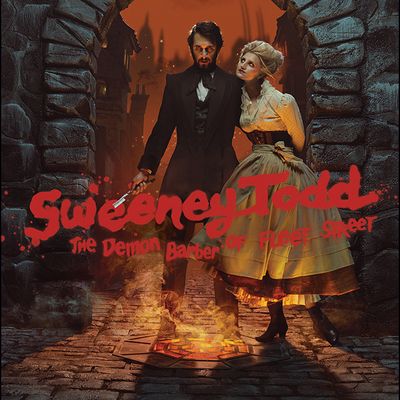
[37:17] Carolee Carmello: Was it is it true that Sweeney Todd was your first time doing a Sondheim show?
[37:22] Rob Russo: Or at least, you know, in New York?
[37:22] Carolee Carmello: In New York, yes. The only other one I did was Company out at there was a Niederlander Theater, I don't think it exists anymore outside of Detroit that used to do a lot of musicals. And when I was probably 26, I did Marta.
[37:37] Rob Russo: Yeah.
[37:41] Carolee Carmello: I think is that her name? Marta, who sings another people.
[37:44] Rob Russo: Yep.
[37:45] Carolee Carmello: So yeah, that was my only other Sondheim.
[37:47] Rob Russo: Sondheim, yeah. Well, I was fortunate to see you do it.
[37:49] Carolee Carmello: Oh yeah.
[37:50] Rob Russo: And what was amazing to me is it's a show that everyone knows so well, right? I mean, it's Sweeney Todd. And yet, in the intimacy of the Barrow Street Theater, and given your performance, it felt like I was seeing it for the first time.
[38:02] Carolee Carmello: And especially the, you know, the comedy written into Mrs. Lovett's songs, you know, The Boys Pies in London and The Little Priest. Just the little thing that I've thought about in the years since it's how you were able to make those jokes feel like you were thinking of them in the moment.
[38:18] Rob Russo: Oh, yeah.
[38:19] Carolee Carmello: They felt so fresh and so, you know, so real.
[38:23] Rob Russo: Oh, I appreciate that. That was that was an amazing experience because that production was so cool and so different, you know, from what people were expecting, I think. I mean, you usually see Sweeney with like a giant chorus and that huge wall of sound.
[38:40] Carolee Carmello: Right, which is also very effective, but this was effective in a different way because it was kind of you felt like you were right in the room with everyone, you know, and that it just made it a little more threatening, I think.
[38:51] Rob Russo: Yeah.
[38:52] Carolee Carmello: It makes you lean in in a different way too. You know, it makes you really hear things that you wouldn't normally hear in an intimate way.
[39:02] Rob Russo: Absolutely. Yeah, I was thrilled to be a part of that and to do that role. That was really an amazing experience.
[39:08] Rob Russo: Well, you've over the course of your career, you've been in 14 Broadway shows, six national tours.
[39:14] Carolee Carmello: I never counted the tours.
[39:16] Rob Russo: Okay, I believe you're gonna be able to do that. We didn't have a number of 95 driving down here. And you know, you've played, you know, the gambit of leading ladies, right? From Dolly Levi to Donna Sheridan, Mrs. Lovett, Mama Rose, you've done.
[39:28] Carolee Carmello: Yeah, I just got to do that lesson.
[39:30] Rob Russo: Yeah, I was jealous I didn't get to go see it. Is there a leading lady that you've yet to tackle that you'd like to play?
[39:37] Carolee Carmello: Um, and is there one that sort of got away?
[39:40] Carolee Carmello: Oh, there's lots that got away. The one that I haven't done that people have been talking about a little bit is Mame, which doesn't get done as often. I think probably the book is a little more dated than, you know, than Dolly. It just probably needs to be.
[39:57] Rob Russo: It wasn't Michael Stewart.
[40:00] Carolee Carmello: Yeah, it needs a little freshening, but Mame for that matter.
[40:03] Rob Russo: Right.
[40:04] Carolee Carmello: It was Patrick Dennis. I mean, don't count him out. But yes, it is there's a problem. There are problems with some of the books. It needs a little tweaking, but yeah, I'd love to do that. I'd love to do Rose again, actually, because that was I did it last summer in Sacramento, which was so much fun, but it was really quick.
[40:25] Rob Russo: Oh sit on their but not the nuts.
[40:32] Carolee Carmello: Fake some well they can stay at Rocknot. Other than those two, I can't really think of anything that exists right now, but I would love to do something new, you know.
[41:00] Carolee Carmello: Do I I would hope that maybe, you know, in the way that great composers wrote roles for Ethel Merman and you know, Angela Lansbury when they were in their 50s? I hope at some point someone will write a great role for for those of us in our middle ages. Right now it seems like we're in a trend toward, you know, people in their 20s. So we're gonna have to wait. I think I'm gonna have to wait a little bit for that. I keep joking, I keep waiting for Broadway to graduate from high school. You know, because every season it's like, oh, another show set in high school. Okay. No, they're they're in there great, but it's just like great. And it's wonderful to bring young people into the theater, which for years, you know, didn't really happen. Right. So yeah, but maybe someone will start writing for women of a certain age again. It's time for graduate school.
[41:47] Rob Russo: Yeah.
[41:49] Carolee Carmello: That's what I think.
[41:51] Rob Russo: Well, we know you have to a show to do, so we want to be very mindful of your time, but we do have one final question, unless I've missed something. What was that show or thing that made you want to go into show business? Was there a specific moment that you thought, oh, I can do this. I want to do this?
[42:10] Carolee Carmello: The one that pops in my head, and it didn't really immediately make me go into show business, but I think it was the time that I saw Evita on Broadway. I grew up in upstate New York, and I didn't really go to Broadway shows as a kid. But when I was in college, I think, was when I saw that production, which was amazing and brilliant and like nothing I had ever seen before.
[42:41] Rob Russo: Yeah.
[42:42] Carolee Carmello: He knew how to do it. I think watching that, I was kind of like, huh. So she's like, she's a storyteller, she's a singer, she's, you know, dancing a little bit, she's really powerful. You know, that all of that appealed to me. And I don't think I really in that moment as a college student went, hey, I can do that, because I don't think if someone had asked me that now back then, I would have said no, I can't do that. But there was something that got stirred, I think, that came out a little bit later. And I didn't have a lot of theatrical experiences at a as a kid, you know, like seeing things. I think the movie musicals that were on TV were probably the closest thing. You know, I watched Sound of Music every year and 1776 movie and West Side Story movie, and that was my exposure to theater, really. So I didn't really understand that you know you could be in a room with live people and live musicians and you know, hear the hear a story like that and make a career out of it.
[43:48] Rob Russo: Yeah, I'm trying.
[43:50] Carolee Carmello: You were succeeding.
[43:52] Rob Russo: Well, thank you so much for chatting with us today.
[43:55] Carolee Carmello: Thanks for having me. It was great to talk to you guys.
[43:58] Rob Russo: Here is an honest man.
[44:03] Carolee Carmello: And you don't know.
[44:10] Rob Russo: And humble will. Not from me. Not from anyone who knows him. Not a morsel, not a crumb, not a clue. I have nothing more to say to you.
[44:41] Rob Russo: Rob here with you may be wondering. As I mentioned at the top, and we talked about it in our interview, Jamie and I sat down with the great Carolee Carmello in the Eugene Ormandy room of the Academy of Music in Philadelphia. You may be wondering, what is the Academy of Music? And perhaps more importantly, who is Eugene Ormandy? Well, the Academy of Music is an historic concert hall and opera house in downtown Philadelphia. President Franklin Pierce laid the cornerstone in 1855, making it the oldest opera house in the United States that is still used for its original purpose, in continuous use since it opened in 1857, hosting world-famous performers, conductors, and composers, and productions of operas and later musicals.
[45:19] Rob Russo: Over the years, the stage has borne witness to Susan B. Anthony making the case for women's suffrage. Tchaikovsky conducting his score to The Nutcracker, and the recording of the music for the groundbreaking Disney feature Fantasia. During World War II, the basement was home to a stage door canteen. Today, the venue is home of the Pennsylvania Ballet and Opera Philadelphia. It was also home to the Philadelphia Orchestra from its inception in 1900 until 2001, when the orchestra moved to the new Kimmel Center for the Performing Arts right next door. The Philadelphia Orchestra still retains ownership of the Academy. Remember Eugene Ormandy? Well, he served as music director of the Philadelphia Orchestra for 44 years, one of the longest tenures enjoyed by any conductor with a single orchestra.
An immigrant from Hungary, who was an accomplished violinist, as a conductor, he was known for championing late romantic and early 20th century music. He put the Philadelphia Orchestra on the map and produced countless recordings, earning the orchestra three gold records and two Grammy Awards. Oddly enough, though, the orchestra never recorded from the stage of the Academy of Music, opting for other venues. But as Jamie and I experienced, the auditorium is absolutely gorgeous, marking an early example of American Baroque revival architecture. It's also been remarkably restored and cared for over the years. While Broadway is composed of 41 theaters, mostly built in the first three decades of the 20th century by a handful of architects, and all roughly the same seat range and configuration.
One of the fun things about touring a big musical like Hello Dolly is seeing all the grand 19th-century opera houses that are in cities all across America. Unlike Broadway, they're bigger and more diverse in design and decoration. If you ever have a chance to see a show at the Academy of Music in Philadelphia, make sure you take advantage.
[47:04] Rob Russo: Rob here, that's our show. Thanks for listening. You can hear us anytime on iTunes. Be sure to check out Social Goods, an online store that offers a curated slate of statement-making merchandise that gives back to nonprofits tackling today's most pressing issues. From Everytown for Gun Safety to Planned Parenthood of New York, the Special Olympics, and more. Best of all, we've partnered with Social Goods to offer a special discount for listeners of The Fabulous Invalid. Go to social-goods.com and use the code Fab15 at checkout to receive 15% off your first order. That's Social Goods, where every transaction comes with real action. The Fabulous Invalid is a production of ONM etc. and The Fabulous Invalid LLC, and a proud member of the Broadway Podcast Network.
Our theme music is by Lucky Chops. Today's episode was edited and engineered by Jamie DuMont and Aaron Kaufman. You can find us online at thefabulousinvalid.com and on social media at Fabulous Invalid and on iTunes, Spotify, and wherever you find your podcasts. And be sure to tune in next Wednesday.
© Broadway Podcast Network, All Rights Reserved