

This week’s show is a special tribute to the life and legacy of Bernard Gersten (1923-2020), a trailblazing producer and non-profit administrator responsible for the success of the Public Theater and Lincoln Center Theater (LCT)... Read More
From the show: The Fabulous Invalid
Guests
Featured Shows

About
This week’s show is a special tribute to the life and legacy of Bernard Gersten (1923-2020), a trailblazing producer and non-profit administrator responsible for the success of the Public Theater and Lincoln Center Theater (LCT). Jamie and Rob sat down with Bernard last summer for what would be his final interview. You’ll hear excerpts from that conversation along with remembrances and reflections from the Public Theater’s artistic director Oskar Eustis, LCT’s founding artistic director Gregory Mosher, LCT’s current producing artistic director André Bishop, and celebrated director Jerry Zaks. Tune in to hear the amazing, one-of-a-kind story of how Bernard Gersten shaped and changed the American theatre.
This week’s music: “Prelude”, “You’re the Top”, from “Anything Goes”, “Aquarius”, “Good Morning Starshine" and “Hair” from “Hair”, “Summer, Summer” and “Where’s North” from “Two Gentlemen of Verona”, “I Hope I Get It”, “At the Ballet”, “One” and “What I Did For Love” from “A Chorus Line”
Find us on Twitter & Instagram: @fabulousinvalid
Facebook: www.facebook.com/fabulousinvalid
Rob’s reviews: www.stageleft.nyc
Email us at: info@fabulousinvalid.com
Jamie Du Mont
Twitter: @jamiedumont
Instagram: @troutinnyc
Rob Russo
Twitter/Instagram: @StageLeft_NYC
Jennifer Simard
Twitter: @SimardJennifer
Instagram: @thejennifersimard
Transcript
This transcript was automatically generated and might contain errors.
[0:19] Rob Russo: Welcome to the Fabulous Invalid, Broadway's podcast, where we present essential conversations with a curated roster of the best, most important, and innovative theater makers working today, from actors to writers, directors, designers, and everyone in between.
[0:32] Jamie DuMont: We took our name from the title of a 1938 play by Kaufman and Hart that has since become a loving nickname for Broadway itself, always deemed on the verge of decline, yet always bouncing back, the Fabulous Invalid.
[0:43] Rob Russo: I'm Rob Russo, writer and theater critic with Stageleft.nyc and Stage Left the Podcast.
[0:45] Jamie DuMont: And I'm Jamie DuMont.
[0:51] Rob Russo: Hi, Jamie.
[0:52] Jamie DuMont: Hi, Rob.
[0:53] Rob Russo: Well, this week we're doing something a little bit different.
[0:56] Jamie DuMont: That's right, that's right.
[0:57] Rob Russo: Um, you know, since we started this podcast back in 2018, the theater world has sadly lost a number of luminaries from stars like Carol Channing and Maren Massey to Titans like Harold Prince and Jerry Herman.
[1:10] Jamie DuMont: So this week we're gonna take a look at the monumental contributions and the remarkable life and legacy of Bernard Gersten, who passed away on April 27th at the age of 97.
[1:20] Rob Russo: If you don't know, you may be wondering who was Bernard Gersten.
[1:24] Jamie DuMont: Well, the New York Times described him quite perfectly as an offstage star of nonprofit theater.
[1:30] Rob Russo: In brief, as a producer and administrator, he helped run Joe Papp's New York Shakespeare Festival, aka The Public Theater, in the 1960s and 1970s, responsible for the creation of Hair on a Chorus Line, among other notable productions.
[1:44] Jamie DuMont: And then in his act two, helped revive Lincoln Center Theater in the 1980s, producing over a hundred and fifty shows in the decades that followed.
[1:52] Rob Russo: Most important of all, though, over the course of his extraordinary life in the theater, Bernard was an enthusiastic champion of art and artists who cheerfully pushed boundaries and candidly developed several essential producing innovations that have led to the enduring success of nonprofit theaters both in New York and all across the country.
[2:09] Jamie DuMont: Last summer, thanks to his daughter, producer Jenny Gersten, Rob and I had a chance to chat with Bernard in what would be his last interview.
[2:15] Rob Russo: Following that conversation and his subsequent passing, we both agreed that his contributions to the theater were a little too unheralded.
[2:22] Jamie DuMont: So we put together this episode to take a look at what he did at the Public Theater, for Lincoln Center, and for the American Theater.
[2:29] Rob Russo: In addition to clips of Bernard from our conversation and our own narration, you'll hear from the Public Theater's artistic director, Oskar Eustis, director and producer Gregory Mosher, who relaunched Lincoln Center Theater with Bernard in 1985, and director Jerry Zaks, who helmed several of LCT's early successful productions.
[2:48] Jamie DuMont: Well, this is exciting, so let's get to it.
[2:50] Rob Russo: Let's do it.
[3:00] Jamie DuMont: Though he said he never dreamed of a life in the theater, Bernard Gersten first got a taste of it as a boy growing up in Newark, New Jersey in the 1920s and 1930s.
[3:10] Bernard Gersten: I appeared in grammar school as the Mad Hatter in the Mad Hatters Tea Party.
[3:19] Bernard Gersten: And I got laughs and applause. And that was it.
[3:24] Jamie DuMont: You were hooked.
[3:25] Bernard Gersten: Yeah.
[3:27] Jamie DuMont: Bernard later opined whether he was attracted to the theater because it also reminded him of attending synagogue, both religious experiences filled with fascination, wonder, and beauty.
[3:37] Jamie DuMont: Later, while serving in the Army on Oahu during World War II, he happened to see a poster promoting Maurice Evans and Judith Anderson in Macbeth at the Schofield Barracks Theater on base.
[3:46] Bernard Gersten: Starstruck and swept away by the experience of seeing his first Shakespeare play, Bernard resolved then and there that he wanted to pursue theater as a profession.
[3:55] Jamie DuMont: He transferred to special services, where he did stage management and technical work for Army stage shows.
[4:00] Bernard Gersten: In just two years, he went from seeing Maurice Evans in Macbeth to working for him on Hamlet.
[4:06] Jamie DuMont: After the war, Bernard got his first job in the commercial theater as an assistant stage manager for what was now a tour of Evans's Hamlet that culminated on Broadway.
[4:14] Bernard Gersten: Following Summerstock and other stage management gigs, I'd take another job that would prove life-changing.
[4:20] Bernard Gersten: I was out of a job, and a friend of mine, Bob Carnes, was from the West Coast, and he called me and said, listen, they need a technical director here at the lab at the Actors Lab.
[4:37] Bernard Gersten: And I said, okay, and we negotiated for about a minute. And I said I'd go.
[4:46] Bernard Gersten: So I got to go out to California. Among the people I met there was, of course, Joe, who taught acting at the Actors' Lab and did a little directing on the side.
[5:00] Jamie DuMont: That Joe was Joe Papp, who quickly became Bernard's best new friend and new best friend.
[5:07] Bernard Gersten: After the Actors' Lab folded in 1950, Bernard moved back to New York, working in television and doing more stage management before working for John Hausman at the American Shakespeare Festival in Stratford, Connecticut.
[5:18] Bernard Gersten: Following their parallel stints, testifying before the infamous House Un-American Activities Committee for their past communist affiliations, Bernard, who of course did not name names, accepted his friend Joe Papp's invitation to help him produce his 1960 summer season of Shakespeare at what would later become the Delacourt Theater in Central Park.
[5:38] Bernard Gersten: The Delacourt wasn't the Delacourt, it was just a little square in Central Park off West 81st Street.
[5:48] Bernard Gersten: And what the Shakespeare Festival was in his earliest years was a traveling organization. It wasn't a company because it wasn't a company of actors, and it wasn't a company of people. It was just a um the people you needed to set up a temporary theater at a location, not in Central Park, but first traveling around the boroughs and then settling down for an extended run in Central Park.
[6:23] Bernard Gersten: But what theater was was an amphitheater created by bleachers that were rented from a bleacher company that seated about a thousand people, and folding chairs, uh, which maybe allowed for another few hundred.
[6:43] Bernard Gersten: And that was Free Shakespeare in Central Park.
[6:46] Bernard Gersten: Reunited professionally, Bernard worked hand in hand with Joe Papp to grow Shakespeare in the Park, opening the permanent Delacourt Theater in 1962 and acquiring the historic Astor Library building in 1967, naming it the Public Theater.
[7:01] Bernard Gersten: In addition to his functional roles as budget guru and all-around production coordinator, Bernard was Joe's partner and best friend, his handler, trusted confidant, loyal sidekick, second in command, and even his alter ego.
[7:13] Bernard Gersten: The 18-year Papp-Gersten collaboration ushered in a bold new era of playwriting and musical theater.
[7:20] Bernard Gersten: One of their slogans was "fuck it, let's just do it."
[7:23] Bernard Gersten: They continued an annual season of Free Shakespeare in the park and produced exciting new works downtown, opening their new space on Lafayette Street with the groundbreaking American tribal love rock musical Hair in October of 1967.
[7:40] Bernard Gersten: When the moon is in the seventh times, and Jupiter aligns with Mars, then peace will guide the planets and love will steer the stars.
[8:36] Bernard Gersten: And we said, what are we gonna do if Joe doesn't like it? And I don't know what we said, but we said we're gonna somehow manage to get it on, whether he liked it or not.
[9:16] Bernard Gersten: Hair was a landmark sensation, but it only had a short eight-week run at the Public planned, after which it was picked up by a commercial producer who made almost all the money on its success upon bringing it to Broadway and beyond, leaving the Public with only 1.5% of its gross.
[9:33] Jamie DuMont: Bernard learned a valuable lesson.
[9:35] Bernard Gersten: In 1968, I married the love of my life, Cora Kahn, on stage at the Public's Anspacher Theater, where Hair had premiered just a few months earlier.
[9:43] Bernard Gersten: Cora would go on to create the Joyce Theater with Elliot Feld, serve as founding president of the new 42nd Street, revitalizing Times Square in the 1990s, and as president of the Breznikov Arts Center.
[9:54] Bernard Gersten: The couple had two daughters, Jenny and Jillian, both of whom work in the arts, and four grandchildren.
[9:59] Bernard Gersten: Upon accepting a lifetime achievement Tony Award in 2013, I would call my beloved family my lifetime achievement.
[10:07] Jamie DuMont: But back to the 1960s.
[10:09] Bernard Gersten: Just a few seasons after the success of Hair, its composer, Galt McDermott, created a rock musical version of Shakespeare's Two Gentlemen of Verona with playwright John Guare for the summer series in Central Park.
[11:08] Bernard Gersten: After tryouts at the Delacourt in the summer of 1971, Two Gentlemen of Verona moved to Broadway.
[11:14] Bernard Gersten: This time, though, things would be different.
[11:16] Bernard Gersten: We take it for granted today that nonprofit theater companies produce commercial runs of shows on Broadway, but in 1971, that had never been done before.
[11:24] Bernard Gersten: The idea came to me like a lightning bolt, causing me to sit upright in bed one night with a eureka moment.
[11:29] Bernard Gersten: I remember that we said, who needs a producer? We produced it.
[11:33] Jamie DuMont: Right.
[11:35] Bernard Gersten: All we needed was $250,000 to bankroll it.
[11:39] Bernard Gersten: And uh we had a member of the board, Luester Mertz, who was very generous.
[11:45] Bernard Gersten: And I remember we went, we had lunch with her and said, Luester, we want to move it to Broadway.
[11:53] Bernard Gersten: And we need $250,000. There's three ways to get it. One is to try to get a record company to back it, which was a custom at the time, or we can get a commercial producer to produce it. Or if we had $250,000, we could produce it and own it totally.
[12:19] Bernard Gersten: And she said, let me think about it. And she said, yes.
[12:23] Bernard Gersten: I finally got here. Where's fame? How do I apply? Where's fortune? And how do I get the noise? The size. I can't believe my eyes.
[12:51] Bernard Gersten: Two Gentlemen of Verona would go on to win the Tony Award for Best Musical 1972, beating out Follies and Grease, and more importantly, proving that a nonprofit theater company could produce directly on Broadway, a new model that Bernard would employ again and again for the rest of his career, changing the course of how nonprofit theater companies in New York and nationwide operate to this very day.
[13:13] Jamie DuMont: David Rabe's Sticks and Bones opened at the Public that same season, then transferred to Broadway, winning the Tony Award for Best Play.
[13:21] Jamie DuMont: Other transfers of the era would include the Pulitzer Prize-winning That Championship Season, For Colored Girls Who Have Considered Suicide When The Rainbow Is Enuf, and Much Ado About Nothing.
[13:32] Bernard Gersten: Along the way, Joe and I would champion emerging actors like Raúl Juliá, Meryl Streep, Sam Waterston, and James Earl Jones with productions like The Threepenny Opera, The Cherry Orchard, and memorable productions of Hamlet and Othello.
[13:47] Bernard Gersten: From 1973 to 1977, the New York Shakespeare Festival took over the Vivian Beaumont Theater at Lincoln Center, producing plays directly on Broadway with Joe Papp pushing the envelope.
[13:59] Bernard Gersten: He would do the plays at the commercial theater with spurn. Because well, they were either socially conscious or racially conscious, whatever it was.
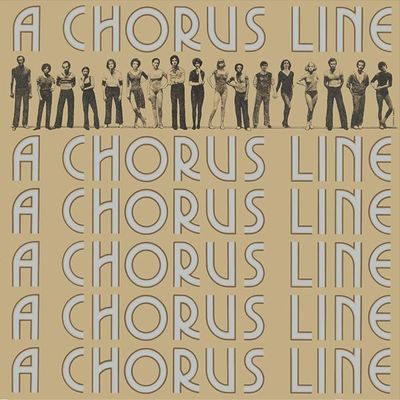
[14:11] Rob Russo: Then in 1975, theater history changed forever. Bernard brought the work of his friend, choreographer and director Michael Bennett, to the attention of Joe Papp and set up the Public to house the workshop of a new musical about dancers that Bennett was developing, which would come to be called "A Chorus Line."
[14:34] Jamie DuMont: And it evolved in workshop and opened at the Newman Theater, and the audiences were wild about it. Employing the model he invented with "Two Gentlemen," "A Chorus Line" moved to Broadway, with Joe, Bernard, and the Public Theater as its sole producers, opening in July 1975 and running a record-breaking 15 years, winning Tony Awards and the Pulitzer Prize, erasing the Public's debt, and bringing heaps of money into its coffers, ensuring its place atop the landscape of nonprofit theaters in New York.
[15:32] Rob Russo: Beyond being just a cheerleader, Bernard also came up with the idea for "A Chorus Line's" mirrored front of house design. And there was just an obvious logic in using the mirrors by and putting quotes on them and putting them all around the theater. In this way, audience members filing into the Shubert Theater or just passing by literally saw themselves in the reflection of the show, mirroring what happened while seeing the show while also replicating the pleasures and vulnerabilities that dancers experience in front of a mirror.
[16:10] ♪ Musical number: "At the Ballet" — performed by cast of "A Chorus Line" ♪
[16:39] Rob Russo: On June 22nd, 1978, Bernard threw an elaborate star-studded surprise birthday party for Joe Papp at the Delacorte, replete with a giant cake, 2,000 attendees, and performances from all their hit shows, including the iconic finale of "One" from "A Chorus Line." It marked a high point in their professional collaboration. Reflecting back on his time at the Public, Bernard mused.
[17:01] Bernard Gersten: It was the source of infinite pain and infinite pleasure. And it culminated in Joe's birthday party when, you know, we had this big surprise party for him, and then he fired me.
[17:19] Rob Russo: Papp and Gersten parted ways over a disagreement about Michael Bennett. Bernard felt that the Public owed it to Michael to produce his next show, "Ballroom," a musical version of the TV movie "Queen of the Stardust Ballroom." Following Joe's long-standing mantra that "I don't produce a writer's first show, I produce a writer's first show, and then I produce a writer's second show." But this time, Joe didn't want to do that. He was competitive with Michael. And Michael had not come and said, "Joe, I want to do this show. Let's do a workshop of it." And Michael didn't assume the position, you know. So Joe gave Bernard an ultimatum. If he wanted to produce "Ballroom" on his own, he'd have to quit the Public Theater.
Bernard wouldn't quit, so Joe fired him. And just like that, 30 years of friendship and 18 years of side-by-side professional collaboration crashed in an instant. Bernard found himself suddenly unemployed at the age of 55. "Ballroom" would go on to be a big flop, and Papp would pass away in 1991, the two never collaborating again.
[18:26] ♪ Musical number: "50 Percent" — performed by cast of "Ballroom" ♪
[19:56] Rob Russo: But that was only Act One for Bernard. We talked to the Public Theater's current artistic director, Oskar Eustis, about the legacy of the Papp-Gersten era.
[20:05] Oskar Eustis: Bernie's title was Associate Producer at the Public, but what he really was was the chief operating officer. He was the man who made everything happen. Joe was the front person. Joe was the face and the voice of the festival. Joe had big passionate ideas, but almost none of them would have been fully realized without Bernie there to make them actually happen. Bernie had a magic touch with people. He formed deep and sympathetic bonds with almost everybody. He could reconcile differences, he could balance budgets. He did all of the practical things that were necessary to build the Public into the institution it became. He came to the Public the change professional in 1960, and it was only seven years later that we started producing new plays.
And I think Bernie was an integral part of the dialogue with Joe of saying that we need to shift the focus of the Public Theater to not just Shakespeare, but Shakespeare and New Plays simultaneously. Later, he also played, I would say, the dominant role in the Public moving shows to Broadway. It was both Bernie's interest and Bernie's expertise that allowed the Public to do that. He always saw the fact that we let "Hair" go and somebody else moved it to Broadway as a mistake. So when it came time to have another hit, "Two Gentlemen of Verona," "Two Gents in the Park," it was Bernie who said, "Let's move it ourselves." And the Public view themselves produced it on Broadway and won the Tony Award, of course, and it was a big hit.
But all of it turned out to be just a prelude for three years later when "A Chorus Line" arrived, and Bernie helped move that to Broadway, and that changed the Public forever. When I came to New York 15 years ago and took this job at the Public Theater, Bernie was a mentor, a friend, a colleague, a guide. We spent a lot of time together, sitting around the table reminiscing and connecting, really, on our shared background as people who had been raised in the left. And the warmth that he showed towards me and the utter desire to help me succeed. And you know, I was a kid taking over this theater that he had built and had left in a very uncomfortable way. And his generosity of spirit towards me, I later found was not exceptional.
It's what he directed towards everybody. And that huge loving heart of Bernie's is the real legacy because that heart gave so many different artists and people like me courage and inspiration and friendship when we really needed it in this sometimes highly competitive New York theater environment.
[23:14] Rob Russo: After seven years in the wilderness, including a stint with Francis Ford Coppola's Zoetrope Studios and a role at Radio City Music Hall, Bernard's Act II began in 1984. At the time, he was an adjunct professor in theater administration at Columbia University, where he had turned the well-known continuing struggle of the Vivian Beaumont Theater at Lincoln Center into a popular classroom problem for his students to ponder. The 1200-seat Beaumont and its 299-seat partner, the Mitzi E. Newhouse Theater below, had opened in 1965 as part of the Lincoln Center Performing Arts Complex. But four different attempts to turn it into a functional, successful theatrical venue over the next 20 years had failed, including Joe and Bernard's residency with the New York Shakespeare Festival from 1973 to 1977.
The theater was deemed cursed, but the fifth time around turned out to be a charm. In 1984, Lincoln Center appointed Gregory Mosher to serve as new artistic director for what would become Lincoln Center Theater. We spoke to Gregory about his time and how he and Bernard came to work together.
[24:17] Gregory Mosher: I had known Bernie for a while. I was a spear carrier in the James Earl Jones production of "King Lear" in Central Park, but it's not like Bernie and I were going out and getting drinks every night. And then Bernie, if you work in the theater in the 70s and 80s, was just a person you knew about and you looked up to. I had heard him stand in for Joe once at a conference. I remember being so impressed with him. So in this long run-up, this endless nine-month discussion I was having with the board of Lincoln Center Theater, I always had Bernie in the back of my mind. But I just didn't think I was going to take the job. I kept telling them I wouldn't. And then finally I said I would. And then after we got that all settled up, one of the first things I did was to reach out to Bernie to see if he wanted to join me.
It's one of the smartest things I ever did. As executive producer of the newly branded Lincoln Center Theater, Bernard was the principal administrative force, overseeing budget, fundraising, and logistics, keeping the trains running smoothly for the show that was up, the one in rehearsal, and the next project on deck. After four failed attempts, Bernard and Gregory cracked the code on the once cursed Beaumont, as Bernard reflected back in a 2010 interview.
[25:40] Bernard Gersten: The secret of the Beaumont has always been to accept the given and then see what needs to be done with the given. And the given is the building. What you begin with is this piece of real estate, this commanding reality of the building with its two theaters, soon to be three, and say, "Well, what do you make of this? What do you need? What do you need to make it work?" And then you balance out those elements that comprise the theater, which are only four. They're four elements in my view. And the four elements are a place, we were given the place. Artists, and the artists existed all around us because we're in New York City. Money, and money had to be figured out, and an audience. And if you take those four elements, which are the key elements, it seems to me, of any theater. How you mix them, how you adjust them, how you administer them, is the secret of success or failure in a given theater at a given moment.
[26:40] Gregory Mosher: The basic deal was I would set a direction for the theater and choose the repertoire and choose the artist and blah, blah, blah, blah, blah. And it's not that we didn't talk about those things all the time. What do you think about this play? What do you think about that play? But ultimately, that was my responsibility. And Bernie's job as executive producer was to go in that direction, to make that direction happen. And there's never been anybody better at doing that. So it was just a kind of dreamy partnership. Our offices were adjoining. We spent at least an hour, maybe three hours a day just talking, kicking things around, trying to figure out how to make this happen. A lot of these plays were really unlikely plays to do.
And man, he was good at that. The biggest early risk Bernard and Gregory took was in opting not to have a subscription series for the new Lincoln Center Theater, eschewing a reliable source of capital and audience members in favor of flexibility in programming and scheduling.
[28:11] Gregory Mosher: Instead, they pioneered the idea of memberships, like you would get in a museum. A flat fee made you a member and gave you access to $10 tickets. But you picked which shows you wanted to see, ensuring the audience at any given performance was there for that show, not out of subscriber obligation. There was no kind of Lincoln Center theater formula. Sometimes they were small plays by very young writers. Julie Tamore did a play before Julie Tamor was Julie Tamore. Um, we were all over the place. So every, there was no such thing as a Lincoln Center theater play. Um, it was just whatever play was up next. And then we had to figure out how to make that play work in terms of casting and how long was the initial run to be, and things like that.
So that's a very different operation than running a six-play subscription season, main stage season, and then having a second stage, because you're constantly having to improvise. And Bernie was a brilliant, brilliant improviser, both financially and logistically. The problem was we had no money.
[29:33] Gregory Mosher: So everybody kept saying, "Well, what's your first season? What's your first season?" I said, "First season? Jesus." And this was an almost insoluble problem because no one would donate to the theater, support the theater until we had a play, but we couldn't do a play until we had any money. So we had a lot of strategy sessions, and I remember one at John Lindsay, the former mayor, John Lindsay was the chair of the board. We were at his apartment, and it must have been like 1:30, 2 o'clock in the morning. We were eating Chinese food. And one of the three of us, I have no idea who, said, "Well, let's just start with a play if we can't do a season." And um, and so that's what we did. Recognizing that they didn't have the budget to reopen the Beaumont Theater, Bernard and Gregory started by programming plays at the much smaller Mitzi E. Newhouse Theater downstairs.
The first were two one acts by David Mamet, Prairie DeSheen and the Shaw. And that was certainly a moment because we opened Lincoln Center Theater for the fifth time it was opening yet, in each prior time. It had gone down into uh uh disrepute. That first outing was unremarkable, but their second play at the Mitzi Newhouse, the first revival of John Guare's The House of Blue Leaves, directed by then newcomer Jerry Zaks, proved to be a game changer.
[31:00] Gregory Mosher: The play was an instant hit with audiences and critics. Scratching our heads, we said, "What are we gonna do there? Too many people wanting to buy tickets, and there aren't enough. What a problem to have." And we happened to have an empty theater upstairs with the Beaumont, and we said in one mystery day of head scratching, "What should we do?" We said, "Why don't we move it to the Beaumont?" And we took the actors up on stage and took the playwright up on stage and the director and had them walk around the dark and empty Beaumont that had been dark for quite some time by then, and said, "What do you think?" And they said, "Well, there's a problem with a Beaumont. Everybody says it's an impossible house and a play.
We have a play that's succeeding so well, and there's a rule in the theater, as in life, which is if it ain't broke, don't fix it. And the House of Blue Leaves is not broke." And we said, "Well, that's true. But on the other hand, if we were to move it up here, and if we could open it here, there seems to be an audience for it of scale. And not only that, we'd be eligible for Tonys." And that was the magic word that we dropped among them.
[32:05] Gregory Mosher: So they walked around the stage and looked at the house, and suddenly some one of them said, "Well, the only one of us who's ever played here is Chris Walken. And Chris, what's wrong with this theater? Why does everybody have so much trouble with it?" And Chris said, "Well, the problem is you walk out on stage and you see all these empty red seats. And so it's discouraging, so it's hard to, it's hard to act in this theater." And we said very gently, "But we wouldn't have empty red seats because the audience response to the play is such that we think all the empty seats will be filled." He said, "No problem." And that was the moment of decision, combined with the magic word Tony. And in fact, the show was nominated for seven or eight Tonys and won, I think four of them at that time. And that was the true launch of Lincoln Center Theater.
[32:53] Gregory Mosher: Here's something I learned from Bernie. So we do the House of Blue Leaves, the Guare play. We have more audience than we have seats in the Mitzi Newhouse. Bernie said, "Well, let's move John's play upstairs to the Beaumont." He said, "Well, okay, a thousand people, you think a thousand people are gonna come?" He says, "It feels like it. I don't know. Let's take a chance. We'll move it upstairs." So we spent, I don't know, a quarter of a million dollars, and these are 1980s dollars, so double it, to move it 40 feet vertically. I think it was the same set. And indeed, the audience still wanted to see it, and the actors were having a great time playing it. And then we had to do The Front Page, which I think you could argue is, well, the greatest American comedy, maybe the greatest American play.
And with that was 25 actors. And we couldn't tell those actors to go away. So Bernie said, "All right, let's move it to the Plymouth." I said, "You're nuts, man. It's run for over a year. Let it go. Let it go. Let's move on to the next thing." He said, "No, the actors want to play it. The audience wants to see it. And it would be, and I remember this phrase so clearly, it would be dereliction of duty to not extend it." And I said, "Okay, man, but let's talk about money. Um, we're not going to make any money." And this was great. I said, "We're going to lose money." And he said, "We're a not-for-profit theater. We don't lose money. Not-for-profit theaters spend money. We subsidize plays."
[34:35] Gregory Mosher: So let me ask you, he said, "Let's say we're going to run it for six months at the Plymouth. Would you spend a million dollars of our money to run it at the Plymouth for six months?" I said, "Absolutely not, you're nuts." He said, "Well, no, I wouldn't either. Would you spend $10,000 to run it for six months?" In other words, subsidize it. I said, "Sure." He said, "Yeah, me too. So let's find a number between 10,000 and 1 million that we are willing to subsidize a six-month run of The House of Blue Leaves. And then we'll be fulfilling our mission. We'll be making a lot of people happy. We'll be paying a lot of salaries from wardrobe people and box office people and stage managers, not just the actors.
That's our mission to make art. Theatrical art. That's why people get a tax deduction. Because your commitment is to make art, not money." The House of Blue Leaves did move to Broadway, making room for The Front Page at the Beaumont. Another play directed by Jerry Zaks, another hit. We spoke to Jerry about these early productions with Bernard and Gregory.
[35:12] Jerry Zaks: Well, um, Gregory Mosher and John Guare came to me with the idea of doing House of Blue Leaves at the new house and asked if I would be interested. And I said, "Yes, yes, very much." And it was once I started working in the building that I started my relationship with Bernie. When I was spending every day in the building, I would find myself drifting up to the corridor of offices there, and walking past Bernie's office and finding myself sitting in Bernie's office and schmoozing with him about everything, anything and everything. We talked about a lot of things. We talked about life, about daughters, about the work, about uh the bigger picture. And at the time I was just beginning uh my directing career.
I was in the middle of the beginning, or I had had some successful off-Broadway shows, but I was just beginning to accept the fact that I was going to be a director and not an actor. And it's particularly important in a time like that that you have somebody who you can just relax with. And uh if that same person is also someone who encourages you in your work, encourages you to keep going and encourages you that you have something to offer. That's what Bernie did. You know, he made me, and I'm sure he made every artist he came in contact with feel like we were doing something important.
[35:12] Jerry Zaks: Unlike a lot of people in his position who aspire to direct or to choreograph or to create, you know, contribute creatively, I thought Bernie was he offered that, he offered that perspective if you asked him, "What did you think of the show?" But he didn't feel compelled to take on that role. I think he was really comfortable in his own shoes in a way that was uh contagious. He metaphorically to the artists that came in contact with him, he was basically the trainer in the corner, rubbing the shoulder saying, "You know, don't second guess yourself, do it, do it, do it. It's valuable." Jerry also shared the best piece of advice Bernard ever gave him.
[38:09] Jerry Zaks: It was after Blue Leaves moved from the new house to the Beaumont, and suddenly we were Tony eligible, and suddenly a bunch of us were nominated for Tonys. And I was faced with having to deal with a tuxedo black tie, which I'd never had to do in my life. So I remember going to Bernie saying, "Bernie, I got a really important question." And he said, "Yes, what is it?" And I said, "Should I rent or should I buy?" He didn't hesitate, and he said, "You have to buy it. You have to buy it." And I'm, I don't know why I remember that vividly. It in that moment, he was saying, "You'll be back, you know. Buy it. You're in for the long haul, you know. Take a chance. Treat yourself right. You deserve it. Buy it." And I have that tuxedo to this day, and it still fits.
[39:02] Gregory Mosher: All of Jerry Zaks' plays at Lincoln Center Theater were, as Bernard put it, home runs. The 1987 revival of Anything Goes was the first musical that LCT produced, marking another early milestone for the company and laying a marker for scale and ambition, as Gregory Mosher reminisced.
[39:19] Gregory Mosher: Anything Goes was our first musical. I didn't know a lot about Cole Porter. I just knew a couple of those hit songs from, you know, great singers singing them. And then it occurred to me that this was the time when, you know, these great wall of sound musicals, sung-through musicals were happening. And there was a general feeling that the age of lyrics was over. It was just going to be about big, big Andrew Lloyd Webber, Tim Rice kind of sound. And I thought, "Well, that's interesting. I wonder if people will ever listen to lyrics again." So I'm sure everybody else did it just to have fun. I did it because I was curious about this lyric thing, and it was minimally mic'd. I mean, really minimally liked. It sounded very human. And it turns out people did want to hear lyrics and hear those beautiful melodies and Patty and the rest of the cast. It was, it was, it was a big surprise, I think, to all of us, how well it went.
[40:16] ♪ Musical number ♪
[40:57] Oskar Eustis: First with Gregory Mosher, and then after 1992, with André Bishop, Bernard helped develop and produce new plays and musicals by many of America's leading playwrights, composers, and lyricists.
[41:08] Gregory Mosher: And not just at the Lincoln Center Complex. That's another thing I learned from Bernie. We're Lincoln Center Theater on 65th Street. We're Lincoln Center Theater on 45th Street. We're Lincoln Center Theater down at La Mama, where we did a play, or BAM, where we did a musical. He said, "We're Lincoln Center Theater because the tickets are $10, and because we're pursuing art and not money. So don't worry about geography." That was interesting to me. And key to the success of the theater. At the Beaumont, the Newhouse, and frequently on Broadway at the Plymouth, the Belasco, the Booth, the Lyceum, or the Court, Bernard stewarded more than 150 productions for Lincoln Center Theater, investing in the success not just of art, but of individual artists, like the monologueist Spaulding Gray, who would make Lincoln Center Theater his artistic home.
In addition to the shows already mentioned, just some of the notable new plays Bernard was involved in presenting included David Mamet's Speed the Plow, Richard Nelson's Some Americans Abroad, and two Shakespearean actors, Wendy Wasserstein's The Sisters Rosensweig, An American Daughter, Old Money, and Third. Tom Stoppard's Arcadia, The Invention of Love and The Coast of Utopia, David Hare's Racing Demon in Via Dolorosa, John Robin Bates's A Fair Country and Other Desert Cities, and Christopher Durang's Vanya and Sonia and Masha and Spike.
[42:25] Oskar Eustis: On the musical front, notable productions included Lynn Ahrens and Stephen Flaherty's My Favorite Year, A Man of No Importance, and Dessa Rose, Michael John LaChiusa's Hello Again, Marie Christine and Bernard Alba, William Finn's A New Brain, Jason Robert Brown's Songs for a New World and Parade, Susan Stroman's Contact, Adam Guettel's The Light in the Piazza, and David Yazbeck's Women on the Verge of a Nervous Breakdown.
[42:48] Oskar Eustis: And of course, there were celebrated revivals of plays like Our Town, The Heiress, Ah, Wilderness, A Delicate Balance, Mornings at Seven, Dinner at Eight, Shakespeare's Twelfth Night, Henry the Fourth and King Lear, and Clifford Odets's Awake and Sing and Golden Boy.
[43:03] Oskar Eustis: And landmark revivals of the musicals The Most Happy Fella, Carousel, The Frogs, and South Pacific.
[43:10] Oskar Eustis: Bernard described his era at Lincoln Center Theater as being defined by four pillars.
[43:15] Oskar Eustis: Number one, an unrelenting optimism.
[43:18] Oskar Eustis: Two, a pragmatic idealism, pragmatic because it's modified and adjusted by reality.
[43:24] Oskar Eustis: Third, an acknowledgement of probability, which refers to the fact that there are going to be a certain number of productions that are simply not well received.
[43:33] Oskar Eustis: And finally, fourth, the right to succeed, which he believed, unlike the right to fail, needed to be asserted.
[43:41] Oskar Eustis: We were unable to connect with André Bishop, Bernard's partner of 20 years at Lincoln Center, to record with us.
[43:47] Oskar Eustis: But he shared the following statement, which I will now read.
[43:51] Oskar Eustis: Bernard Gersten was a giant, larger than life, forward-thinking, brave, curious, elegant, while always maintaining that he just was a man of the people.
[44:00] Oskar Eustis: And he loved, loved, loved the theater.
[44:04] Oskar Eustis: What made him such a great producer for both the Public and Lincoln Center Theater was his total belief in the nobility, importance, and the seriousness of purpose of nonprofit institutions.
[44:16] Oskar Eustis: And yet, nobody loved a big fat Broadway hit more than Bernie.
[44:20] Oskar Eustis: He gave me my first job in the professional theater, running the box office at the Delacorte in the summer of 1971.
[44:27] Oskar Eustis: I was hopeless and persuaded me 20 years later to leave my beloved Playwrights Horizons and join him at Lincoln Center Theater.
[44:35] Oskar Eustis: We had a wonderful partnership because it just all worked.
[44:38] Oskar Eustis: Yes, there were bumps, and he excused them by saying he was Dionysian and I was Apollonian.
[44:43] Oskar Eustis: He was an outgoing optimist.
[44:45] Oskar Eustis: I was shy in private.
[44:47] Oskar Eustis: He was in charge of management, and yet he had a total disregard for financial caution.
[44:52] Oskar Eustis: After an especially grueling finance committee meeting of the board, he shouted, our job here is not to save or make money, it is to spend it.
[45:10] Oskar Eustis: Years ago, when he was about 80, he walked into my office and he said, André, I have something very important to tell you.
[45:17] Oskar Eustis: What, Bernie? What? I asked.
[45:23] Oskar Eustis: And he almost did.
[45:37] Oskar Eustis: We did what we had to do.
[45:48] Oskar Eustis: Oh my god! What I did for what I did for what I did for Bernard retired from Lincoln Center Theater in 2013 at the tender age of 90.
[46:23] Oskar Eustis: His final production was Douglas Carter Beane's The Nance, which, in true Gersten style, was presented directly on Broadway.
[46:31] Oskar Eustis: Looking back over his career beyond the credits and the awards, and Bernard won an astonishing 14 competitive Tony Awards, along with a lifetime achievement award.
[46:40] Oskar Eustis: More than all that, he represented and promoted a philosophy of nonprofit arts management that was artist-centered, where playwrights, directors, designers, actors, and musicians are provided the support that serves their purposes first and foremost, versus prioritizing the interests or tastes of subscribers or investors.
[46:58] Oskar Eustis: He believed in supporting the artist, not just the art.
[47:02] Oskar Eustis: First at the Public and then at Lincoln Center Theater, individual artists were put first and were groomed and nurtured season after season, despite success or failure on any particular project.
[47:13] Oskar Eustis: He believed that the administration, the board, the funders, the critics, even the audience, were all in service to the art of the theater.
[47:20] Oskar Eustis: And of course, it cannot be overstated the importance of his innovation in creating the model for a nonprofit company to produce directly on Broadway, which has literally shaped the course of the American theater since.
[47:33] Oskar Eustis: He was fearless.
[47:36] Oskar Eustis: And he was willing to go where one needed to go, and then help take it to another level beyond that.
[47:46] Oskar Eustis: If I were to choose one word for Bernie, I would say he was an enthusiast.
[47:52] Oskar Eustis: And a lot of people get the enthusiasm driven out of them by the time they're 30.
[47:57] Oskar Eustis: They've been burned.
[48:00] Oskar Eustis: No matter how successful you are, your enthusiasm drops, sort of in proportion to your wisdom or your experience.
[48:10] Oskar Eustis: And he was a rare person in that his enthusiasm never failed him.
[48:17] Oskar Eustis: He was, he said to me once, although he was 20 some years older than I was, he said, just remember, I'll always be younger than you are.
[48:27] Oskar Eustis: And what he meant by that was this factor for enthusiasm.
[48:31] Oskar Eustis: Because I would worry, oh, we're dying, you know, the show's terrible, I'm screwing it up, I'm a terrible producer.
[48:37] Oskar Eustis: And he's saying, No, no, we're going, we're going, we're going.
[48:40] Oskar Eustis: This is good, let's get it up.
[48:42] Oskar Eustis: Let's go, let's go, let's go.
[48:43] Oskar Eustis: We'll just make it as best we can.
[48:44] Oskar Eustis: If it dies, it dies.
[48:46] Oskar Eustis: Let's go.
[48:47] Oskar Eustis: And that's a really rare gift.
[48:51] Oskar Eustis: Bernie never said to me, It's a good idea, let me tell you why we can't do it.
[48:56] Oskar Eustis: He always said, Yeah, great, let's go.
[48:58] Oskar Eustis: Go, go, go, go.
[48:59] Oskar Eustis: And there was never a day I wasn't aware of how special that was and how profoundly privileged I felt to be working with him.
[49:09] Oskar Eustis: Let's put it this way: very few parents, a little very few people who are guiding you when you're growing up are gonna say, well, go for it, go for a life in the theater because it does have value.
[49:22] Oskar Eustis: Very few, very few.
[49:24] Oskar Eustis: And Bernie was one of those people who always made you feel that what you were doing was valuable because of what it did to people.
[49:34] Oskar Eustis: And he loved his kids, you know, and he loved his wife.
[49:36] Oskar Eustis: He did, he did.
[49:38] Oskar Eustis: He had a life as well.
[49:39] Oskar Eustis: So that combination, I think he, you know, he's one of those guys who had, if he didn't have it all, he had an awful lot of it.
[49:47] Oskar Eustis: Bernie was an incredibly practical guy at the same time as he was an idealistic guy.
[49:54] Oskar Eustis: He came from the same kind of Jewish leftist social justice-oriented background that Joe did, but he was much more loose about how to achieve those goals.
[49:54] Oskar Eustis: He was much more interested.
[50:10] Oskar Eustis: He used to say this wonderful thing that I fought with him about.
[50:13] Oskar Eustis: He used to say, the theater doesn't have a mission.
[50:16] Oskar Eustis: The theater has the shows.
[50:18] Oskar Eustis: Look at the posters on the wall.
[50:20] Oskar Eustis: That's the theater's mission.
[50:22] Oskar Eustis: And what he was doing was pushing back against the idea that the theater had to be guided by an ideology that determined everything.
[50:31] Oskar Eustis: And that desire to dissolve the ideology into the shows, to make the practical part of our business the most important part, is something that was essential to the Public.
[50:43] Oskar Eustis: Joe was a radical, but Bernie helped make us radical at the center of the culture.
[50:49] Oskar Eustis: And I think that legacy is, I mean, the Public Theater is based on that legacy.
[50:55] Oskar Eustis: You know, we shouldn't underestimate that another part of Bernie's contribution was his family.
[51:00] Oskar Eustis: His wife Cora was the architect of New 42 and of the entire 42nd Street revitalization.
[51:07] Oskar Eustis: And his brilliant daughter Jenny took his old title of associate producer at the Public Theater and for four years did a magnificent job for me before she went on to the Williamstown Theater Festival and other places.
[51:19] Oskar Eustis: Jenny and her sister Jillian are just indispensable parts of Bernie's legacy.
[51:26] Oskar Eustis: We will not see his like again.
[51:28] Oskar Eustis: You have to say, Bernie really built the Public Theater and Lincoln Center Theater.
[51:32] Oskar Eustis: Neither of those would be successful, perhaps even existing without him.
[51:37] Oskar Eustis: And you can make the case that those are the two most important theaters in New York and perhaps in the country.
[51:42] Oskar Eustis: And that's Bernie. That's Bernie's legacy.
[51:44] Oskar Eustis: Bernard Gersten believed in the transformative power of theater.
[51:50] Oskar Eustis: You've heard of protons and neutrons. Well, he called the energy of the theater theatrons, bouncing around all the available surfaces during a performance, issuing from the play, the actors, the audience, and the room itself.
[52:01] Oskar Eustis: To close this tribute episode, we'll end with some reflections from Bernard from a storyboard conversation in 2009 with the longtime dramaturg of Lincoln Center Theater, Ann Contaneo.
[52:12] Bernard Gersten: My life has been for low all these years, a constant process of finding plays, finding means.
[52:32] Bernard Gersten: Other people make things out of wood, and some people pour steel ingots, and others build walls out of brick and stone and marble and stuff like that, all of which are tremendous tasks.
[52:43] Bernard Gersten: There's no question about them, and that are building blocks of life in an advanced culture and society.
[52:51] Bernard Gersten: If I had it to do all over again, I wouldn't, nothing that has appeared to me appeals to me more yet than does the theater.
[53:01] Bernard Gersten: My pleasure at walking through to the dressing rooms today and just welcoming the actors to the matinee that they're about to go into is one of the great pleasures of life, one many little steps she takes, one man thrilling combination every moment she makes, one smile inside of me nobody else will do, all you'll never be lonely with you know the day of present and you can't forget the rest for the girl that's a kind to sigh give me your attention to I really have to mention she.
[54:27] Jamie DuMont: That's our show. Thank you for listening. We'd like to say a special thank you to Jenny Gersten, Oskar Eustis, Jerry Zaks, Gregory Mosher, and André Bishop, and also the Public Theater and Lincoln Center Theater.
[54:38] Jamie DuMont: The Fabulous Invalid is a production of OM etc. and the Fabulous Invalid LLC and a proud member of the Broadway Podcast Network.
[54:46] Jamie DuMont: Our theme music is by Lucky Chops. Today's episode was edited and engineered by Charles Van Kirk.
[54:51] Jamie DuMont: Find us online at the Fabulous Invalid.com and on social media at Fabulous Invalid and on iTunes, Spotify, and wherever you find your podcasts.
[55:01] Jamie DuMont: Be sure to tune in next week.
© Broadway Podcast Network, All Rights Reserved