

The Webby Award-winning podcast THE MAGICAL MAKING OF ALADDIN ON BROADWAY is back with this special episode, paying tribute to the legendary lyricist, Howard Ashman, whose impact on Disney and musical theatre as a whole can still be felt today... Read More
From the show: The Magical Making of Disney's Aladdin on Broadway
Guests

Featured Shows

About
The Webby Award-winning podcast THE MAGICAL MAKING OF ALADDIN ON BROADWAY is back with this special episode, paying tribute to the legendary lyricist, Howard Ashman, whose impact on Disney and musical theatre as a whole can still be felt today.
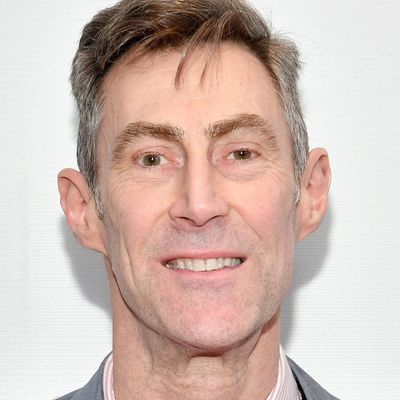
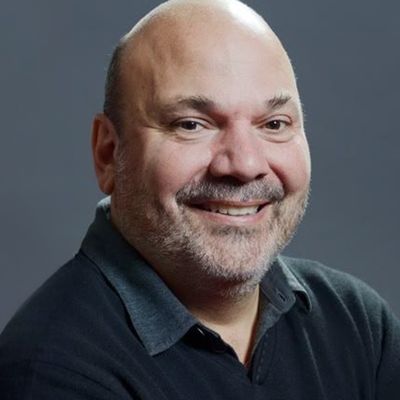
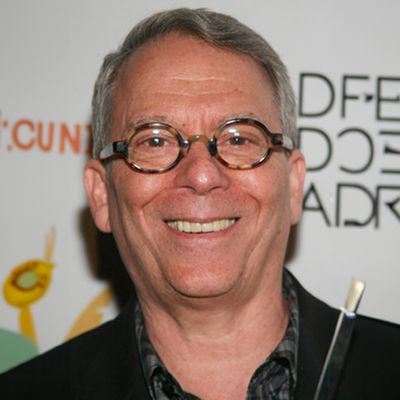
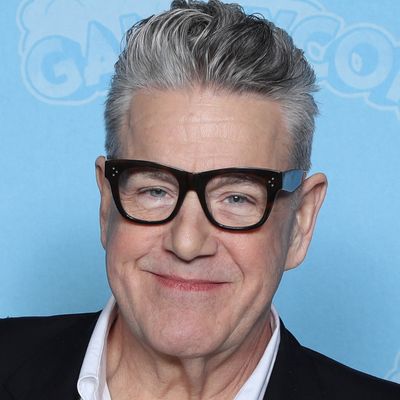
Listen to Alan Menken (Composer), Thomas Schumacher (Producer), Danny Troob (Orchestrator), Casey Nicholaw (Director/Choreographer), Jonathan Freeman (original Broadway cast Jafar), and Bill Lauch recount stories of Howard, and share the importance of his work on ALADDIN, all these years later.
Hosted by Frank DiLella, this podcast will take you on a journey through the life of the brilliant mind behind the lyrics of THE LITTLE MERMAID, BEAUTY AND THE BEAST, ALADDIN, and more. This is more than a tribute—it's a reminder of the power of storytelling, the magic of music, and a legacy that lives on, every night the curtain rises.
Transcript
This transcript was automatically generated and might contain errors.
[0:01] Frank DiLella: Welcome back to The Magical Making of Aladdin. This is a special bonus episode of the podcast celebrating Howard Ashman. I'm your host, Frank DiLella. When you think about the soundtracks from Disney animated classics from the late 80s into the late 90s, certain songs leap to mind. The longing in "Part of Your World." The extravagance of "Be Our Guest." The exuberance of "Friend Like Me." Behind all of these was one extraordinary voice, Howard Ashman. Howard helped change the sound of musical theater and Disney animation, transforming not just Aladdin, but also The Little Mermaid and Beauty and the Beast, and the sound of musicals forever. His lyrics brought depth, humor, and humanity to animated characters and stories we now consider classics.
But today I want to take you a little deeper, to the heart behind the magic. In this special episode, I'm going to show you how Howard Ashman helped create the magic, and why his spirit still echoes in every moment we hear today. Along the way, you'll hear from people who knew him, who worked alongside him, and who are keeping his legacy alive on Broadway. So let's start where it all began, with a theater, a cigarette, and a knock at Alan Menken's apartment door. Howard Ashman was born on May 17th, 1950, and grew up in Baltimore. A bookish kid who loved stories, the kind that made you feel something. Howard chased those dreams to New York City, and he eventually started his own small theater company, the WPA Theater, where he workshopped original musicals on a shoestring budget. And it was there, in the late 1970s, that he met a young composer who would become his creative soulmate, Alan Menken. Here's Alan to tell you the story himself.
[2:17] Alan Menken: Howard had this theater, WPA Theater. Amazing things came out of the WPA Theater. And he had the rights to do an equity showcase of a musical of Kurt Vonnegut's novella, God Bless You, Mr. Rosewater. And he was looking for a composer. I, at the time, was exclusively a composer-lyricist. I was doing both. Howard had never written a musical before, as a lyricist. And I get a call, actually, from my friend Maury Yeston, who said, "Alan! It's Maury! I need this guy, Howard Ashman! But he wants to write lyrics, too." I was a huge Vonnegut fan. I said, "Okay." Howard came to my apartment, and there was this guy at the door, and he was wearing this bomber jacket and chain-smoking, and "Hey, I'm Howard."
And I could tell, you know, he thought, "Well, you know, this is a Broadway kind of guy, and I'm really downtown." Which he was, but we were both sort of, you know, sussing each other out. I think him sussing me out more than I was him. And to make a long story short, he said, "Okay, let's do this together."
[3:27] Danny Troob: Adding some extra insight into Howard's thought process is Danny Troob, a renowned orchestrator who worked closely with him. Howard had a great gift with words, a great concept of story, but he also had a very strong political bias. He was, you know, a 60s radical, rather unreconstructed. Howard was not shy about his politics. It gave a lot of texture to the writing.
[3:56] Frank DiLella: While Howard and Alan Menken's first project, God Bless You, Mr. Rosewater, wasn't a commercial hit, it paved the way for what came next, Little Shop of Horrors. And almost overnight, Howard went from downtown underground to rising star in musical storytelling. Howard wasn't just aiming to entertain. He wanted to make people feel something deeper, to challenge them, surprise them, and maybe even change them. And that's the type of spirit that he would bring to an animation studio that was struggling to save its newest production from drowning. That animation studio was Disney, and the project? The Little Mermaid.
[4:46] Frank DiLella: By the mid-1980s, Disney Animation was not the powerhouse it is today. They had a string of box office disappointments, and some people inside the company were wondering if the golden age of Disney was just over. That's when Howard Ashman got the call. At the time, he was fresh off the success of Little Shop of Horrors, and Disney was looking to bring in fresh voices. Howard wasn't just brought in to write songs. He was brought in to help completely reshape how they told stories. Here again is Alan Menken reflecting on the amazing success of Little Shop, and explaining how they caught the eye, and ear, of Disney.
[5:21] Alan Menken: So he said, "Okay, well, Little Shop is specifically designed to run off Broadway. That's the show that just exploded. And yes, it was lined around the block as to who was going to produce the show. A number of things happened. First of all, Albert Poland, who was the general manager, put together this, helped put together this team of three, who were three producing entities that had done Catch. And that was the Schubert Organization, Cameron McIntosh, and David Geffen. And it was the David Geffen aspect of it that then brought us to the attention of Disney, probably through his friendship with Jeffrey Katzenberg. But Howard was that kind of talent that everyone was looking for.
[6:04] Frank DiLella: Jeffrey Katzenberg was the chairman of Walt Disney Studios from 1984 to 1994, a position which put him on the lookout for amazing creative minds like Howard Ashman. Howard didn't just write lyrics. He restructured entire scenes, bringing characters' emotions to life in song. Part of what made Howard's work so real is how he would draw inspiration from his life to put into his animated story ideas. Bill Lauch, Howard's longtime partner, gives us a glimpse into what Howard would do to achieve this.
[6:36] Bill Lauch: By including a lot of specific lyric references that would tell you something about them, either in the way they, the words they used, how they said them, dialect, colloquialisms were very interesting to him. And he would like to include material and ways of speaking that would tell you something about the character. I think you can see it in Ursula's song, "Poor Unfortunate Souls," and in "Friend Like Me." It's like you're just listening to the way these characters sing and you know kind of what kind of person they are.
[7:17] Frank DiLella: It was The Little Mermaid where Howard's full influence took hold. He brought in Alan Menken to collaborate again, and together they approached the film like a Broadway musical, with an "I Want" song, a strong protagonist, and clear emotional arcs. Songs like "Part of Your World" and "Under the Sea" weren't just catchy, they advanced the plot, bringing deeper levels of sophistication to the story. As we know now, the film was a huge success and won them their first Oscar. It ushered in what we now call the Disney Renaissance, a period of critically and commercially successful animated musicals. Howard and Alan were immediately asked to write the lyrics and music for Disney's next animated film, Beauty and the Beast.
[8:02] Frank DiLella: But again, Howard's involvement was deeper than just writing the lyrics. He pushed for the enchanted objects to sing and speak. He advocated for Belle to have more agency, and introduced songs like "Be Our Guest" and "Gaston" that gave the film a theatrical sensibility. All the while, Howard was working on a third project he pitched directly to Disney himself, Aladdin.
[8:24] Frank DiLella: Before Aladdin the Broadway show, before Aladdin the movie, Howard dreamed up a concept that was bold, brassy, and fast-talking. A world that was part straight comedy and part big Broadway. He pitched the full concept to Disney entirely on his own. Story, songs, and characters. Bill Lauch got to hear those first song demos for Aladdin before anyone else. Just Howard, Alan Menken, a Walkman, and a story treatment. It was a moment Bill never forgot.
[8:56] Bill Lauch: He had drafted this story treatment, and he and Alan had prepared a half dozen songs or so. And I'd heard them in bits and pieces as they were doing rough tapes and working. But they finally went into the studio, and just the two of them and a bunch of synthesizers and keyboards, they did the whole batch of material that they had written to submit with the treatment. And he gave me the treatment script and the cassette tape on his Walkman, and I sat down and listened to it. It was just so visceral. All of these images sort of emerged from the tape and the script. You could tell there was so much fun involved for the creating of this and the recording of these songs. "High Adventure," if you haven't heard the demo tape, I hope you can somehow.
[10:15] Frank DiLella: So what were some of those original story and character ideas? The Genie, a jazz-age showman inspired by Cap Calloway and Fats Waller. Aladdin, a kid with three funny loyal friends, Babkak, Omar, and Kasim. And a heartfelt ballad called "Proud of Your Boy" that Aladdin would sing to his mother, a character that never made it into any versions of Aladdin. If some of these ideas and songs don't sound familiar, it's because they never made it into the final version of the film.
[10:42] Frank DiLella: In order to make Howard's idea for Aladdin work as an animated feature, Disney decided to cut many of the original characters that Howard developed, which also meant cutting their songs, a process that often happens when films are transformed from concept to reality. Let's go back to Alan Menken as he describes Howard's original pitch for Aladdin, and how vastly different it was from the final film.
[11:06] Alan Menken: The concept was, it was like a buddy picture. It was Aladdin and his three sidekicks, Babkak, Omar, and Kasim. And they were street performers just trying to make a buck. And this princess was just kind of, you know, kind of like the, was it Hedy Lamarr and the Bob Hope and Bing Crosby road pictures? And so we had all these songs that when it was decided that we really wanted to be more of a romance and more of a sort of a traditional approach to the storytelling, the mother got cut and the sidekicks got cut.
[11:41] Frank DiLella: When it was decided to create a stage adaptation of the Aladdin film, the creative team immediately realized it was an opportunity to bring back as much of the cut Howard Ashman lyrics and concepts as they could. Tom Schumacher, chief creative officer of Disney Theatrical Group, was excited about this unique opportunity. Here's Tom speaking about some of his earliest days with Disney, and the first time he ever encountered "Friend Like Me," during the development of the Aladdin film.
[12:08] Tom Schumacher: It was still being performed as if it was Fats Waller meets Cab Calloway, which is, you know, and I'm sure 90% of people listening to this know that was the model, this Harlem Renaissance idea that Howard Ashman brought to it, that then later morphed into Robin Asher.
[12:24] Casey Nicholaw: Not everything from Howard's early drafts could fit into the Broadway show. But what survived, songs like "Proud of Your Boy" and "High Adventure," brought Howard's original voice back to the forefront. And some of the creative choices made for Broadway, like giving the genie a bigger, flashier role, were a direct homage to Howard's original idea, that this story should feel like a big, bold Broadway musical. When it was first conceived as an animated feature, it was like a big musical comedy. When they presented this to me, they said, you know, we want to bring back all of the old Howard material that was gone. There were a lot of songs that were cut that weren't used.
[13:28] Frank DiLella: Don't go anywhere. We'll continue right after this break.
[13:41] Frank DiLella: The Little Mermaid was released on November 17, 1989. The awards began to roll in, and on the surface, everything seemed amazing. But behind the scenes, Howard was sick. At the time, the AIDS epidemic was devastating communities across the world, particularly in New York's theater and arts community. Treatments were limited, stigma was rampant, and many diagnosed with HIV-AIDS faced discrimination and isolation alongside the physical toll of the illness. Howard kept his diagnosis private for as long as he could, continuing to work even as his health declined, driven by a belief in the stories he still had to tell. His partner Bill Lauch recalls the intense schedule Howard kept at this time, and how he and Howard's other friends and family pitched in everywhere they could to help Howard stay focused.
[14:32] Bill Lauch: Oh, he was a strong person. And as long as he could, he made the effort. Those years while he was working on Mermaid, he would go back and forth from New York to Los Angeles. And I think, you know, he also had people around him that sort of helped in that regard. That was partly my job to sort of, you know, take care of life in general so that he could focus on his creative work. But that's why when Beauty came to a place where they wanted him to, you know, join in on the project, he had to come clean and say, look, I can't do the traveling. I'm going to have to stay in New York. And I think that honesty is really why the project went ahead for him. Because without it, I think he would have had to say, sorry, I can't. But he met with Jeffrey Katzenberg and laid it out, you know, the truth to him and told him where he was. And then Jeffrey stepped up to the plate and made it possible for him to work on that project. So I'm just forever grateful for that.
[15:37] Alan Menken: At first, he told the team it was a hernia. But eventually, he sat me down and told me the truth. He had AIDS. And it was already advanced. I remember the heartbreaking moment Howard revealed the truth about his illness. We were at the Oscars. We had won the Oscars for The Little Mermaid for song and score. We were at the Governor's Ball afterwards. And Howard was sitting with me. Now, mind you, I knew things were going on with Howard physically. It's just, I don't know how your brain can just block out what it actually is. He had lost a lot of weight. He was, he said, oh, it's a terrible hiatal hernia. And I wasn't the only one. We all bought whatever he was telling us because I think it was just, even though with all the people we were losing and it was, it was a nightmare.
It was like, not Howard, not Howard. And so he said, when we get back to New York, we have to have a talk, a serious talk. So we got back and went over to his house and he said, come in, close the door. He said, well, you know, what? No, what? I'm sick. I'm HIV positive. And it was just a feeling of blue. And we were working on Beauty and the Beast then. So it was we're working on Beauty and the Beast and Aladdin and going, whoa.
[17:00] Alan Menken: Howard, driven by the passion to complete the projects, felt the best thing to do at the moment was simply to continue writing. And we just, you know, we went back to work. Even as his health declined, Howard poured everything he had into Beauty and the Beast and Aladdin. In fact, the last song he ever wrote was for Aladdin, a villainous showstopper for Jafar called "Humiliate the Boy." Jonathan Freeman recalls the experience of recording the song with Howard during the time when his body was starting to fail him.
[17:29] Jonathan Freeman: I was in the studio on January 3rd, like right after the first of the year in '91, because Howard was not well, which I didn't know at the time. And so they were rushing. They got me into the studio to sort of learn new music and they were working on a specific song called "Humiliate the Boy." And then there were other songs, too. But that's what happened.
[18:20] Jonathan Freeman: Oh, it's great. Oh, it's such fun to see another fellow's dreams turn into nightmares one by one. It's such a laugh. It's such a joy to roll our sleeves up and humiliate the boy!
[18:26] Frank DiLella: Howard passed away on March 14th, 1991, at the age of 40. He died in a New York City hospital surrounded by his loved ones. Loved ones that remember Howard not only for what he created, but for the kind and brilliant person he was.
[18:37] Bill Lauch: He is remembered, I'm sure he would want it this way, that he was just a really great, creative, generous, kind person. I think everyone who knew him kind of has that opinion. Just four days before his passing, he received an Academy Award nomination for his work on Beauty and the Beast. When Beauty and the Beast later won the Academy Award, it was I who stepped onto the stage to accept the award on Howard's behalf.
[19:07] Bill Lauch: It was frightening because I'm not a great public speaker and I get very, very nervous and tongue-tied. I was there to represent him and I was also there to represent many people like him who had battled AIDS in their life and were dealing with it, whether they were HIV positive themselves or someone that they loved or knew had the disease and was fighting it. I just felt like it was important for that to be represented in this moment where someone had died and was given this honor.
[19:43] Frank DiLella: Here's the speech that Bill gave at the 1992 Academy Awards.
[19:48] Bill Lauch: Howard and I shared a home and a life together, and I'm very happy and very proud to accept this for him. But it is bittersweet. This is the first Academy Award given to someone we've lost to AIDS. In working on Beauty and the Beast, Howard faced incredible personal challenges but always gave his best. And what made that possible was an atmosphere of understanding, love, and support. That's something everyone facing AIDS not only needs but deserves. There's an inscription at Howard's grave in Baltimore. It reads, "Oh, that he had one more song to sing." We'll never hear that song, but I'm deeply grateful for this tribute you've given to what he left behind. For Howard, I thank you.
[20:33] Frank DiLella: Though his voice was gone, his legacy had already begun to take root in the songs, in the films, and in the lives of those he inspired. Howard didn't see Aladdin soar at the box office or on Broadway. He didn't hear the ovations. He didn't witness the Broadway stage filled with dancers tapping under golden lights or see two musicals based on his and Alan's work, Beauty and the Beast and Aladdin, join the 15 longest-running shows in Broadway history. But his fingerprints are everywhere. Without Howard Ashman, there is no Aladdin as we know it. He taught Disney and all of us that songs can be the story, a lesson that helped restore the Broadway musical to its former glory forever. Alan Menken offers one last thought about how Howard's presence still lingers in his work to this day.
[21:33] Alan Menken: In my heart, in my mind, he's still here working with me. I actually kind of mean that, but then again, none of us really know how that works. Howard once said that in every good musical, there's a moment when a character stops speaking and starts singing because the emotions are just too big for words. That's what Howard gave us, music big enough to hold our dreams, our fears, our laughter, and our love. We're all so proud of him, and he really did accomplish something significant in the short time he had in this world. He really sort of hit the scene in the early 1980s, and he only had like 10 years. And you look at the amount of work that he left in those short 10 years and its impact, it's pretty profound. You can only imagine if he were alive today what he might have created. I think those three or four years that Howard spent working on Disney projects was the best collaboration that could have occurred at that point in his life.
[22:39] Frank DiLella: Every night on stage, when the orchestra swells and the magic carpet lifts into the sky, we're not just watching a story. We're feeling it, the way Howard always dreamed we would. When the film Beauty and the Beast was released in theaters, the closing credits ended with a simple message in honor of this seminal artist. To our friend Howard, who gave us a mermaid her voice and a beast his soul, we will be forever grateful.
[23:27] Frank DiLella: Thanks for listening to this special bonus episode celebrating Howard Ashman. Be sure to get tickets to see Aladdin the Musical on Broadway or any of the international productions by visiting AladdinTheMusical.com. And special thanks to our guests for this episode, Alan Menken, Danny Troob, Tom Schumacher, Casey Nicholaw, Jonathan Freeman, and Bill Lauch.
[23:47] Frank DiLella: This episode is produced by Dory Bernstein and Alan Seales on behalf of the Broadway Podcast Network in partnership with Disney Theatrical Group. Audio engineered by Alan Seales and Sarah Goodman. Edited and sound designed by Alan Seales. Additional production design and content edits by Natalie Ault and Monley Barson from Situation Interactive and Disney Theatrical Group. And I'm your host, Frank DiLella.
© Broadway Podcast Network, All Rights Reserved