

Richard LaGravenese is an Academy Award nominated screenwriter and film director, best known as the writer of The Fisher King. There have been a ton of Broadway musical to movie adaptations over the years . . . from Chicago to Hairspray to Rent to Into the Woods... Read More
From the show: The Producer's Perspective Podcast with Ken Davenport
Featured Shows
About
Richard LaGravenese is an Academy Award nominated screenwriter and film director, best known as the writer of The Fisher King.
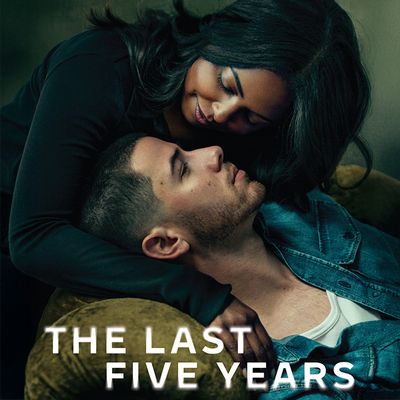
There have been a ton of Broadway musical to movie adaptations over the years . . . from Chicago to Hairspray to Rent to Into the Woods. But there have been hardly any Off Broadway musical to movie adaptations. And then all of a sudden, here comes a film version of The Last 5 Years starring A-lister Anna Kendrick and soon-to-be-an-A-lister Jeremy Jordan. How did this movie happen? Two words. Richard LaGravenese.
So what drew him to The Last 5 Years? And what does he think about our industry?
Listen to his podcast to hear:
- The difference between writing plays and writing screenplays.
- Why the business model of Broadway is much more attractive to writers than the business model of Hollywood.
- Why there are a lot of writer/directors in Hollywood but not so much here.
- And whether or not he’s got more musicals he wants to make into movies.
Keep up with me: @KenDavenportBway
Transcript
This transcript was automatically generated and might contain errors.
[0:00] Ken Davenport: I wanna be a producer with a hit show on Broadway. I wanna be a producer. Hello, producers, prospective podcast listeners. We are back. I'm going to tell you a little dirty secret of the podcasting business is that these podcasts are recorded sometimes well in advance of the day I release them. I know you are all shocked. And this podcast with my very special guest, who I'll introduce in a second, is being recorded just a few days after one of the biggest entertainment events of the year, the Academy Awards, awards, awards, awards. Which is very fitting for my guest today because he's actually an Academy Award-nominated filmmaker. His name is Richard LaGravenese. Welcome, Richard.
[0:43] Richard LaGravenese: Thank you, Ken. Pleasure.
[0:44] Ken Davenport: Richard is a screenwriter and a film director. He was nominated for an Oscar for the screenplay to The Fisher King, which is one of my favorite movies.
[0:51] Richard LaGravenese: Thanks.
[0:52] Ken Davenport: And I know someone that wants to make it to a musical, I think. So but we'll get to that. Also written the screenplays to some other little known films like, oh, I don't know, Bridges of Madison County, which was a musical. Water for Elephants, which I hear they're making into a musical film.
[1:07] Richard LaGravenese: Oh, they are he doesn't even know.
[1:09] Ken Davenport: Uh Beautiful Creatures, which he also directed, and most recently he was the director and screenwriter and champion with a capital C for the film The Last Five Years, the Jason Robert Brown musical starring Jeremy Jordan and A-lister Anna Kendrick. Now, you all know why he's here. Here is a Hollywood power writer that is building the bridge to Broadway. But what I and that's what I love about him, that's where I really wanted you to hear from him and his very unique perspective on both sides of the nation. So, Richard, tell me. You're from Brooklyn, New York, true?
[1:45] Richard LaGravenese: Yes, I am.
[1:46] Ken Davenport: You went to the Tisch School of the Arts.
[1:48] Richard LaGravenese: Yep, for the experimental theater wing.
[1:50] Ken Davenport: Uh my alma mater, Tisch as well. Yeah. So how did this acting major from Brooklyn, New York, end up on the other side of the country writing screenplays?
[1:59] Richard LaGravenese: Because the theater was a big thing. Well, first, let me say I've never lived on the other side of the country. So I I've never lived in Los Angeles. So I don't know why everyone in New York thinks I'm a Hollywood screenwriter, but I guess because that's where the business is and that's where the movies are made. But no, I consider myself a New Yorker. I've lived here all my life. And um what happened was uh I was uh a theater actor slash writer uh and uh I was part of a comedy act. I had done experimental theater, I was uh chorus boy in Summerstock, I did all that kind of stuff. And um I wrote a one-act play for my partner and I, uh comedy act I had that we did at the Lion on 42nd Street. And it happened to be uh the first date I asked my uh soon-to-be wife on.
Um and uh when she saw it, she says, Wow, you you're you're a really incredible writer. And I went, Oh, really? I don't know, and you know because I really want to be an actor and blah blah blah. And she says, No, no, no, you really should stick with the writing. And then, you know, long time we dated and then ultimately married, and um I got a job uh assisting to a screenwriter, a wonderful writer named Neil Levy, uh who had sold an idea, a movie idea, and I knew nothing about uh film. Uh except that I loved it, I was obsessive about movies. Um but I didn't know how to write them. So I sort of apprenticed him, and that movie uh took about three years to get made, and in the process uh it was very frustrating, not working with him, but working with this real kind of uh nightmare of a producer named Aaron Russo, uh who used to be Bette Midler's manager, and and uh I think The Rose was sort of based on him and her.
Um anyway, during that period, I had just gotten married. I wanted my life to start, I was frustrated, so my I was gonna write a screenplay on spec, which means for free, that I would then hand out to try and get a job. And uh this was on the encouragement of my wife who was supporting us at the time. And that screenplay turned out to be The Fisher King. And when I sold it in uh August, September of 1988, um I've been working ever since. Uh so I didn't have to move out there because they knew where I was, and when they need me, they fly me out there. Um but uh that screenplay got me uh got everything started.
[4:20] Ken Davenport: And you had never written a screenplay before?
[4:22] Richard LaGravenese: Not by myself. That was the first screenplay I had written on my own. The other screenplay, I sort of apprenticed, and Neil Levy taught me how to write a screenplay. Um but he hired me because he loved my knack for dialogue, because he had seen my comedy act, and I wrote skid comedy, so it was all based on dialogue. So starting out as a playwright and then becoming a screenwriter, tell me a little bit about the differences, if there are any between writing and tackling the two.
[4:48] Richard LaGravenese: I'm still learning. I'm still learning because uh, you know, my my uh tendency is to write dialogue. I love I love I love actors, I love watching actors give great performances. It's why part of the reason I love movies. Um learning the language of cinema, the language of a camera is is uh something that I'm still I'm still learning. Um but I've I've had some great masters uh to to learn from. Um so I consider myself in my DNA primarily a writer. Um and uh um that you know uh writing for film, uh, this movie, Last Five Years, was for me, at this stage of the game, one of the first uh times I felt as a director that I designed a movie and that the screenplay, because it was Jason's material, uh, the screenplay was primarily how I was going to shoot it and how I was going to tie things together and and what the production would look like and uh w how uh their costumes would tell time and and what their backstories would be because I had both characters singing to each other and and it was really a challenge and an opportunity for me to write in the language of camera because I wasn't I didn't have to write dialogue except for little bits here and there. This was all you know, Jason's material, and I had more confidence in his material than I've ever had in my own. So it was easier.
[6:08] Ken Davenport: Oh that's hysterical. Uh you've talked about you you've worked with some masters of the farm. Certainly you've worked with some incredible directors.
[6:15] Richard LaGravenese: Yes, yes.
[6:15] Ken Davenport: Well, the last I mean, um, you know, uh I wrote uh Behind the Candelabra, and that was uh Soderbergh, and Soderbergh's been a uh you know a tremendous influence. And uh and Terry Gilliam and uh um Robert Redford was a wonderful uh director, Francis Lawrence. I've I've had a lot of great uh Clint Eastwood who I didn't I've worked very briefly with, but even in that brief time I I learned quite a bit. Um so it's it's uh I've had I've been lucky. And being a director, let's talk so we talked about the difference between a writer for screenplays and for theater. What about directing for the stage versus directing for film? Obviously the camera involved, but how involved are I sometimes I remember talking to Sam Mendes about when he was doing Gypsy about American Beauty and hearing so much the director and the technical aspect of the the film and the camera versus how much time they get to spend with the actors.
What kind of director are you? What's I um I love uh working with actors. That's my favorite part. Um this movie Last Five Years, I got to do both because it was such a small production and I had the best relationship I ever had with a cinematographer called Steven Meisler. And so we were a real partnership, and so I got to uh be on the technical side of it. Uh I felt much more comfortable and had more fun than I ever had before. Uh but working with the actors is is is my favorite part. In film directing, there's an old adage that says eighty percent of movie directing is casting. Uh so you do a lot of that work in the casting and then you sort of step out of the way. Um and then when they need any kind of guidance or there are questions or you know, new things come up and new ideas, I I encourage collaboration.
I love when actors uh are excited and want to, you know, create something with me. Um and they both came up with wonderful ideas. Um I always wait until I get the take that I know I wanted, a click I I feel, and then after that I go up to the actor and say, I have it, now I want you to do it for yourself. Just f throw everything away and do whatever you want. And I'll keep the camera rolling until you know you want to say stop. Because I like them to have their own click as well. And oftentimes those takes are are wonderful, a little more spontaneous, you don't see all the homework, you know. Um but I I love working with actors. I respect them. I wonder what a theater director would say the percentage of their work is casting versus if film is eighty percent.
I I I haven't had a director on the podcast yet. So I'll have to I'll have to be able to ask the same question with the first one. They say that John Houston said that about film because you know, as a director, you're dealing with so many technical aspects that they that um the thing about film in the beginning I didn't like is that the human element, which are the actors and the performances, uh are rushed and the and are if it in because the lighting and the technical aspects, that's what you wait around for. That's where all the the camera angles and all the time gets sucked up by that. So when the actors have to come to do their thing, sometimes, not often, but sometimes they're not given their due. They have to rush through, you know, and I I hate that. So I try and balance it out so that the actors are taken care of and can give you know good performances.
[9:23] Ken Davenport: And let's talk about producers in Hollywood versus producers on Broadway. Certainly you you've known both, you've worked with both. I've never really worked with um New York producers. Uh I mean, I mean theater producers. I don't, I don't I know them uh as friends, but I don't I've never worked with them.
[9:39] Richard LaGravenese: Um so I I don't know that I can I can compare.
[9:41] Ken Davenport: And what's the relationship like in in Hollywood with a producer? How much are they as hands on as they as well?
[9:47] Richard LaGravenese: There are all kinds of producers. That's the thing. It's a it's a it's an interesting term. Uh some producers are great in development creatively. Some producers are great at the playing the uh uh the sort of three-card Monty game of of how to get a movie through a system and dealing with uh studios. Uh some uh producers uh come up with ideas and buy books and then hire writers and they have their own vision about what they want to do. Uh some uh producers find original material and then just encourage you to uh you know, they believe in you. They're all all different kinds, you know. Um and then there's some who just raise money and some who just manage the money. They're uh producers are wide term.
[10:31] Ken Davenport: So let's talk about The Last Five Years specifically. What what drew you to it? Or when did you first see it or hear about it?
[10:39] Richard LaGravenese: I never saw the actual uh the original production. Um my friend uh Todd Graff, who uh wrote and directed a movie called Camp about uh Sage or Manor uh is a good friend. And um I would say about 2004, 2005, he gave me the soundtrack because I kept hearing about it and I didn't know it. And um I just fell in love with the score. I I love the score. It's so honest and um insightful and rich and heartbreaking and funny. And it became one of my top ten favorite scores. And I just would listen to it over and over and over, in between doing work, in between writing. Uh and um it became sort of a reward for me to sort of fantasize about making this into a little movie uh outside of the system. And uh slowly but surely, uh step by step it became a reality.
[11:26] Ken Davenport: And did you know Jason? How what was his first meeting like when you said I want to make this into a movie?
[11:31] Richard LaGravenese: Well, it it all started with uh I was I was auditioning uh I was holding auditions for a m uh for a film uh in 2006, I believe. Uh and uh Sherry Renee Scott came in, and the first thing I said, I just gushed over her about Last Five Years and said to her, I've always had this little fantasy about making a little movie.
[11:49] Richard LaGravenese: And so she introduced me to her then husband, Kurt Deutsch. They have probably called Chicago Records. And Kurt had had a similar idea. I did not know that, but he had had an idea. And I said I'd like to do this, and then he introduced me to Jason, and for a few years there it was just the three of us. Jason and I never believed it was actually gonna happen. And Jason was living in LA at the time, so anytime I went out to LA for work, I would always set up a lunch or something with him, and we just have fun. We would just talk about the script. I'd write it in my spare time and come up with ideas, and then he'd say yes to this, no to that, try that, that's something different. He was wonderful to work with.
He was just one of the funniest, smartest men. And this went on for a few years, and Kurt's determination to make it happen, you know, he kept on me, no matter what else I was focused on. And it started to become a reality. And then a friend of mine, Janet Brenner, who's a producer, a theater, Moran Theater, and now in film, I brought her in to help, and she brought in Lauren Versal, who is an independent film producer who knows how that system works, because I've never done independent film before. And the three of them became my producing team and they raised the money. And somewhere along the way, before Pitch Perfect came out, A-lister Anna Kendrick, I met with Anna, who was my first choice, and she attached herself to the movie, which was lucky because Pitch Perfect hadn't come out yet.
I wanted her because she's A-lister Anna Kendrick and because I loved camp, I just thought she was perfect. And she loved her favorite musical as Parade. So she knew Jason from Parade and one thing led to another, and she read the script and heard the score and thankfully attached herself to it, and we were able to raise money. How what was the budget? I don't know if I'm allowed to say it's in the low, low, low single digits.
[13:46] Ken Davenport: Yeah.
[13:47] Richard LaGravenese: Amazing. That's what I was actually asked to invest in the original off-Broadway production about The Last Five Years, which I passed on. The funny thing is I've known Jason for a year, quick stories that he was my vocal coach when I was in college at Tisch.
[14:01] Ken Davenport: No, really.
[14:02] Richard LaGravenese: The story goes that I was literally my second day of class singing "Why God Why" for Miss Saigon, and I heard something from the accompaniment that I'd never heard before, an improvised something, and I was singing and I turned and looked and saw this moppy-haired kid banging away at the piano, and I remember that was I can think back and go, that was the first time I ever heard genius coming from a person.
[14:25] Ken Davenport: Yeah.
[14:26] Richard LaGravenese: And I approached him after class and I said, I would love to do something with you. And he was my vocal coach for several years. So yeah, I was involved very pretty early on with a lot of his stuff and saw it. So certainly I could see why the score would attract. We just saw Parade the other night at Avery Fisher. It was unbelievable.
[14:42] Ken Davenport: I was the yeah.
[14:43] Richard LaGravenese: Unbelievable. I was the company manager for the workshop of that when I went to Toronto and it was just amazing. But and the score, his music, there's something that gets you so inside your heart. But when I look to take a book or a movie and turn it into the theater, one of the questions we have to ask ourselves is why the theater? What about this art form is a great way to tell this story? So here's something that was a very personal story to Jason and done in a very theatrical way to people telling their story in monologues to the audience, not to each other. And reverse time zones, right? So you looked at this and heard this, and obviously we're attracted to the score, but what was it about?
[15:27] Richard LaGravenese: I have a different way that can only be done on film. What was the well because I hadn't seen it on stage? I listened to the score, and my imagination went into seeing the songs as playable scenes, as them singing to each other when that was essay. That's just how my imagination went. Then I found out that it was a monologue piece, and then years later I started the Pasadena Playhouse for the first time. And I just couldn't help seeing it and being able to make it work. Look, I wasn't a hundred percent sure, and I'm sure I know there are many people out there that for whom it doesn't work. But I wanted to see something I hadn't seen on film before. I'm at a point and was at a point in my career where you just get so tired.
I got tired of worrying about box office and trying to please everybody and trying to write something that appeals to a mass general public and not feeling like you're doing anything that you really love and that you really care about and that's more personal. And even though I did not write this, this is very personal material to me. I relate to it a great deal, and Jason has that power with his work. And so I wanted to do it for me and creatively. It's just something that I needed to feed myself, and I knew that my theater tribe, my musical theater tribe, because my daughter is also a musical theater nut, and I know a lot of her that generation through her, that they'd be interesting so if I could do this on a very, very small budget, I shot it in 21 days, that it would be responsible personal project.
You know, I wouldn't be wasting a lot of money, but I would do it the way I wanted to do it, without interference. I wanted to keep it in Jason's form. I didn't want to impose a screenplay on it because I felt that if we did it through a Hollywood studio, that's what they would have asked for. And it was the best time I ever had creatively, and I needed it. I needed to do that, something that I hadn't seen before. It was a risk, and I needed to take it.
[17:43] Ken Davenport: Since the Chicago Revolution, we've seen a number of people.
[17:48] Richard LaGravenese: What Chicago revolution?
[17:50] Ken Davenport: I everyone's I've read that before.
[17:52] Richard LaGravenese: It was that one because it was so successful. Because it was so successful and because all of a sudden we thought, oh, it can be done again. Yes, I see. Because we all knew here in the industry there were tons of musicals that were made into movies in the golden age, and then it just stopped. It just stopped, yeah. Hollywood hated us for a while. We can't touch musicals. I kind of think of the way American Idol says you sound too Broadway. I feel like Hollywood had that appeal. When Lion King came here, suddenly Hollywood was realizing that their properties could be turned into stage productions. So I know it was going that way.
[18:25] Ken Davenport: Right.
[18:26] Richard LaGravenese: But I guess Chicago, I mean I love Chicago. I saw the original also. So I was and I love Bill Condon's work and Rob Marshall. But I didn't realize that that was kind of a watershed, because I guess it was. Yeah, we've seen obviously a number since then, some very, very good and some not so good.
[18:43] Ken Davenport: Yeah. Did you study all those as you were?
[18:46] Richard LaGravenese: No, I mean I watched them just because I watched just because I love musicals. I mean I there, you know, Osmosis as a kid, I mean I've watched every musical that's been ever been made. So, you know, things will come out that I don't even mean to come out. I mean when Jeremy is singing, you know, moving too fast and he's on a water taxi, I'm going, Oh, it's Funny Girl. And I didn't even mean I didn't even mean that to happen. It just kind of happened because we had to change, you know, I originally had him on a bicycle going across the Brooklyn Bridge, but we couldn't afford a helicopter. So I had to change it. So it's just in my blood, seeing every musical, you know, over and over and over.
[19:20] Ken Davenport: And do you think and have a desire to do more?
[19:23] Richard LaGravenese: Oh, absolutely.
[19:24] Ken Davenport: Yeah.
[19:25] Richard LaGravenese: Yeah, absolutely. What what's a what's the one? Well, the last thing I just did, I rewrote Julian Fellowes did the first draft, and he's a brilliant writer from Downton Abbey. I just rewrote Gypsy for Streisand. And that was a ball. That was such a great that was a like a dream come true working with her on that musical. You know, it just was fantastic. I hope that that gets made. They're looking for a director on it, because that would be her singing that score would be historic. We had such a good but it was such a great time, and also, you know, working with Arthur Laurents's book, it was just it's such a great book. He did, you know, you have to go back to it. You have to use that as your core in that you can't stray too far from that.
[20:07] Richard LaGravenese: So that was that. I'm doing a musical, I'm writing one for the stage that I'm almost finished with the first draft on. And that Casey Nicholaw and I are very excited about. So I'm getting closer and closer to doing theater. More film musicals, yeah, sure. They'd have to be something cool that I wanted to do. But you know, I'm a little worried about working in a studio system with it. This having this independence and doing it meant a lot. I wonder if it could work the other way. I don't know. For me, personally, only me personally.
[20:44] Ken Davenport: Now, so you're starting to get more into theater and writing more theater, and you have a daughter, and she's a musical theater nut. If your daughter came to you and said one day, Dad, I have a choice. I could have a successful career in Hollywood or a successful career on Broadway, which one would you want her to choose?
[21:00] Richard LaGravenese: Oh boy, you know, it's it I wouldn't I wouldn't presume to tell her. It really is you gotta follow where your heart goes. Boy, that sounds so corny. It's not just just where your heart goes, but where your personality goes, because you need a certain kind of skin for both, you know. I was just in San Francisco and I was interviewed by the guy who runs ACT out there, and there's a great group of actors out there, fat really fine actors, who chose to stay in San Francisco and not make the move to New York. And they work all the time and because they love the work. You know, there is a life to be had as an actor or an actress where you can work steady and not necessarily win an Oscar or become a famous person, but you can have a wonderful life if you love the work. It's gotta you have to love the work. You can't want it for any other reason. Success is a byproduct, you know.
[21:58] Ken Davenport: Such great advice. I tell people that all the time.
[22:00] Richard LaGravenese: That's really true. Yeah, you want to be an actor? You can be an actor anywhere. Being a Broadway actor doesn't just mean you're gonna be an actor anyway. Tennessee Williams had a great quote that I'm not gonna say right, but it was something along the lines of success is like a shy mouse. If you if you stare at it, it it won't come out. You know, you have to not pay attention to it, you know, for it to come out.
[22:25] Ken Davenport: And when you were obviously growing up in New York, you saw a lot of Broadway shows, obviously.
[22:31] Richard LaGravenese: Well, I was big the first thing was movies. I was a movie nut when I was a kid mostly. And then when I was 12, my parents took me to see Follies. That was my first Broadway musical. And I flipped out. I remember having to explain the second act to my mother. No, he didn't forget the lyrics, he's having a nervous breakdown. Oh, okay, I understand now. And then I used to sneak into the city to see plays and to walk up and down the theater district in those days when you're 13, 14, you hop on the train and you know I could do all of that. So New York for me was always the dream. Hollywood was never, I never had any desire for Hollywood. This being in New York was getting across the river was my dream. So yeah, theater is it was I don't know, movies just seem so impossible for a kid from Brooklyn whose father's a cab driver and knows nobody.
[23:31] Richard LaGravenese: So I but theater felt real. And I remember being at ETW working with Ann Bogart and a group of us outcasts, and feeling I never felt more creative in my life. That was the first time I experienced what it was like to be creative, and it was such a high.
[23:50] Ken Davenport: And how do you think, obviously, since you've lived here and you've seen Broadway, even though you haven't been working on it for the past couple decades, how has it changed, or how do you think it's changed?
[24:00] Richard LaGravenese: Well, um I don't think I'm I'm uh saying anything new. It's gotten a little more uh top-heavy in terms of needing names and stars uh you know to to attract. Um I wish there was uh uh uh more of an off-Broadway. Um when I was a kid, you know, there were plays that playwrights were allowed to sort of have their failures and to have their medium-sized hits so that they can have their, you know, bigger. Now you sort of have to come out of the gate, you know, having a masterpiece, or you know, you fail. Uh and that's the sad thing about New York, and you have to go to regional theater, I guess, to develop your talent and your skills a bit more. Because here it's so um the stakes are so high, you know, the money is is so the rentals and all that stuff.
So it's constricted it a little bit in terms of the kinds of uh talent that we can draw here uh to bring new kind of material. Um there's nothing wrong with having uh you know name actors, as long as they're good actors, you know, to come and do stuff. But there's New York, City Lemet once said to me, the reason he always one of the reasons he always shot in New York is because the wealth of talent here is just constant. There are always there's always new, always coming out. And um I am I am proud of the New York actor scene. There's really amazing actors here.
[25:22] Ken Davenport: Um if there was a son of a cab driver listening to this podcast right now that said he wanted to be a writer someday on Broadway or in Hollywood, what kind of advice would you have?
[25:35] Richard LaGravenese: Right. You know, you have to I I think what happened for me was you know, I it was that thing of uh work um and uh pre-preparation meeting opportunity. You know, I had a s I worked on a screenplay on and off for like two years, and um the writer strike happened, and I couldn't sell it, and when the writer strike was over, suddenly everybody was reading scripts, and the scripts they were reading were surprisingly more for the marketplace, and this original script kind of caught their eye because it was something they hadn't expected. Today I would have never been able to pitch or sell that script. It was just about timing, I think.
[26:20] Ken Davenport: Where did that idea come from?
[26:20] Richard LaGravenese: Um it was the 80s, which for me was a really ugly decade. Um for many reasons, uh, you know, um, especially the early part, the early half of the 80s, was really tough. And I found the time that we were living in, I just felt it was a real narcissistic, cruel, there was a cruelty in the air and a real narcissism. And I wanted to write something about that. So all I had was the idea of a narcissistic man who by the end of the story does a selfless act. And that really was the whole spine of it. And then it just took me about three or four drafts with completely different stories to find out how to tell it.
[27:05] Ken Davenport: And uh do you think it'd make a good musical?
[27:08] Richard LaGravenese: Well, um I have worked with a couple of people who wanted to, you know. Um I hesitate because um there's a the reason one of the reasons I think that it's so great is because Terry Gilliam directed it. And he directed it away from sentimentality. And the problem with putting music to that or certain kind of music is that it could make the story, the story could easily slip into being very corny and sentimental. So it's a it's a it's a it would it would take a really specific composer lyricist team.
[27:44] Ken Davenport: Yeah. You are now writing for the theater. Do you think you will direct for the theater?
[27:50] Richard LaGravenese: I would love to direct for the theater as well, yeah, absolutely.
[27:53] Ken Davenport: Your own work? Will you do your own work?
[27:54] Richard LaGravenese: Uh I would love to do um someone else's or a uh I'm looking right now, I'm looking for revivals, uh, but of plays that aren't usually done. I get the feeling, you know, they always revive the same plays, you know, it's like the heiress and Cat on a Hot Tin Roof, and you know, and uh really, and I there's gotta be other stuff out there, and um there's gotta be I mean there's gotta be gold out there that hasn't been mined, and that's what I'm looking for. And if you've read uh John Laur's book that of the Tennessee Williams bio is unbelievable. It's one of the greatest books I ever read about a writer. And there's about 20 years of of Tennessee Williams plays that were you know completely trashed by writers, uh by critics uh for many reasons, but you never know.
There might be one thing in there that that could be revived that the time is now. Um I mean, I'm even going back to the 30s. I just want to do something. I don't want to direct my own play. I would like to have a great director to learn from. And I think you need an editor and you need an outsider. But I would love to direct a play that's already written.
[28:55] Ken Davenport: It's interesting. I think in film it's more common to see a writer-director combo. You do that a lot.
[29:01] Richard LaGravenese: Now, ever since the mid-90s, yeah, that's been the scene. But I didn't start that way. I really just loved being a writer. I never had any intention of directing. It became a necessity after a while because uh we're at the bottom of the food chain now more than ever. And um we have no power. Uh, if you write an original and the studio buys it, they own the copyright, they could do anything they want with it. Um if you have an ad if you do an adaptation, they can do anything they want with it, hire any director, rewrite the script as they do often. So um you have no control, so and they don't really respect you as much as they do a director, because a director, when they say yes, a movie can happen.
A writer just creates the thing. Um and then of course, you know, everybody's second job is writing, so everybody gives you notes from everybody can tell you. No one tells producers or executives how to be executives, but they feel the need to tell us how to write. So it's a whole uh hierarchy that's difficult. It's just difficult.
[29:56] Richard LaGravenese: It's a massive difference in how the two industries treat their writers that uh in theater uh the writer is is um and and in television uh is more the lead is more in control of of their work. I I don't know why Hollywood, the film industry doesn't respect us to do our job correctly, or they don't trust us. I don't know, I don't know why.
[30:20] Ken Davenport: Um if we've proven ourselves, even after so many years, they still insist on telling us how to uh how to do what we do.
[30:28] Richard LaGravenese: So I'm sure there's been at least one point in your career where you've sat back in a dark screening room and watched one of your films and been like, oh god, that is not what I wanted up there.
[30:36] Ken Davenport: Oh yeah. How does that how does that feel?
[30:38] Richard LaGravenese: It's a heartbreaker for me personally. It breaks my heart uh because I I really uh fall in love with what I'm what I'm working on. Uh and I've done mostly adaptations uh for uh Hollywood, and uh I only pick them because I fall in love with the material and I have some personal connection to them. So it hurts. It hurts.
[30:59] Ken Davenport: Is there a specific example of one that really disappointed you?
[31:02] Richard LaGravenese: Oh yeah. Yeah. More than one. We'll leave it at that.
[31:06] Ken Davenport: And what do you have a favorite of all the properties you've worked on today?
[31:12] Richard LaGravenese: Behind the Candelabra, I'm I'm very very proud of that one. Um and I love the way it turned out. And and uh Matt and Michael uh not just being they weren't just fantastic actors who did an incredible job. But for the four years that we were trying to set up the script, because I wrote it in 2008 for Steven, um, and no studio wanted it because they said it was too gay. Um all those years, uh Michael and Matt would publicly say that they were doing the movie, and um that kind of uh loyalty. Wonderful guys.
[31:53] Ken Davenport: Oh my god, you never get that kind of thing.
[31:54] Richard LaGravenese: Oh, absolutely.
[31:55] Ken Davenport: The world.
[31:56] Richard LaGravenese: Oh, yes. That would be helping to do.
[31:58] Ken Davenport: So okay, one last question. I want you to imagine that you're granted one wish. Your fairy godmother comes down and says, I'm going to give you one wish.
[32:07] Richard LaGravenese: Oh, it's dangerous.
[32:08] Ken Davenport: Yes, just one, though. And you can change just one thing about Broadway or Hollywood.
[32:16] Richard LaGravenese: I'll give you both. I only give everyone else Broadway. But the city work on both sides. You can change one thing, something that keeps you up at night, that frustrates you, whatever it is. Now you can also think about this in terms of as a theater going, because you see lots of shows here. But you can only change one, and with the snap of a finger, that fairy godmother will change it overnight. What would that one thing be?
[32:44] Richard LaGravenese: Create a viable off-Broadway community where there are theaters, uh, where uh playwrights can do their work and and and there's a way to be profitable where rents are um uh easy to manage, uh, where we can maybe uh have uh uh a company. You know, New York would be great if we had a theater company here in one of them. Um just a way to to broaden our theatrical uh uh spectrum uh away from the big budget um blockbusters and star-driven stuff that Broadway has, which is wonderful, but it's it's limiting, and uh it'd be great to to have uh an off-Broadway community again. I remember being a kid uh and even a teenager and looking at the ABCs, and sometimes the off-Broadway ABCs were larger than the Broadway ones.
And it's gone. And I don't understand why people try to explain it to me because they you can't make money off Broadway and the rents and the thing and the that. But I don't understand with this city and the and the theater lovers that we have here, why we can't. You know, there's the Atlantic, and there's there are some places. I love St. Ann's Warehouse. Um we need more places like that to me.
[33:57] Ken Davenport: If this podcast were taped in front of a live studio audience, they just would have gone nuts at that idea. Because I think everyone knows that what this the real art of the theater that's missing is the viable off-Broadway campaign. And I think and New York, of all the cities, we really should make an effort to try and make that happen.
[34:15] Richard LaGravenese: Yeah, because I get afraid that we there are a lot of kids of taxi drivers out there that want to write for the theater that are great writers that get sucked up by Hollywood because there's nowhere here for them to write.
[34:26] Ken Davenport: Yeah, yeah, and a lot of them and us are going to TV, um, which is great, has become a great medium. Um uh but there's nothing like the theater. And that's why we're very thankful you're coming home to us and also building this bridge. Uh, thank you so much for being here. Everyone out there, go see The Last Five Years. Remember, supporting movie musicals means more of them, which is great for everyone. Uh, don't forget to subscribe to the podcast at the producersperspective.com. We got some great guests coming up. Thank you again, Richard.
[34:57] Richard LaGravenese: Thank you, Ken.
[34:57] Ken Davenport: We'll see you all next time.
© Broadway Podcast Network, All Rights Reserved