

Derek McLane is a set designer for theatre, opera, and television. McLane has designed more than 300 productions at theatres throughout the United States and around the world, for Broadway, Off-Broadway and major live television... Read More
From the show: The Producer's Perspective Podcast with Ken Davenport
Featured Shows
About
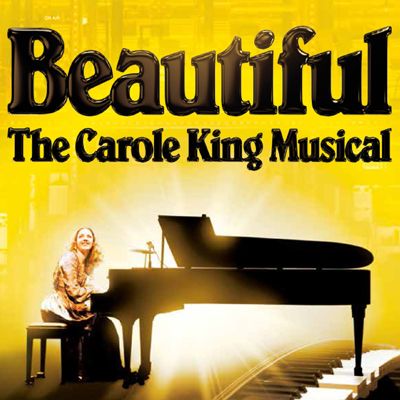
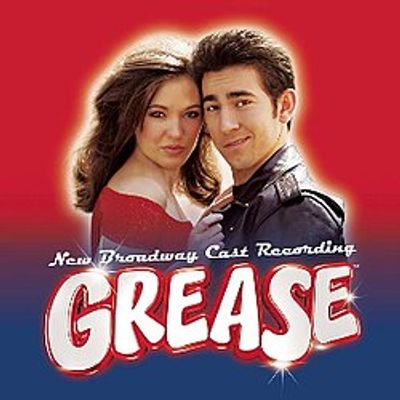
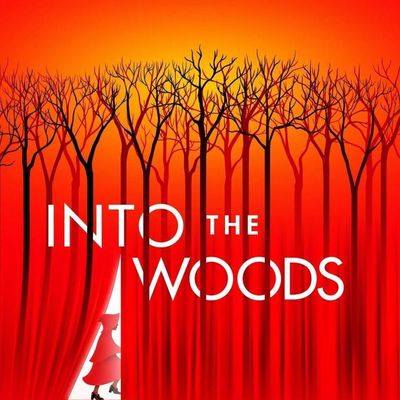
Derek McLane is a set designer for theatre, opera, and television. McLane has designed more than 300 productions at theatres throughout the United States and around the world, for Broadway, Off-Broadway and major live television. McLane won an Emmy and an Art Directors Guild Award for his design for the 2014 Oscars. Broadway credits include: Beautiful: The Carole King Musical, 33 Variations (Tony Award, Best Scenic Design 2009), Grease, The Pajama Game (2006 Tony Nomination), I Am My Own Wife (Tony Award, Best Play), The Women, Present Laughter, London Assurance, Holiday, Honour, Summer and Smoke, and Three Sisters. Off-Broadway credits include: Buried Child, Into the Woods, Posterity, The Scene, The Voysey Inheritance, Two Trains Running, and Prime of Miss Jean Brodie. For television, McLane designed the 2013, 2014 and 2015 Academy Awards, as well as the live television productions of The Sound of Music Live!, Peter Pan Live! and The Wiz Live!.
We talked about everything design related and more including:
- Why a fish tank led to his career in design.
- The one piece of advice that got him accepted into the Yale School of Drama.
- How you can get him to design one of your shows.
- The big part of a designer’s job that people don’t know about.
- How projections will influence design in the future . . . or how they won’t?
Keep up with me: @KenDavenportBway
Transcript
This transcript was automatically generated and might contain errors.
[0:00] Ken Davenport: Hey, are you looking for a collaborator for your next show? Maybe you're a composer looking for a lyricist or a book writer looking for a composer. We now have a writer database on the Producer's Perspective Pro of a hundred and fifty writers strong looking to work with you. Check it out at the Producers Perspective Pro.com. It's the only writer database of its kind. Now on with the podcast.
[0:21] Ken Davenport: I wanna be a producer with a hit show on Broadway. I wanna be a producer. Hello, everybody. Welcome back to the Producers Perspective Podcast. I am Ken Davenport, my guest today, the Tony Award-winning set designer, Mr. Derek McLane. Welcome, Derek.
[0:39] Derek McLane: Thank you. Happy to be here.
[0:41] Ken Davenport: So Derek has designed a ton of Broadway shows and Off-Broadway shows from Fully Committed to Noises Off, Gigi, Beautiful, Nice Work If You Can Get It, Follies, and so many more, including he's a designer of my upcoming Getting the Band Back Together. One of Tony for 33 Variations, a Drama Desk for Anything Goes, and get this an Emmy Award for his design of the Oscars, which he's doing again this year, which we'll talk about. He's fresh off his design for Hairspray Live. I actually used his parking spot when I was interviewing Kevin Leone for this podcast. So thank you very much for that parking lot. Thank you for being here. So let's just start off with this. What came first? Your love of the theater or your love of designing stuff?
[1:26] Derek McLane: My love of designing stuff. When I was a kid, I thought maybe I would become an architect. And I used to sort of make little models of greenhouses. And I also used to make elaborate aquariums in my basement. The aquariums were made entirely from scratch, so the sides were made out of plywood with one plate of glass in the front. And probably wasn't the plywood, usually leaked. But it wasn't really about putting water in them, it was about making scenes inside these boxes. That was a good thing that did me. I didn't know anything about setups. I've never even really heard of it. And I worked construction as a summer job between high school and college and then again during the summer breaks from college.
So somebody asked me to build the set when I was in college because I had this construction experience. And I did that and I immediately thought, wow, wouldn't it be cool to design one of these things? And so I started to do that. There was no I went to Harvard as an undergraduate and at the time there was no theater program. So it was completely just an extracurricular activity. And the good thing is that I got to design a lot of shows. The downside was that I had absolutely no skills. I didn't really know how to say create a piece of period architecture on stage or anything like that. Anyway, that's how I got my start.
[2:42] Ken Davenport: And how old were you when you started designing the aquarium? Because I'm always curious as to where the instincts come out.
[2:48] Derek McLane: Gosh, I don't know probably twelve or thirteen. And the first I'd always made things all my life. I mean, I always been a person who made little, you know, model airplanes and rockets and junk like that.
[3:00] Ken Davenport: You were a model rocket routine?
[3:02] Derek McLane: Well, no, not really. I wasn't I was never really that into the kits. I was more into making them from scratch. I remember when I was about five or six making a rocket out of paper and leaves and I was convinced that because you could light the wings on fire that the thing was going to shoot up in the air and blast off into space and my dad I remember my dad gently telling me that it would be okay if this rocket didn't actually take off.
[3:26] Ken Davenport: And what was the first show that you designed in college that someone said hey will you or will you build this for us?
[3:31] Derek McLane: The first show? Well, the first thing I built was the musical version of Two Gentlemen of Verona and the first thing that I designed was a production of Guys and Dolls which is in a dining room at college and that was in the corner of a dining room and I was very proud of it and I kind of cringe now when I think about what I did.
[3:50] Ken Davenport: So when you said you didn't have the skills to design a set what are those skills? What does a set designer need to have if I decide I'm gonna do this tomorrow, what do I need to know?
[4:02] Derek McLane: Well, you know it really depends on the project. So there were certain shows that I was able to pull off without any of the sort of traditional design skills that were just conceptual things. I did a lot of work with the director Peter Sellers when I was in college. A lot of the things didn't really require traditional drawing skills but you know in order to sort of think bigger or to think say you know to be able to have ideas that were in a particular period that used a period of architecture or things that you know sort of engaged in real fantasy that required you know like a bunch of other skills that I didn't have like the ability to look at a piece of research and figure out you know if I wanted a for example a really elaborate period door and I wanted to have that built on stage I didn't know how to get from the piece of research to the thing on stage because there's certain sort of skills that you know you can learn you can be taught that help you do that.
Or even the you know the ability to figure out how to do a multi-scene musical and how to make that fit into a theater and all the kind of stuff that goes along with that. So a lot of that stuff is drawing based.
[5:14] Derek McLane: And what happened when I was an undergraduate was I met the designer Marco Jurgen and I told him, you know, I wanted to be a set designer professionally, and I said, What should I do? And he said, Well, you should probably go to Yale. You'd probably go to Yale School. He was on the faculty at Yale. And he looked at my portfolio, such as it was, and he said, you know, what you really really need to do is learn to draw, to sketch, sketch well. And I was sort of surprised to hear that. And he said, you know, if you do no more, if you didn't you designed no more plays and spent all of your time between now or try to apply to graduate school just drawing, you would be you'd be in much better shape.
But you've done you've designed plenty of plays, you know, you need to really learn to draw. And so I enrolled in the some of the drawing classes. Well, I rolled in the prerequisite drawing class they had at Harvard, which was called Drawing 10. And it was an absolutely miserable class that insisted that you spend the first six months drawing squares and circles and learning to draw on a meat plate, which really has nothing to do with being able to draw well or see well or any of those things. And so I ended up taking my drawing classes at the Cambridge Center for Adult Education in the evening, where they had real art classes.
[6:26] Derek McLane: I love it. Yeah, the local art school is actually what I it was actually those are real art classes, and I did we did life drawing and they had some you know we had good instructors there and so I did that pretty pretty intensively and until what time I didn't go fly to Yale. And then when I applied to Yale, Ming Choe was the head of the program there, he still is, and Ming Chou Li looked at my portfolio and he said, Well, he said, if you promise to keep studying drawing from now until September, we will accept you. Who I had no idea that the actual sketching was such an important part of the design. I always thought you guys were sitting down at an architecture drawing board and measuring it out with rulers and all sorts of things.
[7:10] Derek McLane: Well, that's certainly a part of it, and that's a part of it that you know I can have an associate do. But the actual sketching is really valuable in a bunch of ways. It's you know it's a little bit like writing is to a writer. It's sort of a basic tool. So when I sit in a meeting with a director, there's always a pad of paper and a pencil or a pen and I sketch during the meeting. And those sketches are not necessarily beautiful. They're not presentation sketches, but they are a part of the dialogue. They're part of the conversation. Well what if it looked like this or what if we did a thing that was like this or you know oh but what if it was like this and the ability to communicate that way is hugely, hugely important.
So just sort of as a way of basically developing basic ideas it's really, really important. And then further to that it's really useful for me and I think for a lot of designers in terms your own process when you are trying to work out a design and you're trying to figure out what you want it to look like. Sometimes you sometimes you read a play and you imagine exactly what it should look like and you go, I know what this is going to be but that doesn't happen all the time and there are plenty of times when you start on a project and you read it and you go, I don't know what the hell this should be or you you read the play and you and you understand what it what the playwright is described but it's not you know it might seem sort of overly literal or uninspired and you just sort of did that and you then you want to take it to the next level.
And the way you do that is by drawing it. You know I always find that if I'm working on a project that I don't know what to do, and I'm stuck, and there's always a deadline looming at some point. The first thing I do is I just sit down with some paper and I just draw whatever it is the play seems to demand. So if it's a play in a plane or room, I just you know figure out what the description is. Maybe there is a written description by the play, right? And I literally just draw that onto a piece of paper. And it's usually this is usually a painful process for me because it looks terrible. It looks like nothing. But then you look at it and you go, Well, how do I make that better? And then you draw it again.
And then you draw it again and you realize something else, and you go, What if I did that? And you draw it a third time. And then you know, and none of those drawings might be anything you ever showed to anybody else, but they are the part part of the process of developing a design. That's sort of the craft of building a design, especially when you don't have a sudden inspiration. You know, I think it's false to think that inspiration strikes and saves the day every single time. Well, a lot of times you just have to roll up your sleeves and do the work, and the drawing is what helps you do that work, it's what lets you do that work.
[9:45] Ken Davenport: So I love this idea that you sit down with a director and just sketch and re-associate as you meet. Is it challenging sometimes for you? Hum or how many times does an author or director come to you and be like, Derek, I watch you design my show. I know exactly what it should look like here. Do this. Do you find it happens a lot? Can you work that way? What's that process like for you?
[10:09] Derek McLane: I have found that happens sometimes, and if it's a good idea and it works, I'm all for it. There's no reason not to do it.
[10:16] Ken Davenport: What happens when it's a bad idea?
[10:18] Derek McLane: Well, usually you find that out when you start to execute it, you know. So, you know, if something is a bad idea, you might just talk about it and talk about you know whether that would really work. Well, you might just try drawing it and say, look at it and go, hmm, not really working so great. But then you can also draw something that might work better. It really depends. You know, sometimes there are lots of directors who come with ideas, and sometimes they end up in the idea that are in some up on stage, or sometimes they develop into something else. Or sometimes they're the sometimes they're the genesis for the next idea.
[10:55] Ken Davenport: I love how you're a I'm going to show you what it's gonna look like or work it out, I'm gonna draw it, I'm gonna do something about it. And writers, actually writers I think are have a more difficult time sometimes. Oh I'm gonna try this, I'm gonna try this. That process can really get the idea out there for sure.
[11:13] Derek McLane: You know, I heard BF Skinner speak, the behavioral psychologist when I was in college, and he gave a talk on writing, which I went to. And he said, So the big challenge for every writer is how do you get started? You know, how do you how do you make yourself write? And what if I have nothing to say? Or what if I don't have can't make good sentences? And his belief was it didn't matter that you just wrote every anyway, and you just even if you wrote badly, you wrote, because the process of writing caused you to write better. And you know, because he was a behavioral psychologist, he believed in writing in the same time at the same time every day in the same room. So you had a place that was just for writing, not for anything else, and he would write.
He liked to write quite early. I think he said he would start at 4:30 in the morning, something like that, and write from 4:30 to 9 every day. And he said the thing that happened for him was that by doing it regularly in the same room, he became faster and faster at getting started. That there was something about the stimulus of walking into that room at that particular hour that caused him to start writing. So I always think of that, and I think, well, you know, a lot of the same things can apply to drawing, and it's to say to sit there and say you don't have any ideas or it all sucks is self-indulgent, really. I mean that might be true, but you know, at the end of the day you just have to roll up your sleeves and do it.
[12:26] Ken Davenport: What's the most misunderstood thing about designing set the average lay person would be surprised?
[12:26] Derek McLane: You know, I think a lot of a lot of people don't realize how many choices are made in design. You know, for example, you know they don't w they don't necessarily understand how even telling you about how the audience is seated is often part of the set design. Sometimes designers move the seats around and move the audience around different parts of the theater. I think a lot of times the audience assumes, especially musicals that a lot of the stuff, the apparatus was sort of there as a part of the theater.
[13:03] Derek McLane: I've heard that from a lot of people, you know, when I give them tours of sets from musicals and I'm explaining, for example, what the show deck is or if I'm saying, you know, explaining how we put this turntable in, they go, "Oh, really?"
[13:15] Derek McLane: I thought the turn, I just assumed the turntable came with the theater. There was always a turntable here and I think people are surprised to learn how incredibly bare bone, you know this because you've been in a million empty theaters, how there's nothing there when you go in when there's not a show there. It is absolutely stripped bare and so that everything that goes on stage is part of that design.
[13:37] Ken Davenport: You talk about audiences being seated or moving the seats around. Do you think, and we have an example of that on Broadway this year?
[13:44] Derek McLane: Right.
[13:44] Ken Davenport: With Natasha Pierre. Do you see this as a trend? Is there going to be more of that in Broadway houses, do you think?
[13:51] Derek McLane: Probably. I mean, it's not, you know, I probably these things go in cycles. It was also big in the seventies. What was it, Candide? I think was, you know, famous for this, but there were a lot of very environmental productions that were mounted in the seventies and a lot of theaters started to be built in the seventies that were flexible. So, you know, not Broadway theaters, but other theaters where you could move, you know, it was deliberately built without fixed seating and you could move them around. But I right now there's definitely an interest in environmental productions and experiential productions, less so on Broadway than elsewhere, but you know those productions elsewhere have an influence on what happens on Broadway for sure. Like Natasha Pierre which started, you know, in a tent and the results of that sort of experiment wound up on Broadway. But I think that I think that there probably will be more of that.
[14:40] Ken Davenport: Some of the biggest hits that Broadway has ever produced are these giant spectacles, Phantom of the Opera, Lion King, Wicked, etc. Do you think Broadway shows have to be big? Is there a certain level that they decide that they have to be to be successful for a commercial audience?
[15:00] Derek McLane: I don't think so. I think if you looked at say Jersey Boys, which had a really long successful run, that was a very, very simple production. It had production and it had, you know, there were things that moved but it wasn't a sort of physical extravaganza. It was about, you know, it was about those four guys really and it felt like a kind of real storytelling event on stage. I think Hamilton is another example. All designed, it's all beautifully designed but it is extremely simple. I don't think people think of that as an extravagant physical production. So I think Broadway embraces the kind of full spectrum of experiences like the ones you described which really are, you know, extravaganzas and big expensive productions to things that are much, much simpler productions.
[15:46] Ken Davenport: You work a lot on Broadway and a lot off Broadway as well.
[15:49] Derek McLane: Yeah.
[15:49] Ken Davenport: If you could only work in one of those environments for the rest of your career and they both paid the same, uh huh, which would you choose and why?
[15:58] Derek McLane: I'd just say, I mean certainly there's more experimentation off Broadway, but I do like the, you know, the, aside from the fact that it pays better, I think the other thing I like about Broadway is that more people see it. And off Broadway is limited in that, you know, in that way, but you know, even a successful off Broadway show is we're gonna be seen by probably two hundred people, maybe three hundred people at night. So it's just a different scale, it's a different scale of work. I do like, you know, I mean what we do is public storytelling and we do like other people to share in it and there is something satisfying about knowing that a lot of people have seen it, that a lot of people have shared in it.
[16:35] Ken Davenport: What attracts you to a project? You're an unbelievably in demand designer. How do you choose which show to do? Is it based on what you can do with the set and like, oh man, I can design one heck of a set for this thing, even though the show is like, meh, I don't know how good the show is, or is it show based?
[16:54] Derek McLane: It's more show based and more, it's more relationship based. I mean, there's certain directors that I work with a lot and, you know, I want to do all of their projects. And that sometimes includes projects that are more successful and projects that are less successful, and that's just, you know, it's part of a roller coaster ride. But if I, you know, if I had to choose between two projects that, you know, one I thought had a spectacular set versus, you know, the other which I thought was a really, really good show, I'd probably choose the thing that was a really, really good show because nobody really ultimately wants to see a bad show.
[17:28] Ken Davenport: You said there are certain directors you want to do all their projects. What makes one of those a director one of those people?
[17:34] Derek McLane: Oh, I think it's just, you know, it's kind of a level of mutual trust that, you know, we enjoy trying something on a show, seeing how that comes out, and you know, have the ability to build on that and go, we tried this idea on this show. That was interesting. And but what if we tried, you know, what if we tried something completely different on something else? It's a lot easier to make bold choices, you know, with people that trust you than it is with people you've never worked with before because there's always a level of gamble and risk to those things.
[18:13] Ken Davenport: Biggest change you've seen in designing sets in the last twenty years?
[18:17] Derek McLane: Well, this goes back to your earlier question. I think that there is in some ways that there's a movement towards simpler productions than the commercial theater. I think that there's been more of an embrace of commercial projects that are very, very simple. I don't know that probably came about partly because of the economics that, you know, it's not really possible to spend two million dollars on every set for every musical. Shows just aren't built that way. So I guess I'd say that's definitely a trend. I think, you know, the style of what people want to see right now has changed also. It used to be there were so many shows that were very heavily period. There were like, they were obviously a lot of, in the eighties there were a lot of really heavily period musicals and I think those are, they're less in vogue now. They're certainly still period musicals but they're not, I don't think they're done with such a heavy, sort of literal sense of a period.
[19:11] Ken Davenport: Where do you see set design going? Where do you see it looking like in twenty years from now? Big spectacles again, minimalistic, all projections?
[19:19] Derek McLane: You know, I kind of doubt it will be all projections. I mean, people have done, we've already had experiments with all projections, and we'll probably have more of them, but at the end of the day, you know, projections are just pictures. They're not necessarily, the projections by themselves are not really a great environment for actors usually because they are just pictures. So I think there's always going to be, I think there's always going to be a need and a desire for that human connection that you get with real textured spaces. Not real, but textured spaces that are places that actors can touch and respond to. But where will it go? I don't know. I don't know.
[19:55] Ken Davenport: You've done a lot of work on television. You've done the Oscars, you just did Hairspray. What's the difference between designing a set that an audience is going to see in 3D and see those textures versus one that's going to be on a screen and flat?
[20:10] Derek McLane: You know that the difference I guess for designing say a musical for television or film, as a designer you don't really control what the audience is going to see to the same degree. You know on Broadway, a Broadway stage or an off Broadway stage, basically, you know, most of the audience is seeing the set from one particular point of view and that's known. You know on TV, the audience's view is constantly moving. It's, and you're seeing it from a lot of different angles and you're seeing it from far away and up close. So it has to, they have to have a whole nother level of detail. In some cases like in the case of the Hairspray that I just did because the camera moves so much and it moved from set to set and it moved in and out of the sets and it, you know, there's so much that was done with steady cams that would rotate three hundred and sixty degrees around.
It wasn't so much about designing a picture. You know on Broadway often you're designing, you know, a kind of a composed picture that where you composed in the sense that a painting is composed. Something like that in television, like in the Hairspray that I was just describing, you're really designing more of an environment that the piece can live in and of it so that the camera can go wherever it wants.
[21:17] Ken Davenport: The process by which sets are built on Broadway. So we go through this process where you design it, you give it to the general manager, give it to the shops, they bid it out, it goes back and forth. What do you think of this process?
[21:33] Derek McLane: Well, it's I guess that's a sort of necessary evil for a lot of productions. Yes. I mean it works fine a lot of the time, but you know, what would be ideal is if there's enough time that the designer and director and producers would sort of be able to look at the design and figure it out, figure out what it is they want to do and how they want to do it so that they're not sort of under the time crunch of getting bids back and getting a show awarded to a shop. You know, there's a thing that happens on some productions where, you know, by the time you get prices back and you're trying to sort of reconcile the costs of the set and the budget, you're up against the calendar. It gives you very, very little time to make good decisions. And I think that's, you know, the thing that's most frustrating for me and pretty frustrating for a lot of directors is when your back is up against the wall. It's probably frustrating for producers too.
[22:37] Ken Davenport: And you don't have time to go back and make new creative choices. You just have to figure out, you know, what to cut in order to get the show on budget. And I don't think anybody would usually enjoy that very much.
[22:49] Derek McLane: No, from a producer's perspective, if you will, we hate to cut stuff.
[22:53] Ken Davenport: Right. I mean, no one wants to cut stuff, and we often find ourselves in these awkward, and you're right. Time pressure situations are like we have to do it by tomorrow.
[23:02] Derek McLane: Right, exactly. And it sometimes feels like I'm even telling designers because you don't have time to rethink it, right? It's like cutting off a hand because it's gangrenous sort of thing. It's an unfortunate thing.
[23:15] Ken Davenport: What's the favorite design that you've seen of a show that you haven't designed? Something you've seen where you're like, that's good.
[23:21] Derek McLane: Well, there are lots of them. There's always a couple other season that make me feel that way. It'd be from way back too anything that's...
[23:26] Derek McLane: Yeah, I mean one of my favorites ever was the set for Carousel that Bob Cowley did with his session. I thought that was beautiful, beautiful magical production was, you know, theatrical and transported.
[23:34] Ken Davenport: Your favorite set of your own? In other words, if the Smithsonian Institute called and said we've got room for one of your models in our institute, which one would you choose?
[23:51] Derek McLane: Well that's hard. I'm always changing my mind about that. But I guess I'd have to say probably using a 33 Variations or I Am My Own Wife, one of those two. They're both, I thought both of those are really fun.
[24:02] Ken Davenport: I will agree with you on that. Both of those are exceptional. I Am My Own Wife was amazing.
[24:07] Derek McLane: Who cares?
[24:08] Ken Davenport: My last question, another James Lifton-like genie question. I want you to imagine that the genie from Aladdin comes to visit you and wants to thank you for your incredible contributions to the theater as a designer and says, what's the one thing that drives you crazy, Derek? What makes you bang the table, flip your drawing table up in the air, get really angry that you've asked this genie to wish away in an instant about this industry? One thing makes you mad.
[24:35] Derek McLane: One thing that makes me, one thing that makes me mad. You know, I guess the thing that makes me maddest is when I've worked on a show that, you know, I and the other collaborators, you know, really works and it can't find an audience. That's incredibly frustrating. And it happens sometimes. It just for whatever reason doesn't catch on with the public. And that's a frustration. And I don't think I'm probably alone in being frustrated by that.
[25:02] Ken Davenport: You're definitely not alone, because I've right there with you. What do you do when that happens? How do you...
[25:08] Derek McLane: Well, I as a designer there's really nothing I can do except I suppose try to get as many people that I care about to see it before it disappears. Because, you know, what we do is ephemeral, doesn't last forever, and it's really only there in the moment. So if there's something that I do feel is special that's not gonna last, then I want the people I care about to see it.
[25:30] Ken Davenport: Well, thank you for that. We'll try to see what we can do with the genie to get that whisked away. All shows will be successful, then all the things will be filled, and we'll never be able to do anything new.
[25:40] Derek McLane: Thank you so much for being here.
[25:42] Ken Davenport: Thanks to all of you for listening. Good luck with the Oscars. We'll all be watching. See you next time, guys. Bye bye. Don't forget to check out the writer database on the Producers Perspective Pro dot com. A hundred and fifty writers just waiting to work with you. Check it out at the Producers Perspective Pro dot com today.
© Broadway Podcast Network, All Rights Reserved