

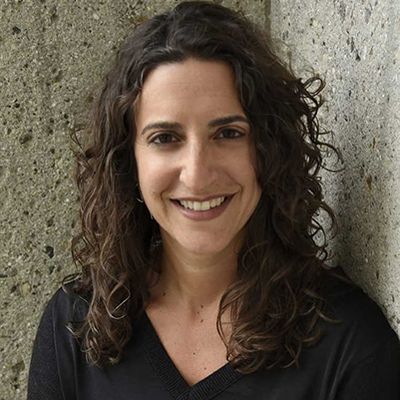
Eva Price is a Tony Award-winning producer of Broadway plays, musicals and concerts, a member of The Broadway League's Board of Governors, and on the producing team of Killer Content and Abigail Disney's venture Level Forward... Read More
From the show: The Producer's Perspective Podcast with Ken Davenport
Guests
Featured Shows
About
Eva Price is a Tony Award-winning producer of Broadway plays, musicals and concerts, a member of The Broadway League's Board of Governors, and on the producing team of Killer Content and Abigail Disney's venture Level Forward. Shows she has produced include Dear Evan Hansen (six Tony Awards including Best Musical), On Your Feet!, Peter and the Starcatcher (five Tony Awards), Annie (Tony-Nominated Musical Revival), The Merchant of Venice starring Al Pacino, and The Addams Family. Off-Broadway shows include Cruel Intentions: The '90s Musical; Drama Desk-nominated Found The Lion, and Small Mouth Sounds.
We talked about all things including:
- How being bored in the news business led to a career in producing.
- Why she’s glad her first show only ran 6 weeks and did NOT succeed.
- How she raised the very first money she ever raised . . . with a COLD call!
- The challenge of being a woman in this business . . . and being a woman Producer in this business.
- What the hardest part was about breaking into the Broadway business . . . you’ll be surprised by the answer.
Keep up with me: @KenDavenportBway
Transcript
This transcript was automatically generated and might contain errors.
[0:00] Ken Davenport: Hey everybody, we're throwing a Tony party for all the members of the Producers Perspective Pro. So this is a great month to join. Check out the Producers Perspective Pro.com. Get an invite and join us on June 11th to see who wins the big prize. Now on with the podcast.
[0:14] Ken Davenport: I wanna be a producer with a hit show on Broadway. I wanna be a producer. Hello, everybody. Welcome back to my once-a-month sit-down with a mover and shaker on Broadway. I am Ken Davenport. This is the Producer's Perspective Podcast. I'm super excited to have as my guest today someone that I've watched climb up through the ranks and become one of the youngest lead producers on Broadway. Please welcome to the podcast Eva Price.
[0:42] Eva Price: Hi Ken. Happy to be here. Longtime fan. First time podcasting. I love it.
[0:48] Ken Davenport: Listen, she can be a voiceover artist too. Eva's had about 20 producing credits on her IMDb page on everything from The Addams Family to On Your Feet to Dear Evan Hansen. She's also taking the lead on shows like Colin Quinn's Long Story Short, Peter and the Starcatcher and Time to Kill, Kathy Griffin Wants a Tony, The Temptations, the Four Tops, and a ton more. She's also been one of the most passionate and prolific off-Broadway producers we have behind such terrific shows as The Lion, Small Mouth Sounds. I had that author on the podcast, Found, and many, many more. She has a GM department, she books tours of her own, she does it all, and she's just getting started. So let's talk about how you did get started. What was your first experience in the theater?
[1:30] Eva Price: My first experience, besides coming to your office and making you talk to me over coffee, was an off-Broadway production called Joy at the Actors Playhouse, which you were very kind to come to, I do remember. And that came out of a friend who had optioned the rights, didn't really know what to do with them. And I was working in the news business at the time and was really passionate about Broadway, but had no idea how to do it. Didn't know anything about working in the theater and volunteered my time to help him because I was bored being in the news business.
[2:04] Ken Davenport: So in the news business, what specifically were you doing?
[2:07] Eva Price: I was an assignment editor for ABC News and a coordinating producer for all of their political coverage and I used to host back when TV became like on the internet. Do you remember those days when you like watched moving video on the internet? So I hosted a show about Broadway called The Mix. And I was doing kind of everything but really dispassionate and lacking creativity and wanting that for my life.
[2:35] Ken Davenport: And did you grow up on the theater? Were you just a fan of it and then said, well, I'm not gonna have a career in it so I'll go into the news?
[2:43] Eva Price: Yeah, I was an actor, I pretended to direct things. I produced a cabaret senior high school when my pianist almost couldn't make it to opening night and I had to go to her parents' house and beg to let her out of the homework assignment. It was a whole thing even at 17. Pretended to direct things.
[3:05] Ken Davenport: Actually amazing. So you know, it's funny 'cause you brought it up. We did have a coffee, I'll never forget it. I know exactly where it was, the Starbucks up by Columbus Circle up there. And I was so taken by your passion for wanting to produce Joy, which I did go see because I was like, I gotta go see this 'cause this woman is gonna do some things. So that was just a friend of yours' show?
[3:26] Eva Price: Yeah, Ben Remmelauer, who now has like patty issues and I think he'd be a great addition to your podcast actually. He was a really funny theater maker and theater writer.
[3:35] Ken Davenport: That's very true. Very good idea.
[3:36] Eva Price: Yeah.
[3:37] Ken Davenport: We'll reach out to him right after this.
[3:39] Eva Price: Right after this.
[3:41] Ken Davenport: Great. So that led to what? No, actually let me ask you this question. It may be a difficult question. How did that show do?
[3:46] Eva Price: Terrible.
[3:48] Ken Davenport: Terrible.
[3:50] Eva Price: But it lasted six weeks and not before that I think it probably should have lasted. But that's okay. Because if I had succeeded my first time out, I don't think I would have learned nearly enough. And I think the best thing about starting a career and starting something new that's this challenging as a producing theater is to fail first and pick yourself up and keep going and learn from those mistakes.
[4:16] Ken Davenport: So how did you pick yourself up and not just run away back to the news, frankly, which is where I think most of the people were running?
[4:24] Eva Price: Yeah, I had a lot and lot and lot of coffee dates actually following that. I instinctually felt that I was good at it, even though practically I was not because I didn't succeed. But I felt that the things that I thought about while it was failing and the decisions I made while it was failing and the impulses that I had about the theater industry, I thought were good ones. So I literally lived in Brooklyn back then, I remembered this so clearly, and there was free Wi-Fi at the COSI up on forty-nine and this was like 2006, and I would literally put my laptop in my backpack every day and I'd go up to that COSI and I'd send emails and I'd do research and I'd meet people for coffee dates at that COSI, and then I'd go back to Brooklyn at night and eventually I was like figuring out that you needed to raise money for stuff and you needed to auction shows and you needed to create a revenue stream for your producing office that was more than just waiting for the moment for your royalties to come in. And I by sort of choice, by mistake, by whatever we want to call it, I taught myself how to be a producer while also growing a general management business.
[5:37] Ken Davenport: So what was the first thing you did after Joy?
[5:40] Eva Price: The first thing I did after Joy was a tour of The Great American Trailer Park Musical.
[5:45] Ken Davenport: Oh yeah, it came out of NIM.
[5:47] Eva Price: So that ran off-Broadway. I raised a little bit of money for that and then that closed as well. But that was very much more a hobby. You know, I was not an active producer on it. But I liked it so I helped raise some money. And I realized that the show itself was so good and so funny, but probably just cost too much for commercial off-Broadway at that time. So with another partner we auctioned the rights to tour it. We worked with a booking agent at the time and we created what I think at that time was a production budget that was about one-tenth of the off-Broadway budget and a weekly nut that was about one-third of the off-Broadway running budget. And we were able to tour it for 18 weeks and took it to the El Fringe and really breathed a lot of life into its licensing and that's sort of how I cut my teeth on producing and general management for tours.
[6:42] Ken Davenport: You cut your teeth on producing a general managing tours by producing a general management tours.
[6:49] Eva Price: I'll figure it out.
[6:51] Ken Davenport: Yeah, it was a lot of naivete like truly like if I actually knew how hard it was going to be ahead of time, there's just no way I would have done it. Either produced or general managed in the end. But it was I was so and being young is like really helpful because you're so cocky and stupid and unafraid and twenty-eight years old, twenty-nine years old, and I thought, okay, I'll, you know, how hard could this be? This, I could teach myself this. There's some, you know, there's this CTI class I took and that prepared me and I'll just take some more people for coffee and ask more questions. And you know, and I brought people in to work with me. People who had company managed and people who worked in GM offices and I just asked them really everything and asked them to help me and made them money and I eventually figured it out.
[7:44] Ken Davenport: I even though it sounds insane.
[7:46] Eva Price: So it sounds great and I love the comment about being young. I always use the analogy like when I was skiing when I was 18, I just pointed myself down the hill and went. Right. Like nowadays if you put me on a ski slope I'd be like, oh my god I'm gonna break a leg, I'm gonna break a leg. There is something to getting out there just doing it. You mentioned raising some money back then. How did you do it then? Where did you start with that?
[8:07] Eva Price: A lot of friends of friends. So I am from Boston which meant I knew very few people and didn't have family members here in New York but I was really good at cold calling and networking my way into situations. So it began actually with a friend told me about an investor friend that he knew and he gave me the phone number and that was the first call I ever made actually was to that investor who ended up becoming a longtime business associate of mine. Again amazing cold call. Just literally phone not even email because 2000 and whatever. I heard you had invested in The Producers, this is what I said. At that point, I thought he had therefore made a million. I thought he made millions of dollars because he invested in The Producers.
Turned out he invested in Timber. But I remember I said, I heard you invested in The Producers, that's great. I think that there's a lot more productions like that in your future. I'd like to be part of them with you. Can we meet? And I would just meet people and then cold call and then meet people and then cold call and one thing would lead to the other. I again it had everything to do with the fact that I was too young to know the best insane way to go about doing business. But obviously it worked.
[9:22] Ken Davenport: And so when you've got people to say yes to, why do you think, including that guy that ended up being a long-term business associate? As you look back, why do you think they said yes? Like what about your pitch that you were saying or you were doing made them go, oh yeah, I'm gonna invest in this person over the long haul?
[9:41] Eva Price: Yeah. I think because I was truly, truly passionate and frankly probably emotionally authentically true in my pitch. I really believe that this every time I put on a show, I truly believed in that moment. Maybe things changed six months later, but I truly believed in that moment that the show deserved a life. I believe that the economic strategy of the show made sense for investor return. I believed that the artists involved in the show had something important to say and deserved the platform of Broadway or off-Broadway or tour, and I think that authenticity really got me a long way.
[10:21] Ken Davenport: So flash forward a bit, you now lead produce, of course, and then you partner with folks as well. What makes you decide? And same thing, same thing that I do, right? So I lead produce, but also partner and co-produce. What makes you decide a show to co-produce?
[10:38] Eva Price: Two to three things, I think. I choose to co-produce shows in which if they existed and I wasn't a part of them in some way, I would feel sad. That's one reason. So maybe I'm not the lead producer, but I see it happening, and to not be a part of it doesn't feel like the right choice. Sometimes I choose to co-produce a show because the artists involved are people that I want to support, and I believe in so wholeheartedly, and perhaps we even have a show that I'm developing with them in which I'm gonna lead produce it one day, and I just want to be on their team.
[11:13] Eva Price: Perhaps it's a show in which the lead producer on it is someone that I want to support for whatever reason. They've been supportive of me. I believe in who they are and what they stand for and the reason they're producing that show. I just I want to support their vision. And then because it's a great investment, and I want my investors to have a great experience, and I want to have a great experience. I wrote a blog a couple years ago in response to like a teenager who wrote in saying, I want to know what a producer does. So I like asked a hundred producers what a producer does, and I got a hundred different answers. What do you think in one sentence of producer's responsibility is? A producer's responsibility is to do everything he or she can do to see the best outcome for that show and for that show's investors.
So that would include everything relating to its artistic success, everything relating to its business success, everything relating to the legacy that that show needs to lead for itself. No stone unturned, no email unreturned, no phone call ignored. It's beginning your day and ending your day, knowing that you did everything you can to make that show successful. That's a producer's job.
[12:30] Ken Davenport: Terrific answer. And you describe a lot of things there, of course. The producer's job is everything. And from marketing to raising money, there's all sorts of things that we have to do, right? What do you think is the most important thing a producer in 2017 has to be? Most important skill. If you could only choose one of the many skills that you have, which one would you say this is the one I'm taking down on the show?
[12:53] Eva Price: Yeah, I think the most important skill a producer 2017 has to have is to understand the world they're in. I think if you're producing a show or you're behaving in a way in how you're producing a show that is not cognizant of the world around you, then you're failing. You're failing your show and you're failing the audience and you're failing your artists and you're failing your investors. And what does that mean? I think that means everything from the topic has to resonate and be relevant for 2017 and the world that we're in right now. It has to matter, it has to exist. There has to be a reason for it. But you also have to exist in light of 2017 and that means be smart about how you market it.
Be smart about the message you use to talk about it. Be smart about the mechanisms in which you sell your show from how you price it to what sort of platforms your ticketing is on to how you utilize social media in the digital sphere to be relevant. And I think people who choose to ignore—I’m really harping on the fact that you asked about 2017 because I think people who ignore the time and the place that they're living in while producing is so foolish. They're so connected. It's an entertainment option in the midst of three thousand and sixty-four entertainment options that we Americans have each day, from Netflix to CISO to YouTube to the Apple Watch. There's just so much to consume. So if you're not gonna be cognizant about the world you're in both the art itself and the narrative you're creating to sell your art, go home.
I'm sorry to say. I get so passionate about this because I watch people make choices and I watch them spend seventeen million dollars on their productions or I watch them figure out ways of how to message and they're just ignoring the world that they're in and it breaks my heart.
[14:52] Ken Davenport: There are now three thousand sixty-five options for us by the way in that time that not something else just came out. Is there anything that whether it was when you were having coffee with me you were thinking about leaving the news, what's the biggest surprise to you about now that you are sitting in a big chair and producing shows like what I never I never thought I'd be doing this or that this is what it would be like. Good or bad.
[15:16] Eva Price: I think the audience is what surprises me. Who they are, how supportive they are and I don't just mean the people sing in the theater at night. I think I mean the fans on Broadwayworld.com and the folks lining up the stage more and the people consuming theater news and theater information. I'm surprised how vast and diverse and intelligent and sort of heartful the theater audience is. I don't think I realized it when I first started off. I just thought it was a bunch of, you know, ladies over fifty-five who had blue hair but actually don't have blue hair.
[15:57] Ken Davenport: I still don't understand where then where you came from. Did you find it hard to quote unquote break into the business?
[16:05] Eva Price: Yeah. Yeah. Some of that was self-imposed challenges like I'm young and I'm female and I'm not rich and so I should just sort of wait my turn or have it some time for me to speak up or I don't deserve that. Like that was that I had a lot of that in the first several years but I had some great mentors who gave me opportunity all men interestingly enough and a few women as I started coming coming up more. I started meeting more female producers who've been lovely have been partners of mine and have been friends. But you know I always look back and I think about my first real two mentors in the theater business and those were two men my father's age who just believed in me and cared about what I had to say and that was really helpful and really important really confidence for me.
[16:53] Ken Davenport: Do you think it is more challenging to be a woman producer on Broadway in 2017?
[16:58] Eva Price: I do I really did. And why tell me there's a bit of chauvinism still that exists on Broadway. I don't know why and I don't know where it comes from and I can't point a finger at it or blame but it just exists and that could be because it's a largely male industry. Every major position and every major theater chain is male it just happens to be that way. Many of the most sought after directors and writers tend to be male choreographers as well so the talent pool is like that. Many of the agents are male. So and these are friends and these are supportive males and these are lovely people, but it creates an imbalance that is hard to ignore that exists. There are golfing opportunities for those men when they get together and there's social opportunities that exist that as a woman you're just not part of. And when there's an imbalance, like just a flat out no to no one's fault, but gender imbalance, you can't help but perceiving that and feeling less because of that.
[18:09] Ken Davenport: What do we do to counteract that?
[18:11] Eva Price: We kill all the men, and no, I love men. I do, I really do. I think we need to find ways to be more supportive for younger women coming into the industry, whether that's helping them financially through stipends and paid internships and opportunities. I think if we can encourage women that there's a place for you here as a producer and as all of those creative jobs that I mentioned, that the industry wants those voices, the industry's here to support those voices, the industry is encouraging the expansion of those voices, then I think that's one thing we can do. I think people are scared of Broadway in general working on Broadway because of its challenges, because it's so difficult because of its one in five success rate, and you know, I think it takes a lot of confidence to come into a world that's hard to come into anyway, and then to look around and see your gender is sort of marginalized, but not as prominent. That's hard. That's hard.
[19:15] Ken Davenport: Well, you're a terrific role model for young women out there wanting to do this because you as you said, I wasn't rich, I didn't know anybody, I was working in the news, and look what you managed to achieve. And what I really like about what you've done is you found a little niche in doing some things on Broadway, some concerts and special events. Tell me about how that happened and came up for you.
[19:38] Eva Price: Yeah, so when I left the news business, I told my parents on Thanksgiving that I was gonna go and become a Broadway producer. I'll never forget this. And my mother just sort of looked at me and was like, I don't understand how you will make money. And I said, Mom, you can't make a living but you can make a killing. And that's all you gotta worry about. You know, ten years later, I have not figured out how to make a killing. I have figured out how to make a living, which is actually fine. That is an actual apparently you can you can live in New York by just being normal. And I'm fine with that and grateful for that. And the way I did that was I looked at Broadway as a place I would always work, a community I would be a part of, find ways to either reproduce, co-produce, or produce a special event or concert once a year or more.
But I knew that there was a beyond Broadway that was fruitful and created great work and was a home for me also. So I decided, you know, pretty early after that great reconciling technical school experience that I would always have a touring business going on simultaneous to my Broadway business, whether that was small shows or big shows. So I always created a pipeline of touring. Um, and I brought in staff and created relationships with booking agents, so that those which went out on guarantees and therefore could guarantee revenue each year, I made sure that my pipeline always was spoken those. What I would also do, because I am fortunate enough to have a really nice relationship with Live Nation Entertainment, is I would always be in process with them to produce concerts on Broadway, you know, limited engagements, which also helped generate revenue.
Because I enjoyed off Broadway as a place to create artful shows and grow talent, I figured out that there's a world of regional theater out there that wants a license and do hybrid touring of off Broadway shows. So I created a circuit with a few different artists to always bring shows to the various lords and presenting houses around the country. So I feel like that became kind of an important way to saying something about the world through artistic endeavors like Small Mouth Sounds and The Lion. It allowed me to also generate revenue and give shows longer and greater lives than if they only happen once in a year.
[22:16] Eva Price: Yeah, you actually can't make a killing unless you figure out how to make a living. That's the tricky thing, like I think no one knows how to make a killing. It just happens. You're around long enough, you're in the right place at the right time, and it happens, but you've managed to figure out a way to be around, so when the opportunity comes, you will strike.
[22:35] Ken Davenport: Tell me about off-Broadway and what you think about its current state right now.
[22:39] Eva Price: Oh my god, how many times have you asked that question with people? You know, not many, because usually people will be like it's the worst place on earth to be, and you've managed to be there many, many times and managed to figure out some way to make it work, whether that's because you're touring it or not. I'm curious just about is it dying, is it dead? If it was a patient in a hospital, what floor would it be on?
[23:02] Eva Price: It would be going back and forth between the ICU and the rehab facility.
[23:08] Ken Davenport: Good answer.
[23:09] Eva Price: My opinion of off-Broadway is that it has become the most exciting breeding ground for new artists. And I'm not gonna forget that and I'm not gonna turn my back on the sphere of off-Broadway, the space, the off-Broadway space, because it's hard to recoup. If I want to be doing exciting work and I want to be supporting new artists and telling new different stories, then I have to keep an arm's length approach to it. I have to be there. And I don't have to be there every season, I don't have to be there all the time, but I have to be there. I have to support it and I have to like it. To answer your question what do I think of it, I think it's how every producer learns how to be a producer unless they just get lucky, right?
So if you're gonna start off being a producer and you're likely gonna fail anyway, I say fail where the stakes are so much lower. I say fail at three hundred thousand dollars instead of three million or fifteen million. And I produce there now I produce there because I think that these shows need to have a life and the risk of putting it up Broadway to have that life makes so much more sense than the risk of putting it on Broadway. And so far so good. I mean the things that I've done there have been things that have found a life outside of their off-Broadway run. I think non-profit off-Broadway is certainly where it's at these days without some really exciting things starting there. And if it wasn't for nonprofit off-Broadway, I think Broadway would not be as exciting or successful as it is in some cases.
And so I don't want it to go anywhere. I want to keep supporting it and figuring out how to fix it. But I think turning your back on it is not the way to help it. You have to use a different strategy to raise money for off-Broadway than you do for Broadway.
[25:03] Eva Price: Yeah, you have to have the long strategy, the long view strategy. And a lot of savvy producers and investors who do produce off-Broadway or invest off-Broadway actually really understand that. They understand that something that doesn't necessarily recoup off-Broadway, but becomes a hit and therefore is licensed and done all over the country and all over the world will likely get them to recruitment faster than, say, something on Broadway that has a chance of maybe recouping 60% off-Broadway and then going in and licensing. I think your approach to raising money off-Broadway has to be an artistic approach with a lower risk promise, meaning you have to come first at it with we're supporting artists and we're supporting an art form, and our downside is really low.
Where on Broadway, I think your approach to investors and co-producers is here's the business model, here's why it makes sense, here's why I'm doing it, here's why I think you should do it, here's the potential for it. But you're constantly going back to that 15-week recruitment schedule or that one-year the government schedule for the musical. And I think with off-Broadway, you're really talking very strongly about what it could do off-Broadway, but what it could do on tour and what it could do in licensing, and what it could do if it became a film or if it became a TV series or if it became a podcast. I mean I think those are things that are often happening off-Broadway. I think I just read today that Jordan Harrison's Marjorie Prime is getting distribution.
I mean that this is happening, you know, roundabout is turning on and these are coming from the nonprofits largely but you know, they're churning out these great plays by these great writers and they're having great lives after these plays are having great lives after and I think the producers that are supporting them are actually getting monetary return.
[26:58] Ken Davenport: If a young producer, new producer never produced before came to you and said, I have five hundred thousand dollars, I have an opportunity to be a co-producer on Mama Mia Two starting Hugh Jackman, or I could take the same five hundred thousand dollars and produce a new musical off-Broadway and be the lead producer on it, which would you tell them to do?
[26:58] Eva Price: Oh God I would I would ask them a whole bunch of questions before I gave them any advice. I'd want to ask them what their goals are. I want to ask them where they'd see themselves in five years. I want to ask them what do they want their experience to be like at this point in their life with this five hundred thousand and then I'd have to give advice because the answer changes. If this five hundred thousand was just about recouping and showing investor return, then I think Jocelynd show is a pretty good choice. But if that five hundred thousand is creating a business model and a name for themselves and a learning experience that is then going to provide years and years of opportunity and potential revenue and relationships, I might advise them then.
[28:08] Ken Davenport: Do you think it's easier to get into Broadway producing today than it was when you got started?
[28:15] Eva Price: More challenging for the producers today?
[28:18] Ken Davenport: I don't think it was very easy when I got started either. So I wouldn't say that it's more challenging today than it was then. I do think that the world has changed in that there's more producers on more shows now than there ever have been before for all the reasons that are obvious, to spread risk out, to create communities around your shows, to get the show capitalized to begin with, just need a lot of help. And I think people are more open because they need more producers on their shows, I think people are more open to more producers than maybe when I first started out. But I wouldn't say that the recruitment rate has gotten better or that investors are more prevalent. I think it's just as hard.
I think 30 years ago it might have been easier than it cost, you know, an eighth of what it costs now to put a show up. But I think the last sort of 15 to 20 years, my sense, you know, I've all been producing for about 10, 11 years, but my sense is that for the last 10 to 15 years, 20 years, it's been tough since post-9-11. I think it's been tough.
[29:26] Ken Davenport: What's your advice for the young person out there that want or old person out there that just wants to get into the game? What would you tell them to do first?
[29:31] Eva Price: I tell them to align themselves with creative teams that they feel really passionate about and feel that their show is in very good hands with. I would tell them to make the right choices for the right reasons at the right time. I would tell them to think long and hard about their general manager, advice that we were all given when we first started, and I would tell them to go for it.
[30:00] Ken Davenport: Alright, my last question, which is my genie question. I want you to imagine that the genie from Aladdin comes to visit, knocks on your office door and says, You've had such a fantastic rise to where you are today, and you're such a terrific role model to young producers and young women producers all over. And I want to thank you for all the work you've done so far by granting you one wish. What's the one thing that gets you so upset could have you turn this table over screaming obscenities about Broadway that you'd ask this genie to wish away that it's it?
[30:35] Eva Price: Can I meditate? I don't be flipping desks.
[30:38] Ken Davenport: That's even better. So what would make you take the meditation and throw it out the window? What's the one thing I want to change about the business?
[30:46] Eva Price: Yeah.
[30:46] Ken Davenport: Is that really your question?
[30:48] Eva Price: The question really is what's the one thing that pisses you off so much about this business that you want to change? The thing that makes you angry.
[30:56] Eva Price: How much time do I have left?
[30:57] Ken Davenport: As much as you want.
[30:59] Eva Price: I think that the general vulturousness of our business, the schadenfreude nature of our business, which is prevalent and so obvious and so there, even among friends. I think it's really, really bad for us. And I don't think there's actually a lot of ways around it, frankly, because of the limited real estate that exists for the shows to be in, i.e. our number of theaters isn't vastly changing anytime soon. I think because there's a limited amount of press coverage that a show that any Broadway show can get because the arts pages are disappearing and because there's so much else to cover in the world besides theater. I think because there's a limited amount of top talent. I think the scarcity of things that we're facing in the theater industry causes our vulturousness and our schadenfreude to exist.
So like I said, I don't think there's a way to stop it, but I do think it's really bad. And I wish that we could be just a little more supportive and a little more encouraging because I think that like passion and that positivity and that karmic loop that we're all in could actually really help us. But until the world changes a bit more, I see us continuing to struggle and compete. And I don't know, I'm a capitalist as well, and at the same time, competition breeds really healthy things too, so maybe I'm sitting here contradicting myself. So maybe I just want more theaters.
[32:37] Ken Davenport: Good answer. We'll all meditate on that. Thank you so much for being here. Thanks for having coffee with me, however many years ago. And thanks to all of you for listening. We will see you next time. Don't forget, join the producers perspective pro dot com this month and get an invite to our Tony Party, the producer's perspective pro dot com.
© Broadway Podcast Network, All Rights Reserved