

Randy Buck is the CEO of Troika Organization for which he has produced over 50 productions across the globe. Before joining Troika in 1999, Mr. Buck was vice president and general manager for Livent in Toronto... Read More
From the show: The Producer's Perspective Podcast with Ken Davenport
Featured Shows

About
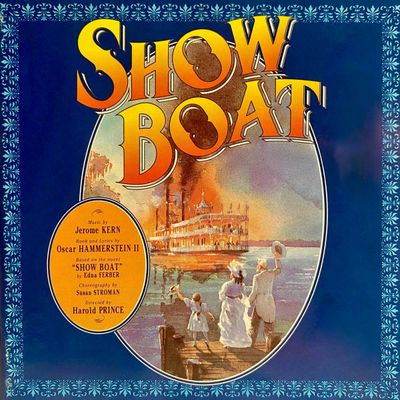
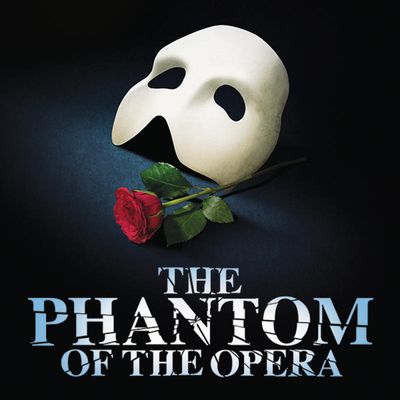
Randy Buck is the CEO of Troika Organization for which he has produced over 50 productions across the globe. Before joining Troika in 1999, Mr. Buck was vice president and general manager for Livent in Toronto. While working for Livent, he managed productions such as Fosse, Ragtime, Show Boat, Music of the Night, and Kiss of the Spider Woman. Mr. Buck was a stage manager for more than 20 years, surviving a year with Mary Martin & Carol Channing in Jimmy Kirkwood's Legends!, a year in Japan with Siegfried & Roy, opening The Phantom of the Opera Music Box Company and opening Show Boat! on Broadway.
Listen in to hear Randy chat about . . .
- What a tour can mean for a show’s Broadway Investors.
- Why on the road, a good TV commercial can mean more than a good show.
- When you should plan your national tour.
- Can a show go on the road without a Broadway brand?
- An easy way to save money for touring productions.
Keep up with me: @KenDavenportBway
Transcript
This transcript was automatically generated and might contain errors.
[0:00] Ken Davenport: Hey everybody, in case you missed it, we had big, big news on the blog this week. My original musical, Getting the Band Back Together, will open on Broadway next August. We are giving away a free CD, free cast recording right now on gettingthebandbacktogether.com. Go to Getting the Band Back Together.com. Get that recording, listen to it, you're gonna love it, and we'll see you on Broadway. I wanna be a producer with a hit show on Broadway. I wanna be a producer.
[0:30] Ken Davenport: Hello, everybody. Welcome back to the Producers Perspective Podcast. My name is Ken Davenport. Today we are going out on the road. I'm pleased to welcome to the podcast the CEO of the Troika organization, Mr. Randy Buck. Welcome, Randy.
[0:46] Randy Buck: Thank you so much, Ken. Good to be here.
[0:47] Ken Davenport: So I've known Randy a long time, and I'll let him tell his story about how he got to Troika. But for Troika alone, Randy has produced over 50 productions, not only on tour around this country, but all over the world. But Troika as an organization has produced so, so many more. When I was actually an actor in the early 90s, it was like the dream coming out of NYU to be in a Troika tour. Grand Hotel and all these shows. But you named the musical they've toured at Andy Fiddler, 42nd Street, Cats, Greece, Will Rogers Folley's on and on and on. This season alone, they'll have the Bodyguard, School of Rock, Love Never Dies, America in Paris on your feet, and even more. Check out their website at Troika.com for more info on the coming season and its history. But let's get to Randy's history. The first job you ever had in the theater, what was it?
[1:33] Randy Buck: Well, actually, it was an apprentice. I worked for a man by the name of John Kenley, who I know a lot of your listeners are going to remember because this man, he was fascinating. He ran a summer stock organization in Ohio touring route, and he ran it from the 1940s up until the late 90s, if you can imagine such a thing. So this was musical stock that doesn't even exist anymore. It was summer stock in its finest. It's big star stock, Mickey Rooney, Ann Miller, Gene Kelly. Then we had the television stars. We had Henry Winkler that came in at the height of his bonds delay. McLean Stevenson. And the stars just went on and on. Josh Agabor, Ava Gabor, you know, you name it. And he would sell, he did 12 shows every season, did one week stock.
He'd open in Warren, Ohio, moved to Dayton, Ohio, then Columbus, Ohio. And you would, so you would tour these shows around one week each. You rehearse the show six days, and that was it. That's what you had. And as an apprentice there, you did everything. So from cleaning the coke mats, working the box office, to building the scenery, painting the drops, altering the costumes, running the show. All those theaters had IaTi crews. So it was a professional theater that there were five or six apprentices in Dayton and Columbus, and then in Warren, Ohio, you'd had like 20 apprentices, and we did everything. We worked from eight in the morning until midnight, seven days a week, and had the best time of our lives.
And I started when I was 15. Actually, my sister was a theater lover when she was in high school, and she was starring in the high school musicals. And so I got drug along because it was easier for mom to drop both of us off, right? So when I was in middle school, I was in the musicals as well. And then when I was 15, she was working for John Kenley as an apprentice then, and somebody got sick, and so I went to work. And in Ohio, you had to be at that point 18. So I told them I was 18, and then I was 18 for the next three years, you know. So I worked there every summer through high school and college, then became a technical director there, and ultimately ended up getting my equity card as an assistant stage manager, Sandy Duncan, and Chris and Christopher Hewitt in Peter Payne in the mid-70s. So it was 75. I've got my equity card. How did you get here to New York?
[3:41] Randy Buck: Well, okay, so it's a longer story than this, unfortunately. I'm sorry. How long do we have the talk?
[3:47] Ken Davenport: 30 seconds.
[3:50] Randy Buck: So anyway, so I did this all the way. I went to Webster College, acting and directing and music as a minor. And when I got out, I went to work as a, well, actually, during in 1977, I was the prop department at the Cleveland Playhouse, if you can imagine such a thing. In 1977. Not a great neighborhood, but it was a tough year. So I was the prop department there. But the next year I got a job as a stage manager at the Westgate Dinner Theater in Toledo, Ohio. And it was in a shopping mall in Toledo. And there were back then, I mean, we're talking about 70s and 80s, there were dinner theaters on every corner of every single block in America. They were so prevalent out there. It was booming business.
And I was there for about six or seven months. And they said, We're going to open a sister theater down in Albuquerque, New Mexico. Would you like to go and manage the theater? And I said, sure, because I always say yes, let's go. So I went down there, and so here I am at age 22, running a restaurant and a theater in Albuquerque, New Mexico, by myself, not having a clue really as to what I'm doing. But you know, you learn, you know, it's trial by fire. It didn't go well, and after a year it closed down, and then I sent my resumes off only to Southern California and Florida because I wanted some warm weather. So I got hired at the Alhambra Dinner Theater in Jacksonville, Florida, which I didn't realize is really not Florida, it's really just Northern Georgia that I went anyway.
They're still in existence. And the Alhambra Dinner Theater is still there, operational, as I understand it. And I was there for about nine months. I got a call from a buddy of mine says, Hey, I'm down here in this place called Jupiter, Florida, and we're starting a new dinner theater. It's called Burt Reynolds Dinner Theater. And I said, Great. So I went down there, thought I died and went to heaven on Westphal Beach, Jupiter, Florida. It was gorgeous. By the way, I said to my daughter, who's 18, I said, Do you know who Burt Reynolds is? And of course, she hasn't a clue. It's so sad. We're so whole bow. And that was incredible. I mean, it was Sally Fields, and I did. I stage managed Josh Logan.
Okay, there's a name that probably most of these listeners don't even remember. Josh Logan was the Howl Prince before Howl Prince. He was the director of all those wonderful musical Annie Get Your Gun in South Pacific. And I mean it was an amazing time. Anyway, so he directed Marty Sheen and Simon Oakland in Mr. Roberts at Burt Reynolds. I mean, if you can imagine such a thing. Well, Burr was a big star, so people were going to work for Bert. Absolutely. And they just came down and they played, and everything ran for like three weeks, and that was it. And they just hang out, and the celebrities coming through there were just amazing. And so that was a great time. But then I got out of that and I got hired actually for my first Broadway show and came up here and interviewed in Manny Eisenberg's office as the production stage manager for Ain't Misbehaven. So that was the original, of course, Ain't Misbehaven, not a retread.
[6:24] Ken Davenport: And you got that first job?
[6:26] Randy Buck: That was my first Broadway, if you will, touring job, yes. And that was through a recommendation of somebody who I had actually worked, who had worked at the Westgate Dinner Theater after me, who had recommended me for this job. Isn't that crazy?
[6:40] Ken Davenport: Yeah. So what I love about your trajectory already is that you worked in a lot of different disciplines. Props, technical direction, restaurant manager. I mean, you did a little bit of everything.
[6:53] Randy Buck: Right.
[6:53] Ken Davenport: Was stage management jumping? I mean, you're obviously not a stage manager right now. Did you fall into stage management? Was that something you were like, this is my path that I'm going to do?
[7:03] Randy Buck: Well, I wanted to, of course, originally, like so many of us in this business, I wanted to be a performer. Fortunately, I had the good sense to know that I wasn't talented. So I said, let's take a right-hand turn. And stage management sort of lent itself to that because you're there as the surrogate director, and you're managing stuff on the road. And I just, you know, I don't know, I'm not controlling, but I like to be in charge. How about that?
[7:23] Ken Davenport: I would agree with that.
[7:25] Randy Buck: So I just I get things done and I like to have it my way. So it just sort of it was a good career for me. And I did it for 20 years. I mean, so with Marvin and Irving, but just one thing led to another. So I went from that to Children of the Lesser God to Master Harold and the Boys to Little Shop of Horrors. So I mean, Master Herald of Boys was with James Earl Jones, and Zake Smokai came in who won the Tony for it. Then it was Howard Ashman directed the Little Shop of Horrors because it came right out of the Orpheum Theater. So all of these things, it was so unique. And you know, you have to move on from show to show, and that I love. So I went through a period after that where I went out independently.
I got away from that office and I did Richard Harrison Camelot for a year. And then I stage managed Mary Martin and Carol Channing in Legends for a year. Jimmy Kirkwood wrote a book about that. It's fast called Diary of a Man Playwright. And then I went for a year, I went and did Siegfried and Roy's World Tour, which was a year in Japan and a month at Radio City Music Hall. That was their world tour. But it was a crazy experience, you know, and always looking for something that's different. It was a fascinating time.
[8:31] Ken Davenport: The depth of your width of it, I should say, reminds me of in a small piece, mine. And what I loved about being a company manager was bouncing around from show to show. It was the freelance life, but for me, it was like going to Harvard one day, because I got to work with Sam Mendy's on the revival of Gypsy, and then working with Tommy Toon at Yale on Greece. It was just go getting an education from each different person and group and set of producers. What's the do you remember any of the biggest lessons you've learned from any one of those productions? Like, oh, like I could tell you an Arthur Lawrence story right now on Gypsy, but I'll wait that until the microphone's off for that one. But what's one big lesson you learned as a stage manager?
[9:13] Randy Buck: I'll tell you one of the one of the my show that I that I picked up in in 1992 was Phantom of the Art. So I came in, I was the production stage manager on the original tour of Phantom. And I had not worked with Howe Prince before, and that was an amazing experience. And I spent a lot of time with Hal because after that he asked me to come to and open Showboat on Broadway, which was, I mean, I didn't want to come into town because Phantom was the dream come true. I mean, I'm a roadie at heart. You know, I always got I people used to tease me, all I need is three Armani suits and a suitcase, and I'm happy. Sorry, honey. I know you're listening to this. I love you. No, that's all changed now. But she knows this, actually.
I am a roadie at heart. And to come off the road, because Phantom was an amazing experience. I was part of the team, it was a four-man team. We went into all those theaters around the country and advanced Phantom and walked in and said, I need three more line sets, I need four more bathrooms, I need washers, dryers, this has to go, that has to go. It was an amazing experience.
[10:12] Ken Davenport: And they did it for you.
[10:13] Randy Buck: They well, you bet they did. That was the Hamilton at the time, you know. And they did that, all that modification, that made all of our lives easier. We all know what Phantom did for all these buildings across the country. But getting back to your question, I spent a lot of time with Hal. We'd have dinner together and whatnot. And I remember one night we were in Tampa, Florida, at a holiday inn, having dinner. And he confessed to me, he said, you know, and I misunderstood him, but I know I didn't, actually, he said. He confessed that he was afraid that people were gonna find out that he didn't know what he was doing, you know? And I what he was trying to say is, we're all just making it up as we go along, right?
All of us are. No matter who we are, none of us has all the answers. And none of us has carte blanche to just go out and do whatever it is they want to do, right? And where's that next creative thought really going to come from, you know? And is it gonna come? We're all there in the same boat. And it was, it was a real epiphany to me because, you know, I just idolized this man. I mean, he's such a genius, and yet he struggles with the same thing that all of us do. We're all wandering around in the dark, just bumping into the furniture. And sometimes it goes well and sometimes it doesn't. And some of us have a better shot at it, like Hal, for example. But that was a big moment for me.
[11:28] Ken Davenport: Yeah, that's a good one. You know, I've been thinking about this a lot lately, that kind of thing, is I bumped into a few people and a few walls myself and noticed that and tried to change what I do, and just you've got to keep doing stuff. You gotta keep spitting stuff out, keep doing more and more things until you bump into the right things or don't bump into the right things. And Hal actually is a great example of that, and I have a letter from him because he's such a mentor of mine hanging on my desk right now. But the success of Phantom for Hal, his biggest success, that came later in his life as a director. When you look at his career, even as a director, he had some very successful shows as a producer, but as a director, it wasn't until Phantom, much, much later in his life, that he achieved the success that we all want.
[12:09] Randy Buck: Yeah, we walk around. I mean the financial success.
[12:11] Ken Davenport: Exactly.
[12:12] Randy Buck: Exactly.
[12:13] Ken Davenport: Why he can go to the Alps every summer. So, what about stage management do you think prepared you most for being a producer today?
[12:23] Randy Buck: Well, it's interesting because, well, I it's an easy question for me because making the shift from stage management into the dollars and cents realities of the world is a quantum leap, it's really difficult to do. Because if you've been brought in on the artistic end of life, you go, I don't care what it costs. That's not my problem, that's somebody else's problem. You never had to care about it. And so I had a very brief stint in 1991. It's like six degrees of separation. My first wife was actually a student of a gentleman by the name of Nicholas Howdy. And Nick Howley was he was the grandfather of Troika Entertainment. He and he he started as a dinner theater in in Rockville, Maryland, called the Harley Quinn Dinner Theater, and ran there for 25 years in Washington, DC.
And so anyway, he was a professor at American University, and she was a student of his. So there we drifted through town. I met I met Nick and I met his wife, who was an actress who I had stage managed at the Westgate Dinner Theater.
[13:18] Randy Buck: Once again, six degrees of separation. Anyway, so Nick hired the two of us to come in in 1991, and this was before just before Phantom. And I was hired as the production manager, and suddenly people were coming to me and saying, we want to do Jerome Robbins, but we wanted to fit it in three trucks, and we want it to be with 36 actors, and we want to have five stage hands and you know, eight musicians, and how much is that gonna cost? And I'm going, I don't know, sounds like a lot of money to me. And suddenly I had to learn how to budget, and I did, and I learned once again trial by fire. But this is really what prepared me for that because the next step for me was to go from being the production stage manager of Showboat on Broadway and having Garth Drobinsky of Live End call me and go, Would you be interested in coming up here in general managing all of our tours?
All of Live Event's tours, could you imagine? I'm a stage manager for God's sakes. But he obviously admired my work and liked me, and he said, Yeah, well, why not? You know, the kid'll work, learn, figure it out. So I did. I moved to Toronto, and I was the general manager for Live Event for its last four years of existence up there, you know, until 1999. We all know how that tale ends. Well, it ain't over yet, but your math had to be better than his. Actually, we never knew because I ran the numbers and went to accounting. I never saw anything after that. I worked at his office. I certainly, we sent lots of things off to God knows where. But you know, there I was, and instead of doing budgets that were, you know, a thousand dollars, suddenly they were millions and millions of dollars.
So the economics changed considerably, but you know, you all of a sudden your eyes open wide and you have to think about everything. As a producer, you have the full responsibility, and you have to think about how many curlers have to go into that wig as well as you know the lighting and the sound and the just everything. That whole world is your responsibility, and you can't let anything fall through the cracks. So, having come from that background where I understood all of that, I understood the creative end. It just made things a lot easier for me, as opposed to the other way around. I found that I find that when you're brought up in the dollars and sense of the business, you're never, it's you can't teach the creative side.
You have to live in that, you have to be immersed in it, really. It's not something you're gonna learn in a classroom. Numbers are easy, I think. So that was a big lesson. God, it's such a such great insight about being around because I credit a lot of hopefully my ability to see both sides of the art and commerce coin with having grown up as an actor, being around directors and writers even before I started company managing. Is there a question you ask yourself when you're because you're faced with these all the time? Ugh, I could spend a couple more grand a week to do this, which would help the art. But the commerce says, should I save it? Is there anything you any checklist, any question you say to yourself before you make that decision?
[16:09] Randy Buck: Someone asked me a long time ago, is it more important to have a good commercial or a good show? To which I said, good show, of course. And I was wrong. It's more important to have a good commercial. Now I'm talking about the business that I do. Okay. I'm not talking about Broadway, I'm talking about the road. We sell the dream. That's what we do. Most of the people out there that buy tickets to see our show, you know, wherever it might be, in Tulsa, Oklahoma, Des Moines, St. Louis, wherever that is, they don't know this show. They don't, all they know, they know it's a title. And what they need to do is we have to get their butts in the seat. They're probably going to love the show. I mean, these shows are not bad shows.
They've done well on Broadway. They're going to go out, they're going to be in that town. So, you know, but we have to get them into the theater in order for it to be successful. And how do we do that? You show them a commercial. And if you've got a great commercial and it gets their interest and they buy a ticket, hey, mission accomplished. But you have to remember we sell probably 80 or more percent of our inventory before we ever show up. And we come in on Tuesday, the reviewer comes, let's say on Wednesday, puts the review in the paper by Friday, then you've got four shows and you're out of town. You know, you're gone. So it isn't, it isn't about whether what the reviewers have to say, and there's no time to build word and mouth.
We're there for a blink of an eye, and we're gone. So what you're really doing is you're trying to sell this up front. And a lot of that is done through subscription, but it's also done with a television commercial. So, what is the most important thing to getting a show sold on the road? That I guess even before the audience gets there or even sees that commercial.
[16:58] Randy Buck: Well, you have to remember, we don't sell to the public. We sell to presenters. Presenters sell to the public, you know, so there's that step there. So the first thing we have to do is, of course, get the show out there into the marketplace. And the bookers do that, and as do we. But you know, they come into town and they see what that you know, what that show is, and they can put their hands on it and figure that out and decide what that show is that they want to book. And outside of that, then we just have to deliver the materials, and then the individual presenters decide how they're going to disseminate that, use that money to get the word out there, whether it be in print or electronic or whatever that medium might be to sell those tickets.
So everyone knows Broadway is booming like this. I just wrote a blog today about the grosses last week, and I do a recap every week, and that my recaps are getting boring because Broadway is doing so well right now. Is there an automatic trickle-down effect to the is the road doing as well? Give me give us the current state of health.
[18:30] Randy Buck: Well, you know, the Broadway and the Road are such a different economic model, you know, in that, you know, an average Broadway show now is gonna cost a well, I mean, a musical of substance and size, it's gonna cost $15 million to produce. We're much less than that. An equity show right now costs about four million dollars for us to put that out. And I'm talking about, you know, a bigger musical with a big physical production. Now, here in town, though, it's the difference is is that here you can get 165 or 200, and you know, it's gonna be 250 soon, and people will pay it, and they pay it because they come here to see the show. It's very different when you're in Dayton, Ohio. I can say that because it's my hometown.
And I can tell you that they're not gonna pay anything more than 45. And if you raise your ticket prices to 47, you're gonna lose 5% of your audience. They're just gonna say, I'm not gonna go. There are too many alternatives to staying at home and just watching television or going to a movie or whatever it might be. So it's really tough. And when the economics, when the economy is strong, which it is right now, this is why we're in my opinion, we're enjoying all of this, because everybody has the expendable income. But let me tell you that, in 2008, we know what happened. I mean, this everything crashed, and people were not coming to the theater, and we were all suffering. And our income went down.
The guarantees significantly went down at that particular point in time. But so it's it's a whole different model out there, and it's different in every town. So when people say, Well, what do you sell your tickets for? Number one, I don't sell tickets, the presenter does. But it's very different from Chicago and LA, as opposed to what it would be in Dayton, Ohio or Evansville or places like that, Poughkeepsie. So give me a state of the state, though, on the 30 plus years you have on the road. How are we doing compared to other years or decades? Do you think is this the best of times, the worst of times, or this is just about Africa?
[20:18] Randy Buck: Well, I think that there's there's so much more product. Look, if you go back to when I started out in this business, you had to be a bona fide hit to go on the road. You had to be a catz, you had to be a chorus, you had to have some significant mileage on that show. And then you went out and you toured. That's not the case anymore. I joke with people that say when we have a reading, the bookers are showing up there. And it's really sort of true. I mean, I can name shows right now that are have not even come into town. They're pre-Broadway in regional theaters, and the booker has already been hired, as the publicist has too. So that and those are both just functions of the road, but it hasn't even opened on Broadway yet.
We don't even know. It could be a total flop here, but they've already they're already thinking about the road. They're thinking about how we can churn that money up. And is that good? Should producers be doing that, or is that cart before the horse? Or well, it's a bit cart before the horse. Yeah, I think so. But the thing is is that there are so many titles out there. There are shows that are playing here right now in town, which are not great shows. And listen, I've done this myself. They're not great pieces of theater, and they'll run for a certain period of time and close, let's say three months, and they still get a tour and they go out. There is no show that's going to open here that there's not that the producers are going to try to get a tour.
And there's sort of a misnomer out there that you can recoup your Broadway losses from the tour. Trust me, that is never gonna happen. You're lucky to get away with your shirt at the end of the tour, is what it comes down to. There is money there. There are solid tours, they do, they can make money, and certainly there's there's the big blockbusters, which we'll put over here because you can't compare yourself to that. But traditionally, you're you know, you're lucky to get out. It used to be very different. I used to be able to almost guarantee a 20% return on the tours. I mean, absolutely. That was like the minimum. That was back when you could recoup in one season. You could go out and do 30 to 40 weeks, make your money back at plus 20% or even more.
And the problem now is that's sort of evaporated, it's definitely evaporated. Now you need a couple of seasons, and this was epic. This happened about three or four years ago, maybe a little bit more, where suddenly you had to go into the next season. And before, when you could recoup in one season as a tour, you were not at risk because you would go to the booker, you would say, Get me 40 weeks. They'd say, You open in September, you close in June. This is how much money we would forecast that out. So when we forecast as a little aside here, this has become major business here. So we have a database that delivers the gross the net calculation for each city, what the average you know, labor is for each city.
It talks about we look at the history for the last 10 years, and we actually allow the computer to deliver us a route based on historical data, and then we go in there and we start to tweak it based on what that musical is and how it might deliver. We didn't used to do that 15, 20 years ago. We just said, hey, you got a garage, you got a sheet, let's do a show. It was a simpler time. We can't afford to do that anymore. What's the number one reason that you think that shows don't recoup in one season? Point your finger one thing, biggest one.
[23:21] Randy Buck: Well, there's a cut there's a there's a few things. Obviously, there's a cost, there's a cost of living increase, which is interesting because gasoline, for example, now is the same price that it was 10 years ago. And I go back and I look at all these things and I look at historical data, and I'll go through line by line. I'll go, what the heck happened here? You know, 10 years ago. This is how much this cost. Buses, I used to be able to rent for a week for $3,000. Now they're $10,000. Hotel rooms, I used to be able to get for $35 to $40 average a night. Now it's $100. It's things like that. Why? There's no real reason for that. Cost of living index is not that is not that high, but that's what it's become.
So we deal with that. So that's one factor. And from the from the artistic show, from our side of things, there's the thing called the weekly operating profit pool, which is all of the creatives come together, and it used to be that everyone was paid a percentage of a box office. That goes way back. That failed because they started running out of money. So they said we've got to figure something else out. So they came up with this idea. So it's a weekly operating pool, profit pool. So what they do is they'll take a percentage of the weekly operating profit, and that goes to pay the authors, which is the lyricist, the composer, and the author, the writer itself. And it also included in there.
You can have anybody you want in the pool, of course, but generally it's director, choreographer, the design team is all in there, the original Broadway producers are in there, the tour producers might be in there. But it's a chunk of money that goes, it's put aside every single week based on profit, which makes good sense. Okay. So if and there's there's a minimum that gets paid out every week so that everybody gets a little bit of money, and you want to try to keep that as low as possible. What we've seen is, you know, that's sort of gone from 20% of the weekly operating profit to 30 to 35 to 40 to 45. And in some cases, post-recoupe it can be 55, 60% of the profit goes to this pool. Well, it's sort of like running in sand after a while. You can't make your money back if you're paying all this money out every single week. So that's a big problem. That's what's sort of grown exponentially over time.
[25:30] Randy Buck: Do you have any other ideas of how we should cut those folks in in a more creative way? Well, any different models being floated around out there? They certainly listen, the weekly operating profit pool is a great model. The problem is it's sort of just grown out of control as agents become more demanding. Perhaps producers and general managers have sort of gone. You know, once you set a past practice or a precedent, it's like that's it, we're done. You know, if I'm a if I'm a director and I'm accustomed to getting 5% of the weekly operating profit, I'm not going to go back and do my next show and take three. I'm going to want six. Everybody wants more. But at some point you have to say, I'm not going to do that.
So the model works, but the numbers are too high. It's as simple as that. It's this crazy trickle down because I'm sure what happened is you used to be able to guarantee tours 20% profit. So the creatives were guaranteed X amount of income as well, which was probably pretty good. We were doing as a producer 20% profit.
[26:29] Randy Buck: I'm sure the creators were doing very, very well. All of a sudden you can't. A few tours go out, don't recoup. Well, then the agents go, damn it, I'm not making not even for my artist. The agency itself isn't making enough money. I've got to get more of the weekly operating profit to balance out the fact that I may not recoup this sucker, which now trickles down to you, which you're more and more shows aren't recouping. It's this hamster wheel that's probably it is a bit of that.
[26:56] Ken Davenport: Yeah, yeah, indeed. It's hard. Can shows that don't play New York get on the road? And if so, what are the characteristics of a show that can get out there without sitting down in a theater here in the city?
[27:09] Randy Buck: Well, that actually there's a couple of categories there. Every once in a while we'll spit out a show that's a retread and things like that and put that back out there. But generally it needs a Broadway brand, a recent Broadway revival to put it back out again. And we've got a few shows that have come along. We have right now Bodyguard, which did not have a Broadway brand. And so we went ahead and we put that out. Of course, once again, you've got to have a reason to do it. So you can't just take an arbitrary title and say, hey, here you go. It has to be something that's gonna have appeal to the presenters, and ultimately they have to feel like it's gonna have an appeal to their audience. So Bodyguard, everyone knows the movie, it's classic, you know, and so that managed to get out there.
And just doing well, doing well. We have Love Never Dies. Now, Love Never Dies is Phantom 2. It's the sequel to Phantom. It's been done in Australia, it's been done in Japan in this format here. The West End production was a different production altogether, but it's being marketed very much as Phantom 2. It's 10 years later. That's gonna have a lot of interest. 50% of the people who have ever seen Phantom come to see this or gold. And it's a great show. You know, so people won't be disappointed. But once again, you gotta get them in the building. And people are gonna come, I think, because they're going to want to see what is the next chapter in the Phantom story. So you've got to be pretty specific.
We've had some epic failures out there as well. We did a show called Dr. Doolittle, which had no presence here in the US, and we went out and we tried to do that on the road. That didn't go well. And the other one that we did was 101 Dalmatians, which everyone sat back and said, Oh my gosh, this is going to be amazing. It's a great title, and everybody knows 101 Dalmatians.
[28:45] Ken Davenport: And what didn't go well with those two? Because I remember them now very clearly. I certainly was one of those people sitting in my office going, oh man, I wish I was in on that show. What didn't go well with?
[28:55] Randy Buck: You know, there's well, I'll tell you what didn't go well with 101 Dalmatians is that people thought the marketplace didn't market this properly, I guess, because people thought it was a kid's show. And we went to, we opened at the Oroway, and the business was just awful. Awful. Sorry, guys. It's not my fault. But it was just terrible. And what we found was when we were asking around, we asked some board members at an opening night party. So, what do you think the problem is? And they said, Oh, well, we didn't see the show. And I would say, Well, why didn't you see the show? Well, I gave it to some neighbors of mine's because I just didn't want to go see a kid's show. They were thinking of it as sort of an arena sort of kids' attraction.
I think that might have been what hurt there. It's so hard to say why things work and why some things don't, and why things can not work at one point in time, like Chicago in 1976, and then come back and Barry goes out and takes it out and runs it for 20 years, you know? Good for him.
[29:52] Ken Davenport: But who would have thought anything that you were like, ugh, this thing is never gonna work, and it's turned around and surprised you and worked like gangbusters?
[30:02] Randy Buck: Yeah, that's it. Well, yeah, I would have to say 101 Dalmatians once we got into it. It was certainly one of those because we were tasked with finding actually dogs to take on the road, which, you know, I mean, everything has a long story, as you know. But when they did this originally in Madrid, it was done with Dalmatian puppies, and then once they grew up to adolescents, and Dalmatians, I don't have to worry about offending Dalmatians. They are one of the dumbest dogs out there, they're impossible to train, and they bark like crazy, and they're just insane. And no one would ever really want one as a pet. But when the movie came out, everyone went out and they got Dalmatian puppies. So I didn't know any of this.
Okay, so I called my good friend Bill Berlone, the dog man of Broadway, and I said, Bill, we got a great opportunity. We're gonna have Dalmatian puppies, and we're going on the road with 101 Dalmatians. There's dead silence on the phone. And he goes, You don't know the story, do you? And I said, No. Well, when that movie came out, everyone brought their kids Dalmatian puppies. They grew into adolescents, they tore the house up, and the adults took the they went back to the pound in droves. There were thousands and thousands of Dalmatians that went back, and they were euthanized. They didn't, what can you do with them? Nobody wants them. And it was a huge problem in the animal rights community.
So now you're right, yum, and going, Oh my god, I'm producing a show that's going to be an epic fail. So we're thinking of, well, maybe we can get other dogs and put stockings on them that look little black spots. And we're thinking all this crazy stuff. We ended up getting 16 Dalmatians to take on the road, and to find somebody to train to do tricks on stage, and also to go out and get them because what we wanted to do is get rescue dogs so that we wouldn't have PETA all over us. So you say, Well, why 16? Well, 16 is the number of crates that are pinga size based that you can fit on a rock and roll bus that you gut and you put them in the back because you have to take these dogs and they have to have trainers or handlers that stay with them 24/7.
So there's bunks in the front of the bus and 16 crates in the back. We went on the road for a year. If there's one thing the listeners out there could take away from that, because I know I'm taking away from this myself. Broadway doesn't think that way. So Broadway thinks what's the most number of dogs that we're going to need to achieve the effect that the director and the writer wants. But I love about what you do, and that and what actually I think we should do more of on Broadway is you back into it. Like you're using 16 dogs because that's what fits on the bus, and we have an economic model and a budget to fit within. And if we go beyond that, presenters aren't going to pay more than X dollars of a guarantee, right? It's this backing in idea.
[32:38] Randy Buck: Well, this all goes back to Kenley players where I first worked as an apprentice. Kenley had a nephew that had a truck and it was 40 feet long, and that was what went on the road. And if it didn't fit in a 40-foot trailer, it got left at the first theater, and we were done. And we would load it and it didn't fit. We'd unload it, we'd load it again. If it didn't fit, we'd get on the phone and call the hotel and wake the director up and say, which scene do you want to cut? Seriously, that was the way it went. It wasn't like, oh, well, let's pull the other truck around. And we have that problem all the time in our business. You can't, you have to. When we design a show and we're looking at a tour, we have to consider how many hours does it take to install.
We go through this every minute of a load in on paper and say, This is how long it's going to take to hang this drop. This is how long it's going to take this lay this latest deck. We go through it moment by moment because we have only X amount of hours to put this in. We close on a Sunday night, we open on a Tuesday, done. Non-negotiable. You have to figure out how to do that. And you have to travel a thousand miles in between sometimes. So you have to think about that. How many trailers is it going to go into? So before that show is ever built, we actually put it into a truck on CAD and figure out how we're going to pack the trucks before we build the scenery. It has to be that because it doesn't fit in the 40-foot trailer.
But you know, I remember being out with Little Shop of Horrors when we opened in Cleveland and we'd hired the off-Broadway director or designer to design the touring musical. And we were supposed to be in three trucks, and we were in seven coming out of it. Can you imagine? And I remember Irv Siders, and Irv was about like six foot eight. And he towers over this designer and he goes, I thought you said this would fit in three trucks. And the designer looked it up and said, I thought it would. Thank God for CAD now to prevent that from happening again.
[34:20] Ken Davenport: So speaking of what Broadway producers can learn from the road, if you could get all the Broadway producers in one room and could give them one piece of advice, and actually you could get all the Broadway producers in one room. If you could give them one piece of advice about the road and teach them something that they may think they know, but they don't, what would you say to them?
[34:39] Randy Buck: Well, first off, I wouldn't want to give that away because I'd like to keep a job. Okay, we can start with that. You know, it's become about the physical productions, you know, and you know, you can't fault them for that. People come here to see that glitz and glamour. So it really has to do with the economics. Once again, it's such a different animal. It's like it's not even the same business. There just aren't a lot of similarities between the Broadway and the tours. You know, they build a show that is a ship and a bottle. One thing that you could suggest since everything seems to go on the road, when you build your show to put it into these buildings, build it with hinges and coffin locks, and let's at least be able to use something.
You know, when I did Priscilla, you know, they spent that that bus, for those of you who remember Priscilla, when it was at the Palace Theater, that bus cost two million dollars, right? And so when that thing left the Palace Theater, it was just cut up into small pieces and thrown in the trash. There was nothing that was usable from that. And we had to go out and I had to go back to Hudson and go, Neil, do you have something on the back lot, maybe? Something a little cheaper, the used bus. But of course, there was no used bus, so we had to build it all over again. Now, I got away with $800,000 for a bus. But yeah, two million dollars, and it just gets cut up and thrown in the trash. Australia, they wore black arm bands there for about six months after it.
[36:04] Ken Davenport: So my last question, which is my genie question. I want you to imagine that the genie from Aladdin comes to you and thanks you for your unbelievable service to the road. You've delivered theater, Randy, to towns and millions and millions of people all over the country and all over the world that frankly just wouldn't have had it if it weren't for you. You've helped spread that word, and I know I'm very thankful for that. And the genie is very thankful for that. So the genie grants you one wish. What's the one thing that drives you the most crazy about the current situation on the road? It gets you angry, that gets you swearing, throwing things all over, leaving scenery behind, and trashing with a sledgehammer. What's the one thing that that makes you the most pissed off that you asked this genie to wish away in an instant?
[36:51] Randy Buck: Well, of course, you know me well enough to know that that would never ever happen. However, never I'll tell you, we need to stop building them so big. We need to stop relying on these massive physical productions. And we have two great examples in this Broadway season. Dear Evan Hansen, Come From Away are two brilliant shows that don't need a thing. You could do them in your kitchen and they would be as effective as they are on stage. I mean, Dear Evan Hansen has all those screens, but it's that's just window, literally window dressing. It's so it's not really necessary to convey the piece. And I believe that what you need is a script and a score. You know, when you need to start having chandeliers and helicopters, you that's that should be a danger signal.
And I don't mean to condemn those shows because they're brilliant and they're wonderful, but they create a problem for us out there. And now there's an expectation that we're going to deliver those shows out there and those massive physical productions. You know, back when I started in this business, and for many years, we would come in on Tuesday morning at eight o'clock and we had a show on Tuesday night. Now almost all these musicals spend a day and a half. So it's like we're gonna go into Monday. And as soon as you start loading in on Monday, you've created all kinds of problems for the bookers, for routing, for everything else. The trucks can't get there in time. But we're nonetheless, we're still doing that.
And it's really beating a head against the wall. The presenters have been very, very conscious about the labor. When we show up at the loading dock, there's 70 men, 70 local stage hands who are going to be working around the clock in some cases just to put your show in. I mean, if you can imagine, this is a bit antiquated. We're doing the same thing we were doing a hundred years ago. We did it by train back then, but we're still doing it. We drag this stuff in, we pull ropes, and they go up. They were doing that back then, and that's how we run a show. And if you take theater back to what it, you know, come on, back to what it was. I mean, the Greeks didn't have falling chandeliers and they didn't have helicopters, you know. And it's storytelling. Just tell the story, a good story that people want to hear that they're going to be interested in. And let's leave some of those trucks in the yard.
[39:00] Ken Davenport: What good advice, thank you for that, and thanks to all of you for listening out there. If you are not in the city, go to your local performing arts center, local theater, see a show on the road. Thanks so much, Randy, and we'll see you all next time. So have you visited Getting the Bandback Together.com yet and gotten your free cast recording? If not, go there right now. Getting the bandback together.com. Get your recording, enjoy it, and we'll see you on Broadway.
© Broadway Podcast Network, All Rights Reserved