

David Rockwell is an American architect and designer. He is the founder and president of Rockwell Group, a 250-person award-winning, cross-disciplinary architecture and design practice based in New York City with a satellite office in Madrid... Read More
From the show: The Producer's Perspective Podcast with Ken Davenport
Featured Shows
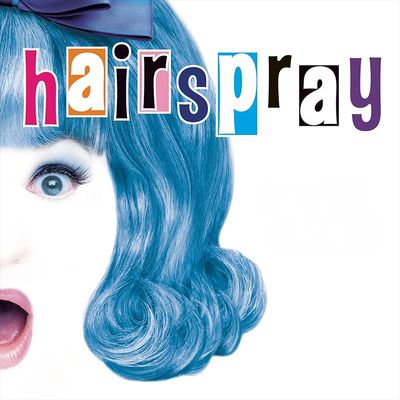

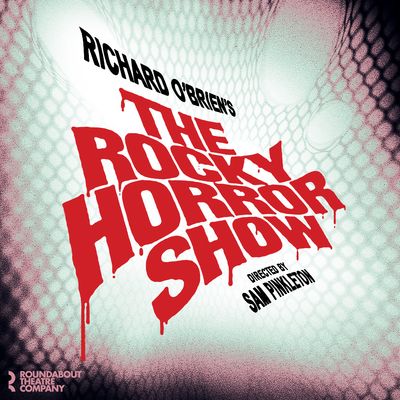
About
David Rockwell is an American architect and designer. He is the founder and president of Rockwell Group, a 250-person award-winning, cross-disciplinary architecture and design practice based in New York City with a satellite office in Madrid. There aren’t too many architects and designers that work in as many mediums as David.
As you’ll hear in this podcast, David got bit by the Broadway bug early in life, but then went on the unique path of designing other things, like hotels in Las Vegas, some of the most famous restaurants in the world, airport terminals, and more.
But thankfully for us, he came back to Broadway. And thankfully for me (and for all of you listeners), he sat down with me on the stage of my theater to talk about . . .
- How he comes up with ideas for the design of his shows.
- Why transitions are the most important factor in a design.
- Who taught him to work in our world, after designing in so many other mediums.
- How Producers should work with designers (and how he deals with Producers).
- When designers should be hired for a Broadway show.
Keep up with me: @KenDavenportBway
Transcript
This transcript was automatically generated and might contain errors.
[0:09] Ken Davenport: Hello, everybody, and welcome back. I am Ken Davenport. This is the Producer's Perspective Podcast. As you all know, the theater industry is a very niche business. Usually the people that work here work only here because their knowledge is so very specialized. It's a very small group of super talented people that can work both inside and outside our industry in their discipline. And today I'm sitting with one of those people, if not the best example of them. I'm here on the main stage of my theater with three-time Tony nominated Broadway set designer David Rockwell. Welcome, David.
[0:45] David Rockwell: Nice to be here.
[0:46] Ken Davenport: Now you all know David's sets from Kinky Boots, Lucky Guy, Sideshow, Hairspray, etc., etc. But do you know about his other work? Well, I'm sure you do. How about the restaurant Nobu? I can't get in there myself, but I've seen pictures; it's stunning. Or how about this one, the Cosmopolitan Hotel in Las Vegas? I have lost many, many a dollar on the floor of that casino. Or, oh, how about the JetBlue Terminal 5 at JFK? So as you can see, David and his 250-person firm work in a variety of disciplines. So, first of all, let me say, David, thank you for sharing your immense talents with the Broadway industry. But I have to ask, compared to so many of your projects, like I don't know, Grand Central, for goodness sake, the theater seems like such a small industry for you to focus so much of your time on. So why? Why do you do it? What brought you here?
[1:42] David Rockwell: Well, it's a great question. I think the answer, which I'm not gonna be particularly fluent about, because I think as a creative individual, I've really come to the conclusion that most architects and designers and set designers pursue what they're interested in, pursue what you're passionate about, and then later on you can look in the rearview mirror and figure out what motivated you. But I will tell you that from the moment I can remember, I was intrigued by the notion of a theatrical space. Probably due to my mom, who was a dancer, I'm the youngest of five boys. So by the time I came around, she was not actively dancing, but we were living in a very private suburb in the Jersey Shore, and she started a community theater.
And I think the way I learned to engage in the world, the way I learned to communicate was by making things, Rube Goldberg contraptions. I was always in the process of building, and so when this community theater started to happen, a light went off in my head that the most exciting place in this community was the three months that multiple groups were being brought together. So I think my key into design originally had more to do with how design connects people, and as the journey went, I moved much more into architecture, and my interest in theater became the stuff I referred to to make the architecture more exciting. So you can imagine 20 years ago when we were doing the first Nobu, for instance, and I said to Drew Naporn and Robert De Niro and Nobu Matsuhisa that one of my ideas was to stencil cherry blossoms on the ash floor as a reference to Madame Butterfly.
They looked at me like I had lost my mind. But they indulged that instinct, believing it somehow could lead somewhere. So it's been an incredible gift in my life, and really unexpected that I would dive into theater and be welcomed by the community you described in such a complete way.
[3:59] Ken Davenport: Did you design for your mom's community theater back then?
[4:02] David Rockwell: Well, it's funny you should ask me that. I was twelve, so I wouldn't say I was designing, but I did paint, and one of the things I worked on was the set for The King and I for the Deal Community Players. I recently collaborated with Don Holder, the incredible lighting designer, and he lit On the 20th Century; he lit The King and I. I said, you know, Don, I had this thought that I created this great version of The King and I when I was 12, and I went back and looked at the photographs, and it was much lower tech than Waiting for Guffman. I was really more a kid actor in all the productions we did, and I had opinions about design, I think. I had a lot of opinions to the producers of our local community theater as well, actually, which my parents got me involved in. Same story.
[4:53] Ken Davenport: Where was that?
[4:54] David Rockwell: In Sturbridge, Massachusetts. I got dragged to an audition when I was five years old, and it stuck. Community theater, the key, the entry point for a lot of professionals these days.
[5:04] Ken Davenport: So you didn't go the Broadway theater route right away, right?
[5:08] David Rockwell: No, not at all. We moved to Guadalajara, Mexico when I was 12, unexpectedly. I mean, you as a 12-year-old, you don't get the sense we're moving in six months, and then you end up in a place that could not be more different. Starting with the fact that no one spoke English. We were 8,000 feet above sea level as opposed to. So it was really like being a kind of stranger in a different land. And my interest in theater really morphed into an interest in public spaces and public theater. Mexico, Guadalajara, particularly, was all about festivals and mariachis and marketplaces. And as I started to get fascinated with how physical places were formed, my interest in architecture began to take shape.
What I found most intriguing, and is still what I find most intriguing about public spaces, is not any one building, but the choreography that moves you from place to place and kind of the connective tissue between buildings. And that led to me studying architecture at Syracuse University in a great education, but very much a kind of modernist architecture with a capital A point of view. But I did find a way to continue to keep alive my interest in theater. I came to New York every summer and worked. If I saw a show that I liked, I would go see it literally the next day. At that point, TKTS allowed that. So it was a hobby and a vocation and an obsession that I found ways to work in architecture. And what I started to discover is taking notions of theater and embedding those into physical places makes them more engaging.
[7:06] David Rockwell: So that continued. I then took a year off of school from Syracuse and studied in London at a place called the Architectural Association and was kind of reintroduced to the world of theater in a big way there. Came back to New York and got a job for the summer working for a Broadway lighting designer named Roger Morgan who had just done Dracula, which was unbelievable with these Edward Royce sets. I was a glorified assistant, but I drafted and was helpful and sort of got that out of my system and went back to architecture school, finished, and then came to New York and really didn't think seriously about stretching and trying to kind of engage and actually designing the theater until about 20 years ago. So the architecture firm was already on its way.
[8:02] Ken Davenport: And one of the things that I'm fascinated the most about people like yourself, designers and architects, is that obviously you're an incredible artist and have to envision these beautiful and intricate flowing designs, but at the same time, you sit down, you draft it, you have to understand the science behind it as well. What percentages artist versus scientist? Is there a—what do you think that's more important to have or which skills?
[8:29] David Rockwell: I don't know how to answer that directly, but I've been thinking about the process because it's our 30th anniversary as a studio, and we have a book that came out. So I had to, you know, for the first time acknowledge that it was a good idea to look back and see what our process was and kind of track the connective tissue between the different projects that we were doing. And here's what I discovered, and it's something that I talk to students about whenever I'm involved in a school, and that is you have to start with research. You have to start with understanding the project, understanding in the case of theater, On the 20th Century, for instance. I researched not only the history of the 20th century itself, but deco, use of metal, posters from the period were really insightful because it got into the psychology of what made that so special, what made that combination of speed and optimism and luxury so unusual.
You have to research the story, you have to meet with the director, you have to find the spatial problems, you have to have the toolkit to deal with those problems, understanding of mechanics, how things move. You have to deeply engage with your collaborators, your lighting designer, backlit, front lit. Think about material palette, and then you have to take all that and conjure something that is an amalgam of all those ideas that has a certain level of magic and unexpected approach. And in each case, there is that period where you feel like you're not going to figure it out. Because I think for a creative individual, the worst possibility is knowing the answer before you begin. Because then you short circuit that process.
So it's a combination of having the tools, delving into as much of the history as you can, and then finding all the tangents. For instance, I started to look with On the 20th Century that our memory somehow of that deco period is a single metal chrome, when in fact there was a rich palette of bronzes and golds and coppers, and that freed up a certain kind of thinking about craftsmanship. And then you have to just think about how am I going to take all this and create a sense of magic that invites the audience into the show and tells the same story the director wants to tell and provides the kind of world. You're really creating a world to tell that story.
[11:23] Ken Davenport: And when you were that kid, did that answer the question kind of?
[11:26] David Rockwell: Yes, yes, it did.
[11:28] Ken Davenport: And when you were that kid coming into town and spending a summer, what were some of the sets or designs that blew you away back then?
[11:38] David Rockwell: I just recently read that they're doing a TV version of The Wiz. I was blown away by the physical production of The Wiz at that time.
[11:51] David Rockwell: Uh, Hal Prince's *Candide* at the Broadway Theater was an extraordinary experience. Tony Walton's design of *Pippin* was, uh, and is, and remains an unbelievable piece of, uh, magic, particularly that rope coming out of the floor, that rope castle. Peter Larkin's design for *The Rink* was a sort of a seminal thing for me in terms of understanding transitions. Um, the first Broadway show I saw when I was 12, my dad took us into the city right before we moved to Mexico. I went to Schraff's restaurant for lunch, which was my first New York restaurant. I was mesmerized by walking around the city, and then we went to the Imperial Theater to see *Fiddler on the Roof*. And Boris Aronson's design, which is, you know, so linked to movement. And I recently had a conversation with Halpenz talking about that, that just how kinetic that solution was. But that was a powerful thing for me.
[12:59] David Rockwell: Well, and you mentioned the key word there, which I was taught a long time ago about what makes especially a musical set work, which is transition. Someone said to me, uh, they were looking at a general manager said, "Yeah, this looks like an okay set, but I don't understand how this musical is going to move." Yeah. And that seems to be one of the key ingredients for a designer. Can you talk to me about that problem? You have to get to how many locations in one set. Whereas when you design Grand Central, Grand Central pretty much stays where it is. What's the process for determining that movement?
[13:33] David Rockwell: Well, so I felt like movement and architecture is something worth noting. For instance, the Paris Opera House. When you think about being in that Paris Opera House, part of at least half of the show is the movement in through the lobby, up the stairs, around the balcony, and then peeking into this room that explodes into view. There, the transition is driven by the viewer. Theater, as far as I know, is the only art form where the transformation happens live in front of you. And in fact, I'll give enormous credit to Jules Fisher for encouraging me to take a leap into theater. And this was, you know, maybe 20 years ago. And I was sketching at a show, and he was a friend of mine, and um, we were talking about it, and he said, you know, why don't you just begin to speak to directors to understand what their needs are around, uh, storytelling.
And really it was in his transitions that is, um, I think the single most important element because it's what takes you from place to place, it's what can build emotional, uh, kind of movement. Um, as I think about pretty much every show I mentioned that I was blown away by as a kid, what you remember is, uh, pictures where the actor's movement, the music, the physical set are all in some kind of dance together. Um, you know, sometimes it becomes the, the, uh, you know, you're creating the engine that's going to drive the show.
[15:18] David Rockwell: I'm with Scott Ellis recently, and *You Can't Take It With You*. I, as I read the play, I kept thinking there was something about the Sycamores, even though it was the 1930s, it was a very urban, uh, play. They were near Columbia. Their non-conformity I thought would be more tangible if the audience got a sense of what the rest of New York looked like. And that led us to a set that had two sliders that were much sketchier than the facade of the Sycamores home. And those represented, uh, you know, the conformity of the rest of New York, and when the show began, and during each transition, those would slide off, and the set revolves 140 degrees. And so you're brought into the world of the Sycamores in a way that felt like it would give the audience a kind of interesting perspective and, um, reinforce the power of the play.
[16:18] David Rockwell: And speaking of plays versus musicals, do you approach one differently than the other? Are they just all a piece of theater, or does one require a different muscle in design?
[16:29] David Rockwell: I think each project has to be taken as its own adventure. And I think it's a privilege to have each adventure. So, and whether it's a musical, a big musical, a small musical off-Broadway, um, I think each project has its unique challenges. And I'm a little bit like the person who's sort of in love with the last project they've done. Um, you know, it just is an indescribable thrill. And I will tell you, being able to work with the artists and craftsmen and people in the theater gives me insight into architecture that, uh, is creating opportunities I never expected would exist.
[17:13] David Rockwell: So, what was that first project that you dipped your toes back into on, uh, in the theater again when Jules recommended you talk to directors?
[17:22] David Rockwell: Well, it was three or four years of meeting with directors, uh, and designing things that didn't happen. So there were several false starts. One was, uh, I started to work on many musicals that didn't happen. I won't go into great detail of what they were, but I fell in love with the projects, developed models, met with directors, and, um, Jordan Roth and Chris Ashley called me and said, "We're doing a revival of *The Rocky Horror Picture Show*, and um, we'd love to talk to you about it." And having spent all those pop culture years in Guadalajara, Mexico, somehow I had never seen *The Rocky Horror Picture Show*. So I rented the DVD, and I came back in the next day and I said to them, "I'm a little baffled, having never seen this in front of an audience.
What makes this a compelling piece?" Because my thought was theater might be the more academic partner to my populist day job. So I was thinking the *Cherry Orchard* of BAM, not necessarily *The Rocky Horror Picture Show*.
[18:24] David Rockwell: And Chris Ashley, who's a brilliant director, um, said to me, "You know, David, in some ways this is an opportunity for you because it's about self-creation. You know, it's about the moment where, uh, they're, they're, uh, stepping into the world of the movies." Um, and so I jumped in and we designed it two or three times because it was going to be at different theaters. I went to the Circle in the Square Theater where I met Jerry Mitchell for the first time, who had bruises on his hips from teaching people to do the time warp. And let me tell you, that never occurs in architecture. I never had a client show me bruises on their hips before. So I was sort of taken with that. And we got to the Circle in the Square Theater, and, um, it was, uh, you know, it was a really magical experience.
Jordan was great. I think it was Jordan's first Broadway show. Um, and, uh, then Jerry, after that, introduced me to Jack O'Brien and suggested I do *Hairspray*. And that, that was, you know, that was indescribable. Jordan did one of these podcasts, and we talked about *The Rocky Horror Picture Show* a lot, and I remember that, and, uh, listeners out there go Google images of this because if you've been in Circle in the Square, you ain't never seen Circle in the Square like this before. I was steps away from Dick Cabot, perched out over the group and high above, it was fantastic, fantastic design.
[19:48] David Rockwell: And I'll show the one of the things we did, because we didn't know you weren't supposed to, is the entire set rotated and flipped into the floor so that the opening transition was, uh, was thrilling. Now, a lot of people say, you know, Broadway requires a spectacle. You need, especially scenically, you need *Phantom of the Opera*, the chandelier. When you're sitting down to design a new property, does that ever enter your mind that the Broadway consumer who's paying $150 to $500 now demands a certain level of razzle dazzle, if you will?
[20:23] David Rockwell: It really doesn't, because I think you can't outguess what people are going to like. And I don't think when I'm thinking about what projects to work on and where to put our time, I think trying to figure out what's going to be successful is a no-win situation. And the same is true about thinking about what an audience wants. I think you can think about what's the best way to present this material. You can think about how do you break past the proscenium and get contact. You know, it's the thing that's so incredible to me about theater, and what I think is so extraordinary about the people who work in the theater, is it's a temporal art form. So you can document it, but if you're not there, you didn't get it.
So it's a two-hour, hour and a half, two and a half hour experience that becomes, uh, you know, an important part of our collective experience, our memory, based on having shared that and being there live. So, as a designer, I do think about how to make that extraordinary. But I don't think it's about big or small. I think it's about how to, um, have it feel connected and have the audience have a kind of visceral experience.
[21:36] David Rockwell: And, um, you know, you get to play with many elements, familiarity and surprise. *You Can't Take It With You* is a familiar kind of Victorian world, but the surprise is that each element of the 250 things on the wall relate to some backstory in the play. So when you're spending the two hours with the Sycamore family, as you start to look at that, it's not about spectacle, but it's about backstory. And where do you think design's going over the next 10 to 20 years in the theater?
[22:11] David Rockwell: Um, I really do believe any time you talk about a trend, it's already morphed and moved on. Having said that, um, uh, there's, you know, I think audiences, maybe because we're so connected in terms of technology, are craving more and more live experience. And so I think how this theater responds to that is interesting. Um, there are more and more artists pushing the boundaries of what theater can do. That's always been the case. You know, the history of theater is the history of, um, constantly, uh, pushing various relationships of the audience and the performer, modifying that, finding ways that that story can connect. And technology's been a part of that is an ongoing story. So I think, but at the same time, I think that there's no one solution.
So you say what direction the theater is going, and I think the theater is very much alive. I think it's unpredictable. I don't think it's about the latest whiz-bang technology necessarily, because in many cases the oldest, uh, handcrafted piece is the thing that makes the most impact. Um, I think as it becomes more expensive to load in shows and load shows out, there's pressure to address that as a designer and think about the reality of giving the show a chance to run.
[23:49] David Rockwell: Um so, you know, it's there's there's no fortunately no pat answer that I've discovered. It may exist, but I don't I don't know it yet. Are you a fan of projections and their use in the theater? Um I think projections are essentially another way to do a painted drop. So I think thinking of them as something um that's sort of bringing cinema into the theater uh is not the most useful thing for me. I think thinking of them as another tool, thinking of them is uh imagery is interesting, and it's something we're exploring right now with a project with Jerry Mitchell in a way we haven't explored before. And uh it's it's an interesting process because we're creating a very textured world that will move and shift along with images, some of which will be light and some of which will be projection.
But I'm I'm certainly not a fan of the notion that the world is projected versus real, but I think there's all kinds of amazing uh you know possibilities yet to be explored that uh that we haven't gotten a chance to use yet.
[24:58] David Rockwell: You've worked obviously with a lot of producers over the last couple of decades that you work here in the theater. Uh I'd love to ask you for some names of your favorite and least favorite, but I won't put you on the spot. But tell me some of the characteristics of your favorite producers. Uh, what do you think the skills are that are required today to be a successful producer? Um enormous persistence, uh passion, um, thick skin, uh, ability to seduce multiple groups to participate, trust of the artists and being able to step out of the way when it's time to give uh some creative room to the team. Uh luck, I think luck is very important. The ability to um uh really back something. Uh it I do have uh a newfound respect for producers, uh, and I've been thinking about it quite a bit.
Um and and I think it has to do with just looking back and thinking how much work it takes to rally all the forces to give the creative space for the team to do its work and then support that work, not knowing what the outcome is going to be. Um I think it takes a great deal of uh skill and um and energy and commitment and patience and luck.
[26:26] David Rockwell: Do you find similarities between producers on Broadway and restaurant owners or hotel owners? Is it the same kind of philosophy, no matter what the company is that these people are leading? That's a great question. Um it's one I haven't thought much about. Um, there's no set type of restaurateur. So, you know, there are restaurants we work on that are chef driven, some are operator driven. Um I think that's true about producers. I think there's some producers who are more focused on the creative piece and some more focused on the business end. And in the restaurant world, if you're being led by a chef, then there needs to be a business intelligence in the background backing that up. And I think the same is true as in producing.
It requires a very well-rounded group, whether it's one person or a group. Um, I think there's a similarity in uh the element of risk. The amount of money it takes to create a hotel. We're doing a new hotel right now on uh Madison Square, been going on for a long time. Enormously talented owner, Ian Schrager, uh partnered with Marriott. Um incredible taste, uh incredible persistence, uh, and really great leadership, as you might expect a director would have. So I think in some cases, you know, there's a director led production, there's a producer led production, the same is true in hospitality.
[28:04] David Rockwell: And little Bertie told me you might have some producing interest as well. Is that true? Well, I don't know about that. I mean, we we worked for quite a while with uh Scott Sanders on Houdini, and that continues to be something I'm interested in. And you know, uh it is so difficult to when you think about um creating something from scratch that uh that's that's going to hit the mark. But I'm interested in all parts of it. I'm interested, it it certainly is a great learning experience. Um it is uh I think every part learning every part of the job, it's a little bit like when when I started doing restaurants, uh uh chef I was working, he said, I want you to come work in the kitchen. I'd like you to come work in the front of house.
I think having a better understanding of the economics makes you a stronger designer. And uh if it turns out that there's a possibility uh for me to help uh create stuff, I'll I'll evaluate that as it comes along. But um the the thing for me that is so special about the theater work is it's real-time collaboration. You're in one space with the director, the lighting designer, costume designer, and you're you're creating stuff right then together, and that is uh very unique. That's not something that exists in any other world I discovered.
[29:31] David Rockwell: So uh I understand it may be challenging at times to get the kind of because your work is artistic and yet so specific and uh scientific as well, to get notes from a restaurateur or a producer who doesn't understand that world, I'm sure it can be challenging at times. Yeah. So, what advice would you give to someone like me, who I'm I'm not the most aesthetic? I can't, my I don't have anything on my walls at home. I couldn't design anything. To understand your world a bit more, like you say, to work in the kitchen. What can a producer like me or someone do to understand a little bit where you're coming from? Um I think trying not to be prescriptive. I think you know, notes are most useful when they're describing what you'd like to see happen that's not happening, what part of the story is not connecting, what part of the story of it is connecting.
Um so I think one thing is not being prescriptive, but at the same time being very direct about um the parts of the story that aren't working, not physically how to solve it. Because that stops the creative process as opposed to engages it. Um I think clarity about budgets is very helpful because in many cases there's a fuzziness. Um and uh, you know, we did a restaurant for Danny Meyer in um the Grammar Park Hotel called Myelino. We began it. We talked about the exact uh budget, but every piece within that budget we could help mold back of house, kitchen, front of house, chairs. So I think by bringing the designer really under the hood on what the overall plan is, um, because the weekly is, you know, in many cases a bigger killer than the cost of building the set.
So understanding that um and getting everyone in the creative team engaged, I think gives you a better chance to succeed. Being empathetic, uh, you know, designers are sensitive and you want to get it all perfect, and it's um it's never perfect. One of the great truisms is you know, you don't you don't you stop working on a show because you're done with it uh because it's time to open, not because you've finished all the work. So I think empathy is good.
[31:55] David Rockwell: So as a is any of that helpful? Yeah, in fact, I'm gonna uh just clarify that because I think that's uh a brilliant question. There tends to be this lack of transparency, even between members of our own teams at time. I think my what I generally manage or my own general manager is like, oh, Ken, we're hiring this designer. We're gonna tell them the budget is X. It's crazy. It happens all the time, and it happens in in architecture too, versus just in it, you know, I'm a parent of two kids, it happens in parenting too. It's called negotiating, you know. So if you're gonna say you're going to bed at 10, but you really need midnight, it creates that that fuzzy thing. So I think transparency is a good thing.
So you'd rather a producer or general manager come to you and say, David, you got a million bucks. I don't care how you whack it. I'd rather they say two million. I should have known. But you'd rather just us give me that number and then you here play with it whatever you want. Put it into automation this, put it into well, it's also a good idea to set the budget after really knowing what the play demands. You know, and that is a uh a pet peeve that um that you hear a lot in the theater, right? That the budget, if the budget is set and it's fixed, but it doesn't match the ambition of the project, somewhere that's gonna have to be negotiated and figured out, and it's good to do that up front.
So then the takeaway from that is as soon as that director gets on board, that because often we hire a director, and then we think we're done for a little while, but that designer has to come on board right after the director and before you print your budgets and investment papers and all that, so that we go out with the proper raise.
[33:30] David Rockwell: Yeah. It's a great, great takeaway for myself. Okay, last question. I want uh this is now becoming the famous genie question. I want you to imagine the genie from Aladdin appears and says, David, I'm going to give you one wish. You can change anything you want about the theater industry with the snap of a finger. What's been keeping you up at night, what's been getting you the most frustrated, what drives you crazy. I'm gonna change it however you'd like. But you only get one. What would you wish? I would never be good at the genie game, because I'm I'm you know, I'm I'm not a linear thinker that way, so I would probably ask the genie if I could trade the one big wish in for three smaller wishes.
But um I'll just make one up. Um it would be nice. I think I think the time pressure is really a killer in theater. And I know it's an economic driver, and I know it has to do with the cost of the real estate and the cost of the labor. But if I could make one wish, it would be um to have more time. And you know, you look at some of the stuff coming over from the National Theater where they've had a huge amount of time. And I think the gift of time for the creative team would be the best gift.
[34:50] Ken Davenport: That's a great answer, one we haven't heard yet, and I too would like some more time. Uh, David, thank you so much for your contributions to Broadway, to the city as a whole, to the world. Uh, everywhere I've been, where uh I can always tell, it's stamped with a David Rockwell design, and uh it's stunning wherever it goes. Thank you so much for being here. And for all of you, we will see you next time. Thanks so much for tuning in, and don't forget to subscribe.
© Broadway Podcast Network, All Rights Reserved