

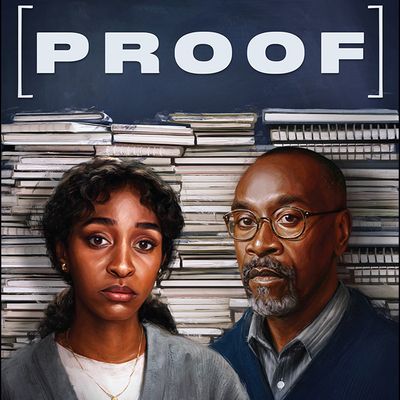
David Auburn is a playwright, screenwriter, and theatre director. He is best known for his 2000 play Proof, which won the 2001 Tony Award for Best Play and Pulitzer Prize for Drama, and was later adapted into a film in 2005... Read More
From the show: The Producer's Perspective Podcast with Ken Davenport
Guests

Featured Shows
About
David Auburn is a playwright, screenwriter, and theatre director. He is best known for his 2000 play Proof, which won the 2001 Tony Award for Best Play and Pulitzer Prize for Drama, and was later adapted into a film in 2005. Other films he has worked on include The Lake House, and his directorial debut with The Girl in the Park. He wrote several short plays, collectively grouped as Fifth Planet and Other Plays. His first full-length play, Skyscraper, ran Off Broadway in 1997. He has worked on other plays such as The Columnist, Lost Lake, Sick, and Side Effects. He has been awarded the Helen Merrill Playwriting Award and a Guggenheim Fellowship.
David and I chatted about the origins of Proof and how he solved it as well as . . .
- How he “warmed up” to writing plays by writing sketches and one-acts first (and a business reason why this is a great place for emerging playwrights to start)
- The most important reason why he thinks Proof was so successful and why it’s done everywhere.
- Why he enjoys directing other people’s work, but doesn’t want to do his own.
- The difference between writing screenplays and stage plays.
- Where he gets his ideas . . . and what he does first when he gets one.
This week's episode is brought to you by ProductionPro, an entertainment technology company focused on improving creative collaboration in Film, TV, and Theatre production. Check them out here: production.pro.
Keep up with me: @KenDavenportBway
Transcript
This transcript was automatically generated and might contain errors.
[0:07] Ken Davenport: You're listening to the Producer's Perspective Podcast with your host, Tony Award winner, Ken Davenport.
[0:12] Ken Davenport: Hey, so one of the reasons why I'm sitting here today is I was a computer geek when I was a kid. And on my very first show, the revival of My Fair Lady back in 1990, uh, they sat me in front of the Mac Classic, and I typed up the schedules, I kept notes for the directors, I made clip art, graphics. Uh, thankfully, technology has come a long way in the theater. And Production Pro has come up with the very first digital production bible. It's literally a visual breakdown of your script where you can capture, sort, and share designs, choreography with everyone on your team. It's incredible. No more three ring binders anymore, no more me as the PA on My Fair Lady making copies and distributing it to everybody.
It's all there right online. Production Pro, your very first digital production Bible. You can use it for everything you need to develop, prep, rehearse, and even restage your shows. If you're interested in checking this out, go to production dot pro backslash TPP. That's production dot pro backslash TPP, and welcome to the 21st century of creating shows.
[1:29] Ken Davenport: Hello, everybody. Welcome back to the Producer's Perspective Podcast. So happy that you tuned in today. You picked a very good episode to do that. I'm thrilled to welcome to the podcast, Pulitzer Prize winner David Auburn. Welcome, David.
[1:41] David Auburn: Thank you.
[1:43] Ken Davenport: So David won that Pulitzer and a Tony Award for his incredible gripping play Proof. Uh, he's also the author of The Columnist, Skyscraper, as well as the screenplays to Proof, The Lake House, and Girl in the Park, which he also directed. Uh, so David, let's start. Did you always dream about being a writer since you were a kid? Where did this impetus happen?
[2:01] David Auburn: I didn't dream about being a writer. I always did a lot of theater though growing up. I did community theater and school theater. We moved around a bit. I um, I was born in Chicago. We moved to Columbus and then lived there until I was about 12, and then we moved to Arkansas, lived two different places in Arkansas. I think besides the fact that my parents always encouraged it and they liked theater and going to theater, you know, if you move around a lot, it's a good way to plug into a social network and to meet people and to have fun. And I wasn't really an athlete, so that was, you know, that was how you got to a new town. You did school theater, you went to the local community theater. Um, so I did that pretty intensively all through high school.
I even worked as a professional stagehand and things like that at the local repertory, you know, equity house in Little Rock. But I never really thought about either being a writer or working in the theater. Um, it just was a kind of hobby, an extracurricular. Uh, I thought at the time, I mean, it was vague, but I think I wanted to be some kind of like diplomat or go into politics or do governmental work, something like that. Uh, and that's what I studied when I first went to sh went to uh college. But I quickly found that I was spending all my time doing theater. And uh, I got into a small group that did sort of Second City style sketch comedy. Uh, the Second City had been founded on the campus of the University of Chicago.
So someone, Bernie Solens, who was one of the early producers of Second City came back and started a group that was meant to sort of train a new generation of people in this, not so much in the improv tradition, although we did some of that, but more in sketch comedy writing. And I started to do it, and I found that I could do it, and then I really liked doing it.
[4:00] David Auburn: But before that, you were writing stories or I had never written anything before I started writing these sketches. I went to see a lot of theater. I considered it a great, it was a primary interest, but it wasn't for some reason I'd never sort of allowed myself to make the mental leap of thinking of it as a career possibility. I liked acting, I wasn't a particularly good actor, but I enjoyed performing, you know, but so I never considered going into it uh via that path. But there was something about making these sketches and not just writing them but performing them and also just sort of figuring them out in front of an audience that I found really compelling. The whole process appealed to me.
You know, you put something, you write something, you put it up, parts of it work, parts of it don't work. So then you, you know, so then you say, well, why did that, why didn't that get a laugh? That seems like a funny line, or that seems like a funny idea. What was wrong with that? Why didn't people respond to it? And then you, and then you move it somewhere else, and then suddenly it works, and somehow, right, putting the right amount of information in front of it somehow liberated the audience to respond to it in the way you were hoping, or taking away a certain amount of information changed the way the audience perceives it. So doing that kind of tinkering was what I really loved about being in that sketch comedy group.
[5:28] David Auburn: And then one summer, I think it was the summer after my junior year of college or something like that, I had worked really hard to try to get myself an internship at the office of this uh Illinois senator, who was Paul Simon. Um, that was sort of in my career, my supposed career track, and I was very excited to get this summer internship in his office. But my group was going to go to the Edinburgh Festival and perform at the French with our sketch review. And so I had this sort of dilemma, which seemed to me like an impossible thing to solve, you know, which do I do? Which path do I take? And then I realized, no, it's an incredibly easy decision. I'd much rather go to Edinburgh and drink and have fun and perform with my friends and, you know, then sit in Paul Simon's office in the loop all summer.
So that was a kind of moment of clarity where I thought, yeah, this I think I want, I think this is where I want to go. I think I want to do this. Didn't know how, but I first began to think of it as a possible career trajectory then.
[6:30] Ken Davenport: I want to get back to this idea about you starting with comedy and hearing the reaction, because that doesn't happen when you write drama. You know, you don't, you're not hearing laughs, right? You're not hearing that thing if you're writing something very serious, yeah. For example, do you think that starting in comedy actually is better training ground for writers because you get that instant feedback that you then can figure, oh, that isn't working?
[6:56] David Auburn: It's a very good workshop. I mean, it's not, but it's not just the laughs, it's the experience of holding the audience's attention or recognizing that they're clocking into the premise of whatever you're doing. I mean, what's really nice about a three or five-minute sketch is that all of the rules, or many of the rules that apply to it scale up really nicely to larger things, so that you can once you sort of figure out some basics about how you tell a story in three or five minutes, how you set up a premise, how you establish character, those kinds of things. You're sort of ready to move on and try to do it in a 15-minute piece or 20-minute piece or an hour-long piece. Um, if you read, if you read Pinter's review sketches, that's how they operate.
I mean, they are not actually all that funny, many of them. They're not intended as comic pieces, although some of them are very funny, but they are these sort of like in miniature, these plays in miniature that do most of the things that his larger plays do, but they do it very quickly.
[8:01] Ken Davenport: So when did you scale up? What was the first play that you wrote or decided I'm gonna, I've done sketches, they're working, I'm gonna try my hand at something longer?
[8:11] David Auburn: Well, one summer we got together and decided to improvise a play and write it down. I had a number of friends who were older than me and had gone on to sort of work in the Chicago theater scene, and one of the things that they were trying to do was create these improvisationally developed plays. So we did this one summer. You know, we did we did improvisations, I was the director, I sort of helped shape the improvisations. We talked about what we liked, what was working, and eventually we sort of shaped it on the page. We wrote the things down, revised them in writing, and then eventually had a couple of scripts for a play. So then when I thought I'd like to try to write my own play, I had this as a model in my mind, which is ultimately not a good model for writing plays, but it was a good model for writing the first play because it sort of liberated you.
I thought, right, I don't have to be a writer, all I have to do is I'll do exactly what I did before with my group of friends, only I'll be the one improvising everything in my head, and then I'll just write it down. Um, so I wrote a play that way, and it uh, it wasn't very good, but it made me feel that writing a play was something that I could at least conceivably do.
[9:25] Ken Davenport: Can you just talk about that process of improvising something in your head, and then also why that wasn't a good idea? So, what was that day like you woke up? I'm gonna sit down and write. What did you?
[9:39] David Auburn: I wrote a lot of random scenes, literally starting from a kind of list of premises. Here's someone asking this question, and how does the next person respond? And a lot of them didn't go anywhere. But when I felt that I had a scene that sort of did go somewhere, I just kept working on it literally one line at a time until I had some ideas about where the story could go. And when I say it wasn't a good way to write a play, actually, no, it's a perfectly fine way to write a play. I think what I found out later on was that having a few more ideas when you start off is often quite useful, or this can accelerate the process, but, but uh, you know, I think that when you're learning to write, and even when you're sort of in mid-career or God knows, maybe late career, I don't know where I am in my career, but wherever you are, you're continually kind of inventing or making up stories for yourself about what you're doing.
You know, you're just sort of lying to yourself about what you think the method is that you're following for this one, and hoping that it works, and tricking yourself into sort of keeping going until you either come up with something or you don't, and then you make up a new set of stories for yourself about what you think you're doing. It's a strange process of kind of continually trying to trick yourself into keeping going because there's so many reasons to stop.
[11:03] Ken Davenport: And uh that first play, which you said wasn't so good. Did you get it up? Did you do reading? What happened to it?
[11:09] David Auburn: It never went up, but I, but I, it did get me into this quite remarkable um program that used to be run out of Amblin, uh Steven Spielberg's company. I sent this play, I, I saw I literally saw a poster on a wall and sent this play in, and then was admitted into this program that Spielberg had just started where he brought out 10 writers a year and let them, it was a sort of screenwriting apprenticeship. Um, there were some fiction writers, there were some playwrights, uh, and I was one of the ten in this the first year that this got started. So I had this crazy experience of going out to LA and getting to, I was, they had stipends, so I got a little bit of money, enough to live on, and I was allowed to sort of write and get feedback.
So that was a head spinning kind of break. I mean, not a break in the sense that it led directly to anything, but a break in the sense that it gave me some sense that perhaps there's a future here for me, perhaps I can, I can keep doing this for a while.
[12:13] Ken Davenport: Do you remember the like the biggest thing you learned at that workshop?
[12:19] Ken Davenport: Because you were a self-taught writer at this point, basically, right? Just going and figuring out stuff on your own. So you go there, you're thrown in with a whole bunch of other people, uh, under Steven Spielberg's vision, right? What's the you remember a big takeaway you took when you're like, oh, that's I should start doing that when I write?
[12:39] David Auburn: Yeah, I think I think that one of the things that sank in, maybe a little too late, but it sank in was that it was that clever, smaller ideas, good jokes, quirky aspects to a particular character in funny moments, um, are a source of real diminishing returns when you're writing something longer. I mean, those are the things that can sustain you through a short scene, but you know, uh you you if if the bones of a piece aren't built in such a way that a larger idea carries you through it, a character is really trying to accomplish something or discovering something new, for example. Um, no matter how clever you are, no matter how funny you are, you're going to run out of steam. So I think it was just a sense of realizing that doing things on a longer, a larger scale or a longer scale, a full-length scale, required figuring out some architecture in a way that shorter things don't require as much.
[13:44] Ken Davenport: So, how did you get to New York?
[13:48] David Auburn: At the end of this fellowship, I had written a screenplay, didn't nothing happened to it. Um I was living in LA, and I thought, and and I had a number of friends from Chicago who had moved to New York to try to start small theater companies and kind of do that storefront, do-it-yourself kind of theater. And I thought I'd rather go if I'm going to go broke, I'd rather do it in New York trying to be a playwright than do it in LA trying to be a screenwriter. I I still felt that I really wanted while I could to be in a room with my friends trying to make theater. So I came here. And uh, you know, we we we formed little companies and we put on shows and rented rooms in small theaters and kind of cobbled evenings together for over a couple years. Uh and it was a lot of fun.
[14:50] Ken Davenport: Was there a moment that you felt you were discovered that a door opened for you here that led to where you are now?
[14:59] David Auburn: Well, the the I heard about the Juilliard playwriting program, which was just beginning. It had there had been a year of it uh with um I think John Guerrero and Terrence Ringale teaching it. That was the initial year, and then it was reconstituted with Christopher Drang and Marsha Norman. Bunch of hacks, all those people.
[15:18] Ken Davenport: Yeah, really not good people to be associated with, but I thought, what the hell, you know.
[15:23] David Auburn: Um so uh so I heard about this, and I was working, you know, a day job, and and I'd written a number of one acts for these small groups that I was in with friends, and I sent one in or sent a couple in as my application. This was the first year of the Juilliard program, and I got in. So that was a kind of professionalization that seemed like a break. Um, I'd never really been in a room with playwrights of that stature before, and they were extremely good teachers, and the other students were very good playwrights, so uh that was an important step.
[16:00] David Auburn: I'd also never worked with professionally trained actors, particularly learning about how actors approach a text, the kinds of things that they need in order to do their work from the text, from the playwright, what's helpful to them, what isn't helpful to them. Learning about that process was hugely valuable at Juilliard.
[16:25] Ken Davenport: I love that your seems to me that your process or the development of your career started real small. It was reviewer sketches, it was one axe getting you into Juilliard in a way.
[16:42] David Auburn: Yeah, I mean, I always liked I always liked writing things that we could realize in some way. So a lot of that was just by virtue of the fact that it's easier to mount something small and modest than it is to mount something larger. And you know, you could just that the spirit of you know review sketches is that you throw it up and see if it works, and if it doesn't work, you try to fix it, and if it still doesn't work, you throw it away and write something new. You know, that kind of continual um just recapitulation of the thing that you're trying revamping of it, reshaping it until you arrive at something that works the way you want it to. Um, I think was a useful way to to develop some basic skills.
[17:27] Ken Davenport: So tell us about uh where the idea for Proof came from.
[17:33] David Auburn: Um I had had a play done off Broadway, uh, a professional professional production, a commercial production. Um it didn't last very long, but it was a nice experience. It it was you know, gratifying and it was a good production and all that sort of stuff. So I was and I so I was I felt ready to write another play. Um but I didn't have anything. Uh uh I sat down and played around for nine months or a year with a lot of different ideas. I think at a certain point I had two ideas that I felt were dramatically potent in some way. One was one was about two sisters that started arguing about something after a parent died. Um they found something left behind, and this began a you know, a sibling dispute.
Um, and the other was about someone worrying that they might inherit a parent's mental illness, someone who was maybe at the age where some of those illnesses can kind of kick in. And I imagine someone sitting alone, you know, on their on their birthday and thinking, now I'm the age that my parent was, is this gonna happen to me? And those both of those, for whatever reason, just seemed like potentially potent situations. And it was it was in looking for a way to put them together that Proof really came about. I mean, I was you know, it's thinking about what could these sisters discover, what could this legacy be from this father, you know? Is it a is it a book manuscript? Is it a piece of music that he wrote?
Is the painting? Is it and then the thought of a mathematical or scientific document seemed really interesting to me, partially because its authorship could be called into question. And the fact that a number of well-known mathematicians have suffered from mental illness kind of gave me the bridge to that other idea. So once I had those pieces and the kind of link to them between them, I was able to write the play fairly quickly.
[19:30] Ken Davenport: What's fairly quickly?
[19:32] David Auburn: Well, the first draft was fast. I mean, maybe six weeks or something like that. Wow. But it was a very sketchy, kind of almost like a blueprint draft. And then and then it took probably a year or six months or nine months, something like that, to really think through this framework or this scaffolding that I built. All the pieces were there, and all the characters were there, and the scenes were the scenes that were ultimately the ones in the final play. But you know, putting kind of putting meat on this skeleton took quite a long time. But once I finished that process, the play was substantially done. I didn't I did a few changes when it was in production, but not very late.
[20:11] Ken Davenport: After the blueprint, did you do a reading of it or anything? Did you, or did you just say, okay, I've got my blueprint, I'm gonna go back now.
[20:17] David Auburn: No, I felt excited about I felt excited about the the story that it was telling, but but I knew that it wasn't finished. But you know, once I did do that sort of second larger draft, I started to have readings. Um I read, I I put together a group of friends, and I then I did a reading with some producers, eventually did a reading at Manhattan Theater Club. That was the reading that Mary Louis Parker did when the theater decided to produce it. And we're gonna get back to Proof in a second, but that process of a six-week blueprint, have you used that same process on future plays, or does your process really change every time?
[20:57] David Auburn: No, I mean, one of the really confounding and frustrating, but also interesting things about doing this, at least for me, is that whatever method you end up using to write a play doesn't end up being applicable to the next play. And uh and it seems like, at least so far, um writing a play is mostly about figuring out how to write that play. I mean, as opposed to simply understanding what it is you're trying to say. I mean, you sort of have to devise a whole new way of writing. That's probably putting it pretentiously and too strongly, but sometimes it feels like that to get the thing written. Um I guess another way to put it is I feel like I'm starting over with almost no prior experience every time we start a new play. That's probably not really true. I mean, I think I am bringing things that I've learned and experienced to it, but it feels like stepping out into thin air kind of thing.
[22:07] Ken Davenport: So before the Tony, before the Pulitzer, before the reviews, even opening night, the play goes up. What do you think? Do you think this is a good one? I hit it out of the park here. Or like, how did you feel that night about what you've done over that year or two?
[22:25] David Auburn: Well, I mean, I remember feeling a number of different things. The the rehearsal process was really good and smooth. And and it was the first time I worked with Dan Sullivan, and that was very pleasant and creatively, you know, uh successful. Enjoyed it. So I'd had a rehearsal process that didn't feel particularly fraught. And then on the final dress, we had that sort of classic final dress where it felt like it was the play taking place underwater or something. And I remember I remember going taking the subway home and feeling like, alright, I've got to get my resume together because this is I'm gonna be hitting the temp agencies tomorrow, quite literally, you know. Um but you know, by the time we were into previews, we had three weeks of previews.
I felt this is this is working well. This is a good, this is the audience is is responding to this and clicking into it and living with the story in a way that felt really good and satisfying. I mean, I didn't know if it would be a hit, I didn't know if it would be well reviewed, but I felt that it was a good show. So I felt that whatever happened, it was a good show, and I was eager to keep trying, you know. Um and then and then it did become quite successful, and that was very surprising. Not because I didn't think it was a good play, but because you don't expect anything to sort of take off the way that play did.
[23:47] Ken Davenport: How did you feel when you found out you won the Pulitzer? Like what went through your mind where you were like, yeah, I oh, of course.
[23:55] David Auburn: I mean, this is a great play. No, I was flabbergasted. I mean, it was never it I was delighted, I was thrilled. Um, I had a certain amount of uh uh a slight sense of foreboding, like this is too much too soon. Um but but uh I was you know I I was thrilled, and I thought whether or not you know, whatever this does or does not lead to or doesn't does or doesn't become the only way to make sense of this is to sort of think of it as a credential to use to do the work that I want to do next, and and to take whatever kind of artistic risks I could take next.
[24:38] David Auburn: I thought you sort of now I have no excuse but to just try to write the plays that I'm really interested in writing. That's the gift that has been given to me at least for a portion, you know, period of time. So I tried to take it in that spirit. If you could distill it down to one thing, what do you think's the one reason why that play works so well, that it resonates with an audience, that it's become such a special piece of theater? For one reason, I think the scenes are very playable. I think that they're good scenes for actors. Ultimately, I think so that actors want to take those roles on. That's been the lifeblood of the play, people wanting particular performers wanting to act it. And, you know, one of the nicest things about the afterlife or the ongoing life of that play is that it gets done a lot by acting students, and partially that's just because the roles are the right age for young actors. But I'm proud that the scenes are good scenes for young actors, that they're good teaching scenes. So I think that's my short answer.
[25:58] Ken Davenport: Well, having seen that original company, I remember those scenes, or as I said in my introduction, just gripping, I mean, tennis matches of dialogue, they're very, very gripping. And I have to say that a lot of the—and part of the reason that the play ran through more than one company was that both MTC and Dan made the investment in fully rehearsing each new company that came into the play, which is not necessarily what happens every time. And that was a big factor in the play's success, I think. You know, when we replaced an actor, a whole new company came in. It wasn't one person who had been rehearsed by a stage manager for, you know, for five days. So that—and Dan, when he rehearsed those new companies, he approached it with them as very much in the spirit of this is your play now. You don't have to do anything that's been done before. I'm not looking for you to do what's been done before. We're going to reinvent it. And, you know, that kept it fresh through a long run.
[26:59] David Auburn: Do you like to have your directors on earlier to act as dramaturges as well, or do you like to do most of that work yourself and then deliver it and then say, here, take it and run? It's worked different ways with different pieces. The play that I'm working on now, which has been developed from the beginning with a particular theater and a particular director, I've had the director on the whole time along, and that's been useful. It's actually sort of something new for me. I've never had that, but it's been nice to be able to check in with this director, show him things, and give him ideas and see if he feels that they're promising or what he feels the pitfalls might be. But that's sort of a new experience. I haven't really done that before.
[27:46] Ken Davenport: Do you read reviews?
[27:47] David Auburn: Sure.
[27:49] Ken Davenport: Why?
[27:50] David Auburn: I feel it feels weird and neurotic to go out of your way to avoid them. I think you're going to end up getting a sense of what the reviews are anyway. People will send you an email that says, "Oh god, I—" they'll, you know, they'll send an email that says something like, "Listen, that New Yorker review, just that guy's an idiot, don't listen to him." You know, so then you know whether or not you've wanted to read it, what was said. So I think, and also I just want to, I just generally want a sense of how the play has been received. And, um, even though it can be painful. If it's a real stinker, I don't torture myself, I don't read every word, but I want to have at least some sense of what the response to the play has been.
[28:34] Ken Davenport: You see a lot of theater now, I assume.
[28:37] David Auburn: Yeah.
[28:38] Ken Davenport: What's the biggest challenge or problem that you see in new plays? The biggest, for lack of a better word, mistake that you see writers make today, especially new ones.
[28:49] David Auburn: I don't, you know, there's so much good new writing now, and there are so many good young American playwrights that I can't say that I see a particular problem. I mean, you know, people do things in ways that are now, you know, sadly, I don't like to think of myself as middle-aged, but I'm getting there, and you realize what that means, which is that people do things in ways that seem surprising and unfamiliar to you. Sometimes that can be exhilarating; sometimes you feel kind of cranky and phobey-ish, but you fight hard against that reaction because it's the nature of art to continually change. I think one of the more unfortunate things about modern theater in general is just that you're so restricted in terms of the number of people you can put on stage and the scale of what you can do.
You can go for a long time and see nothing but four or five, six-character plays. I write those plays myself, not only for mercenary reasons, but just because those are the kinds of plays that I was trained to write and that I understand how to write. You forget this is a whole other kind of theater. I just directed a production of The Petrified Forest from 1935, a Robert Sherwood play. You know, it has 20 characters. We had 13 actors. It was exhilarating; it was thrilling. And it's sad that it's so thrilling. You know, that's not that unusual for most of history. Plays were this size, and yet you get to have, you know, you get to have 13 people on stage, and you say, "God, I don't know how to do this.
Where do I put them all? What do I do?" So getting to work at a larger scale is really exciting, and it's not something we get to do anymore as much, although it still happens. Playwrights still take chances; theaters still take chances on those plays. So, in general, I feel like we're in a very, very good, fertile time for American theater. Extremely strong.
[30:50] Ken Davenport: So you started in Hollywood writing in that fellowship program, writing a screenplay, thought about LA, came over here, wrote some plays, picked up some trophies for the mantle, and now you've written some screenplays, of course, as well. What's the difference between writing a play and a screenplay?
[31:08] David Auburn: There's a difference that has to do with the legal nature of what you're doing. I mean, when you write a play, you own the copyright of the play; it is your play. The theater doesn't buy the play; they option essentially the right to produce it for a certain period of time, and that's reflected in all the kind of arrangements, unspoken and spoken, that you have with all the people who work on the show with you, so that you are treated as the author of this work throughout the process. That's not true in the movies; it's not really your movie; it's the director's film or the producer's film. So you enter into it with a different mindset, I think, and a different understanding of what your authority is going to be. That's probably the biggest difference. I mean, if you want to have the kind of experience with a movie that you have in the theater as a playwright, you have to direct the film.
[32:02] Ken Davenport: And the process for you for writing a screenplay and a play, is it similar? Do you have to put on a different type of hat before you sit down to start crafting a screenplay?
[32:13] David Auburn: I mean, usually, if you're contracted to write a screenplay, they want more information going in about what you're going to provide. They want more preliminary treatments, and they want the story to be more fully worked out than I usually would when I'm writing a play. So very often, the experience of writing the screenplay is you spend a lot of time developing a document that's sort of like a treatment, and then the actual writing, even though you do a lot of invention when you're scripting it, there is more that has been decided already in the treatment phase. That isn't really true in playwriting. I'm usually flying more by the seat of my pants.
[32:51] Ken Davenport: You directed your own screenplays. Have you directed your own plays?
[32:55] David Auburn: A couple times, but I really don't enjoy it that much. I like directing; I love directing plays, but especially with a new play, I like having another director. I don't find it that interesting to direct my own stuff. I don't make the kind of discoveries that I think you want to have people making. It's probably kind of flatter results, but I love working on other people's work.
[33:23] Ken Davenport: Advice to writers out there that are looking to bring a dent in the business?
[33:30] David Auburn: Well, I think if you're just starting out, the best thing to do is just go where your friends are to find a community of people and make theater with them in whatever sort of situation or with whatever level of production that you can. If you're putting something on in a basement, if you're putting on something in a bar, small theater. Building some kind of community, I think, is where most careers come from. I mean, I think historically that's how careers are made. You find a group of people who are like-minded, you put on shows with them, some of them are terrible, some of them are good, you learn from them, they learn from you. Eventually, perhaps someone in that group gets a break and they can kind of drag you along with them. Maybe you're the person, but you know, careers come out of small communities of people making theater together.
[34:29] Ken Davenport: And you answered that question as I think most people do. Well, if you're just starting out, what if you've been slogging away at this for 10-15 years, you've written a bunch of stuff, and nothing has really taken off? Your advice change for those folks who are still banging their head against doors trying to get them open.
[34:48] David Auburn: I guess it's that there is no one model of how careers work. So not having had a production that you like or whatever it is, before a certain point, or having spent a certain number of years without the success you want, does not mean anything. It doesn't portend anything. This business is too random and too strange. So I think if you're thinking in terms of any one template and thinking that doesn't fit what's happened to me, therefore it's not going to happen to me, I think that's usually mistaken.
[35:24] Ken Davenport: Okay, my last question, which is my genie question. I want you to imagine the genie from Aladdin comes to visit you, knocks on your door and says, "Thank you for your contributions to the American theater, and I want to grant you one wish." What's the one thing that drives you crazy about Broadway? Such a nice guy, genteel. What would make you flip this table up, curse, swear about Broadway that you'd ask this genie to wish away in an instant?
[35:24] David Auburn: Well, I mean, it's got to be ticket prices, right? I mean, it would be ideal if anyone who—especially let's narrow it down to, let's say, to high school students—let's say any American, any New York public high school student could walk up and buy a ticket to a play for the price of a movie. That would be a kind of utopian ideal that would be fantastic; it would be thrilling. So that's my lamp rubber.
[35:24] Ken Davenport: It's a good one. Well, thank you for that. Thank you for joining us here today. Thank you all of you for listening. Don't forget to tune in for next time and next episode, and don't forget to subscribe. We'll see you then. Look out, Broadway, here I come!
© Broadway Podcast Network, All Rights Reserved