

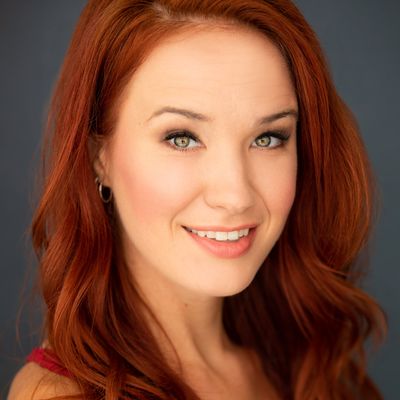
Sierra Boggess is a theater actress and singer, best known for originating the role of Ariel in The Little Mermaid on Broadway and for her multiple appearances as Christine Daaé in The Phantom of the Opera... Read More
From the show: The Producer's Perspective Podcast with Ken Davenport
Guests
Featured Shows

About
Sierra Boggess is a theater actress and singer, best known for originating the role of Ariel in The Little Mermaid on Broadway and for her multiple appearances as Christine Daaé in The Phantom of the Opera. She also originated the role of Rebecca Steinberg in the 2015 Broadway production of It Shoulda Been You, and performed the role of school principal Rosalie Mullins in the Andrew Lloyd Webber musical adaptation of School of Rock. Other roles include Love Never Dies (Christine Daaé); Master Class (Sharon Graham); Les Misérables (Fantine); and Love, Loss and What I Wore (Various Characters).
If you haven’t seen Sierra perform, then, well, you’ve missed out on seeing someone do exactly what they are supposed to be doing with their life. Her way with a song, a lyric, or just an introduction is as entertaining, uplifting or as heartbreaking as she wants . . . and she makes it all seem so easy. It’s no wonder why Disney tapped her for The Little Mermaid. Hear Sierra talk about all that, as well as …
- The big risk she took to get the role of Ariel and what put her over the edge in the room.
- How she stays positive when the business disappoints her, through no fault of her own.
- Her style of working with writers on new musicals and how that has changed over the years. (And she’s currently in Atlanta on a pre-Broadway tryout of Ever After!)
- Why she created “Light Lessons” for artists and everyone. (Click here to check them out. I’ve got a set on my desk.)
- Marketing for Performers: What’s important, necessary . . . and what isn’t.
This week’s podcast is sponsored by the Heartland Brewery which opened in New York in 1995, and back then, our city was not the hotbed of brewpubs, beer bars, and beer drinking it is today. Since then, Heartland Brewery has grown into the largest group of brewpubs in the region. They’ve got locations here, in Times Square, in Midtown West, and the Empire State Building.. Visit the Heartland Brewery at heartlandbrewery.com.
Keep up with me: @KenDavenportBway
Transcript
This transcript was automatically generated and might contain errors.
[0:00] Ken Davenport: I wanna be a producer with a hit show on Broadway.
[0:07] Ken Davenport: You're listening to the Producers Perspective Podcast with your host, Tony Award winner, Ken Davenport.
[0:13] Ken Davenport: Hey everybody, it's Ken Davenport. Welcome to the podcast. And before we get to Sierra Boggess, who's going to tell us how figure skating led her to land her role in The Little Mermaid and give you great tips for success if you're a theater artist of any kind, I wanted to let you know that this week's podcast is sponsored by the Heartland Brewery.
[0:33] Ken Davenport: Heartland Brewery opened in New York in 1995. And back then our city was not the hotbed of brew pubs, beer bars, and beer drinking it is today. Since then, Heartland Brewery has grown into the largest group of brew pubs in the region. They've got locations here in Times Square in Midtown West, the Empire State Building. I'm a super fan of the place myself. They have a great chicken salad. They've also got a private event space, and we're actually having our producer's perspective pro mixer there. So if you're a pro, don't forget, come on down. Visit the Heartland Brewery. Thank them for sponsoring this week's podcast. And now let's hear it from Sierra.
[1:20] Ken Davenport: Hello, everybody. Welcome back to the Producer's Perspective Podcast. I am Ken Davenport. You are in for a special treat today because we have one of those rare guests on the podcast. You know, for the longest time, I didn't have any performers on the podcast like a giant snob. And I'll admit that it wasn't the first thing I thought of when I thought of the business of Broadway, and that's what this podcast is really about. And I wanted to make sure that all of you heard from the nuts and bolts business makers. And then I woke up, had an epiphany, and I thought, of course, performers are part of that business. Why am I such an asshole? So we've had a few terrific performers on the podcast so far, Stephen Pasquale and Danny Bernstein. But we've never had a woman on the podcast as a performer. So please welcome the first female Broadway star on the Producer's Perspective podcast, Miss Sierra Boggess. Welcome, Sierra.
[2:14] Sierra Boggess: What's up? I'm like making all these excited faces at you, and no one can see it.
[2:19] Ken Davenport: I know. I should go to video.
[2:20] Sierra Boggess: You should.
[2:21] Ken Davenport: Although no one would do the podcast.
[2:23] Sierra Boggess: No, people.
[2:25] Ken Davenport: That's right. I can wear my Namaste hat right now and sit here and talk to you.
[2:28] Sierra Boggess: We'll have to do a little selfie so everyone can see the Namaste hat afterwards that you're wearing.
[2:34] Ken Davenport: So I first heard about Sierra when I heard these rumors going around the industry that there was this young lady that Disney was so in love with to play The Little Mermaid that they had to put her in another show to like keep her busy until The Little Mermaid was happening. Now I don't even know if that's true, but I'm just telling you, that was the rumor on the street that you were that good, and of course, you are that good. She did make her debut in The Little Mermaid. She opened the Vegas production of Phantom of the Opera as Christine and has played it here on Broadway as well. She played Christine in the world premiere of Love Never Dies in London. She's been in Les Misérables and a whole bunch of other shows.
And almost immediately after this podcast, she's going to play the lead in the new musical Ever After. You can learn more about her as well as her light lessons, which we'll get to later on her website at SierraBoggess.com. So, where did you get bit by the performing bug?
[3:33] Sierra Boggess: Well, I grew up in Denver, Colorado, and I never thought about doing acting ever. I wanted to be a professional ice skater. And so I think what happened is while I was competing as an ice skater when I was a kid, that's when I realized I'm not afraid of being in front of people, and I really enjoyed the approval. That's what I think when I look back in hindsight. But ice skating is a really expensive sport, and we didn't have a lot of money at all growing up. So I had to stop when I was like 13. And you start skating, like if you're training, you're skating from like four years old. So even though I was young when I stopped, it was that was informative years of my life. And I was heartbroken.
And I don't know why, but it's like the natural progression was then I just went the middle school that I was going to had like a drama class, and so that's what I was doing, and I loved it. And I loved immediately the family feel of it, and like it felt like a team, and maybe that also goes back to like that to skating is a sport too. It's like you're not ever alone or anything, and so you just immediately have like these incredible people that you're working with and like being vulnerable around and practicing like crying and laughing and being silly and like all this stuff. And for me, that was just like I think it was my outlet more than anything. And then it turned into it was just from then on, I knew that I wanted to major in.
I didn't even know what musical theater that term, like when I started looking at colleges, but then once it was explained that's what you're into, then that's the term, that's what you're looking for with like school and stuff like that.
[5:22] Ken Davenport: Could you have been like an Olympic skater? Were you on that trajectory?
[5:25] Sierra Boggess: Well, that's what I wanted. I mean, I can't remember really what no, I do. I remember like what jumps I was at. I was just starting to land my doubles, and in order to, you know, it's like that's the age that you start working on your doubles, and it's like, you know, triple. But this I when I was skating, this was the time of like the whole Nancy Kerrigan, Tanya Harding thing. That's who I was looking at as my role models and stuff. It's so crazy, like looking back.
[5:48] Ken Davenport: Which one was your favorite?
[5:50] Sierra Boggess: Nancy Kerrigan.
[5:51] Ken Davenport: Okay, good. Because I thought she was like so elegant and like my I wanted to do she has this really signature spiral, which people who study ballet like that's an arabesque. I don't know why in skating it's called a spiral, it's different, but it's the same move. So I was like always trying to like add that into my programs and stuff. Like, I know you know there's a Nancy Kerrigan, Tanya Harding rock opera that was at Nymph just a couple years ago.
[6:15] Sierra Boggess: Excuse me? No, I did not know that.
[6:17] Ken Davenport: Yes, you should check it out.
[6:18] Sierra Boggess: Okay, great, thank you.
[6:19] Ken Davenport: You should check it out. So you jump into theater. So, what was your first big role that you played in high school or when did you start singing?
[6:28] Sierra Boggess: Wait a minute. Did you start singing young or yes? I sang all the time because I'm the middle of two sisters, and we sang together all the time, and we also played instruments. We're really musical family. My older sister is a cellist for Broadway, so she plays cello. I used to play flute, and my little sister played piano and oboe, so we would play like trios together, sing like Andrew Sister stuff in harmony. So always I was singing. And then in high school, yeah, I did all the musicals. We did like Music Man and stuff my freshman year, but I was like a dancer, you know, worked my way up. But my guess my first lead, maybe was I played Sonia in Godspell, the Turnbuckle Man. That was like a junior in high school, like sitting on people's laps in the audience.
And then I did Fiddler on the Roof, I was Hodel, and I didn't start taking private voice lessons until I was like 17 years old. Because I always sang naturally soprano, and I wanted to learn how to belt like Broadway people, and so that's how I learned that he was like taught me how to do that. So, but it wasn't until I was 17 that I was even thinking there was like how to make that kind of sound or something. So I think we did we did Guys and Dolls in high school, and I wanted to be Adelaide. That was my thing. I always wanted to be the character ones, always since I'm a kid. I never wanted to be like an ingenue. I never thought of myself like that. Always wanted to do charactery stuff, but nobody else could sing soprano, so I would always get cast and typecast as like the ingenue one, and that was so I played Sarah Brown, and I remember being really sad because I just wanted to be Adelaide.
[8:35] Ken Davenport: Okay, so this is a I think about this a lot when I think about performers because you get typecast because of a vocal type or because of a look, even though your desire may be to want to do something else. Yes, and you've continued to be cast as auditions.
[8:54] Sierra Boggess: Yes.
[8:54] Ken Davenport: How does that make you feel?
[8:56] Sierra Boggess: Well, people who know me know me are always like, God, I want you to do something where people know you're funny. But I what I have learned to love about an ingenue, and I'm so defensive of an ingenue, especially when I teach like master class and stuff now for like the kids. I say kids too, but I'm like people that are like just graduated, so they're in their 20s. But people get so like when they sing like an ingenue or some or sing like old-timey stuff, they it's like they forget that there's any personality or something. And I think you can make an incredible career out of ingenueing it. That just made it a verb. If you're if you also figure out this, like these characters are also just as fiery and have so much substance to them.
Like when I play Christine in Phantom, she is not just this like waif of a girl that just has no clue about anything, is just being she is really smart and really strong. She's the one managing these two men, you know. It's like there's so much that we watch her grow up. So it's like I've really enjoyed finding the meat in the characters that are that people can just dismiss as just like the vanilla-y. I don't want to make a career of playing just vanilla ingenue. I think all of them have so much to say. So I guess I guess I enjoy it now.
[10:19] Ken Davenport: So let's talk about your move here to New York. And first of all, you had like shocked look on your face when I was telling you about the rumor that was on the streets.
[10:27] Sierra Boggess: Yes.
[10:27] Ken Davenport: Was that is that true?
[10:29] Sierra Boggess: Not true. I what happened was I was doing Phantom in Las Vegas, and I auditioned on my I th I had like a vacation, and I came to New York and I auditioned for Little Mermaid, and I did not get called back, not even a call back. And so I went back and thought nothing of it. Then I got a call two months later from my then agent who was saying they want you to come back in to audition to do the dance call and to audition to cover Ariel. And for some reason, I was like, no, I'm good. Like, no, no anger, nothing about it. I just objectively was like, no, I think I would rather stay, you know, playing Christine in Vegas than go and and I don't I don't feel interested in covering Ariel. But I really never thought like this will be it.
Like it was just, oh perfect, I'll just audition for something that seems right for me. They but still, so I said no, and then two months later, I got a call saying they want you to come to New York in four days for a final callback for Ariel. And I was like, a final? I haven't even done one. It's like, yes, they like and and I also I had heard rumor was already cast, and they said, no, it's not, and there's only like five, it's down to five people or something. I mean, crazy. And so I remember booking the flight, and it cost $700 because it was all the way from Vegas and it was in four days, and I thought to myself, well, this is the most expensive ticket I've ever bought in my life, but if it's it'll be worth it, like it's just something about that, like the intention, I don't know, and some pull.
And I also thought that I'm being given a second chance. And what I did was like researched, like I cannot even tell you. I put the movie on, and I was like, why? Now I did the work before, but now let me really do the work. Like, what what didn't they see before? What didn't I do? And I was watching this cartoon trying to figure out why what is it about her that everybody is like that love that they love so much and how she talks and how she moves. How can I, as a human, do like I went crazy. And I'm living in Vegas, so there's a pool everywhere. So I went into the pool, and I was like, that's when I discovered for anybody who saw Mermaid, my arms were never by my side. I discovered it's like, oh, if you're just in the water, your hands are not, you'd have to force your hand.
So it's like little things like that. So I flew to New York and I did the callback, and it was a callback that lasted three to four hours. I went in there. This is when Alan Mencken changed the key for the song because the Broadway key is a whole step higher. Because I sang it through the movie key, part of your world, and then he went to the piano and he said, I want to hear it in this key, and he moved it up, and they said it's because my voice sounded younger in that key.
[13:26] Sierra Boggess: So that's how it became like Sierra's key. And so that was all within the callback. And then they then I sat outside. Um, oh, the other thing was uh how they did the um swimming in the show was Heelys, the shoe with the heel with the wheel on the heel. And so I'd never put a pair of Heelys on, but I was an ice skater. Oh my gosh, you know, going full circle. Yes, and so I was like, okay, well, I know how to use upper body while my bottom part of my body is doing what it needs to do, but I'd never put Heelys on. My dresser at Phantom had a pair of Heelys, like a grown-up pair of Heelys, and so I borrowed them. We rolled up the carpet in my dressing room before my callback, put them on. I put my um feet together and of course fell right away because you're off balance.
So I did I did the mistakes in by myself as opposed to if I went in the callback, um, I'll do those in front of the people. Um, which is what I always say. It's like, do yourself a favor. If you know something going into it that could help you do it. So, anyways, um, when I was in the middle of the callback, then Stephen Meir, the choreographer, came out and he was like, I heard you were an ice skater, and I said yes, and he was like, Great, and went back in. That was it. And I was like, Okay, so like rumors are going. Um, then we went in and we did the Heelys bit, and I was the only one of the five girls who had ever put Heelys on, which blew my mind because they were like, they all said all the Disney, all the two rows of people were like, it's okay, we know, like, don't worry about, we just wanna show you a little bit, like taking them across the floor, the um associate career, taking them across the floor by their hand, like one at a time.
And I was like, I didn't want to be like the little brat that's like, I got this, but I was like, I also I also don't need the help, but I was so I was gently like, I think I can I'll be okay or something, you know? And I was like, Yeah. Um, but they remember that the um Jane Abranson from Disney said to me, She always talks about that. She's like, I'll never forget that you were just like phing on these like Heelys. So that's what happened. It was four hours long. I danced with some princes and all kinds of stuff, and then I flew back to Vegas and that weekend went came and went, and then I got the call that that was gonna be it. And I so I had to leave early. So I was already I so the guess people could have thought it's like, oh, they put her in that show, but I was already, I had been in there for ten, nine, ten months.
And okay, you mentioned something as you like I had already done the work, but now I really didn't work. Tell me just a little bit about your process for preparing for any role. You're about to go to play ever in ever after. So, what's your normal how does an actor prepare?
[16:16] Sierra Boggess: Great question. How does one prepare? I personally believe that we should do as much research as possible and then forget it. It's like the I I mean, I hope that makes sense to maybe one person, but I do as much, much, much prep work as possible. For example, with Ever After, it's made up. This story is made up, it's a version of a Cinderella story, but there's elements within our piece that are real. For example, the book that my father gives me in the show, which we don't see any of this. I just talk about this book that I love that my father gave me before he died, is called Utopia by Thomas Moore. Well, I Googled it. It's a real book. People actually research this book. I had no idea. So I went and bought the book.
So I'm reading it as if I'm already Danielle. It's like, what would she know from this? Like, that's what she that's what she's basing a lot of her life around when something as significant as this is the last thing my father gave me before he died when I'm like eight years old. Um, then what how would that inform me? So I do stuff like that, and I go through the piece and comb out as much like stuff that I can find that I want to research. And I also I also am a big fan of doing the songs as monologues because especially when the music is so beautiful. I mean, I'll do that with Andrew's shows as well, too, especially with something like Phantom. It's like, what am I actually saying here? Because the music is like icing.
It like informs so much and it informs the audience how to feel. But if I'm not also really ruthlessly aware of what I'm saying, then it does become like ye old in genuine of what we think of ye old in genuine. Does that make sense?
[18:03] Ken Davenport: Yeah, yeah. And when okay, so you're pulling obviously a lot from the text, which is fantastic. The book and and you've worked on a ton of new musicals. How much do you inform the authors? Like, tell me a little bit about that process of like do you suggest to the authors, like, no, you know what? I'm on a new developing musical. I'm not sure she would say this. How's that relationship?
[18:28] Sierra Boggess: It's tough. It's funny. I'm really working on that right now. Cause I when I first started out, I mean, that to me was like a no-no. Like, you don't, you just do what you're given. Especially like when you train and dance, you don't have a say, you do you do what you're told. And um, so it's taken me a while now, and I'm in a position where I do have some type of say. Um, but I mostly try to come in now with answering as many questions as I can without asking for them to change anything. I'm working on trusting that the people will see what they need to see if I come in and just ruthlessly give them like my best shot at what's happening, even if it doesn't feel right. But there's certain things I remember in school of rock when we were starting that process, and there was something where I was like, the the placement of these two scenes don't make sense.
I think it would make more sense if this and I did quietly say to to the director, um, so it's like never a thing that's like, what if it was this and coming from that place and not like it needs to be? Because I'll do it whatever way, you know, the director is gonna say, but there's certain things it's like, and then it did, it changed. And so I realize it's like I enjoy doing it when it's about like the good of the piece and stuff. There's things within ever after that I'm working on now that I know will change and and ebb and flow and stuff, um, that and I will be able to with my director uh talk about this stuff, I think. But I do think it's important to try it, you know, the way so that they can that also it empowers the producer, the director, the writers to see for themselves what's not working.
But I also have had writers that are like, help me. What do you what do you think or something? And then I guess it's like that thing in life too. I think what we do anyways is such a metaphor. I think you you probably feel the same thing with with life. And if someone's not asking for help, you know, if you're not open to receiving, like, then there is kind of no point in because it can become I've seen it with other like fellow actors, I've seen them get so frustrated because they're so deeply opinionated about how it should be. And so I do I don't know, I'm working on it. My answer is all over the place, but it's because I'm working through this of what what it is the best way to do it.
[20:58] Ken Davenport: As a performer, when you were coming up and or even now, do you find you have to market yourself? Are you do you have to think about the business of selling yourself as a performer? I mean, you've had obviously big success, so I'm sure it's a heck of a lot easier now than it was. But do you have to think about the other side of the business?
[21:18] Sierra Boggess: I didn't when I was first starting because when I was first starting, social media wasn't even a thing. Like this is what's so crazy. It's within the only past few years that social is such a big thing. So it does you can look at it as like now I'm marketing myself. Um, but at first, especially when Disney's your first big thing, they're marketing you for you. And you have this like, um, for all that time with Disney, it was my responsibility to uphold the Disney way, um, so that I'm not the one who like ruins people's lives because Ariel's like going crazy or something. You know what I mean? Like, you don't want to be responsible for like the downfall. And that's how I felt. Like, I don't want to be responsible for like that.
Um, so that that was separate. So it took me once I left uh that show, it took me some years to figure out who I was or who I wanted to be in our industry, because it was done for me when I first started, if that makes sense. Um now I feel I'm not really m I don't think that I am consciously marketing myself, but I do I don't know. I you want to stay relevant, I guess. That's the thing.
[22:35] Ken Davenport: So you've opened shows on Broadway, West End, Vegas. It's all easy, right?
[22:43] Sierra Boggess: Oh yeah. That's sure. That's what your podcast should be called. It's all easy. Broadway, it's all easy.
[22:49] Ken Davenport: Broadway. It's so easy.
[22:51] Sierra Boggess: Uh still a struggle at times? I mean, we've talked a couple times. I mean, you you've had some interesting luck in your career, and then you were supposed to come to Broadway with a couple of very big shows.
[23:03] Ken Davenport: Yes.
[23:04] Sierra Boggess: Rebecca twice.
[23:08] Ken Davenport: Oh yeah.
[23:09] Sierra Boggess: The Marquis was up, Prince of Broadway.
[23:12] Ken Davenport: Mm-hmm.
[23:12] Sierra Boggess: And it didn't happen.
[23:13] Ken Davenport: Yep.
[23:15] Sierra Boggess: When that stuff gets you down, how do you get yourself back up again?
[23:21] Sierra Boggess: Yeah. It is, it's hard. Um you were in that phantom in place where the Love Never Dies was. Love Never Dies was also supposed to come in. That didn't come in. Yeah. And then in Paris, it's interesting where like the The whole theater burnt down. The whole stage burnt away. Yeah, that was the most recent. I left School of Rock in order to go and open the first all French production, a Phantom in Paris for the 30th anniversary. I literally learned the entire score in French. And then two days into tech, the stage is like on fire and there's no there's no show. Can't do it. Go home. We're done. I mean, yeah. That sucks. It sucks. And you can't argue with fire. Like, you know what I mean? You can't be like, oh, let's just dance around it.
No, you can't argue with that. We're done here. So when that stuff happens, it is such an opportunity, and it's an opportunity of how are you going to behave with this level of heartbreak? Because it is heartbreaking, as you know. And I try and learn what I can from it, and I think it's an opportunity for us, especially in our industry, to relearn that lesson that I'm not what I do. So even when it cause we can't count on it, the as with Rebecca, the marquee can be up, and we're still not going. You know, we're about to we have contracts signed, we're going to first day of rehearsal tomorrow, still can't be guaranteed. So um, and that's when you know, I I'm a student of Wayne Dyer philosophy, and he is the one who introduced me to the statement, I am not what I do, I'm not what I have, and I am not what other people think of me.
So when this all started happening in 2012, I feel like is when this all was things that aren't gonna happen for you. That's when I really started thinking about that statement. It's like, oh, because I've been I've been saying that I am what I do, you know, as a performer. So I think it helps me be first of all more grounded and more um aware of what life is offering me, other than my resume, you know. So I did a lot of like soul searching work of like what else brings me joy and yoga and meditation and all kinds of that stuff. But also I I started doing my own like solo show. I don't even like to say it's like my cabaret, but at 54 below, then I came up with my show um called Awakening, because I was like, I'm awakening to this whole who am I thing?
And I and people really responded to that because everyone's asking that question. We're all trying to figure out what our purpose is. And so what I've discovered is no matter if I'm doing a show or not, the most important thing for me is to be ruthlessly myself and to be helpful and to be kind and loving and be that type of light worker, I like to say, vessel, to remind people that's it isn't it isn't as basic as we think it in terms of our job doesn't define us or our relationships don't define, you know, it's just figuring out who you want to be in the world, I guess.
[26:34] Ken Davenport: Does that make sense?
[26:35] Sierra Boggess: Yeah, and we're gonna get into this a little bit more because I know this connects with light lessons and what you're doing. Uh but you said something about the the Wayne Dyer quote about I'm not what other people think think of me, which is a very important thing for I think anyone in this business, especially now in the days of social media.
[26:54] Sierra Boggess: Totally.
[26:55] Ken Davenport: Do you read reviews?
[26:57] Sierra Boggess: No, not at all.
[26:58] Sierra Boggess: Not at all. I had to learn that the hard way. I learned that the hard way.
[27:01] Sierra Boggess: What was how it wasn't a review, it was a blog.
[27:05] Sierra Boggess: About well, it wasn't a blog, it was a chat room.
[27:08] Ken Davenport: Was it my blog?
[27:09] Sierra Boggess: No, absolutely not.
[27:11] Sierra Boggess: It was you, and now I'm gonna publicly say to you, no, it wasn't. It was um when I was doing Phantom. And um, and I remember uh because I'm enjoying my and when I was doing Mermaid too, so I guess it was a twofold thing, but it's like I didn't know because again, like the internet was becoming a thing. And I was like, you can like Googling yourself wasn't what now it's like, don't do that. But then it's like, oh my god, I can look up, like I wasn't previously known. Now I can see I'm having such a great time on stage, everyone else must be feeling the same. Let me see. Like, and then you see it's like who's this nobody, like stuff like that, and it's so painful when you read things, especially behind like you don't know who these people are, they don't know you, and it's so it feels so personal.
And so I learned that right then, and I even talked to my sister about it. Like, can we child lock like or child proof it some way so that you can't because it's weird, it's like an addiction. You know, people are talking about you, and so it's like you want to go there. I remember struggling with that for a long time. I don't struggle with that at all anymore. And um I there was a time like 2009 or 10, I went off all social media. I started over. It was just too much because it was all new, and it felt like it was controlling me as opposed to me controlling it, you know. And then I came back on with this whole like, hold on, I have a platform here and stuff like that. So I got a hold of it as opposed to, but I always tell people, um, because you can do whatever you want, you can read reviews or not, but just ask yourself, am I seeking out more um uh issue, I guess, or like am I seeking out something that I'm gonna have to overcome even more than the stuff you already have to in your life? You can't avoid the negativity, but don't add to it, you know.
[29:10] Ken Davenport: So that's now a even better segue. Come on, light lessons. So tell me a little bit how this started. What is it and how it started and and where people can buy it?
[29:20] Sierra Boggess: Oh, that's the most important. Should we just say that? Um, first of all, they're on my website, so people can even as they're listening, can be looking it up, um, all over the website, so you can find it very easily. But light lessons are these little cards that I came up with that come in this really cute little bag, and each are personalized little phrases or words that I use to help center myself, or when I'm stuck on a loop, that you pull a word and it helps get you to the place that you um a more healthy place to focus on. Um, and this all started like nine years ago when I was in London, and um I would pull words from this um these like angel cards that I found in a really cute like astrology shop in London, and I would pull a word um before a show so that I could focus myself because doing eight shows a week, you can get like wrapped up in drama or you know, or trying to do the same thing or create the same feeling as the night before.
And I thought this would be a good idea for my character. So it started from that place, and then once I started sharing it with more people, and I've realized this is actually really helpful in our lives. Then I realized that this is really something that could be useful, and it's it is only within the past year that I then partnered with Jane Jordan who runs Fit for Broadway and talked to her about um how to make this make this a reality and um personalize these these things for people, and it's been really incredible. Um, because my fan base um they love me from like especially with something as big as Mermaid and with Phantom. Um, so it's like they want to know like how to you know, like how to access that light and that positivity and stuff, and this is just simply a tool to help you, you know.
So many times we get stuck and caught on these loops, and it's our minds. I think they talk about that in AA. It's that it's the same thinking that got you here that you're trying to use to get out of it, you know. And that that can be applied to anything in our lives. We're we're trying to use the same thinking to get ourselves unstuck. So sometimes just another tool on the outside, like a beautiful word or a phrase or something, um, can really help. So yeah. And they've been very popular, very popular. And we're just about to do this huge push for it's holidays, and you know, we're gonna do a push for that too, because they're actually everybody's like, this is such a good gift. And I too, I'll give them to people and say, if you don't resonate with this, I know there's someone in your life who does.
Like, you can give it away. It's a really easy thing to give to somebody. There is I I don't see any downfall to it, to be honest. It's like, unless I'm not mine, right? You have yours. We're gonna pull word. That's pull a word. Just pull a word. Pull a word for the people.
[32:27] Sierra Boggess: You can't see this, everybody, but I'm pulling a word from this adorable little bag. It is pretty. Oh my god, I pulled this today. This is a mape. The word is openness. And that is look, that's the intention of this right now. Being completely open. There's a window, like it's that's the word. That's your word, everyone. Stay open, stay open.
[32:54] Ken Davenport: Okay, in the spirit of openness, what's a myth about performers that you would like to dispel? You think there's a belief that people think about actors and actresses that you like it's such bullshit?
[33:11] Sierra Boggess: Yes. And I would just like to tell everyone to knock it off.
[33:13] Ken Davenport: Yeah.
[33:14] Sierra Boggess: That's such a great I've never been asked this question. What a cool question. Um, I think there's a myth that we're all crazy. That word gets used with us a lot, and this we're all just like loose canons and crazy, and just like you never know, and we're and also that we all um need attention at all times, and that we're all extroverts. That is not so. And um, it's our responsibility as actors to understand as much of the human condition as possible so that we can portray it, I believe, and so that can maybe get construed or something as um crazy, but uh we're very complex, and I think that we uh we grow emotionally quicker than some because we have to. If if you're good, if you want to like really, really do it, you know. Um so yeah, I guess I would say that we ain't crazy. That's simple, and we're not all loose canons, and um we like the we like structure as well.
[34:23] Ken Davenport: If you could get all the producers and writers of big Broadway shows in a room and had one thing to say to them all at once, what would it be?
[34:33] Sierra Boggess: I would say to uh take a second and check yourself. Are you doing this still with integrity?
[34:41] Ken Davenport: How do you feel about the lab contract?
[34:43] Sierra Boggess: Oh, that's a whole thing right now.
[34:46] Ken Davenport: I know, I just I've just got very like nuts and bolty on you.
[34:49] Sierra Boggess: Yeah, like you know, everyone's talking about the lab contract, and actually, Stephen Pasqual and I, for those of you out there want to go uh listen some more about this topic about workshops and labs and whether the current contract with the Broadway League and equity should change. Have you done labs?
[35:05] Sierra Boggess: I've done labs.
[35:06] Ken Davenport: Have you done workshops?
[35:07] Sierra Boggess: I've done workshops.
[35:08] Ken Davenport: Do you have a preference?
[35:11] Sierra Boggess: No, I think what I'm really trying to, I'm just trying to listen to everybody, and what I'm hearing is I think from the actors, everybody is wanting to, nobody wants to be forgotten or as if you weren't like an integral part of things. And um, so I think people are like it's reflecting like how our country is too. People are trying to be heard. And so that's why it does go back to the it's not just the producers and writers that I want to ask, like, check yourself, is this within your integrity, and get back to the why. But I think the actors too, I want us to get back to the why are we doing this? It's hard because, especially with theater actors, nobody got into this for the money, and the money is a huge part of these contracts, you know, and how much you get paid for a lab versus and a workshop, like, and what all the and so I just it's uh it's the it is tough, and I think that's why it's been going on like being talked about so much.
So I I like to uh gather all the information before I can make like a statement or something, but I think integrity is a big thing right now for us to look at. We're not seeing too much of that in our world right now, so it's like a reminder, I think.
[36:26] Ken Davenport: Alright, my last question, which is my genie question. So I want you to imagine the genie from Aladdin.
[36:30] Sierra Boggess: Yes, I'm comes to visit you.
[36:34] Ken Davenport: Yes, James, I will heart and says, Little mermaid, I would like to grant you one wish. What you are such a I mean, since the first day I met you, I'm not surprised now to see openness, and you're one of the most positive people that I've ever met, not to be mentioned in this business, which can be a very negative business at times. Let's face it. So, what's the one thing that in your weak moments gets you very angry, upset that you'd ask this genie to wish away about this business in an instant?
[37:08] Sierra Boggess: Being I was already ready.
[37:10] Ken Davenport: Yeah.
[37:10] Sierra Boggess: Ready to go.
[37:11] Sierra Boggess: No, I like to go as soon as it's like, yeah. Uh being misunderstood. I hate to be misunderstood. And I hate for other people to feel misunderstood. We as humans, I think, um, when there is a misunderstanding, we immediately decide. We pick a side immediately, we decide that's how this is, we put it in a box, and that's how that goes. Um, I have grace for that because as humans, we're just trying to make ourselves feel safe. Our heads are always trying to, our egos are making it trying to make us feel safe. But I think um I think that's what I would want to eliminate with the genie. But in if there is no like magical genie, the way to do that is by listening. You know, this is why it's so beautiful what you're doing, because you're giving an opportunity, it's an openness again.
It's like to be hurt, and that's why it's like, yeah, I want you to see, like, we should do video, but you know, that's actually can we listen? How can what if we just can we listen? People want to be Oprah talks about that. People just want to tell their stories and know they've been heard and know that they're relevant.
[38:24] Ken Davenport: Advice for any young figure skaters out there who want to get into this business?
[38:29] Sierra Boggess: My advice always is it's great to have the desire and check in with that. That if that's if this is your desire, but then you have to want to do the work. It's a lot of work. It's not to scare you off, but no matter what, there is so much work involved. And um I have to say, like the statement that I'm no my quote that I'm known for that I pass on to everyone is and I say as advice is you are enough. You are so enough. It's unbelievable how enough you are. Meaning, as you've come onto this planet, you're already enough. So everything else you do, everything you add, everything you work on is extra icing. But that's the integrity thing. Get back to the enough. Get back to you are already enough. You would never look at a brand new baby and be like, that's not enough. Ever. You never look at a new like tree or thing. You we have grace for these things, and we lose that as we get older. So getting back to is like, you're enough. You're enough.
[39:31] Ken Davenport: Very well said. Beautifully said. Go check out Sierra's website, SierraBoggess.com. If you're in Atlanta, go see her Ever After. Although maybe we'll get to see her here on Broadway with that. Uh and go to SierraBoggess.com, check out Light Lessons. Thank you so much for being here.
[39:46] Sierra Boggess: Thank you so much.
[39:47] Ken Davenport: Thanks to all of you for listening. We will see you next time. Look out Broadway here by Come.
© Broadway Podcast Network, All Rights Reserved