

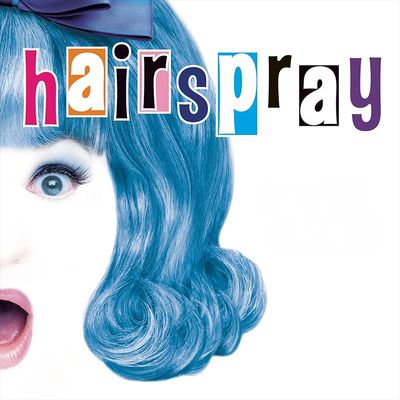
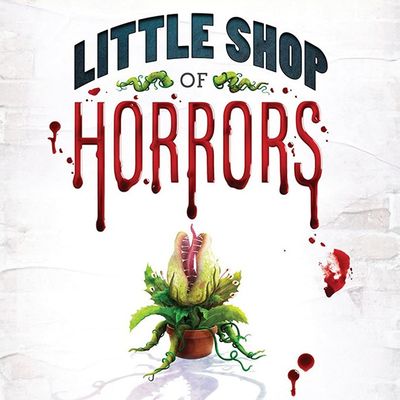
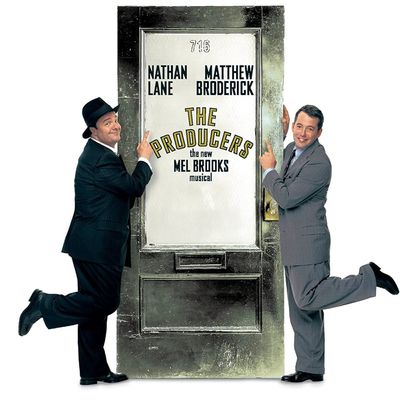
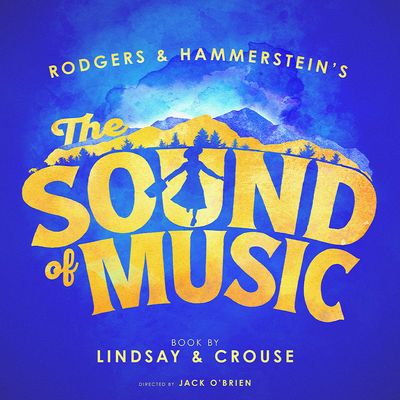
Tom Viertel has produced a wide range of plays and musicals on and off Broadway, in London and on tour for over 30 years, including Hairspray, The Producers, A Little Night Music, The Encounter, Young Frankenstein, Little Shop of Horrors, The Weir, The Sound of Music, Smokey Joe’s Café, Driving Miss Daisy, and many others... Read More
From the show: The Producer's Perspective Podcast with Ken Davenport
Featured Shows

About
Tom Viertel has produced a wide range of plays and musicals on and off Broadway, in London and on tour for over 30 years, including Hairspray, The Producers, A Little Night Music, The Encounter, Young Frankenstein, Little Shop of Horrors, The Weir, The Sound of Music, Smokey Joe’s Café, Driving Miss Daisy, and many others. He is a member of the Board of Governors, Government Relations, and Tony Management Committees of The Broadway League and a Trustee of the Equity-League Pension Funds. With his partners, Richard Frankel, Steve Baruch, and Marc Routh, he owns Feinstein’s/54 Below, Broadway’s Supper Club. He is the Executive Director of the Commercial Theater Institute, which provides a comprehensive curriculum in producing for Broadway.
We talked about how producing has changed over the years as well as:
- What’s wrong with Off Broadway today? And can it be fixed?
- How to learn from the shows that don’t work.
- The most important skill a Broadway Producer must have.
- The advantages of taking small investors and how he built his database.
- What real estate and Broadway producing have in common.
This week's episode is brought to you by Broadway Roulette, the fun and easy way to see a Broadway show. You pick the day and eliminate up to 6 shows you've already seen or don't want to see. Then they send you to a surprise show that fits your criteria. Check it out at: www.broadwayroulette.com.
Keep up with me: @KenDavenportBway
Transcript
This transcript was automatically generated and might contain errors.
[0:00] Ken Davenport: I wanna be a producer with a hit show on Broadway.
[0:07] Ken Davenport: You're listening to the Producers Perspective Podcast with your host, Tony Award winner, Ken Davenport.
[0:13] Ken Davenport: Hey everybody, Ken Davenport here. In just a few moments, we're going to get to the podcast with Broadway superpower producer Tom Viertel, who also is the head of the Commercial Theater Institute. For all you producers out there, make sure you tune in. He's going to give you some great tips on how to get started today.
[0:29] Ken Davenport: But before we do that, a reminder that this week's podcast is brought to you by Broadway Roulette. Broadway Roulette is the fun and easy way to see a Broadway show or many Broadway shows for one low flat price. So here's how it works: it's gamification, as we say in the marketing world, a little buzzword there. You pick the day, the number of tickets, you eliminate up to six shows you've already seen or don't want to see. Broadway Roulette will spin the wheel, like on Wheel of Fortune, and send you to a surprise Broadway show. Every ticket beats the list price, guaranteeing that you get a great deal without the usual lines or hassles or hunting for discounts. And you can spin again and again and never see the same show twice. So visit BroadwayRoulette.com and book your spin today. And now on with the podcast.
[1:49] Ken Davenport: Um, but with partners Richard Frankel and Steve Baruch, and we've had Richard on. We haven't had Steve on, so that's must be next. Uh, but with those two guys, he's produced the Producers, Hairspray, Angels in America, Smoky Joe's, both the original and the revival, and we want to talk about that, and so many others. Also very active in the Broadway League, our trade association, uh, including time on the government relations committee, uh, and with me on the professional development committee. Uh, he's the exec director of the Commercial Theater Institute, the training ground for future producers. So let's start there, if you will. You're the executive director of this uh training ground. But how did you get your training? Where did it start for you?
[2:33] Tom Viertel: Well, I sort of fell into producing in middle age. Um, at the time when I started producing, uh, I was uh working full-time uh in my family's real estate business. Um, Broadway was a vibrant place to produce commercially. That's changed a lot over the years. Uh, and I was able to uh join with Richard and Steve uh to produce small shows off Broadway, many of which were pretty successful, uh, and to um be able to turn those into tours and uh London productions in some instances. So we were able to get a kind of on-the-job training experience that uh didn't require CTI. You were making your own mistakes and picking yourself up on, you know, and getting back on the horse. Uh, so we were able to learn quite a lot about producing uh in that context.
And for the first eight years of our producing experience, we really didn't do much of anything besides off Broadway, other than the stuff that flowed from that. It was a wonderful time. It was a time when small, in some cases, kind of experimental productions could actually flourish. And kind of standard fare could work off Broadway in many ways as well as it did on Broadway.
[4:05] Ken Davenport: So I usually like to butter up my guests at the beginning of these podcasts, but since you brought up uh we learn from our mistakes. Is there any big mistake that you made early on that you remember learning from? Like, oh, I'm never going to do that again that you still think about today?
[4:21] Tom Viertel: Oh, any number of things. I actually just uh we were in the process of publishing a little blog that's a story that uh, you know, and and let me start by saying you it's really hard to generalize about anything in this business. You know, the chances that things will come up in exactly the same context are uh uh small. And um, you know, mistakes of 30 years ago aren't necessarily mistakes today, but I'll tell you the story. We produced the second show we produced was a show called Sills and Company, and it was an entirely improvised evening. From start to finish, everything was improvised on the spot that night, so nobody saw the same production twice. Um, we opened a very mixed reviews. When you do things that are made up every night, not everything works.
Uh, and so we had a lot of good reviews, a lot of not so good reviews, a lot of reviews in the middle. Uh we were at the Lamb's Club, a 300 seat house. Uh doesn't exist anymore. Um, and night after night, we were getting about 150 people, half houses. And after, and because it was a show that had a lot of flexibility in that you could have 10 people or you could have five people, it didn't much matter how many people were performing on a given night. And the show itself was pretty flexible. We thought, you know, if we could move to a house that had 150 seats, we'd be full every night. So we did. We were able to reduce the costs because the 150-seat house was less expensive than the 300-seat house.
And every night 75 people showed up. It was a lesson that I've kept in my own heart forever, which is that moving theaters, unless you absolutely have to, doesn't solve problems. It's an odd thing to learn. From time to time we see shows changing houses in the opposite direction, with Avenue Q and Jersey Boys tagging on to the tail ends of their Broadway runs, smaller houses that did well. I don't know that that's a lesson for the ages, but it was certainly a lesson for the time, and I think for a long time afterwards. But as I say, you know, this is a business where everything that happens is worth thinking about. But if you think it's going to happen and play out exactly the same way every time you do it, or uh, you know, anybody does it, uh, that's not really that's not really as likely to happen. It's you know, it's a crazy business.
[7:06] Ken Davenport: Well, let's talk about something uh more positive then. Can you think of something that you did that worked out even better than you thought it would?
[7:16] Tom Viertel: Well, for sure, one of the things that took me by surprise was how successful a tour could be of a project that was a small off-Broadway project. Uh, and and uh we did a number of those that worked out really well, and in our naivete, in some cases we did tours that made no sense at all in terms of this business and still managed to work out. I'll never forget that when we uh our very first show was a magic and comedy act, a unique one, uh Penn and Teller, who have carved out an extensive career in Las Vegas now, and who we present from time to time when we can convince them to come back to New York. Um, but we had just produced them in a tiny off-Broadway house, 200 seat, 250 seat off-Broadway house, uh, and and had had an immense success.
It was our first show, uh, and you couldn't get a ticket. It was really astonishing. So we decided to take them out on tour. And we booked six-week engagements in each of six or eight cities. Now, when you do a tour in today's world, and I suspect even in that world many years ago, you would book only weeks of subscription audiences, and you would, you know, take what amount of kind of sure things and move on to the next city. But we didn't know any of that. So we booked six weeks in each of these cities, and to today that would be considered suicidal because you'd have to sell all these single tickets, and we made out really well. So it's one of those things where you blunder in and it vastly exceeds your uh your um uh uh you know expectations or what your expectations should have been. We had no expectations at the time because we literally didn't know what we were doing.
[9:14] Tom Viertel: Um we had another one of those. This was uh this wasn't as odd, um, but we were one of the producing teams on Driving Miss Daisy, which was a show that uh played only off Broadway for a little over three years. Uh and we were constantly it was very successful, and we were constantly tempted to move to Broadway, and we constantly resisted it. Uh but we did put together a tour of it, uh, and it was a star-driven tour. The star of it was Julie Harris, who was a five-time Tony Award winner and the great touring actress of her day. And the tour dwarfed the off-Broadway show in terms of its economic success. So the idea that you could do these little relatively unrisky shows uh off Broadway and then move on to circumstances like tours uh or even playing the West End uh and be successful at those in ways that were out of all proportion to the money you'd originally risked.
Uh, that came as quite a surprise to me and a welcome one. And still, I think that's something that's a surprise to a lot of people is that even today on Broadway there can be a higher profit margin on tours, etc., and actually less risk than even the Broadway production.
[10:31] Ken Davenport: I would imagine that producers obviously was very successful for you here, but those tours actually, I'm sure did unbelievably well.
[10:39] Tom Viertel: They did really well. Uh and and um in retrospect, I don't think we would have produced two of them. Uh, but that that's sort of an esoteric point. Uh, but but I agree with you now. The grosses uh on tour can be higher than grosses you can achieve on Broadway. But I would point that uh out. That's uh that's a relatively recent phenomenon. That's really a function of Hamilton's success and the amount of attention uh that it's drawn to subscription uh uh solicitations in each city. I mean, you know, subscriptions have grown dramatically in a way that hadn't happened in many, many years. Um, and that's you know, provided shows that you know, tour in Hamilton's wake with tremendously uh attractive um uh uh uh economics.
Um but if you'd look back five, seven years ago, I don't think you would have been able to make the that claim that grosses on the road would be higher than Broadway. I think Broadway was always the holy grail, and touring was a nice, relatively safe thing to do, in which you can make some money, but it was never going to be Broadway kind of money if you had a big success on Broadway. That may not be true anymore, but we'll see how long that lasts too. The touring world is a very cyclical uh and it's been through good times and bad times.
[12:04] Ken Davenport: You mentioned that you got your start or you were in the real estate world before you started producing. You're not the only person I know that was in real estate before producing or still is. What about being a real estate person makes you a good Broadway producer?
[12:19] Tom Viertel: Well, I I don't necessarily think being in real estate makes you a great Broadway producer. I think I've always felt that picking the right project is what makes you a great Broadway producer. My basic attitude, even though I run CTI and you know, we try to teach producing, is that if you pick the right project, you can afford to make a meaningful number of mistakes in the producing process and still come out well. And if you pick the wrong project, uh you can be a cocky genius at producing, and it probably won't ultimately change the outcome. So I don't think I don't think they go hand in hand, but I do think that there's a familiarity with the process on a sort of deep level of creating a piece of uh real estate that you can rent or sell to creating a Broadway show. Because first of all, they both take a long period of time.
[13:18] Tom Viertel: You know, from the time you buy a piece of land, I'm assuming that you know, talking about what we did, which was to buy property, buy raw property and build buildings and then rent them and own them.
[13:30] Tom Viertel: Um from the time you buy a piece of land and you go through the zoning process and you go through the permitting process and you go through the construction process and then the rental process, you're looking at, you know, anywhere from seven to ten years, and we're seeing that kind of a time frame for Broadway projects as well.
[13:49] Tom Viertel: So certainly understanding that this doesn't happen overnight, that's part of the similarity.
[13:55] Tom Viertel: The other thing, though, and I think the more important thing is that when you're doing a real estate project, what you're doing is putting together a team of people or several teams of people, some of them creative architects, and in some cases even engineers, uh, and marketing people, uh, some of them technicians, people who know how to build things, and kind of marrying them all into a team that understands what they're supposed to do, what their particular job is, how they work with others on the team, who the boss is, who's making the final decisions, those processes are very similar.
[14:36] Tom Viertel: And overriding even that is that each time you do one of these things, you're starting from scratch. Whether it's an office building that's built on a piece of land that you bought, or whether it's a musical that's being made out of a movie, you're starting from scratch.
[14:53] Tom Viertel: The fact that your last project was successful or failure may have an effect on how easy it is to do the next project, but it won't have an effect on the outcome of the next project.
[15:05] Tom Viertel: And so each one of these is start from scratch, build it, hope they'll come.
[15:40] Ken Davenport: You mentioned how important it is to be good, quote unquote, at picking projects. How do you pick a project?
[15:46] Tom Viertel: I think almost every producer picks projects based on their gut. I think trying to outguess the audience is uh I would find it impossible. Uh, and I think that has limitations. Uh you know, producing based on your gut. And I I but I don't know how else to do it. If I fall in love with a project and want to produce it, that's kind of the end for me. Uh for better or worse. Some projects that I fall in love with don't draw audiences, other projects do, and I think that's true of every producer.
[16:17] Tom Viertel: I mean, even the most successful producers have had flops. Uh and it's a it's a product of you know what draws them in, what makes them want to put that in front of the public. And I think there's good reason to do it that way, because you know, apart from anything else, you're gonna have to sit through this show, you know, many, many times, anywhere from you know, 20 times to a hundred times. Uh, and if you don't like it, if you're trying to do it because you think others will like it, that process is both unbelievably painful and I think limits what you can contribute to it.
[16:56] Tom Viertel: If I'm in love with something and I see that something is is standing in the way of making it all it can be, I can speak with some confidence to my creative team. If I have no idea why I'm producing it other than that I think it's a hot idea for an audience, whatever I say to the creative team might or might not help, but it would be just dumb luck if it did, because my own affinity for the project doesn't bring me to a point of being able to say things that would actually make it better for the audience that I'm trying to outguess might make it better for me, but whether it'll make it better for anyone else is you know, anyone's guess.
[17:32] Tom Viertel: And we've had projects like that, and it's it's a frustration. When projects that you're super passionate about don't draw audiences like you hope or expect, how do you and the show closes, which unfortunately they all do, how do you pick yourself up from that? Do you do you go through a mourning process?
[17:48] Tom Viertel: You know, we do this, we do we have a session at CTI at Commercial Theater Institute that addresses this issue specifically. It's called the flop house. And each year we bring together uh producers who've had a good deal of success uh to talk about the times when it didn't work. I think it really depends on a lot of different things how you pick yourself up. I mean, we've had you know many projects that haven't fully worked. But if you felt that the decision you made to produce it initially was a good decision, that you still believe in the project when it finally closes, if it's had some degree of acceptance on Broadway, if people are running up to you and saying, look, this was just great.
[18:39] Tom Viertel: Um, you can look at the things that made it fail or that you think made it fail, and analyze that and learn from it. Uh, and some of those lessons can be painful, but those are things that I've always found pretty easy to pick myself up from. When you've made a guess and you realize that your guess is really wrong-headed, uh, and things start to go wrong and it's painful and it takes forever, that's hard to pick yourself up from.
[19:07] Tom Viertel: We had a mega flop a few years ago, and I think it took us a couple of years to pick ourselves up from it psychologically, and say, let's take these kinds of risks again. Um so it all depends, I think, for me, on how I feel about the way it flopped, and um uh sort of what if anything is to be learned and whether the lessons that you learn are too painful. That can be a problem, too.
[19:37] Tom Viertel: Um, but you know, I've I've always come at this business with the famous Sam Goldwyn expression clearly in my head, which is if they don't want to come, you can't stop them. So it it's it's something that can sustain you through you know trying 15 different marketing things and having none of them work, you know. People make up their minds about projects pretty early on, and uh it's very hard to change their minds, it really is.
[20:08] Tom Viertel: Um you can move the needle with star casting and you know, occasional good publicity, uh but once people have once the people who go to the theater have sort of figured out what they think of your show, I I've always found it almost impossible to make it change.
[20:28] Tom Viertel: So the question is, how did they come to thinking about what they how how do they come to thinking what they think? And is that your fault? Or is it just built into the material? And if it's just built into the material, are you glad you produce the material anyway?
[20:47] Ken Davenport: How has producing changed today from when you started? How's it different?
[20:52] Tom Viertel: How much time have you got? Um I expect your answer is gonna be a good one, so we'll take it much time. I think it's changed in a lot of different ways. Uh and and and in different categories, so that for example, um, with respect to plays, I think we've become ever more dependent on star casting in a way that's a little discouraging. I think it's really hard to put on a play on Broadway uh and make it work uh without a name to attract and now that may be less true of revivals but you know in in a new play I think it it's it's it's rare to have a new play come along and actually financially succeed without star casting that wasn't always the case and uh it's it's it's discouraging I mean because to some degree you're sitting there thinking is my star big enough and if that's the sort of two dimensional decision making you're making that's that's not my idea of the fun of producing at all.
[22:03] Tom Viertel: Th there are other changes with plays but let's stick with that the other big thing that's happened with plays in particular is the disappearance of off Broadway. I mean I can't overstate how important it was to our careers and how important it was to the health of theater to have commercially viable projects going off Broadway as well as on Broadway.
[22:25] Tom Viertel: Now they've always been cyclical shifts I mean when we were producing off Broadway people would come up to us and say you know ten years ago this would have been on Broadway and after we stopped producing on Broadway and then with the occasional smaller project on Broadway people would come up to us and you know you know ten years ago, this would have been off Broadway.
[22:47] Tom Viertel: So there is a cycle to it, but I don't think the cycle can be broken anymore. Apart from anything else, a lot of the off-Broadway theaters have disappeared. They're not theaters anymore.
[22:56] Tom Viertel: So there's almost no way to resurrect it. And there are structural issues that no one knows how to overcome off Broadway, particularly with respect to advertising budgets that I think just make it a hopeless case. And not having it there, I think puts a certain number of projects, many of them plays in an awkward position when you want to do a commercial production of them because they really don't belong on Broadway. They're not big enough to hold the Broadway stage.
[23:27] Tom Viertel: And they just don't get produced as a result, though they get produced off Broadway and they fail. So that can be very frustrating. On the musical side, I think the biggest changes have been technological, both in terms of the way we create scenery and to some degree costumes, the kind of fun experience of going backstage and Phantom of the Opera the other night and seeing the costumes.
[23:55] Tom Viertel: And you know, they are a throwback to a technique that's virtually disappeared. They are so elaborate and so unbelievably heavy as a result. I mean, people they're carrying 40 and 50 pound costumes around. Um sets in particular have changed radically.
[24:12] Tom Viertel: I mean, virtually everything that appears on Broadway now is rendered uh through uh projections. Uh, I think if you needed to paint a piece of scenery with anything more elaborate than you know, paint, uh, you know, with just a flat paint, uh, it would be hard to find scenic painters who could do the job when I first came into the business. Scenic painters were a whole world of people who could render these unbelievable sets, but their jobs have disappeared.
[24:39] Tom Viertel: The more meaningful part of the technological changes have taken place in terms of ticketing, uh, and particularly in the last three or four years where we've uh gotten the ability to create many, many more zones in a theater than we used to be able to create and to price them uh with small differences as well as large differences to try to attract audiences of all different sorts and with all different economic uh circumstances.
[25:13] Tom Viertel: And the ability to change the pricing as you go along, depending on your success or failure, uh has uh has become many times greater than it used to be. There are whole professions now of people who work in what's called uh dynamic ticketing, uh, who spend time with company management and theater owners analyzing buying habits and uh the kinds of uh incentives that can work for each show, and uh providing roadmaps in effect of how to maximize uh uh income.
[25:55] Tom Viertel: Um, I think that's been a huge help in terms of stabilizing quite a number of shows and magnifying the success of quite a number of other shows. Um, interestingly, I don't think every show on Broadway is yet using those techniques to the fullest. I think there's still room for growth, and of course, the data keeps growing.
[26:16] Tom Viertel: I mean, there's just more data all the time that you can utilize to make sound decisions. I think there's a there's a perception out there that that ticket prices are just increasing, and to some degree they are increasing, of course. Um, but the but the complexity of what these folks do is far greater than that.
[26:35] Tom Viertel: They're adjusting prices both up and down to try to take advantage of buying habits that they see emerging on individual shows, and every show is different. So I think that's been an immense change. Um, there are other changes that you could talk about. I think the change in the acting pool is really striking and interesting. Uh, we're seeing many more people of color in the acting pool for Broadway now, and it's being reflected on stages all over the place. Uh, I think we're seeing more highly trained people coming into our acting pool, people because, you know, maybe not when I started, but not that long before it, there was the Yale Drama School, and then there were a few other places you could go.
And now there are incredible programs all over the country that are graduating actors who are remarkably not only gifted but well trained. So your choices in casting, I think, have become greater. Um, and the last change I'll mention, because I literally could go on for hours about this, is the considerable change in the relationship between the not-for-profit sector and the commercial theater. Um, you know, the not-for-profit sector for the most part is relatively young. It's about 50 years old, which, you know, it can seem old to young people, but you know, anything that falls within my lifetime is young. Um, so, you know, virtually all the not-for-profit theaters that were in that first round of theaters started in the mid-60s. And they were started in a lot of cases by people who really were rebelling against Broadway.
Before that, there was just Broadway. I mean, there were a handful of other theaters, the Cleveland Playhouse, the Pasadena Playhouse, but we see that, and a few other places. But the kind of nationwide theater that we have, it didn't exist before then. So Broadway was it, Broadway and Broadway touring, touring of shows that had been on Broadway. So, whatever the Broadway producing community's taste was, that's what people were being given as theater. And there were a lot of theater makers out there who were very angry about that, who wanted to do work that was far more experimental, far more cutting edge, and they had no place to do it. So when the regional theater system began to be built during the Johnson administration, a lot of these people got a lot of these angry folk got jobs at the very first round of regional theaters.
Uh, somebody had the bright idea of bringing together the commercial producers and the heads of these regional theaters for a meeting. And I gather, long before I was involved, it was a food fight. I mean, they were really furious with each other and screaming and virtually coming to blows and stuff like that. And 25 years later, Rocco Landisman, who was running the Jamsen Theaters at the time, had the bright idea of doing it again. And so this was the one that I went to. And it was, you know, a business meeting. It was about, you know, we could do a project at your theater and then bring it to Broadway. And it was, and even that, which was in 1997, was the beginnings of a relationship that's only grown over the years, where, you know, people consider certain good commercial producers in some cases consider certain theaters their second home.
Uh, and the kind of working relationship that they have with the artistic director of that theater satisfies both of them, and they would prefer that. So there's a lot more depth to the relationships than just we can bring a show to your theater and then bring it in. Um, and I think it will continue to grow. Not that regional theaters have given up producing challenging pieces. I think they continue to do that in large numbers. And not every theater can take advantage of this relationship. It needs to have a certain amount of infrastructure and a certain amount of audience size, and needs to have the runs long enough so a commercial producer can utilize the time. But those relationships have begun to take over.
You don't see a whole lot of commercial out-of-town productions where the commercial producer is taking the risk of whether the box office will work or not, because they can go to regional theaters, have a long enough run to, you know, sort of make the most of what they're trying to accomplish, and not risk box office because the regional theaters take that risk. And I don't know how it'll evolve beyond where it is now, but it seems to have evolved pretty steadily on both a kind of emotional level and also on a financial level, all along, and I wouldn't be surprised if that continues to happen. So that's changed the way people think about their projects. People go about creating their projects. Um, it's another big change.
[31:53] Ken Davenport: How do you raise money for your projects and how do you teach people to do it at CTI? What's your strategy?
[32:00] Tom Viertel: Well, our strategy for raising money begins with a process we began when we produced our first show without realizing that that's what we were doing. Um, you know, the opportunity was there to produce Penn and Teller in a 250-seat house, and it was going to cost $175,000 to do that. So we were in the real estate business. We knew a lot of people who made a lot of money. And so we called up a bunch of friends and said, put up 17.5 and, you know, we'll go do a show. And it was a hobby, you know, what we were doing. Um, and that's what we did. So we began by getting what amounted to small investors. And as we went on doing it that way, you know, kind of calling our friends and calling our friends' friends and inviting them in, we began to build a quite sizable base of small investors, people who invest at less than a $25,000 level, which is sort of the minimum that most, you know, Broadway shows, not your show, but other shows, tend to have.
And by now we've developed a list of these folks that approaches a thousand people, and that allows us to raise meaningful amounts of money. I mean, from the $250,000 we put into a recent show that we didn't personally produce, to well over $2 million that we put into shows in some cases that we did produce, that comes from a base of people who really don't think of themselves as regular theater investors, probably aren't investing with anyone else, and gives us a kind of an edge toward getting to capitalization. But the fact is that when you're doing a new musical for, you know, $15 million now, we don't have the capacity to raise that kind of money from small investors. So we go out, as everybody else does, to people who either raise money or contribute money at much higher levels and cobble together the rest of the funds.
Um, I've always thought it was a good idea to take on another, if not literally equal, close to equal producing partner, or sometimes more than one, to get to these very high capitalizations. Um, but you know, fundamentally we start with our small investors and move on to people who are regular investors in theater. We teach and we teach that theory. We well, we teach the theory of working together to CTI. Um, we explain what we do. Uh, I there isn't, as far as I know, anybody else who actually does it systematically, so I don't teach it as anything more than an option. This doesn't seem to be a technique. Um, and I think, you know, the things we do teach are how to ask for money, where to find investors, and how to steward your relationship with investors.
I think stewardship is a very important word. It really is used more in the not-for-profit sector, but the notion that you convince somebody to write a check and then don't pay much attention to them is a really bad idea. If you want to grow in this business, one of the things you need to do is to keep investors engaged and as happy as you can make them. You will, as I said earlier, have flops. And some of these people will be invested in them and unhappy, disappointed. You need to have a big enough relationship with them, a personal relationship with them to be able to either overcome that or at least overcome it in some of the instances. People tend to invest because of you, not because of the project.
Not only because it'll get you past some bad times, but also because it gives you a sturdy underpinning to why anybody would invest with you because they know you, because they believe in you, they think you're honest, they think you've got taste, they think you've got expertise. And we teach all of those things in CTI because I think anybody who goes out thinking that they don't need those things is going to be very short-lived in this business.
[37:00] Ken Davenport: I love your approach. It's such a business process. It's really how you get anything done. And I love also this idea. You know, you have a thousand. I find that it's about a numbers game. The more leads you have, the more sales you will make, right?
[37:16] Tom Viertel: A point David Mamet made very clearly in Glengarry Glen Ross.
[37:20] Ken Davenport: Go ahead, Gary.
[37:21] Tom Viertel: So you're on the government relations committee for the Broadway League. How are we doing in informing our government that the arts in Broadway specifically is important to the health of this country?
[37:35] Tom Viertel: I think in large measure we're doing okay. We have some real problems that we need to overcome. Uh, I chaired the government relations committee for seven years, and then stepped down and Tom Curtis, he was another very wonderful producer, stepped into that role. Um, and I think the league has done a great job in terms of government relations. Uh, the staffer, Tom Perugia, is especially energetic and talented and smart, uh, and I think makes a big difference. I think it's made a big difference that we're in front of members of Congress pretty regularly now, at least twice a year, and sometimes more than that. Uh, and when we first went down, we hadn't really been there in any numbers for a long, long time, I guess.
And we held a league biennial conference where many members of the league come together in Washington, specifically so we could get everybody to fan out and talk to their congressmen. And Mark Warner, the senator from Virginia, came to address all of us. And his opening words were, where have you been? You know, and that was really a key that you gotta be down there, you've got to be talking to people. You have to make whatever kind of relationship you can, not only with the Congresspeople, but also with their staffs. Everybody who's in Congress has experts on their staff in various areas. And depending on what area you want to talk about, you might wind up talking to a different staffer in any given office.
But you need to make those relationships. And over the what now almost 10 years of really doing this steadily, I think we've done that with a lot of people. We have real supporters down there. I think when I talk about the big picture, it's quite interesting. Almost everybody down there loves Broadway. They really do, Republicans and Democrats. Republicans, I think, like it because it's a business. And although it's a high-risk business, it's an interesting business, and it's a business. They believe in promoting business. Um, for Democrats, it's not only a business, but it's also the arts, and they believe that the arts will make us culturally richer and smarter, and it's a civilizing thing.
[39:58] Tom Viertel: Not that Republicans in some cases don't believe that, but I don't think it's as much of a priority for them. Um so we've never had a hostile reception that I'm aware of in any congressional office. And um that's been heartening. People may not agree with our positions, or they may choose not to opine about our positions, but I don't know that I've ever stepped into an office where people go, you know what, I just wish this didn't exist. And then, you know, you run into people, Congresspeople who have children or grandchildren who want to be actors, and so they have a personal relationship to Broadway that surprised me in many cases. Orren Hatch, who's a very conservative senator from Utah, writes music.
And he's proud to tell you that he does. And that's his way of being interested in Broadway. So it's quite remarkable, I think, on this broad scale. Then we've had, and we've had success. We've gotten ourselves into a position where we can now write off our initial costs in the first year of our operations, which eliminates something called phantom income, where people are receiving tax forms that show them having an income when they haven't actually gotten their money back yet. That very irritating to investors and actually turns some investors off so much that they don't best. And we put a we we made we eliminated that took a long, long time to do it, but we did. Um we've had other successes as well, not only in the federal level, but in the state level, where we've where we've gotten a law passed that allows producers to get a tax rebate from New York State for beginning tours in upstate New York, and that has made the six or eight venues that are capable of beginning a tour, far more popular than they were.
They're all being used. Every slot that they have for that type of work is being taken. So we've had meaningful success. Uh we are struggling now with a fairly arcane, a couple of fairly arcane issues. One to do with the pension funds that the unions that work on Broadway maintain, many of which are in very good shape, but one is not, and that's among several pension funds that are having difficulty that aren't in the Broadway world. Uh and the Congress knows they have to solve this problem, but they don't agree at all about how to solve it. Uh so those talks have been ongoing without much progress. And the other was had to do with the implementation of the 20% tax break that companies, private companies, LLCs get or don't get so that they can stay competitive with each other and with the large public companies.
Uh, and we have not gotten the ruling that we want on that from the Treasury Department, so we're gonna have to go back to Congress and ask for a change in the law, and that'll probably take quite a while. It's a slow process, but a fun one. There's nothing more fun for me than walking in and meeting a congressperson or a senator. And I'm heartened by it, I have to say, I realize this isn't about theater, but you meet these people and they're not dumb and they're not mean. Their rhetoric comes off in ways frequently that's very alarming. But the actual people seem engaged and smart and willing to listen. Uh, and it gives me some hope for our government that I don't think I would otherwise have. I encourage everybody in the league to come and be part of this because it'll change your attitude toward government.
[44:00] Ken Davenport: Okay, putting on your CTI hat. You are a uh talking to, I don't know, maybe there are lots of people out there that want to be producers that aren't today. What's the first thing someone should do if they want to start producing?
[44:10] Tom Viertel: Well, uh, for my money, as I said, in the old days you could start producing off Broadway. Now, the main choice that you have is to raise some money for somebody else's show and become what's called a co-producer. And as a co-producer, you'll probably be invited into some aspects of the business side of the show. Uh some producers are more welcoming than others, and um what they're willing to talk to you about in meetings is pretty circumscribed. So you can learn a little something. Um, but nothing like what we were able to learn in our early days off Broadway. And that's why I think CTI has become so much more important because it's the only systematic way to learn about producing. Nothing will teach you like doing it for sure.
But this will give you a pretty comprehensive education in it. Uh, we generally ask people uh and encourage people to start uh with what's called uh three-day intensive. Takes place a Friday, Saturday, and Sunday. This year it's March 1st to 3rd, uh, right here in Midtown. And uh it covers virtually all the really important aspects of producing um uh over that three-day period, uh, and we have some fun with it as well. Uh and then I think, you know, we have a number of other courses, including a 14-week course that meets every Monday night for 14 weeks to go into many of those topics and some other topics uh in a more uh detailed way. The sessions are longer and there's a lot of time for QA.
And then we have a three-day session up at the Eugene O'Neill Theatre Center, which is something we should talk about for a minute. The O'Neill is a creative think tank, basically. It originates projects that haven't been produced before and gives them workshop periods of time. It's an open submissions process, so anybody can submit a script. And the CTI session takes place at the height of the O'Neill season when musicals and plays are being workshopped at the same time. And it's a session specifically devoted to creative producing, to the producer's creative input and to creating marketing campaigns that will sell the show because that's the other area where producers really can be creative or be part of the creative process.
And then we have a lot of one-off projects we're doing tomorrow. We're doing a pro one-day session on the vocabulary of producing. So we'll have people from a number of walks of the of the theater life from technical people to producers to general managers who will define terms that they use that might not be familiar to everybody in the community, so that when people are listening to discussions or arguments or negotiating a contract, they at least know what these terms that aren't in general use mean.
[47:14] Tom Viertel: One of the things that I do that we haven't talked about is that I'm the chair of the board at the O'Neill Center. The O'Neill Center is in Waterford, Connecticut, it's right next to New London. So it's pretty far up the line, and it's right on the coast. O'Neill is literally on the water, so it's gorgeous property. And it does a lot of different things. It's workshops, new plays, and musicals. We get about 1,500 play scripts and about 300 musical scripts each year. We choose eight plays and three musicals to workshop. Each one of these programs has its own artistic directors, so it's quite a lot of different sets of thinking that go into it. We have a school that operates year-round that is an intensive in theater for college-age kids.
They come from their own schools to us for either the fall term or the spring term, and we have a summer school as well. And they dive into theater and nothing else. They take no other kinds of courses, and they all have to do everything. They all have to write, they all have to direct, act, design. In the case of our musical theater program, they have to learn how to compose and choreograph. So there's a and obviously you can't teach somebody how to be a world-class choreographer in 14 weeks, but you can teach them what the elements of it are and what the things to understand about it that are most important are. So these programs have jump-started careers because they're so intense. In addition, we do a program in Puppetry, one of the largest in the country.
We do a program in Cabaret, and we do a program that's our critics Conference, uh, where which is run by Chris Jones, who's the uh chief critic in Chicago. Uh, and arts journalists come and write uh reviews at everything that's done, but never shown to anybody but that class, but uh it's it is the only arts journalism or conference of its kind in America. So the O'Neill's done a lot of different things. We have a program in Moscow. Um, so it does a lot of different things, but none of them involve producing whole shows with costumes and sets. They involve the launching, we call ourselves the launch pad of American theater, and a lot of great projects have come out of it, and a lot of great careers have come out of it.
Literally, from Merrill Street, who got a first-paying job there, and Michael Douglas, who got his, to um Emmanuel Miranda, who got his first chance to do uh a professional production at the Ail and Bobby Lopez and Kristen Lopez separately. Um so we we we feel like we serve the American theater community in a way that's unique. Uh, and we do it in a place that's really spectacular. I've been, it's quite a beautiful place.
[50:19] Ken Davenport: Okay, my last question, which is my genie question. I want you to imagine that the genie from Aladdin comes to visit you and grants you one wish. What's the one thing about Broadway in the theater industry that you'd like to change with this one wish? Something that drives you crazy, that gets you angry. Do you want this genie to wish away?
[50:41] Tom Viertel: I think the one wish I'd have to have in more theaters. I mean, this is it's a it's bottleneck doesn't begin to do it justice now. And you must have experienced this too. The number of projects, it's really been remarkable how we've come back from the 80s when the English were supplying us with all of our most important projects. Um we've over the period of time from then until now, we've gotten to a point where we have so many people who are good at creating these projects, uh, and have invested their lives in becoming so expert, both on the producing side and on the uh you know creative side, that we don't have enough theaters for them all. We've experienced in the last few years an immense upsurge in uh the success of shows on Broadway and the kinds of grosses that they're now doing.
So the real bottleneck is there aren't enough places to put them. And you know, theaters are expensive. You'd almost certainly have to build one in connection with a much larger building that you were that you were doing to make it economic sensitive. But it's just tragic that uh, you know, we don't have more theaters. So I there's a lot of stuff I'd be happy to wish for, but I think overriding everything is the ability to put our shows on, and that means more theaters.
[52:14] Ken Davenport: I'm right there with you. If a producer can't produce, they can't eat. So we need more buildings. Worse yet, you wind up producing right up to the point where you need a theater, and then you have to stop. Well, thank you for that. Thanks for joining us today. For those of you out there who don't know about CTI, go check it out. Uh just Google the Commercial Theater Institute or it's Commercial Theater Institute dot com. Check it out. I'm a huge fan of it. Uh, you'll see my name there uh somewhere as I sponsor it because I'm a big fan of the organization. And the three days is such a great way in if you're curious at all it's coming up that first weekend in March so go uh thanks again and we'll see you next time here I come.
© Broadway Podcast Network, All Rights Reserved