

Dominique Morisseau has authored over nine plays, including The Detroit Project (A 3-Play Cycle), which includes the following plays: Skeleton Crew, Paradise Blue, and Detroit '67. Additional plays include Pipeline, Sunset Baby, Blood at the Roo, and Follow Me To Nellie's... Read More
From the show: The Producer's Perspective Podcast with Ken Davenport
Guests
Featured Shows
About
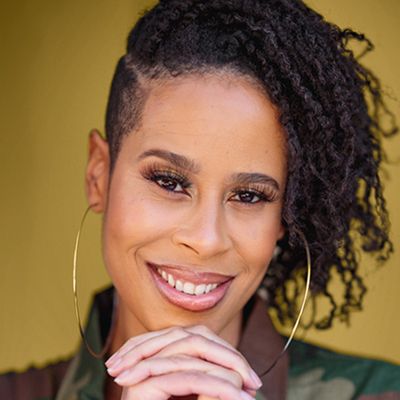
Dominique Morisseau has authored over nine plays, including The Detroit Project (A 3-Play Cycle), which includes the following plays: Skeleton Crew, Paradise Blue, and Detroit '67. Additional plays include Pipeline, Sunset Baby, Blood at the Roo, and Follow Me To Nellie's. She most recently served as co-producer on the Showtime series Shameless. She wrote the book for the jukebox musical Ain't Too Proud—The Life and Times of the Temptations. This marked Morisseau's Broadway debut, and she received a Tony Award for Best Book of a Musical nomination, the first Black woman to do so. She is a recipient of the MacArthur Foundation "Genius Grant" for 2018.
Dominique and I have been trying to have this podcast convo for a while now, and boy was it worth the wait. In a quick thirty minutes, we talked about:
- How getting a great quantity of her work out in the world as she was coming up helped her improve her skills and get noticed.
- Why not understanding the word “No” was an essential part of her becoming a writer in the first place.
- Why she’s cautiously optimistic about where we are right now and where we’re headed with diversity in the arts. . . and what still makes her nervous.
- She doesn’t read reviews. Ever. Listen why.
- How long she had to be an “emerging artist” and whether or not emerging = young.
This episode of The Producer’s Perspective Podcast is sponsored by Magnolia Bakery. Visit Magnolia Bakery for freshly-baked, classic American desserts, including cupcakes, banana pudding, cakes, cheesecakes, icebox bars, and cookies. For more information, visit magnoliabakery.com or follow them @magnoliabakery.
Keep up with me: @KenDavenportBway
Transcript
This transcript was automatically generated and might contain errors.
[0:00] Dominique Morisseau: I had just submitted it. I hadn't gotten my yes or anything, but I was moving as if I was already it was a done deal. You know? It never occurred to me that they would say no to me, and they didn't. But I just I I knew how passionate I was, and I was so committed, I didn't really know the word no. I didn't even conceive of it, and so it wasn't never a limitation for me.
[0:20] Ken Davenport: I wanna be your producer with a hit show on Broadway. You're listening to the Producers Perspective Podcast with your host, Tony Award winner, Ken Davenport.
[0:32] Ken Davenport: Hey everybody, we're gonna get to today's podcast in just a moment. And boy oh boy, my guest has some fantastic insights on why we need to get more young people to the theater on diversity, and also what she feels about audience response on Twitter specifically. So check that out.
[0:48] Ken Davenport: But first I want to thank today's sponsor. And by the way, if you are hungry, you are in trouble right now. And also if you're on a sugar-free diet or trying to get on one, you're in bigger trouble. Because today's guest is sponsored by that sweet, sweet destination, Magnolia Bakery.
[1:08] Ken Davenport: You can visit the Magnolia Bakery for freshly baked classic American desserts, including those incredible cupcakes, banana pudding, cakes, cheesecakes, icebox bars, and cookies. Based in New York, but now has locations in Boston, Washington, DC, LA, and Chicago, it even overseas.
[1:25] Ken Davenport: By the way, I talk about the Magnolia Bakery all the time as one of those great stories. I even relate it to Off Broadway a little bit because I used to think that Off Broadway was like the Magnolia Bakery of the theater world when Magnolia Bakery was just downtown. It was like hidden, it was this secret spot, and people used to line up around the blocks for it, and they still are now that it's a big, big franchise.
[1:49] Ken Davenport: Their most popular dessert besides the cupcakes is that banana pudding. They offer a classic flavor as well as more than a dozen specialty flavors on a rotating basis, including chocolate hazelnut, yum, Java chip, and salted caramel. So go get a cupcake today. Visit MagnoliaBakery.com, follow them at Magnolia Bakery for some sweet, sweet photos of those sweet, sweet treats. And thank them for supporting this podcast and also just supporting the theater in general. They're great friends there with great desserts. Go get one.
[2:20] Ken Davenport: And now on with the podcast. And also very excited for today's guest, who's been very hard to get because she is one of the most in demand writers today. Super busy. I know that for a fact because I just got off the phone with her agent just a few moments ago inquiring about her availability for a project, and he said, Ken, she's super busy right now. Please welcome to the podcast playwright, book writer, poet, actress Dominique Morisseau.
[2:57] Ken Davenport: Great, thank you. So Dominique is the author of a whole bunch of plays, three of which are part of a cycle known as the Detroit Project, really what she burst on the scene with. She's had work performed at the public, Atlantic Signature, Williamstown Sundance, The O'Neill Conference, all over the country. She is the book writer of that brand spanking new musical, Ain't Too Proud, The Temptations musical, which just opened to great reviews a few weeks ago and doing very, very good business if you follow those grosses.
[3:25] Ken Davenport: She's been a producer on a Showtime series, Shameless. She's won a ton of prizes and was named Variety's Women of Impact for 2017, 18. And she also was named the MacArthur Foundation Genius just last year. So, Dominique, how did you get started? I read somewhere that you were a poet first. Is that true?
[3:48] Dominique Morisseau: That is true. I did start off as a poet. I've been a writer since I was a kid. You know, I've written short stories and I was obsessed with short stories and like poems and things like that when I was a kid. But when I was in college, that's when I started to use I was studying theater and I started to really feel the need to tell my story and to give some voice to myself because I wasn't doing enough work and we weren't studying work of color in my school, so I felt like I needed to write my own way. And I used poetry inspired by Into Taki Shan Gay for colored girls. You know, I used poetry as my entry point and for writing plays.
[4:28] Ken Davenport: How old were you at this point?
[4:30] Dominique Morisseau: When I was in college, I was 19, 20 years old.
[4:33] Ken Davenport: So that's some pretty heavy duty lifting there to realize that stories about you and your community were not being told and that you were gonna be the one to start doing this. Where did you get that kind of courage?
[4:48] Dominique Morisseau: You know, I think it's I was an actor. So to me, I'm and I'm always been a very problem solving, like a solution oriented kind of person. So when I look around and I'm an actor and I'm not acting, and I came to school to act and to do the kind of work that I w you know was interested in doing and that wasn't being produced in my school. It was a no-brainer to me that I better I need to write it. You know, I need to I'm a writer. I want to get on stage and do my own thing. And when I discovered that we had a student run theater that we could submit work to, it was clear. Like, oh, well then I'm gonna do that. I'm gonna do my own thing. I don't think I was conscious of filling any larger gap than the gap I was personally filling. That revelation didn't come to me until after the work was up on its feet. And I saw what it meant to everyone else. And then I said, Oh, oh this is bigger than me.
[5:39] Ken Davenport: Huh. It's like you were hungry so you decided to cook yourself a meal instead of waiting for someone else to bring it to you.
[5:46] Dominique Morisseau: That's right, that's right. And then you realize oh my God, a lot of people are hungry and I can cook. You know oh I better I better make some meal.
[5:55] Ken Davenport: Well that's where that's what I wanted to ask is the oh I can cook part of it. When did you realize that you actually were good at this? You just started to write and what was the feedback? How did that happen and what gave you the courage to keep going?
[6:11] Dominique Morisseau: You know, that's so interesting. I mean I don't even ever think I cared who thought I was good. You know, I don't I think that that caring didn't come until much later in like when I got older and I sometimes have to you know go back to the girl that didn't care. Um because I you can forget her real easily in a in an industry that things focused on opinion, you know. But there was a point in my life and that that was a point in my life where I never even the idea that it wasn't good just never even crossed my mind. Like I just I felt like I'm a poet. I've always been good at writing since I was you know really a youth like since I was in like second grade my writing has always been applauded by my teachers and so I I I guess I just felt the courage because I never my mother from my family members, I've always gotten encouragement as a writer and as a performer frankly, um, that I have some sort of special connections to the written word.
And so when I when it came time to say, Oh, you do it yourself, I honestly never thought it was I remember this happened actually one of 'cause I wrote the play for myself and two of the other African American girls in my department at the time. And I'm still, you know, in contact with those women. But I remember one of the women at the time who didn't end up continuing with the show, uh, because she just wasn't we just weren't gelling. But I remember this is what made me know, gave me a hint that we may not gel with this show. I was so excited. I had not even gotten my play, you know, we had to submit it to the basement arts program. We had to, you know, submit a proposal and then get the yes and then move forward.
I had just submitted it. I hadn't gotten my yes or anything, but I was moving as if I was already d it was a done deal, you know. And I was passing out the script to the girls I wanted to be in it and I was excited to talk to them about their roles. And I remember one of the girls said to me, Well, you know, they do say no sometimes. And I just looked at her like, How dare she? You know, like why would she ever do that? Why would you rain on my parade? It never occurred to me that they would say no to me, and they didn't. But I just I I knew how passionate I was and I was so committed, I didn't really know the word no. I didn't even conceive of it, and so it was never a limitation for me. And and when I got older, it obviously, you know, you learn to start to doubt yourself. I didn't out of I didn't jump into this in self doubt at all.
[8:29] Dominique Morisseau: Yeah, I and I wanted to we're gonna jump ahead a little bit because I want to talk to obviously you had this you have this big commercial behemoth of a musical on Broadway, which is you know the biggest and brightest spotlight. How was it dealing with all the scrutiny of that as opposed to some of your earlier works?
[8:48] Dominique Morisseau: Well, between Broadway and Michigan a lot's happened. There's a lot of story in there. But I, in my work, I mean, I had my first play produced in New York in 2013. So from 2013 to 2019, that's only six years. But for the length of time that I was a New Yorker and an artist living professionally in New York, that was from 2001 to 2019. That's almost twenty years. And so for me, I've always, from the moment I stepped foot in New York, I was always a playwright and an actor and a poet. And I did many, I was also a dancer. I did many things. My first show in New York was dancing. So I've started theater companies, I've written one-woman shows, I've gotten up on stage and bombed, forgotten lines, you know.
I've just gone, I've built companies and seen them end with friends. I mean, I've done so many things. I've been a part of so many festivals, theater festivals where I've had ten-minute plays and one acts, and you know, and so I feel that between then to when my first full play got produced in New York City in 2013, I learned the rigmarole of what it means to submit your work and to hustle to get your work seen in New York. I think from 2013 to the Broadway scrutiny that you get, which is like the next level, the next level scrutiny, even the scrutiny I got being premiering my work at the Public Theater wasn't aggressive scrutiny for me at the time.
[10:18] Dominique Morisseau: Suddenly people that I don't know and who've never had a conversation with me are like speaking on my work and whether or not I'm capable as a writer, which was never a doubt in my mind since I was a kid. You know, which everyone in my life has always been impressed with my writing. To now be in a space where some people are and some people are not impressed. Or some people say I can and some people say I can't. And it's like, who are these people? They get to make those decisions about what I'm capable of. I think between that and so I've learned a new set of how to deal with the microscope on my work sometimes, you know, between 2013 and now. I think with Broadway, there's always the constant reminder that Broadway is a commercial production.
It is a commercial industry. It does not have the same principles as off-Broadway. It just doesn't. You know, decisions are not made strictly for artistic purposes, they're also made for the potential of consumerism. So I think when you know that, it allows you to just weather information and weather the scrutiny differently and yet hold fast to my mission. Because I am an off-Broadway, uh off-off-Broadway, an underground artist on Broadway. Broadway is not changing who I am and what I do and why I do what I do. So for me, when you see my work on Broadway, you're gonna see me on that stage. That is the thing I don't compromise. I cannot always dictate the curation of that work, but when it comes down to the content of the work, that's gonna I am an off-Broadway underground artist on Broadway.
[12:01] Ken Davenport: I love that. You seem to have done a high volume of work when you were here when you first got here in 2001, which I love doing festivals and template plays and concerts and all sorts of things. How much of your success do you equate just to the sheer volume of rep like I'm doing anything and everything that I was it practice for you? Was it marketing for you? Looking back on that time now, how important was it?
[12:31] Dominique Morisseau: Oh, very. I mean, when I talk to, you know, usually when I'm talking to young artists or newer artists that don't have to necessarily be young, I talk about what I call the foundational work. The all that stuff I did in 2001, while to some people who are just getting out of school, they hear 10 or 20 years and that sounds like a panic attack to them. You know, like, oh God, I can't wait that long. But I think people have to be careful of how they're listening, because I never said I waited or anything. I have been active and busy since I got to New York City. That doesn't mean I was visible, but the visibility is conditional. We can't always control who's watching. All I can control is what I'm doing.
And so for me as an artist, yeah, it takes it's I marketing. I'm married to a music artist who happens to also be a great marketer. Um he got his, you know, he went to college for he got his degree in communications and he came into the music industry as a director of marketing at a company. So he knows how to market himself and he has taught me how to market myself. I think that I don't really focus greatly on marketing as much as I think what my husband, Jimmy Keyes, JK, I think companies need to hire Jimmy Keys. Um, because what he does as a marketer, he's always talked to me about how marketing is just storytelling. And so that connects to me as a writer. I am a storyteller. So for me, I've never really focused on like promotion marketing more than I have just telling my story to the world. And so if I'm working on a project, I'm telling that story to the world. I just like to tell my story to the world. And that has helped me gain, I think, visibility in the work that I do.
[14:12] Ken Davenport: Can you talk a little bit about your process when you start a new play? Like you get an idea. It sounds like obviously you draw a lot from experiences around you and your world. What's the first thing you do when you're like, I've got an idea for a play? Now what?
[14:28] Dominique Morisseau: Sometimes I do nothing. I think about it. So if I go, Oh, I have this idea for this play. I don't go, I don't write it down necessarily. I don't I mean, some people do, and sometimes I might j I might some days I might come up with a list of just all of my ideas that I've had in my head, but I don't really go back to them. Because I look at ideas as from myself that they're things that come to me once. If it comes to me twice, it starts to come to me three, four times, and that's when I know that's something I need to move toward. So if I get this idea for a play, I don't just go sit down and write it. I go, okay, I think I know what I want to. I think I have this idea. Huh. All right, let me see how that lives with me.
Another week or month goes by and that's still on my mind. Well, I start to think about that more, it starts to take up space in my brain. Then I know that I'm ready to move to like conceiving of it. And that means a lot of different things. You know, when it was well, what was interesting about the Detroit project, that came to me as a project, as like a three-play project. I had that idea. I was like, Oh, I want to write three plays. And I want them to be connected. Right, because one is not I just like the number three is one of my favorite numbers, and I just like that's what I want to do. And there are three eras in Detroit history that really excited me. So I thought I really want to do this.
And then I the way that they come to me, I knew what I wanted to write about. I said, I want to do 1949 because I knew that that was during the Paradise Valley era. And I knew I wanted to write about the Paradise Valley era. So I go, okay, the 40s. And then I said 1967, because I heard we had a riot, the Detroit riot. What else? What is that? I've never really learned about that growing up, so I want to know. I want to learn I want to write about that. And then I knew I wanted to write about the auto industry. So I knew that was going to be more contemporary. And when I say contemporary, it was set in 2008, but at the time I was conceiving of this, it was only 2010. So for me it felt still now.
Now that play is about the past. But at the time it was about the present. You know, at the time I conceived of it, it was the present story for me. And so that's what I wanted to look at those three eras because I knew that they were important. But when I start thinking about what I want to say about those eras, I knew 2008, for instance, I said, I want to deal with the auto industry. How do I do that? Oh, I think I want to set a play in a factory. I've never seen that. You know? What could that look like? Where oh man, that could be exciting. And I personally have never been in a factory. So then I needed to go start going visit some, you know, some factory museums in Michigan and start reading about factories.
And so that's how I started that one. And reading about the closing of a factory and how that affected the workers. And then I look at my own relatives and who have also dealt with, you know, factory jobs and and they dealt with, you know, losing their jobs in 2008. So I had a range of people to talk to and to try to gather some stories.
[17:13] Ken Davenport: You said something very interesting there, which is really a mission of mine too when I produce. You said, um, oh, I want to set it sh put a factory. I've never seen that before. And I'm a big believer in trying to put stories and people and scenes scenery, etcetera, animals and what's in the silence on stage that people have never seen before. Is that a common theme in your work, trying to do things that are unique?
[17:37] Dominique Morisseau: It is. Or is you know, just unique to me, because I don't know. You think you're doing something new and then somebody's like, Ah, I'm not that interested in that, and that's fine. But for me, I try to think of what excites me, what have I not seen, not what hasn't anyone seen, but what haven't I seen that I think is an exciting thing to go I would like to see. Um and something that I haven't seen. I'm not so naive to think that just because I haven't seen it doesn't mean it hasn't been done somewhere in the world. But if I haven't seen it, that means it hasn't been done enough. So I want to see something like that.
[18:11] Ken Davenport: You've obviously got good instincts for that type of thing.
[18:14] Dominique Morisseau: Yeah. So I heard you I've known about your history, of course, and being here for a while, and then I heard it was a conversation at some opening night party or something, and you were mentioned as a new writer. How does that make you feel? When's because you've obviously just popped on the scene in a big way with the Broadway success. And as you said, since 2013, this has been you've been really kind of gaining steam, but you've been chugging away a long time. So how does that feel? I'm sure you've heard similar things from people immediately like, oh, welcome to the club in a way when you've been grinding away.
[18:47] Dominique Morisseau: I you know, I mean, I haven't heard no one's called me that to my face in a long time. So I don't know how I will feel if somebody I was just my eyes are they'd be like, Wow, am I still new? I don't know. You know, I remember for a long time when I was in the public emerging writers group and then everybody keeps calling you an emerging writer forever, and you're like, how long do you have to be emerging? Like when do you when have you emerged? You know, and we just realize, oh, never, because marketing and branding, you know, they like to put new on you all the time. It's just like something nothing's better than new, you know. I'm like, I'll be seventy years old and they'll still be calling me new.
And I guess that'd be that. But for me, I just take it that I'm new to you. I'm new to you. And to the people that haven't been paying attention. I'm always gonna be new to somebody. But my work, I'm not new to my craft. So that's how I feel. I feel like, okay, well, you I'm new to you. Uh y I'm a new discovery for you, and that's fine. But I'm not new to what I do. I'm I'm dyed in the wool by at this point for what I do.
[19:51] Ken Davenport: You have such a strong mission for the stories you want to tell on stage and again they affect you so personally, or like, oh, I want to write about this because I don't know about this. When you write something and it gets up for the first time and you're going through a rewrite process, how much do you depend on the audience response or feedback or any of that to influence your writing? Or are you like, Oh, I know what I need to do. This is I know it, just leave me be, I can do this. Or do you rely on feedback?
[20:20] Dominique Morisseau: I do, I but I rely on very calculated and structured feedback. I don't rely on feedback. It's like, you know, I always would think when I started working on television, I would you know, and they would check the ratings or you know, some some of my co-writers will follow the Twitter, and I'd think, Well, why are you following Twitter?
[20:36] Dominique Morisseau: They don't know what they want. If they did, they would write it. We are the ones in control. You can't let an audience write your story for you, that's ridiculous. But I also thought, well, it is nice to know how they're feeling about things, you know, to some degree, um, because it is teaching me what if what I'm trying to communicate is useful information to me to see if what I'm trying to communicate is landing, is being communicated. They don't have to like it or dislike it. It doesn't—that's not the point. Is it—are they—is it being clear? Are they understanding the journey that they're on? Whether they like it or not, like it is of no consequence, I think. Um, and so it's useful to me to sit in among an audience that doesn't know I'm the writer because it's very different when they do.
Um, but when they don't know I'm the writer and I can sit among them and just listen, hear what they're hearing or hear how they're responding to the work. It does teach me about what's being communicated in my work.
[21:34] Ken Davenport: Do you read reviews?
[21:36] Dominique Morisseau: No.
[21:37] Ken Davenport: Not at all.
[21:38] Dominique Morisseau: No.
[21:39] Ken Davenport: I did not.
[21:40] Dominique Morisseau: Yeah.
[21:40] Ken Davenport: No, I like my sanity.
[21:42] Dominique Morisseau: And um, you know, and I value my sanity. And I actually try to encourage any people in my life not to, but I—it's hard. It takes—I actually was about to write something about this on Facebook today. Not about reviews, but about awards. Because I also—I really do appreciate awards. The awards that I've been given in my life aren't usually the ones that go, and the nominees are these five people and this one won, you know. The awards that I get usually come with just private nominations, and someone has said this, you know, we want to award you. And I like those because they don't feel like they're necessarily um pitting us against each other and being like a popularity contest. You know, it feels like you're just in acknowledgment of the work that I do, and that's exciting to me.
But yeah, I just—I don't—I appreciate awards, but I also think we're just obsessed with them in ways that really can be damaging to our um our industry and our ways of working, you know, because awards do help you get visibility, and that's great for the people that they give those awards to. But there's so many people, mm mm, some of my favorite artists, my husband always reminds me of this actually. He always says, Bob Marley, who is one of our favorite artists, Bob Marley never got a Grammy. Bob Marley's a legend. He's never received the greatest award. He received one grant—he received post—what do you call it? Posthumously? So after his death, he then received Grammys. Bob Marley in his life never received a Grammy.
And he is the legend that he is. So I always remember that and go, we can't—we cannot count on things like being knighted, getting five stars, or I don't know, ten Tonys as the—we—that just can't be the only way that we're measuring greatness.
[23:31] Ken Davenport: So what does measure greatness for you as a writer?
[23:36] Dominique Morisseau: I think it's about the work and the work—what the work is doing, the mission of the work, and if that mission is being achieved. You know, so to me, I wish more—I wish critiquing would lean in this direction, and I hope it does eventually. I've talked to a lot of journalists. I've talked to a lot of critics um, and have asked them about where they feel the tone is going because I really hope that critics and theater can work more together and um, not—people not sharing their true and raw opinions, but that we're not using those opinions to shut theater down, but rather to ignite more conversations about theater. So that we are sending people to the theater to weigh in as opposed to stopping them from spending their money on theater.
And so to me, you can have your bold opinion and use it as an encouragement tool to create dialogue. I would like to see more of that happen. So to me, when the work—I wish more critiquing was asking the work, seeking um understanding about the work's mission. How can you say someone failed at something that you don't even know what they were trying to do? I can't say you failed at something that I don't know what you were trying for. Maybe you did exactly what you were trying to do. And so I would like to see us engage. To me, successful work is when they have achieved—effectively achieved the mission of their work. And that's exciting to me. I find work that's successful when it personally, when I feel moved, charged, or disturbed—effectively disturbed, moved or charged by the work.
[25:09] Ken Davenport: And you had a very strong mission when you started writing about doing more stories about your community, which you're obviously doing a lot of and doing very, very well. Uh, I want to talk about that a little bit. I mean, look, you're a woman playwright who's also a person of color. How has that world and the business changed over the last 20 years since you've been doing this? Are we getting better at this? What's your take on how far we've come and where we need to go?
[25:41] Dominique Morisseau: You know, I always—I get asked that question a lot, and I think I've started to say uh what I'm learning um to say to effectively convey my feeling is that I'm cautiously optimistic. You know, I do feel like we are doing—there's a lot of great work happening right now. This past season in New York City, when I was there, I saw a lot of plays by people of color and, you know, and by and large, African—young African American playwrights. And that was exciting to see that. You know, I was like, wow, this was not happening when I was getting produced—when I first got produced. Something's—something changed. And so I'm excited about that, but I'm also cautious about that because I'm like, wow, this is a very trendy thing.
I hope we're not a trend, you know, because you—when you go really—when you just haven't been doing something and you do it really aggressively, it just feels like compens—overcompensation, you know. And then it's like, is this sustainable? Are we actually making this sustainable for not just African American playwrights, but Latinx playwrights, Asian American playwrights, Native American playwrights? Like, are we making space for everybody? Are we picking hot topics? Um, and that's what concerns me is the hot—I don't want to be somebody's hot pick for the week. I want to be fully indoctrinated into the industry.
[27:00] Ken Davenport: Well, I would say one of the reasons that we're going through this cautiously optimistic phase and seeing a work by a lot of young African American playwrights and other people of color is frankly because of people like you who 20 years ago said, "Hey, wait a minute, we're not doing enough of this. I'm gonna do it myself." So I want to personally say thank you for paving the way for the world that we're living in now, and hopefully where we'll go and the business—where the business will go.
[27:27] Dominique Morisseau: Okay, I want—thank you.
[27:28] Ken Davenport: Well, it's—thank you for saying that. It's absolutely true. You know, it's—you are the definition of what I call an entrepreneur, and you like took the business in your own hands and are helping to shape it into the way you want it to be, which is great. So let's end with my genie question that I ask all of my guests. I want you to imagine that the genie from Aladdin comes to visit you and wants to thank you the way I just did for all the work that you've done to promote stories about your community. And that genie is going to grant you one wish. What's the one thing that you would change about the industry? And I'm gonna say actually about Broadway in general, because you've just had this big Broadway experience here.
By the way, everyone should go see Ain't Too Proud. It's a ton of fun. Uh, and very, very touching and moving at the same time. A real credit to you. So you just had this experience. What drove you crazy about the—you're such a positive person? What frustrated you? What made you angry? What drove you crazy that you'd ask this genie to wish away in an instant about the Broadway experience?
[28:34] Dominique Morisseau: I think the thing that makes me—makes me a little crazy, or I would say not even crazy because I value my sanity, um, makes me sad really this idea of elitism with Broadway. Uh, that people, uh, you know, and there's a limited idea about the people we think actually have the money to come. So that we cater to only one specific age group, racial group, demo, you know, and economic demographic, and that that's what we pour all of our energy and resources into as if no one else mattered but them. And that makes me sad because I think, wow, I wish we would take more time and to really study the buying patterns of other communities of color, to study the trending buying patterns of young people. My God, young people matter, and they—and we really don't pay attention to them because we think that they have no money.
But I said, whoever the young people are always turn the tide for what will be how commerce will go in the future. So we have to invest in them to be able to come see shows and to be marketed to um and to become ambassadors for the industry that we're trying to keep alive. I would change those things. I would—I would change the way that we engage those communities or in a commercial space so that they are thought of, they're not an afterthought, and that we actually aggressively seek them with the same fervor that we are seeking what I feel like is predominantly the older, over 60 white, you know, um affluent audience.
[30:19] Ken Davenport: You know, I don't think I've heard a better reason of why we should get—or a better explanation of why we need to get young people into the theater than that. Thank you for that. Uh, thank you for joining us uh here today and everything that you're doing for the theater. I can't wait to read what's next and see what's next. And thanks to all of you for listening out there, and we will see you next time.
© Broadway Podcast Network, All Rights Reserved