

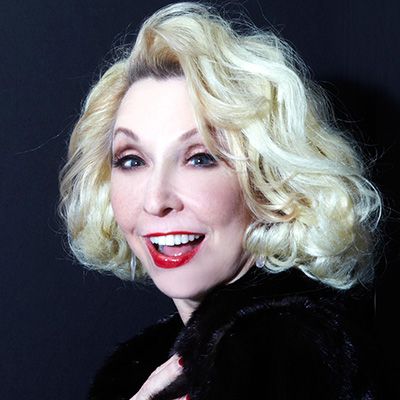
If you don’t know Broadway Funny Girl Julie Halston, you are in for a treat. She’s one of the fiercest comediennes we have, currently playing and flambaying a Producer (!) on Broadway in Tootsie, but has been in everything from Gypsy (where we met) to You Can’t Take It With You to Hairspray to Anything Goes and more... Read More
From the show: The Producer's Perspective Podcast with Ken Davenport
Guests
Featured Shows
About
If you don’t know Broadway Funny Girl Julie Halston, you are in for a treat. She’s one of the fiercest comediennes we have, currently playing and flambaying a Producer (!) on Broadway in Tootsie, but has been in everything from Gypsy (where we met) to You Can’t Take It With You to Hairspray to Anything Goes and more.
But she got her start on one of the smallest stages in New York City.
And the story of her rise as a Broadway star, a writer, a producer, and more is a real inspiration and education for us all. Listen to hear all about:
- How Charles Busch forced her to write her first show in two weeks . . . and how she got the courage to do it.
- Where she learned how to do dramatic readings of NY Times Wedding Announcements. (And yes, listen to her do a reading from the NY Times at the end of this podcast!)
- Why she says “yes” to everything she can and why you should too.
- Why, despite her big Broadway success, she still performs in her one-woman show (including a performance coming up on October 3rd at Birdland! Go!)
- How she creates unique characters, like the stripper in Gypsy, that are so memorable and so freakin’ funny and so beyond what’s just in the script.
If you’re an actor or a fan, then you should listen to this podcast. If you’re a TheaterMaker of any other kind, then you MUST listen to this podcast.
And I apologize in advance for my laughter throughout the episode. You try and hold it in when talking to Julie Halston!
Enjoy and thank you for coming back to our new season!
This week’s #SongwriterOfTheWeek is Zack Zadek! If you enjoyed the outro music in this episode, go on over to www.ZackZadek.com for more tunes.
This episode is sponsored by Sunlight Studios. Use the code DAVENPORT by October 10 to save on renting studio space. Visit www.sunlightstudios.com for more information on their offerings!
Transcript
This transcript was automatically generated and might contain errors.
[0:00] Ken Davenport: I love talented people. I like being around talented people. Why not? I got a shot. Why not give others a shot? I wanna be a producer with a hit show on Broadway.
[0:14] Ken Davenport: You're listening to the Producer's Perspective Podcast with your host, Tony Award winner, Ken Davenport.
[0:21] Ken Davenport: I like what she's doing. This might be a thing. She's giving it feeling. She's making it. That is this week's guest, the incredible Julie Halston from her hit Broadway musical Tootsie playing in the background there.
[0:36] Ken Davenport: Very excited to chat with Julie today. But first, before we get to this very, very funny lady, this episode is sponsored by Sunlight Studios with eight bright and spacious studios for rent.
[0:49] Ken Davenport: You can rehearse your next Broadway hit knowing you're in good hands. To book a studio today at Sunlight, visit SunlightStudios.com, just like it sounds, right in the heart of the theater district.
[1:00] Ken Davenport: It doesn't get more conveniently located than Sunlight Studios. And if you want to save some bucks, use code Davenport.
[1:08] Ken Davenport: I wonder where they got that. Use code Davenport to receive a 5% discount on all bookings until October 10th, 2019.
[1:18] Ken Davenport: Again, use code Davenport, save some bucks. We all want to keep our budgets down. You can do that at Sunlight Studios, very conveniently located in the heart of the theater district.
[1:27] Ken Davenport: Thanks, Sunlight, for sponsoring this week's episode with Julie Halston.
[1:31] Ken Davenport: Man, I love to be fair, dear.
[1:34] Ken Davenport: You did kill the last one.
[1:36] Ken Davenport: Julia, don't I deserve a chance at a future that celebrates me?
[1:40] Ken Davenport: Oh, this is really good. Hello, everybody. You're listening to the Producer's Perspective podcast.
[1:45] Ken Davenport: I am Ken Davenport. And you know, for many years on this podcast, I have been an idiot because I have failed to have many performers as guests.
[1:54] Ken Davenport: Well, we're changing that now. And I am very excited about today's guest because it's one of my favorite performers.
[2:00] Ken Davenport: She is not only super talented, but she is also the epitome of what I call an entrepreneur, someone who's responsible for taking her career in her own hands and making it happen.
[2:11] Ken Davenport: Please welcome to the podcast the incredible Julie Halston. Welcome, Julie.
[2:15] Julie Halston: Well, I am very happy to be here.
[2:17] Ken Davenport: So Julie is currently starring on Broadway in Tootsie, that big old hit over at the marquee. Additional Broadway credits, we could be here like all day reading this stuff.
[2:25] Ken Davenport: But a few on the town, You Can’t Take It With You, Hairspray, The Women, and a bunch more, including Gypsy.
[2:30] Julie Halston: Yes.
[2:31] Ken Davenport: Which is where I first met her when I company managed that show. Every night you made me laugh. Every night.
[2:36] Julie Halston: Oh, and that was with Bernadette Peters, you know, Broadway Royalty, Sam Mendes, our director.
[2:45] Ken Davenport: It was an incredible cast, and we at Gypsy, you know, still do reunions. We're all still really close friends.
[2:53] Julie Halston: Except obviously for me, because I'm never invited to the city.
[2:55] Ken Davenport: No, well, that's true. Company management, you know.
[2:58] Julie Halston: However, the cast still gets together. In fact, Jenna Gavigan, who was a child, who was one of the Tory Adorables, who is now like, you know, a 30-year-old woman, was in my dressing room just the other night.
[3:10] Julie Halston: I'm gonna go see Brooks Ashmanskas in The Prom next week. Heather Lee, who lives in Los Angeles, she's still one of my best friends.
[3:18] Julie Halston: This all came about in 2003. Gypsy with Bernadette Peters.
[3:24] Ken Davenport: Yeah.
[3:24] Julie Halston: Well, and Broadway, you've done other stuff besides Broadway, of course, as well. A ton of TV and film. You've won like four MAC Awards for your cabaret show.
[3:32] Julie Halston: You have done it all. So you're obviously known for being a big comedian.
[3:37] Ken Davenport: Yes.
[3:38] Ken Davenport: Were you—what came first? Were you like making people laugh like out of the womb? Were you always like cracking people up?
[3:45] Julie Halston: That's really what happened. I graduated from Hofstra University, you know, in, you know, 1868. You know, the Civil War was going on.
[3:54] Julie Halston: But I graduated from Hofstra, and I actually came to New York thinking I was going to be a very serious actress. You know, the fact that I had a very deep Long Island accent, I didn't care.
[4:04] Julie Halston: I thought I was going to be Hedda Gabler. But I studied at the Terry Schreiber Studio, who's a very good, I mean, really one of the better acting coaches and teachers, and has been doing it for many years.
[4:17] Julie Halston: And he was the very first person to actually say, you know, I actually think you're really funny.
[4:24] Julie Halston: Because I think he would hear me talking to like on our breaks. Not even in a scene, right? Not even in a scene, just talking, you know, to other actors.
[4:36] Julie Halston: And so that kind of got me thinking, but on the other hand, I was still very devoted to the idea that I was going to be a very classical actress.
[4:44] Julie Halston: Meanwhile, I had no classical training. Didn't stop me. I thought about it.
[4:47] Julie Halston: What did you study at—uh, I studied performance, but, you know, I had done like an all-female version of Waiting for Godot, you know.
[4:56] Julie Halston: So I again, this was all serious stuff, and you know, things like that. Viet Rock by Megan Terry, you know, all these kind of, you know, 60s and 70s, kind of very, um, a little bombastic, you know, theater.
[5:11] Julie Halston: Then I ended up, and of course, brilliantly, thank God, through a mutual friend, meeting Charles Busch, who happened to be a one-man band performer who wanted to write a play, was desperate to just do something, wrote a little sketch called Vampire Lesbians of Sodom.
[5:38] Julie Halston: Everyone turned him down. Everybody. Including his own sister.
[5:46] Julie Halston: She was like, I'm not doing that on the Lower East Side. Remember, this is the 1980s. The Lower East Side was like Berlin after the war.
[5:53] Julie Halston: It was really a crackdown place. And I had met him through a mutual friend.
[5:59] Julie Halston: And I was like, well, I'll do it. I'll do it.
[6:02] Julie Halston: And but here's where it all became something really interesting. We did start our own theater company. Ken Elliott, our director, was the one who said, we need to actually, because it became very successful.
[6:15] Julie Halston: We need to be our own company. We're not getting work through the usual route.
[6:21] Julie Halston: You know, get an agent and just, you know, we weren't the Juilliard people, we weren't the, you know, NYU people.
[6:29] Julie Halston: We were, you know, sort of like the outsiders. And so we did. We formed our own theater company.
[6:36] Julie Halston: And it was actually through that when we would be in these crazy dressing rooms, you know, which weren't even really dressing rooms, like in an alley.
[6:46] Julie Halston: And Charles was the one who said to me, You're really funny, and you should write things down.
[6:53] Julie Halston: And you should eventually do something with that. I was like, yeah, yeah, yeah, yeah, yeah.
[6:58] Julie Halston: You know, I just, I was just yakking. I was just yakking, making the cast laugh.
[7:03] Julie Halston: Not even again, not even on stage so much. They're just watching.
[7:07] Julie Halston: Yeah, just like, you know, talking and, you know, putting our, you know, makeup on or whatever, and I'm like, oh, you wouldn't believe what my mother said to me today, blah, blah, blah.
[7:15] Julie Halston: And they'd be howling. And anyway, we did eventually become a rather successful off-Broadway company.
[7:24] Julie Halston: Success for us meant, you know, $200 a week. I think that's what I earned, really.
[7:30] Julie Halston: And I was thrilled. I, however, had a day job.
[7:34] Julie Halston: I still worked on Wall Street.
[7:36] Ken Davenport: I was a Wall Street?
[7:37] Julie Halston: Yes. I was a librarian for an investment council firm called Brundage Story and Rose.
[7:44] Julie Halston: And my boss is now one of my dearest friends and my financial advisor.
[7:51] Julie Halston: See, this is how life works in a circular route. First of all, you as a Wall Street librarian sounds like a sketch in itself.
[7:58] Julie Halston: It was like a sketch in itself. It really was.
[8:01] Julie Halston: I was desperate for a job. I, but that was my day job.
[8:06] Julie Halston: And then at night, I would leave the office at like 6:30 after the market had closed, and race downtown to do Vampire Lesbians of Sodom.
[8:16] Julie Halston: I got four hours of sleep a night. And didn't matter.
[8:19] Julie Halston: I was young, you know, I was in my 20s. This is what you do.
[8:25] Julie Halston: You're like, I can't seem to get onto Broadway. We've got this theater company. We're just doing it on our own.
[8:33] Julie Halston: We never thought about like, oh, we're gonna get, you know, big reviews, and we're gonna, this is gonna turn into, you know, I'm gonna get my own TV series or whatever.
[8:42] Julie Halston: We were just having a blast working with a playwright that we thought was just a fun, interesting person who would write these parodies of all these different genres of film.
[8:55] Julie Halston: You know, the film noir or Gidget Go Psychotic, which was the original name of Psycho Beach Party.
[9:02] Julie Halston: So all these parody shows became wildly successful. And it was when we were doing this in our dressing room, and at that point we actually did have real dressing rooms.
[9:15] Julie Halston: Charles said to me, You need to do a one-woman show.
[9:15] Julie Halston: You need to do a one-woman show. Just saying the things that you say here.
[9:24] Julie Halston: I said, No, I can't do that. That's for stand-ups, you know. I'm an actress.
[9:27] Julie Halston: Again, I took myself very seriously. Even though I was in Vampire Lesbians of Sodom.
[9:33] Ken Davenport: I do want to see you play Hedda Gabler sometime.
[9:35] Julie Halston: Now that's all I can think about.
[9:37] Ken Davenport: Now exactly. Well, you'll have to produce it.
[9:39] Julie Halston: Listen, before you go into your show, I want to go back to one thing you said about you, Charles Busch getting turned down by everyone.
[9:47] Ken Davenport: And by the way, for the listeners out there, we did Charles was on the podcast, and it's an amazing one, so look it up and listen to it.
[9:52] Ken Davenport: But everyone's turning him down, and you said yes. And I'm a big believer that in the beginning of your career you should just say yes a lot.
[10:02] Ken Davenport: A lot of things. I want to know what it was—did you see something in Charles?
[10:07] Ken Davenport: Were you just like, I'll do anything? What was it about Charles that you saw?
[10:10] Julie Halston: Okay, so I did skip one little element, which is before I ended up doing Vampire Lesbians of Sodom, he had invited me to his one-man show at the Shandahl Theater, which I think is now a parking lot.
[10:25] Julie Halston: It's not even, it doesn't exist. It was rat-infested, it was a nightmare.
[10:29] Julie Halston: He had no audience. He knew that I had a lot of friends.
[10:33] Julie Halston: So he invited me. He said, Look, I'll pay for your tickets. If just I need an audience.
[10:40] Julie Halston: Would you just come and bring people to this one-man show of mine?
[10:45] Julie Halston: It was called Charles Bush, Alone with a Cast of Thousands.
[10:49] Julie Halston: And he played both men and women. This is like in 1983.
[10:56] Julie Halston: And I fell in love with him.
[10:59] Julie Halston: I thought he was creative, fascinating.
[11:03] Julie Halston: I loved that he was playing women and men with just like a one little prop, maybe a hat or a scarf or a fan.
[11:12] Julie Halston: He wasn't even in full drag or anything like that. But I found him very alluring.
[11:18] Julie Halston: Many of my friends also thought it was hilarious.
[11:21] Julie Halston: And many of my friends go, we don't get it.
[11:23] Julie Halston: We didn't get it. But they saw a show for free, so they didn't care.
[11:28] Julie Halston: But I got, you know, I would bring audience to Charles.
[11:32] Julie Halston: And I just fell mad for him. I just thought he was great.
[11:35] Julie Halston: So that's why I ended up saying yes.
[11:37] Ken Davenport: So you just saw an artist that you saw something special, and you're like, I'm gonna be around this guy.
[11:42] Julie Halston: I want to be around this guy. I just want to hitch myself to this train because I think it's fun.
[11:47] Julie Halston: Again, it wasn't like, oh well, this will get me a big career, or this is our Tony Award, you know.
[11:53] Julie Halston: No, it was just wow, he's interesting. That was one of the smartest decisions I ever made. Yeah, he becomes this great mentor for you, obviously. Exactly. Pushed you to writing your own stuff. Exactly. So tell us how that happened. So we're in our dressing room. This is when we had been doing Vampire Lesbians of Sodom quite a while, and at that point, I think I actually did have an agent. I was starting to branch out a little, but he was the one who said, you know, you've just got to do your own thing. You're funny, you're and you keep us laughing, and you know, yeah, I bet you could write something. I didn't believe him. And he said, Well, you better do it because I've booked you in a club.
What? And I was like, What? He said, Yeah. Guess what? You're doing in two weeks. You're going to 88 on 10th Street. I've booked you. Irv Rabel, the proprietor, has booked you, and it's a Monday night, and I'm telling people all about it. So you better write a show in two weeks. Two weeks? I literally, I don't know how I got on stage that night. But you did. I mean, forget how you got on stage. What you so you said, okay, you're gonna do it for you. I said yes again. And I said, Charles, what am I gonna talk about for 50 minutes? He goes, Well, call your mother up. That's a start. So I did. I called her up, and I just was like, Ma, how are you? And she was like, Well, you wouldn't believe what's been going on in the neighborhood.
And she just, she just and I wrote everything down that she said. And then my mother was a big matinee lady. She used to come to the theater a lot. She loved the theater, and she would always tell me her reviews. So of course, I am laughing already, Katie. You know, my mother would she was like, you know, Mary and I, we went to see, you know, Gemini or whatever, whatever would she would say. Oh, she loved musicals, but she would go to everything, quite frankly. And oh well, I mean, I hope I don't offend her because I'm a big fan of hers. But she was like, Do you know that Christine Baransky? And I said, Well, I don't really know her personally, Mom, but she's very talented. She goes, I find her cold.
I said, Mom, I think you're talking about the character she was playing. She was like, Well, regardless, left me cold. But I'm gonna tell you someone who's gonna be a very big star. My mother predicted this so many years ago. She goes, someone named Nathan, and then she like looked it up. She had the playbills. She goes, His name is Nathan Lane, and he's gonna be enormous. And she was the one who told me that. So I would just write down everything that she would say, and I would say I had at least 15 minutes. And then one of the things that I used to do, and this is as far back as like 1980. I was obsessed with the New York Times wedding announcements. They were very, very, particularly in the early days.
They were very, very pretentious. And everyone was very, you know, or everyone had three names. Everyone was a, you know, Raymond Porter the Third, you know, and they were very, very formal. And I could somehow gleam real comedy out of these things. And, you know, they would talk about what the bride was going to be wearing, you know, her grandmother's veil, a silk dubioti, you know, uh, train, and blah, blah, blah. And I just thought this was the most pretentious, crazy stuff. And I am still to this day reading in my act, The New York Times Wedding Ant. So you just read them. You just I just read them. I literally created a show a number of years ago, and I was like nominated for awards for it called Julie Halston, Queen of Readings.
And Ken, I just read things. But I had to have. You are the actress that can read the phone book. You are the really you can do it. I literally read from Vogue, from my Baltimore Catechism, from my diary, from the New York Times wedding announcements. And Charles was the one who said, Well, I've booked you, you're doing it. It sold out. I ran that show for two years, Wednesday nights and Saturday, and we would sell out. And this is the thing that was so great. I was able to, and I didn't know that this was going to happen, meld a cabaret career and a one-woman show kind of career with a theatrical career. And it was at that time, so of course now it's like the late 80s, early 90s. Billy Stritch, Jim Caruso, Ann Hampton Callaway, Liza Minelli, she would hang out at 88s. All these people, Julie Gold, Judy Gold, so comedians were starting to get into these club situations as well.
That brought casting agents like Jim Carnahan down to these clubs. Scott Ellis first saw me at 88 because he was friends with Liza Minelli because he did a show with Liza Minelli. So suddenly there was this blend of cabaret world people, theatrical people, and I literally was able to create a one-person show from the cabaret space world. It brought in casting agents so that now I'm being cast in like Law and Order, or you know what I mean, TV things, like as a guest star. And then off Broadway producers started coming into the situation. And suddenly I was told, hey, we think this show could go off Broadway. And Ken Elliott, who was our director for Charles Bush's show, said, I'll direct it.
And we created a show called Julie Halston's Lifetime of Comedy. It was nominated for an Outer Critics Circle Award. Drew Dennett was my producer. Dale Lawrence, his girlfriend at the time. She was in our company. She got investors. It ran off Broadway, and I got a TV development deal out of it for CBS. And I did a pilot called Those Two with Harvey Feierstein. And it was the precursor to Will and Grace, nine years before Will and Grace. This is amazing. This is what so correct me if I'm wrong, but what I love doing is weaving these threads through people's careers. But because you said yes to Charles Bush, those all those dominoes fell. And if for some reason you didn't say yes, he might have paid his sister a lot of money to play his co-star.
You'd be making a lot of people at that Wall Street firm laugh really hard. The Christmas party would be a scream, but I wouldn't have a career as an actress. And do you know, Ken? I still say yes to everything. Well, you're here for God's sake. You said yes to me. It's a perfect example. You're like, I don't know what this podcast is, but okay. No, but I do. I say yes, unless it's unless there's such a red flag around it, I say yes to readings when I can. I say yes to workshops when I can. I say yes. I literally just produced. I you must know about this. I just produced an industry reading for a friend of mine who wrote uh a show, which I can't say on the podcast, but it's about the Wright brothers and it's hilarious.
I just said yes. I love talented people. I like being around talented people. Why not? I got a shot. Why not give others a shot? That's what this whole community is about. That's why I love being part of the Broadway and off Broadway community. It's a community. And it's hard enough out there. Why not keep the ball going, particularly if you believe in people's work? I believed in what Charles Bush was doing. Now, if I had if I saw his show and I was like, ooh, I don't, I don't think this guy has any talent, maybe I would not have said yes to vampire lesbians. But I was gobsmacked. I thought he was hilarious. I thought he was talented. I also loved that he was playing male and female roles. Instead of it being confusing or strange to people, I thought it was great.
I thought, wow, that shows he even more range. Talented people excite other talented people. And you know, it's so interesting. Yes, there's a lot of competitiveness in this b business. There's a lot of jealousies and envy or whatever, and all that's part of it. But what I have found most often is that successful talented people really like to be around other successful talented people. Yeah, they might get envious or whatever, but they like to be around that, and they like to applaud it, encourage it, keep it going. It's you know, the most generous performers I know are very big stars. Well, Charles was obviously very generous with you to look to his right and say, You should perform, you should do what I do, basically, is what he was saying.
Well, he did, and he said, You're my muse, I'm gonna write for you. And wow, that's a gift you don't turn down. You don't turn that down. Were you obviously you were nervous that first time you performed? Yeah. Do you still get nervous now when you've written something and are performing it? Or do you always? Always. Always. Really? I still worry about it's so funny. Like every time I'm gonna be doing another one woman show uh October 3rd at Birdland, which is where I like to perform, and I literally, every time I perform there, I go, Oh, is anyone gonna come? I always am nervous that no one's gonna buy tickets. Usually it's always sold out, to be quite honest. But and Jim Caruso always laughs at me and he goes, No, no, no, everyone hates you, no one will be here, and and you will bomb.
And of course, it turns out great, and I always have so much fun. That second, when they announce your name, right before that, my stomach does do a bit of a flip flop, and I still am going over things, but I do find I like to be super prepared. I think preparation is kind of everything, even even when you go off script. Because you know, when you're doing a comedy act or when you're doing a one woman show, you do want to be able to go up script a bit, play with the audience, whatnot, but you have to go back because I'm actually a storyteller rather than just a traditional stand-up. I don't just stand there and tell jokes. I tell stories and jokes, um, and then readings as well. Um but until I get out there and I hear that applause, I'm a bit of a flip-floppy stomach nervous, you know.
Um of the great things about having a lot of experience though is that you you get a pass on a certain level, particularly in this community when you when you know that there are a lot of performers in the audience.
[23:49] Julie Halston: You can make certain jokes that you know if you mess something up, it's kind of like the old Johnny Carson, you just shrug your shoulders and you go, "Blew that," you know, but you get a pass on a certain level. But yeah, the nerves are always there, particularly when you try out new material. There's, you know, I used to try out new material on, you know, some of my friends or my husband or whatever, and I try not to do that too much because some of my friends are like, "Are you telling me a story that you're gonna tell on October 3rd or whatever?" I don't mean to be that kind of person, but Charles is someone that I can bounce ideas off of, and we are really good with each other that way. One of the things that's so great about when we collaborated was that I would go over to his house, and I know people are gonna laugh about this, but it's really true.
He was like, "Oh, I love the clothes of the 60s, let's do something in the 60s." Like, it starts with the clothes, you know? Or like, he'll be like, "Look, this wig, isn't it beautiful? It reminds me of, you know, Joan Crawford in the 1940s. I'm gonna write a play about that." You know, so it starts with a wig or a dress or whatever, okay? But we would sit there and we would just yak, and then we would sort of kind of, he'd say, "Oh, I think you should play like a countess," and I was like, "Yeah, countess who's really a, you know, a stripper on the side," you know? And we'd just, and he'd start writing things down, and you know, I would just tell him like, "Oh, I gotta tell you about my day," and we would start talking in the cadence of what we were gonna do.
Like whether if it was going to be a film noir, we would start talking in that kind of cadence, or if it was going to be a sort of 60s thing, we'd start doing these kind of jokes, you know, sort of Twiggy-esque kind of things. So we would just play, and we would sit in his apartment and play, and then literally, I'm not joking, I would say within like three or four weeks he'd be like, "Hey, here's a new play," and it would come out of our playing with each other, improvisational kind of thing. And because he's so talented, it would be a real play. I remember one of his more recent plays was "The Divine Sister" that we did down at the Soho Playhouse not too long ago, actually.
[26:26] Julie Halston: And it took place in the 1960s, but we were nuns. We weren't models. We were nuns. And I think I got to page three. And I knew it was going to be a hit. I was laughing out loud on page three. And I just thought, okay, this is it. And of course, you know, it ran 10 months and it was a hit. And it was brilliant. And there actually is interest in that property. He's talking to some people, um, big people. Uh, and, uh, you know, I'm like, "Charles, you know, they would have to put so much Vaseline on the lens at this point if we're gonna do this," you know? But anyway, that was fairly recently, and you know, I knew from page three it was fantastic, and we got a rave review. What happened? They can't all be fantastic and big hits.
What happens to you as a writer, as a performer where you're on stage and it doesn't go? It doesn't go, yeah, or it's you're in the show that, uh oh, this didn't work, and you spent a lot of time in that apartment or working on that character. It's hard, it really is. It's actually pretty heartbreaking, and you know, you know more than anyone, it's a really tough business why something lands and why something doesn't land. But you know, I know this is hard for people because you do have to develop a bit of a thick skin in this industry, and I mean, I've told stories where I go, "Wow, that was five minutes of kind of near silence," and you kind of go, "Okay, take it out." You have to be very brutal with yourself.
You go, "Okay, take that out." That story may end up being like a written short story for something else, but that is not going to go in the act. You have to be brutal with yourself. Or if I do a reading that, wow, why did the first half land and the second half didn't? Then you have to go home and you have to study. Bill Irwin, who I worship, I remember years and years ago when he first hit town with, I guess, "The Regard of Flight." It was one of his shows that he... About the McCarthy era, 1950s. And there was a fantasy sequence where Charles was Lady Godiva, and you know, we had this amazing wig, and he was on a horse, and we somehow got this kind of prop and a horse, and it was he was like sort of suspended from a, um, a platform.
I mean, it was a riot, didn't fit, didn't fit the narrative, didn't propel the show further. Um, and he had to cut it. And it was hard because it was a very funny piece on its own, but it didn't really go. It was a fantasy sequence that didn't really belong.
[30:25] Ken Davenport: What's the, you're so funny, and it seems to come so easily for you, and you could read anything and it'd be funny. But what is the essence of what makes something funny? You know, people try to be funny all the time. How do you do it?
[30:50] Julie Halston: Well, contrast is one thing, contrast. You know, when you're reading something very grand, for example, like you're reading something that Queen Elizabeth has just, you know, decided to read to her, you know, her country, but you read it like this, you know, you read it in a Long Island accent, you know, that's contrast, so that's always funny. So you're already laughing. Clearly, there are people who are just very good at writing cleverly, like this just know how to put words together in a very clever way, like a Noel Coward, you know. Do you do character research when you, like, let's I want to talk about "Gypsy" for a second. Because your stripper in "Gypsy" was just hysterical.
[31:38] Julie Halston: She was a little tipsy, if I remember correctly.
[31:41] Ken Davenport: She was more than a little tipsy.
[31:41] Julie Halston: She was kind of blotto. Yeah, very blot. I mean, she really kind of stared all over the place. But what I loved about that, and really, you know, that was early in my career, and I remember what was great, even better being a company manager was being able to watch some artists like yourself work. That was nowhere on the page, right? Nowhere on the page. So not you added the fact that she was blotto, which, as I remember thinking, of course she was blotto. She's a stripper in the vaudevillian age, right? And she was not young. She was about 40 years old.
[32:11] Julie Halston: Right. That's what's, I'll tell you honestly about that character development. First of all, Sam Mendes made all of us, all of us write a backstory. He was really tough about it, too. And he was like, "I want you to do research." And we had books about the Wichita Circuit, the Orpheum Circuit. He brought in a lot of research for us. So that was one thing. Plus, uh, at that point, we could actually look things up because the computer age had emerged. So I did a lot of research on that. I looked at a lot of pictures of, you know, carnivals, carnival barkers, carnival girls, uh, show girls, strippers, those kind of, um, tent shows in the 1930s, what people were doing, where they were living, how they were living.
It was pretty hand to mouth. It was not glamorous on any level. What those girls looked like, how they were. And I came up with the idea of being a drinker. And Sam thought that was a great idea. He was like, "I love it. That's great. We'll get you a prop. What do you drink?" And I was like, "Well, I like to drink wine, so I'm gonna make her a wine drinker." He goes, "I love it. I love it. We're gonna make her a wine drinker." But he was the one who said, "Now, if we're gonna have this stripper who's of a certain age, who's on a bad circuit, that circuit is not a good circuit, and you're gonna be pretty drunk. I don't want you to move." Now we're gonna go back to the text. Now we're gonna go back to the lyric.
"I'm electrifying, and I'm not even trying. I never have to sweat to get paid." He said it's right there in the lyric. You've created this character, but now we can marry it with the lyric. Because, you know, I'm not a dancer, I'm not a singer. How I, although I do musicals, which is a riot, but he said, "Let's somehow marry this. And I guarantee you, if you don't move, and you stand there pretty drunk, and you literally just light up your costume with difficulty, you will bring the house down."
[34:44] Julie Halston: And he was not wrong. He was definitely right. I mean, I'm laughing right now, just thinking about I wish we had video on this podcast to show everybody.
[34:51] Ken Davenport: Yeah, which again goes to that contrast because we had seen the other strippers doing all their crazy things.
[34:56] Julie Halston: Yes, and they're dancing.
[34:59] Ken Davenport: Yes, and one's like a ballerina, so she has to have some skills, and not me.
[35:04] Julie Halston: And you just staring off, staring off. And but it was in the lyric. I mean, that was what was so smart. He was like, "You've created this, but we need to marry it with a lyric." And no disrespect to Arthur Lawrence, the brilliant book writer, who, you know, was tough on us. However, when the revival has been revived again, I have heard that people do now utilize what I created on that stage for Miss Electra.
[35:38] Julie Halston: So I feel very proud that we've created this sort of archetype now. So now people really don't do much when they literally just stand there and light up. I think that's pretty brilliant. Another Julie Halston original. Yeah, it was kind of crazy. What's it like for you? You're on a you're in Tootsie right now, big Broadway musical.
[35:57] Ken Davenport: Yes. Versus the small cabaret stages. Do you have is it a different type of performance, a different type of energy? Do you like one versus the other?
[36:07] Julie Halston: I love them all. And I, you know, usually when people ask me things about this, I always say, well, whatever I'm doing now, I'm most in love with. But that's not really true. The fact is, I love being on a Broadway stage. Love it, love it, love it, love it. I'm a big performer. I like being on a big stage. However, the thing that's so great about doing your own show, and by the way, I mean, just so that people should know this, when you do your own show, not only is it artistically fulfilling, you know, because I'm not, because I'm doing my own one woman thing, and I don't have to pay musicians or whatever, because it's just me standing up there yakking. You can make real money. I mean, I'm just putting it out there.
[36:50] Ken Davenport: There's the entrepreneur in you. This is why you're on this podcast.
[36:53] Julie Halston: Yeah, there's the entrepreneur in me. I'm telling you, I used to make when I did two shows a week at 88, Wednesday nights and Saturday nights. And of course, that was the days when it was all sort of like cash. I could somehow frequently make as much money as a Broadway ensemble member. Just pocket it right in there. Because if you sell out, I would get that door. They've got the drinks, I got, I'm just being real practical now. I'm just telling people, you know, when I play that Birdland, I'm telling you can do well. So that's another reason to start thinking for yourself about these things.
[37:40] Julie Halston: Anyway, because I am a big performer, and I'm now luckily known as a performer who has a certain persona. The persona being, you know, I think the world is crazy, and I'm gonna judge it, and I'm gonna tell you what my opinion is, which is really a callback to my mother. Many people who come to my shows, my one woman show, know who I am and they know my persona. However, every time I perform, there's always a number of people in the audience who have never seen my one woman show. They might know me from Broadway, they might know me because I was on Sex in the City and I played Bitsy Von Muffling, and they're like, oh, let's see what that lady who played Bitsy is doing. But they all get it. They all get it.
And when I'm present doing my one woman show, that's my favorite place to be. When I'm on the stage at Broadway, that's my favorite place to be. I'm not as comfortable on movie and film when TV sets. I'd like to become much more comfortable on that. But I just recently did an episode of Divorce that Sarah Jessica Parker is in. And because I knew a lot of those people, because a number of them work on Sex in the City, it was such a comfortable set, and Sarah Jessica Parker is such a comfortable, lovely, wonderful human being. It was so comfortable and so fun that that became my favorite thing. Do you know what I mean?
[39:12] Julie Halston: So I'm always present for what's right in front of me. But if somebody were to say to me, you can never work on Broadway again. Like, I don't know, if Broadway exploded or whatever, I don't know, or just you can never, I would be heartbroken. I love being on a Broadway stage in front of a live audience. And musicals are particularly rewarding because you have every element of the creative world. Dancing, singing, an orchestra, amazing sets, everything and the crew, you know. I, you know, there's nothing more alluring to me than pushing open that stage door, saying hello, Tommy the Fly guy. You know what I mean? It's like saying hello, all right. Scotty, Scotty's in the day in the house, you know.
I love the crew, I love my hair and makeup people. I'm the whole ritual of Broadway, of theater, it's not just Broadway, it's off-Broadway, it's the whole ritual. I go on the stage before we start the show. I love it. Sort of you give it up to the theater gods. I love that ritual. I just, I'm sorry. I and I love taking that final bow with the cast and hearing that orchestra, it is thrilling. It is something so special, so unique. Why wouldn't I? Do you know what I mean? Why wouldn't I love it?
[40:38] Ken Davenport: This is a great segue to my last question, which is my genie question.
[40:42] Julie Halston: Okay.
[40:42] Ken Davenport: I want you to imagine that the genie from Aladdin comes to visit you.
[40:46] Julie Halston: Okay.
[40:47] Ken Davenport: Thanks you for making all these people laugh. I mean, you what you you've really given people the ultimate gift, making them forget their troubles, actually without moving in Gypsy, just making them laugh just by standing there. I want to thank you for all that by granting you one wish. You obviously love Broadway and performing so much. But what's the one thing about Broadway that drives you crazy, that actually makes you angry, that would have you flip up this table that you would wish that this genie would just make disappear like that.
[41:21] Julie Halston: I've got my producer hat on now.
[41:23] Ken Davenport: Yes.
[41:25] Julie Halston: Which is I'd like to see costs come down because that's hard, and I understand that as a producer. And I'd like to see Broadway shows become more accessible to people. Broadway is the one thing about this city. You cannot get any other city. Broadway is its own unique 12 block radius in New York City. People do come here to see a Broadway show. I wish it wasn't as the ticket prices weren't as expensive. That would be my genie wish. So that instead of a family having to see only one show, right? Because they're here for the holidays, and they're gonna go to Top of the Rock or they're gonna do that, and they're gonna go to Statue of Liberty or whatever. But I'd like to send have them see two or three shows. And how do we make that work?
[42:29] Ken Davenport: It's a very good wish. I have one more question for you.
[42:32] Julie Halston: I just so happen to have a New York Times right here.
[42:37] Ken Davenport: Okay.
[42:38] Julie Halston: Would you read something for us?
[42:41] Julie Halston: Of course.
[42:41] Ken Davenport: All right.
[42:42] Julie Halston: I'll flip it open to.
[42:44] Julie Halston: Oh, there's a there's a wonderful article on the front. Let's uh get a brand new Julie Halston reading just for you.
[42:53] Julie Halston: Okay, this is wild. This is wild. Has Maplethorpe's shock worn off? A critic argues that the ones taboo photographs have lost their power. Thirty years after Robert Maplethorpe's death, the legend still obscures the photographs. His demise at 42 from AIDS during the height of the American epidemic gave a tabloid step to the authenticity of his sexually transgressive art. Right at that time arose the political controversy. Or contrast I'll contrast. Well, I don't know how to say it in the British way, but that is.
[43:43] Ken Davenport: That's how I read the New York Times.
[43:45] Julie Halston: Fantastic. Thanks so much for being here with us.
[43:47] Ken Davenport: Thanks, all of you for listening. And we will see you on the Producer's Perspective podcast next time.
[43:52] Ken Davenport: Once again, a big, big Producer's Perspective podcast. Thank you to Julie Halston for sitting down with us today and being such a great sport. Speaking of sports, the super conference is coming up November 16th and 17th. And yes, that comparison makes absolutely no sense whatsoever, but you get what we're going for. It's the most exciting event of our year here at the Producer's Perspective Super Conference, November 16th and 17th. This year we have two fantastic keynote speakers. Pulitzer Prize finalist, Heidi Shrek and Joe Iconis of Be More Chill Fame. Two, two, two keynotes for the price of one. So join us at the Super Conference. It's going to be a blast. We are going to do some things we've just never done before. And you're going to have a lot of fun and learn a lot in the process. So join us there. Just Google Ken Davenport Superconference. It'll pop up.
[44:45] Ken Davenport: If you're excited for this new podcast season, do us a favor, review us on Apple Podcast. It'll help other theater makers and theater fans just like you enjoy these conversations. And it reaches all over the world. And there are people in places we don't even know about that won't ever be physically here in New York City. Get a chance to see a Broadway show. This is their chance to touch it, but they only can do that if they hear about it. Your reviews help them do that. If you want to keep up with Julie Halston all year long, and if you want her to make you laugh all year long, follow her on Instagram, her Instagram handle at actress Julie Halston, just like that. Make sure you're following me on Instagram at Ken Davenport B Way. It's where I drop all the best announcements of the stuff we're doing early. I do everything there early, uh, before press releases, even.
[45:39] Ken Davenport: Uh, and now, now we get to that final moment. I'm gonna leave you with our songwriter of the week. That's right, hashtag songwriter of the week. Each week here on the podcast, we highlight a brand new songwriter, an emerging songwriter on this podcast. Today we'll be hearing Zack Zadek's song Sisters from his musical Deathless. If you don't know Zach, that's fantastic. That's why we're playing his tune today. So again, this is Sisters Zach Zadek from his musical Deathless. If you like what you hear, you can find more over on his website, www.zackzadek.com.
[46:18] Ken Davenport: Uh, we love giving some love to all these new writers out there who just want their shows out there in the world. So go to their website, go to Zach's website and check it out. Uh, that's it for this week. We will see you next week with a brand new podcast episode. Thanks so much for tuning in and for being such a fan of the theater.
© Broadway Podcast Network, All Rights Reserved