

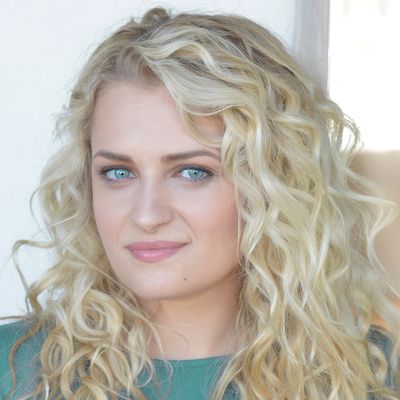
Groundbreaking performer Ali Stroker won the 2019 Tony Award for Best Featured Actress in a Musical for her role as ‘Ado Annie’ in Rodgers and Hammerstein's Oklahoma!.. Read More
From the show: The Producer's Perspective Podcast with Ken Davenport
Guests
Featured Shows
About
Groundbreaking performer Ali Stroker won the 2019 Tony Award for Best Featured Actress in a Musical for her role as ‘Ado Annie’ in Rodgers and Hammerstein's Oklahoma! She made history as the first actor in a wheelchair to appear on Broadway when she originated the role of ‘Anna' in Deaf West's acclaimed 2015 revival of Spring Awakening.
Ali's also the first actress in a wheelchair to graduate from NYU's Tisch drama program. She starred in 12 episodes of the talent competition, The Glee Project, which led to a guest role on Fox's Glee. She then recurred in the Kyra Sedgwick ABC series, Ten Days in the Valley, and she guest-starred on Fox’s Lethal Weapon, CBS’ Instinct, and Comedy Central's Drunk History. Ali earned a Barrymore Award nomination for starring as Olive in The 25th Annual Putnam County Spelling Bee. In addition to her work on and off-Broadway, she's soloed at the Kennedy Center in Washington, DC, New York's Town Hall, and Lincoln Center for the Performing Arts. Stroker has been a co-chair of Women Who Care, which supports United Cerebral Palsy of New York City. She co-founded Be More Heroic, an anti-bullying campaign that tours the country connecting with thousands of students each year. She’s lead theater workshops for South African women and children affected by HIV and AIDS with the group, ARTS InsideOut.
Ali’s dedication to improving lives through the arts, disabled or not, is captured in her motto: “Making Your Limitations Your Opportunities.”
This week’s #SongWriterOfTheWeek is Carmel Dean. Featuring the song "The BeanStalk" from the musical Renascence and written by Edna St. Vincent Millay and Dick Scanlan. The full album is available on iTunes and Spotify.
This episode is sponsored by Curtain Call! Curtain Call is the platform for all theatre professionals; onstage or backstage, creative or cast, producer or theatre. You can network easily AND look for work. You can view and apply for jobs directly through the platform. Just go to curtaincallonline.com to sign up. They also have an awesome Instagram page - with incredible photography @curtaincall.
Keep up with me: @KenDavenportBway
This podcast was edited by Stanley Wiercinski.
Transcript
This transcript was automatically generated and might contain errors.
[0:00] Ali Stroker: And not even the word overcome is so strange because I feel like part of my success has been my chair. That being different and being an original because I've had to be has been a part of why I was acknowledged this summer at the Tony's.
[0:44] Ken Davenport: That is Tony Award-winning actress Ali Stroker, who is this week's guest on the podcast, singing from the Tony Award-winning revival of Oklahoma, currently playing at Circle in the Square. Allie's this week's guest on the podcast. You're gonna hear her amazing story. Uh look, this is a challenging business for anyone to begin with, but Allie has faced some very specific challenges that most of us have never had to face. And you're gonna hear her incredible story and how she triumphed over incredible odds in just a few moments. But for now, let me thank Curtain Call, Curtain Call for sponsoring Allie's episode. Curtain Call is the platform for all theater professionals on stage or backstage, creative or cast, producer or theater.
It's free to join. You just need an email address, and you can create your own profile. It's kind of like IMDB, so people can see who you've worked with, not just who you've worked for. Easy way to network and actually look for work. You can view and apply for jobs directly through the platform. So just go to Curtain Call Online to sign up. They have an awesome Instagram page as well with incredible photography. Guess what the handle is? At Curtain Call. So check it out, curtaincallonline.com or @CurtainCall on Instagram, and thank them for sponsoring Ali Stroker's episode on the Producer's Perspective podcast coming up next. Let's go out with just a little more Allie.
[2:10] ♪ Musical number: "I Can't Say No" — performed by Ali Stroker ♪
[2:40] Ken Davenport: Hello everyone. Welcome back to the Producer's Perspective podcast. My name is Ken Davenport. This week on the podcast, one of the greatest stories that Broadway has seen in the last several years. She is the Tony Award-winning star of the current revival of Oklahoma. Eight times a week, she sings the song, "I'm just a girl who can't say no." And I think that's because she actually doesn't know the word no. It's not in her vocabulary. Please welcome Tony Award winner, Ms. Ali Stroker. Welcome, Allie.
[3:06] Ali Stroker: Wow, what an intro, thank you.
[3:09] Ken Davenport: Well, all true. So Allie did win that Tony Award for Oklahoma. She's also appeared on Broadway in my production of Spring Awakening, where she made history as the first person who uses a wheelchair for mobility to appear on a Broadway stage. I'm still like amazed that that was the first time that happened. It took a long time. Finalist on the Glee Project and appeared on the show as well. You're a Jersey girl, is that right? You're from Jersey. So tell me how you were first exposed to theater. Where did you get the bug?
[3:40] Ali Stroker: The bug. I was introduced to theater when I was seven years old down on the Jersey Shore. Our neighbors were the Antinoffs. Jack Antinoff is now the lead singer of Bleachers, a small band, not so small. And Rachel Antinoff is a designer. And Rachel had just come home from Stage Door Manor and decided to be...
[4:03] Ken Davenport: Oh, Stage Door Manor. For those of you who don't know out there, that is like the theater camp.
[4:08] Ali Stroker: Exactly. And so Rachel came home and decided that she was going to direct a production of Annie in our backyard. And she cast me as Annie. And that summer we rehearsed all summer long. And at the end of August, we put the show up with our neighbors came and sat in our planters. And the deck was the stage. And then we hung a backdrop over like this area where there was a ramp for me to get in and out of the house. And Ken, I fell in love.
[4:44] Ken Davenport: You had never performed. How old were you again?
[4:47] Ali Stroker: Seven.
[4:47] Ken Davenport: Seven. And you hadn't done anything. Were you a singer? What were you?
[4:50] Ali Stroker: No, so I was injured in a car accident when I was two, and after the accident, I became really introverted, and I was, you know, pretty traumatized from the experience. And my mom said that she always had music on, that that was a part of my healing and coming out of my shell again. But both my mom and dad said that it wasn't until Annie that my personality and my light came through again. And I remember being so nervous for the show, but then being on stage for the first time was so powerful for me because I was used to being stared at out in public, but for the first time when I was on stage, it felt like people were looking at me and I was in control, and I had the power, and I just became hooked.
Plus, I loved the energy and like the drama around putting a show together. I was just like, this is amazing, and so after that I went home and I started taking voice lessons, and my parents had this strategy with me and my brother, we were both injured, that we weren't gonna put any attention on what I couldn't do, we were only gonna put attention on what I could do, and singing was one of those things, and performing was one of those things, so I just dove straight in and started taking voice lessons and tried to become a part of any sort of theater programs in our town.
[6:35] Ali Stroker: And two years after Annie, I did The Wiz at our elementary school, and they cast me as Dorothy, and my mom said that was the first time she realized she said she turned to my dad in the car and she said, "We've got something really special on our hands," and neither of them were performers, and they were like, "We need to start talking to people about what to do," because my mom was like, "When you were on stage, you didn't see anybody else," you know, she's my mother, but you know, that my light really came through, and there was something very special, so that was sort of the beginning.
[7:14] Ken Davenport: It's so amazing to hear you say my light came through because since the first day I met you, I remember just like she is just a beacon of light. It just pours out of you. And it is so hard for me to even imagine you introverted.
[7:29] Ali Stroker: Yeah, I know. I know so many people say that. And I don't really remember myself introverted. It's like I didn't allow myself to feel the world and my life until I found this thing that gave me a purpose. Because I think the identity of being a girl in a wheelchair was just something I didn't like. So I sort of shut it off. But to be a young girl who was a singer and a dancer and an actress felt so powerful. So I really say that like musical theater saved my life because it gave me this other identity that felt exciting.
[8:18] Ken Davenport: Yeah, what would you be doing right now if your friend hadn't brought home Annie?
[8:23] Ali Stroker: So she always says, so the really cool tie to Rachel again was Rachel designed my Tony dress that I wore to the time.
[8:32] Ken Davenport: How amazing.
[8:33] Ali Stroker: She was amazing. But she always says, she said, "You would have found it, you would have found it." But I don't know. I don't know what I would be doing. Um I can't imagine doing anything else. And one of the other really special things that I sort of grew up with was my parents always talked about giving back. How important it was, always, especially because we were given so much. You know, after the accident, there was so much support given to my family, and so that has become just an essential part of my life that I perform, but I also am always looking for ways to give back to people, and something really beautiful happened when I became an actor and began to get some publicity was I realized there were so many people out there with disabilities that were needing, wanting, and ready to see themselves represented, and I was one of those kids.
When I was a kid, I came in and saw tons of shows, but never saw anyone like me on stage. So, in many ways, this dream of being on Broadway was something I always wanted, but I didn't know quite how it would happen because I had never seen it done before, and I believe that representation does that for young people, it allows them to see that something is possible. I was so fortunate to have parents that said, even if it hasn't been done, it is possible, you are a superstar, you can do anything, and then I happened to meet the right people like you and like Michael Arden, who were like, "Yeah, this has never been done. First of all, that's crazy, and second of all, we're doing this no matter what it takes," and so it's changed my entire life, but it's also been my dream from when I was seven.
[10:42] Ken Davenport: So we certainly know that environment plays such a great deal, and I love the shout-out to your parents who obviously had a massive impact on you. But there had to be something in you that made you like it must have been demoralizing to go to big Broadway shows, not see anyone else on the stage like you, and then to go home and to really gear like no no, I'm gonna keep doing this because one day that's gonna be me. How do you as a young person summon up that courage?
[11:09] Ali Stroker: Well, I was given a lot of positive reinforcement growing up. My voice teachers and my teachers and anybody who was working with me, you know, it was very important to my parents that I was only surrounded by positive people, and that was like from physical therapists to nurses to you know the kids I was hanging out with. We were only creating a positive environment because they knew how much, they knew how much I needed confidence. Now, I also think that my love for singing and being on stage was so strong, like to this day when I don't feel well, I will go sing because for me it's like some it's like the same thing as someone going out for a run. Like it kicks my endorphins, like it's this insane experience for me because when I'm singing, I feel this sense of freedom that I don't feel anywhere else in my life. And I really believe it's because for me, having a physical disability, you feel your limitations all the time.
[12:18] Ali Stroker: I feel what it's like to not be able to jump out of the car. With my voice, there's no limits, and that is a powerful feeling for someone who lives in a body, I am paralyzed, that you know, has these very concrete limitations.
[12:40] Ken Davenport: So it sounds like there were a lot of positive people in your life. And again, I love that your parents were just like, we're gonna surround her with light. And obviously it came through. But there had to be some moments where people were like, you can't, this is not gonna work out for you. Like it's just anything specific that you remembered.
[12:59] Ali Stroker: Yeah, there were many moments that I remember people sort of saying, like, this isn't gonna work, like, because the stage isn't accessible, or like we don't know how this is gonna work when I got to NYU. I was accepted into Cap 21, but then they weren't sure, they didn't want me to take the dance curriculum, and they weren't sure if it was gonna work out. And I had my mom was really great about pushing me to advocate for myself, even at a young age, like making phone calls to my PT and to doctors, but this was a moment where it was like I felt like, oh, I'm accepted in this program, but then to sort of feel like, well, we don't know if you can do it. So there was this little piece of me that was like, I'm gonna show you all that I can do it, and also just a genuine love and desire to be the best actor that I could be and the best singer that I could be.
I also just there was nothing that was distracting me away from performing. I loved performing so much. So all of the people that came in and were like, Well, we don't know how this is gonna work, or like one time my mom took me to a dance class and like the teacher just had no idea what to do with me, so I sat and watched. Those were really painful moments, but in those moments, I think because of how I was raised and how my parents sort of created this mechanism in me to always find a way to do it even if it was different than everyone else.
[14:44] Ali Stroker: So I call it translation, sort of this interesting that I ended up doing Spring Awakening with Deaf West's, that when you have a disability as a performer, your greatest tool is your ability to translate because I've never done a show where I run in wheelchairs ever, but you know, when I need to translate the movement or whatever it is we're doing on stage, it's so automatic for me. And so in those moments of pain of having to watch, I realized, oh, in watching, I can become my greatest ally and figure out how to do it on my body and the way that I do things.
[15:31] Ken Davenport: Did you ever want to quit?
[15:33] Ali Stroker: No. Never. No, never. It's not in my mechanisms. It's not in my so that was another thing we were raised with that you never ever ever give up, ever. My dad was a coach. And so we were raised with all this mantras, and he had gone through a really difficult time. His dad died when he was young, and his mom gave that to him of this like never giving up, and you can do anything, whatever the challenge might be. And for him, you know, he talks about how after we were hurt, it was like his greatest challenge, and he was going to coach and father us through it. And my mom was just really, really smart and sort of a brilliant advocate. So together they really gave me these tools to say, okay, when someone says we can't do it, if there's a will, there is a way.
So Allie, you get to have the will, and then together you'll find the way, and so I so for me, like giving up, or like, you know, I've had awful days, but there's never been a part of me that was like, I can't do this ever.
[16:45] Ali Stroker: And another piece that I think is so important that not a lot of people talk about is patience. One of the things that my disability has taught me is like ninja patience, like having to have the most patience at the times that you don't want to have patience, and that has come into you know, into practice for me in my career.
[17:13] Ken Davenport: Right, you've been it's not like you just started doing this last week.
[17:17] Ali Stroker: No, no, no. And so, you know, in those years after college, when I graduated and moved to LA because I thought maybe the TV industry might be more open to my chair, and Glee had just hit the air, and so I was like, that's a world that's already created that I could fit into. But really, like, no doors were opening, and I was just bored, and I was like trying to write my own show, and I was meeting a lot of people, and that was a huge part of my success and getting to where I have gotten is relationships with people because when you're different, people have to trust you, they have to trust that you are going to follow through, that you're going to be cool in a room with people that might not know how to handle something, and so I really um I'm really glad that I had those years where I wasn't working or wasn't doing shows because it taught me patience and I am so so grateful for where I am now because of all of that, all of those challenges and how difficult it was to get there.
[18:31] Ken Davenport: And that's where you met Michael and where Spring Awakening began, right? How did that just tell everyone how that started for you?
[18:38] Ali Stroker: Yeah, so I was in I was living in LA and I had just filmed Glee and being very young, I thought once I got to Glee and I did that show, everything else would be easy. And sometimes, you know, when you have your first break, you think that like now things will come easily, but that's not the way the industry works.
[19:03] Ken Davenport: I had the same moment. I one of my first shows, actually my two first shows both got good New York Times reviews. And I literally for Alter Boys saw the New York Times review and I was like, oh, this is amazing. Royalties will start pouring and this is gonna be the easiest thing. And we had to grind that thing like crazy for years and years and years.
[19:22] Ali Stroker: Yes. It's never as easy as you think it's gonna be when you first break it up.
[19:26] Ken Davenport: No, and I was I was so sort of shocked by it. I was surprised that things weren't coming a little bit more easily, but thank goodness they weren't because I had decided to change agents because I was living in LA and I was my agent was a new work-based agent. So I changed agencies, and my first audition they sent me out on was for Deaf West's's Spring Awakening that was happening in a little theater down in downtown LA. And I went to the audition, and I of course knew that Michael was directing it, and I had known of Michael through social circles, but I didn't I hadn't met him until that day when I came in, and I sang a song from the Glee Project, which is crazy, and I got called back, and in the callback, we had to sign and sing, and it was a moment for me of like feeling like I was perfectly by purpose because signing is all with your hands, and my hands was something I had and that I could do, and expressing myself through my upper body and through my arms and through my hands had been my entire life.
So learning sign language and then getting to sing while I was signing was like this is heaven. So I remember going in and doing Purple Summer, and they were like, Wow, like have you signed before? Like you feel like such a natural signer, and I was like, I've never signed, I've never used sign language, but I have been using my arms and my hands to express myself my entire life, and so I ended up being cast in the show, and then we did it in downtown LA, and then we did it in Beverly Hills, and then the show came to Broadway, and I was in South African teaching, doing a give back program. I remember this now. And I got an email from Ken and one of our other producers, and it said that the show was coming to Broadway that fall.
This was in June. And I remember like being stunned and then crying and laughing at the same time, and then telling all the kids that I was teaching, I'm gonna be on Broadway, I'm gonna make my Broadway debut. And one of the kids raised her hand and she said, Miss Allie, what's Broadway?
[22:01] Ali Stroker: The biggest ego check of all. It was amazing. It was amazing because it put everything in perspective, and it reminded me how important it was to be a human being and to continue to give back and also go after my dreams and do all of them all at the same time. So that's kind of the story of Spring Awakening.
[22:24] Ken Davenport: Yeah, whenever anyone in this business you want an ego check, go to like Middle America. I this happened to be last week. We were opening the tour of Once on This Island. I went to a pizza shop that was literally four blocks from the theater where one of the signs was gonna be. And I they said, Why are you here? And I said, Oh, I'm doing this musical. And the woman looked at me like, oh, musical. You know, I've never seen a musical.
[22:46] Ali Stroker: And it's mind-blowing. It just reminds you how small our world is.
[22:51] Ken Davenport: It is, and it is so refreshing for me at least to meet people who are just in another world, and their appreciation or their curiosity or their interest in what we do is always so beautiful because you know this industry can really dig you into a hole and you sort of believe that you're the only thing that exists, and then to sort of step out of it, I just think those moments are so important for sanity.
[23:28] Ken Davenport: How are attitudes changing? I assume that it's a bit different now than it was when you started. Tell me a little bit about the growth of that process, and then tell me where you think we need to go with it.
[23:39] Ali Stroker: Yeah. So things have changed a lot since I graduated from college. When I graduated from college, I couldn't really get an audition. I had agents, which was really amazing. They came to see my showcase at Cap 21, which by the way, everything worked out really beautifully at Cap 21. But, you know, they would pitch me to come in for something, and I was so fortunate to have them because they were sort of receiving the no's, and I was just not hearing anything, but I think it would have been really hard for me to hear people say, Yeah, I don't think that's gonna work. Over the past it's now been 10 years since I graduated. I have seen more and more people have a real interest in diversity, in casting people that are out of the box, and also I really believe that we have seen what the successes of creating diversity like Hamilton, like we have seen that this is something that the world wants and needs, and when I got cast in Oklahoma at St.
[25:06] Ali Stroker: Ann's Warehouse, I had no idea it was gonna come to Broadway, but anytime someone comes to me and it's like this production is not traditional, that is sort of my type, not traditional, which is funny to me that as an actor you sometimes have to think that way, like where would I fit? But something that I've learned in the past I would say three or four years is don't sell yourself short because to me, Oklahoma is as traditional as it comes. I never thought when I was learning about Roger and Hammerstein that I would ever be in one of their shows at a commercial level because I always thought that those shows were going to require people that in my mind looked and moved traditionally, and what I'm realizing is that theater and revivals especially have changed that.
In many ways, I could blame my chair or my disability for like the challenges at the beginning, but I think it comes down to the fact that like people just didn't know me, and part of succeeding in this business is allowing yourself to be known and allowing people to see you, and that sort of comes in many layers for me because a lot of my life I've wanted to control how people see me, but I know now, especially I will never be able to control that, but to trust that who I am as a human and as a performer is something that people are interested in, and as a little girl, I think I was scared of um at times like how I would make my way in the world because I felt like people felt bad for me, and of course, that piece of me always lives inside, and arriving at this place in my life where I am not only getting to work at the highest level of my industry, which is what I always wanted, but to be acknowledged and to receive a Tony award for me is like whoa, like the stars have aligned, but even more than that, like Ali, you were meant for this, and you are in a wheelchair, and you are paralyzed, and you do have physical limitations, and you belong here, and I guess like I think that my story in many ways, after I won the Tony, like the response I got from people was so huge and so emotional because I think in many ways, my story represents for people their own challenges and to see someone succeed and overcome, and not even the word overcome is so strange because I feel like part of my success has been my chair.
[28:30] Ali Stroker: That being different and being an original because I've had to be has been a part of why I was acknowledged this summer at the Tony's because the truth is nobody else is doing what I'm doing. And that is what my life and my career has been because I I have tried so hard, and at times it's been excruciating to wrap my arms around my challenge, my wheelchair, to love it, to celebrate it, to use it to my advantage. Let's just talk about you as an actor, period. Tell me about like how you dove into the role of Ada O'Annie. Like, what do you do as an actress? Do you research? I mean, especially a role like that that has been done by probably about 850,000 people over the I mean, had you seen it before?
Do you try to block that stuff out? What do you do? Yeah, so I know Oklahoma well. Uh, I was introduced to uh Oklahoma at the Paper Mill Playhouse Summer Conservatory, and I had seen Oklahoma musical on VHS in school, you know, they put it on the music teacher. Um, and I always thought that Ada O'Annie felt like a caricature to me. She never felt real. And she was always played like she wasn't very smart. So when I got this audition, even before I got cast, when I got this audition, I am really lucky. My boyfriend is an acting coach and a director, and so he has helped me since we've been together four years now, you know, with when you are given an audition and given a role when you're cast, that everything you need is right there in the text, that the story is right in front of you.
You don't need to go off imagining things. Now, for me, that was a little bit confusing at first because I was like, well, but Ado Annie isn't in a chair. And he would always say, But in this production, even for the audition, she is. So allow the text to inform you and all of your choices. So that's first and foremost that the text will guide you, that these American classics, Oklahoma has been around for as long as it has been because it is that strong of a story. Well, okay, so that's first and foremost. The next part, and especially for Oklahoma, was the music. And I love country music like a lot, and so this was sort of exciting to feel what Can't Say No felt like in my voice. And then when I got into the audition, they told me, you know, now do it like your version.
You're at a bar singing this song. And you know, all of the people who I've listened to over the years come through Dollar Parton, uh Deanna Carter, like all of these country singers that I just love, and so that was really exciting to sort of feel the music, and I knew that they were gonna do different arrangements, so this was really sort of thrilling to feel like oh, there's some play in that.
[31:57] Ali Stroker: But the other thing about Ada O'Annie, and about any role that might appear that the character is not very smart. I never feel like that reads to play somebody dumb. That's a judgment on the character. To me, Ada O'Annie's really smart. She just has a lot of questions, and she wants the answers now. So though that is my objective through the entire show is to get the answers and to explore. These are two guys that I want to explore that I want to hang out with, that I want to um test the waters with, and to me, that is also the other big part is like what do you want, and to play that objective through, and it has been it has worked, it is it is it is very helpful. And what about directors? Talk to me about how the director-actor relationship is for you.
Like, what do you look for in a great director? Well, what's great about my chair is that the director, like, there's I'm not hiding anything when I come into a room. So either a director's like interested or not, they're curious or they're not. And so this was like the same thing with dating. It's like either like you're like it's sort of like the first hurdle, we're already over the first hurdle of like are you curious and interested great okay now let's talk so for me a director a really great director allows um an actor to do some of the leading in the room and what has been great about working with Michael and with Jacob Fish is that Michael Arden is that they have a they know that I know my physical world better than anybody in the room so they allow me to discover and play but also they keep me you know really clear about what my objectives are in the story and the storytelling element like for both of these productions that I'm talking about Spring Awakening and Obama they were revivals and they had really strong sort of visions for the storytelling and to me a great director is a really good storyteller and and a great leader because I think it's the hardest job in the room to lead that many artists down one path that's your vision that's a really challenging job so I really respect the job of the director and uh I always hope that it will be a collaborative relationship and not just do this, do this.
[35:03] Ali Stroker: Your dream role? Something you want to play? My dream role is to originate a role in a new musical. Because to me, that is where as an actor I get to be most creative. Um, and to get to work with a writer in the room to me is always just exhilarating. And would you want that role to be a role that was a woman in a chair or just a woman, and then you would bring yourself to it, and the piece would morph as a result? Yeah. So this has been an interesting thing since after the Tonies. There's been a lot of projects that have come my way that are a character for a woman in a wheelchair. But the way in which those characters are written, unfortunately, really don't I'm not interested, I'm not interested in telling the story of disability.
To me, that is like something that's been done over and over and over again, and feels like it corners the disabled community in the world because it's the same story of challenge and then overcoming. To me, I want it, I want to tell a story about a woman who is after something, and she happens to be in a chair, because that also feels like the story that I've been waiting to see. That it's not, you know, Nessa, where her life is horrible because she's in a wheelchair, and then once Alpha Bill Alphabet like sets a spell on her, then she is better, and she is now cured, and she is now happy.
[36:50] Ali Stroker: To me, that's not the story that I'm interested in telling. And with all due respect to Wicked, it's like one of my favorite shows in the world. But like seeing that show as a teenager and like feeling like, oh my god, here's my role, and then in the second act, she has to walk. I was devastated because I was like, oh my god, like I'll never be able to play the one role on Broadway for the girl in a wheelchair. But that was also the greatest gift because I've never played a character in a wheelchair. I've never been cast in that role. So that's such a fascinating thing. That of course I would never think about it in that way, but what a devastating moment. I was like, she walks. No! That's not the way it's supposed to go.
And also, like, for me, like, you know, this is sort of a side note, but people used to ask me, like, if there was a cure and you would if you you could walk again, would you want to do that? And I was like, I I don't think so. I I can't imagine it would be so scary to me. Like the same would be opposite for you if one day like you were in a chair, like it's it it's just another world, like that would mean people wouldn't hold the doors for me. And like, what about you know, like all these small things that are a part of my life that I do feel like are a part of who I am? Like, I don't ever get in and out of a cab in New York City without interacting, and like allowing and trusting someone I don't know to pick up my wheelchair and put it in their car, and like there's a dance with all of these strangers every day when you live in a wheelchair because you need help, and I just can't imagine, and anyway, I I digress, but wicked, you know, was this character that I thought, oh, this is the answer, and then realized that oh, I would have to that would be way too easy, you know. Like, I I'm gonna have to find the answer myself.
[39:10] Ali Stroker: Advice for anyone out there looking to break into this business, work your tail off. Okay, that's easy to say, but what I mean by that is there are gonna be a lot of quiet moments, and in those moments, find what you can do to enhance yourself as an artist, as a um, as a person who you know, if you know your dream is to be performing, how can you constantly be bettering yourself, taking classes, meeting people, going to see theater, collaborating, creating, you know, and especially now in the world we live in, there's so many opportunities to create your own work, and it's so scary to do. That's a nice excuse, but like you know a lot of writers, and you know, when you're not able to be employed by somebody else, like employ yourself, and then also like develop yourself as a human being.
It's really easy to just get like in this grind of like only ever working. And in the past year, for me, that has been tricky. I've needed to find opportunities to get out of this bubble of work and like touch space with who I am as a person as well. But to not give up, and uh this is my motto, but I think it I think it could apply to anybody, but you can turn your limitations into your opportunities, and they will set you apart and make you an original, and you will be able to create something that has never been done before.
[41:04] Ken Davenport: Speaking of making your own opportunities, you mentioned somewhere in there and talking about your LA story that you were thinking about writing your own show, or still doing this?
[41:14] Ali Stroker: Yeah, so I have written two one-woman shows already, and I am currently in the process of writing another one, which I'll be doing at Lincoln Center at the end of February.
[41:26] Ken Davenport: Fantastic. You heard it here, everybody. Go check it out. Okay, my last question, which is my genie question.
[41:32] Ali Stroker: Okay.
[41:32] Ken Davenport: I want you to imagine the genie from Aladdin comes to visit you. And look, you've been such an inspiration to so many people, and the genie wants to thank you for that. By granting you one wish, what's the one thing that in your experience has really you are such a positive light? It's like I could turn all the lights off and see everything in this room right now. But what's the one thing that does make you so angry or mad or makes you want to throw something that you'd ask this genie to wish away in an instant about working in this business about Broadway?
[42:09] Ali Stroker: Good question. The thing that comes to mind the most is around accessibility and how frustrating it is that for so many performers the door cannot even be opened because there are accessibility issues backstage and on stage, and we talk a lot about you know practicalities, but again, if there is a will, there is a way always to create access. And so I sort of bring this wish to you as a producer that we come together and figure out ways to create accessibility for performers with disabilities because it blows my mind still that all of the houses are accessible, the backstage is not, and this is something that I want to start working on, especially with um a lot of these cabaret clubs. A lot of those places are where I was seen for the first time, and a lot of those places I have been carried on and off the stages, and there has to be a better way because part of fully embracing this entire movement and this community is saying we will create access, and this goes back to like civil rights stuff, Kim.
Because if there isn't accessibility, I in many ways am not welcome with who for who I am, and we will make excuses because it's always easy to accommodate for the venue, but at some point, and for me it's now. I won't if I won't perform anywhere that's not accessible, and if it's not accessible, we have to come together and figure out a way, and I don't mean just physical accessibility. I feel like there should be caption captioning everywhere. We live in the digital age, there's so many ways to do this, and creatively and beautifully and powerfully, and the same thing goes for the ramps and the lifts and the the accessibility. This is a part of our world, and um I will quote my boyfriend. We many ways are trying to preserve history by not making things accessible, but he says, is that really a part of our history that we want to preserve the part of history where people with disabilities were not welcome to public places?
I think not. So to me, that is the part of this that is frustrating, and I feel real responsibility for all the people coming up behind me. Because if I don't at some point say no, it will never change. So that's one of my big things right now that backstage and these theaters and clubs and cabaret places need to get it together. Not just for patrons where they're making money, but for people to work.
[46:16] Ken Davenport: People wouldn't open doors for me anymore.
[46:19] Ali Stroker: Well, you are opening doors for so many people with statements and your strength. It's incredibly inspirational because what what a strong statement and what a strong stance. And I have no doubt with your passion that you're gonna make some significant changes in this business and in the world. So I thank you for it. I thank you for opening my eyes to this world. I mean, I literally am like, what the F? We gotta make sure this is because if we don't like what's great about you is you've proven how incredibly talented and how many artists there are like you out there but just haven't had that accessibility, and we're denying ourselves the experience of seeing people like you on stage if we don't make it accessible.
[47:04] Ken Davenport: Yeah. So everyone out there, we're gonna do this. This is gonna be a big goal. It's gonna take some time, but with you leading the charge, I have no doubt we'll do it. Thanks, thanks for being here. Thanks for everything. Thanks for tuning in. We will see you next time on the Producer's Perspective Podcast.
[47:21] Ken Davenport: Big thanks again to Allie for being with us today. Don't forget all of you out there, theater makers. Super conference is coming up November 16th and 17th. Joe Iconis, Heidi Shrek, keynote speakers, and Tony Award winners all over the place. On panels in the audience, it's gonna be an incredible weekend, November 16th and 17th. TPP superconference.com to get your ticket. If you're excited for this new podcast season, we're doing it a little differently this year. Please give us a review on Apple Podcasts. Yes, review us on Apple Podcasts. Just helps other people find us and spread the word about the theater and our incredible guests at the same time. If you want to keep up with Ali, follow Ali Stroker on Instagram.
And don't forget to follow me on Instagram as well at Ken Davenport Bway or on Facebook. And now, this is like one of the most fun things I do every week. We break a new songwriter. This week's hashtag Songwriter of the Week. Today we'll be hearing the Beanstalk from the musical Renaissance. And written by Edna St. Vincent Millet and Dick Scanlan. The full album available on iTunes and Spotify. We will see you next week with a brand new podcast episode and a brand new songwriter of the week. Thanks for being with us. We'll see you then.
[48:44] ♪ Musical number: "The BeanStalk" — performed by Ali Stroker ♪
© Broadway Podcast Network, All Rights Reserved