

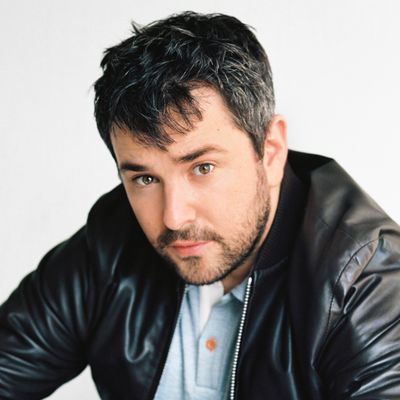
Alex Brightman is an actor and writer, best known for originating the role of Dewey Finn in School of Rock and the title role in Beetlejuice on Broadway, both of which earned him Tony Award nominations for Best Actor in a Musical... Read More
From the show: The Producer's Perspective Podcast with Ken Davenport
Guests
Featured Shows

About
Alex Brightman is an actor and writer, best known for originating the role of Dewey Finn in School of Rock and the title role in Beetlejuice on Broadway, both of which earned him Tony Award nominations for Best Actor in a Musical. Other Broadway credits include Glory Days, Wicked (Boq), Big Fish, and Matilda the Musical (Michael Wormwood). Alex is also a member of the comedy group, The (M)orons, along with fellow Broadway actors/writers Andrew Kober, F. Michael Haynie, and Drew Gasparini. As a writer, Alex is currently developing two new musicals, The Whipping Boy and It's Kind of a Funny Story with his friend and writing partner, Drew Gasparini.
This episode is a little different than our normal programming . . . this episode was recorded live at BroadwayCon a few weeks ago. Thanks again, Broadway Podcast Network and BroadwayCon, for having The Producer's Perspective Podcast on the stage to have this conversation.
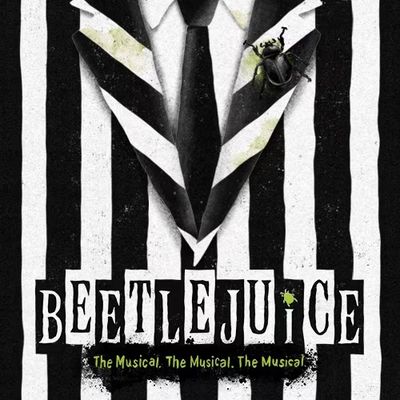
Haven't seen Beetlejuice yet? Go check it out at The Winter Garden before it closes. For tickets, click here.
To keep up with Alex's antics all year long, follow him on Twitter: @ABrightMonster
This week’s #SongwriterOfTheWeek is Sam Salmond! If you enjoyed the outro song in this episode, go on over to www.samsalmond.com or check him out on Instagram @samsalmond.
Enjoy and thank you for coming back to our new season!
Keep up with me @KenDavenportBway on Instagram.
Check out my blog for daily content: www.theproducersperspective.com
This episode was produced by Mary Dina.
Transcript
This transcript was automatically generated and might contain errors.
[0:00] Ken Davenport: So, like at elementary school, they were like, it's important to know your times tables. And I went, I severely disagree. As far as rejection goes, the odds are against you anyway. So I know that. I guess math did teach me one thing. Um I wanna be a producer with a hit show on Broadway.
[0:20] Ken Davenport: You're listening to the Producer's Perspective Podcast with your host, Tony Award winner, Ken Davenport.
[0:27] Ken Davenport: Hey folks, begging your pardon. Excuse me. Sorry to barge you. Now let's skip the tears and start on the whole, you know. That was that whole being dead thing sung by none other than the star of Beetlejuice, Mr. Alex Brightman, who happens to be this week's very special guest on the Producer's Perspective podcast. Why is it a very special guest? Because this episode of the podcast was recorded live at Broadway Con this year. That's right. I sat down with Alex in front of a live studio Broadway Con audience. We talked about his two Tony nominations and his roles in Beetlejuice and School of Rock. And also we talked about him being a writer with his partner Drew Gasparini. They've written new musicals such as The Whipping Boy, and it's kind of a funny story.
So you're gonna hear audience reaction in this podcast. It was super fun. Enjoy the podcast. Go to BroadwayCon next year so you can see content like this live and in person. Uh and now let's hear a little more of that tune from Beetlejuice before we get to Alex Brightman live from BroadwayCon.
[1:38] Ken Davenport: Hi everybody! My name is Ken Davenport. This is a live version of my podcast, the Producer's Perspective Podcast, where I ask uh pillars in the industry, like two-time Tony nominee Alex Brightman. Uh yeah. It's a shame he's not talented, not funny, and has no energy whatsoever. It's a real shame. Yes. Uh, so I'm gonna ask him questions that are from the producer's perspective, all about where he got, where he is. It's what I do on the podcast, but I'm gonna start right in. So, Alex.
[2:11] Alex Brightman: Hey, Ken.
[2:13] Ken Davenport: Was there a moment in your life that you can look back? Like the moment where you were like, that I have to do that on stage. Was there was there that moment in your life?
[2:22] Alex Brightman: Yes. I think that it's more interesting to think about when you're younger, you don't know anything. Quite literally, like there was a moment where I had to figure out this is a pen. It's the first time I ever saw a pen. You know what I mean? Like, you don't know what an apple is or what it tastes like until you eat it. So I think I've always fascinated about that because there was a first time that I saw theater, like experienced the whole entirety of theaters. That was uh when I was eight years old, and I was at the Winter Garden Theater, uh, visiting my uh grandparents in New Jersey, took me down to New York City to see a Broadway show called Cats. And never heard of it. Yeah, never mind.
It's based off of this movie that just came out. Uh did really well. And uh I saw the show, and I, you know, quite frankly, don't remember. You know, you're eight years old, and it's so long ago. Uh, or perhaps I blocked it out. Who knows? And uh I remember being sitting there intermission, and uh before the show intermission, one of these times where it was the show wasn't happening, but I it had happened, and I found myself just so whatever that feeling is, hair standing in the back of my head, chills, some type of feeling that I now can sort of point to as like you get that feeling when you know your life's in the right place, like when you know you're doing something right, and so that just felt right.
And I didn't know what theater was, so I couldn't put a name to it. But when I was out of the theater and went back home to uh my grandparents' house, I was like, whatever that was, more of that. More that's that's when you decide to be a dancer.
[3:47] Alex Brightman: That's right. That's when I decided to be a cat, a full-time cat. And I just wanted to be have the experience of that, whatever that was. I just enjoyed everything about it the lights, the darkness, the communal aspect of people getting together, and then at some point becoming one audience. That to me is like a magic trick. When you can get hundreds and thousands of people to like shut up and then it also invoke similar reactions and and connect without having to turn to each other. I just think there's something still I find fascinating and a bit miraculous about that. So that's only grown since I was eight. And but that moment I remember very specifically, like this is gonna be something about who I am. That's what I love about the theater, actually. You can get 2,000 people a night of all different ages, races, gender, sex, all in one place and all just focused on one mission, one author's message.
[4:41] Ken Davenport: So, what was the first after that eight-year-old experience? What was the first experience on stage for you?
[4:46] Alex Brightman: I auditioned about a year later, this painstaking um year, because I think there was a cutoff age-wise for the community theater in California where I'm from. Um, and I auditioned for uh the children's musical theater of San Jose, uh, which was I didn't know then was to become an enormous part of my life and um development. And I auditioned for a production of the Christmas Carol uh as a musical, a Christmas Carol, excuse me. And uh I was about you know, three inches tall, and so I was like a shoe in for Tiny Tim, which I played uh wonderfully, and my as my parents like to say, I haven't grown since. Um but I it was one of those theaters that auditioned that uh cast everybody who auditioned.
So, so which is seems like one of those things where you're like, well, then great, how do you know who's talented? But what what I find to be spectacular about that is that it it shows you that theater is not about talent, theater is about community. And so that's what I learned first about theater is that it is a community-based thing where it is about uh you know pushing each other up and holding each other when you're falling, and then the talent stuff can come later. But it really at its core, what that place taught me for the upwards of 40-something shows I did there before I left for college, was that it truly is just about developing relationships. That's what good theater is. And so that first show was uh Christmas Carol, and I legitimately never stopped until this moment right now. I mean, I haven't stopped.
[6:10] Alex Brightman: You have a show in just I have a show in an hour, two or you know, whatever time it is. Was there ever a doubt in your mind that this was gonna be the thing that you did for the distribution?
[6:19] Ken Davenport: No doubt. You were just the bullet train.
[6:21] Alex Brightman: It was it it was the only thing that was consistent and has continued to be consistent in my life. Through school, I found out I was very bad at everything else. I mean, I just was I tried, it wasn't for lack of trying, I just wasn't interested in being good at math. I I became very resentful of science. I was like, Well, who's to say? You know, it's like, why can't we be creative? Why does it have to be two plus two? Is it four? Who knows? You know, it was like that kid. Um, but I just was just more creative than I wanted to be uh smart, I guess. And so I developed the stuff that I thought would be important to me and sort of like offloaded stuff that I didn't think. Here's the mistake I made is I learned way too early that things like math wouldn't be important to me.
[7:05] Alex Brightman: So, like in elementary school, they were like, it's important to know your timetables. And I went, I severely disagree. And I, to be honest, I mean, they're very important to some, but I haven't used them in years.
[7:17] Ken Davenport: So you can't always get cast as tiny Tim. There had to be on this rise to who you are today. There had to be moments where you didn't get the part or that knocked you down your dad. How did you get up from those moments? And how do you still now?
[7:29] Alex Brightman: Oh, absolutely. More now than ever, because I think that's the thing. It's like there isn't a lot of places that do that, like cast everybody thing. It's a wonderful thing. I wish Broadway did it more. But then Broadway would just be weird. It'd just be like 900 people in shows and uh the pay would be very low. And uh uh but I rejection is part of this business. And again, one of those things I learned early on is just that like if I was able to be a part of a show, I was happy. It was never about a lead, it was never about the type of role. I am still, and my agents know this to a fault. They don't like me saying this out loud. I am the guy that would absolutely go from playing Beetlejuice to playing third shrub to the left as long as I'm in a show.
I am most happy when I'm in a process and being able to be creative, and I do not care at what level. Um, I'm not above the ensemble. I'm not, I would rather be in a show than not be one because it's below me or beneath me. I don't believe in that.
[8:26] Alex Brightman: So as far as rejection goes, you know, the odds are against you anyway. So I know that. I guess math did teach me one thing. Um but I just know, you know, there's 10 million actors and one person gets a role. So it's like my mindset is when I get a phone call, this has become more of a funny thing from my agents, and they go, Yeah, it's not going your way, or you didn't get the part. I go, Yeah, why would anybody get any part? It's like, you know, it's it's ridiculously against you. So to not get one is you, you know, you're in a bigger group there than you are in getting the role. Um, getting a role is wonderfully isolating because then you are it and then you have something to prove. Not getting it, the pressure's off.
You know, if you don't get a role, no big deal. Go eat some McDonald's and you know, you know, quell your feelings. Don't eat McDonald's. Don't eat McDonald's. Uh this podcast is sponsored by Taco Bell. And no, you know, it's like that's that's right.
[9:22] Alex Brightman: Um, no, but it's that thing where, you know, it's part of life. So thick skin is a big part of this business, but also I work super hard, but don't take things too seriously. And I think that's a very good distinction. Like I work as hard as I possibly can, and at that same exact level, I try not to take any almost anything that seriously. So that when rejection happens, it's like, yeah, fine. Yeah, the moment you do take I'm uh God, I hope I get it. I have to get it, I have to get it. You become a little desperate, and then frankly, you don't usually get those ones. And it becomes like I don't look at theater or auditioning like a pass fail system because it's it's not, it's totally subjective.
And to look at auditioning or theater as anything but subjective, open to opinion, is crazy. To think it's like objectively, if anything's objectively good or bad, that doesn't make sense to me. It should be a conversation. No, no, not everyone should like every show. You should be able to argue and stuff like that. So when you know, you go in going like it's either I get it or I'm gonna quit show business. I just think you're in the wrong business.
[10:20] Alex Brightman: And as I like to say a lot of the time, if you really want to be unhappy, go do a job that pays you more because we don't get paid a lot of money. It's like, you know, you can be unhappy in a job that pays you way more money than musical theater. So that's my advice when I tell people like, I'm really I don't like what I'm doing. I'm like, well, then go work in a coal mine and make a bunch of money doing that and still be unhappy. Or be really happy and make less money, like what I do. Can you talk to me a little bit about what you believe the actor's role and the creative process of a new show is? You've been lucky enough to be a part of two huge musicals, yeah, School of Rock and Beetlejuice, from really early stages.
[10:58] Alex Brightman: And a lot of people think shows are just written and then they get to Broadway, but you were involved in the early stages. Talk to me about what you think an actor's role is.
[11:06] Alex Brightman: Yeah, and just to put it out there, also Big Fish, which I was, you know, that I hope which was, you know, one of those times that like all that creative energy and collaboration, which I'm about to talk about, you know, you they worked on this show for nine years, um, six uh seven of it before they even brought actors on board, and then we closed in three months. So, like, think about that when you like, you know, when I'm about to say about collaboration, but I believe that the actor's role is it changes in every show because the directors and the creative people and uh everyone that has decided to allow you to be a part of this, has their own idea about what your role is too. So I think it's it's good for an actor to first listen and not come in with their own, like, here's what I'm gonna do.
I'm just gonna improvise and you guys are gonna write around me. That's not how things work in my world. I am always very sensitive to the idea of writers as a writer too, to understand that like they have a message than a point of view they want to get out there. My job is to like convey that message as best as possible. And if I have ideas, I make double sure that they want to hear them. If they don't want to hear them, I don't want to fight. You know, it's I think it's good. You know, if I fighting for your ideas is one thing, but like just generating ideas no one wants to hear doesn't help. It's all about collaboration. Is this okay? Is that okay? Um, thankfully, as a great example, Alex Timbers, who directed Beetlejuice and some of the most creative things you've ever seen.
His least favorite thing, as far as I'm concerned, is actors who ask permission, which I love. So what he wants is the actors to come in and have thoughts and have uh arguments and debate. And we didn't we spent so much time joking and talking rather than rehearsing that what came out was what you're seeing on stage, which is something that is wholly vaudevillian and weird and you know, where anything can happen. And uh that was due to a ton of conversation we had beforehand. Like, what do you want to do here? And we talked in private and in public, like we want to play. Okay, great. They hired the right people, they hired people to ask questions and to poke and to prod. And with uh School of Rock, we had a less time.
That's really the only thing. We had within inception of the show to Broadway, it was within a year, which is I don't think has ever happened. Unless you have billions of dollars like Andrew Lloyd Weber, you can't make that happen. Um, I don't think. And so we had less time to play. We had to like come up with a show. So it was like the same process of Beetlejuice, except synthesized into like, you know, five months.
[13:36] Alex Brightman: Was there something about that pro because we I hear about this a lot. Like, I'm develop a bunch of musicals, it takes eight years. Yeah. I read David Henry Huang, who was on my podcast, said to me that the first time he ever heard M Butterfly, the play read out loud by actors, was on the first day of rehearsal for the Broadway production. That's there were no readings, there was none of the stuff, these extrapolated development processes. Do you think we can overread these things or overdevelop them sometimes?
[14:02] Alex Brightman: Well, I think times have changed, certainly, with how much things cost, first of all. Like, like and you know, if if we're talking things like the producer's perspective, it's like I uh from what I know about um developing a musical, and the the more and more I'm learning about developing even television stuff, is that producers in general and people that are you know financing a show now more than ever want to be assured as close to 100% as they can that this show is gonna work. So that's why so many workshops, so many things get read. But I do think what suffers because of that is the material. I do think that uh, you know, sometimes people write really good first drafts, but because of this now culture of like we got to do a reading and then a two-week workshop, and then we're gonna do a four-week lab, and then we're gonna do a dancer's lab and this, the writers get in their own heads and go, is this show good anymore?
And I think sometimes, like I think big fish, I think we had just enough time to write the show worse than it already was. Like the show is in really good shape in Chicago, and Chris Jones, I think brilliantly said from the Chicago Tribune said, the one mistake this show could make is to make too many changes before they put it on Broadway. And he was right. I think we just started to make these changes because we had the time, you know. And that's not um a testament to anybody in any negative way, it's just the culture of theater. You are in a room all the time reading this material, and producers write, you're you know, that you're you're breathing down your neck to make it amazing. So the amazing is a really hard bell to ring because it always changes.
So I think that is a tough thing. But when, yeah, I think I I would love it if we could hear things sooner rather than having them read to the ground. That would be like my thing as a writer. Like, I would love to hear the minute I write something, I want to hear it. So uh I know it's right and wrong rather than letting it marinate and going, oh, maybe it's not great.
[15:48] Alex Brightman: Well, Todd, you mentioned you when did you start writing? Uh I had a big breakup. I just liked it. I like to bring it up because I think it's funny. Um life changes will make your creative process wonderful. I want to put a date on it. 2012-13. I started like but really actually putting my mind to writing things that I wanted to finish. Um I think every actor has some folder on their computer that says writing projects, and then it's just like, you know, a page and a half of like Jerry and Dan talking about the game they're going to, and you're like, and then it's over. And then it's like, I'm not gonna finish that project. Uh but I really started trying to like beginning, middle, and end things in around 2013, and just I didn't know how to write.
I didn't, I knew how to act. So I've read scripts, I know what they look like. So I just read everything I possibly could on how to write, and then ingested it and then tried to output. And it was bad and then it was less bad, and then it was like medium good, and then it got good, and then things went well. But I continue to work on it. I mean, writing again, it's all subjective.
[16:47] Alex Brightman: Were you nervous about telling people that you now write? Yes. Yes, because that you know, the minute you tell somebody you're doing something, the next thing they want to know is when can I see it? Um, and so that actually ended up becoming a good thing for me because I was like, I'm writing this thing, and then two weeks later a friend of mine would go, where's that thing you're writing? And that puts a fire under your ass to actually go, like, oh, accountability is a good thing for when you're a writer because you're your own boss. And so deadlines don't necessarily matter if no one's paying you. So you wake up in the morning, you don't feel like writing, and then that happens 20 times in a row, and then you lose your project.
So I set my mind to the first thing I ever wrote was a uh uh this musical I wrote with my my writing partner, Drew, um Gasparini, who's just who's just announced he's writing the Karate Kid musical, which is super cool. Um, but we I set deadlines for myself like I was being paid. I had three months before my next thing I knew I was doing. I sat at a Barnes and Noble for five hours a day with a computer open in the same tried to get the same spot every day. If some days there was zero things that happened, and some days I would I picked my head up and it had been five hours and I had written 60 pages. So I in three months we wrote the first draft, terrible draft, vomited out, but it was finished. So we had something to work on. And I think that was where I learned about like actual self-accountability.
[18:02] Alex Brightman: That's an amazing like there's so many things about that story that people take decades and decades to learn or get coached on. Yeah. This idea of what paying yourself, like you would show if a if you're bought the job you hate, right? You would show up tomorrow just because someone is paying you. Right. But something you dream about doing, it's very hard to show up for. So this idea of thinking like you're being paid. I know some people out there that actually pay themselves. They take a little money, they put it away, and they buy themselves something at the end of the week, at the end of the month when they finish the work. Going to the same place. I'm one of those people, going to the same place every day, having a little office, doing a little something, do working regardless of what comes out, so smart.
And then what I love is that yeah, you when you have something, I always say it's like uh sculpting. When you have a lump of clay in the middle of the room, it's much easier to shape that lump of clay into something good. But before you have a lump of clay, you can't do anything. And I always I say this a lot to because I now have have this sort of like uh annoying thing that I do to people that are creative. Most recently was to Rob McClure. He's writing, he had this idea to write this um sort of adjacent Peter Pan novel about SME, a sort of an origin story for SME. Brilliant idea. And it is brilliant. And the way he described me and watching him describe it, his eyes would light up, and that's when you know something's right when someone gets excited to talk about the thing they're doing.
And I told him the worst mistake you could have made was telling me this, because now I'm gonna keep checking in on you about it. And he's like constantly writing it. Because what I like to say a lot of the time, and I said it to Rob, telling me about the thing that you're writing is just like a magician telling you about the magic trick they're gonna do. It's much more impressive if you just do it. And I think that is like something I've learned. It's like you tell I'm doing all these cool projects, and they're like, and then three years later they go, Where's that project? Oh, still it's I'm still working on it, but it's great. And you're like, you so you're never working on it, you just want to tell people you're doing something. We're in an age where that's very easy to do. You can tweet out, oh, I'm writing this great project, can't tell you what it's about, and then 17 years later, you're dead and there's no project.
[19:58] Alex Brightman: That's something you don't know, or the next day. Who who knows? Yeah, I I have a book called How to Mouth's a Gape. Yeah. It's true, you know, ideas actually, you can't even copyright an idea. Like legally, you can't copyright it, they're worth nothing until you put some pen to paper and get it done. And now I'm gonna write a note to talk to Rob about that great idea. It's a great idea, truly. And but I, you know, it's also that uh, you know, you can't uh the idea the exactly right. You can't say when I when I hate when people go, a TV show comes out or a musical happens and they go, I had that idea, and I go, You didn't. It's this Facebook thing. If you if you thought of Facebook, you would have invented Facebook.
It's that great line I think from that movie from the guy no one likes anymore, I guess. But but at the time he was, I guess. He's listening, just for you. That's right. But it is a great line. It's like that, I guess I imagine it's Aaron Sorkins' line, but it's a great line. If you had invented Facebook, you would have invented Facebook. You can say I had the idea, but until it's yours, it's not yours. It's about the doing rather than than just the thinking.
[20:54] Alex Brightman: Yeah. Do you you're about to perform in just a few minutes, actually? Yes, do you do you get nervous before you go on stage? Hell yeah. Really? So today, at 250, right now. This is not, I mean, this is abnormal. Everyone here, it looks like you're all about to come fight me. You're saying in the same direction. You're all standing up. I'm outnumbered here in this way, and so this is super abnormal of a situation. This is not a thing. You know, this is a construct that you were all agreed that you're facing this way and you have to be quiet, but at any time, you could just get up and charge the table. And you haven't, and that's great. And but I I I I've said this too, the she's getting up to you.
Um I wish you could all see at backstage at Beetlejuice in every show, but it's funny with Beetlejuice because it's such a crazy funny show. That everyone's backstage and we're just chit chatting whatever, we're all in costume and we're chatting right before the show starts. 1500 people out in the audience uh who have expected a show that their friends told them about that it we need to do perfectly and execute well.
[21:50] Alex Brightman: And everyone's backstage, like, you know, if you just saw us five minutes before the show, you would be like, are they even doing a show? And then the minute, the second, the moment, the smallest amount of time, the moment a stage manager goes stand by, which means the show is about to start in legitimately five seconds, everyone goes like this. They'll be talking like this, and they go. And you just watch a wash of nerves over everybody. So I say that to like comfort other actors who are like, oh, they must not get nervous. No, we're nervous all the time. It's just that's the real act. Is that like pretending not to be nervous your entire life? Um, you know, I'm sweating my, you know, balls off up here, you know.
But I'm pretending to be calm. So this is the act. I'm really a serial killer. Is there you've done a lot of new stuff. Yeah, is there a classic role in musical theater that you want to do? Um that I could revive? Yeah. Uh let's see. I was just gonna say, I was trying to find who said you went there. Oh I was gonna make some sort of off key joke about being like, I'd love to play Harold Hill if they were ever doing a production sometime soon. Um, they've had enough. Everyone leave them alone. They're not they've done nothing to nobody except an entire company of people. Um but uh uh I don't know. I I mean I not really. I mean, I'm not a big I don't yeah, I don't know. I like watching those musicals.
I don't know if I'm built for those musicals. Maybe older plays. Um I know that like you know, I would love to do a production of the show art. Um I would love to do uh I mean at some point to do a production of God of Carnage. It's just one of my favorite plays, and both by Yasmin Array, I just realized. Um yeah, I don't know. I more of like I would perform more in something of revival of a play than a musical. And quite frankly, because of Beetlejuice, I'm a little musicaled out because Beetlejuice is so much musical that I just like I think the next thing needs to be like me in a coma in a play where people talk about my character and I'm just in the coma the whole time, and then at the end I get to go, I'm alive, and then the curtain drops, and that's my whole role. And I still get paid whatever I'm worth.
[24:05] Alex Brightman: You've done uh television stuff as well. What's the difference between performing on stage in front of 1500 people and then in front of a camera that's more money? More money. That's that's when I found my first ever television check. I was like, oh my god, I've been in the wrong business for two decades. Um acting style. Yeah, there certainly is. My wife, uh quoting my wife right now. My wife is a casting director for television, and she uh talks about boxes. Like every uh every medium in creative arts is just boxes. They're bigger and smaller boxes. So you perform for the box that you're in. So on in in the theater is a much bigger box. So you're performing for that space. In on a movie, you're performing what you know is to be on a screen, which is a smaller but still big box.
And for television, you are performing at your smallest. And Michael Kane teaches that, you know, on camera, you just do nothing. Which is like, you know, sometimes you watch a TV show and like, wow, they really took his advice. They're not doing anything. Um, but no, it is a muscle to stretch for sure for me, because I'm broad in general. I mean, I'm just big and uh uh Really? Yeah. Whatever. I've never listened to this podcast. Um it is, but I learned from Marcy Phillips, who's a casting director at ABC, she said this is a muscle you're going to have to flex. It's just it's taking everything that you do, not losing any of the personality you have to offer, and just synthesizing it and boiling it down to drops and not a flood.
And so, and I think that that's been a very important. I and also, again, quite frankly, the stuff I have done on television has been borderline broad stuff. Documentary now, and you know, the even on The Good Fight, oh thank you. Fans of cocaine. Um that but like, you know, for example, like I'm there's a I'm come a movie's coming out maybe I think this summer that I did with Billy Crystal and Tiffany Haddish, and it's uh really funny, but it takes place in like an SNL type setting. So again, not much subtlety had to be used. So I may am waiting for that role that like allows me to sort of be more vulnerable and dramatic, which is something I would die to do. You know, I have sort of become a little bit more of the wild person on Broadway, but I I have a sensitive side, you guys.
[26:12] Alex Brightman: Alex Brightman in the coma. The coma. All right. My last question as we're winding down here, which I ask all of my podcast guests. It's my genie question. Oh, I want you to imagine my James Lipton actors studio momentary. I was imagining James Eichelhart. So imagine the genie from Aladdin comes to visit you. You have such a positive attitude, and I love everything about what you do, both on stage and off. Thank you. Thank you. And the genie says I'm gonna grant you one wish. Okay. What's the one thing that drives you crazy about Broadway that frustrates you, that really gets you that you'd wish you could change in an instant, you cannot say the music man. Nope. Wasn't going to. But the one thing that you want to change for the better about Broadway.
I wish someone would invent. I guess I wouldn't have to invent it if it was a genie, it would just happen, but I do wish desperately someone would invent some type of a device or machine that would knock out the signal on cell phones completely. During the uh length of a Broadway show, and they could be and it doesn't mess with the phone, it doesn't do anything. It just completely disables their phone for the entirety of the production, and then when they're done, it's over. They can't use it. Even if they try, the phone doesn't work. The whole phone, not taking a phone call. The whole phone is a black screen. Um I'm really a big fan of these pouches that are happening. Yeah, they're amazing.
I do, and I think that the they're only gonna get more seamless at how they actually work, and they already are so seamless. But I think they're just there's gotta be some sort of signal. I'm sure it's like totally like hacky and like you know, they would have to I think Iran has it. I was gonna say, I'm sure like they're already sort of working on that for ne more nefarious things uh somewhere. Um, but I do, I just really wish people would just in this, and I sympathize because younger people with phones, it's just you that's what you were born with, and that's a thing you know. And so I do sympathize with younger people who do want to capture everything as currency. Um, but to know does it soul points mean more than uh, you know, sharing things.
Like if you just can gather the memory of a show in your head, is so much better than when you watch it back like 17 times. Because if you just remember the show as being good, that's all you need to remember. If you remember the show being good and then you watch it back five times and go, it was okay, you've ruined it for yourself, I think. I think whether you admit it or not, watching something back and back and back and back and back, it's not helpful, and it's also not live. So I feel compelled a lot of the time to try and just spread that message of like it's live theater. So please just like enjoy it live. Like we things are there's plenty of things to enjoy on screen. There's way more than enough things to enjoy on screen.
Don't give yourself the horrible opportunity to try and watch something that people have crafted for months and years and watch it on your phone like this with bad sound coming up because you dropped in a toilet once. Um that is absolutely not what we rehearsed for. That is absolutely not what we planned on doing it for. Um, we want you to be there. Um, and I if my other wish that's adjacent to that is to make it more affordable. I know that's a big thing for people, and I get it, and I am not in charge of ticket prices. If I was, you it'd all be free, but then I wouldn't be he paid. So uh, you know, it's a cycle. But I do hope in the future there is some sort of middle ground we can all reach that people don't feel the need to reach for their phones all the goddamn time.
Um so yeah, that's it. My genie wish would be no phones in theaters. I I I love this idea of just the memory of it being more powerful than anything you can watch live. Always gonna be better in your head, always. And let it be. Just to bring it full circle, that's what inspired the memory of seeing cats when you were eight years old going home, was what inspired you to do everything that you did to be here today. That's right. And if it has not that for were it not for that memory, I would not be anywhere. Oh, God. See how I set him up for that? I forgot where I was for one second. You reminded me that I was at BroadwayCon. Thank you, everybody. Go see the movie of cats. Go see the movie of cats.
Go see. Um, no, but that's it. I do think that is exactly right. That whole thing is just why people do what they do, is because they had some sort of uh held on to memory of something that is important to them, and that's kind of fundamentally makes them who they are. So if it was ruined by a cell phone, I might be, you know, a construction worker at this point. And there's nothing wrong with that. I'd be the funniest uh best singing construction worker you've ever heard in your life. Who could do a really good Beetlejuice voice? Well, I'm so thankful for cats because it brought you here today. Thank you so much to Alex.
[30:43] Ken Davenport: Thank you, Ken. Thanks to all of you for coming. Thanks to Broadway Podcast Network and for BroadwayCon for having us. Listen to the ProducersPerspective.com. And we'll see you there next time. Bye.
[30:52] Ken Davenport: All right, bye bye. Thanks so much to Alex for hanging out with me at BroadwayCon this year, and thanks to BroadwayCon for having us. If you're excited about this new very special season of the Producers Perspective Podcast, please do me a favor, give us a big old fat juicy kiss review on Apple Podcast. Helps other theater makers and theater fans like you find these conversations and enjoy them. If you're looking for more theater podcasts like this and even better ones, check out Broadway Podcast Network. It's the brand new community and platform for Broadway themed podcasts and all sorts of other online content. To find more about me and learn about all my projects, Broadway and beyond, you can follow me on Instagram at Ken Davenport B Way, or check out my blog.
Sign up at the Producer's Perspective.com. And now, drum roll, please. This week's hashtag songwriter of the week is Sam Salmond. Check out his song Keep on Fighting from his musical called The Home Front. Listen to it. And then for more information, check out his website, Sam Solomon, S-A-M-S-A-L-M-O-N-D.com or at Sam Solman on Instagram. Support new writers. All you have to do is just listen to them. That is support enough. And then share it. We'll see you next week on the Producer's Perspective podcast.
[32:12] ♪ Musical number: "Keep on Fighting" — performed by Sam Salmond ♪
© Broadway Podcast Network, All Rights Reserved