

I think we should retire the term "Jukebox Muscals". Why? Because I believe there are better terms we can use to describe this genre of musicals. If you want to read more of my thoughts on this topic, go to my blog. Referenced in this episode: Rock of Ages... Read More
From the show: The Producer's Perspective Podcast with Ken Davenport
Featured Shows
About
I think we should retire the term "Jukebox Muscals". Why? Because I believe there are better terms we can use to describe this genre of musicals.
If you want to read more of my thoughts on this topic, go to my blog.
Referenced in this episode:
- Rock of Ages
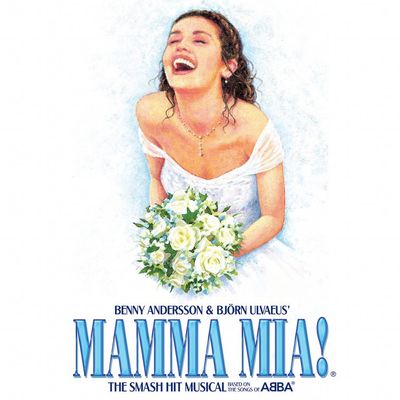
- Mammia Mia
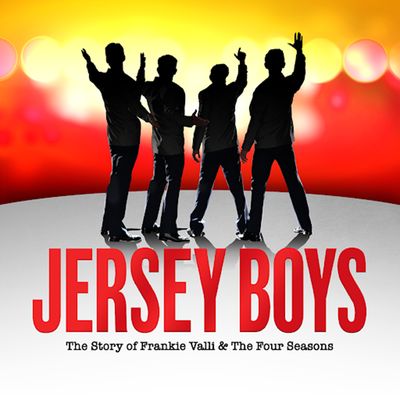
- Jersey Boys
- All Shook Up
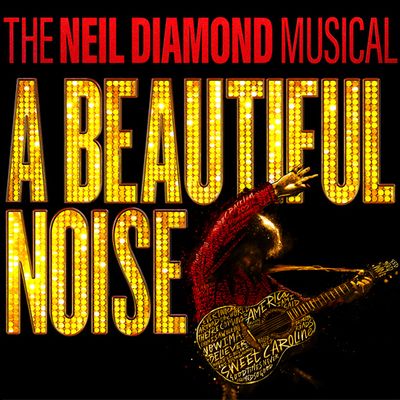
- A Beautiful Noise: www.abeautifulnoisethemusical.com
- The Producer's Perspective: www.theproducersperspetive.com
About the podcast:
After 6 years of podcasting with one style, we're shaking it up here - no guests! Just me! I'm giving you micro-episodes with my perspective on Broadway and the comeback on Broadway.
About me:
Ken Davenport is a Tony Award-winning Broadway producer and writer whose credits include Once On This Island (Tony Award), Gettin’ the Band Back Together, The Play that Goes Wrong, Groundhog Day (Tony nomination), Deaf West Theatre’s Spring Awakening (Tony nomination), It’s Only a Play, Macbeth starring Alan Cumming, Godspell, Kinky Boots (Broadway - Tony Award, National Tour, Toronto, Australia, and West End), and more, including multiple Off-Broadway productions! Ken’s shows have been produced internationally in over 25 countries around the world.
He is the founder of TheaterMakersStudio.com, a one-of-a-kind "masterclass" community that provides training and inspiration from Broadway's best to writers, directors, producers and more.
Ken also serves as the Executive Producer for North America for Andrew Lloyd Webber’s Really Useful Group. Outside of theatre, he has produced award-winning content for both film and TV. Ken’s unique production and marketing style has garnered him international attention in numerous publications, including Vanity Fair and The New York Times.
Upcoming projects include Broadway Vacation, Joy the Musical, My Life In Pink, Harmony: A New Musical written by Barry Manilow and Bruce Sussman, a musical based on the life and songs of Neil Diamond, and a musical based on the life of Harry Belafonte.
Keep up with me @KenDavenportBway on Instagram.
Check out my blog for daily content: www.theproducersperspective.com
This episode was produced by Mary Dina.
Transcript
This transcript was automatically generated and might contain errors.
[0:39] Ken Davenport: Hey everybody, it's Ken Davenport here. Welcome back to the Producer's Perspective podcast. This week, I'm gonna dig into musicals based on pre-existing music, more commonly referred to as the jukebox musical. I'm gonna tell you why I think that term should be partially banned. Stay tuned for more on that in just a few moments.
[0:39] Ken Davenport: I wanna be a producer with a hit show on Broadway. You're listening to the Producers Perspective Podcast with your host, Tony Award winner, Ken Davenport.
[0:39] Ken Davenport: Hey everybody, it's Ken Davenport here. Welcome back to the Producers Perspective Podcast. This week we're talking about a very commercially successful type of musical, a genre unto itself. It is what is more commonly referred to as the jukebox musical. I'm gonna talk about how we're going to come up with a better classification for musicals based on pre-existing music. That's how I refer to these, but that's a very long boring description. Musicals based on pre-existing music or a pre-existing catalog. That's certainly not a buzz phrase. So we're gonna come up with some different classifications for these types of musicals today.
[1:20] Ken Davenport: Today they have been very successful, and a lot of people think the birth of the musical based on pre-existing music was Mamma Mia. And that is actually not true. Mamma Mia is the most famous example of it in modern times, of course, because it spawned 142 companies all over the world and made a bajillion dollars. Spawned a movie and even a movie revival, and actually, probably sold more albums, more ABBA albums than ABBA's original run when they were a pop group. So obviously they can be very commercially successful. Then we've seen Jersey Boys, we've seen Beautiful, etc.
[2:01] Ken Davenport: So a lot of people think it was born with Mamma Mia, it was not. Jukebox musicals, as they are commonly referred to, or these musicals based on pre-existing music, date way back. I mean, Ain't Misbehavin' is technically a quote unquote jukebox musical. Forever Plaid, that little show, that's technically a jukebox musical. There have been tons of them throughout history where musicals have been written, whether original stories or not, where music that has existed previously was used as the score.
[2:39] Ken Davenport: So this term jukebox musical, it has a very negative connotation these days. Critics have come out against them. I think it was Jesse Green for the New York Times who called them a cockroach, or it might have been Ben Brantley. They critics tend to slap at these suckers because they think there is just a lack of originality. And take it from me, because I have worked on several, it can be very challenging to craft a story around songs that already exist, right? So I like to break these down a little bit more.
[3:14] Ken Davenport: One, I don't like that term jukebox musical anymore. And frankly, I just don't think it applies. I mean, first of all, the most successful quote unquote jukebox musicals we've seen, Mamma Mia, Jersey Boys, Beautiful, that's one artist, right? One artist. When was the last time you went up to a jukebox, put in a quarter, and you saw only one artist in the jukebox? Well, first of all, when was the last time any of us saw a jukebox? That's a whole other story. But you understand what I'm saying. Jukeboxes don't usually have one artist only in the jukebox.
[3:51] Ken Davenport: So already it doesn't seem to apply. It may apply to some, Rock of Ages, Forever Plaid again, right? But not all, and not even our most successful. So I break these types of musicals down into three different buckets. I'm gonna go through them now. The first would be the bio musical. That is your Jersey Boys, and that is your Beautiful, and that is also the musical that I am producing with Bob Gaudio of the Four Seasons and Jersey Boys, A Beautiful Noise, the Neil Diamond musical, where we are telling the story of the artist. This is the bio musical. That's bucket number one.
[4:31] Ken Davenport: Bucket number two of this type of musical is what I call the catalog musical, where one artist's catalog is used to tell an original story. So this would be Mamma Mia. This would be All Shook Up, which use the songs of Elvis, right? This is the catalog musical. Again, this is an original story, so it's unrelated to the artists who wrote the songs, but it is only using that one artist's song. And the third bucket, the third bucket of these types of shows would be what I call the compilation musical or the jukebox musical, the pure unadulterated. There are lots of different artists in there. This is your Rock of Ages. This is your Moulin Rouge. Moulin Rouge would actually apply, even though it's also based on a movie, so it gets a lot of credibility from there. But those are the three different types of quote unquote jukebox musicals.
[5:35] Ken Davenport: Again, I want to do away with that term, except for the specific jukebox style musical like the Rock of Ages. I believe there are three different types. There are, same with me, bucket number one, the bio musical, bucket number two, the catalog musical, and bucket number three, the compilation or the jukebox musical. Now, here's a big question for you. And I'm gonna leave you with this. Which type of musical based on pre-existing music? Bucket number one, bio, bucket number two catalog, or bucket number three compilation. Which one has been more quote unquote successful? Which has a higher recoupment rate? That's how we define success in this business. Getting their investors their money back and getting to profit. Which type of musical, bio catalog or jukebox, has been more quote unquote successful, which has a higher recoupment rate?
[6:41] Ken Davenport: Got a guess? Is it A? Is it B? Is it C? The answer is I will tell you next week on the Producer's Perspective podcast. So don't forget to tune in to next week. I will reveal the answer then and talk about another scintillating topic that I know you will be interested in. We will see you then on the Producer's Perspective podcast.
[7:17] Ken Davenport: Thanks again for listening to the Producers Perspective Podcast. If you found this episode informative, educational, inspirational, or just entertaining, do me a favor and share this episode with another theater maker or two in your life. My mission is to amplify the conversation about theater because if we get more people talking about it, we'll get more people making it, we'll get more people seeing it. It will be great for the industry as a whole. If you want more of my daily perspectives on theater and Broadway, check out my blog at the ProducersPerspective.com or check out my social media accounts at Ken Davenport Bway on Instagram and at Ken Davenport on Facebook, Twitter, and LinkedIn. We'll see you for the next episode.
© Broadway Podcast Network, All Rights Reserved