

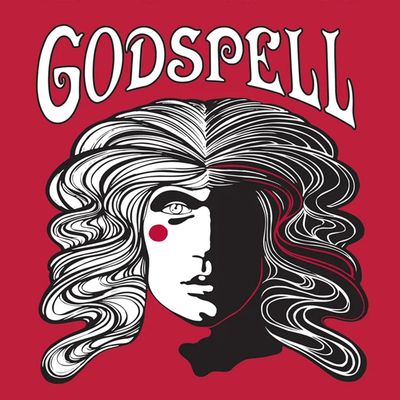
It has been 10 years (!) since I crowdfunded Godspell. It remains one of the most difficult things I’ve ever done in this business. It took two years to put together. It took three law firms. I had to pass a securities exam... Read More
From the show: The Producer's Perspective Podcast with Ken Davenport
Featured Shows
About
It has been 10 years (!) since I crowdfunded Godspell. It remains one of the most difficult things I’ve ever done in this business.
It took two years to put together. It took three law firms. I had to pass a securities exam. Oh, and let me tell you when this SEC slaps your wrist in the midst of your offering, you lose some sleep.
But, like most difficult things, it was also one of the best things I ever did for my business. And my life.
Not only did we fund the production, and help launch the careers of some superstars, but I’m also still friends with many of “People of Godspell”, which is what we called our Producers and Investors (we had over 730 of them!).
We created a family. And it still exists. (That’s pretty common with Godspell, actually, as anyone in it can attest.)
After we successfully crowdfunded the show, using an old regulation called a “Reg A,” Congress passed The Jobs Act . . . which made it MUCH easier for businesses to crowdfund. (Bad timing on my part!)
Everyone predicted an explosion of this type of microfinancing in all industries . . . Broadway and Off-Broadway included.
And it didn’t happen.
I don’t know of ONE Broadway or Off-Broadway production to utilize the new “Regulation CF” since it was passed.
Why?
Here are three reasons why.
Referenced in this episode:
- 8 Tips for a Kick A$$ Kickstarter Campaign: read here
- How To Raise Money For the Arts... Or For Anything: click here
- NY Times Article on Godspell: NYTimes.com
- Learn More about TheaterMakers Studio: www.thetheatermakersstudio.com
- The TheaterMakers Facebook Group: www.facebook.com/groups/theatermakersstudio
- Continue the conversation: www.instagram.com/kendavenportbway
- The Producer's Perspective: www.theproducersperspetive.com
About the podcast:
After 6 years of podcasting with one style, we're shaking it up here - no guests! Just me! I'm giving you micro-episodes with my perspective on Broadway and the comeback on Broadway.
About me:
Ken Davenport is a Tony Award-winning Broadway producer and writer whose credits include Once On This Island (Tony Award), Gettin’ the Band Back Together, The Play that Goes Wrong, Groundhog Day (Tony nomination), Deaf West Theatre’s Spring Awakening (Tony nomination), It’s Only a Play, Macbeth starring Alan Cumming, Godspell, Kinky Boots (Broadway - Tony Award, National Tour, Toronto, Australia, and West End), and more, including multiple Off-Broadway productions! Ken’s shows have been produced internationally in over 25 countries around the world.
He is the founder of TheaterMakersStudio.com, a one-of-a-kind "masterclass" community that provides training and inspiration from Broadway's best to writers, directors, producers and more.
Ken also serves as the Executive Producer for North America for Andrew Lloyd Webber’s Really Useful Group. Outside of theatre, he has produced award-winning content for both film and TV. Ken’s unique production and marketing style has garnered him international attention in numerous publications, including Vanity Fair and The New York Times.
Upcoming projects include Broadway Vacation, Joy the Musical, My Life In Pink, Harmony: A New Musical written by Barry Manilow and Bruce Sussman, a musical based on the life and songs of Neil Diamond, and a musical based on the life of Harry Belafonte.
Keep up with me @KenDavenportBway on Instagram.
Check out my blog for daily content: www.theproducersperspective.com
This episode was produced by Mary Dina.
Transcript
This transcript was automatically generated and might contain errors.
[0:00] Ken Davenport: Hello, everybody, it's Ken Davenport here. Welcome back to the Producer's Perspective podcast, episode number 234. So, one of the most challenging and yet most rewarding in many, many ways, initiatives that I've done over my career has been the crowdfunding of Godspell. And I actually thought, and so many people thought that what we did with Godspell would start a domino effect of crowdfunding throughout the theater industry. And you know what? It didn't. And on today's podcast, I'm going to talk about three reasons why crowdfunding did not take off on Broadway. So stay tuned, and we'll get to the reasons why it's not a thing today.
[0:43] Ken Davenport: I want to be a producer with a hit show on Broadway. You're listening to the Producers Perspective Podcast with your host, Tony Award winner, Ken Davenport.
[0:56] Ken Davenport: Hey everybody, it's Ken Davenport here. Welcome back to the Producer's Perspective Podcast. Somehow it has been 10 years, 10 years since I crowdfunded Godspell, which remains one of the most difficult producing initiatives that I've ever done in my entire career. It actually took me two years to put together the plan to crowdfund Godspell. It took three law firms. I actually had to pass a series 63 exam in order to be able to raise money in certain states. I think Maryland was one of them. Don't ask me why. Oh, and while I'm at it, uh full disclosure here, I will tell you that along the way, during those two years, the SEC even gave me a little slap on the wrist about our offering, which wasn't our fault, by the way.
It really wasn't our fault. But I will tell you this: you haven't lived until you've gotten a call from the SEC at about 4:30 on a Friday afternoon saying we want to talk to you about your offering. We worked it all out, obviously. Uh and it was a bit of miscommunication, but this kind of regulation is one of the reasons we're gonna get into on why crowdfunding that I did for Godspell didn't take off in our industry.
[2:11] Ken Davenport: But now listen, as difficult as it was, crowdfunding Godspell was also one of the best things I ever did in my business and also in my life. Not only did we fund the production of Godspell, and we helped launch the careers of some pretty big superstars right now. Uzo Aduba, Hunter Parrish was in it, Lindsay Mendez went on to win a Tony Award. But I'm also still friends with many of the people of Godspell, which is what we called our producers and investors. And a lot of people don't know this. We and ask me this a lot. We had over 730 investors in Godspell. We created a family, right? We created a family, and that was the whole goal. Many people asked me why did I crowdfund Godspell this way? And the reason I did it is wasn't to raise the money, it was to raise a family, to bring a community of people together.
[3:05] Ken Davenport: In fact, how I came up with this initiative and how I come up with most of my marketing initiatives is I actually look to the organic, the organic fabric of the show itself. And in Godspell's case, I actually sat down with Steven Schwartz, the composer, and said, Stephen, will you tell me what is Godspell about? And what he said was he didn't say it was about Jesus and the disciples or any of that. What he said was, it's about a community of people coming together. So that made me think, and for those of you looking to come up with marketing ideas for your shows, get into the nitty-gritty of what your show is about and then try to build a marketing initiative around it. So I heard that from Stephen, it was about bringing a community of people together. So I said, what can I do to bring together the largest community on the business side, the largest community of producers and investors ever. And that's what I came up with the idea to crowdfund it.
[4:06] Ken Davenport: And look, crowdfunding was a bit of the rage then. I had witnessed uh the uh Barack Obama campaign, which was really crowdfunded, lots and lots of donors at small amounts, and he raised a lot of money that way. But there was not a mechanism to raise money for profit in in a crowdfunding way. So, to be honest, I asked like my lawyers, I probably like 12 times, I want to do this, and they were like, no, can't do it. No, can't do it, no, you can't do it. And then, and I urge you all to do this, don't take no even for the 12th time. It was some late-night Googling that I stumbled on an old regulation, an archaic regulation called Reg A, that allowed small businesses to crowdfund. Basically, what I was thinking was, you know, there are sh there are companies out there, publicly traded companies, penny stocks that have small market capitalizations, even less than Broadway Musicals.
Surely there has to be a way to do this. I stumbled on uh this thing called a reggae, called my lawyer the next day and I was like, Can we do this? There was silence, and then the lawyer said, actually, you know what? You can.
[5:14] Ken Davenport: Again, it took us two years to figure it out. By the way, since then, reggae has actually been uh redesigned and overhauled. In fact, Congress, the Office of Congressional Oversight called me and did an interview with me because we were one of the first or one of the few people uh around that time to get a reggae passed through the SEC. So they asked us uh what was problematic about it, and boy oh boy, did I tell them. Let me tell you. Uh so uh we got it through and we successfully raised the money. We got a front page story in the New York Times about it, uh, and it was a pretty big deal. So a lot of people came to me saying, one, when are you doing this again? And two, do you expect it to explode uh crowdfunding in the industry?
Now, again, like I mentioned, reggae has been uh redone. There's a new regulation called Regulation CF, stands for crowdfunding. So you would think that crowdfunding would actually take off on Broadway, and you know what? It hasn't. It hasn't.
[6:19] Ken Davenport: And a lot of people ask, like, why do you think it hasn't? I'm gonna give you three reasons right now why crowdfunding did not take off on Broadway. Number one, it has to do with the max amount of money you can raise. So regulation CF was designed for small business, so there's actually a five million dollar cap on how much you can raise, which immediately knocks out 99% of Broadway musicals, leaving only Broadway plays, right? So that is one of the reasons. Like only plays could even consider doing it this way. Never mind whether the producers want to do it this way, right? Now, off-Broadway shows are well under 5 million, or they should be under 5 million. So this regulation should be in play for any commercial producer looking to crowdfund an off-Broadway show.
So if you are looking at doing an off-Broadway show and are like, I want to do something unique and different, you could use the regulation CF for your off-Broadway show. Now, I still don't know anyone who's done it this way. I still don't know.
[7:24] Ken Davenport: Here's a couple other reasons why I think that's the case. So, number one, the max money you can raise. Two, it's not cheap to raise small amounts of money. So, in our business, there are a limited number of vendors in each area of expertise. There are like three to four advertising agencies, two to three accounting firms, and still a limited numbers of lawyers. And our lawyers do not specialize in this because they can't. There's just not enough work in this regulation, which means you're gonna have to hire another attorney, right? This is gonna add to your budget. There's also additional expenses. There's online portals you need, there's all sorts of more regulation. This is actually a problem with regulation CF.
And I think it's not just the theater industry that's having this issue, it's other industries as well. I don't think regulation CF is used very often. And that's because there's there's too much expense in actually getting it. I like to say the only people that win in some of this regulation are the lawyers, right? And if you're a one billion dollar market cap, what's a few hundred thousand dollars in legal fees?
[8:29] Ken Davenport: I used to actually uh complain the SEC was picking on us like crazy during Godspell, and yet like casinos have no problem, like all the, you know, uh Bernie Madoff had made off with millions and millions and millions of dollars. Like the more money you have, you just buy your way through, it seemed anyway to me. Um, so when you're dealing with small amounts of money, it's harder to afford all those additional expenses, including the legislation, uh sorry, the lawyers and the online portals and technology and all that. So a lot of people just say, you know what, it's not worth it. I'm gonna raise money in the traditional way. And the third is look, you have to work even harder to raise less money, right?
So the thing is, I listen, I'll tell you a story. I remember this consulting session I had with a writer who launched a Kickstarter campaign, and he wondered why he hadn't raised all his money in the first five days. So I asked him, like, what did you do to promote it? And he said, nothing.
[9:30] Ken Davenport: Don't I just did it on Kickstarter. Don't people find it on Kickstarter? So, like anything, just because you build it doesn't mean they will come. That old cliche from Field of Dreams is BS. You have to spread the word about your offering. And I think the mistake that a lot of people make is that, oh, I'm gonna do something crowdfunding, it's just gonna be easier, like everyone's gonna come running. It's not. You may get more people to invest, but they're going or donate, but they're gonna do so at less amounts of money. Sometimes it's less work to go to fewer people and just ask for more, right? So a lot of people have chosen not to go the crowdfunding rate because it's hard work. You gotta then nurture all those investors and feed them.
Now, this is something, this was part of the mission of God Small. And honestly, it's part of my mission to this day. I love the small investor. I still take small investors on all of my shows because I believe what you're doing is again putting a family together for that show.
[10:29] Ken Davenport: You're raising a marketing army at the same time. If I have a hundred investors versus 10, I've got a hundred people out there telling their friends going to see the to go see the show. This is a strategy I learned from Hal Prince. This is what he did back in the day when he was a producer before he was a director, right? So don't think that just because you're crowdfunding that it's going to be easier, it's actually harder. It's actually harder. So those are three reasons, right? The maximum amount of money you can raise. It's not cheap to raise this small amount of money, and you have to work hard. Be prepared to market your butt off, right? If you're going to do crowdfunding, you may have to market it even more.
[11:11] Ken Davenport: And now look, there is a fourth reason. There is a fourth reason. I uh this is a little bonus reason, right? I said three reasons. I'm gonna give you a fourth. And the reason why this is an extra bonus is this is one we just need to get over. And then I think a lot of people don't want to use the crowdfunding model because they think it cheapens their production or it makes them look desperate. Oh, I'm just you know collecting spare change in between couch cushions. That's not the case. By not allowing the small investor to participate in the making of theater, we're actually ignoring a huge portion of the theater-going population. I talked about Barack Obama's campaign. Small donors are what got Barack Obama elected.
Small investors are what brought down giant hedge funds with the GameStop saga we just saw a few months ago, right? By embracing small investors, whether through crowdfunding or whether producers dividing up $50,000 units into $10,000 bite-sized units, more reasonable numbers, we actually could raise more money for more new shows, more new voices, and we'd have money to market them as well.
[12:22] Ken Davenport: So if you are looking to crowdfund your show, I say go for it. Just remember, it may be a little bit more expensive. You may have some more regulation, right? And you're going to have to work hard. You're going to have to market it. But I will tell you this if it's something you want to do, it's worth it in the long run. In the long run. Not in the short. You're going to be sweating like crazy as you raise all that money a little bit at a time. But you're going to meet amazing people in the process. And provided you do that work and do that effort, you will get to your goal.
[13:01] Ken Davenport: Thanks so much for listening to the Producer's Perspective podcast. If you want more information on raising money or crowdfunding, I've got a ton of stuff on my blog, including we have eight tips for a kick-ass Kickstarter on my blog. Just Google that and you'll find it. Or check out my book, How to Raise Money for the Arts or For Anything Available on Amazon.com. We will see you next time.
[13:39] Ken Davenport: If you found this episode informative, educational, inspirational, or just entertaining, uh do me a favor and share this episode with another theater maker or two in your life. My mission is to amplify the conversation about theater because if we get more people talking about it, we'll get more people making it, we'll get more people seeing it. It will be great for the industry as a whole. If you want more of my daily perspectives on theater and Broadway, check out my blog at the ProducersPerspective.com or check out my social media accounts at Ken Davenport B Way on Instagram and at Ken Davenport on Facebook, Twitter, and LinkedIn. We'll see you for the next episode.
© Broadway Podcast Network, All Rights Reserved