

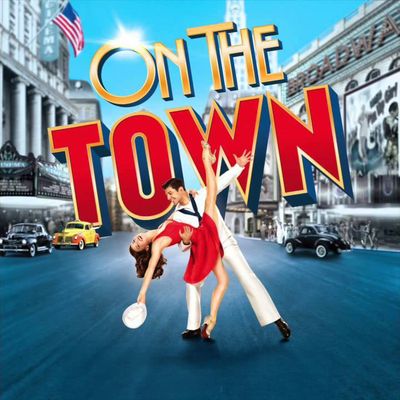
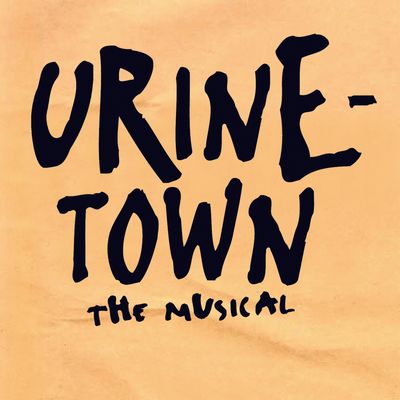
John Rando is a stage director who won the Tony Award for Best Direction of a Musical for Urinetown the Musical in 2002. He received his 2nd nomination in the same category in 2015 for the 2014 Broadway revival of On the Town... Read More
From the show: The Producer's Perspective Podcast with Ken Davenport
Featured Shows
About
John Rando is a stage director who won the Tony Award for Best Direction of a Musical for Urinetown the Musical in 2002. He received his 2nd nomination in the same category in 2015 for the 2014 Broadway revival of On the Town. He has directed Off-Broadway, on Broadway and in regional theatre. On Broadway he made his debut in 1994 as the Assistant Director for the Arthur Miller play Broken Glass. He next directed on Broadway in 2000, with the play The Dinner Party by Neil Simon. Rando directed the musical Urinetown, which opened in 2001 and closed in 2004, and won the 2002 Tony Award for Direction of a Musical. He directed several staged concerts of musicals for New York City Center's Encores!: Strike Up the Band, Do Re Mi, The Pajama Game, On the Town, Damn Yankees, Gentlemen Prefer Blondes, and Little Me.
If you’re a Director, or just plan on working with a Director (which is all of us), then listen in to this enlightening podcast to hear John talk about . . .
- How he created his own major in college to pursue the theater.
- Why Directors have to balance art and commerce just like Producers.
- The story of the unlikely success of Urinetown.
- Why he likes to work with people with opinions.
- The most controversial question I’ve ever asked on any podcast to date.
You’re going to learn a lot by listening to the Director of Urinetown, The Wedding Singer, and this past season’s glorious On the Town talk Broadway . . . but one of the most interesting things you’re going to learn is that John is simply a great guy.
Keep up with me: @KenDavenportBway
Transcript
This transcript was automatically generated and might contain errors.
[0:00] Ken Davenport: I wanna be a producer with a hit show on Broadway. I wanna be a producer.
[0:09] Ken Davenport: Hey guys, it's Ken. Before we get to this week's podcast, I wanted to remind you about this beautiful little show I'm producing this fall called Daddy Long Legs by the director of a little show you might have heard of called Le Miz, John Caird, and Paul Gordon, who wrote the beautiful Jane Eyre, which was on Broadway a number of years ago. You gotta come check it out. And hey, here's a little secret. At the end of this podcast, as a little Easter egg for you, I'm gonna play one of the songs from the show, The Secret of Happiness, sung by one of the most talented ladies in the city, Megan McGuinness. So hang on to the end of the podcast and listen to the song from Daddy Long Legs. Okay, now on with the show.
[0:50] Ken Davenport: Hello, producers, prospective podcast listeners. I am Ken Davenport. We are gonna have some fun today. Yes, yes. Hal Prince once said to me, "Kid," okay, he didn't say kid, but he did say, "Ken, if you want a show to happen, get me to direct it." And what he was telling me was that if you get an A-list Broadway director, the money will come, the theater will come, everything will come, these shows will happen. And today, guess what? We have one of those Broadway A-list directors on this podcast. I'm sitting here across the table with Tony Award winner and occasional golfer, John Rando. Welcome, John.
[1:30] John Rando: Thank you for that introduction.
[1:33] Ken Davenport: Yes. John made his directorial debut back in 2000 with a terrific production of The Dinner Party, but he really burst onto the scene with the very uniquely titled Urinetown, which won him that aforementioned Tony. After that, he went on to direct shows like The Wedding Singer, A Christmas Story, and On the Town, which got another Tony nomination for him. And just a few weeks ago, he opened Penn and Teller on Broadway to rave reviews, and I just tweeted that it recouped its investment today. So that's good news.
[2:01] John Rando: It's very good news.
[2:03] Ken Davenport: I did not know that. I have a lot of happy producers.
[2:07] John Rando: Yes, you do.
[2:08] Ken Davenport: I hope you are happy over in the Frankel office. I hope you got a nice recoupment bonus.
[2:15] John Rando: I don't know. I'm hoping.
[2:17] Ken Davenport: I think you do. I know your agent well. I have a feeling you do. And actually, I know his agent well because John is attached to a very exciting project called Getting the Band Back Together that some guy named Ken Davenport is bringing to Broadway. So, John, let's—
[2:34] John Rando: Yes, yes, Ken Davenport is bringing that to Broadway. Thank you, Ken Davenport, wherever you are.
[2:41] Ken Davenport: As soon as we get a theater. So, John, take us back. When did you get bit by the theater bug? How did this all happen?
[2:47] John Rando: Oh, um, well, yes. That's a good question because it started as a junior high school kid who heard that the speech class in seventh grade would be a lot of fun and might be pretty easy. So I took that speech class and we did a lot of improv and it was a lot of fun. And I became a sort of an actor and acted a lot in junior high school and in high school. And so that's when the theater bug bit. However, I didn't show any signs of swelling or anything like that outwardly because I kept telling my parents that I was going to go to law school. And I didn't do that. I didn't go to law school. I stayed in the theater. But I did study. So, anyway, that's how it happened.
[3:44] Ken Davenport: Why not law school?
[3:45] John Rando: Well, I wanted—I really wanted to be a director. In high school, I really started to—where I had a great drama teacher, Robert Judd was his name at Clear Creek High in Houston, Texas, League City, Texas, to be specific. Anyway, I did a lot of plays with him and working with him, and when I went to college, I recognized that that's what I really wanted to do. And so at the University of Texas at Austin, where I went to school, I kind of devised my own degree plan under the humanities label, and I wrote to this university and said I really want to get a humanities degree, but I want to become a director, and I figured this is how I can do it. I can study languages and Shakespeare and history and philosophy and maybe take a few theater classes too. But I didn't want to get a degree from the theater department. UT has this brilliant theater department, but I thought I needed to have a few more, you know, thoughts in my head. So that's how I did it.
[4:49] John Rando: So after college, I was faced with this dilemma, and so what should I—well, how can I do? So I got a Fulbright fellowship to study theater in Europe in Germany and Italy, and so I did. I went there and then I came back, and then it was like I had to really face the music and decide am I gonna do this for a career? And so at that point, I applied for graduate work to UCLA in theater directing, and I also applied to Columbia School of International Relations, thinking that if the theater thing didn't go well, maybe I could get into this school and do some international relating because I spoke German and Italian. And so in the mail from Columbia, I got a very thin envelope and I opened it up, and of course it was a rejection letter.
But from UCLA, I got a round trip ticket, airplane ticket. Come and see us, come meet us. We're really interested in talking to you. We really think you have something. And so I went to UCLA and studied theater through and got my MFA in directing.
[5:57] Ken Davenport: So you just—back to undergrad for a second, you designed your own major.
[6:01] John Rando: Yes.
[6:02] Ken Davenport: Sounds like that. Which for those of you—this is a real theme developing in a lot of the artists that I talked to, like yourself, who have gone on to very successful careers. Theresa Rebeck in last week's podcast spoke about how she did the same thing basically. She convinced them to have a playwriting class, which I find fascinating. So you got this undergraduate degree that you designed yourself, and then you got your MFA in directing. But the seed for directing was planted in high school, you said?
[6:27] John Rando: Yeah, high school. The first play I directed was called—it was my senior year, it was called The Butler Did It. And it was a kind of lousy version of a mystery comedy play.
[6:39] Ken Davenport: I smell a revival.
[6:42] John Rando: I don't think so. I don't think it ever lived. But it was very funny for a high school play, you know, and of course, there was no butler in the play. There was a maid, and the maid did the murder.
[6:55] Ken Davenport: What was it about directing? You know, as high school students, most people want to be on the stage so they can show off to all their friends. What was it about directing that was very attractive to you that still is attractive to you?
[7:08] John Rando: I love the craft of acting, and I find it as a director, I love actors, I love watching and working and trying to help solve the mystery of the scene, of the language of the moment. So that's what I'm really into. So that's what I was into. So at that time, and as I got as I went through college and into grad school, I started to realize what I really liked was the whole picture. I didn't just like—as an actor, because I had a choice not to be an actor and not to try to be an actor. And I acted all through college and into grad school, but then I stopped after that. I never acted professionally. And I just wasn't that interested in my body. I wasn't that interested in my voice, and all of that stuff that actors have to be into—my own sort of weird psychology.
And I was more interested in the literature and the storytelling and what these stories can do to an audience and how an actor and working with text can transform himself or herself, and those are the kind of things that just I was attracted to.
[8:10] Ken Davenport: So tell us about the path of Urinetown and how Urinetown happened.
[8:15] John Rando: Yeah, that would—Urinetown. I got a phone call from these very young guys who were becoming producers, and Matthew Rigo at the Araca Group, the Great Araca. At that time they were just starting out, and Matthew, I met at the Berkshire Theater Festival because he and I were working together there as young directors. And he called me and said, "Hey, I got a really cool play that I think you'd like. It's a musical I think you'd like to do it." And he wanted me to come and see it. It was happening at the Fringe Festival, another—the first production of it, and I couldn't go. So he sent me the script, and I read the script without listening to the music. I called him up and said, "This is brilliant.
I want to do it." And then he said, "Did you hear the music?" I said, "Not yet." But I found that to be a very good help in picking musicals. You really do have to read them and understand the story and the through line and make sure you like it and want to tell that story first. Because music is so seductive, it's just like amazingly seductive. So, anyway, that's how that happened, and then you know, it was just like this great, very deliberate focused journey of how to get that show to the ultimate goal of being on Broadway. And we did it through a couple of readings, some development readings, and then a fantastic off-Broadway production on 54, on this very street, just a half a block from here at a police station. One of my favorite crappy off-off-Broadway theaters in the bottom of the state.
[9:50] Ken Davenport: Yes.
[9:51] John Rando: Above a courthouse is a police station, it was, and part of that inspired us to do the design. We just wanted to, so we just basically saw that they had like this white tile, and we said, "Okay, let's in the hall." He said, "Hey, that'll be great for our set. We'll put that in our set," and we just kind of created that space to make it feel like it was really there, like you were in it. So, anyway, that's how Urinetown happened, and we were really fortunate. And it came at a really compelling time in the theater where I think Broadway was changing dramatically, and then 9/11 happened four days before we were supposed to open. 9/11 happened, and it was an amazing moment. And so we had a delay.
In fact, Broadway went dark for a few nights, and when we came back to perform—this is before we opened—we still had our opening night cake that we were supposed to eat. So I made a speech before we started, just thanking the audience for actually coming to the theater because you know that was a pretty scary time, and invited them all to have cake after the show. We had the cake in the lobby there once they finished, you know. It was a good chocolate cake.
[11:00] Ken Davenport: When that show was done, when you read it, when you were doing it off-Broadway, did you think, "Oh, we could get this to Broadway? This is a Broadway show"?
[11:07] John Rando: Well, the goal was not—the we kept saying we need to be a thorn in Broadway's side. That's sort of what I kind of kept telling people. So we need to be a thorn in Broadway's side, and we need to be such a problem child that they don't know what to do, so they have to put us there. And so we created it. We created—we created the—there was no place for that show actually to be financially, commercially successful because of the size of it off-Broadway. It really couldn't—Broadway couldn't sustain it. We knew that. But we created a production that if we had to stay off-Broadway, we would try to sustain it. The good news is that we did well, and so we could move it to Broadway. And of course, at that time we picked the Henry Miller Theater, which you know was a 500-plus seat house, really small house, really dilapidated theater, because it would be perfect for the show. So that's how that happened. So the goal was always to be a thorn in Broadway's side, kind of make fun of it at the same time to worship it.
[12:10] Ken Davenport: Let's go back to this idea, which I find fascinating about picking a musical or picking a script that you want to do just by reading it and not listening to the music. Because you're right, music could get you to do a lot of shows, or I've seen a lot of shows where music is great, but the shows are not so great. Is that what you do with other musicals? Do you just read the script first? What are you looking for when you do that?
[12:32] John Rando: Yeah, always, always read first. Unless, of course, it's you know the Carol King musical, then of course you're gonna listen first to you know her stuff or whatever. But most of the time, yes. Really, really listen, really listen to the book, hear what the story is just by reading it to yourself, reading it out loud sometimes. And does it turn me on? Am I excited by it? Does it make me laugh? Does it have a point? What's the point? How can I help? Maybe it's not fully fleshed out yet. I might be able to help it. And then go to the music and see how the music sounds, how it feels. Because music is really seductive. It can totally influence you and your thinking and your emotion. And you as a director, you just be sure you know what the story is and what the tone of the story might be that you want to tell.
And if you can get that first in your head, in my mind, then listen to the score and hopefully you're delighted and surprised and amazed. Case after case, on a good reading of the musical, the musical seems to read really well. Oftentimes the music does too, just because.
[13:44] Ken Davenport: You've now been directing on Broadway, you're in your second decade of directing Broadway shows now since the premiere of The Dinner Party.
[13:51] John Rando: Yes.
[13:52] Ken Davenport: Have the demands on a director changed over the last 20 years? Do you find yourself like, "I never had to do this before"? This is a new skill that I've had to acquire. Anything different?
[14:02] John Rando: I think there's a lot different in terms of stretching the imagination, because that's what we try to do, everybody. I love what's happening. There's so many exciting, interesting revivals, so many exciting, interesting new works happening that the challenges are that, you know, just artistically there's some really impressive challenges out there and make you want to do better work, even greater work than what you're seeing, you know, and constantly pushing you. And so you feel that I think the most in Broadway is really different than it was before 2001.
[14:47] John Rando: It's dramatically different in the past six years. I mean, you know, it's just the way ticket buyers are behaving is so interesting and amazing. And the kind of prices that people are paying for what they really have to see as opposed to what they might like to see. It's really compelling. And having, you know, one of the things that I've am kind of pleasantly surprised by but also intimidated by is the Broadway culture. There's a huge now family market out there. If you look around and you see the musicals playing, many of them have to do with being there and they're healthy because of the families going to see them, young people with their parents. So that's a big interesting part of our journey now is creating not only stuff that might be compelling and inventive for adults but also the children audience.
So, you know, having worked on A Christmas Story for example and recognition seeing the enthusiasm, the family enthusiasm in the theater, it's really special. And that also makes me realize that there's a lot of across America coming to New York City, there are a lot of really great young people who are passionate about the theater, passionate about seeing it, passionate about especially about the musical theater. It seems like musicals in high school and junior high have come such a huge way, especially in the past 15 years really. I mean, it was always a part of our breeding ground place for us to create great artists but now it's even more than ever. And so that part is really fascinating. I don't know if I answered your question but I wanted to talk about that.
[16:39] Ken Davenport: You did. You did. You mentioned revivals there at the beginning of that answer and this year you directed On the Town, your first Broadway musical revival, which I loved and didn't expect to because I think that revival is a dusty old revival, right? And I was not so excited about it. And then now I hear, oh, you're doing it. Of course, we're working together and I've experienced you working on our show together, which is a new musical which can go any direction you want. And you are so good at poking the creatives dramaturgically to know, make sure the hero is doing this and what about your lead character here? You can't do that so much on a revival, right? So the text is the text, especially something like On the Town that's biblical in almost. How do you approach adding? Because the On the Town production has such a Rando stamp to it. It so feels like you and it's so unique and different. How do you find that when you can't change the text or the score?
[17:42] John Rando: Well, you know, I've had this great history of learning about the musical theater because I didn't start there. I started in the classical theater. That's really where I trained. That's really what I did. And it wasn't until, I mean, Urinetown was essentially my first musical, which was a nice musical to start. But I had this great thing called City Center Encores. And the people there, Jack Fertell, Kathleen Marshall who was running it, Walter Bobby, all these wonderful musical theater artists back in 1995, or whenever I first started there in '96, '97, or whenever it was. And over the years, I developed this great passion for really trying to understand these wonderful old musicals that could how to breathe life into them, how to give them a robust new energy, while at the same time being totally respectful of them, loving their stories and wanting the story to be told again, knowing that, trusting that.
So there was always that debate. And with this particular production of On the Town, there were many things that I thought were really important. One of them was the joy and the sex appeal of New York, of sailors visiting New York and their journey that they make through the town. And I thought it was just a fantastic, the original, the book and the music. It captured this time and this energy, this youthful energy so clearly. Because, you know, in 1944, we're going off to war, we're 20-something, we arrive in New York. It's New York City, it's one of the great cities, it's amazing. It's our country's entertainment capital. There's so many beautiful women here, you know, well, let's find one tonight.
And they do, and each of these three guys find the girl of their dreams in one night. It's such a great story to tell. I was so passionate about telling that and telling it with humor and joy. And yet, you know, it's such a great piece because they have to say goodbye at the end of it. And so the 24 hours, when the 24 hours is over, they're saying goodbye that they may never see these women because they're going off to fight a war that's much bigger than their little journey is. So it's a great story. I knew that when I was working on it. And I had a really good cast and the great Joshua Bergasse to do the choreography.
[19:28] Ken Davenport: So what kind of writers do you like to work with? So let's flip now to the new musical. How do you approach working with? You read something, you like it, you want to talk to the writers. What is that relationship or describe your perfect writer-director relationship?
[19:28] John Rando: I love working with writers and I love listening to them and really hearing them out and trying to help them tell the story they're eager to get on the page and therefore on the stage. That's the key, I think, in terms of how I work with writers. I love the process but I also love helping as opposed to dictating because I really try to shy away from that kind of language. Well, they have to say this here, or they have to do this there, and this has to happen. That kind of language would put me off as a director. And you know, I have such real respect for writers. And because, you know, you're sitting there hoping they're gonna come up with this very funny idea or this great line that's gonna make your job a lot easier.
And so you're kind of trying to encourage and nurture and reassure. A lot of times working with writers is just like, that's really good. That's really good. You know, it's profound, it's really good, it really does something, keep going. Those kind of words are really important. In a musical especially, the collaboration is so complicated because you're not only dealing, of course, with the book writer, but often you're dealing with the lyricist separate from the book writer, and or as a team, and then you're dealing also with a composer. So helping the team create the same idea, the same thought, is really a fun job for a director. I love that job. So, you know, I think the other thing too is just like the more familiar as the years go by, the more familiar I get with musicals, and the more I study them and know the past musicals as well as what's happening right now, it makes my job easier because I do know that there's some structural things that can really help, and that can help tell the story, or maybe there's some structural pieces missing that need to be there.
So I'm able to help the writers see that. And then I think what is the most fascinating, however, thing for a director of a musical and working with writers is, okay, here's a scene you've written, and it is on a train, and it's a really good scene. It's really good. I get it, the characters are great. Right before that, you have a scene that's in a carousel, and that's a really good scene. But there's nothing to get me from this carousel to this train. And that's a big journey. I have some issues. I don't know if I should. How am I gonna make the scenery do what it needs to do? How am I gonna? So maybe what we need to do is write a song that takes us through the carousel into the train and past it, you know, or something like that.
I think sometimes it's really helpful to take writers sometimes through the questions that I ask about a script as a director in terms of how the story is unfolding in three dimensions on the stage. And that helps them write. Right, oh, I have a great idea. When she gets off the carousel, she's gonna sing, and the world will change behind her, and we'll arrive at the train. Yes! And that writer writes the best song of the show, suddenly. You know, it doesn't always work like that, but you know what I'm getting at. It's that constructivist thinking that a director can bring that helps a writer continue to develop a script.
[24:09] Ken Davenport: One of the favorite exchanges that I've had with you developing Getting the Band Back Together was we were talking about, here it comes.
[24:09] John Rando: Good, say it.
[24:09] Ken Davenport: We were talking about one of the lead characters, love interest, the love interest, the character of Danny. And you were saying, like, wow, she just doesn't feel strong enough. We've got to get her to, we've gotta get, we've gotta, well, we just have to have a song good enough so a Idina Menzel would want to play her. And I looked at you going like, what? And you were like, well, isn't that what we want here? And of course, you were talking about the strength of the character through Idina, but you also said, look, we want to attract actresses like Idina Menzel to do our show, which again, what I love about what you do is you balance so much of the art and some of the commerce.
[25:04] John Rando: Yeah, yeah. How important is that to a modern-day director?
[25:08] Ken Davenport: Thank you. That actually, that gets right back to that earlier question in a way. Yes, the smell of the commercial is really also critical to wrestle with and grapple with as a director. It's very tricky. Because if you don't have, say, you don't, you listen to your producers and they're begging you for a star, but actually you may have already found the right people for it, and the producer agrees, and then you, we're both scratching our heads, what are we gonna do? Because we don't have a name, but we have this good company, then you look at the project and you say, well, maybe the good news here is instead of 36 people and this star, we'll make it 24 people. So we'll make maybe we make the cast a little smaller.
Maybe we'll conceive it in a different way visually that helps us lower the initial cost. And I've had countless, I mean, you and I have had conversations about that. It's just like how do we, it's really, I actually think the through that three-way conversation between the writer, director, and producer, or the writers per se, if it's a musical and there are three or four writers on it. But that trying of trying to solve the whole puzzle, trying to be creative, trying to be inventive, trying to tell an exciting story, at the same time not being obviously commercial, and obviously so that you end up with something that feels soft or spongy and not electric. And then also, will the numbers work?
Economically will this work? How can we keep the show open? Those kind of questions. I just think that they really influence everything. They influence how you do things, how you design things, how you talk about them. So it's a great relationship. It's really fun. It's why we do our job, I think.
[27:00] John Rando: So look, you've had a lot of success, but you've had some shows that haven't worked out as well.
[27:06] Ken Davenport: Happily, if that's some duds.
[27:07] John Rando: Yes.
[27:08] Ken Davenport: Name one.
[27:09] John Rando: Biggest dud.
[27:10] Ken Davenport: Biggest dud, well, Dance of the Vampires, of course.
[27:12] John Rando: Of course.
[27:13] Ken Davenport: Dance of the Vampires, of course. How do you deal with something like Dance of the Vampires when it doesn't work out? Obviously, you get into it thinking this is...
[27:20] John Rando: Well, I don't know about that either. Now we're getting to it.
[27:27] Ken Davenport: Well, that's it. That's actually, if you have a drink, we could talk about Dance of the Vampires.
[27:32] John Rando: But I wear that badge with great honor and love. And that was a very difficult time in my life because my mother was dying during the previews. It was a real nightmare. It was horrible in terms of all the personal stuff that was going on as well as trying to make the show work. And so, but your question really is about how to deal with the bumps along the way, and it's hard. It's hard. It's actually really tough. And you know what? I work a lot also, I work a lot, that's obviously not on Broadway. I do a lot of off-Broadway. I do a lot of regional theater. I really believe in the American regional theater. I think it's so important to the health of what we do, and frankly, a lot of times it's way better than what's happening on Broadway or in New York.
Not always, but a lot of times. There's some great stuff out there, and it's really fun to work out there. So that out there, meaning in New Jersey even the George Street where we did Getting the Band Back Together, or Chicago Shakespeare's, I'm about to do The Air Apparent and David Ives's play there. So, you know, you just go back to work. You know, you just keep working. When I was an assistant director, I remember I was an assistant director really, really close to Jack O'Brien. And he was running the Old Globe Theater in San Diego at the time. And they do, they were doing, they still do, they were doing 16 shows a year.
[28:57] John Rando: And at one point, I remember overhearing a conversation with this brilliant managing director, Tom Hall, and they were having a real honest conversation about the work. We were working on a show; it was my first show with Jack that I was assisting, and it was a Terrence McNally play that bombed, that did terrible. It was called Up in Saratoga, and it was a fantastic rewrite, a funny rewrite of a 19th-century American comedy called Saratoga that was a big hit back then, but nobody knows it now. Anyway, I remember Jack turning to Tom Hall, and they were talking about losing and dealing with the fact that this wasn't going to be a success. He said, you know, it's really hard to do 14 hits a year.
We're really lucky to get three hits a year. We're really pushing our luck there. So, you know, we do a lot of work, and we learn a lot from the plays that we don't do so well. And that's definitely the case. I mean, that was like great lesson number one as an assistant director. It's like, okay, you want the professional theater? Here's what you need to know: three out of fourteen, three out of fourteen, you know. And that's pretty good. That's like baseball averages, you know what I mean? And so, as long as you know that, presumably the people who are gonna hire you know that as well. That doesn't always happen. But you know, sometimes it takes producers a little bit of time to come back to you and to say, you know, maybe he's got it in this one or this one that we're about to do. So, you know, that's how you do it. Just keep going on; you just keep doing shows.
[30:44] Ken Davenport: We talked about your relationship with authors, the type of relationship you like to have. What about producers? Do you like when they're actively involved? Do you like them to write a check, sit back, or how do you like them to be involved with the shows?
[30:56] John Rando: Yeah, um, you know, I've worked with really very, very good producers, and I like a producer who has an opinion and has focus. But what I really love is a producer who actually understands the process and recognizes that sometimes it takes a week and a half to get to where the producer wants the show to be, or a scene to be, or a song to be. They recognize the whole entire process, understand it, and give the director the playground and all the equipment in the playground needed to make the joyous event happen, the charm of a theatrical event happen. So I love producers that understand that. And I want, however, also producers that have opinions and that can say, you know, I don't really like that part of it, and here's why.
And I listen, you know. There are some things that I'm willing to go to the mat on, and I want a producer to be able to take me when I want to go to the mat on something, who recognizes that and says, Rando really likes this. Well, there must be a reason for it. So, you know, and he explained it, and I think I get it, you know, and maybe it'll work. But I also will say the same thing about the producer; if the producer really wants this, then let's try it. Let's see what happens. So I love a trusting relationship, an honest relationship. Like when we work together, I really love it because you come at me strong at times, and I come right back at you strong, and it's like, Ken's got an idea there.
I gotta help him. He's right. Damn it. Or he's not right at all. It's crazy. But you know, I love being able to be passionate about it and at the same time respectful and honest. I love producers that know how hard it is to do this stuff, to know how hard musical theater is.
[32:43] Ken Davenport: Okay, I'm gonna ask a real shocking question. A question that I haven't asked anyone else in the 30-something odd podcasts. You ready?
[32:55] John Rando: Go.
[32:55] Ken Davenport: Serena Williams, the tennis star, was recently quoted saying this: "Tennis is a game, but family is forever." Now, I've met your wife. I hear you talk about your son all the time, a big soccer player, right? I've seen him; he had an injury last year, you were heartbroken about it because he's a big goalie, right?
[33:17] John Rando: Yeah, keeper, I should say.
[33:18] Ken Davenport: Keeper, yeah. Well, the question really is this, and you know, I don't think we talk about this enough in this business that can really occupy seven days of your life and every hour, waking minute of the day. How do you balance this obviously very important family life that you have and the demands of being an in-demand director and having multiple shows go on at the same time and always having to look for the next show? Before we started this podcast, you were like, I'm thinking about what's next, what's next? This may not happen, this might.
[33:54] John Rando: Yeah, it's the best question. It's the best question because it's the most important question. I was very young in high school and acting, and actually, it was in the first year of college, and I was sitting on my bed playing my guitar. My mom walks into the room, and she goes, you know, you're not really thinking about doing that theater stuff for your career, are you? And I said to her, you know, I just want to do what I love. And that's what happened. I did what I love. And then I recognized that I needed family. It was really an important part of my life, and really actually more important. So I learned to balance, and I'm still learning how to balance. In fact, right now, I'm thinking, I really want to go see On the Town tonight because I don't get to see it for a couple of weeks, and I want to see Megan Fairchild, who's leaving the show.
I want to just thank her for her service and what have you. At the same time, I'm really eager to go home and just have dinner with my son and my wife because he's been at practice all week, and we haven't had a dinner together. So inside, I'm really wrestling right now, and I'm gonna go home and have dinner. And then maybe after dinner, once the dishes are done, and once everything's cool, I may slip out and come back to see the show. You make it your priority because it keeps you sane, it keeps you focused, and you really care. You really care. And bringing up Alex, my son, who's 14 now, he has no interest in the theater whatsoever, which is so remarkable. And it's very much like me. I had my dad was an aerospace engineer.
He helped build the lunar module. And that's why we were in Texas. That's what we did down there. He was a pretty good aerospace engineer and went on to help build the Skylab and then the Space Shuttle, and then ultimately a space station before he died and retired. And I loved astronauts and space and all that as a boy, but I had really no desire to do it. And that's my son, you know. He has no desire to be in the theater, and really, you know, I had to beg him to come see Penn and Teller even. Of course, he totally loves Penn and Teller, and he thinks they're the coolest thing on earth now, but it's that way, you know. And of course, he has no trouble getting me to one of his soccer matches.
You know, I can stand on the sideline and just totally lose myself and forget about everything that I have to do in the business world and just be a part of my family. And so that really is why you do it, I guess. It's not fun. I don't, and I the one thing that I do tell young directors who ask this question, and they do ask it. How do you, you know, how do you have a family and do this career? And I basically said, I waited too long; don't you wait so long. Start now, do it now. That, and I do believe that. I actually, in hindsight, realize, oh, you know what? Kids are great. They're gonna grow up, you're gonna make it, it's gonna be okay. You just need to do it.
[37:11] Ken Davenport: So, okay, last question now. My genie question, we call it. I want you to imagine that the genie from Aladdin comes to one of your son's soccer matches and says, John, it's halftime. I was gonna say intermission there. I'm saying intermission. Uh, it's halftime. I'm going to talk to you; you've done such great things, and you pay attention to your son's soccer games, even though you got 17 shows running. I want to grant you one wish. One wish only. What is the one thing that drives you so nuts about Broadway that makes you angry, that could keep you up at night, that could distract you from watching your son's soccer game? The one thing that really irritates you that you would ask this genie to wish away or to change with a snap of the finger, what would that one wish be?
[38:03] John Rando: Um, hmm. I think, uh, wow, wild question. I guess I wish. Oh, you know what I think? I think I would wish for some more theaters. Some more theaters. I wish New York City would build. If we're talking about Broadway, I wish New York City would build a few more theaters. It's strange, but in the success, the kind of unbelievable success of Broadway, even though some shows open and close and what have you, there's still so many waiting for theaters. And you have these shows that have been running for 20 plus years, and they're so wonderful, or 10 years, or whatever it is, they're so wonderful. But they prevent these other wonderful shows from finding their spaces. And so I wish, you know, when we build these big buildings and these big glass towers all around us here in the theater district, that they required to build a theater too in the basement.
Another cool space to do a musical or a new play. So that's probably what I wish for. I just wish for, um, it just feels like a little too tight. The real estate is just a little too tight. There used to be, as you know, I mean, there used to be what, 80 plus more theaters back before 1965. It seems to me that maybe times have changed now, and the theatergoers could do that. We could afford, you know, ten more shows a season. The economy seems to be strong, and certainly New York City is such a wonderful tourist destination now. The tourists want to come, and what do they want to do when they come to New York? They want to see the Statue of Liberty, they want to see the Empire State Building, and then they want to go to Broadway. And Broadway is on every single list of every tourist. At least one show, if not several. So build more theaters, Genie.
[40:02] Ken Davenport: I want to thank John for taking time out of his day and wish him well as he goes to have dinner with his family. And thank you for being here. He's a terrific director; he's a terrific guy. I appreciate you spending your time with us. Thanks to all of you for listening. I'm not sure who's gonna be on next week's podcast, but it'll be someone exciting. Don't you worry, tune in; don't forget to subscribe. We'll see you then.
[40:25] Ken Davenport: Okay, guys, as promised. Here it is. Megan McGuinness singing The Secret of Happiness from Daddy Long Legs. Enjoy.
[40:27] ♪ Musical number: "The Secret of Happiness" — performed by Megan McGuinness ♪
[40:50] I've discovered the secret of happiness is not to mourn the past.
[40:58] I've discovered the secret of happiness is not to run too fast.
[41:29] You can still beat them by coming in last.
[41:34] The secret, the secret of happiness is...
[41:34] I've discovered the secret of happiness is honest fade.
[41:55] Don't fear the future, you'll just be delayed.
[41:59] Cause the secret, the secret of happiness is living in the now.
[42:09] Living in the time it takes to blink, I think is high.
[42:17] We're meant to be living.
[42:19] I've discovered the secret of happiness is following my will.
[42:28] I've discovered the secret of happiness is the we can run that here.
[42:36] Happiness comes when we learn to be still, and the secret, the secret of happiness is...
[42:36] The secret of happiness is near.
[42:36] The secret of happiness is here.
© Broadway Podcast Network, All Rights Reserved