

Ralph Sevush is the Executive Director of Business & Legal Affairs at the Dramatists Guild. You don’t know about the Dramatists Guild? Well, you’re about to, because in this podcast, Ralph is not only going to tell you how it started, but why it started, and why it ain’t never going away... Read More
From the show: The Producer's Perspective Podcast with Ken Davenport
Featured Shows
About
Ralph Sevush is the Executive Director of Business & Legal Affairs at the Dramatists Guild
You don’t know about the Dramatists Guild? Well, you’re about to, because in this podcast, Ralph is not only going to tell you how it started, but why it started, and why it ain’t never going away. He also talks about . . .
- What the heck is the APC (Approved Production Contract) anyway?
- Why he’d like to sit down with Broadway Producers and recalibrate that APC for today’s unique producing market.
- Does he agree with John Breglio about the potential for a Hollywood writer deal working on Broadway?
- How the current Producer – Writer negotiation system is costing producers money, and how we can fix it.
- Why the Boston Red Sox really are superior to the New York Mets. (Ok, ok, he didn’t talk about that – that was just me throwing that in there . . . hehe.)
What you’re going to love about this podcast is the passion with which this man works to protect every single writer out there, whether you’re a five–time Tony winner, or a rookie who just joined the Guild . . . but also how Ralph acknowledges that the business has changed since the Guild was formed and how the Guild is eager to change with it.
Keep up with me: @KenDavenportBway
Transcript
This transcript was automatically generated and might contain errors.
[0:01] Ken Davenport: I wanna be a producer with a hit show on Broadway.
[0:08] Ken Davenport: I wanna be a producer.
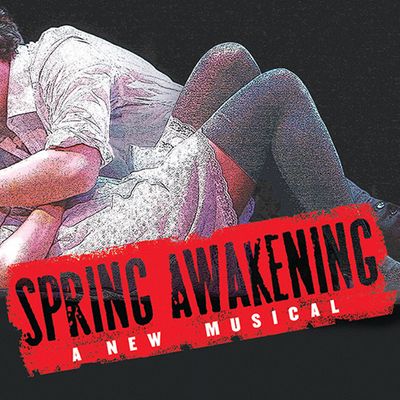
[0:11] Ken Davenport: Hey guys, it's Ken Davenport here. Before we get to this week's podcast, I wanted to tell you a secret. Ready? You all know I'm doing Spring Awakening on Broadway. Well, there's a secret in the logo. In the art itself, there's a little Da Vinci code like symbol. Know what it is? Well, if you want to find out, visit SecretOfspringAwakening.com. Secretofspringawakening.com. It's pretty cool. Check it out. Now on with the podcast.
[0:40] Ken Davenport: Hello, everybody. Welcome back. I am Ken Davenport. This is the Producers Perspective Podcast. This is going to be one of the last few podcasts of the summer. Sad face. But don't worry, we got some really exciting people to warm you up as we get into the fall, including today's guest. Now, everybody knows who I talk to out there in the world when I talk about Broadway, everybody usually knows that every staff position on a Broadway show is covered under the jurisdiction of a union or an association or a guild of some sort, from the actors to the director to the ushers. But what many people that I talk to don't know is that there's also an organization that represents the writers of dramatic works as well. And that organization is the Dramatists Guild of America, or the DG, as we like to call it here in the Biz. And I am so grateful that today we have on the podcast the executive director of business affairs at the Guild, Mr. Ralph Sevush. Welcome, Ralph.
[1:35] Ralph Sevush: Thank you, Ken.
[1:37] Ken Davenport: Ralph has been with the guild almost 20 years now, and actually is also a writer as well of stage plays as well as fiction. In fact, I think we were in a few BMI workshop classes together.
[1:47] Ralph Sevush: Long time ago.
[1:48] Ken Davenport: So, Ralph, why don't we start just by telling everybody out there who may not have heard about the guild what it is and what it does?
[1:56] Ralph Sevush: It's an organization with a sort of long storied history, and it starts about a hundred plus years ago as the subcommittee of an organization called the Authors League. The Authors League was an association of writers that started at the turn of the 20th century, the rise of the progressive era, the rise of labor and unions in America, and they were there as an association to look out for the interests of writers. At the time it became clear that the interests of playwrights were somehow different than the interests of novelists and other writers. So a subcommittee of that league was created called the Dramatists Guild. And that committee became its own organization within about 10 years, and it really was based on the first contracts.
1926 was the first guild contract. It was called the MBPC, the minimum basic production contract. And people like Eugene O'Neill and George Bernard Shaw and the folks of that period fought long and hard to come up with an agreement that producers would respect and live up to. The reason that it came about is because up until then, playwrights didn't own or control their work. Producers would pay them very little very often. The author had to have another role in the production. Either they were the actor or the producer themselves, or you know, presenter of some sort. So that's how they made their living, really, and the writing was supplementary to that. There was no such thing as a professional playwright until the late 1800s, and then this organization came along to sort of standardize terms and help writers stand together with each other so that there would be a defendable contract in effect.
And there was since 1926 up through the 1980s, at which point the producers got together and sued the guild, and we sued them back. And out of that lawsuit came another contract called the approved production contract of the APC. And that's been the contract that's been in effect for the last 30 years or so. So the guild is not a union, it's a trade association of property owners, essentially. Writers who own and control their work and license the rights to present it to producers for limited periods for limited territories, limited purposes, and as a result of that license, a producer can earn an ongoing interest in the author's future revenue streams from that. And that's sort of the business model that evolved from the early 20s till now.
[4:22] Ken Davenport: Do you know what that first contract was in 1926?
[4:26] Ralph Sevush: I think it was an O'Neill contract. I'm not sure exactly. It's amazing to me to hear that those names were so involved in something that is we're still using today in some shape or form.
[4:37] Ralph Sevush: Right. It was interesting that at the time the producers, of course, Lee Schubert being the leader of the producers group at that time had of course no interest in participating in a standard contract. So they decided to break this new contract by going across to England to import plays because the American writers wouldn't give them any. So they went to Shaw and Noel Coward and said, you know, we'd like to bring your plays over. And Shaw said, Oh, that would be great, as long as we do it under a guild contract. At which point they realized that wasn't going to change anything, so terms were agreed to. And how did you end up here at the guild?
[5:15] Ralph Sevush: Oh, a long and winding road. I started out in the film business before I even went to law school. And in the early mid 80s, I worked for New Line Cinema and some other film companies doing coverage of scripts and working in marketing department and things like that. And then I went to Cardozo Law School, and in the early 90s I got out and was working for an independent producer and did that for a number of years. And I learned the business side of theater. He had the producer brought me in to do film deals because he wanted to do theater and film. And so while I was doing film deals for him, I learned the theater business. Theater wasn't a stranger to me. I grew up in a house where my mom was the Ethel Merman of the local Y. So she gave me piano lessons at an early age so I could be her rehearsal pianist.
And that was fine when she was doing like Annie Get Your Gun, because Irving Berlin, you know, was a hummer and his songs were usually in a major key. So then she did Follies, and you know, I was looking at a score with by Sondheim with seven sharps that changed to six flats, at which point I said, Mom, I'm going back to play Little League. You're on your own. So actually I was one of the few kids in my high school who loved the Mets and show tunes with equal passion, which put me in a very small group. So musical theater and theater generally was something I grew up with and was very happy to be back in when I was working in the producer. After he had produced a fairly large number of unsuccessful shows, I was looking for other opportunities.
And the guild at that time was looking to expand their legal staff. So that was a really good match because you sort of have to know what side of the table you belong on. You know, I was never really particularly comfortable fighting on behalf of producers' opportunity to make more money. That was never where my heart was. So when the playwrights said, We'd like you to come and help us, I felt much more at home, and I found I slept a lot better. Didn't make as much money, but you make those kind of sacrifices. So that was 18 years ago. And I know because my daughter was born like three months after I started here. And now she's going to college next week. So 18 years later. Now I mark the time. It's very easy to remember how long I've been here by their birthdays.
[7:38] Ken Davenport: You've seen a lot of changes, obviously, in your personal life, to watch a daughter grow up in those 18 years. And I assume, like all of us, you've seen a lot of changes in our industry. But I'm interested from your perspective and from the desk you're sitting at right now, how has the industry changed in terms of what the writers face now and your challenges?
[7:59] Ralph Sevush: What's happened over the last sort of 20 years, and it was part of a process that was going on long before I got here, but I've been aware of it, is this notion that somehow that the risk that writers run by being writers, by choosing that as a calling, is sort of discounted or not valued in the same way that the risk of money is valued. So what I've seen in the producing community is an effort to shift the burden of risk of the money from themselves onto the creative team and particularly the authors. See, everybody else in the production is represented by a union. There's the producers on one side and the union on the other. Everybody, from the people who hand out the programs and take tickets, people who sell the tickets in box office, to the people who clean up the bathrooms afterwards, to people who pull the curtains and do the designs, and the wigs, of course, to the actors and the directors and the designers and choreographers, everybody has collective bargaining.
The playwrights don't. The playwrights own and control their work, so they're not employees, so they don't have that. What they have instead is ownership control of the work. That's the deal, the Faustian deal they made a hundred and something years ago. So they offer that play to the producer or the commission to write it or however it comes about. And then the producer used to raise money to produce that play. Now, because money became harder and harder to come by, they had producers had to pay more and more to get it. And whatever they ended up giving away in labor negotiations to the other creatives or the other people in the room, they simply look to the author to make good their losses.
So what happened is you have royalty pools, which takes writers from being compensated on gross to being compensated on net weekly profits. Then you have amortization, which reduces the net weekly profits by taking the cost of the show and spreading it out over 50 weeks or whatever to make sure that the money gets its money back first before the creatives. And so there's this ongoing process of sort of burdening the writer with the cost of the money. When the writer is already taking the risk of being a writer, nobody was in the room when he, you know, he forewent law school or medical school or, you know, disappointed their parents by going into this business. Nobody was in the room and they were staring at an empty screen.
Nobody was in the room and they took something blank and filled it up with words, and nobody promised them anything that they'd read it, much less produce it. But now they've written something that's good enough for people with money to want to put money into it, and the people with money are saying, but you have to bear some of the risk now. They've worn enough of the risk. And that shift in the burden of risk is sort of the symptom of what I've seen, and it's sort of representative of the trend that I've seen over the last 20 years. And then you have the commercial, the major corporate producers moving into Broadway who have their own Hollywood model of doing things. But of course, it's okay to be treated like a screenwriter if you're being paid like a screenwriter.
But to be treated like a screenwriter and paid like a playwright is the worst of all possible worlds. And it's taken a long time to get the movie studio producers, corporate producers, to sort of accept the fact that this isn't Hollywood, and that the writers here are operating under a different paradigm, and that everything they've given up for ownership and control of their work is not going to be given up lightly. So that I think those are the main conflicts that we've seen.
[11:38] Ken Davenport: So I was going to get to this, and I'm glad you started to already explore it, especially since I had no idea that you worked in film before even coming here. But obviously, this it's vastly different economic models when it comes to compensating creatives on the show. I got into this with John Breglio when he did his podcast. And of course, for those of you out there who don't know, basically, when you're a screenwriter, a studio says, Yeah, we want it, we're gonna pay you a big chunk of money, and then the studio owns it, and that's it. And you're there's a famous quote of someone saying, Oh, the equivalent of writing a movie is like throwing it across the state line of California, and then I never see it again.
[12:19] Ralph Sevush: Well, there was a heavy there's a Hemingway story when he was asked how he how did he deal with Hollywood on film adaptations of his books? He said, I would drive through the night to the Mexico California border. I would throw my book over and they would throw a suitcase of money back.
[12:37] Ken Davenport: That's it. That's the quote I was looking for. Um, that could be entirely apocryphal, by the way.
[12:42] Ralph Sevush: It's a good one.
[12:43] Ken Davenport: Let's let's call it fact. Uh so what's fascinating to me, of course, is that in the theater it's the exact opposite. We don't pay as much up front, and then the owner gets to or the writer gets to keep that work, and we're just licensing it for a period of time. My question is, is there any world, if I was a big time movie producer and came in and I said, Ralph, I want to do something different on Broadway. I want to take one of your members, and I think they're okay with this, but they want your blessing, of course. I'm gonna offer them a half a million dollars, but I'm gonna own this script. Is there any way that this would work? Wouldn't is there any scenario that you would approve, do you think?
[13:23] Ralph Sevush: In other words, we've already established what you are, we're just dickering about the price.
[13:27] Ralph Sevush: Yes. Yes.
[13:28] Ken Davenport: Um, because here's the difference. The film industry works because there are hundreds and hundreds of motion pictures produced every year, and thousands and thousands of hours of television produced every year, just in America. And you can make a pretty good living as a writer writing screenplays that don't get produced, or being the 11th writer in a writer's room, and put braces on your kids' teeth, and get health and welfare benefits and pension and all those things. And in exchange for that, you give up ownership and control of your work. That's a reasonable deal that has worked for the last sixty something years. I think screenwriters would like to improve it, but whatever. The problem doing that in the theater is there's literally 40 buildings in America where a writer can make a living in the theater.
40. And half of them are filled with shows that have been running for years. There simply isn't the volume or the opportunity of work to make that deal work for theater writers. There they may work for that one writer, but it won't work for writers because there simply isn't enough people who could get a half a million dollars to give up ownership and control. I mean, there's a reason Aaron Sorkin will come back and write a play every once in a while.
[14:46] Ralph Sevush: There's a reason these guys come back. It's because even the most powerful of them want to be able to own and control their work on occasion because when they have something significant they want to say, they want to say it to a live audience on a stage where their words are their own. And to preserve that opportunity, we have to keep work for hire and we have to preserve ownership and control for members because otherwise, what writers would write for theater if there was no ownership and control? Just the ones who couldn't get work in Hollywood where they could get paid better and could have health insurance and collective bargaining. Why you would end up with sort of the idiot stepchildren?
That would be the culture. That would be the theater in America. The writers couldn't make it somewhere else. Are we defending playwrights? Yeah, but we're also, I think, safeguarding theater culture by ensuring that there's something for playwrights to write for without having to abandon it as a career entirely. I mean, it's already hard enough. There you was a guild president named Robert Anderson who and he's here's another apocryphal quote that may or may not have been said by Mr. Anderson, which is you can make a killing in the theater, but not a living. Um, and there was a book a few years ago by Todd London called Outrageous Fortune, which documented that fact that you cannot really make a living as a playwright.
And in fact, the IRS agrees because we've seen a number of audits of writers where their business deductions were disallowed because what they're doing is considered a hobby. So, in that environment, to give up ownership and control would be insane.
[16:21] Ralph Sevush: John Breglio agrees with you, by the way. Of course, he said the same thing, and everyone I asked this question is basically saying the same thing. It's not something that would ever work for us on both sides of the equation either. I mean, I've thought about this myself, and would I ever, knowing the risks of Broadway, right? Would investors of mine say, oh, sure, Ken, we'll pony up a million dollars just to own this thing that we have no idea it's gonna resonate or not? Um, so I think we should all just give up on that idea. Um, if you had a choice of being a playwright in 1980 versus being a playwright in 2015, which would you choose? You think it's easier today? There are more opportunities today?
It's interesting. It depends what you want out of being a playwright. If what you want is to make a living, I don't know that you were any more able to make a living in 1980 than you are now. I do think that there was less internecine conflict. For example, because of the economic pressures that exist now on both the producers and all the other people in the production, there are members of a production that want a piece of the play in addition to the producer. Directors want a piece of the play. The cast of a workshop wants a piece of the play. Of course, the agents and the lawyers want pieces of play, the producers earn a piece of the play by raising the money and producing the play. There's so many people who want a piece of that revenue stream because the playwright is the only one who owns anything that can that has the ability to generate revenue over time.
But it's that revenue stream which pays the playwright so that they can't write their next play. And so, you know, I think there was less of that going on in 1980 than there is now. So, in that sense, the playwright was able to maintain more of their revenue stream. Of course, I could be totally fictionalizing this, and it could have been just as bad then. But when I started, it was 1997. I do think there were some of these controls and approvals were seen more as a given. And now I think people under tougher financial constraints are looking for any way to maximize the revenues. And if that means trying to pressure the playwright into giving up more and more so that they can have more stuff to sell to an investor to raise the money, I think there's this part of what's going on.
And the studio movie studio producing is very much a factor now that wasn't a factor back then. So there's this downward pressure from the corporate producers, there's sideways pressure from collaborators, dramaturgs, directors, actors, there's all who want to feel like a more part of it. There's pressure from Lord Theaters. I mean, who would think that nonprofit organizations who've received the tax benefit of being nonprofit could then put their hands in the pocket of the playwright because they're under incredible financial pressure as well. We've had some success pushing back against that in recent years, but that's a real pressure. So the pressure comes from every direction. And I don't know that was ever easy.
I'm sure Shakespeare was sitting around saying, God damn producers, you know? What do I gotta do to make a living in this business? I'll act. That's what I'll do. I'll direct. So I don't know that it was ever an easy job or a job you can make a living at, but I think there were certain things that were taken for granted as a given that are still now in recent years sort of under attack.
[19:58] Ralph Sevush: It's fascinating what you said though I've never thought about it in this way, which is yeah the playwrights are the only people that own anything. So of course everyone looks to them. There's no one else to look to it's the old man in the sea. Did you ever read the old another Hemingway reference? Um, you know he has the fish on the hook and he's trying to get it back to land and all the way back the other fish are taking bites out of it. So by the time he gets it back to the sand there's nothing left but a carcass you know and playwrights are just trying to get enough of it back to the beach that they can you know feed their family one more day. It's uh it's a uncomfortable metaphor but it's it's what it is.
And we mentioned the corporate producers a few times already. What do you think of this influx? Do you think it's good for the industry? Does it make you nervous? How has it been already in dealing? Um, I think that they're in business to produce a certain kind of show. And you know there's a lot of sort of sturm drawing about oh you know all these movie adaptations and musicals, whatever. Shows have always been based on something. They were based on plays, they were based on short stories. What difference does it make what it was based on? I don't see that as an inherent evil, you know. And the corporate producers pay very well by and large. Not well enough to own and control the work, but certainly well enough to put a writer in a situation where they can then go off and write their own stuff on spec, which is what they're going to be doing anyway, and they don't have to write TV for a while. I think some of them producers are better than other producers. I think that's true with commercial producers or corporate producers. Some of them are better at their jobs than others.
[21:42] Ralph Sevush: What is a better producer for you? What are the characteristics that you look at when negotiating with one when talking to one that makes the producer better today than yesterday? What I would consider a good producer many years ago. In the sense that he knew he wasn't the writer, he knew he wasn't the director, he knew he wasn't the designer. He knew what his role in the production was. And his role from his point of view was to be sort of a midwife, to birth this creature, to get everybody in the room and facilitate the creative process. And then to draw enough of a crowd to make it all pay off for everybody involved. I think there are some producers who think of themselves as authors or tours or something.
I think that can be dangerous. I think there are some producers who don't respect artists and see them as tools to create this company that will then generate profits. And that's part of the producer's job, but it's not the entirety of it. And to the extent that there's a lack of respect for the artist artists involved in the project, you're gonna get the kind of artists you deserve over time. You know, uh you will develop a reputation as someone who doesn't respect artists, and sort of nature will take care of that. The word will get around, and you'll find yourselves working with inexperienced writers who don't want to be treated poorly, uh, who don't know that they're being treated poorly, I mean, rather than experienced writers who know the difference.
Now, sometimes that can pay off big anyway. I wouldn't, you know, bet my house on it. So I think a good producer is one who knows his role, who respects artists, and isn't looking to um make their bones on the back of trying to break a union or guild contract or trying to show how tough they are, or have so much ego invested that they let it get in the way of the show. I've seen a lot of ego in this business. It's an ego-driven business. Anytime you get into the arts, your creative where where billing matters so much, and you spend so much time negotiating billing clauses, you know you're in a business about ego. It's fine to have ego, but you can't let it get in the way of the production. And sometimes I find producers who are fighting for things that are literally meaningless, but they want to be able to say they have it.
[24:06] Ralph Sevush: Can you just describe to me the contracting process a little bit? We talked about the APC at the beginning of this, which is this template document that all of us have to use. And and again, correct me if I'm wrong. I'd say the majority of shows are on this contract. There are a few that are not, but even the ones that are not seem to use it as the template or foundation, which I'm sure is a bit disturbing in a way. And then just describe the process because I know they all we negotiate with authors all the time, and then there is a process which the contract really comes to you just to take a look at it. And I think the listeners would love to know how that all works. Alright, well, the guild contract is called the approved production contract, and in it there's a provision that says that provides for what's called guild certification of the contract.
Certification means we're a party to the contract and we're a co-signatory. The contract has 21 sections in it. And then there's a section 22, Article 22, which basically says, and then anything else the parties may agree to, as long as it doesn't undermine the contract. So that addendum is basically what comes to the office. And I review them looking for pluses and minuses. What things are above minimum terms, what things are below minimum terms, are there trade-offs? Are there quid pro quos? Is the contract on the whole equivalent to the standard model agreement? Have there been too many concessions that would hurt other writers? Have there been enough pluses to offset them? Um so it's a it's a balancing act, and our role in the guild is not we're not there representing that writer.
The writer has their own representative, their own lawyer, their own agent, and we're here on behalf of our 7,000 other members who aren't in the room when those two have made a deal to make sure that nothing they did in their deal will create a precedent that undermines the ability of all the other members, all the other playwrights to make a living in this business. So, you know, it's uh it's kind of a it's a difficult weighing process, and we try and be objective about it and try to remember that we're not here to stop productions. We're here to facilitate them, to facilitate our members being able to do the work. We just have to step in when the narrow interest of that one writer is putting at risk the ability of 7,000 other writers to make a living.
[26:36] Ralph Sevush: So that's that's where we sort of draw the line where where precedents are being established that would be harmful. And we so we have a limited period of time to respond to the contract. We offer recommended we either are able to certify it or we're not. If we're not able to certify it, we then make comments on the contract for the parties to consider if they can incorporate them into the contract, we'll be able to certify it. And then usually some other another round of negotiation happens and a final certification letter is issued and we're able to certify the agreement with certain provisos that have been agreed to by everybody. We often get a lot of anger and complaint from producers who said, Look, I spent a lot of money to negotiate this contract.
The author was well represented. Why am I talking to you? Well, because it's a three-party contract, and you spent all your time negotiating it with one of the two parties, but you didn't spend any time talking to us about it. So if you'd spent time talking to us about it while you were talking to the playwright, you would have been able to do this all in one time, and it wouldn't take two separate steps and wouldn't be paying the lawyer twice. So let's do it all together, and it would be more efficient. More efficient still, of course, would be to renegotiate the basic template so that it reflected the way the industry actually worked, and so that you, individual producer, didn't have to renegotiate an agreement that was negotiated 30 years ago on every single show that it comes to Broadway. But the league has not seen fit in its judgment to sit down with us and renegotiate it. They'd rather have all of their individual members, you producers, bear the cost of renegotiating the contract.
[28:15] Ralph Sevush: But that's between you and your league. Wow, so that's for so many fascinating things in what you just said. Um let's deal with the first one, which is you would rather a producer come to you first before we go to the author, or all of us sit down in a room and say, hey, this is what we're planning on doing and try to do it in this triumvirent or Trinity as well. Yeah, sometimes I see you know, there'll be a sort of a short-form letter agreement or something, or a deal-term um short form thing that gets circulated. You know, we could if we were involved, if we were CC'd on that from the outset, we could sort of send up flares. You know, if this ends up in the final deal, this could be a problem because such and such.
Maybe you want to think about it doing this way. Or if there isn't a deal memo, maybe there's a first draft of an APC, Article 22, that's being circulated, and writers are feed giving their comments to it, and we could be giving our comments to it as well, you know, in an artificial capacity. We don't certify drafts, you know. We can only certify a signed contract that's come in. But I think a lot of the frustration that producers feel is would be ameliorated by involving the guild earlier in the negotiation process. Because sometimes what happens is writers, agents will give up stuff they know the guild will claw back for them in order to get something else.
[29:41] Ralph Sevush: I can't believe I haven't realized that before. So um, and as I said, you know, our interest isn't in maximizing the playwrights deal. It's in protecting minimum terms, not ensuring maximum terms. And we lose our ability to have a credible, rational relationship with producers if they feel we're only we're just gonna get, you know, the best deal for the playwrights we can. That's not what we're here to do. The that's not what the APC is designed to do. It's there to present create a floor. It's there to standardize so that unrepresented writers, new writers will have the same advantages that more experienced writers have been able to get. And if more experienced, more successful writers are able to get terms above that, well then good for them.
But that's between you and the agent. That has nothing to do with us. So to the extent the producer, the AC ramp is using us as the bad guy so that they can get a better deal in some ways, they're essentially playing us against the producer. That's not a situation we're particularly happy to be in, but we have to do that when we've been put in that position. And so that's why that becomes a difficult. And it sounds like you are an advocate for opening up the APC that was written 30 years ago when the business is much different and figuring it out for today.
[30:58] Ralph Sevush: Well, absolutely. And we've tried to ask the league to do that with us, and they've refused because of what they claim are antitrust issues, which is just a convenient way of saying, no, we don't want to talk to you and we don't have to talk to you. And they don't have to talk to us. So they, you know, why should they? But we end up talking to you anyway.
[31:17] Ken Davenport: That's exactly right. So it might just save us a heck of a lot of time and legal fees if we just figure this out.
[31:23] Ralph Sevush: Yeah, if you guys realized you were, you know, not being served by your own league the best way they could, that's something you guys might want to talk about internally. One of the biggest issues that I've seen the guild become very vocal about is of course the piracy issues that it's been facing, we're all facing because of the internet.
[31:43] Ken Davenport: Yeah.
[31:44] Ralph Sevush: Um you don't represent people say, oh, you represent writers. It's not writers mean composers, lyricists as well as librettists, of course. And sheet music pretty much is being ripped off left and right, which didn't happen when I was an actor.
[31:57] Ken Davenport: Yeah.
[31:57] Ralph Sevush: So what are what steps are you taking now to try and protect the writer's work?
[32:02] Ralph Sevush: It's interesting. I mean, tech, you know, we're doing a podcast right now. And in 1980 there is no such thing, right? So you're talking about the different world that the writer lived in then and now. The biggest difference, I suppose, is the technology. Technology is a double-edged sword. It's a tool like every other tool, and sometimes it could be used well, and sometimes not. The ways that you are it's used well, playwrights have greater access to and you know, it used to cost a playwright a lot of money to Xerox their script and mail it to people and wait months to hear back and send it out again and again. And we used to get all these calls from writers saying they never returned my script.
You gotta get and we write letters to producers saying please return so-and-so script. It all seems like so quaint now because everybody submits electronically at this point digitally. There are no postage costs, there are no printing costs, and there are a greater sort of array of opportunities, production opportunities, because of that, which is all to the good. There's also when people do unauthorized or unlicensed productions, play publishers and agents and authors can find out about it. You know, Google Alerts or whatever will tell you when somebody's publicizing a production that there is no license for it. So that's another plus. But you know, there's a cost to all of these things, which is one is the greater you've you've lowered the barriers not only to production but to piracy to illegal access.
[33:28] Ken Davenport: So how do you deal with that?
[33:30] Ralph Sevush: Well, you can keep the script in your draw, which is to guarantee that'll guarantee its safety. But short of that, if you send it out into the world as a playwright, you have to be prepared for the fact that it could be go it could end up places you shouldn't have. So you want to have your work registered for copyright so it has protection. You want to maybe watermark your digital versions of your work so you know when where illegal downloads come from. The guild is also taking an initiative on the sheet music issue. We have a piracy subcommittee. You may look on our website, there's a music video called You're Playing Our Song or something like that. It's just to remind people that, you know, when you when you download a song or a sheet music or something illegally, you're actually there's actually somebody who wrote that song who's not getting a royalty.
And that's not a big corporation, that's somebody who's depending on that royalty stream to make a living. And if you really like those artists, depriving them of making a living is self-defeating. You know, they're not going to make more of the stuff you like if they can't make a living doing it.
[34:37] Ralph Sevush: So that's really there's an educational component to what we're doing and trying to let people know that there's an impact to that. There's also a effort to try and make stuff more available legally. There's going to be websites and other places where unpublished work will become legally published and available, even though they're not from big publishers, but individual playwrights can make their stuff available in a way that's legal. And there's um, there's just a fundamental educational issue that we're dealing with a generation to whom technology is second nature and to whom information wants to be free. But that's just a mindset that sort of devalues authorship and doesn't give it value.
So it's it's dangerous for people who write things for a living. And it's I don't know that there's anything specific that could be done about it except to continue the educational effort to let people know that there's an impact to that, there's a cost to that, there's a social cost to that. And the stuff you like could diminish and disappear if you don't allow the people you like whose work you like to continue making that work by making a living doing it.
[35:48] Ralph Sevush: If you look at the music business, you know, Spotify and IT and a lot of this, a lot of the digitalization and the mass downloading and all that stuff has gotten to the point where the guys who write the songs don't really make much money from them anymore. So you have to actually perform the songs. And you tour with the show, you tour your albums, you do concerts, and that's how you get paid as a performer, not as a writer. Well, that means when you're 50 and 60 and 70, you still have to be on tour to make a living. But uh, or if you're not the artist who performs it, why would you write the songs? You know, you're not gonna you get hardly anything for them anymore. If you compare the royalties to what artists got 20 years ago to what they can get now, especially when you adjust for inflation, it's it's ridiculous. Why would anybody do that? That's why air supplies on the road.
[36:34] Ken Davenport: That's right still to this day.
[36:36] Ralph Sevush: That's right. Um, okay, last question, Ralph. I want you to imagine that the genie from Aladdin, from one of those corporate producers, actually, comes written by a guild members, Alan Nincol.
[36:49] Ralph Sevush: Yes.
[36:50] Ken Davenport: Uh, that the genie comes to your office and knocks on the door and says, Ralph, you've been such a fierce advocate for playwrights for the past 20 years, and you're so passionate protecting their interests. I want to thank you by granting you one wish. I want you to think about the one thing that drives you so crazy about this business. The one thing that makes you so angry, that keeps you up at night, that drives you nuts that you would wish this genie to change or eradicate in an instant. With a wave of his wand or the snap of his fingers. What would that one thing be?
[37:27] Ralph Sevush: I think it's the things I've been talking about. I think it's this notion of having enough respect for the sacrifice and risk that artists run by being artists, so that the economic interests value their contribution and their risk in in a way that's equal to the value they give their own money. If those things were equated and understood to be equivalent, I think a lot of this tension would go away. If if we could uh collectively bargain with producers in a way that didn't endanger our existence, and we could sit down as rational people and look at the big picture of how the theater industry works and doesn't work anymore because economic economic models that were created a hundred years ago simply don't apply anymore.
That's a conversation I've been dying to have for 20 years, and nobody's interested in having it. Everybody sort of wants to deal with the problem of their next show. And nobody is looking long term, nobody's looking big picture, nobody's looking beyond their own five drum and their own self-interest to look at what is the interest of this art form.
[38:39] Ralph Sevush: It's so infuriating because you talked about the digital impact. I mean, theater isn't a rarefied position. Unlike music, unlike film, unlike books, all of those experiences can be replicated through digitization. You can get an exact copy of the song that you loved on a record, you know, in your home, a single pirated download or whatever. The experience of listening to a song that's been digitized or downloaded is exactly the same as the one you can get from buying it on iTunes or a CD. Eventually, the pipes going into your home will allow movie downloads to be as quick and as easy as songs are. And the experience, especially with these massive high-deaf televisions, I know many people would prefer to watch it in their home rather than sit in movie theaters with the kind of audiences that sit in movie theaters now.
Theater is the rare experience where you can't just digitize it. It's a live experience. You have to be there. There's no replication of it. Yes, you can make an illegal bootleg of it and put it up online on YouTube or whatever, or through Pirates Bay and sell a bad videotape of a production of Wicked, but that's not the same thing. They're not replicating the experience. Nobody who sees those things thinks they've seen the show, really. And the evidence of that is people who do see those things on TV or on film are more likely to go see the show than if they didn't see it. It acts as a big promotion for the live experience. So, in a lot of ways, it's it's uh the limited, the sort of primitive technology of theater makes it immune to the problems of digitalization and theft and piracy.
But because of that, um, we're not taking advantage of the fact that that unique niche is still available. Nobody's looking at what that market is, nobody's looking at how to reach it. Younger audiences are not are not experiencing live theater as part of their daily lives. It's too expensive, it's too elitist, it's too rarefied, and there's no vision, no eyesight on the big picture. Where are the new pro where are the new playwrights being produced? Not in New York, that's for sure, maybe in the regional theaters, but they're not reaching very many people. And there has to be a summit of all the interested parties to figure out a better way to do this so that we don't lose generation after generation of potential theater goers.
[41:07] Ralph Sevush: Look, we've always wanted to sit around the fire and tell the story of the hunt. The shaman has been doing that, you know, for 10,000 plus years. We need that. That experience is fundamental to our DNA. Tell us the story of the hunt so that way we can get up tomorrow and have the courage to go hunt again. So we know we can do it. It's it's the it's the religious role of theater, of storytelling. And younger generations are finding that in other places. But there's still going to be a fundamental hunger for that if we can provide it in a way that meets them halfway, that finds a way to make it available to them on terms they can understand and obtain and make it affordable and in a way that becomes part of their life again.
Arts education make it a part of their lives again. Ticket discounting, make it part of their lives again. These are the things that need to happen if we're going to have a theater in the 21st century that means anything, that isn't just sort of opera and museum pieces recreated under glass for like one percent of the population. Theater used to be at the center of the conversation about public life. And it could be because of its unique nature, and because of the hunger that we have as a Homo sapien for that story to be told to us. But nobody's looking down the road enough to feed that hunger to satisfy that desire to meet that need, and it's going to be to the detriment of the culture and to everybody who's involved with it if there isn't somebody doing that. So I guess that's the big the big wish is that we could get in a room together and figure it out.
[42:48] Ken Davenport: Well, I would certainly volunteer to be in a room with you to discuss it at any time. I want to thank you so much for not only being on the podcast, but for being such a fierce advocate for the playwright. Um I obviously know a lot of writers and it for all of them that I talked to that are members here, and for me, it's nice to know that there is someone standing up for them. Um, if you are a writer out there, we've talked a lot of big names here, Aaron Sorkin and George Bernard Shaw, but the fact is anyone can be a member of the Dramatists Guild, correct?
[43:17] Ralph Sevush: That's right. All you have to have done is written something.
[43:20] Ken Davenport: So if you're a playwright or a composer or a lyricist and are looking to get some representation, learn some more, there's an incredible amount of resources on the Dramatists Guild website, and for being a member. In fact, I just stole like four issues of their magazine from the coffee table, Don't Tell Ralph. Um, just go to dramatistsguild.com. There's a great deal of information and resources there for you. Thank you so much for listening, and we'll see you next time.
[43:46] Ken Davenport: Thanks again for listening to this week's podcast, guys. And don't forget, if you want to know the secret Easter egg hidden in the Spring Awakening logo, check out Secret of Springawakening.com.
© Broadway Podcast Network, All Rights Reserved