

Spencer Liff is a choreographer, dancer, and performer. He has earned two Emmy Nominations for Outstanding Choreography for his work on the hit FOX TV series “So You Think You Can Dance”, where he has been a resident choreographer... Read More
From the show: The Producer's Perspective Podcast with Ken Davenport
Featured Shows
About
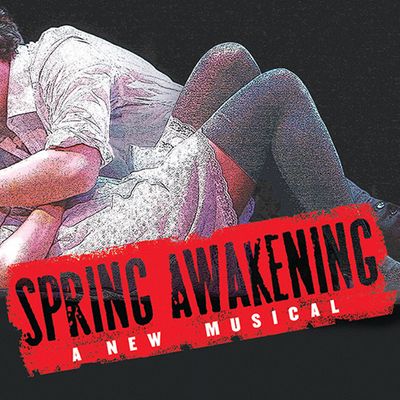
Spencer Liff is a choreographer, dancer, and performer. He has earned two Emmy Nominations for Outstanding Choreography for his work on the hit FOX TV series “So You Think You Can Dance”, where he has been a resident choreographer. He was the choreographer for the critically acclaimed Broadway revival of Spring Awakening. This re-imagined production originated in Los Angeles with Deaf West Theater. He was nominated for a Drama Desk, Outer Critics Circle, and Astaire Award for the shows run on Broadway, and won both the Los Angeles Ovation Award and The Los Angeles Drama Critics Circle Award. His regional theatre credits include Oliver!, World of Color (Disneyland), Sleepless in Seattle, and Saturday Night Fever. He made his Broadway debut in Big-The Musical, followed by The Wedding Singer, Cry-baby, Equus, and 9 to 5.
Listen to Spencer talk about Spring and a whole lot more, including:
- What a whole bunch of rocks had to do with his career choice.
- Why being an actor and dancer was the best education he could have had as a choreographer.
- The difference between choreographing for television and choreographing for the stage.
- How life for choreographers in 2015 is different than in 1995.
- Just how the heck did he teach actors that can’t hear the music how to dance in Spring Awakening (and hear him reveal some of the secret cues in the show that help cue the actors)?
Click above to listen and learn!
Keep up with me: @KenDavenportBway
Transcript
This transcript was automatically generated and might contain errors.
[0:00] Ken Davenport: I wanna be a producer with a hit show on Broadway.
[0:07] Ken Davenport: I wanna be a producer.
[0:10] Ken Davenport: Hey guys, if you're a subscriber to this podcast, and why wouldn't you be? Do me a favor and get on over to iTunes and give us a big fat, juicy, favorable review, will ya? It'll help spread the word about Broadway and all these incredible artists that we've had on as guests. Thank you so much.
[0:26] Ken Davenport: Hello, producers, prospective podcast listeners. Welcome back to the show. We are towards the end of Spring Awakening month here on the podcast. Of course, we've had our director, we've had both of our authors, and today we welcome to the show, the choreographer of Spring Awakening, as well as the choreographer of So You Think You Can Dance, the Emmy-nominated Mr. Spencer Liff. Welcome, Spencer.
[0:50] Spencer Liff: Thank you for that introduction.
[0:53] Ken Davenport: It's my game show intro. So to give you an idea of how hot Spencer is as a choreographer, I'm gonna tell you a little story. So we're putting up the billboard of Spring Awakening the other day, and we're on the corner of like 45th in Broadway, and my partner and I we look up, and of course it's surrounded by all these other billboards, and my partner says to me, "Hey, look at those three big shows on our corner. What do they have in common?" And I said, "I don't know." And he said, "They were all choreographed by Spencer." Those three shows were Spring Awakening, of course, Hedwig and the Angry Inch, and the brand new Neil Patrick Harris variety show Best Time Ever, which just made its debut on NBC last week. Spencer has been busy shooting that show while we're in preview, so he's one of the busiest guys around. So we're gonna get straight to it. So tell me about the path, about how you've become a choreographer. You were an actor back in the day, yes?
[1:48] Spencer Liff: I started very young. I went on the first national tour of the Royal Rogers Follies. I was seven years old. So I've been an equity member since I was seven, and got introduced to Tommy Tune at that age, and I think as the first director choreographer to work with, that was very inspiring. I always knew that that is the path it would take. So I became a dancer. I made my Broadway debut in Big: The Musical when I was ten years old, and just spent my childhood working, going back and forth between LA and New York in commercials, TV, national tours, Broadway, kind of all of that. And there wasn't ever a question that I would try anything else. That was just what I was gonna do for my whole life.
And as an adult, I started my dance career on Broadway and worked with a guy named Rob Ashford and absolutely loved how he choreographed, how he worked. I became his assistant for several years, moved up to associate, and learned as much as I could from him, as well as assisting sort of the other big Broadway choreographers at the time. And then I made a huge leap onto So You Think You Can Dance when I was 23, and that was really the first thing I had ever choreographed on my own was on the biggest dance television show at the time. So it was a giant step forward, and it went very well, and I immediately knew that I had the opportunity to either really launch into the choreography career or to stay in my dancing career, and I made the choice to stop performing full time and to really focus on the choreography.
[3:22] Ken Davenport: And how old are you now, may I ask?
[3:24] Spencer Liff: I just turned 30.
[3:25] Ken Davenport: Just turned thirty. There's an awful lot of that career already.
[3:30] Spencer Liff: It was two very separate lives. It was my performing, my child performing career, and then my adult performing career, which really was only from eighteen to twenty-three, and then now the choreography career.
[3:41] Ken Davenport: So you started at seven, I assume you started dancing when you were four, four years old. Where are you from?
[3:47] Spencer Liff: I am from Arizona.
[3:50] Ken Davenport: You want to give the dance school a shout out?
[3:52] Spencer Liff: I didn't really have one. I trained kind of all over the place in Arizona, but because I went on tour so young, I really learned how to dance at Broadway Dance Center in New York City and some great schools in LA. But I had the fortune of getting to train from the best teachers in the world between LA and New York. That made a huge difference, and my mom was incredible at making sure that I was able to take from everybody. I went to School of American Ballet here in New York for a while as well.
[4:20] Ken Davenport: So you mentioned that you always knew you wanted to choreograph. What was it about it that drew you towards it? And how were you like really young when you were like, "Oh, I want to make up steps, I want to do that," or did it come later?
[4:33] Spencer Liff: No, it started with a lot of it started with pattern making. Like this sounds so strange, but I would sit in the backyard and make patterns with the rocks that I would find and organize them and do formations with them. And I didn't even know what that was, but my brain just clicked into that. I could sit for hours and do that. Of course, my parents were like, "Fine, great, he's off on his own." But I would, the first show I saw was Cats, and I came back. My father took me on a trip to New York, and we saw Cats as well as a few other shows, and I came back and had bought the tape then of it, and I did a performance of Cats for my mother every single day until she couldn't stand it anymore and put me in dance class.
But I just I would sit and watch the movie musicals for hours, and I loved them. And I think I really knew when I was in Big, I would watch Susan Stroman, and in my head, not in a disrespectful way, I would fix all the things I wanted to with the numbers, and I would think like this is how I would choreograph it, and I would put this moment in, and we should be doing this. And I knew instantly I was like, I cannot wait till I'm in charge so I can do this. And that's I just sort of knew that that's what it would be.
[5:37] Ken Davenport: So the key to a choreographer's career is playing with rocks as a kid.
[5:40] Spencer Liff: I know how strange that sounds, but I do have memories of just like seeing how patterns would flow with each other, and I would take the ones that looked alike and put them together and also, you know, all sorts of things. In Arizona, you don't have grass, so you have rocks.
[5:55] Ken Davenport: That's very interesting though, because I'd never thought of it that way. I always think of choreography as this purely artistic form of expression, but there's a lot of organization and almost like these patterns and an OCD type of how you fit everything together.
[6:10] Spencer Liff: Yeah, it's my brain doesn't now. Some people really chart everything out on paper. That doesn't do much for me anymore. Every once in a while, I'll grab like pennies and do it on a table when you're trying to figure out how to make a huge number work. Sometimes I do these award shows, and I did the Latin Grammys this year with like 65 people, and you have to figure out how all those bodies fit on stage, what the camera's gonna look like from afar, and you know, it is so, it is like almost like charting a football game in terms of X's and O's on paper sometimes.
[6:42] Ken Davenport: Where do you start when you are told you're joining a new musical and you say, "Okay, we have this big production number here"? What is your first step in terms of composing a dance for a show?
[6:54] Spencer Liff: If it is within a musical and it's not just a standalone number, your first question is what is it serving to the show? Where do we need to finish at the end of the number that we haven't learned before it? So you're just like a song, you're putting forth information. And so that's my beginning is just sort of, you know, what we have to convey with the characters, and then really music is the next step. And I can listen to a song and I just listen to it several times with my eyes closed, and by the end of that, I've composed it in my head as to what each section is. This is a dance break, this is when the guys dance, this is when the girls join them, this is when we all get around the lead singer and we lift them up, and so that sort of forms itself first, and then for me, the very last thing that falls into place are the actual steps.
Those come really easy once the structure of everything else is figured out. In something like Spring Awakening, every single number really has to serve a different purpose, and it had to introduce a brand new idea so we could keep things flowing and use the sign language in a different way, which, you know, I'm sure we'll talk more about later. But, you know, on something like So You Think You Can Dance, where I am just putting forth a number, like a standalone number, I really will just sit and listen to music for hours and compare music and ideas and match them, and I get that light bulb aha moment, and then I'm like, "Okay, this is what I'm doing this week."
[8:16] Ken Davenport: And how much do you work with a dance arranger when you're doing the composition of a new number? Do you rely on them to give you music? Do you say, "Here's what I want here"?
[8:27] Spencer Liff: I mean, the best ones is when it's a nice marriage. There are some like David Chase, who I've, who is the best in the business in my mind. He comes up with his structure and then watches your dancers, and when there's a kick, he'll put in a ding, and when there's a lift, there's a music that matches it. There's nothing more beautiful than the first time you see the orchestra with the dancers and you see how it all comes together. And then I, you know, I don't have a problem going to those dance arrangers and saying, "I need 12 more counts here," or "I need this to go bada bum bong." And they, you know, their brains work in that genius way that I don't understand, and they make it happen. And that's actually one of my favorite relationships in a room when you're creating something brand new, is you know, when the composer is willing to play with you to make something really, really cool.
[9:17] Ken Davenport: And how much do you rely on the dancers? I know directors, of course, when they are working on scenes, they'll say, "Oh, improvise this or try this, or what do you think?" And the actors will give them ideas. Do you do the same when you work with dancers? Do you say, "What could you do here?" Or are you like, "Here's what I want, and this is how I want it," or do they sometimes just free for it?
[9:37] Spencer Liff: No, it's a good mix. It depends on what you're working on. I mean, in Spring Awakening, I don't have a lot of actual trained dancers in that show. So if we needed to move from one side of the stage to the other, we spent a lot of time every single morning. I would click them through a rigorous warm-up, we would do strength work and core work, and then we would improv across the floor. And over the time I've spent with them, I just honed in on things that they did that I really liked, so I could pull from their talents. When you work with great dancers, though, they all come with their own bag of tricks, and you can, you know, I'm not a big fan of just improv here because that's sort of is a little lazy on my part to do that, but you find yourself saying all the time, "What is a lift you know how to do?
I need you to do a turn into a big jump," and you do pull from their repertoire. It's really cool when things organically form in a room, and when you hire the best dancers or performers that you can get, you should give them the ability to bring forth what they have.
[10:34] Ken Davenport: So I got a call the other day from a very successful Broadway producer who said, "I want to come see Spring Awakening because I want to check out Spencer Liff and his style." Describe if someone asked you what your style was, what would you say?
[10:50] Spencer Liff: That's a hard question because I don't want to be boxed in by one style, and I keep picking shows that are incredibly different from each other. I think you would easily recognize what my hyper dance style is on the TV show. In the theater work I've done, first and foremost, front and center is story-driven, character-driven movement that does not rely on turns and kicks. It should be extremely visual and innovative, out of the box. I don't like doing stuff in the theater right now that I have seen before. So I'm not interested in sort of recreating great works of Robbins and these, you know, these styles that you have sort of seen before. I don't need to be doing that right now.
[11:38] Ken Davenport: So let's talk a little bit about the television. Right now you're working on Best Time Ever, which is a variety show led obviously by Neil, and it's live. So tell us a little bit about the show and what you're doing on it.
[11:53] Spencer Liff: Well, I am the choreographer of any of the dance elements they have on the show, but I'm also a producer on the show. It's the first time that I've had that title. So there are six segments, live segments in the show, and we are kind of all hands on deck to make sure that that happens. We have celebrities that show up at the last second on the show. I'm in charge of kind of wrangling them, explaining to them what they're gonna do, pitching them the ideas to make sure that they want to do them. We have a big performance at the end of every single show where Neil will perform with an existing group of people. I can't give away who's coming on the show, but it's a very incredible season that we've lined up.
So for that specifically, I go to that group, I look at what they have. We don't want one of their numbers that they do normally, so we're taking what they can do and creating a one-of-a-kind moment and number for them to do on our show that has to include Neil, also has to include Nicole Scherzinger, who is a co-host on the show, every single guest that's been on the show that night, and little MPH.
[12:53] Spencer Liff: So there's a lot of moving pieces. You don't get any of those people until the day of the show, and then you have to kind of fit them all into the puzzle very quickly. It is so fast-paced that you're coming up with stuff on the fly during the live show, you know, trying to get everything to just happen magically for that one moment. And I've done a lot of live TV work, but nothing that is on this scale. It's kind of crazy how large this show is. We're only done two episodes. I've had about seven anxiety attacks already from just the two hours on TV. But it really it's unlike anything else, and the rush that I get from that, I can't match it. So, yeah, it's exciting. I can't wait to see how people like we just had our second episode last night, and I think people are finally understanding what the show is. No one knew what to expect last week, and they spent half the show thinking, what the hell am I watching? But I think that we found our rhythm last night, and I'm excited to keep going with it.
[13:53] Spencer Liff: And how different is it creating a dance piece for television, whether it's on So You Think You Can Dance or Dancing with the Stars or Best Time Ever, as opposed to theater, where you know the audience has one view and it's a flat stage, and here you've got cameras. So, how different is it in the composition process for you? Um when you do TV, the only thing that matters is what the camera sees. I think in camera shots, even in my theater work, which is something I can't stop my brain from doing now. Um but yes, when I create on So You Think You Can Dance, I know what every single moment is going to be shot like. You film it on a flip camera and you give it to the director, and they put their own spin on it, but if I have ten really important moments that need to be filmed a certain way, they make that happen.
Um we have a lot of control on So You Think You Can Dance as to what we say, how the lights are gonna be, what the costumes are, the hair, the camera shots, every single element we essentially do direct and produce. I can't have that much control on when I do the big awards shows or Best Time Ever, because there's so much, there's 19 cameras and they're in the live booth calling them, and you sort of have to create and make sure just like you do on stage that everything looks good. Um, but I had, you know, I had these incredible dancers on the show last night to dance with Bonnie Tyler. Half of what they do gets cut out because they're close-up shots and they're here and there, and you have to just let that go and know that, you know, okay, well, we worked really hard on that moment.
That didn't matter at all because nobody saw it. And you can't take that personally, you just really have to move on to the next. But when I do theater, yeah, it's not such a pinpointed vision of what you would like to be seen. You have to know that the audience can look anywhere they want, and then it's your job to try to hone in their focus to exactly what needs to be seen. Um, I really like working in both forms of, you know, in both mediums, but they are very different, obviously.
[15:59] Spencer Liff: So you've obviously been involved with Broadway for a long time now, since you were a kid. You've seen a lot of changes in the industry. How has dance and choreography changed over the last 23 years since you've been doing it? Well, it's gotten a lot harder. What people can do has gotten a lot harder. I think in the same way that if you look at the Olympics 20 years ago, what they were doing in gymnastics and ice skating was so far below where they're at right now. You think what physically could anybody else do with their bodies, but we've come a long way in that aspect. Even on So You Think You Can Dance, what we what the show was doing 10 years ago, those big numbers and big moments would not be considered anything.
They would be considered kind of, you know, bombs at this point because we've pushed ourselves so far. So I'm extremely excited to be having my career in this moment where dance is really, really strong, where it's all over the place, where people are recognizing dancers as not celebrities but as personalities as well. Nobody knew a dancer from another dancer back 10-15 years ago, but now these dancers that are coming out of the TV shows, they have their own followings and their own groupies and hundreds of thousands of followers, and it's that's a little strange and a little different. In the same way that a choreographer that my face is on that TV show and I can get stopped in the street daily with people saying that they love this number, that they like this.
That didn't happen to choreographers 10 years ago. They were faceless. Another thing is that I think the American audience has gotten schooled in what is good dancing and what is not. So you can't put mediocre dancing in front of them anymore because they've watched all these shows and learned these comments from judges and are able to form their own opinions and their tastes have gotten heightened as well. So I think the entire industry has just had to raise the bar.
[17:56] Spencer Liff: So let's talk about Spring Awakening a little bit. How did this come about for you? I had worked with Michael in LA on some other shows. We knew each other in New York when we were both performers. We had both moved out to LA and were sort of craving theater because there isn't a whole lot out there. And Michael is really good at wrangling people to do stuff for free and to just like come and have a good time and do this reading in my living room, or let's put on this crazy play that goes to six locations in Silver Lake where the audience has to go on public transportation. That was the first thing we did. It was nuts. But I've always had a good time working with him. He dreams really, really big, and I enjoy trying to make those things reality for him.
Um so he came to me with this. I had never seen Big River, I'd never seen a Deaf West show, I knew what it was. I had never really signed or had any inclination as to what that would be like. And we did a workshop two years ago. It was from the first second, terrifying, hard. Any trick or, you know, normal rehearsal process that I'd ever used in my life just didn't work. And so we kept I kept trying things that just weren't working, and trying to incorporate with the sign language and hitting a brick wall with the ASL interpreters as to what I could do, what we couldn't do, and every day was, you know, I would get in my car at the end of the day of the workshops and like want to cry because it was so frustrating, but then there would be these moments during the day where you would see these glimmers of hope of what the show might be, and it was impossible to not get chills watching them.
So I knew it was really special. We had planned on doing five or six songs in that workshop. We got two done, which showed us how long everything was gonna take. And then the workshop ended, and I, you know, people came and saw it, everybody was in tears, and you know, and then I let it go, and a year passed, and we came upon the 99 seat theater, and every single thing that could have gone wrong leading up to that went wrong. And I just kept expecting Michael to throw in the towel because I would have. Any normal sane person would have said, we're not supposed to do this right now. We lost our theater, we lost half of our cast, we lost our stage managers, we lost our money, like up until just a few days before rehearsal started.
So I was at the same time directing another show and doing So You Think You Can Dance when Spring Awakening was supposed to go into rehearsals. And I just remember always thinking, like, this isn't really gonna happen. Like, we're it's not gonna happen. And then it did, and we went into rehearsal, and I found myself working from like five or six in the morning until midnight every day on those three projects, doing the TV show in the morning, directing a play in the afternoon, coming to Spring Awakening at night. And the first week of Spring Awakening, I came so close myself to throwing in the towel because I was physically exhausted, and it was launching back into this world that was so incredibly difficult to communicate.
Our cast was brand new, we really didn't have any of our workshop cast. So you had the hearing kids on one side of the room, the deaf kids on the other side of the room, and nobody was talking to each other, and it was there was so much tension in the room, and it was just it was really, really scary for everybody, and we just kept kind of pushing on and seeing those glimmers of hope rehearsing in this horrible church wreck room in the valley. And everybody was coming for free, trucking it in there and spending these hours, and it was, you know, I think every single person had the same thought that they wanted to quit because it was really, really hard, but at the same time you couldn't stop it.
It had us. So that went on for like two months. I mean, it was the longest rehearsal process ever. We could get half a number done every day because it just took so long. And Michael and I were, you know, was throwing in an organized way, throwing spaghetti at the wall, just trying to see what would work, what we could do that looked impressive. You can't use counts, you can't rely on musicality, everything had to be visual. And how do you make two and a half hours out of sign language not look like two and a half hours of standing there signing? And every time we'd find a new idea that worked, it was like, oh my god, okay, this is really cool. Okay, let's figure out something for the next one.
Um so then we moved to our 99 seat theater, and when we made the move, and we got into that new space, the show really started to come alive. I we all had this fear, I think, that we just weren't gonna be able to pull it off, or that nobody would come. I remember really thinking, how are we gonna get 99 people a night to come to this thing? It was shocking to just think that anybody would care or want to come see it. And just from the very first preview, the buzz and the people's reactions crying afterwards, coming up to us hugging. It was nice to know that that being that inundated in it and having no idea of people's reactions would be that strong. Um so we just instantly sold out. I remember wanting all these people to go see it, and I couldn't get tickets for my for anybody to come see it.
And it was just all of that was a shock and a surprise. And I think in that moment we knew that wouldn't be the end. But I didn't know certainly none of this was on the table. You know, when we first started doing it, Michael talked about, well, maybe we can go on a tour, or maybe we, you know, but it had just been here in New York. So I'm like, who would be crazy enough to put us back on for you? I had no idea who would do such a thing. But that, yeah, it just wasn't a reality. It wasn't something that was part of the goal, which is why I think this is a really sweet moment in time, because it's just the icing on the cake and the reward for some really hard work that was just supposed to be for the love of theater.
[23:51] Spencer Liff: No, the original production obviously had some iconic choreography, the Bill T. Jones stuff. Did that go enter your mind too? Were you like, did it make you more nervous when you know there's something associated with the show that people remember and know? Um, it didn't, mainly because I saw the original show once in previews. I was doing another show at the time. I went on like when they had a Sunday night or something, you know, early on in the previews. I remember thinking, this choreography is so cool, I hope this guy gets nominated for this. And then of course he went on to win. But you see a show once. I remember that it was very gestural based, and but I didn't remember much more than that, and I very specifically stayed away from him watching any clips.
I did the same thing when I choreographed Hedwig. I didn't ever see the original Hedwig because I was like 12 years old, but I never went back and looked at YouTube because I thought if I come upon the same thoughts and ideas that were there before in my own right, then that's what they're meant to be. But I know that I'm not influenced by what was happening before. And then if I come up with something that's so wild and radically different, I'm not gonna worry about doing that because it's so different. I just, it just left it as like a blank slate and left it for me as just a new musical. So no, it didn't worry me. The only thing that I thought was that his was very, it was very based in gestures, and I had talked to some of the original cast who, you know, they would find what does this mean to you? What would this word mean?
[25:19] Spencer Liff: Find a gesture for that. Well, we sort of had the same thing, but it actually was a language, and it actually was gestures that were being provided by our ASL team. Um, and I think that's the similarity, and you know, but that was my main focus was obviously taking that huge part of it and not worrying about what Bill T had done.
[25:39] Spencer Liff: Well, I did see the original Hedwig, and I would remember going to the production here and being a little bit nervous because I love that production so much. And I think people that see originals feel that a lot of times about revivals. Oh, is it gonna be different than the original? We loved it. And what I loved about your work at Hedwig is that it was everything about the original, and then some on this giant stage, but obviously new and different and unique to your vision. Uh, and the same thing with Spring. What I love about the show actually is, and what I think you've done such a great job with halfway through the show, I forget that the cast is deaf. Talk a little bit about those cues that they, because I forget that they can't hear the music, which I'm just gonna repeat that to everyone out there because we've been talking about it, like, oh yeah, it was difficult, it was long.
The thing that makes it difficult and a long rehearsal process is that many of the cast members can't hear a thing. So how are they getting those cues? Tell us a little bit about those Easter eggs in the show.
[26:36] Spencer Liff: Yeah, the part of the show that the audience will never be aware of is by far the most complicated part, and the goal is exactly what you said: that you are supposed to become unaware of it, you know, 20, 30 minutes into the show. I think it's like watching a foreign movie where in the first 10-15 minutes you're incredibly aware of the subtitles and then they go away and you're just, you know, receiving it. I love that about our show in the first place that it takes 15-20 minutes to get going because you're really trying to figure it all out and you're, it's a puzzle, and then I think the show really blossoms and then you're just rocketed. But there are, yes, so everything is actor-driven, is cue-driven on stage.
So if there is a phrase of music and a deaf actor is starting to sign, then a hearing actor standing next to them will fold their arms or unfold their arms or shift their body weight, or just simply look at the actor, and then the four counts later, when the next phrase looks, they shift their body weight the other way. So there are thousands of these throughout the show.
[27:43] Spencer Liff: Um, and then there's just a lot of kind of breathing as one company and information, making sure that they are sort of hearing anchors planted throughout so that deaf actors always have somebody hearing in their eyesight to sign along with. And then just after months of repetitive rehearsal with the rhythms of the signs, and they just have that internal cues in their body. Um, it really was repetition, and then you know, there's a lot of people do viewpoints, and it's interesting because we certainly didn't do viewpoints with this cast, but it is very much the same kind of feelings and ideas, and it's like when we all sit, we all sit together. When we all stand, we can see that, we can feel that as a company, and it just sort of became subconscious in my mind as well.
Over the years of working with this company, I just started to learn like what we can and can't do, and there's no such thing as so everybody's gonna stand on the one. So we got five, six, seven, eight, and one. It doesn't work like that. It's like so the three of you are gonna watch Allie and she's gonna shrug her shoulders on the seven, and then you on the eight, you wait a beat, and then you stand on the one. And you three over there are gonna watch Catherine, and she points her finger out from her fist on the eight, and that's your cue, you know. So it's constant running around and creating all those cues and making sure everybody has what they need.
[29:06] Spencer Liff: Um, and then you just have to do it ten times to get everybody to stand on the one. So that is what that's a lot of what the time is. And then I look and I want to change something, and you think, do I have the hour to change this one moment? Does it mean that much to me to change this, or do I need to worry about something else? So thankfully, through the three times we've done this now, I've gotten to fix a lot of the things that I've wanted, and I have my list, and I look at it now, and I still have ten things I want to change, and I have to decide in our last couple days of rehearsal what are the really important ones to do, because it isn't, it's not just you all sit around in a group setting and I give a note and I say, Hey everybody, let's just do this instead.
Like you, it doesn't work like that. The extra hard work that we put in on the front end of the rehearsal process, I just think is so shown. The reward is so great. Because when the show's over, you do stop and you think, wait, how did they do that? How are they all perfectly in time at all, you know, at all times? And it's just, it's because I screamed at them for months until they were.
[30:17] Ken Davenport: God, that has to be the most frustrating part for you. Because obviously, look, you were raising rocks as a kid. You are a perfectionist that likes the patterns, you want things to go a certain way. Putting a show on Broadway is so difficult in the last few weeks because of the constraints of a preview process and the number of hours you can rehearse and the number of things you can change in a regular show. Now you're, you've only got limited because you know it takes hours and hours.
[30:43] Spencer Liff: It does. Tech is not fun with this process, mainly because you can't, which I'm sure Michael talked about, you can't really use a God mic in the way that you would normally. He has to say hold, and then TJ hears that, and he has to flash a light, but they're all, you know, mid doing stuff. It takes them all a very 30 seconds to realize we've said hold, and then everybody's got to reset and they have to stop and they have to look at the interpreter who's got a little light on her, and then you run up on stage and you're trying to, you know, to move people around because you can't really just sit in the house and say, Hey Triselle, what number are you on? Like, are you on two, you know? It just, it doesn't, it's not, it's not so easy as that.
And then you're running on stage and they're lighting, so you have to find the light so that they can read your lips or they can see you well enough to interpret, and the interpreter's running behind you, and I just want to go fast and fix everything, and she's running alongside, trying to sign along, and it's just, you know, you have to just breathe because it's not, it's you want to get so frustrated, and the band members are playing their music really loud and they're sound checking and lights are flashing, and you're like, Can everything just stand still for one second and turn the lights on so I can please tell everybody what I need them to do? But that, you know, it's uh it's the same feeling of when you work in like a crazy live TV environment. You just have to take a breath and get it done and know that it's exhilarating to get to do something with something like that. But the tech process is not my favorite part of working with Deaf West.
[32:13] Ken Davenport: Well, it's obvious that you're the right guy for it because of frankly, because of all that television experience and that high pressure. Uh and again, the brilliance for me of the show is that all that hard work and all that stress, and you can't see it at all when you watch the show. It just beautifully blends so well together. Uh what's next for you?
[32:32] Spencer Liff: Um, I finish up right now. All I can see in life is the next eight weeks here doing Best Time Ever, producing a brand new, you know, hour of live TV every single week, which takes us to mid-November. Um, and then I go back to LA and do two shows for Nigel Lithgow and his family. They do British Pantos, uh, they've brought over. So I do two shows simultaneously when I get back to LA, one at Libana Playhouse and one at Pasadena Playhouse, and then I'm taking the holidays off because I have not stopped this entire year. Um and then next year it starts all over again with, you know, shows that I have on the docket of the workshops and things, and you know, I don't know if So You Think You Can Dance is coming back again for another year, but that holds about four months of my life.
But I'm sort of excited that I'm hoping next year will be bigger than ever, and that, you know, Michael and I can do a new show together in some way. Um, but we'll see what comes up after this. We'll see what people's interests in me are after this.
[33:41] Ken Davenport: Lots of our greatest directors in the musical theater were choreographers originally, and you mentioned directing a play. Do you want to direct as well?
[33:50] Spencer Liff: I do. I absolutely do. I moved very quickly from dance to choreography, and I would like to work. There's a whole list of directors I would like to work with and learn from before I really step out on my own. I've been, you know, a few years ago I was choreographing in the regional world, and now I think I'm choreographing the Broadway world, then I can go back to that regional world and direct there and sort of breed who I want to be as a director in those theaters and then move on. So that's sort of my plan at the moment, and where I'm working regionally is now in the directing field. But I do want to be more like a Rob Marshall in terms of directing the film and the TV. So I think it's just a constant moving up and not leaving a category behind.
It's why I'm keeping a foot very firmly in TV and film and theater and moving myself up equally, because I don't think there's another choreographer that's doing that right now that really is at the top of all of those worlds. I would like that to be me.
[34:55] Ken Davenport: I have a feeling it's gonna happen, and I also have a feeling you won't be directing in the regionals for very long before you get tapped for something much, much bigger. Okay, last question. It's my genie question. I want you to imagine that the genie from Aladdin makes an appearance in front of you and says, Spencer, you've done such great work in television and theater, and I love the revival of Hedwig, and I'm so glad that was back and the craziness you've gone through with the Deaf West tech. I want to grant you a wish. I want you to think about the one thing that drives you so crazy about Broadway. One thing that keeps you up at night that makes you so angry you're such a sweet, nice guy. What drives you nuts? What makes you angry about the world in which you work that you would want this genie to wish away in an instant?
[35:44] Spencer Liff: Oh my god, that's a hard one. Gonna watch my, you can't wish for other wishes or anything. Yeah, one wish the one thorn in your side. Maybe this sounds awful and a double edged sword, but it's the quick negativity of the internet world and how easy it is for someone to sit at home and criticize what you're doing and what's going on. I am so sensitive as an artist that I can't look at Twitter. I can't look at the blogs because I can't, you know, I have to stay removed from that sort of critique because it hurts. It's like, it's crazy how hurtful it can be for someone to throw a comment that they don't like, you know, that what you're doing is terrible. So I would love, I would love to remove the ability for that much negativity to be in the world on your work so that we can all create in a like a safer space.
And if we know when things don't work, they don't work, but it's sort of that it's get in the ring and do it yourself before you can throw those things around because it's really, really hard to. Um, and then yeah, that would be that would be my wish.
[36:58] Ken Davenport: It's a good wish. Thank you so much for taking time out of your very, very busy schedule to spend it with us, and thanks for all the incredible work you're doing. Uh especially, of course, for me, the work you've done on Spring is so stunning and beautiful and so incredibly fused into everything else. It's a joy to watch. Thanks all of you for listening. Next week, Spring Awakening Month ends with the artistic director of Deaf West Theater himself, Mr. DJ Kurz. We'll see you then. Thanks for listening, guys. Don't forget, get on over to iTunes and give us a nice, juicy, favorable review. It'll really help spread the word about what we're doing here. Thanks so much. And if you're not a subscriber, be one. Thanks.
© Broadway Podcast Network, All Rights Reserved