

David J. Kurs is the producer and artistic director of Deaf West Theatre. Their 2015 production of Spring Awakening, an intermodal rock-musical adaptation of a controversial late-19th-century German play about growing up in a sexually repressive culture, had an extended run, and is headed for Broadway... Read More
From the show: The Producer's Perspective Podcast with Ken Davenport
Featured Shows
About
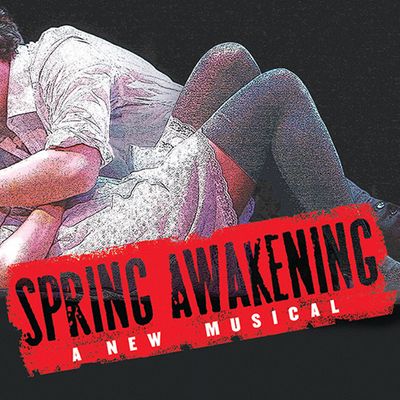
David J. Kurs is the producer and artistic director of Deaf West Theatre. Their 2015 production of Spring Awakening, an intermodal rock-musical adaptation of a controversial late-19th-century German play about growing up in a sexually repressive culture, had an extended run, and is headed for Broadway.
Pick your format, whatever your format, and listen to/watch/read Mr. Kurs talk about all things involved in being an Artistic Director and his company’s second foray to Broadway, like:
- Why deaf actors make the best actors around.
- Why, unlike other Artistic Directors of nonprofits, DJ doesn’t want Deaf West to have its own venue.
- How Broadway can be more accessible.
- The challenges of marketing Deaf West productions to a mainstream audience . . . in Los Angeles.
- How Spring Awakening got started, and why it’s a symbolic production for the deaf community.
Keep up with me: @KenDavenportBway
Transcript
This transcript was automatically generated and might contain errors.
[0:00] Ken Davenport: I wanna be a producer with a hit show on Broadway. I wanna be a producer. Hello, producers, prospective podcast listeners. I am Ken Davenport. Thank you all for listening. Well, folks, we're at the end of spring awakening month here on the podcast. But we save the best for last. Just don't tell Duncan, Steven, Michael, or Spencer that I said that. Now, a little few notes about today's podcast. It's being recorded in multiple ways to make sure it's actually the most accessible podcast possible. If you're listening to the podcast through your normal channels, then the voice you hear when I ask DJ, our guest today, a question will be the voice of Dylan, who is DJ's sign language interpreter for today.
We will also have a transcript of the podcast available on my blog. Literally, as you're listening, you can go there and download it to read it if you'd like. And this is me over here. Hi everybody. And this is my new friend and the artistic director of Deaf West Theater, our guest for today, DJ Kurs. Welcome, DJ.
[1:30] David J. Kurs: Hello, everyone. Thank you so much for being here today. Can you tell me a little bit about how Deaf West got started?
[1:42] David J. Kurs: Deaf West was founded about 25 years ago by Ed Water Street, who comes from the National Theater of the Deaf. And he moved to Los Angeles and realized that there were no theater companies in the Los Angeles area. So he wanted to give theater to the deaf community and deaf audiences in Southern California. And there's about one million deaf people in Southern California that he wanted to bring the theater to. So with a group of friends, he started producing shows. And we've been in LA for the past 25 years. In 1999, we had the idea of doing a sign language musical, which was not the first sign language musical, I might add. But in my opinion, it was the first one that was done well.
[2:35] Ken Davenport: And tell me a little bit about the National Theater for the Deaf. When did that begin?
[2:42] David J. Kurs: That was founded in 1969 by both hearing and deaf individuals at the O'Neill Center. And for about 10 or 15 years, they got federal funding, which allowed them to have a national tour. And also to be featured on national TV and have a full company with the best actors in our community. And it's actually a very hard moment for our community right now. Last year, Phyllis Frelich passed away. She was a big part of National Theater of the Deaf and Deaf West Theater. She was the original Sarah in Children of a Lesser God. It's really sad to see that generation slowly passing away. And we're really concerned about the next generation of actors and artists.
[3:50] Ken Davenport: I would consider you a part of that next generation. Fingers crossed. How do you interpret that?
[3:56] David J. Kurs: Well, you are still early on in your position as the artistic director, correct?
[4:04] David J. Kurs: Yeah, hopefully. And hopefully it'll continue. When did you join as the artistic director?
[4:12] David J. Kurs: I became the artistic director almost three years ago. And what were you doing before that?
[4:20] David J. Kurs: I was the ASL master.
[4:23] Ken Davenport: For Deaf West?
[4:25] David J. Kurs: Yes. And different productions. I was in different periodic productions as an ASL master. And before that, I was in film production and film development. And I saw what Deaf West did with Big River. And so I said, hey Ed, I want to be a part of this.
[4:46] Ken Davenport: So ASL Master is something that I've only just learned, and I'm sure the listeners and also the viewers out there may not know what that is. Can you tell us what an ASL master is?
[5:00] David J. Kurs: So sign language is completely different and separate from English. But when we start a production, the first thing we do is have a team of ASL masters work together with actors and make translations from English into American Sign Language. And we want to preserve every nuance and every intention that the writers had, preserve that in American Sign Language, because you cannot do word-for-word translations. It has to be natural and it has to come from the heart. And you have to make it feel natural. And that's a very long process. And we really spend a lot of time going through that. And that's what separates Deaf West from other theater productions. So it really is like a translator for a foreign language production into English. Like a translator would translate Molière or some foreign language productions, you have some translations on the page. So you can actually make direct translations, but we have to work with our actors and the translations.
[6:51] David J. Kurs: That's a really good question. Linda Bove, who is one of the ASL masters in Spring Awakening. She has been working in this field for 40, 50 years, dare I say. I don't know if she's that old. I think what she brings, she's a native speaker of American Sign Language. She's from a deaf family, and she's been signing since birth. She's very aware of what the audience sees. And when deaf people come into the theater, she understands what their experience should be like. She doesn't want the audience to misunderstand or miss anything in the show. So we work very hard on making the show feel normal. It's by trial and error, I have to say. Some plays are very easy to translate, and others are not. Steven is not very easy to translate.
It's very abstract, it's very poetic. And it's open to interpretation. Luckily for us, he wrote the book that explained to us the lyrics, the dialogue, and that really helped us so much when making the translations. It gives us context and background to what's being said. And fortunately, we have him in the room. So when questions come up, we're able to ask for his input. It's a very beautiful process. And it's very enjoyable for me to see it on stage. For me, personally, as a deaf audience member. You hearing, me being deaf, we're seeing the same show, but through two different sides of a prism.
[8:49] Ken Davenport: Well, it's just as beautiful to watch for me, I think, as it is for you, and that's something that I've been so struck with since I saw the show in Los Angeles. It's beautiful. It's sign language that I've never seen before. You can tell that there's a real art behind it. Let's get back to you for a second. So was Big River your first taste of theater, or when did you first, what was the first production of the theater you saw?
[9:17] David J. Kurs: So I grew up in Southern California, and fortunately I was I had Deaf West in my backyard. So I saw my first Deaf West show when I was in the seventh grade. My parents made sure that I saw every Deaf West show thereafter. And I think that early exposure to theater helped me to be where I am today. I'm very passionate about exposing young generations to theater to give them the same experience that I had growing up. When I went to Gallaudet University, I wanted to major in theater and TV production, but my parents said, no way, you're never going to get work in that field. So I became a business major. And after graduation, I went to work in dot com industry, and I didn't like it. So I moved to LA.
And I became a script reader for a film production company and worked in development for a while, for about five years. And at the same time, I was trying to get a deaf film made. And it was really hard. The film industry, there's so many cooks in the kitchen, and everyone has their own opinion. And they're all very star-driven. So for me, I couldn't have hearing people playing deaf actors or deaf characters. So it was a very frustrating process for me. So when I saw Big River, I thought, whoa, this theater did what I wanted to do. They put deaf and hearing people together on a large scale, on a national stage. And they made the hearing world understand our language and culture in a new way.
And for me, that's the power of theater. I'm a theater geek, I have to say. I've always been. But I never really thought about it in terms of comparing it to film and TV. It's much easier for deaf people to succeed on the stage as opposed to the screen.
[11:52] Ken Davenport: Do you think it's better suited for stage than film purely because of the business aspects and the three-dimensional? Is there anything else that makes it better for the stage?
[12:05] David J. Kurs: I think, for example, ASL and music, ASL musicals, are still in their infancy. I think it's the art form that's waiting to be discovered. Alex Wise, who's in the show, it's Spring Awakening right now, told me one thing the other day. He's been in a lot of musicals, and he's never known what to do with his hands. Jazz hands, I guess. So for him, being in this production, he said, everything finally came together. He was able to fully express himself through his hands and using his voice at the same time. And for me, that's a beautiful thing. We're not elevating the form of sign language musicals, but also musicals in general. What I love about your story about how you found the theater is it's very much like mine. My parents got me involved with the theater when I was a little kid. They wanted me to go to law school, and I was a theater geek myself.
[13:09] David J. Kurs: It happens the exact same way, whether you're hearing or deaf. And we, of course, count on our parents. My mission statement, just like yours, is to try to get more and more young people to the theater. So let's talk a little bit about your responsibilities as the artistic director. So, what do you do on a day-to-day basis? I try and get plays made. Try and find money. And I babysit a lot. As you've seen in our process, I'm always trying to make sure that things are done right and that they're accessible, so that deaf people and hearing people are valued equally and have equivalent experiences. And my first responsibility is to the deaf community. I want to make plays that they want to see. And sometimes hearing people want to see those shows too.
But really, I try and follow the spirit that Ed Water Street said. When he moved to that area that had no sign language theater company, he knew something had to be done about that. So that's what I try and do every day. At the same time, Deaf West's mission is to build a bridge between hearing and deaf communities. So I try and do that too.
[14:44] Ken Davenport: How do you choose your plays? What's the criteria?
[14:51] David J. Kurs: So the first thing I think about is will it be interesting for deaf audience members? Will deaf people want to see this production? And when I think about the play, I think of how we can execute the play in an interesting way. When Ed did Deaf West's first play, he put the voice actors in the control booth. And hearing people had to listen through infrared speakers or headsets. And later the hearing actors found their way onto the stage. And for some reason, it made the productions better. And the audience feels it. And compliment the hearing actors and kind of encourage them to come to a new level. It's a beautiful process when you have two languages and two cultures coming together in one production. I think that doesn't happen anywhere else in real life. Where both hearing and deaf people are working together to create something. I think for that reason, ASL Theater is very special.
[16:12] Ken Davenport: What was that first play that Deaf West did?
[16:18] David J. Kurs: Jin Game. Which is on Broadway this season. Are you gonna go?
[16:24] Ken Davenport: Of course.
[16:25] David J. Kurs: Yeah, I love those guys. The second show was One Flew Over the Cuckoo's Nest. And all the patients were deaf. And the nurses and the staff were hearing. And I remember seeing that show. And I thought, I got it. I got it. It's just like real life. For me, that was a very powerful moment.
[16:53] Ken Davenport: Yeah, I just got that too, just by you describing that. When the podcast is over, maybe we'll talk about moving that to Broadway. Because that sounds like an amazing production for sure. Where do you find the actors for your productions? Are they all based in Los Angeles? Are they from around the country or around the world?
[17:19] David J. Kurs: So when we did the show about a year ago, we knew we didn't have enough deaf actors in LA. So we decided to do open submissions via video. And so people made, we made a video saying, hey, we're gonna produce Spring Awakening, and we got submissions from all over the world. At the same time, we also had auditions in LA and found some great actors through agencies. And we also got video auditions from people who live in Washington, DC, Texas, and we had to judge them and analyze them based on that video alone to see if they were good enough to bring to LA. And thank God those people are still in the show. We did not have any problems finding hearing actors, and we usually don't. There's plenty in LA as you know.
But in terms of deaf actors, there's a limited pool. First of all, there's not enough opportunities for deaf actors. So deaf people aren't usually motivated to enter the field. For me, that's a reason that it's extremely important for Deaf West to create more opportunities for deaf actors. And by doing that, we're not only giving them work, but we're showing them how to do the work.
[18:47] Ken Davenport: So tell me a little bit about how Spring Awakening started. How did it come about?
[18:55] David J. Kurs: So Michael Arden and Andy Meintis. We had coffee one day, and they said we want to do Spring Awakening. And I said, Are you kidding me? The national tour just closed. It's too soon. But I came home. And I remember what they said about the show being about communication. And I remember the first scene in the show where Wendla is asking her mother, how are babies made? And for me, it clicked. It all came together. Deaf people don't learn the birds and the bees from their parents. They learn it in school from their peers. And that experience of navigating the world without strong adult guidance is very common among deaf community members. So everything clicked at that moment. And all of a sudden I was really encouraged to do the show.
Also, I brought up to Michael about deaf history and how at that period was a very dark time in deaf history. And so in our process, we developed the concept of doing Spring Awakening, where it's clear who's deaf and who's hearing. And trying to figure out how to put them together in the best ways possible. And through the workshop process, we found more things. One of the things that was very exciting from the beginning was Michael's commitment to making this a visual musical through choreography, through Spencer, and this beautiful choreography. Not only do we feel it, but we see the music as well. And for future productions, we're going to add more projections to our shows. Because I think that really enhances the experience of music.
[21:00] Ken Davenport: You talked a little bit about how the first few scenes of Spring Awakening affected you personally about kids learning the birds and bees from their friends. Which I assume is how you learned in a way. Did you go to a school for just deaf kids or for hearing and deaf children?
[21:23] David J. Kurs: So I was mainstream, so I went to a school for hearing and deaf kids. But I was fortunate that I had deaf parents. So I grew up with more adult guidance than most deaf people. But at the same time, I was still afraid to ask them and learn the birds and the bees from them. As I was growing up, I remember feeling that I don't really belong in this world. And that experience of being alone and learning as you go. And you don't even have to bother reading the captions. You still understand what they're talking about. Our experience is universal. We're more alike than we think. And in the deaf community, our communication issues are magnified on the surface. But deep down, we also try and connect with other individuals. And so we're constantly navigating, and I think Spring Awakening really helps us bring our language and culture to a vocal point.
[23:08] Ken Davenport: So Spring Awakening is now on Broadway. What does that mean for you and the organization? Are you excited about it? Is it nervous? Are you nervous?
[23:22] David J. Kurs: I'm not nervous. I have confidence that it's going to work. I'm grateful. And I'm thrilled. For me, the most important thing is to be able to put deaf actors and sign language on the national stage. I think through the powerful, through the power of art, we can educate others about who we are. And the fact that the only thing that separates us is language. Thank you for making that possible.
[24:18] Ken Davenport: So what's next for Deaf West after Spring Awakening? Do you have another production planned?
[24:27] David J. Kurs: Oh, I'm afraid to tell you. Don't judge me. No, actually, we have some new musicals, and we have some adaptations in mind as well. We also have a regular program in LA. And we'll continue doing shows at our own theater. But again, I'm really motivated by this experience of transferring Spring Awakening from a small theater in Los Angeles to Broadway in under a year. So I think we're gonna do more musicals, and I hope that you like them.
[25:08] Ken Davenport: And what are your dreams for the organization and for Deaf West? Where do you think it can be, should be in 10 years from now?
[25:21] David J. Kurs: Hopefully it'd be easier for us to do our work. We're a very small organization. You would laugh when you see our budget. But hopefully we'll grow our organization and we can do more productions, and we can do more good work that we've been doing. For me, it's important that we do something new and fresh each time. We don't want to do the same formula over and over again. With each production, you have to make it worth it. And that's very important to us as an organization.
[26:10] Ken Davenport: Where is your theater in Los Angeles?
[26:12] David J. Kurs: Do you have your own space?
[26:16] Ken Davenport: We move around.
[26:18] David J. Kurs: We rent different spaces throughout the LA area.
[26:21] Ken Davenport: Do you want your own space?
[26:25] David J. Kurs: I don't know. We used to have our own space. But for me, it's also nice to be able to introduce our audience.
[26:34] David J. Kurs: Introduce our theater, sorry, except different areas in LA. The modern audience wants a new experience. And I think today people like going to something new, not something familiar. I think people like to be able to Instagram part of the community that they're going to. And I think that experience itself is very important to deaf people. They're not only seeing the show, but they're getting a new feeling for the area and the seat.
[27:35] Ken Davenport: But what you just brought up, I think is fascinating, which is today's changing audience may actually want a different surrounding every time they see a show. Maybe I'm wrong. I should mention.
[27:59] David J. Kurs: We did have subscribers, and we and that didn't really work well for us. I don't know why. Maybe today's audience isn't really work well for us. I don't know why. Maybe today's a Michael changed. It was his vision to do this production. And he thought it might be done well in the tables. It was his vision to do this production. And still to this day, I'm disappointed that we didn't do that in my channel. We were this close. This close, but it didn't happen. And still to this day, I'm disappointed. I would love to do that kind of thing. We were this close. This close, but it didn't happen.
[28:38] David J. Kurs: I think today's audience has higher expectations. I think today's audience has two cents. Higher expectations. It's different today.
[28:56] Ken Davenport: I think you're right about today's audience. I think they look for something totally different in their theater, and certainly part of that is because of technology, as you mentioned, Instagram. I want to ask you, you and I are about the same age, and certainly we've seen a lot of changes in technology, which I have to imagine have affected the deaf community even more than me.
[29:24] David J. Kurs: What has it been like to watch all this technology from texting to email come to life for the deaf community?
[29:39] David J. Kurs: I think technology has benefited the deaf community in tremendous ways. Me especially. I'm the artistic director of a company without a full-time interpreter. We email each other all the time. And it's nice that people prefer email over the phone for me. That's really a blessing. And for the deaf community, they're able to stay in touch through Facebook, Instagram, emojis even. English isn't our first language. So we're communicating through images, through video. It's a really exciting time. At the same time, I can't help but miss the good old days when we had deaf clubs, when people put together shows. We had a very strong tradition of theater in deaf clubs that we don't anymore.
[30:42] Ken Davenport: And your parents are deaf.
[30:46] David J. Kurs: They often, you know, my parents will say, when we were kids, we had to walk through the snow, and they obviously had a very different experience growing up. Do they admire the technology now as well, or do they also look back and...
[30:57] David J. Kurs: No, I don't think you're gonna find any deaf people who miss not having captions, who miss the days of not having video relay service. I think deaf people are on the first wave of technology. We're always finding new technology and putting it to use right away. I don't think deaf people have the nostalgic feelings about the good old days, except for the community aspect. Deaf people used to get together every week in deaf clubs all throughout the country. Now we're lucky if we see each other once a year.
[31:48] Ken Davenport: You have kids.
[31:51] David J. Kurs: Two, in fact.
[31:52] Ken Davenport: And how old are they?
[31:55] David J. Kurs: Five and two.
[31:57] Ken Davenport: Do you think they'll want to pursue a life in the theater? Any interest?
[32:04] David J. Kurs: Probably. I don't know. I'm trying to prevent it to the best of my abilities.
[32:12] Ken Davenport: That was my best question. I don't want them to repeat my mistakes.
[32:17] Ken Davenport: What would you say to other kids out there who are deaf or have a disability or somehow feel like they don't belong in the theater or in art? What would you say to them right now, even though it may be more difficult for them to find work, as you said for deaf actors?
[32:44] David J. Kurs: I don't have a clear two-bit line for you. But I have my own mission, to be honest with you.
[33:16] David J. Kurs: It could be a hand wave. It could be sleep. We're natural actors right from the start. And so I think we have an advantage over hearing actors, at least until the jobs start coming in. But I'd say that there's hope for them. And that I hope to create more work for them. Too much of our history, we have been denied our own language. You still find teachers and parents who are trying to make their children speak at the expense of education. And I think that's really behind what I do every day.
[34:23] David J. Kurs: But we should have both options.
[34:51] David J. Kurs: And something I noticed specifically, of course, in our actors like Sandra and Daniel, who I can't take my eyes off, even though they're not speaking at all.
[35:04] Ken Davenport: It's so true.
[35:05] David J. Kurs: I just had to point that out about you being natural actors. And some of the most expressive that I've ever actually come across. I wish they could teach some of the hearing actors.
[35:16] Ken Davenport: I know how to be so expressive.
[35:19] Ken Davenport: Okay, so last question. This is a question that I ask everyone on my podcast. I call it my genie question. I want you to imagine that the genie from Aladdin down the street, let me knock some wood that we're only half as successful as that genie in Aladdin. I want you to imagine that that genie comes to you and says, DJ, you've done incredible work for Deaf West Theater and for the Deaf community. And I want to thank you for that by granting you one wish. I want you to imagine, and look, as you've been now working in the Broadway community now for several months over this summer, and I'm sure there are many things that drive you crazy or keep you up at night, and you think, gosh, I wish this could be different. I wish Broadway could change. I wish it could do one thing different. What's the one thing that you would ask this genie to change with a snap of a finger?
[36:35] David J. Kurs: First thing that comes to mind is I wish there would be more Michael Arden's. Truly, people who understand that sign language is not a decoration. It's an integral part of the art form. And understand and know what's possible. I hope to find more collaborators like Michael. I hope to work with Michael for a long time. But also I hope to see more people like him who are able to see through the whole picture and the whole process and really understand the potential of what we're doing. It's been a really wonderful experience working with him. That's my wish.
[37:41] Ken Davenport: Well, thank you so much for being here today, DJ. I'm so honored to be producing your production of Spring Awakening on Broadway. Obviously, I hope it's a huge success for all of our very courageous investors who are taking this ride with us.
[38:27] Ken Davenport: Imagine what you're gonna do over the next 30. Thank you all of you for listening, for reading, and for watching. I'm Ken Davenport. We will see you next time, but don't forget Spring Awakening month may be over, but Spring Awakening still plays on at the Brooks Atkinson Theater through January. Go see it. DJ and I both promise you'll have a great time, right, DJ?
[38:54] David J. Kurs: Definitely.
[38:55] Ken Davenport: Thanks again, everybody. See you next time.
© Broadway Podcast Network, All Rights Reserved