

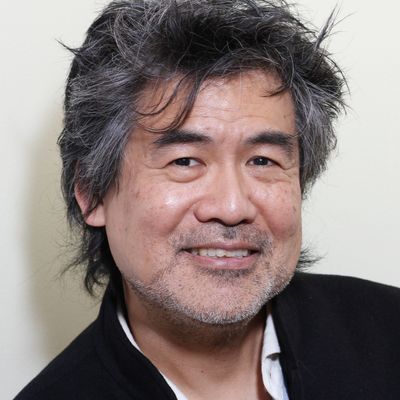
David Henry Hwang is an American playwright, librettist, screenwriter, and theater professor at Columbia University in New York City. His best-known play was M. Butterfly, which premiered on Broadway in 1988... Read More
From the show: The Producer's Perspective Podcast with Ken Davenport
Guests
Featured Shows
About
David Henry Hwang is an American playwright, librettist, screenwriter, and theater professor at Columbia University in New York City. His best-known play was M. Butterfly, which premiered on Broadway in 1988. The play is a deconstruction of Giacomo Puccini's opera Madama Butterfly, alluding to news reports of the 20th-century relationship between French diplomat Bernard Boursicot and Shi Pei Pu, a male Chinese opera singer. The play won numerous awards for Best Play: a Tony Award (which Hwang was the first Asian American to win), the Drama Desk Award, the John Gassner Award, and the Outer Critics Circle Award. His next project was a radical revision of Richard Rodgers, Oscar Hammerstein, II, and Joseph Fields' musical Flower Drum Song. Other work he has done includes Trying to Find Chinatown, As the Crow Flies, Chinglish, The Dance and the Railroad, and the books for Aida and Tarzan.
David has written plays, musicals, television, opera and more. He’s terrific proof that if you’re a master story teller, you can adapt that skill to any medium (focus on the fundamentals, kids).
David shared what it takes to work in all those different mediums and a whole bunch of other stories about working in our biz like:
- What it was like to have his first play premiere at The Public.
- How the first time he heard M. Butterfly read out loud was at the first rehearsal for the Broadway production!
- What we can do better to encourage more diversity on and off our stages.
- Why there wasn’t an opening night party for M. Butterfly.
- How the development of new plays has changed . . . and whether that’s for the better.
Keep up with me: @KenDavenportBway
Transcript
This transcript was automatically generated and might contain errors.
[0:00] Ken Davenport: I wanna be a producer with a hit show on Broadway. I wanna be a producer. Hey everybody, last chance. This Saturday, I'm teaching my Broadway Investing Seminar right here in New York City at 2 p.m. Go to the Producer's Perspective.com to register. We'll see you then. Hello, producers perspective podcast listeners. Welcome back. Boy, I gotta tell you, when I started this thing, I didn't realize I'd be as lucky as I have been sitting down with such incredible artists, and today is another one of those days. I'm not gonna complain about it though. Today my guest is none other than the Tony Award-winning playwright, David Henry Hwang. Welcome, David.
[0:43] David Henry Hwang: Thank you. Thanks for having me on your podcast.
[0:45] Ken Davenport: So David burst onto the playwriting scene in the late 80s with his Tony Award and Drama Desk Award-winning play M. Butterfly, which was also a Pulitzer contender. Since then gone on to write many more plays, including Golden Child, Chinglish, which I was a producer on. Thank you. One of the funniest things I've seen in the last decade or so, and a bunch of other books for musicals, including a couple of shows for Disney, Aida and Tarzan, and as well as the reworked RH Classic Flower Drum Song, written for Hollywood, for opera. We were just talking about television, which we'll get into in a few minutes. But let's go back to the beginning, David. How did you get started as a writer? Where did the inspiration come from?
[1:25] David Henry Hwang: So I don't actually come from a theatrical family. I'm not one of these people who grew up, you know, going to theater. If anything, I came from a musical family because my mother was a pianist. But my father and my mother were both Chinese immigrants, and my father ended up being a banker. So when I got to college, I saw some plays in my freshman year. I went to Stanford and we got bussed up to see shows at American Conservatory Theater. I saw the Bill Ball production of The Winter's Tale, as well as a production of Thornton Wilder's The Matchmaker, and I began to think, hmm, maybe I can do this. So I started writing plays in my spare time, and I found a professor who was willing to take a look at them.
He told me they were really bad, which they were, because I wanted to write theater, but I didn't actually know anything about the stage. But the same professor was a good guy, and we kind of designed a playwrighting major at a school that still doesn't have one today. And I saw as many plays and read as many plays as I could. And my senior year, I wrote a play to be done in my dorm, which through a variety of fortuitous circumstances got produced by Joe Papp at the Public Theater about 14 months later, and then I started to have a career.
[2:43] Ken Davenport: So this was at Stanford where you designed your own major pretty much. I have to, you probably haven't heard of these, but both Teresa Webeck and John Randow, who've done podcasts for me, have said the exact same thing in college. They had to design their own major in order to do what they wanted to do. So that first play you wrote, what was it?
[3:02] David Henry Hwang: It was called FOB for Fresh Off the Boat, and it was about the conflict between fresh off the boat immigrants and ABCs or American-born Chinese. And I started writing it. I was fortunate between my junior and senior year in college, to I was home in LA and I saw an ad in the LA Times calendar that said study playwriting with Sam Shepard. So I clipped this thing and I sent it in. And it was the first year of what was subsequently a pretty significant event in Southern California Theater called the Padua Hills Playwrights Festival. But this was only the first year that they ever tried to do this, so there were only two of us that applied to be students. We both got in. And at Padua, I got to study with Sam and Maria Irene Fornes, Walter Hadler, Murray Menneck, a lot of great writers, who taught us to write more from our subconscious.
And when I started doing that, I didn't know I was going to end up writing about a lot of the subjects that I've ended up writing about, East-West issues and immigration and assimilation, but these issues started appearing on the page. So clearly, some part of me was incredibly interested in this, but my conscious mind hadn't figured that out yet. And that led to this first play, FOB.
[4:17] Ken Davenport: And that was the play that went to the Public?
[4:20] David Henry Hwang: Yes.
[4:20] Ken Davenport: So talk to me about that. You get the call, oh, your show is gonna go to the Public. I mean, what was that?
[4:25] David Henry Hwang: Well, I mean, first it got accepted. I sent it to the National Playwrights Conference, the O'Neill Conference, which happens every year in Waterford, Connecticut. And so my first big break was that it got chosen to be part of the conference. And I think they got had 1,300 submissions that year, and they chose a dozen plays. So that got me some attention. And then the Public had done a play about the time I was writing FOB, the Public had done a play by Len Jenkins called New Jerusalem, in which a Caucasian actor was cast in an Asian role. And this led to yellow face protests from the actors of that day, ten years before the whole Miss Saigon controversy. And Joe Papp, who the founder and producer at The Public, Joe being who he was, he invited the protesters into his office and ended up hiring one of them onto his staff with the brief to find plays for Asian actors.
And it was just about that time that FOB came across his desk. So I've always considered myself the beneficiary of affirmative action because that's really what affirmative action is. It's like someone sees the need and creates a program to try to address it. And I was the guy who was lucky enough to get to walk through that door and take advantage of that opportunity.
[5:41] Ken Davenport: And how was the play received?
[5:42] David Henry Hwang: It's actually received really well. I won an OB for Best Play that year. And it was one of Frank Rich's earliest reviews for the New York Times, and he reviewed it very, very well.
[5:57] Ken Davenport: Well, that's something to say, knowing his track record. So you submit this play, it gets up, you get a good review from the New York Times. What's the trajectory next? Did everyone just hound you, look the second coming is here?
[6:10] David Henry Hwang: Well, no, and then I went to drama school because everything had happened so quickly, and I hadn't actually I didn't feel like I had enough background in theater history. I really wanted to read more and know more about what had come before. So I went to Yale, and during my first year at Yale, it's a three-year program. You get all your academics out of the way, so I got my theater history, but I wasn't there very much because I had a second play that ended up being that I wrote which was not the new Federal Theater, which also got a good review in the New York Times, and so then Joe was going to move that to the Public. I had a third play that Joe was going to produce, so I just was never in New Haven, so I dropped out.
[6:51] Ken Davenport: So how soon after did M. Butterfly happen?
[7:00] David Henry Hwang: So FOB was produced in 1980, and M. Butterfly was in '88. So I did four plays with the Public and one play at the Second Stage in the interim before having my first Broadway play, M. Butterfly. And talk to me about where the inspiration for M. Butterfly came from.
[7:13] David Henry Hwang: I was at a cocktail party, and it's the sort of story one would hear at a cocktail party. And somebody said, you know, have you heard about the French diplomat who had a 20-year affair with a Chinese actress who turned out to be, you know, A, a spy and B a man in drag or a transgender woman, as we would say nowadays? And the diplomat claimed that he never knew the true gender of his lover. And obviously I thought, well, that's really interesting. And I began thinking I wanted to write something about it, but I originally thought of it as a musical. At the time I was working with the producer Stuart Ostro, who is probably best known for having produced 1776 and Pippin in its original productions.
And Stuart and I were working in a musical which never actually happened. But I thought about doing M. Butterfly as a musical, and I wrote him a proposal. And I thought, you know, what did this diplomat think that he'd found? And the answer came to me, oh, he probably thought he'd found his version of Madame Butterfly. And at that point, the idea of dovetailing the events of the spy story and the plot of Madame Butterfly seemed like an interesting way to get at the materials. So I wrote Stuart this proposal, and he supplied some early funding to help me do research because this was, you know, obviously pre-internet and most of the information was in France. And then I didn't actually I'd never written a musical, I didn't know any composers, I didn't know, and I thought, you know, I'm just gonna write as a play.
So I wrote it as a play and sent it to Stuart sort of as a courtesy, not because he'd only done musicals up to that point. And Stuart decided he was going to produce the play on Broadway, and that's how we got started.
[8:51] Ken Davenport: So it goes on and is a big hit, and then let we flash forward a little bit since we're on the musical subject. You start you write musicals later on in your career. So how did that come about? Were you always interested in that form?
[9:03] David Henry Hwang: You know, I've always been interested in putting music into plays. So I think going back to my earliest plays, even FOB and Dance in the Railroad, they had dance, they had Chinese opera movement, they had music to accompany that. But I'd never written a musical proper. After M. Butterfly, I started getting offers to write opera libretti. I mean, Philip Glass asked me first, and we did two together, and then I was one of the few people, you know, living people who'd written on opera libretti, so I started getting offers for other libretti. But I didn't really think of working on a musical proper until the late 90s, and it wasn't to write a musical, it was to revise Flower Drum Song. I really wanted to, that was my goal.
And Flower Drum Song was, you know, is a Rogers and Hammerstein musical, the only musical that's ever been written in Broadway history up until the current season and Allegiance prior to that. Flower Drum Song was the only musical about Asian American as opposed to Asians in Asia, which had ever been on Broadway.
[10:11] David Henry Hwang: And it's sort of fallen into, you know, off the face of the earth by the time you get to the late 90s. Some people felt it was stereotypical, some people just felt it wasn't the best Hammerstein book, the book by Hammerstein and Fields. And Hammerstein was, you know, st uh had been diagnosed with uh the cancer that would eventually kill him during that period, so he wasn't around much, and a lot of people just was, you know, felt it wasn't their best book. So, you know, we had entered the era of revisicals by the time you get to the late 90s. So I asked the Rogers and Hammerstein estate for permission to do a revisical, and uh, and they were incredibly gracious and supportive, and then I started working on that, and that took a long time because I thought that, oh, well, this will this will be pretty easy because the you know my collaborators are no longer around.
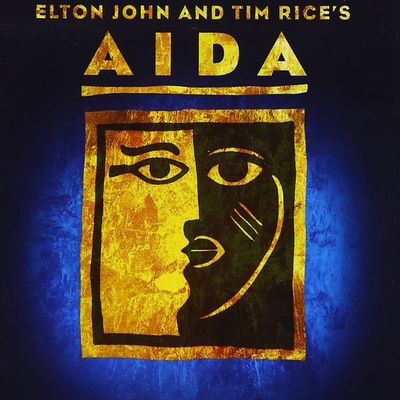
Rogers and Hammerstein are no longer around, so I can just do what I want. And what I learned was that it's actually quite the opposite, that because my creators were not around, they couldn't actually change anything. And then, you know, uh the musical director David Chase talked about the DNA of songs. So the songs are created to do something. And when you have geniuses like RH, they're created very well to do that thing. And you try to make the song do something it's not it wasn't created to do, and it's you know very difficult. The song will rebel against that. So it took me a long time, and I worked with uh Bobby Longbottom, who directed and choreographed the production to learn about musical theater, and before that could get up, I got approached by Disney to um to come on as part of the rewriting team for um Aida.
[11:50] Ken Davenport: So talk to me a little bit about the difference between writing a play and a musical. So now Aida, you are, of course, there's some source material there that you can base it on, but is there a different approach for you for a play versus a musical?
[12:04] David Henry Hwang: You know, I think that writing a book for a musical is uh is actually quite humbling in the sense that when you write a play, you you know, you you build a scaffolding uh dramatically, and you're building to the big monologue, or you're building to the big conflict, and then you get to write that big. When you're writing a musical, you build the scaffolding, but then you don't get to, you know, you don't get to have the orgasm really. You you hand the orgasm over to the uh lyricist and the um and the composer. So I think you know, it's it's much more structural, it's much more about craft, and and I think it's also tricky because you know, now that I've worked in a number of different forms, I feel like every form, there's somebody who's the primary creative artist, and every and the others people support that.
So if it's a play, it's the playwright. If it's a movie, it's usually the director uh in an opera, it's the composer. But in a musical, you kind of need to do a mind meld between uh, you know, the book writer, the lyricist, the composer, uh uh, the producer, the director. I mean, there's you know, there's a lot of people who are really responsible for for having the vision for the piece. And as a result, uh I I mean, I think that's why so many musicals, for instance, are based on other source material, because it at least gives you something concrete for four or five artists to say together, okay, this is what we want to do. We want to adapt Gypsy Rosalie's memoirs. And you know, as opposed to, you know, we want to do a musical about um, you know, some sort of reincarnation or something. Um and it's not to say that there aren't, certainly, there certainly there are successful musicals that are original, but I think it's a lot harder.
[13:47] Ken Davenport: Do you we were just talking before about uh writing for the television show you're working on right now? And I was gonna ask you a question that we got cut off, and now I'll ask it here. Do you find that you write more for the for an actor in television or in film versus the stage? Do you find getting more feedback or you or voicing a specific actor?
[14:10] David Henry Hwang: I mean, uh I haven't done, I've just finished my first season working on uh on an episodic television show. I've I've um been a writer-producer for season two of The Affair on Showtime, and so I'm still learning a lot about that form. But it is certainly true that I mean, when you get a TV show, and particularly when the show is fortunate to run for a few seasons, um, you know, you go into the process, you go into season two with the actors in place, but the story is not necessarily in place. And the characters, you have a set of characters that have been developed already. You might add new characters, those those characters obviously need to continue changing. But I think the actor ends up having a great deal more influence and input simply by virtue of the fact that they continue from season to season, and when you begin a new season, there are no scripts yet.
[15:07] Ken Davenport: So how long did it take you, for example, to write a first draft of M. Butterfly? Are you a fast writer?
[15:12] David Henry Hwang: I'm a relatively fast writer? I think I've gotten a little slower as I've gotten older, but I mean the first draft of M. Butterfly probably took between six to eight weeks. I thought about it a long time before I started writing, and like any script, it got rewritten a fair amount. Uh but the first draft, yeah.
[15:29] Ken Davenport: So talk to me about your rewriting process. So, for example, six to eight weeks you get M. Butterfly. What percentage of it do you think change from the end of the first draft to opening night on Broadway?
[15:41] David Henry Hwang: Um there are, you know, for uh different plays require different amounts of rewriting. So I feel like sometimes say, you know, you're like you're trying to bake a cake, and sometimes they come out of the oven pretty much like a cake, and sometimes they don't. M. Butterfly would have to say, I didn't rewrite that much. I would say maybe 15% of it got rewritten. And it was also in an era before the amount of play development that we tend to do nowadays. So uh for instance, I never even heard the play read out loud until the first day of rehearsals for the Broadway production. And it was just a different way of doing things. I mean, fortunately, that particular play uh ended up being pretty close to the you know uh how it knit where it needed to be.
But you know, and I it was also working with John Dexter, who directed M. Butterfly, who also had directed Equus and been a resident director at the Metropolitan Opera and was, you know, helped one of the founders of the National Theater. John also came from an older school of British playwriting and and and directing where the directors were not necessarily expected to have opinions about the script. So, you know, John liked the script enough, and I think I think liked it very much, and that's why he took on the project. But, you know, when we were we did our out of town tryout in Washington, D.C. at the National, and um, you know, when I and I did end up rewriting a fair amount when we were in DC, uh, you know, and John was not unhappy when I would bring in rewrites, but I I think he felt like, oh, this is something else he has to stage.
[17:19] Ken Davenport: So I wish we had video for this podcast because everyone would have seen the shocked look on my face when David just said that the first time he heard it out loud was at the first rehearsal because that is just the exact opposite. No one would ever consider doing that now. Do you think we're over developing shows?
[17:38] David Henry Hwang: I think we can overdevelop shows. Like I said, I feel like every show is its own kind of beast, and different shows need different things. And I think when we get into a sort of one size fits all development model, then that's a problem because some shows, you know, are a cake when they come out, and and others do need as much development as we have now. I think there are probably examples in the old days where shows didn't get enough development. But I think the point is to try to be very sensitive to what each particular project needs.
[18:07] Ken Davenport: Yeah, we've seen some great successes of that. I'm thinking of talk about musicals, Book of Mormon. Everyone was so shocked when it didn't do its out of town or in town and it just came straight in. And of course that cake seemed to be ready.
[18:20] David Henry Hwang: Yeah.
[18:20] Ken Davenport: So it is worth looking at that, not one size fits all. I love that. Uh do you read reviews?
[18:26] David Henry Hwang: Um I I like to have reviews summarized to me because I like to know how the show's gonna do, but I tend not to read them because I don't really want to know that much. I just want to know the basic tenor of the review.
[18:42] Ken Davenport: Do you listen how when your a show is in previews, how do you get feedback? Do you ask is it director, do you are you listening to the audience or are you just going on your own gut and nothing?
[18:54] David Henry Hwang: I mean, I'm I'm certainly listening to the audience as an organic entity. I feel like the audience is never wrong, basically, in the sense that uh, you know, if the you think something's funny and they're not laughing, it's not the audience's fault. It's uh, you know, it could be the actress, it could be the production, could but so I learn a lot from the audience. I think one of the most harrowing, you know, parts of the process really, but and also uh by the same token, one of the most important and revelatory is that first preview. You learn so much by listening to the audience, and you know, it i it's usually about stuff that isn't working and you have to fix. That's why it's scary.
[19:32] Ken Davenport: Is there an ever an example of your work where you were totally shocked that the audience response was the opposite? Good or bad?
[19:38] David Henry Hwang: You know, I have to say that um Chinglish was a show that I did not realize was as much of a comedy as it ended up being. You know, I thought it was sort of and it's for those of the that you're the listeners who don't know it, it's about an American businessman who goes to China to try to make a deal, and the play's about a third in Mandarin, and we used we projected supertitles to translate the Mandarin into English. So, you know, I thought it was pretty amusing that there were a lot of uh mistranslations in the show, but I didn't actually realize until I heard it probably at the first reading, that um that it was sort of it that it was a farce in the sense that you know classical farce is the audience knows more than the characters on stage.
[20:25] David Henry Hwang: So the audience knows that the mistress is hiding in the closet, but the characters don't know. And so the audience is omniscient and gets to watch the characters scramble. And Chinglish ended up working that way too, because the audience knew everything that everybody was saying, but not everybody on stage, all the characters did not necessarily know what each other were saying, and it ended up being a farcical stretcher, which was a surprise to me. Pleasantly so.
[20:51] Ken Davenport: Uh, you think it's easier for a playwright to get started today than it was when you got started, or harder?
[21:00] David Henry Hwang: I think it's harder. Um, I feel like the main advantage of coming up when I did was that the field was still growing, particularly when you talk about not-for-profit theater. Uh, so not-for-profit theater was growing in that, you know, for all intents and purposes, it didn't come into existence. I mean, there's some in the 50s, but really they it all started um after the creation of the National Endowment for the Arts. Um, and so starting from the late 60s, you have not-for-profit theaters being founded all around the country. So it was a field that was still growing until about the mid-90s. And um similarly, Broadway, and this is I think pretty well documented in Michael Riedel's new book, you know, Broadway was in big trouble in the 70s, and uh, you know, Broadway started to grow uh in the 80s. And so if you were coming up during that period, you were dealing with a field that was growing where there were more opportunities.
And now I think it's hard because there are a lot of people who want to do it, and Broadway certainly and musicals in particular are really hot and probably closer to the heart of uh American popular culture than they've been at any time since the 1950s. So that's all great, but a lot of people want to do it, and they're not the number of opportunities are not necessarily getting larger, and then you still have kind of baby boomer playwrights like myself, like you know, stakes sticking around and like taking up slots. So I think it's hard for a young playwright.
[22:29] Ken Davenport: Any advice for those out there looking to get started?
[22:32] David Henry Hwang: Um, you know, I've come to feel that you never know what is going to be commercial, and maybe producers do, but I don't, and I don't think artists necessarily have to know or really should know. If you look at M. Butterfly, nobody thought that was going to be a hit. And in fact, uh one of the co-producers tried to shut it down after the uh after we got bad reviews in Washington, D.C., and Stuart Oster, the producer, had to mortgage his house to get us to New York. And we went into the Eugene O'Neill, and we had a tiny, you know, I don't know, we had, you know, a few thousand dollars of advance, and no money to even have an opening night party. Um, and I think the cast there's like a betting pool about when the show is going to close.
So no one expected that show to be a hit. In a way, that's a good thing, because it I think it forces young writers and writers of all ages, really, to fall back on writing what you really believe. Um and that's what's gonna that is just as likely to be successful as something that you calculate for commercial gain. But if you write something that explores what you need to what the questions you need to ask yourself as an artist, and you make the discoveries that you need to make as an artist, then you've already won, no matter what happens to the play. And then success is the icing on the cake. But it's success shouldn't be the cake. Success has to be the icing.
[23:57] Ken Davenport: My uh shock face number two for me when I hear there was no opening night party for M. Butterfly on Broadway.
[24:03] David Henry Hwang: No.
[24:04] Ken Davenport: Uh, there's no money.
[24:05] David Henry Hwang: Oh, but you've had many parties on M. Butterfly since then.
[24:07] Ken Davenport: I would have. Fortunately, that's one of those Broadway stories that all worked out. And maybe coming back through the city.
[24:13] David Henry Hwang: We're yeah, we're sort of in discussions. It's about, you know, that period of time. It was originally done in '88, and um, so I I think it's due for a revival.
[24:24] Ken Davenport: So you were born here, even though your parents were Chinese immigrants. Uh obviously that's had a big influence on your work subconsciously, I guess, to start now.
[24:33] David Henry Hwang: No, recently, consciously, as soon as I started writing one. Uh how do you think we're doing with diversity uh on Broadway and in theater in general in this country?
[24:43] David Henry Hwang: Um, well, you know, there's people talk about, for instance, the fact that last season was one of the least diverse uh in recent years, and the current season is one of the most diverse in recent years. So it's difficult to say whether there are patterns that are happening or not. I feel that Broadway, at least at this point, and theater in general, at least has the desire to become more diverse. And if not, it's not even really a social justice issue. It's a question at this point of changing demographics and markets. And everybody knows that by 2040, people of color are going to be majority in this country. And every industry in America is trying to prepare for that and reach out to uh to all this new purchasing power.
I think Broadway also wants to do that. I don't feel that we've quite figured out how to do it yet. Um, you know, Hamilton is a step in certainly in a great direction. Um and I love that show. But in general, I I don't know that we have figured out how to make diverse audiences feel welcome in the theater. You know, sometimes people talk about ticket price, and I think ticket price is certainly a huge issue in the theater in general. But it's it overlaps, but it's not the same as the diversity issue because you know, our tickets are no more expensive than tickets to see what Beyonce and Jay-Z, but their audiences look much more like America than ours. So uh I believe that when audiences feel welcome, they will they will buy tickets.
And, you know, as an Asian American, Asians certainly have, in general, a fair amount of purchasing power, um, and yet are not particularly, you know, well represented in Broadway audiences. So I still think we have a lot of work to do. And it to me relates to diversifying content and diversifying uh who we cast because everybody wants to see themselves on stage.
[26:38] Ken Davenport: Right. That's you make an excellent point there that I've talked about a bunch, which is diversifying of the content. And you're a perfect example of this. You are an Asian American and you write a number of plays dealing with those issues and therefore need actors that are Asian or Asian American. So it seems to me that the way to get more diversity on the stages is to get more diverse playwrights and more content creators.
[27:02] David Henry Hwang: I think so and you know and also to cast uh cast things uh uh with a wide range of actors that you don't have to assume that a character whose race isn't specified needs to be cast with a Caucasian actor.
[27:15] Ken Davenport: Okay so my last question which uh we call my genie question inspired by the genie from Aladdin I want you to imagine for a moment that the genie comes to you and says David you've done such a wonderful job uh since you started writing plays and creating that major in Stanford uh to stay and I want to thank you for that by granting you one wish what's the one thing that drives you so crazy about Broadway that makes you angry or very even tempered nice guy what makes you mad keeps you up at night that you would want this genie to change with a snap of his fingers or a wave of his wand?
[27:53] David Henry Hwang: Um I think it is this issue of diversity. That has been something that has motivated me since I was a kid in the sense that I remember, you know, when I was whatever, 12 or 13, I if I knew that there was going to be an Asian character in a movie or a TV show, I would go out of my way not to watch it because given the way that Asians were portrayed in those days, I knew, you know, just sort of intuitively sense that it would make me feel bad. And so therefore it's somewhat not surprising that I've ended up consciously or unconsciously writing about some of the things that I have. And I think diversity on Broadway is a huge issue for the future of Broadway and for the future of the theater. We need to be able to reach out to varied audiences, and that includes economic diversity. How do we create a situation where the ticket prices are not uh beyond the reach of uh middle class people, uh tourists, um New Yorkers. Um, so that's what I'd ask the genie to fix.
[28:56] Ken Davenport: If there was one thing you specific thing you think we could do Broadway to make this better, more welcoming to the audience. You you mentioned earlier that ticket prices, sure, every ticket price could be cheaper for everyone.
[29:09] David Henry Hwang: Yeah.
[29:09] Ken Davenport: So putting ticket prices aside, what's the one thing we could do on Broadway to make it more welcoming for the more diverse audience?
[29:16] David Henry Hwang: Um I think if whether through the choice of material or through casting, um the uh the diversity of actors on stage represented the diversity of America. I think that would be a huge step in the right direction.
[29:36] Ken Davenport: Terrific answer. Thank you so much for spending your I know you're very busy scheduled carving a little time out for us. We got to get you back to that TV show. Uh thank you so much for being with us.
[29:45] David Henry Hwang: Thank you, all of you, for listening. And next week, get this. You talked about Rogers and Hammerstein. Next week, Ted Chapin, the president of Rogers and Hammerstein.
[29:53] Ken Davenport: Ted's great. Ted's so smart. I was so helpful with my projects.
[29:56] David Henry Hwang: Yes, and I'm gonna ask him all about Flower Drum Song. Uh so make sure you tune in for that. Thanks so much. We'll see you then. Bye bye. Don't forget about my Broadway investing seminar this Saturday at 2 o'clock. You'll learn all the tips and tricks I use to pick shows. See you then.
© Broadway Podcast Network, All Rights Reserved